

Acts 13:14-52, Part 3


Paul’s First Preaching of the Gospel Part 3
Announcer: Shalom. Holy Scriptures and Israel is a ministry designed to share with the Jewish people the good news of the Lord Jesus, Yeshua the Messiah, and to instruct Christians on the Jewish roots of their faith. And now, teaching God's Word from a Hebrew Messianic perspective, here is Gideon Levytam.
Gideon Levytam: The study of Acts chapter 13, and that's what happened here. You notice that is the Apostle Paul is pointing out actually to the resurrection of the Messiah, because here it says that when they have fulfilled all that were written, they took Him down from the tree and I'm reading now verse 29. And they laid Him in a sepulcher, but God had raised Him from the dead.
See Paul giving them the gospel, the life of the Messiah, the death of the Messiah, the burial of the Messiah, the resurrection of the Messiah. This is the gospel. The perfect sinless life of the Messiah, no fault in Him, and yet He had to die. They place Him on a Roman cross, and then He had to be buried in accordance with the Psalmist. And then He had to be resurrected.
And he said here, but God had raised Him from the dead. He's talking to His Jewish brethren as the audience. He's saying to them, listen, men rejected Him, men despised Him, men put Him on a cross, but God raised Him from among the dead. God was satisfied with the work of Yeshua the Messiah. Romans tells us this, He was put to death by men, but He was raised for our justification.
God raised Him from among the dead because He was satisfied with the work of Yeshua the Messiah. So the Apostle Paul pointing to the gospel, and that is the gospel, brothers and sisters. The gospel is glad tidings, good news. Somebody paid the price for our sins. Somebody had to die that the sinner can be forgiven. That is the gospel.
The life of the Lord, the death of the Lord, the burial of the Lord and the resurrection of the Lord. And he's moving on now, and look at this, brothers and sisters. He's speaking in verse 31, and he said that he had been seen for many days of them which came up with Him from Galilee to Jerusalem, who are His witnesses unto the people. And we declare unto you the glad tidings.
How that the promise which was made unto the fathers God had fulfilled the same unto us their children, in that He had raised up Yeshua again. You notice now, he used the same word fulfilled. In earlier verse, if you remember in verse 27, we read that Israel had fulfilled. You notice it says there in verse 27, they have fulfilled them in condemning Him.
Now we see in verse 33 that God had fulfilled in raising Him. You see, the Scripture had to be fulfilled. God had to fulfill His word because God is the one who wrote it in the Scripture. He is the one who said in the Scripture that the Messiah had to die. And remember, Sha'ul, Paul didn't have a New Testament text. He only had the Old Testament, the Tanakh with him.
So he couldn't quote Acts because he was acting Acts. He couldn't quote Romans because Romans was not yet in existing. He just began the ministry. So there's no New Testament at all here. It's only the Tanakh, only the Old Testament, the Hebrew Scripture. So he's quoting three verses from the Tanakh, the Old Testament, to prove to them that that was already prophesied in the Hebrew Scripture, and they are reading it every Shabbat.
Psalm 2 in verse 7 speaks about the resurrection of the Messiah. God's begotten here, it's not that it had to do with His birth, but it has to do with His resurrection. He begetting Him out of the grave. He raised Him from the grave. Look at this verse 34. And as concerning that He raised Him up from the dead, now no more to return to corruption.
He said, same thing, it is written. He said on this wise, I will give unto you the sure mercies of David. He's quoting Isaiah chapter 55 from the Hebrew prophet, in verse 3. Again, he's now continuing and again in verse 35 and 36, he said, wherefore He saith, it is written, also in another Psalm, thou shall not suffer thy Holy One to see corruption.
This is Psalm 16 and verse 10, which we have read earlier, that has to do with the body of Yeshua the Messiah remain in the grave, only three days and three nights. And he rose from the grave, from among the dead, because His body would not see corruption. And remember, Psalm 16 is a Psalm of David. David was the one who was writing this Psalm.
Psalm 2 is a Psalm of David. So David was speaking. David, the king, was a prophet, yet he was a king. He was speaking forth the mind of God, concerning the coming of the Messiah, Israel's Messiah. And so now he continued and he's kind of nailing it to the end because, you know, we look so much up to David, our king. You know, when we talk about Israel and the promises of God, we always look at these three men: Abraham, our father; Moshe, our lawgiver; David, our king.
These are the three great men that we as Jewish people, as Israeli, looking always to Moshe, Rabbenu, he's the one who gave us the law. Abraham, he's the one who was chosen, and David, he is the king. David, Melech Yisrael, David the King of Israel. But you can see now that Paul is showing to our brothers and sisters of old, the Jewish brethren, he's showing to them about the reality of the resurrection.
And he's saying to them now in verse 36 and 37, he says, David, after he had served his own generation by the will of God, he fell on sleep. In other words, he died. And he was laid unto his fathers, and he saw corruption. See, David's body did not rise as yet. He was a believer, he's a child of God, he will be resurrected in a future day, but his body saw corruption.
He hasn't been resurrected as yet. So Paul is giving them this understanding. He says, listen, even though David wrote Psalm 16, even though David wrote Psalm 2, but David had not been resurrected yet. David was speaking of the coming Messiah, the coming Messiah. And then he continued, he says, but He, verse 37, whom God raised again, saw no corruption.
And indeed, we know very well that David saw corruption, but Yeshua saw no corruption. On the third day He rose from among the dead, and now is seated at the right hand of the Father on high. So, verses 14 to 25, Paul rehearsed before his Jewish brethren, Israel history. Verses 26 to verse 37, Paul declared before his Jewish brethren, Yeshua is the Messiah.
And finally, at the end, the conclusion of this chapter, verses 38 to 52 of Acts chapter 13, Paul now applies the need of the gospel to his Jewish brethren. And I would emphasize this, all what we read up to now has no value to any one of us unless we apply it to our own hearts. All what Paul mentioned about the history of our brethren, our nation Israel, and how it pointed ultimately to the Messiah, unless they have applied it to their own hearts, it has no value for them.
Every individual had to apply it to his or her own heart. And look what the Apostle Paul is saying here to them now. First of all, notice, verse 38 and 39, Paul pointed to the fact that faith in Yeshua the Messiah give one justification. Look, be it known unto you, therefore, men and brethren, that through this man, this is Yeshua, is preached unto you the forgiveness of sins.
And verse 39, he elaborate. And he said, and by Him, this man, this Yeshua, all that believe are justified from all things, from which you could not be justified by the law of Moses. Now, this is amazing to understand. The word justified, in Hebrew, it is "yitzdak" or "lehitztadek." You know, it was Job who asked in Job 25, how can a man be justified with God?
He asked this question. He was in a dilemma, like many today, in a dilemma, how can a sinful man be justified with God? This is a question of the ages. Everyone want to know that he's right with God. All of us need to know, if I leave this scene today, this world today, if I die today, am I right with God? Are my sins forgiven? That's the question that Job asked years ago.
How can a man be justified with God? And men does not have this answer unless he come to the Scripture and he see it in the person and the work of Yeshua the Messiah. How can a man be justified with God? Look what the Bible says. Clearly, verse 38 and 39, be it known unto you, therefore, men and brethren, that through this man, this is Yeshua, is preached unto you forgiveness of sin.
And that by Him, by Yeshua, all that believe are justified from all things. And the word to be justified simply means to be declared righteous. How can God take you and I a sinner and said, I declare you righteous. I know I am not righteous. I know I am a sinner. But how can God, the holy God, can declare a sinner righteous?
One has to accept the righteous one, the Messiah Yeshua Himself. And to be justified, just as if never sinned. God look at us, He says, listen, I see you in the Messiah. I see you as if you are the one that have never sinned. Why? Because sin had been dealt with. My son, the Messiah of Israel, the descendants of David, had paid the price for you on the tree.
And he says, justified from all things, past, present, future, all things. The big things that we have done, the small things that we have done, from all things to be justified by the deeds of the law shall no man be justified, but through faith in the Messiah. He declared everyone that believe on Him to be justified. Paul elaborated on that in the book of Romans, in chapter 3, from verse 20 to verse 28, when you have a time, read that text and you will see that he said there by the deeds, by the doing of law keeping, no one can be justified.
Because the law is like a mirror that condemns us and show us how wrong we are. God expect from us that high, and we never measure up to His expectation. We always fall short of the glory of God. But God said, now when you accepted My son, I judged him on the tree, he was buried and he rose, now I can declare you just, if you only believe on Him and accept what He had done for you.
So, it is not from some things, you know, but from all things. And all, brothers and sisters, if you would have an opportunity to look at the record of your own life, and we see the things that we have done, that God could judge us for what we have done, the thoughts in our hearts, the words that we say, the things that we looked at.
God could condemn forever and ever. And now he can say, on the basis of the work of my dear son, I declare you justified. Really, this is an answer to Job who said, how shall a man be justified with God? Job, here's the answer. Believe on the Messiah, on the Savior Yeshua, and God will declare you justified from all sins.
You remember the jailer, he asked Paul and Silas in the book of Acts later on, what must I do to be saved? Act chapter 16. And Paul said to him, believe on the Lord Yeshua the Messiah, and you shall be saved. Just to believe, just to accept His work, just to trust Him, to say, Lord, I am accepting what you have done for me.
So, you could not be justified from all things by the deeds of the law. He said to them in verse 39. And he's moving on in verse 40 and 41, he's now warns them against rejection of his message. There is a warning because he says here in verse 40 and 41, beware, be careful, therefore, lest that come upon you which is spoken of in the prophets.
Again, he's quoting the prophets. And now he quote the prophet Habakkuk, the inspirer of Israel, who loved his people so much, and God through Habakkuk was presenting to the nation of Israel. He says, look, behold you despisers, and wonders and perish, for I work a work in your days. A work which you shall in no wise believe, though a man declare it unto you.
You see, God can harden hearts as well. He's warning Israel, he warned them through Habakkuk, and he's warning those people in the city of Antioch of Pisidia, don't you be like the one that Habakkuk was speaking about many, many years ago. And you remember what he said to them? He says, listen, don't be despisers. Don't be those that are not accepting what God telling you.
He says, listen, I'm going to work a work in your days, that you will not believe. This is a judicial hardness of the heart. Not only that there was the willful hardness of the heart, but that will bring about a judicial hardness of the heart, like Pharaoh had experienced when he rejected the God of Israel. And then he move on now in verse 43, and you see here, now you can see that there is some response to the message, and it's so precious.
Again, Sha'ul Paul and Barnabas are in the synagogue in Antioch of Pisidia. There are those who responded to the message. And sometimes you feel like you are talking and you are talking, and many preachers feel the same, and I'm sure Paul felt, and I'm sure Stephen felt, and I'm sure Peter felt, and they are preaching and the preaching of the message. And sometimes you feel like it fall on deaf ears.
And look what we find out here in verse 42. He says, when the Jews were gone out of the synagogue, the Gentiles besought that these words might be preached as well to them on the next Shabbat. You notice verse 43. And when the congregation was broken up, many of the Jews, the Jewish people, and religious proselytes followed Paul and Barnabas, who speaking to them, persuaded them to continue in the grace of God.
That is so wonderful to hear because you see that in that synagogue many of the Jewish people responded to that message. They wanted to accept the person of the Lord. And Paul and Barnabas spoke to them, and they persuaded them to continue, not in the law, but in the grace of God. Continue on. Yes, it doesn't mean that you are not to follow what God says in Scripture.
Law of Moses is pure, is holy, is undefiled. There's no problem with the law. The problem is with men, and men need the grace of God. And that's why he's saying, continue in the grace of God. You began with the grace of God, when you receive salvation through Yeshua the Messiah, continue in the grace of God. You know, the problems in the Galatian, is that they began with grace, but they continue with law.
They began with grace, and they continue with legalistic ways, and that's why the apostle had to write them such a strong letter to the Galatian. He says, you started with grace and you want to finish with law, with works? And here he said, they persuade them to continue in the grace of God. We need the grace of God not only for salvation, but we need the grace of God every day of our lives as believers.
And so he continued now, as we head on, there is opposition. You know, every time when you preach the word and you share the message, there are some believers, praise God, some accepted the message, but immediately you see that there is an opposition. In verse 44 and verse 45, you can see the opposition of those who did not respond, who opposed the gospel.
In verse 44, the next Shabbat day, notice another Shabbat day, again, he's in the synagogue there. The next Shabbat day came almost the whole city together to hear the word of God, but the Jews saw the multitude, they were filled with envy, and spoke against those things which were spoken by Paul, contradicting and blaspheming. You see, those are the other group among the Jewish people who did not accept the Messiah.
So when they saw the whole city coming now and hearing that message of the Messiahship of Yeshua from the mouth, from the lips of Paul and Barnabas, they were amazed, they were surprised, and then they began to oppose it. They didn't want their own brethren to come to know the Messiah. And now the Gentiles coming and the whole city is coming to hear the word of God, and they began to oppose it.
Again, remember, Acts chapter 2, they opposed Peter. Acts now chapter 13, they opposed Paul. Why? Because they hardened their hearts, and they didn't see the Messiahship of Yeshua. And it's not only that the Jewish people are hardening their hearts. We see it now in the church age around the world, how many from among the Gentile world who opposed the message of the Messiahship of Yeshua and reject Him.
And so, it says now in verse 46 on, Paul and Barnabas respond to the opposition in the next verses, verse 46. Then Paul and Barnabas waxed bold, and they said, it was necessary that the word of God should first have been spoken to you. But seeing that you put it from you, and not judge yourself worthy of eternal life, he says, we turn to the Gentiles.
You see what Paul is saying, now we are going to turn to the nations of the world, to the Gentile. They began with the Jewish community, they began in the synagogue. But when the leaders of the synagogue did not want to acknowledge it, and they were opposing that message, now Paul and Barnabas said, but seeing you put it from you and judge yourself unworthy of everlasting life, lo, we turn to the Gentiles.
This expression, everlasting life, already had been spoken earlier in the gospel. One of the most famous verses that we all probably know by heart is John 3:16. For God so loved the world, that He gave His only begotten Son, that whosoever believeth on Him shall not perish, but have everlasting life. Faith in the Messiah is giving us an everlasting life, an eternal life in association with God, with Yeshua the Messiah.
But they counted themselves unworthy of everlasting life. So what does he do? He says, we are turning now to the Gentiles. Even though he said we are turning to the Gentiles, if you notice that, every time you read about the Apostle Paul, the first thing he does when he go to the Gentile city, he is going to the synagogue of the Jewish people to spend a time of the preaching of the gospel to his own brethren first.
Then he continued to the Gentiles, to the nations around. In verse 47, for so has the Lord commanded us, saying, I have set thee to be a light to the Gentiles, that thou should be for salvation to the ends of the earth. Verse 48. And when the Gentiles heard this, they were glad and they glorified the word of the Lord, and as many as were ordained to eternal life believed, and the word of the Lord was published throughout all the region.
Now, one or two points to mention here. You know, three times the word Gentiles is mentioned here. In verse 46, we turn to the Gentiles. In verse 47, that God had set thee, this is Yeshua the Messiah, to be a light unto the Gentiles. In verse 48, when the Gentiles heard this, they glorified the word of the Lord. You see, Israel as a nation still is a nation that is called to share the message of the gospel to the world, to the Gentile world.
In the Messianic kingdom, Israel will ultimately fulfill what God had actually called this nation to be. But when Israel the nation as a nation failed, the Messiah Himself now become the one that was
Featured Offer
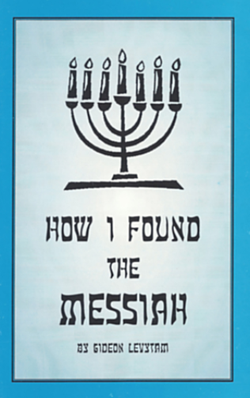
Follow Gideon Levytam's journey and discover how he was led by God, through a series of exciting circumstances, to find the One his people are still waiting for.
Past Episodes

Featured Offer
Follow Gideon Levytam's journey and discover how he was led by God, through a series of exciting circumstances, to find the One his people are still waiting for.
About Holy Scriptures and Israel
As time passed by, the Lord Yeshua took dear brother John Van Stormbroek to himself. The ministry of Holy Scriptures and Israel continued with additional development. In the early 1990’s, a weekly morning Bible class began which brother Gideon Levytam led regularly in the City of Toronto. This weekly open Bible class was held in the Willowdale assembly meeting hall. Eventually, a second mid-week evening Bible class was added. In April 2002, the need for an additional outreach Bible teaching meeting arose. We begun a Saturday (Shabbat) ministry meeting in which a systematic teaching of God’s word is presented to all who attend. Together we learn God’s Word, pray for each need and the salvation of Israel, and sing songs of worship unto our God, praising Him and our Lord Yeshua the Messiah.
In Mid 2004 we started to air on Joy 1250 Radio station a 15 minute Bible teaching program called "The Holy Scriptures and Israel" with Gideon Levytam. The broadcast teaches God’s word from a Hebrew Messianic perspective and has proved to be a blessing to many. It's now aired seven days a week. Our prayer is that many more of our Israeli people will have a clear understanding of who Yeshua is, why we all need him, and come to know him as their Lord and Messiah.
About Gideon Levytam
Contact Holy Scriptures and Israel with Gideon Levytam
426 Simcoe Street
Niagara-on-The-Lake
Ontario L0S 1J0
Canada
(905) 325-1234