
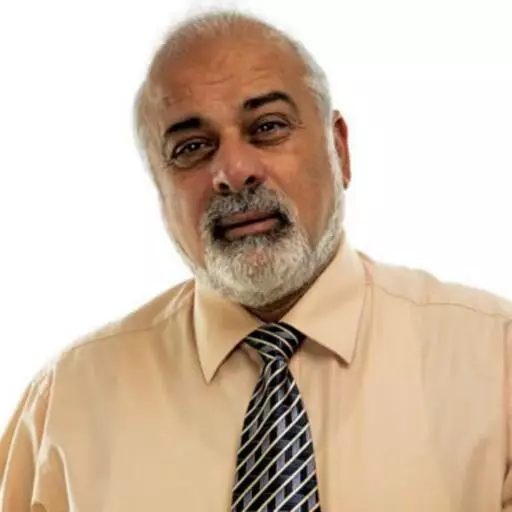
Acts 13:14-52, Part 1


Paul’s First Preaching of the Gospel Part 1
Guest (Male): Shalom. Holy Scriptures and Israel is a ministry designed to share with the Jewish people the good news of the Lord Jesus Yeshua the Messiah and to instruct Christians on the Jewish roots of their faith. And now, teaching God's word from a Hebrew Messianic perspective, here is Gideon Levytam.
Gideon Levytam: Okay, Shabbat Shalom. I am going to read today the portion that we didn't conclude in our last meeting together. This is the book of Acts. Will you please turn with me to Acts chapter 13? I want to see by the grace of God if we can look at the second half of this chapter. It's a long chapter, Acts chapter 13.
In our last ministry meeting, we read the first 13 verses and talked about the selection of God, who chose Saul and Barnabas. He told the believers in Antioch to separate Barnabas and Saul for the work of the ministry. They went out and began to preach the gospel. We concluded, if you remember, with the verses that pointed out the departure of John Mark, who returned to Jerusalem.
Guest (Male): But when they departed from Perga, they came to Antioch in Pisidia and went into the synagogue on the Sabbath day and sat down. And after the reading of the law and the prophets, the rulers of the synagogue sent unto them saying, "Ye men and brethren, if ye have any word of exhortation for the people, say on." Then Paul stood up and, signaling with his hand, said, "Men of Israel and ye that fear God, give audience.
The God of this people of Israel chose our fathers and exalted the people when they dwelt as strangers in the land of Egypt and with an high arm brought he them out of it. And about the time of 40 years suffered he their manners in the wilderness. And when he had destroyed seven nations in the land of Canaan, he divided their land to them by lot. And after that, he gave unto them judges about the space of 450 years until Samuel the prophet.
And afterward, they desired a king and God gave unto them Saul the son of Kish, a man of the tribe of Benjamin, by the space of 40 years. And when he had removed him, he raised up unto them David to be their king to whom also he gave testimony and said, "I have found David the son of Jesse, a man after mine own heart, which shall fulfill all my will." Of this man's seed has God according to his promise raised unto Israel a Savior.
When John had first preached before his coming the baptism of repentance to all the people of Israel and as John fulfilled his course, he said, "Whom think ye that I am? I am not he. But behold, there cometh one after me whose shoes of his feet I am not worthy to loose." Men and brethren, children of the stock of Abraham, and whosoever among you feareth God, to you is the word of this salvation sent.
For they that dwelt at Jerusalem and their rulers, because they knew him not, nor yet the voices of the prophets which are read every Sabbath day, they have fulfilled them in condemning him. And though they found no cause of death in him, yet desired they Pilate that he should be slain. And when they had fulfilled all that was written of him, they took him down from the tree and laid him in a sepulcher. But God raised him from the dead.
And he was seen many days of them which came up with him from Galilee to Jerusalem, who are his witnesses unto the people. And we declare unto you glad tidings, how that the promise which was made unto the fathers, God had fulfilled the same unto us their children in that he has raised up Yeshua again as it is also written in the second Psalm: "Thou art my son, this day have I begotten thee."
And as concerning that he raised him up from the dead, now no more to return to corruption, he said on this wise: "I will give you the sure mercies of David." Wherefore he says also in another Psalm: "Thou shalt not suffer thine holy one to see corruption." For David, after he had served his own generation by the will of God, fell on sleep and was laid unto his fathers and saw corruption. But he whom God raised again saw no corruption.
Be it known unto you therefore, men and brethren, that through this man is preached unto you the forgiveness of sins. And by him all that believe are justified from all things from which ye could not be justified by the law of Moses. Beware therefore, lest that come upon you which is spoken of in the prophets: "Behold, ye despisers, and wonder, and perish, for I work a work in your days, a work which ye shall in no wise believe though a man declare it unto you."
And when the Jews were gone out of the synagogue, the Gentiles besought that these words might be preached to them the next Sabbath. Now when the congregation was broken up, many of the Jews and religious proselytes followed Paul and Barnabas, who speaking to them, persuaded them to continue in the grace of God. And the next Sabbath day came almost the whole city together to hear the word of God.
But when the Jews saw the multitudes, they were filled with envy and spake against those things which were spoken by Paul, contradicting and blaspheming. Then Paul and Barnabas waxed bold and said, "It was necessary that the word of God should first have been spoken to you, but seeing ye put it from you and judge yourselves unworthy of everlasting life, lo, we turn to the Gentiles."
For so has the Lord commanded us saying, "I have set thee as a light unto the Gentiles that thou shouldst be for salvation unto the end of the earth." And when the Gentile heard this, they were glad and glorified the word of the Lord, and as many as were ordained to eternal life believed. And the word of the Lord was published throughout all the region.
But the Jews stirred up the devout and honorable women and the chief men of the city and raised persecution against Paul and Barnabas and expelled them out of their coasts. But they shook off the dust of their feet against them and came unto Iconium. And the disciples were filled with joy and with the Holy Spirit.
Gideon Levytam: This is the end of Acts chapter 13. It is an amazing passage because, brothers and sisters, as we study the book of Acts and look back at the presentation of the gospel, we can see that just like the gospel was preached by the Apostle Peter in the city of Jerusalem in the beginning at the foundation of the church of Yeshua the Messiah, here the Apostle Paul is presenting the gospel in the synagogue of the Jewish people.
From there in Antioch, the gospel will move on to the rest of the nations of the world. You can see the interesting thing that God used the presentation of the gospel first of all to the Jewish people in the city of Jerusalem in the beginning when the church was born. But also, when the gospel moved on to be presented to the Gentile world, he began at the synagogue of the Jewish people in the city of Antioch where the Apostle Paul presented his first public message as he was moving along to present the gospel to other nations in Asia Minor.
We are here in chapter 13 and we have already mentioned that in the first 13 verses was the call of Paul and Barnabas by the spirit of God. He said, "Separate unto me Barnabas and Saul for the work of the ministry which I have entrusted unto them." The brethren in a local assembly in Antioch, this is a different Antioch, the capital city of Syria, laid their hands on them and commended them to the work of the ministry and they sent them away.
As the Apostle Paul and Barnabas left the city of Antioch, this capital city in Syria, they moved on and they got to Salamis. Remember that they went straight to the synagogue of the Jews. They went again to the synagogue of the Jews because of the principle that the Apostle learned from Yeshua the Messiah: that the gospel is going to go to the Jewish people first and then to the rest of the nations of the world.
So they moved on and preached in Salamis. From Salamis, they moved on to Paphos. If you remember, then they got to Perga, and in Perga, John left them. We do not know why John Mark left them. We just mentioned some believe that perhaps it was for fear of persecution, perhaps the change in his life being a young Jewish man and he started to see that the gospel is being preached to the Gentile world.
He saw paganism and idolatry and he just went back to the city of Jerusalem. Once he had gone back to the city of Jerusalem, we read now in chapter 13 beginning from verse 14 on that now the Apostle Paul takes the lead. From here on, you notice now that he begins to move from the place that is called Perga all the way to Antioch in Pisidia. This is a different Antioch. Apparently, some say that there were seven cities that were called Antioch in the Roman Empire.
The Antioch that is in Syria is mentioned in chapter 13 verse 1. Antioch which is in Pisidia is mentioned in verse 14 of Acts chapter 13. There they go to the synagogue of the Jewish people. They go to their own brethren first of all to present to them the message of the gospel. Here, brothers and sisters, look at this. There is a custom that we always have in our own synagogues in Israel and elsewhere in this world. There is a weekly cycle of the reading of the Torah, the five books of Moses, and the Nevi'im, the prophets.
It is a custom that every Shabbat there is a portion being read of the Torah and a portion being read of the prophets. This is constantly being done even today. You're going to go to a synagogue today and you will find out that there is a portion being read of the Torah and there is a portion read in the prophets. This is a continuing cycle. That's how there is an ongoing reading until in one year you finish the whole scripture, the law and the prophets.
But another custom that is even today being practiced is that when a guest comes, they would give them an opportunity to give a word from God, a word from the scripture. Most likely, it will be a person that they will know about and they will recognize that he's perhaps a rabbi from another location or a person that was known in another city or town because after all, the Jewish community is always connected.
The synagogue in the city of Antioch of Pisidia knew and got information on what was going on in Jerusalem or what was going on in Antioch in Syria. There is always a connection between the Jewish community around the world and it was no different then. So when the Apostle Paul and Barnabas came to the synagogue in Antioch of Pisidia, we find that they have invited them to say something. Look what it says here in verse 15.
The rulers of the synagogue sent unto them and they said, "Ye men and brethren, if ye have any word of exhortation for the people, say on." It is an interesting custom because it's an opportunity for a certain rabbi or a certain leader from another location to give a word of encouragement, some word of exhortation to the Jewish brethren. Remember Yeshua himself when he was in Israel before he died.
He went to the city of Nazareth and in Nazareth, they gave him the scripture and he read the prophet Isaiah. Remember after he read the passage from the prophet Isaiah, he gave it back to the leader there, to the servant there, and then he sat down. Everybody looked at him and he said, "This day this scripture has been fulfilled in your midst."
The passage that he read from the prophet Isaiah had to do with the fact that the Messiah was going to come and the Messiah was going to heal the brokenhearted, to give sight to the blind, to provide salvation. He said, "This day this scripture has been fulfilled in your midst." You read it in the book of Luke in Luke chapter 4. Everybody was amazed at the speech of Yeshua the Messiah.
Then he began to expound to them and to share with them because he came to provide redemption and salvation. Judgment is delayed. Judgment is going to come, but later on. But now, today, the scripture has been fulfilled in your midst, Yeshua the Messiah said. Well, here Paul, they ask him to speak if they have some exhortation. Look what he said in verse 16.
Saul, though he became a believer in Yeshua, never for a moment thought that he's not part of the nation of Israel. Though he accepted that Jesus, Yeshua, was his own Lord and Messiah, he always talked to his Jewish people and he always understood and embraced the fact that they were his brethren, they were his people. He was part of the nation. In verse 16, Paul stood up and he did something very similar to what Stephen had done years earlier in Acts chapter 7, which we have already looked at.
Stephen, who was another Jewish believer of the first century, was speaking to the Sanhedrin and telling them and rehearsing before them the history of our people, the people of Israel. Notice he says in verse 16: "Paul stood up and beckoning or signaling with his hand, he said, Men of Israel and ye that fear God, give audience." He quieted everyone down in the synagogue and he said, "Listen, I want you to give audience."
He called them men of Israel and those that fear God. Apparently, there were some Gentiles there from the nations who had embraced the God of Israel and they accepted that he was the true and living God and they became part of the synagogue. By the way, the word synagogue in Hebrew simply means Beit Knesset. Beit Knesset means a house of gathering. It is a house where there would be the gathering of the Jewish community on a Shabbat day to read the text of the scripture, to worship the God of Israel.
So there were those from among the Gentiles who had embraced the God of Israel and they became what we call God-fearers. They came in and they gathered on that Shabbat day and now the Apostle Paul began to rehearse before all these people the history of his own nation, the nation of Israel. I want you to notice from verse 17 to verse 25, Paul reviews Israel's history before his Jewish brethren.
He reviewed before them all the history and you notice the hands of God in the history of our nation, Israel. It is always the hand of God. He doesn't point to focus on man but he focused here on what God had done. Now notice how many times we find the word "he". Notice that, first of all, in verse 17, God chose Israel. Notice verse 17: God exalted Israel as it says, "He exalted his people."
Notice again in verse 17: he had brought Israel out of Egypt. It was God who had brought Israel out of the land of Egypt. Paul reminded his own Jewish brethren in the synagogue of Antioch of Pisidia of the faithfulness of God. He brought Israel out of Egypt. Notice now in verse 18: he led Israel in the wilderness for 40 years. Can you imagine? Look at this.
Verse 18: "And about the time of 40 years, he suffered their manners in the wilderness." God not only has chosen them, not only exalted them, not only delivered them out of Egypt, but he led them for 40 years. Paul is saying he suffered their manners. You know how Israel grumbled and complained and was dissatisfied and didn't want this and rebelled against Moses and against the Lord, just like you and I do it against the Lord ourselves in our life as believers in Yeshua.
We grumble, we complain, we are unsatisfied, we are unhappy, and we always have this human nature rises within us by complaining against God. Israel had done it the same thing during these 40 years in the wilderness journey. That's why he continues now in verse 19. Not only that he suffered their manners in the wilderness, but in verse 19 it says he destroyed the seven nations there in the land of Canaan.
In other words, he brought them from Egypt to Canaan and then he brought them into the land and those seven nations, the Jebusites and the Girgashites and all those names that we have in the book of Exodus, God had dealt with those nations when he brought Israel into the promised land. He continues in verse 20 and ultimately speaks about the judges. It says in verse 20: "And after that he gave unto them judges for about the space of 450 years."
We are studying now the book of Judges. For 450 years in the history of our people Israel, God raised a judge. He led the people to victory. When the judge died, Israel was back into sin and disobedience and departure from the Lord. He raised another judge and this judge delivered them from all the bondage and then for a while, Israel had peace, had shalom.
Then when the judge died, back they were going in disobedience to the Lord. The cycle that we mention in the book of Judges that existed among our own nation: sin that brought judgment of God, that brought a cry for help and mercy from the Lord, then the Lord raised a judge and delivered our people from the hands of those that oppressed them until the cycle continued. This is so true because we see it in ourselves.
This is the same thing we see in the life of the church. God raises men and women who are godly for a season. The people are being moved in the right direction and then when those are gone, the new generation that was born forget the things of God and they are back away from the Lord. Then God had to raise and to make a revival and to stir up the people of God to be restored to himself.
It's the cycle that we experience as well. This is the period of the judges where every man did that which was right in his own eyes until Samuel. Notice now in verse 20, Samuel the prophet. In Hebrew, we call him Shmuel HaNavi, the prophet whom God had raised him to introduce to the nation of Israel the man that is after God's own heart, David the king. So we find out that afterward Israel desired a king in verse 21. Again, I want you to see...
Featured Offer
Follow Gideon Levytam's journey and discover how he was led by God, through a series of exciting circumstances, to find the One his people are still waiting for.
Past Episodes

Featured Offer
Follow Gideon Levytam's journey and discover how he was led by God, through a series of exciting circumstances, to find the One his people are still waiting for.
About Holy Scriptures and Israel
As time passed by, the Lord Yeshua took dear brother John Van Stormbroek to himself. The ministry of Holy Scriptures and Israel continued with additional development. In the early 1990’s, a weekly morning Bible class began which brother Gideon Levytam led regularly in the City of Toronto. This weekly open Bible class was held in the Willowdale assembly meeting hall. Eventually, a second mid-week evening Bible class was added. In April 2002, the need for an additional outreach Bible teaching meeting arose. We begun a Saturday (Shabbat) ministry meeting in which a systematic teaching of God’s word is presented to all who attend. Together we learn God’s Word, pray for each need and the salvation of Israel, and sing songs of worship unto our God, praising Him and our Lord Yeshua the Messiah.
In Mid 2004 we started to air on Joy 1250 Radio station a 15 minute Bible teaching program called "The Holy Scriptures and Israel" with Gideon Levytam. The broadcast teaches God’s word from a Hebrew Messianic perspective and has proved to be a blessing to many. It's now aired seven days a week. Our prayer is that many more of our Israeli people will have a clear understanding of who Yeshua is, why we all need him, and come to know him as their Lord and Messiah.
About Gideon Levytam
Contact Holy Scriptures and Israel with Gideon Levytam
426 Simcoe Street
Niagara-on-The-Lake
Ontario L0S 1J0
Canada
(905) 325-1234