
Acts 13:1-13, Part 2


The Lord’s Call of Barnabas and Saul Part 2
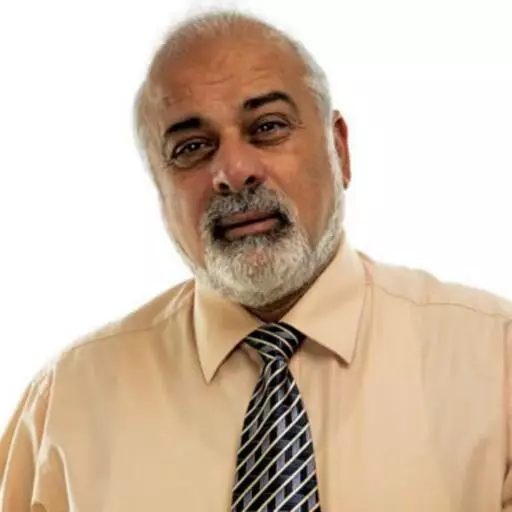
Gideon Levytam: Shalom. Holy scriptures and Israel is a ministry designed to share with the Jewish people the good news of the Lord Jesus, Yeshua the Messiah, and to instruct Christians on the Jewish roots of their faith. And now, teaching God's word from a Hebrew Messianic perspective, here is Gideon Levytam.
Gideon Levytam: The study of Acts chapter 13. You know, the beautiful thing about this is that the spirit of God will use the people of God who are going about serving Him as they move along in a life of service for the Lord. He will direct them. He will call them. He will lead them on as they are serving Him and desiring to serve the God who have called them to serve Him.
Gideon Levytam: Now, if you for a moment, please, turn with me to Genesis chapter 24. I want to show you another man that was called by God, was led by God as he was serving the Lord. In Genesis chapter 24, we know the servant of Avraham Avinu, our father Abraham.
Gideon Levytam: He was sent by Abraham to go to bring a bride for Isaac, his son. And look what he said to Rebecca where he found her later on, and he was speaking with her and wanted to know if she would be the one that will be the bride of the son of his master, Abraham.
Gideon Levytam: We read of him in verse 26 and 27 of Genesis chapter 24. And the man bowed down his head, and he worshiped the Lord. And he said, Blessed be the Lord God of my master Abraham, who has not left destitute my master of His mercy and His truth.
Gideon Levytam: And then he said this clause, very interesting, I, being in the way, the Lord led me. He said to Rebecca, I did not sit here and waited until the Lord will give me some sort of revelation from heaven. My master told me to go to bring a wife. And I, being in the way, and the Lord led me.
Gideon Levytam: While I was walking with the Lord, while I was on my way in my walk towards the obedience to my master, I was going to bring a bride for my master. I being in the way, the Lord lead me. Brothers and sisters, this is a great encouragement for us.
Gideon Levytam: The same thing, as Paul, Shaul and Barnabas ministered to the Lord, the Lord called them. As the servant of Abraham, our father, was on his way, the Lord led him. As you and I will be on our walk with the Lord, and seeking to live for Him and to obey Him and to be consistently following after Him, the Lord will lead us.
Gideon Levytam: And he will direct us, and he will let us know what is next and how to do things. But we must be in the way. We must be in God's business all along. God cannot use you and I if we are not occupied with Him. It's not like a magic that you press a button and all of a sudden we are occupied with Him, and then we kind of get out of this and we are not occupied with Him and then he press another button and we are again occupied with Him.
Gideon Levytam: No, we need to be on that road to live for Him and then as we are on the way, He leads us, and He opened doors to us. Over the years, I can tell you for the short time that I participate in the Lord's work, so many doors were opened that you did not plan on them to come your way. They just opened.
Gideon Levytam: And as the doors are open, you go through that door, and you serve the Lord in this area, and sometimes the Lord shut the door, and you have to wait on Him and you continue to follow Him, and then another door is being open. That's the way the Lord is working, and He's calling His servants here in chapter 13 in order to present the Gospel and to continue it further among the Gentile world.
Gideon Levytam: And so he called them. He said to them as they ministered to the Lord, and they fasted, the Holy Spirit said, Separate unto me Barnabas and Shaul for the work where unto I have called them. He had a call for Barnabas and Shaul, the ministry that he was going to give them is to spread the Gospel.
Gideon Levytam: Beyond the borders now, beyond Jerusalem, beyond Judea, beyond Samaria, to the uttermost part of this earth, and they are being used, called by God to be the one that would spread that message of the Gospel. And so in verse 3, when they had fasted and prayed.
Gideon Levytam: Now, these two expression here, fasted and prayed are very important. Fasting, it's not only because we need to lose weight, but fasting has to do because of concern for something. They were concerned for something. Is that the mind of the Lord? And how are we going to go about it? Lord, direct me. And they fasted, and they also prayed.
Gideon Levytam: You know, to pray, brothers and sisters, if you're honest with me, if there's anything that we neglect the most is prayer. Spending time in prayer. First of all, in private, then with our husbands or wife and our children, then with our brothers and sisters. If there's anything that we neglect the most is to talk to the Lord.
Gideon Levytam: Instead of talking to the Lord, we're talking to people. Instead of talking to God about people, we're talking to people about other people. Instead of talking to God and telling Him, God, here's my problem, here's my issue, here's my concern, here are my desires, God, help me, direct me.
Gideon Levytam: Well, we find out that Shaul and Barnabas prayed. The brothers and sisters in the local assembly in Antioch prayed. And they talked to the Lord. They fasted because now they were going to go out. They were going to preach the message to the other cities, to broaden the exposure of the Gospel in many other cities. And so they fasted.
Gideon Levytam: Secondly, they prayed. And thirdly, notice what they did, they laid their hands on them. Now, what does it mean to lay their hands on them? You know, in scripture, Old Testament, in the Tanakh, in the Hebrew biblical Israeli history, as well as in New Testament history, the laying of the hands speaks of identification.
Gideon Levytam: In other words, when I lay hands on someone, I identify with that person. You remember that in olden time, when the Hebrew would come to the temple or even before that, to the tabernacle in the wilderness, when an Israeli who have sinned and needed to be forgiven, he would bring an animal to the altar, to the tabernacle, and he will lay his hand on this little lamb.
Gideon Levytam: And when he lays his hand on this lamb, he confessed his sin, and his sins were transferred to that lamb. And when the lamb was killed by the priest, then his sins were forgiven. Well, laying of the hand speaks of identification, of fellowship, of acknowledgment.
Gideon Levytam: And so when the brothers and sisters in the local assembly, in the city of Antioch, could see that they were called by the Lord, that the Holy Spirit of God have called Barnabas and Saul, they fasted, and they prayed, and they laid their hands identifying with their call.
Gideon Levytam: You know, we sometimes call various groups of people have certain way of, they call it an ordination. We have ordained somebody. But the point is here, we learn from these verses that it's not a human ordination, it is a divine call, but the brothers and sisters of the local assembly identify with that call.
Gideon Levytam: And they laid their hands upon these two brethren. I want to read a verse in first Timothy chapter 5, and verse 22. The Apostle Paul said to a younger man by the name of Timothy, some words of counsel that he gave him.
Gideon Levytam: And look at this. And he said to him, Timothy, lay hands suddenly on no man. Neither be partakers of other men's sins, keep thyself pure. What he was saying to Timothy, he says, Timothy, don't lay hands suddenly on everyone. In other words, don't identify very quickly with someone.
Gideon Levytam: You know, someone comes along, and we do not know who that person is, we need to know someone. We can identify with that individual. And the laying of the hands speaks of identification, of fellowship. And Timothy was exhorted by the Apostle Paul, Timothy, don't lay hands suddenly on anyone.
Gideon Levytam: Don't lay hands suddenly. Don't be rushing yourself into laying hand, into identifying with everyone. But take your time. Find out if this is the mind of the Lord, if this is the will of the Lord, and then you can identify. And then you can lay your hand upon that person in identification and fellowship.
Gideon Levytam: And so the brothers and sisters in the local assembly of this city of Antioch, in Syria, they have identified with the call. They saw that this is the call from God. These two men served in the local assembly. It takes time to build up character, to grow and mature and to be used by the Lord.
Gideon Levytam: You cannot just be as a young man without experience, just to carry on. It takes time to build up your spiritual growth. It takes time, and they were ministering to the Lord. They were serving the Lord, and then the Spirit of God called them, and the brethren identified with it, and they recognized that they can send them away now with their blessings.
Gideon Levytam: You know how it must have been encouraging to Shaul and to Barnabas when the believers in the local assembly recognized that they had a call from the Lord. And so here we see in these verses, the fact that they have been sent by the Spirit of God. You notice it says in verse 5, when they were in Salamis. Salamis is a city in Syria, about 16 km away from Antioch.
Gideon Levytam: What did they go to do? They preached the word of God. That's all the ministry that these brethren. As they moved forward, as they left Antioch, this place where they have been commended to the Lord's work, they were preaching the word. They were teaching God's word.
Gideon Levytam: Unless a person hear the Gospel, he cannot be saved. We need faith comes by hearing, hearing by the word of God. So they were preaching the word. Simply proclaiming the message. But you know where they proclaim it first? You notice that the first thing that these two men have done, they preached the word of God in the synagogue of the Jews.
Gideon Levytam: You know, that is something that the Apostle Shaul, Paul always have done. Whenever he have gone to any city in his ministry, he first of all gone to his own brethren who were Jewish people who did not know yet the Messiah. And he have gone to the synagogue, first of all.
Gideon Levytam: You will notice throughout the history of Paul, chapter 13, chapter 14, chapter 17, chapter 18, he went to the synagogue. Chapter 19, he went to the synagogue. Every time he arrived to a city, he have gone to the synagogue of his own brethren, of the Jewish people. Why?
Gideon Levytam: Because the Bible does teach in Romans chapter 1 that Paul wrote as an instruction to the Roman believers. He said, I am not ashamed of the Gospel of the Messiah, for it is the power of God unto salvation to everyone that believes. And then he added, to the Jew first and also to the Gentile.
Gideon Levytam: This is the principle. It began right there being taught by the Apostle and also practiced by the Apostle. He had gone to the synagogue of the Jewish people, and he began to talk to his brethren. And he shared with them about the Messiahship of Yeshua. And yes, he was opposed by the vast majority because our own people have not accepted the Messiahship of Yeshua at his first coming.
Gideon Levytam: Only the minority, a small group of Jewish people from among our nation Israel have accepted like the Apostles, the early disciples who proclaimed the message of the Messiah, but the main company of our nation Israel did not accept the Messiahship of Yeshua. By the way, up till today, we are struggling in proclaiming the message of the Gospel to our own nation, to our own people.
Gideon Levytam: 2,000 years have gone. And it is still as a nation Israel haven't yet accepted the Messiah. But the Apostle Shaul, Paul and Barnabas here, the first thing that they have done, they have went and they preached the word of God in the synagogue of the Jews.
Gideon Levytam: And you know what? In the synagogue of the Jews, we have always the word of God, the scripture. We have the Tanakh. So they opened the Tanakh, the Old Testament, and they began to share from the Tanakh, from the Old Testament about the Messiahship of Yeshua. That He is the Messiah, that He was prophesied by our forefathers, that He will come, the son of David, who would come and will die, and will pay for our sins.
Gideon Levytam: They shared the message in the synagogue. It's very precious because as they were speaking, they were two Jewish men talking to their Jewish brethren about the Jewish Messiah through the Jewish, the Hebrew scriptures. Wonderful to see that. And they were on the way to preach the message to the Gentile world.
Gideon Levytam: Because the message of the Gospel is not limited to the Jewish people. It is going beyond the borders of Israel. Because all have sinned and come short of the glory of God. And so they've gone, and they have begun their journey, and in fact, from chapter 13 to the end of chapter 14, we have the first missionary journey of the Apostle Paul.
Gideon Levytam: And you know what they did? It says in verse 5, at the end, that they took with them a young man by the name of Yochanan, John as their servant, as their minister. In other words, this young man, we read of him here in verse 5, was serving the Lord with Shaul, Paul, and with Barnabas, he ministered to them. There are many areas and many things that he helped them.
Gideon Levytam: And you know, it's so nice to see an older brethren going with a younger brethren together, walking together. It's so beautiful to see that. And how he helped them and he assisted them and he ministered to them. In fact, if you notice at the end of chapter 12, it says there that Barnabas and Shaul returned from Jerusalem.
Gideon Levytam: They returned to Antioch when they had fulfilled their ministry, and they took with them John, whose surname was Mark. In other words, this Mark, John came from Jerusalem, from Yerushalayim, with Barnabas and Shaul, and he went to Antioch and now he was with them in Antioch.
Gideon Levytam: And then they took him now for their first missionary journey. But it doesn't take too long, and you find this young man getting discouraged and he's leaving the ministry. And you will see this in a moment. But they took him along. In the beginning, there's a good start. He have gone along with them. He ministered to them. And Shaul and Barnabas really use him.
Gideon Levytam: Actually, he was a relative of Barnabas, a family member. And so Barnabas took him along with Shaul, and together they ministered unto the Lord. And it was beautiful to see older and younger, all in this point of time, Jewish believers ministering to the Lord and ministering to the people of God.
Gideon Levytam: And so now, notice, in the next verses which we read today, from verse 6 to verse 13, we find out that as they began to go to preach the Gospel, there is an opposition to the message of the Gospel. When there is a real word of God preach, always there's a counterfeit next to it.
Gideon Levytam: When the servant of the Lord going truly to minister the Gospel, the word of God, there's always a false prophet or false servant who come along, sent by Satan, to oppose the message, to trick the people of God, to send people away from hearing the message.
Gideon Levytam: And you can see it right here in the next verses. Look, and it sometimes happened even in this case, the opposition came from a person who was also Jewish. Look what it says in verse 6, the false prophet. When they had gone through the aisle of Antioch. Papus apparently was the capital of Cyprus. They found a certain sorcerer, a false prophet, a Jew, whose name was Bar Jesus. Bar Yeshua, Ben Yeshua. Interesting.
Gideon Levytam: Here we see that there is a false prophet, a sorcerer. Actually, the word sorcerer come from the Greek word Magos, which mean a magician. He makes tricks. He's a magician. It's a counterfeit. And he, he found himself in a place called Papus. And when they have gone and arrived to Papus, they found that man there.
Gideon Levytam: Again, I want us to realize whenever God sent His word, there's always a counterfeit next door. It happened in the past to our own nation. We remember when Israel came out of the land of Egypt, there was the mixed multitude comes along. They came out with them, and they are the one who stirred up the people and carried the people and say, well, why should we continue to go? Where it's happened to this Moses? Where does he lead us into this wilderness? Why are we hungry? We have no food, and they complain and so on.
Gideon Levytam: And this is exactly what's happening here. They were just beginning now to develop the work. It didn't take too long, but all of a sudden you find out that there is false prophet. You see, interesting that you have here in verse 6, false prophet, while in verse 1 and 2, they are the true prophets.
Gideon Levytam: They are those who truly speaking forth God's word, and they are those who falsely not speaking God's word. And we find this men by the name, it says here his name is Bar Jesus. And you notice the interesting thing, you know, Jesus is a Hebrew word Yeshua or Yehoshua. And the word Bar means son.
Gideon Levytam: In Aramaic, Bar, in Hebrew, Ben. Bar Jesus, son of Jesus, son of Yehoshua. While we have the true Yeshua, the Messiah who died for our sins, who gave himself a ransom for many. Here we see a man who is false prophet with such a name as son of Yehoshua or son of Jesus, Yeshua. Well, we find out in the next verse that there was also in the same area
Featured Offer
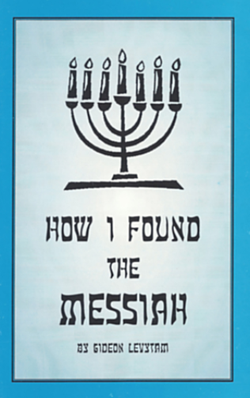
Follow Gideon Levytam's journey and discover how he was led by God, through a series of exciting circumstances, to find the One his people are still waiting for.
Past Episodes

Featured Offer
Follow Gideon Levytam's journey and discover how he was led by God, through a series of exciting circumstances, to find the One his people are still waiting for.
About Holy Scriptures and Israel
As time passed by, the Lord Yeshua took dear brother John Van Stormbroek to himself. The ministry of Holy Scriptures and Israel continued with additional development. In the early 1990’s, a weekly morning Bible class began which brother Gideon Levytam led regularly in the City of Toronto. This weekly open Bible class was held in the Willowdale assembly meeting hall. Eventually, a second mid-week evening Bible class was added. In April 2002, the need for an additional outreach Bible teaching meeting arose. We begun a Saturday (Shabbat) ministry meeting in which a systematic teaching of God’s word is presented to all who attend. Together we learn God’s Word, pray for each need and the salvation of Israel, and sing songs of worship unto our God, praising Him and our Lord Yeshua the Messiah.
In Mid 2004 we started to air on Joy 1250 Radio station a 15 minute Bible teaching program called "The Holy Scriptures and Israel" with Gideon Levytam. The broadcast teaches God’s word from a Hebrew Messianic perspective and has proved to be a blessing to many. It's now aired seven days a week. Our prayer is that many more of our Israeli people will have a clear understanding of who Yeshua is, why we all need him, and come to know him as their Lord and Messiah.
About Gideon Levytam
Contact Holy Scriptures and Israel with Gideon Levytam
426 Simcoe Street
Niagara-on-The-Lake
Ontario L0S 1J0
Canada
(905) 325-1234