
Acts 10:9-33, Part 3


The Vision of Peter & the Meeting with Cornelius Part 3
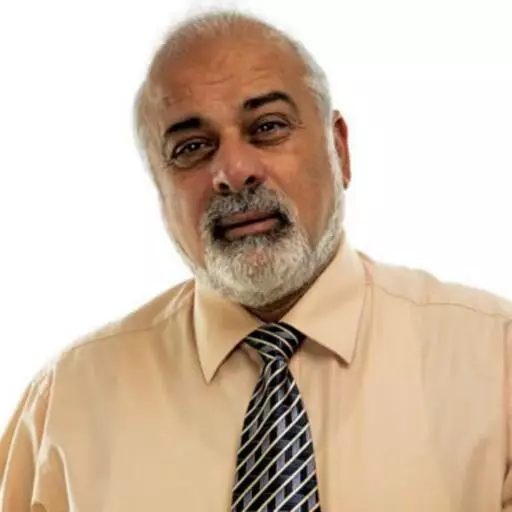
Gideon Levytam: Shalom. Holy scriptures and Israel is a ministry designed to share with the Jewish people the good news of the Lord Jesus, Yeshua the Messiah, and to instruct Christians on the Jewish roots of their faith. And now, teaching God's word from a Hebrew Messianic perspective, here is Gideon Levytam.
Gideon Levytam: The study of Acts chapter 10. You notice, brothers and sisters, that these messengers were such a faithful messages. They said to Peter exactly what happened to their master there in Caesarea. And they gave a testimony to this person, a man by the name of Cornelius, the Centurion.
Gideon Levytam: He was a just man. He was a man that feared God. He had a good report among the Jewish people. And ultimately, it says here that he received a message from the angel of God to send for you and to hear words from you, Peter. What an opportunity Peter had here.
Gideon Levytam: You know, it is hard for a man such as Peter, as a Jewish man, when the Gentiles in the first early church age came to him and asked from him to hear a message. Peter needed to learn, brothers and sisters, that now the door of this great salvation to be part of the body of Messiah was no longer only limited to a nation alone, the nation of Israel. But the door was open to the nations of the world.
Gideon Levytam: And so Peter have heard what these messengers were speaking concerning Cornelius. And again, I want to emphasize, it's the Holy Spirit of God that moved in the life of Peter to reveal him this truth. It is so unfortunate when we don't see or men do not see, or don't recognize the movement of the Spirit of God in their life, to discern that God have now opened the door to the nations of the world.
Gideon Levytam: It is unfortunate, even today, among our own people, not realizing the present day dispensation of the church age. Not recognizing this, but Peter have. But he needed now to learn how to behave, how to conduct himself. So, in the next verses now, we are moving forward. In verses 23 to 33, Peter is now moving ahead to meet Cornelius.
Gideon Levytam: The first thing that we learned today is a shift in Peter's attitude in verse 23, the first part. Peter, listen to this. He called them in, he took them into the house, and he took the responsibility to lodge them in. That shows us already that Peter, though he was Jewish from among the nation of Israel, he lodged them in the house of Simon the Tanner.
Gideon Levytam: You could see already right there that he began to understand that even though these messengers were not from among the nation of Israel, were not Jewish, they were Gentiles, he said, nevertheless, they can come in, and I can go into them. There is a lesson to learn. There's a movement of God beginning right now in reaching the Gentiles with the message of the gospel.
Gideon Levytam: And so Peter did not hinder that. He brought them into the house. He took the responsibility to lodge them. And then it says in the rest of this verse, on the morrow, Peter went away with them, and certain brethren from Yafo accompanied him.
Gideon Levytam: Now again, I would like to say, he knew what's going to happen and how people will look at that, that he, as a Jewish believer in Yeshua, the Messiah, going to the Gentile world and speaking, going to a Gentile home, he knew that he needed to have witnesses along with him, to show him and to show others of this great work that God was doing, not only among the Jews, but also among the Gentile world.
Gideon Levytam: And so he took with him, according to this verse, it says, certain men. He took some of his Jewish brethren along with him. And you know how many people he actually took with him? We don't have it written here in this verse 23, but if you turn the page to chapter 11, and you notice in verse 12, when Peter vindicates his ministry to the Gentile world, look in verse 12, he was saying, "And the spirit bade me to go with them, nothing doubting. Moreover, these six brethren accompanied me."
Gideon Levytam: "And we entered into the man's house." Peter took with him six Hebrew Christians, six Jewish believers from Yafo. He took them along with him to the house of Cornelius. And so, he took a certain brethren. Then verse 24 tells us that on the morrow, they had entered into Caesarea. And Cornelius waited for them. And had called together his kinsmen and near friends.
Gideon Levytam: Peter had been walking again. It seems to be like there are two days because you find in verse 23, on the morrow, verse 24. It must be a two-day journey, about 30 miles, about 50 km, about 25 km a day, per say. And they arrived to the city of Caesarea. And here you see this man by the name of Cornelius.
Gideon Levytam: What does he do? He was waiting for Peter. And you notice what he did. What a man he must have been. He called together all his family, and he called together his friends, and he was sitting there and waiting for the messengers to come with Peter and the message that he has for them.
Gideon Levytam: You know, Cornelius must have been a unique man. You know, he was a commander who had authority. He must have had power and authority. He must have had means. He could say, "Well, I don't need God in my life. I'm satisfied with what I've learned from my forefathers, what I've learned from the Romans about the Caesars and the gods of the world, if you will." But he was a godly man who wanted to know the ways of God. He knew something was missing.
Gideon Levytam: So what did he do? He was waiting eagerly. He called together his family. He called together his friends. And they were all in his house waiting. I remember years ago when I was traveling in White Russia, in Belarus, to minister the word in certain places. And I'll never forget that. And I came to various places where there were so many Jewish people that were waiting to come to hear the message that I was going to share.
Gideon Levytam: And when I came into their apartments or a little church building, you can see everybody sitting there, waiting so eagerly to hear the message of the Word of God. I thought it was tremendous. What an opportunity! What a willingness to listen to the Word of God!
Gideon Levytam: Well here, Peter arrived to Caesarea, and here's the man Cornelius preparing his family, preparing his friends for the message that they were going to hear through this vessel, a man by the name of Peter. And so, Peter arrived there. And in verses 25 and 26, we see the meeting between Cornelius and Peter.
Gideon Levytam: And as Peter was coming in, Cornelius met him, and he fell down at his feet. And he began to worship Peter. Look at the attitude of Cornelius. Now of course, it was wrong in what he was doing, because how can he go and worship Peter, even though Peter was a vessel that was sent by the Spirit of God to minister the Word of God?
Gideon Levytam: But nevertheless, do you see the reverence to the things of God? He wanted to know what God has to say to him. And because, remember, Cornelius was a Roman commander, the Romans were worshipping all sort of gods. So we will not be surprised of him falling at the feet of Peter seeking to worship him. But Peter never allowed him to do such a thing.
Gideon Levytam: And that's where you see the other side of Peter because Peter took him, and he raised him. He says, "Stand up. I myself also am a man." What an attitude Peter had. Peter could have said, "Well, what an opportunity I have to get some worship from men."
Gideon Levytam: "I am the great Pope. I'm this great one that God used to open the door to the Jewish people, to the Samaritan, and now to the Gentile. I'm supposed to receive some honor, some praise, and some glory." Peter had an attitude of humility. You could see even though he was struggling with the issue to go to the Gentile world, or to eat food that he was not allowed according to the Bible, according to God's Word, according to the rabbinical teaching as well.
Gideon Levytam: Nevertheless, he was a man that was broken before the Lord. He was used as a vessel by the Lord, and he did not want this man by the name of Cornelius to worship him. And that's why he said to him, he took him by the hand, he says, "Listen, stand up. I am also a man, just like you."
Gideon Levytam: I reminded of a verse in 1 Peter chapter 5 when Peter wrote the letter to the Epistle to the elders among the Jewish believers. He says to them in 1 Peter 5 verse 1, "The elders which are among you, I exhort you," he said. "Who am also an elder and a witness of the sufferings of the Messiah, and I am also a partaker of the glory that shall be revealed."
Gideon Levytam: He says, "Feed the flock of God which is among you. Take oversight thereof, not by constraint, but willingly, not for filthy lucre, but with a ready mind. Neither as being lords over God's heritage, but being an example to the flock. And when the Chief Shepherd shall appear, ye shall receive the crown of glory that fadeth not away."
Gideon Levytam: "Likewise ye younger, submit yourself unto the elder. Yea, all of you be subject one to another, and be clothed with humility, for God resists the proud, but he give grace unto the humble." Peter was speaking later on, writing these epistles, his first epistle and second epistle to the leaders, to the Jewish believers, to whom he was ministering to, and he said to them, "Listen, don't exalt yourself."
Gideon Levytam: God resists the proud, and he gives grace unto the humble. And you can see this character formed in the life of Peter when Cornelius was worshipping him. And Peter said to him, "You know, you better stand up. I'm also a man." How different it is in what's going on today where those great leaders, if you will, and I speak specifically of the Pope who received, in a sense, worship almost, by men who look at him as if he is the one who represent Peter here.
Gideon Levytam: And it's so different. You can see the different. Peter was not desiring for Cornelius to worship him, and he said to him, "I am only a man. Stand up." The Apostle Paul, Shaul, also experienced this. If you remember that later on in the Book of Acts, in chapter 14, when they also thought of him as gods.
Gideon Levytam: And you remember what Paul as well said, Shaul said, he says, "I am also a man. Don't you come and worship me." Also John never experienced it when John was falling at the feet of the angel in Revelation 19. And the angel said to him, "No, no, don't you worship me." He needed to learn, you cannot worship men, you cannot worship angels, you only worship God. You only worship the Messiah, who is the God man.
Gideon Levytam: And so Peter told him, "Stand up. I am also a man." And that's very moving, very touching. And so we find that now Peter went into Cornelius' house in the next verse, and as he talked with him, he went in. And again, brothers and sisters, listen. And he found many that were come there together. He found many that were sitting there together. Their knowledge of God's truth were limited. Their knowledge about the Messiah was nil.
Gideon Levytam: But they only wanted to know what God has to say to them through the vessel that he was sending. And they were sitting there quietly, waiting for the messenger to speak. And he found many there sitting together and waiting to hear the word of the Lord.
Gideon Levytam: And so, look what Peter is saying now. In verse 28, Peter beginning to explain what in the world he's doing in the house of Cornelius. He began to explain, and he told them, "Do you know how that is an unlawful thing for a man who is a Jew, to keep company or to come unto ones of another nation? But God had showed me that I should not call any man common or unclean."
Gideon Levytam: What I want to say in the Bible, in the Tanakh, in the Old Testament, when God had spoken to our nation, Israel, the issue was not necessarily to go into the house of a person who was not a Hebrew. But the issue there is not to do and to follow the ways of the Gentile world. In fact, the opposite, to draw them to come to believe in the God of Abraham, Isaac, and Jacob.
Gideon Levytam: But you see, beyond it, traditions have evolved. And that's why, if you can see here, that it says, "It is unlawful for a man that is a Jew to keep even company or to come into one of another nation." That was something that was added by the Pharisees. It was not scripture per say, because the opposite is to reach out to the nations of the world, not to believe in what they believe, not to do what they do if they follow in a wrong direction, but to draw them to the God of Abraham, Isaac, and Jacob. But here you can see there are certain things that have been added.
Gideon Levytam: But then he added, and you can see now, brothers and sisters, how the Spirit of God is now connecting the event that occurred on the rooftop in the city of Yafo to the situation that Peter find himself in the house of Cornelius in the city of Caesarea. Peter connected it here together.
Gideon Levytam: Remember in Yafo, he didn't even know then the people were coming from Cornelius. In Yafo, he didn't know anything about what the Spirit of God was going to lead him to go into the house of Cornelius. He only knew the sheet coming down with the food, three times, unkosher, unclean animals that he said, "Lord, I'm not eating. I haven't eaten that before."
Gideon Levytam: But now he's connecting it with what happened. The same Holy Spirit of God, who worked in the heart of Cornelius, is the same Holy Spirit of God who worked in the heart of Peter, bringing them together, inclining Peter to understand that now the gospel is to go to the nations of the world.
Gideon Levytam: And so God have showed me that I should not call men. Notice, in earlier verses, it's not men, it's food. Here he says that I should not call men common or unclean. And that is verse 15 where the voice came to him, he says, "What God had cleansed, you do not call common or unclean." And verse 15, by the way, the word you, it is, you Peter have to learn a lesson.
Gideon Levytam: Because I have cleansed those who come to me, you Peter do not call this individual or those individuals common or unclean. And so, in verse 29, Peter asked them now for the reason they went to call him. "Therefore," he said, "I came to you without gainsaying, as soon as I was sent for."
Gideon Levytam: "I ask now," he says, "therefore, what intent ye have sent for me." He did in obedience to God, in obedience to the voice of the Spirit of God. He went down from the roof, went with the men the following day, went all the way to Caesarea, and he entered into the house of Cornelius, and he asked them, "What did you send for me?"
Gideon Levytam: And so in the last verses, dear brothers and sisters, so beautiful, the answer of Cornelius in verses 30 to the last verse that we have read today, verse 33. Cornelius gave him that answer. Very nice to see how Cornelius answered to Peter. Cornelius he said, "Four days ago," two days to send the servant, the messengers, two days for Peter to come back, "Four days ago, Peter," he says, "I was fasting until this hour."
Gideon Levytam: "And at the ninth hour, I prayed in mine house. And behold a man stood before me in bright clothing. And said, 'Cornelius, your prayers is answered, is heard, and your alms had a remembrance in the sight of God. Send therefore to Yafo and call Simon, whose surname is Peter. He lodged in the house of Simon the Tanner by the seaside, who when he comes, he will speak unto thee.' And immediately therefore, I sent to thee. And thou hast well done that thou has come. Now, therefore, we are all here."
Gideon Levytam: "In thy command before God, we came here, we had to hear all the things which are commanded thee of God." Look at the testimony of Cornelius, straight to the point. He's telling him exactly what occurred that we have read already in the first eight verses of this chapter, chapter 10. He's telling him what happened to him.
Gideon Levytam: And you can see that when a sincere man desire to know the will of God, God is going to move, move mountains, move hearts of people, to give him the message that he needs to learn. And so Cornelius by answering this to him, he told him how it all came about.
Gideon Levytam: Now, I want us to just look at this how interesting, just a couple of points in closing that I think it'll be very nice for us to learn from what happened here. The first thing that we want to learn here is that verses 30 and on, those verses shows us that God uses men to share the gospel and not angels.
Gideon Levytam: You know, God could have said already in the earlier part when the event occurred, when Cornelius have experienced, have had this vision of the angel coming to him and saying to him, "Your prayers and your alms have been risen to God." The angel could have said to him, "Let me tell you, Yeshua from Nazareth. He was born in Bethlehem, lived in Nazareth, he died outside of the city of Jerusalem. He bore the sin of this world."
Gideon Levytam: The angel could have used the message of the gospel to present it to Cornelius. But you can see, brothers and sisters, that angels are messengers, but the message of the gospel were given to men and not angels. Angels could not fathom, could not experience, or they could not understand to the depth that you and I can understand because of what the Lord had done for us. They are not saved.
Gideon Levytam: Angels don't share the gospel. God uses men. God uses people to share the message of the gospel. And that's why when the angel
Featured Offer
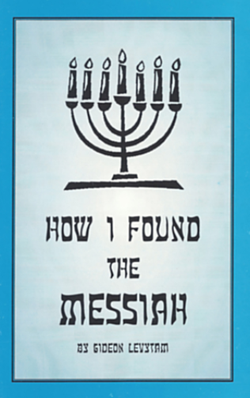
Follow Gideon Levytam's journey and discover how he was led by God, through a series of exciting circumstances, to find the One his people are still waiting for.
Past Episodes

Featured Offer
Follow Gideon Levytam's journey and discover how he was led by God, through a series of exciting circumstances, to find the One his people are still waiting for.
About Holy Scriptures and Israel
As time passed by, the Lord Yeshua took dear brother John Van Stormbroek to himself. The ministry of Holy Scriptures and Israel continued with additional development. In the early 1990’s, a weekly morning Bible class began which brother Gideon Levytam led regularly in the City of Toronto. This weekly open Bible class was held in the Willowdale assembly meeting hall. Eventually, a second mid-week evening Bible class was added. In April 2002, the need for an additional outreach Bible teaching meeting arose. We begun a Saturday (Shabbat) ministry meeting in which a systematic teaching of God’s word is presented to all who attend. Together we learn God’s Word, pray for each need and the salvation of Israel, and sing songs of worship unto our God, praising Him and our Lord Yeshua the Messiah.
In Mid 2004 we started to air on Joy 1250 Radio station a 15 minute Bible teaching program called "The Holy Scriptures and Israel" with Gideon Levytam. The broadcast teaches God’s word from a Hebrew Messianic perspective and has proved to be a blessing to many. It's now aired seven days a week. Our prayer is that many more of our Israeli people will have a clear understanding of who Yeshua is, why we all need him, and come to know him as their Lord and Messiah.
About Gideon Levytam
Contact Holy Scriptures and Israel with Gideon Levytam
426 Simcoe Street
Niagara-on-The-Lake
Ontario L0S 1J0
Canada
(905) 325-1234