
2 Timothy 4:9-22, Part 2 of 3


To whom be glory for ever and ever part 2
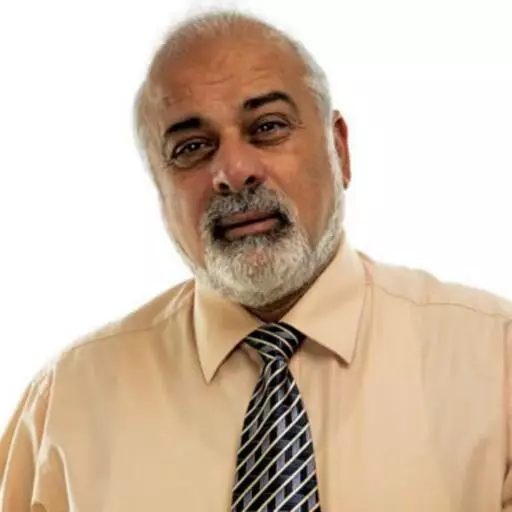
Unidentified Speaker: Shalom. Holy Scriptures and Israel is a ministry designed to share with the Jewish people the good news of the Lord Jesus Yeshua the Messiah, and to instruct Christians on the Jewish roots of their faith. And now, teaching God's word from a Hebrew messianic perspective, here is Gideon Levytam.
Gideon Levytam: The study of 2 Timothy chapter 4. That's the reason why Yeshua the Messiah came, so he will deliver us from this present evil world, and that's what he did when he died for us on the tree. But Dimas apparently made a choice. He began well as a fellow worker, continued on for a while, a little bit longer, but by the time we read 2 Timothy chapter 4, Dimas had forsaken the Apostle Paul, loving this present world. You remember what John said in 1 John chapter 2? Love not the world, nor the things which are in the world, for all that is in the world is the lust of the flesh, the lust of the eyes, and the pride of life, and it is not of the Father.
Love not the world. In other words, he doesn't talk about not loving people, he speaks about the system that denies the Messiah, the Messiah, that deny the God of the Bible, that deny the truth of the gospel. Love not this world, because this world is not of the Father. It is not of the Father, because this only will draw us away from the things of the Lord Yeshua the Messiah. And here we see that Dimas was drawn away. He was drawn away. Maybe later on, we do not know what happened to Dimas later on in his life. The Lord, I'm sure, has spoken to him, and in due time, perhaps he restore him back to himself.
We're going to find this in another person later on. And in other words, the Lord is working, but the Apostle Paul felt this when he was in prison there, in a dungeon there, and one of the people who were fellow workers have gone, no longer there. Demas have forsaken me, loving this present world, and he's departed unto Thessalonica. He went back to the city of Thessalonica. Notice now verse 10b, we have two more men. One of them is named Cresens. He says he went to Galatia, and then another one by the name of Titus, he went unto Dalmatia. In other words, here's two servants that the Apostle Paul sent them into two other areas to minister the word of God.
About them, he doesn't say that they forsook him, but about Dimas, he said, Dimas hath forsaken me, having loved this present world. The others were sent to minister. So beautiful to see that even though the Apostle Paul is in prison, and even though he is bound, you might say, perhaps they allow him to receive some visits here and there, and he was still delegating the responsibility to others and giving them the responsibility to minister the word of God in various cities there. Now notice in verse 11, we continue and we find out name after name. In verse 11a, there was a man by the name of Luke.
He says, only Luke is with me. You know, Luke apparently was a doctor. According to Colossians chapter 4 and verse 14, he was a physician. And it is interesting that he, throughout the journey of the Apostle Paul of Shaul, he joined him and he ministered to him, and perhaps because the Apostle Paul also was a Roman citizen, a Roman citizen was allowed to take with him a slave. To remind you, brothers and sisters, that in Rome there were probably more slaves than people who were free. There were so many slaves, and the Romans could take with them slaves to serve them. Now, Luke was not his slave, but Paul as a Roman citizen took the opportunity to say, you know what, Luke, you stay with me, and we're going to serve the Lord together.
And Luke stayed with him and also assisted him when the Apostle Paul had some problem, maybe health issues. And he remained with the Apostle Paul, even though the Apostle Paul was now in prison. We continue on with the list, and I want you to notice now he's asking Timothy to bring a man by the name of Mark with him. Now, it is interesting about this Mark because it says in verse 11b, "Take Mark and bring him with thee, for he is profitable unto me for the ministry." Now, if you will read carefully in the book of Acts, Mark is actually John Mark. He is the one that left the ministry a little bit earlier in chapter 13 of the book of Acts, he went back home and he did not continue in a ministry to serve among the people with the Apostle Paul.
So there was a time of his departure. He was perhaps going backwards. He was discouraged and he perhaps didn't feel comfortable to continue on to follow with the Apostle Paul and to serve him. But apparently, beloved brothers and sisters, by the time that he's writing to Timothy to come to him, before he dies, before he's departing, the Apostle Paul said to Timothy, you know, Timothy, bring Mark back with you. And because now he's profitable for the ministry, profitable to me for the ministry. We learn a great lesson that even when we turn away from the Lord a time and we get discouraged in the ministry and maybe disappoint the Lord, the Lord is always willing to restore us.
We are always able to be restored to the ministry to serve him. You know, remind me, Yonah ha-Navi, Jonah, the prophet of Israel, when he didn't follow the Lord's instruction, when the Lord told him to go to Nineveh and to preach the message of God's word to the Ninevites. So instead of going, he have gone in another direction. And then the Lord allow him to go through experience. You remember he was in a ship, and then they cast him out of the ship, and then the big fish swallowed him and spewed him back on shore. You remember what happened in the time of Yonah ha-Navi, Jonah the prophet. And then the Lord sent him again.
And Jonah was sent again to give a message for 40 days and judgment is coming. And the whole city have repented. So there's always an opportunity to be restored to the Lord, even though at time we fail the Lord and we don't continue to be faithful. There is always a way of restoration. And if you or I at times get so discouraged and we are not necessarily stay close to the Lord and perhaps deviate from one way or another, the Lord is always willing to restore us back to himself. It's not only that we need grace to be saved, but we need grace to be kept, and the Lord is able to do so. So he's telling to Timothy, Timothy, I want you to bring Mark back now because he is profitable unto me now.
You know, earlier, if you read in chapter 15 of the book of Acts, Paul did not want to take Mark. And that's why he was separated from the fellow servants because he did not want to take Mark. Barnabas, you remember there was a friction between both of them, and Paul went one way and Barnabas went another way, and the reason was because of the fact that he didn't want to take Mark because Mark left the ministry and went back home. But now Paul is saying, you bring back Mark with you. Now he is profitable unto me for the ministry. And so God is able to restore his people back to fellowship with him in order to serve him here in this world.
Well, let's continue. Notice in verse 12, we find out a man by the name of Tychicus. He said, I have sent him to Ephesus. Now, Ephesus, of course, is where Timothy is still serving. So apparently Tychicus was going to be sent to replace Timothy. When Timothy was coming to the Apostle Paul to Rome, Tychicus was sent to replace him while Timothy is on that journey to the city of Rome. So now Paul is continuing to ask Timothy to come to see him before he die, and then notice how beautiful in verse 13, he's requesting from Timothy to bring with him a few things. It says in verse 13, the cloak that I left at Troas with Carpus, when thou comest, bring with thee.
And then he add, and the books, but especially the parchments. So when Timothy will travel, he will stop in an area that is called Troas. Apparently from Troas, Paul had to quickly leave Troas. So he left there the cloak. It's like a garment, an overcoat that have a hole in the middle and it keep you from being cold. And then he left there, notice the books in Hebrew, Sfarim, and the parchments. This is the leather piece, you might say, skin pieces upon which was written the word of God. And Paul was the kind of a person that always loved to read the scripture. And so when he was in prison, left Troas earlier, had to go away quickly, now he's asking from Timothy to bring the books and to bring the parchments.
Perhaps the books has to do with the Tanakh, the Old Testament scripture that he will read, and the parchment upon which he was writing his letters, and he was asking from Timothy to bring it. You see, Paul was reading from the Hebrew scriptures, studying the Tanakh, what was promised by God about the Messiah, and as a revelation was given to him by the glorified Messiah, he was writing. He wrote 13 letters, the book of Romans, First Corinthians, 2 Corinthians, and so on, Galatian, Ephesians, and Philippian, 1 and 2 Thessalonians, all those letters that the Apostle Paul was writing as he was ministering among the Gentile world.
And so he was writing. And so he's asking from Timothy to bring him the books. The books like a scrolls, bring the scrolls to me because he wanted to read the scripture. The Apostle Paul was a student of the word. Let me remind you that as a Jewish man, he grew up in the land, he was a Pharisee, he was a teacher of the word, he learned the scripture. Wherever he have gone, he have gone to the synagogue and he opened the scripture. He could open in the synagogue the scripture and identify the passage that speaks about Yeshua the Messiah, and he was reading it publicly to all our own Jewish people, proclaiming that Yeshua was truly and indeed the promised Messiah of Israel and the Savior of this world.
So he was a student of the word, and he was writing. He was one of the apostles that God have given him the gift of being an apostle and the ability to receive revelation from God, from the Lord Yeshua the Messiah, to put it for us on a parchment and to send it from place to place as a doctrine that had been given to the assembly, to the believers everywhere around the world. So Paul wanted these parchments to come to him. He wanted these books. Perhaps it will be the last time that he was going to see what was written in them, and then he will have to leave this scene to go to his master after he pass away, after Nero will kill him, and ultimately he will be taken out to the presence of the Lord, absent from the body and presence with the Lord Yeshua the Messiah.
So here he was, beautiful to see how he gives those instructions to Timothy. It was a long journey for Timothy to take. Winter was approaching, and in fact, brothers and sisters, we don't even know if Timothy have actually have arrived to Rome to give to Shaul Paul the cloak, the books, the parchment. We don't even know if he have arrived there. Perhaps he has, but that was the last letter that Shaul Paul is writing to Timothy. But now notice what we read. Paul know people by name, right? We read about Dimas, we read about Crescens, we read about Titus and Luke and Mark and Tychicus. We read about even Karpus in verse 13.
This man kept in Troas Paul's cloak, books, and parchments. But now he remember another man. This name is in verse 14. He was a man by the name of Alexander. Interesting that he mentioned him here, and notice what he says about Alexander. And that is rather sad. In verse 14 and verse 15, Paul points to Alexander. He was a copper smith. He was one that worked with copper. And apparently, what this Alexander did, it says here, Alexander the coppersmith did me much evil. The Lord reward him according to his works. You see, apparently, Alexander have did a lot of harm to the Apostle Paul, to Saul.
Perhaps the reason that Saul is finding himself in prison is because Alexander was saying and speaking something against Shaul Paul and brought about the fact that he was put in prison. He was like informing others about the servant of the Lord in a negative way that brought about the imprisonment of the Apostle Paul. And so he telling to Timothy, Timothy, look what this man by the name of Alexander have done. He did me so much evil, so much wrong he have done against me. And he add in verse 15, he says, Timothy, he says, of whom you beware, Timothy, for he has greatly withstood our words. You know, it is so terrible when someone infiltrating among the people of God, withstanding against the servants of the Lord, withstanding against them, and causing evil against them, and ultimately bringing about that they are being imprisoned, like the Apostle Paul, like many others over the generations, that there are those that have been opposing, withstanding the teachings and the words of the servants of the Lord.
John have experienced that. Peter have experienced that. Paul have experienced that. And we know very well that many others, whether it is in the history of the nation of Israel or history of the body of Messiah, much opposition have come against those that have served the Lord Yeshua the Messiah. There is a verse in 1 Corinthians chapter 16, if you turn with me there for a moment, in verse 9, Paul said that as well. He says, for a great door and effectual is open unto me. But then he doesn't stop. And then he said, and there are many adversaries. There are many who oppose the work of the Lord.
That's how he felt. He have experienced opposition. He have experienced rejection. And here is a man by the name of Alexander. He was a coppersmith. He was working with copper, and he was the one that opposed the Apostle Paul. Well, he gave a warning to Timothy. Timothy, listen. He says, you beware of this fellow. You beware because he constantly, greatly withstood our words. And so, as he's writing this letter to Timothy, he's giving him a list of names. Demas, Crescens, Titus, Luke, Mark, Tychicus, and he continued to mention, now we have arrived to a man by the name of Alexander. And so notice, brothers and sisters, in verse 16 now, look how the Apostle Paul have felt when he was there in jail, in prison.
It says, at my first answer, no man stood with me, but all men forsook me. I pray God that it may not be laid to their charge. Must be a very sad ending of his life here. He just concluding his life, ready to depart out of this world, he says, listen, no man stood with me. All men forsook me. And as we already mentioned in a earlier part, the Demas have forsaken me. He was alone. You know, sometimes when we look at people like the Apostle Paul and Peter and James and Jude and John, and we think what a glorious people they are. They have so much information. They've written for us the Word of God, the Bible, and we got so much speaking about them, and we look at them and we learn from them.
But these were people that have experienced trials and sufferings in their lives. They didn't have an easy time in their life. No man stood with me. All men forsook me. Demas have forsook me loving this present world. In fact, the verse in chapter 1 and verse 15, look what he says there. All they which are in Asia be turned away from me. 2 Timothy chapter 4 and verse 10, Demas forsook me. And now in this verse 16, no man stood with me, all men have forsaken me. You would think, wow, Paul, you are such an apostle, and everybody should follow you, Paul, and everybody will be willing so much to follow because you are a man of God, you are an apostle, you got information from Yeshua the Messiah.
You would think that everybody will follow him. But you know, we learn here that the human nature in them and in you and I is just the same. You remember what we read about Yeshua? Smite the shepherd, and a flock and a sheep shall be scattered. Even when Yeshua Jesus the Messiah was on the cross, on the tree, when he was smitten by God in a judgment for the world, for you and I, all the apostles and the disciples forsook him and fled. You know who was there by the cross, actually? There were women who loved him so much, who appreciated him so much, but the disciples of all forsook him and left.
Same thing with the Apostle Paul. He have experienced rejection, misunderstanding, all men forsook him. No man stood with me. Demas have forsaken me, loving this world. All they which are in Asia have left the Apostle Paul, and he was all alone in a dungeon there. When you look at this, what a sad end, you might say, but yet, brothers and sisters, he was serving the Lord. Look at this, 2,000 years later, a group of people like you and I today reading his word. And other people elsewhere in every locality who love the word of God, they are studying the word of God, learning from the ministry that the Lord gave to Shaul Paul.
It's amazing to see how God is still working, even though a person such as Apostle Paul find himself in prison. That expression here, all men forsook me, in Hebrew is kulam azavuni. Everyone have left me, and I'm here in prison all by myself. But he trusted Yeshua the Messiah, and he committed himself unto the Lord. So now let's move along because we are going to finish this. In verses 17 and 18, we can see that even though everyone left him, the Lord have never forsaken his servant. Even though he was all by himself in prison, the Lord was faithful to the Apostle Paul, and he knew this in his heart.
And so in verse 17, he said, the Lord stood with me. Notice he says in that verse, nevertheless or notwithstanding, he says, the Lord stood with me and he strengthened me that by me the preaching might be fully known and that all the goyim, the Gentiles, might hear, and I was delivered out of the mouth of the lion. Notice this expression, nevertheless or notwithstanding. Even though Dimas forsook me, even though no man stood with me, even though all that I in Asia forsook me, the Lord have never left me. He always sensed the presence of the Lord in his life. Yeshua said to the people of Israel, and he also through the apostle in Hebrews chapter 13, that I will never leave you nor forsake you.
At the end of the Gospel of Matthew, before he went to heaven, Yeshua said to the disciples, lo, I am with you all way, even unto the end of the age. He never leave us. At time we maybe feel like if we have left us, we have never gonna leave us. And so it's an encouragement. He says, nevertheless, even though everybody left me, the Lord stood with me and he strengthened me. You know, we constantly need to be strengthened because we are weak, we are feeble. Paul was feeble, he was weak, but the Lord had encouraged him and strengthened him and allow him to continue to minister the word of God throughout his ministry.
And notice it says in verse 17, that by me, verse 17b, the preaching might be fully known and that all the Gentiles might hear. Now, you see, the Apostle Paul was called to be the apostle to the Gentiles. You remember on the way to Damascus, when he got gloriously saved, he have accepted that Yeshua was the Messiah. Yeshua said, you remember, I will show him how much he will have to suffer for my name's sake, and I will send him to preach the message throughout the Gentile world, and it included the people of Israel and kings and rulers. Well, God used Paul, and he never left him alone. He called Shaul Paul to be the one that will preach the message of the gospel and that the nations, the goyim, will come to faith in the Messiah.
Think about it, brothers and sisters. We live here, 2,000 years passed by. Those of us that are from among the nations of the world, from the Gentile world, have come to faith in Christ, in the Messiah. And it was because the Apostle Paul was faithful to preach the message of the gospel to the nations of the world. He went from city to city in Asia Minor and elsewhere, in Galatia, and he was ministering the word of God. And many came to faith in the Messiah. They had no hope before, but they heard the love of God and that the Messiah Jesus died for their sins, and that he paid in his precious blood when he died for them on the tree, and they have accepted him, and they receive the gift of salvation, that the Gentiles might hear by me that message of the preaching of the word of God.
So he continue, and you notice what he says in verse 17b and verse 18, he used the word deliverance or deliver in three ways. Verse 17b, and I was delivered out of the mouth of the lion, this past. Then verse 18, and the Lord shall deliver me from every evil work. That's the future. And then verse 18b, and he will preserve or deliver me and preserve me unto the heavenly kingdom. He will preserve me now. You see, in verse 17b and verse 18, we have the preservation of the Lord in the past, in the present, and in the future. In the past, he said, I was delivered from the mouth of the lion. That lion was not a literal lion, he's really speaking about Satan himself.
Announcer: You have been listening to the Holy Scriptures and Israel with Gideon Levytam. Gideon teaches God's word from a Hebrew messianic perspective. For more information about this ministry, write to Holy Scriptures and Israel, Box 1411, Niagara-on-the-Lake, Ontario, L0S1J0, or visit our website at holyscripturesandisrael.com. You are also invited to Gideon's weekly Bible teaching on Fridays at 11:00 AM and 7:00 PM and Saturdays at 1:00 PM at Willowdale Christian Assembly Hall, 28 Martin Ross Avenue in Toronto. Holy Scriptures and Israel is made possible by your prayers and financial support. If you would like to support the program, visit holyscripturesandisrael.com.
God bless you. Shalom, shalom.
Featured Offer
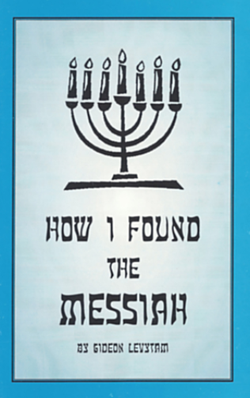
Follow Gideon Levytam's journey and discover how he was led by God, through a series of exciting circumstances, to find the One his people are still waiting for.
Past Episodes

Featured Offer
Follow Gideon Levytam's journey and discover how he was led by God, through a series of exciting circumstances, to find the One his people are still waiting for.
About Holy Scriptures and Israel
As time passed by, the Lord Yeshua took dear brother John Van Stormbroek to himself. The ministry of Holy Scriptures and Israel continued with additional development. In the early 1990’s, a weekly morning Bible class began which brother Gideon Levytam led regularly in the City of Toronto. This weekly open Bible class was held in the Willowdale assembly meeting hall. Eventually, a second mid-week evening Bible class was added. In April 2002, the need for an additional outreach Bible teaching meeting arose. We begun a Saturday (Shabbat) ministry meeting in which a systematic teaching of God’s word is presented to all who attend. Together we learn God’s Word, pray for each need and the salvation of Israel, and sing songs of worship unto our God, praising Him and our Lord Yeshua the Messiah.
In Mid 2004 we started to air on Joy 1250 Radio station a 15 minute Bible teaching program called "The Holy Scriptures and Israel" with Gideon Levytam. The broadcast teaches God’s word from a Hebrew Messianic perspective and has proved to be a blessing to many. It's now aired seven days a week. Our prayer is that many more of our Israeli people will have a clear understanding of who Yeshua is, why we all need him, and come to know him as their Lord and Messiah.
About Gideon Levytam
Contact Holy Scriptures and Israel with Gideon Levytam
426 Simcoe Street
Niagara-on-The-Lake
Ontario L0S 1J0
Canada
(905) 325-1234