
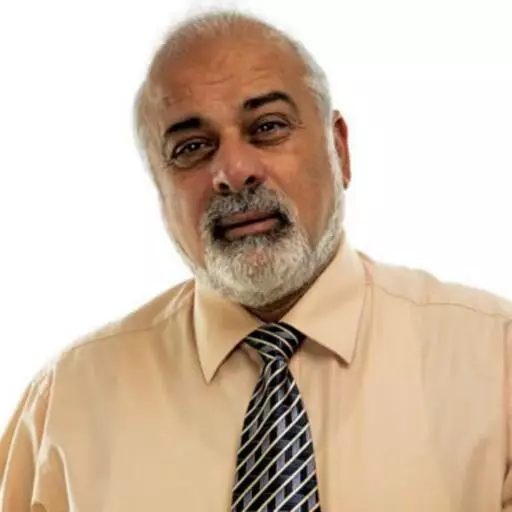
2 Timothy 4:1-8, Part 3 of 3


Watch thou (Timothy) in all things part 3
Unidentified Speaker: Shalom. Holy Scriptures and Israel is a ministry designed to share with the Jewish people the good news of the Lord Jesus Yeshua the Messiah, and to instruct Christians on the Jewish roots of their faith. And now, teaching God's word from a Hebrew messianic perspective, here is Gideon Levytam.
Gideon Levytam: The study of 2 Timothy chapter 4, that word for fables is the Hebrew word hagadot or hagada. It's tellings of all kind of stories. You know, in Israel's history, we have many, many hagadot, many, many stories that we can say over the years, and many of them are beautiful hagadot, beautiful stories. But there are also some stories that are not real and not biblical. It's the same thing in the time in which we live in. There are many today who turning away to fables, things that are not based upon the word of God. They turn away. The Greek word is mythos, M-Y-T-H-O-S. It's like a myth. It's nothing.
It's just in air. It's not real. Oh yeah, but they told me that story and they believe in that. You know, there is a story that been told that in somewhere, I think it is in Portugal, that Mary, Miriam, the mother of Jesus, they have an image there, I think, and she's crying there, and you can go in a certain time and you can see the image, the tears. It's a myth. People go there every time to find out, oh, Miriam is there, and she's crying, she's weeping, and see that image show the weeping, and so, wow, and it's part of a religion. It's a myth. It's not found in the Bible. She's rejoicing in glory.
She gave birth to Yeshua HaMashiach as a woman that had been privileged, but she's now in heaven. And she's not weeping, she's rejoicing in the presence of God. And all sort of stories have been told. There are myths that have been told all around, and see what people, according to Paul, who said to Timothy, they shall turn away their ears from the truth, but they shall turn unto fables. Now that expression, fable, is mentioned more than once in the letters that Paul wrote to Timothy. Turn to 1 Timothy, please, chapter 1 and verse 4. Paul said, neither give heed to fables and to endless genealogies which minister questions rather than godly edifying, which is in faith.
So do, Paul said to Timothy already in the first letter. Notice how it is so interesting. In chapter 4 of 1 Timothy and verse 7, Paul said, refuse profane and old wives' fables, hagadot, and exercise yourself rather unto godliness. Fables, set them aside. You, Timothy, make sure that you preach the word because there will be those that in those days, and the time will come when they will not anymore endure sound doctrine, but after their own lusts. They shall heap to themselves teachers having itching ears, and they shall turn away their ears from the truth and shall be turned unto fables. And how sad it is, brothers and sisters, and indeed this is the days in which we live in today as well.
There are many fables, many myths that are being told, all kind of things, many false teachings that are being taught today, and a person need to search the scriptures and be a student of the word of God, rightly dividing the word of truth and setting things aside that are not pleasing to the Lord. Now, I just want to read one more verse in the prophet Jeremiah. Look at that passage. Jeremiah is preaching to our people, Israel, and I want you to listen to what Jeremiah was telling to the people, to our own nation, Israel, in chapter 5 and verse 30 and 31. Look at this. It says, a wasteful and a horrible thing is committed in the land.
The prophets prophesy falsely, and the priests bear rule by their means, and my people love to have it so. You see, when Israel, our own nation, have departed from the ways of the Lord, the prophets prophesy false prophecy. The priests of Israel bear rule by their own means, not trusting the Lord, but in their own way. They invented the religion, you might say. And he says, notice God says, and my people, they love to have it this way. In other words, they love to continue to allow this, oh, it's great, you know. They had itching ears, want to be tickled as well because they love to do so, because they departed from sound teaching, from the word of the Lord.
It happened historically to our own nation, Israel, and it is happening in the present day dispensation of the church age, the body of Messiah, the very same thing. That's why we must be very careful when we blame Israel, because we look at within the professing church today, the depth of the fall of the professing church is far deeper than the depth of the fall that Israel, the nation, had fallen in Israel's days. And so now, brothers and sisters, let's continue on. Not only that Timothy is to preach the word, verses 1, 2, 3, and 4, now verses 5, 6, 7, and 8, Timothy is encouraged and charged to fulfill the ministry that God called him for.
And I'm reading verse 5, but you, Timothy, watch. Notice then, but watch thou in all things. Endure affliction, do the work of an evangelist, make full proof of your ministry. Timothy, okay, here's the contrast. They will continue in their own way. They will carry on as raising for themselves teachers having itching ears, but you, Timothy, you need to do something different. Don't follow this way. You be different. And you know, that's what God is calling all believers, to be different in the sense of you commit yourself to the word of God. You, as it says here in verse 5, watch in all things.
And if you are going to watch and be careful what you listen to, whom you listen to, what you be occupied with, just watch it. And the word for watch here is really come from that word of being sober. Be sober, watch, be alert, be sober. You be sober, you be alert, and notice those four things here: watch, endure, do, and fulfill. Those four words we find here in verse 5. Watch in all things, endure affliction, do the work of an evangelist, and fourthly, make full proof of thy ministry. Fulfill your ministry. And so Timothy, and you and I are called to be awakened and alert. And the question we have to ask ourselves, what do we listen to?
Whom do we listen to? And what do we kind of embrace as part of that which we understand from the Word of God? Sometimes we really need to be careful. I mean, even we are preaching on the radio, and it's a privilege to preach on the radio, but you have all kind of Bible teachers on the radio, all kind of views on the radio. There are some who believe that Israel don't have a future any longer. They teach it on the radio. Some have different views, you know, you have all kind of views. It is amazing to see radio, television, internet. You have all kind of views. So who are you going to listen to?
Well, Timothy, you better watch. Watch in all things because you have to be awakened to the fact that you might embrace things that are not sound. Secondly, so endure affliction, because the moment you are going to participate in the work of the Lord and participate in following Yeshua the Messiah, you will find that there will be some affliction involved in that. That means that people will not like what you say. Well, look at the Lord in his life. He says he suffered because he testified for God. Look at Shaul Paul, look at Peter, look at James, the early disciples. They have suffered, they have endured affliction in their life.
And last week we read 2 Corinthians 4, 2 Corinthians 6, 2 Corinthians 11. We see the affliction that Shaul Paul have experienced in his life. So he says, endure it. If there is a problem and you'll have to sometime endure affliction, endure it. Bear with it. Realize that this is part of the life of the believer. The Hebrew word to endure is lisbol, come from the word sevel. It's suffering. It has to do with the thought of suffering. Sometime, brothers and sisters, a believer is called to suffer, to suffer sometime. You know how many believers today, I often think of the former Soviet Union, the many who could not even open their Bible many years ago.
I'm talking about true believers who suffered because they are believers in Yeshua. They are Christian, they are Meshikhiyim. And there are suffering that going on in Muslim world today, where believers suffer because they name the name of Yeshua. And sometime you and I may need to experience some challenges as believers as well. We don't like it, we don't look for that, we don't want it, but it is part of the believer's experience. So endure affliction, Timothy. And then he said to him, notice the third thing he said, do the work of an evangelist. It's so precious. You know, the evangelist is not only standing and preaching, but to do the work of evangelist is involves so many areas.
There are so many ways whereby we can evangelize, let people know who Yeshua is and the need of salvation. And then finally, in that verse 5, make full proof or fulfill your ministry. God gave you a gift. God gave you the gift to serve him as a shepherd, as a pastor, spiritual leader, or gave you a gift to visit people, gave you a gift to help others. Fulfill your ministry, Timothy. Do your work. Carry on. Don't be discouraged, Timothy. Do so because it is only going to bless you, and the Lord will be honored by that. And so, brothers and sisters, after he said to him this in verse 5, in verse 6, 7, and 8, the Apostle Paul give Timothy 3 reasons why he's writing to him this letter.
But I want to highlight, just by way of concluding that thought that we have here, in those three verses, we have certain things that the apostle expresses to Timothy. Number one, the apostle Paul knew what is coming ahead of him. He knew very well what's going to happen to him. Number two, the Apostle Paul knew how he himself lived his life as a servant of the Lord Yeshua the Messiah. And number three, the Apostle Paul knew what he's going to receive once he left this world and he's going to be in glory with Yeshua. So let me just read those three things here. The first thing, he knew what was going to happen.
He knew that he's going to die. And so it says here in verse 6, for I am now ready to be offered, and the time of my departure is at hand. In other words, he said, I'm ready. I'm ready, he says, to be, and notice he used the word offered. What does it mean to be offered? You see, that expression, to be offered, it's like a libation. It's like a pouring of the wine upon the altar, which represent a libation. It's like a offering unto the Lord. And that thought here, to be offered, it's really represent before us the fact that he offered himself for the things of the Lord. He gave over his life for the Lord.
He knew he's going to die. He knew that Nero is going to kill him at any time. And by the way, from history, it had been told that they took Paul, they placed his head on a place where they have actually chopped his head and cut his head off. That was history teaches us. When the Romans, when the emperors have killed the Apostle Paul. He offered himself for the service of the Lord. All his life was characterized by serving the Lord Yeshua the Messiah, and he knew that it was going to happen. So he says, listen, I'm willing to do so. If that's what the Lord called me to do, I will accept it from the hand of the Lord.
I'm willing to be offered. Notice he used the same expression in Philippians chapter 2 and verse 17. Paul said, yeah, and if I be offered upon the sacrifice and service of your faith, I joy and rejoice with you all. He said this to the Philippians when he was in prison. He said to them, Philippian, listen, even if I will be offered upon the altar as a drink offering that you pour out. He says, I'm going to do so. I'm willing to do it on your behalf, he said to the Philippian. And then here we see it in our chapter here that Paul said, I am ready now to be offered. What a servant of the Lord. And then secondly, in that same verse 6, he said, and the time of my departure is at hand.
That word here, the departure, is ptirati in Hebrew. I'm going to die very shortly. I'm going to leave this scene, Timothy. So he knew. Can you imagine when you know you're just waiting in prison and you know any time the jailer gonna come, take me out of the dungeon and hand me over to another, and they will take me to a certain place where the Apostle Paul have lost his life by someone cutting his head and removing him out of this scene. What an awful thing to know that is going to happen to you at any time. So he's saying to Timothy, Timothy, I know I'm going to die. I know I'm going to leave this world, but Timothy, you watch, you endure, you do the work of an evangelist, you make full proof of your ministry.
I'm going to die, Timothy. I know what will happen to me at any time. Then, beloved brothers and sisters, in verse 7, Paul not only knew what is going to happen to him around him, he also knew how he lived his life. How he lived his life as a believer. That's why he said in verse 7, I have fought a good fight. I have finished my course. I have kept the faith. I have fought a good fight. You know, he had to fight not with his own strength, with the strength of the Lord who said, without me ye can do nothing. For him it was a fight. All his life he was devoted to his Messiah, to his Mashiach, to Yeshua.
He says, I have fought a good fight. Though three times, you notice the word I is mentioned three times in verse 7, but not in a selfish way, not in a prideful way, but it was in a humble way. He said, I have fought a good fight. I have finished my course, and I have kept the faith. You know, it's so precious when a person continue on. Yes, there are struggles. Yes, there's opposition. Yes, there's misunderstanding. Yes, there's discouragement. Yes, oh yes, it's always there. What we're gonna do? We're gonna blame everybody? Paul could have blamed some of the believers who, because of them, he was in prison.
But he never blamed others. He always, he said, this is what the Lord have allowed me to go through, and I'm accepting it from the hand of the Lord. But I know for sure, with the grace of God, with the help of Yeshua the Messiah, I fought a good fight. I have finished my course. This is the end for me. And then he said, I have kept the faith. Notice the word the faith. He doesn't say I kept faith, but I kept the faith. As Jude tells us, the faith which was once and for all had been delivered unto the saints. Jude in verse 3. The faith, the emunah, the doctrine that was given by God through Yeshua the Messiah, the teaching that God have taught in his word.
That's what he said, I have kept the faith. In other words, he fought a good fight, he finished his course, and he have kept the faith. When he passed away, he died through Yeshua the Messiah. He kept the faith all the way to the end. It's so precious to see people who are getting up in age and are just, you know, the Lord might take them at any time, and oftentimes you go to their bed when they are sick, and in fact, instead of you encouraging them, you leave the room by being encouraged by their faith and their faithfulness to the Lord. Paul says, I have kept the faith. So, brothers and sisters, he knew what was coming, that he's going to die, verse 6.
He knew how he lived his life as a believer in Yeshua the Messiah, as a servant of the Lord. He knew, oh yes, I'm sure he knew that there was a failure at a time in his life. That's why he says in Romans 7, the things I want to do, this I don't do, and the things that I do not want to do, this I do. O wretched man that I am, who shall deliver me out of this body of humiliation, he says in Romans chapter 7. And then he turned his face, his heart to the Lord. He said, I thank God through Yeshua the Messiah, my Lord. He only could succeed with the help of the Lord. So he knew what was coming, that he's gonna die.
He knew how he lived his life. And finally, in verse 8, listen to this, he also knew what he will receive from the Lord Yeshua the Messiah when he's going to be with him. Notice what he says in verse 8. This is interesting. Henceforth, because of this, there is laid up for me a crown of righteousness, which the Lord, the righteous judge, shall give me, notice that, at that day, and not to me only, but unto all them that love his appearance. You see, he knew what was going around, that he's ready to die. He knew how he lived his life as a believer over the years, but he also knew what is awaiting for him in heaven.
You know, in other passages, he said, I know whom I believed, and I am persuaded that he is able to keep that which I've committed unto him against that day. I know who I'm believing in, but he also said, I know what laid up for me in heaven, in glory, in the presence of the Messiah. And you notice what he said? Notice he says here, hence there is laid up for me a crown, a crown of righteousness which the Lord, the righteous judge, will give to me. When? That day, he says, and not only to me, to you and to you and to you and to you and everyone that loves his appearance. It is so precious because the Bible, the New Testament, the Brita Kadasha teaches us about crowns that the believers will receive.
Now, the word for crown is the Greek word stephanos here, and the Stephanos simply mean that crown that come, it's a victorious crown, a crown that a believer that will receive, this is what you call a victorious crown, Stephanos. And every believer that is faithful to the Lord, really that crown represent a reward in heaven. Now, we don't live for the Lord because of the reward, but the Lord promised a reward for faithful life here in this world. In fact, the Bible teaches us that there are five kind of crowns that the believers, the faithful believers, will receive. In 1 Corinthians chapter 9 and verse 25, Paul called it an incorruptible crown.
In 1 Thessalonians chapter 2 and verse 19, he calls it a crown of rejoicing. In 2 Timothy chapter 4 and verse 8, where we are now, he called it a crown of righteousness. In James chapter 1 and verse 12, he calls it the crown of life. And in 1 Peter chapter 5 and verse 4, he calls it the crown of glory. This is a crown. Crown of righteousness, crown of rejoicing, crown of life, crown of glory, incorruptible crown. They speak of a reward that the Lord will give to the believers for how did they live here upon the face of this earth. Now, it's not that Paul sought for crowns and rewards, but he knew that a faithful life here will be rewarded by the Lord.
He will say, well done, good and faithful servant. And he was waiting to hear his master's word. Now, beloved brothers and sisters, there must be understanding between the crown, the Stephanas crown that all believers who are faithful will receive with the Diadamus crown, which is the royal crown of which we read in Revelation chapter 19, verse 11 and 12, that Yeshua the Messiah will have upon his forehead. It's a Diadamus, it's a royal crown that he, as king of kings and lord of lords, will have upon his head. but you and I, who, if we have been faithful in our life to the Lord, the Lord will give us either the crown of righteousness or the crown of rejoicing or the crown of life or the crown of glory, which is incorruptible crown.
It will never vanish away, the reward. And if you read carefully Revelation chapter 4 and chapter 5, even those rewards, the crown that we're gonna get, we're gonna cast it at the feet of the Lord, and we're gonna say, it's not me. You are worthy. Lord, you are worthy. And so precious to think about these beloved brothers and sisters, the thought that the Apostle Paul encouraging Timothy in these two things here. Number one, preach the word, verses 1 to 4. Number two, Timothy, fulfill your ministry, verses 5 to 8. And brothers and sisters, I'm encouraging myself and encouraging you. Let's get encouraged by what Paul wrote to Timothy, and let's ask the Lord to help us as well.
So we will be the kind of a people that are being used by the Lord for his service, because I can tell you that life at best is very brief. It's like a falling of a leaf. Soon will the master come, and then we're going to look back and we will say, I should have served him more. I should have taught his word more. I should have been faithful more while I'm here now in this world. So may the Lord help us to do so.
Announcer: You have been listening to the Holy Scriptures and Israel with Gideon Levytam. Gideon teaches God's word from a Hebrew messianic perspective. For more information about this ministry, write to Holy Scriptures and Israel, Box 1411, Niagara-on-the-Lake, Ontario, L0S1J0, or visit our website at holyscripturesandisrael.com. You are also invited to Gideon's weekly Bible teaching on Fridays at 11:00 AM and 7:00 PM and Saturdays at 1:00 PM at Willowdale Christian Assembly Hall, 28 Martin Ross Avenue in Toronto. Holy Scriptures and Israel is made possible by your prayers and financial support. If you would like to support the program, visit holyscripturesandisrael.com.
God bless you. Shalom, shalom.
Featured Offer
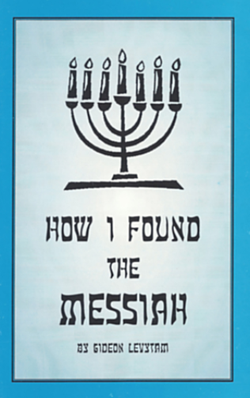
Follow Gideon Levytam's journey and discover how he was led by God, through a series of exciting circumstances, to find the One his people are still waiting for.
Past Episodes

Featured Offer
Follow Gideon Levytam's journey and discover how he was led by God, through a series of exciting circumstances, to find the One his people are still waiting for.
About Holy Scriptures and Israel
As time passed by, the Lord Yeshua took dear brother John Van Stormbroek to himself. The ministry of Holy Scriptures and Israel continued with additional development. In the early 1990’s, a weekly morning Bible class began which brother Gideon Levytam led regularly in the City of Toronto. This weekly open Bible class was held in the Willowdale assembly meeting hall. Eventually, a second mid-week evening Bible class was added. In April 2002, the need for an additional outreach Bible teaching meeting arose. We begun a Saturday (Shabbat) ministry meeting in which a systematic teaching of God’s word is presented to all who attend. Together we learn God’s Word, pray for each need and the salvation of Israel, and sing songs of worship unto our God, praising Him and our Lord Yeshua the Messiah.
In Mid 2004 we started to air on Joy 1250 Radio station a 15 minute Bible teaching program called "The Holy Scriptures and Israel" with Gideon Levytam. The broadcast teaches God’s word from a Hebrew Messianic perspective and has proved to be a blessing to many. It's now aired seven days a week. Our prayer is that many more of our Israeli people will have a clear understanding of who Yeshua is, why we all need him, and come to know him as their Lord and Messiah.
About Gideon Levytam
Contact Holy Scriptures and Israel with Gideon Levytam
426 Simcoe Street
Niagara-on-The-Lake
Ontario L0S 1J0
Canada
(905) 325-1234