

2 Timothy 4:1-8, Part 2 of 3


Watch thou (Timothy) in all things part 2
Unidentified Speaker: Shalom. Holy Scriptures and Israel is a ministry designed to share with the Jewish people the good news of the Lord Jesus Yeshua the Messiah, and to instruct Christians on the Jewish roots of their faith. And now, teaching God's word from a Hebrew messianic perspective, here is Gideon Levytam.
Gideon Levytam: The study of 2 Timothy chapter 4, and it become like a club, you see, and then you don't come to hear the word of God. Well, listen, what is the body of Yeshua the Messiah? The body of Christ, gufa mashiach, is where the Messiah is being centered and the object, and the word of God is being taught, and the people of God are being fed. But can you imagine you're going to go to so-called assembly meeting or church meeting or congregational meeting or keila and you don't hear the word? Ah, Timothy, Paul is saying to him, no, no, no, Timothy, you, Timothy, preach the word. Preach the word. Don't preach your opinion.
Don't preach what you think need to be preached. You preach the word, God's word, dvar Elohim, thus saith the Lord, ko amar Adonai. And so Timothy is being told by Paul to do so, and this is so interesting because he said to preach the word, and then he said to when to do so and how to do so. Notice he says here, be instant. I'm reading now verse 2b, be instant or be ready to do so. He said, in season, out of season, reprove, rebuke, exhort with all long suffering and doctrine. In other words, Timothy, listen, you don't only preach the word when you feel like, but be ready to do so. Be instant.
The Hebrew word here, hatmed. Do it continuously, in season, out of season, in season, out of season. In other words, there is never, never a time in which we should not allow the word of God be part of whatever we do. And whenever we speak, you know, it's not healthy for a believer to say, listen, I go to the church meeting on Sunday or on Shabbat on Saturday. I put my so-called jacket for this weekend. I take it off, and I don't talk about the Lord the whole week after. And then next week I come, and I'll be religious again, put my jacket of a religious person and all of a sudden talk a little bit about God, then take it off and carry on my life without him the other week, and then up again.
You see, Timothy was not called to do so. Paul was not teaching that. So listen, wherever you go, minister the word of God. Minister the word of God. Teach and preach the word of God. Notice be instant, in season, out of season, because there is never... Can you imagine? Brothers and sisters, people have so much pain in this world. People have so much misunderstanding about the things of God. Many people are not knowing that they are heading to eternal separation from God. People don't realize when they are getting themselves connected with things that are not biblical, that they're only entangling themselves with things which are not healthy.
Timothy, no, no, no, you preach the word in season, out of season. As it says, be instant, be ready always to share it. You don't need to be aggressive. You don't need to be obnoxious. You don't need to force it down the throat of other people. You do it gently, graciously, with wisdom and sensitivity, yes, but take the opportunity to preach the word, you know, because there is an effect when the word of God is being presented. You see, there's such a disorder in this world. The only one that we can find comfort here is in the person of Yeshua the Mashiach and through his word. Through his word we find comfort, we find encouragement.
Believers, unbelievers find salvation, find hope if they only listen to the word of God. For the word of God, the Bible tells us in Hebrews chapter 4 verse 12, is powerful. It is sharper than two-edged sword, and it is able to discern, and it is able to divide the soul and the spirit, and it's able to help us to distinguish certain things, to help us in our spiritual growth. You know how many times when you go to a person who is sick in the hospital, and you give him the word of God, and you read him just a couple of verses, and it comforts the heart when a person is sick. And what about when a person is needy and have all sort of problem, you come and you read for him a few verses from the word of God, and he give him or her an encouragement and lifting them up.
That's the word of God. You know, I want you to read with me. Go to Psalm 19 for a second. Look what David, the king of Israel, said about the word of God. And when we say about the word of God, it speak about the whole council of God from Genesis, Bereshit, to Revelation, to Chazon, all the scriptures. Look what Psalm 19, verse 7 says. The law of the Lord is perfect, converting the soul. The testimony of the Lord is sure, making wise the simple. The statutes of the Lord are right, rejoicing the heart. The commandment of the Lord is pure, enlightening the eyes. The fear of the Lord is clean, enduring forever.
The judgment of the Lord are true and righteous all together. Verse 10 tells us David, David, the king of Israel, said, more to be desired are they than gold, yea, than much fine gold. They are sweeter than honey and the honeycomb. You know, David used six different words to apply to the word of God. The word Torat Adonai, the law of the Lord. The word Edut Adonai, the testimony of the Lord. The word Pikudei Adonai, the statues of the Lord. The word Mitzvot Adonai, the commandments of the Lord. The word Yir'at Adonai, the fear of the Lord. And the word Mishpatei Adonai, the judgments of the Lord.
Moreover, to be desired are they than gold, yea, than much fine gold. They are sweeter also than honey and the honeycomb. And so Timothy is encouraged to preach the word and to be instant in season, out of season. And you see the word of God also, beloved brothers and sisters, is convicting us. Notice that in verse 2, he says, to reprove, to rebuke, to exhort with all long suffering and doctrine. See, that word for reprove, it means to convict. See, when we hear the Word of God, it convicts us. When we have gone in a wrong direction, it convicts us, it helps us to be restored. Secondly, that word rebuke, it warns us.
It gives us a warning. If you're going to go in that direction, look where it's going to lead you. And the word of the Lord help us to be warned in the direction that we go. And thirdly, he said it's exhort them. This is really to appeal to the heart and the conscience of the hearer. That's why a preacher of the word of God is not only to read the text, but also to use the text to correct and to warn and to appeal and to convict, because we all need that in our lives. Even us who are believers, we know how wayward we are, how quickly we go astray and we're getting discouraged and the things of the Lord are being set aside.
And imagine Timothy was a younger man. He's living in Ephesus right now. He's ministering in the city of Ephesus, and already there, there were rising issues and problems there. And so Timothy needed to minister to the people there and to be faithful to what the Lord have called him to be there. So he was to preach the word, and he was to do so instant, in readiness of mind, in season, out of season, to reprove, to rebuke, to exhort, but listen, at the end of verse 2, he said, with all long suffering and doctrine. Now, what's happening if you are going to preach the word, and if you are going to reprove, rebuke, and exhort, you need a lot of long suffering.
To serve the Lord is not only standing in a pulpit and telling him what the word of God said, and not to have long suffering and patience with the brothers and sisters in order to help them to mature and to develop. It's not merely an oratory, you know, I'm just a preacher. No, a preacher is also to seek to help others in their spiritual growth. It's not only telling people how bad they are or how wrong they are without to, first of all, apply it to yourself, and secondly, trying to help the body of Messiah to grow spiritually. Well, that's what Paul is telling Timothy, with long suffering, bearing with one another, long suffering.
It takes time, beloved brothers and sisters, for the flock to grow and to mature for the people of God. And notice at the end of verse 2, it said, and doctrine. You know, always you find the Apostle Paul emphasizing limud, doctrine. Doctrine. Why? Again, I mentioned it before, because he have already mentioned it earlier in the previous chapter, the importance of sound doctrine. Limud, or teaching that is based upon the word of God. You remember he said to Timothy in chapter 2 in verse 15, Study to show yourself approved unto God, a workman that needeth not to be ashamed, rightly dividing the word of truth, cutting it in a straight line.
Make sure that you give sound doctrine. That's what he's really saying here to Timothy in this passage. Very, very precious how the Apostle Paul is encouraging Timothy with the thought of sound doctrine. If you just go back for a moment to chapter 3 and notice what it says in verse 16. All scripture is given by the inspiration of God, and it is profitable for doctrine, for reproof, for correction, for instruction in righteousness, that the man of God or the woman of God may be mature, thoroughly furnished unto all good works. He spoke about doctrine many, many times, and he's adding this again here in this second verse.
So he continue now, verse 1, he reminded him that Yeshua is going to be the judge, and he's going to be judging all men, the living and the dead. In verse 2, he's telling, preach the word. Preach the word. Just simply present the word of God to others, as he mentioned it here in verse 2. But now notice what he does in verse 3 and 4. In verse 3 and 4, here's the reason for the preaching of the word. Here is the reason, Timothy. He says, for the time will come when they will not endure sound doctrine, but after their own lusts shall they heap to themselves teachers having itching ears, and they shall turn away their ears from the truth and shall be turned unto fables.
Timothy, here's the reason why you need to preach the word. Not only because the word of God is so precious and encouraging the believers, and it is a way of salvation. Faith cometh by hearing, and hearing by the word of God. But Timothy, I want to tell you what's going to happen. I know this because the Lord revealed this to me. Shaul Paul is saying this to Timothy. He said, for the time will come. For the time will come, Timothy, I want you to know that, when they will not endure sound doctrine. The they, beloved brothers and sisters, of verse 3 are the very same men that I mentioned in chapter 3 and verse 2, and a little bit later on in verse 8.
Let me read you chapter 3 and verse 2. For men shall be lovers of their own selves, covetous, boasters, proud, blasphemers, disobedient to parents, unthankful, unholy, without natural affection, truth breakers, false accusers, incontinent, fierce, despisers of those that are good, traitors, heady, high-minded, lovers of pleasure more than lovers of God, having a form of godliness but denying the power thereof. Now these are the they in chapter 4 and verse 3 are the very same professing believers, professing Christians, professing Meshichim, who are part of the great house, the professing assembly.
And can you imagine? He says, listen, I know what's going to happen, Timothy, because the times will surely come, I'm telling you this, Timothy, that they will no longer induce sound doctrine. And beloved brothers and sisters, Paul said this in about 66, 67 AD. We are now at about 2017. We are talking about over 1950 years or so. And can you imagine what's going on today? The professing church, Christendom, have so many views about the things of the word of God, the things of the Lord. And it is really a time in which we live in. This is what you call the last days in which we live in. The Messiah is going to come soon, and he is really telling to Timothy, and of course, what Timothy heard and received is passed along to us, and in a sense, you and I are part of this professing group that named the name of Yeshua the Messiah, Jesus the Messiah.
And we are part of this great house. And he says, but they will no longer endure sound doctrine. You know, it makes you wonder why? Well, because we have a sin nature. We have a sin nature, and the sin nature wants to have its own way. I know better than God. I'm going to tell you what the Bible say. I'm going to tell you the way to God. Some reject that Yeshua is divine. Other reject the triunity of the Godhead. Other reject the virgin birth of the Messiah. Others reject the doctrine that has clearly been taught in the Word of God, both by Old Testament saints, the Hebrew people, the people of Israel, and by the body of Messiah, by believers who gave us in the New Testament in the Word of God, rejecting the clear Word of God.
And he says, listen, they will not endure sound doctrine anymore. And you know, the word for sound means a true teaching of the Word of God. They will no longer endure. And you notice what he said in verse 3 again, he continues it, but after their own lusts, they shall, the same they, they will heap to themselves teachers because they have a tickling ears and they want somebody to scratch it. You see, isn't it nice if somebody gonna come to say to you and to me, says, you know what? You're a good guy. You're a great person. Everything you do is fine. God loves you, and therefore all you need is just accept the love of God.
You can carry on in your own way, never mind what God teaches us in his word. It's very nice. It's kind of, you know, like when you sometimes have a tickle in your ear, it's so nice when it's kind of somebody scratches or you scratch, oh, this tickling, you feel so much better. See, what Paul is saying, people will want teachers that will teach them things that will make them feel good. It's a feel good preaching, you see? Oh yes. You know, it is interesting that usually when we go to a funeral service, usually we always hear this person was such a kind man, and this lady, she was a precious, precious lady.
We always seems to do that, right? Because we don't want to say anything bad about the person, and that is appropriate. But you know, in reality, sometime when we really think about this person must have been a very difficult person, a very hard person, whether it is a male or a female, a boy, a girl, a man or a woman, you know, this person will be extremely difficult. This person have been very hard in his or her life, but when he or she passed away, we say, oh, what a lovely person that person have been. So, you know, we are like that, isn't it? That we like to hear things that are very pleasant to hear, but we don't like when sometimes the Lord had to tell us, listen, the direction that you go is not right.
You need to be corrected by that. And when we carry on in sin in our life, the sin which does so easily beset us, and the Lord had to tell us, this is wrong. We don't like to hear that, right? We like that the Lord will say, wow, you've done so many things that are very well. We don't like when there is a rebuke and correction. And sometime, beloved brothers and sisters, we see in Christendom, in a professing church, we have those that will rise up in those last days, and they will, after their own lust, they shall heap to themselves teachers because they have itching ear. The word in Hebrew is ledagdeg.
You know, it's like tickling. They have a tickled ear and they need somebody to scratch it for them so they will feel better. Now, we don't need to criticize people all day long. We don't need to cut people down. That is not ministry. Ministry is sharing the word, seeking to be in some small measure an example. We always seems to fail in that, we know that, but we are to teach the word, to preach the word, and to preach sound teaching, as we find here in this passage. In Hebrew, we call it limud bari, healthy teaching. Healthy teaching, teaching that are healthy, sound doctrine. He says in verse 3, they will not endure sound doctrine.
And in verse 4, they shall turn away their ears from the truth. The truth sometimes hurt, but the truth needed to be presented. So notice that in verse 4 now, not only that they will not endure sound doctrine, not only that after their own lust they shall heap to themselves teachers because they are having itching ears, but notice in verse 4, they shall turn away their ears from the truth, and they shall be turned unto fables. You know, turning away from the truth and going unto fables. And you see, you notice he used twice the word ears. Why? Because the avenue whereby we hear the word is through the ears.
Somebody said the other day, no wonder why God has given us two ears and only one mouth, so we will listen twice as much as we speak. But we sometimes reverse it, right? We speak twice as much as we hear. And so the word ears is mentioned twice here, having itching ears, verse 3, and verse 4, they shall turn away their ears from the truth. And oh, how sad. How many have over the years have thought that they can change the truth or that they can deviate from the truth that is written in the word of God? And they have gone in their own course, and they have ended up to see that the truth will never change.
You just 10 years, 20 years, 30 years later discovered that I should have listened to the truth that is found in the Word of God. I would have been far better had I listened to the truth. But you see, they turn away their ears from the truth, and notice what they turn into. It says they shall turn unto fables. That word for fables is the Hebrew word hagadot or hagada. It's tellings of all kind of stories. You know, in Israel's history, we have many, many hagadot, many, many stories that we can say over the years, and many of them are beautiful hagadot, beautiful stories. But there are also some stories that are not real and not biblical.
It's the same thing in the time in which we live in. There are many today who turning away to fables, things that are not based upon the word of God. They turn away. The Greek word is mythos, M-Y-T-H-O-S. It's like a myth. It's nothing. It's just in the air. It's not real. Oh yeah, but they told me that story and they believe in that. You know, there is a story that been told that in somewhere, I think it is in Portugal, that Mary, Miriam, the mother of Jesus, they have an image there, I think, and she's crying there and you can go in a certain time and you can see the image, the tears. It's a myth.
People go there every time to find out, oh, Miriam is there, and she's crying, she's weeping, and see that image show the weeping, and so, wow, and it's part of a religion. It's a myth. It's not found in the Bible. She's rejoicing in glory. She gave birth to Yeshua HaMashiach as a woman that had been privileged, but she's now in heaven. And she's not weeping, she's rejoicing in the presence of God. And all sort of stories have been told. There are myths that have been told all around, and see what people, according to Paul, who said to Timothy, they shall turn away their ears from the truth, but they shall turn unto fables.
Now that expression, fable, is mentioned more than once in the letters that Paul wrote to Timothy. Turn to 1 Timothy, please, chapter 1 and verse 4. Paul said, neither give heed to fables and to endless genealogies which minister questions rather than godly edifying, which is in faith. So do. Paul said to Timothy already in the first letter. Notice how it is so interesting. In chapter 4 of 1 Timothy and verse 7, Paul said, refuse profane and old wives' fables, hagadot, and exercise yourself rather unto godliness. Fables, set them aside. You, Timothy, make sure that you preach the word because there will be those that in those days, the time will come when they will not anymore endure sound doctrine, but after their own lusts.
They shall heap to themselves teachers having itching ears, and they shall turn away their ears from the truth and shall be turned unto fables. And how sad it is, brothers and sisters, and indeed this is the days in which we live in today as well. There are many fables, many myths that are being told, all kind of things, many false teachings that are being taught today, and a person need to search the scriptures and be a student of the Word of God, rightly dividing the word of truth, and setting things aside that are not pleasing to the Lord. Now, I just want to read one more verse in the prophet Jeremiah.
Look at that passage. Jeremiah is preaching to our people, Israel, and I want you to listen to what Jeremiah was telling to the people, to our own nation, Israel, in chapter 5 and verse 30 and 31. Look at this. It says, a wasteful and a horrible thing is committed in the land.
Announcer: You have been listening to the Holy Scriptures and Israel with Gideon Levytam. Gideon teaches God's word from a Hebrew messianic perspective. For more information about this ministry, write to Holy Scriptures and Israel, Box 1411, Niagara-on-the-Lake, Ontario, L0S1J0, or visit our website at holyscripturesandisrael.com. You are also invited to Gideon's weekly Bible teaching on Fridays at 11:00 AM and 7:00 PM and Saturdays at 1:00 PM at Willowdale Christian Assembly Hall, 28 Martin Ross Avenue in Toronto. Holy Scriptures and Israel is made possible by your prayers and financial support. If you would like to support the program, visit holyscripturesandisrael.com.
God bless you. Shalom, shalom.
Featured Offer
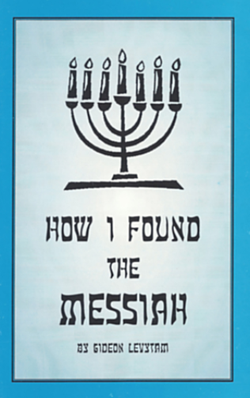
Follow Gideon Levytam's journey and discover how he was led by God, through a series of exciting circumstances, to find the One his people are still waiting for.
Past Episodes

Featured Offer
Follow Gideon Levytam's journey and discover how he was led by God, through a series of exciting circumstances, to find the One his people are still waiting for.
About Holy Scriptures and Israel
As time passed by, the Lord Yeshua took dear brother John Van Stormbroek to himself. The ministry of Holy Scriptures and Israel continued with additional development. In the early 1990’s, a weekly morning Bible class began which brother Gideon Levytam led regularly in the City of Toronto. This weekly open Bible class was held in the Willowdale assembly meeting hall. Eventually, a second mid-week evening Bible class was added. In April 2002, the need for an additional outreach Bible teaching meeting arose. We begun a Saturday (Shabbat) ministry meeting in which a systematic teaching of God’s word is presented to all who attend. Together we learn God’s Word, pray for each need and the salvation of Israel, and sing songs of worship unto our God, praising Him and our Lord Yeshua the Messiah.
In Mid 2004 we started to air on Joy 1250 Radio station a 15 minute Bible teaching program called "The Holy Scriptures and Israel" with Gideon Levytam. The broadcast teaches God’s word from a Hebrew Messianic perspective and has proved to be a blessing to many. It's now aired seven days a week. Our prayer is that many more of our Israeli people will have a clear understanding of who Yeshua is, why we all need him, and come to know him as their Lord and Messiah.
About Gideon Levytam
Contact Holy Scriptures and Israel with Gideon Levytam
426 Simcoe Street
Niagara-on-The-Lake
Ontario L0S 1J0
Canada
(905) 325-1234