
2 Timothy 2:19-26, Part 1 of 3


The foundation of God standeth sure part 1
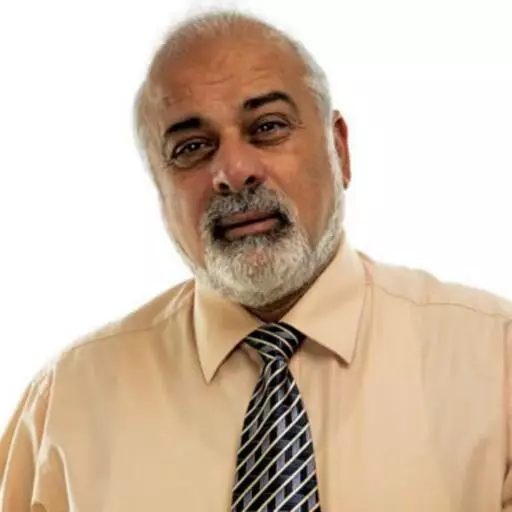
Unidentified Speaker: Shalom. Holy Scriptures and Israel is a ministry designed to share with the Jewish people the good news of the Lord Jesus Yeshua the Messiah, and to instruct Christians on the Jewish roots of their faith. And now, teaching God's word from a Hebrew messianic perspective, here is Gideon Levytam.
Gideon Levytam: Shalom everyone. We are going to study today the second epistle of Timothy, and of course it is the third message on the second chapter. So, 2 Timothy chapter 2, verse 19 to 26, and the subject is the walk of the men of God. So I'm reading from verse 19. Nevertheless, the foundation of God standeth sure. Having these sealed, the Lord knoweth them that are his. And let everyone that nameth the name of Christ depart from iniquity. But in a great house there are not only vessels of gold and of silver, but also of wood and of earth, and some to honor and some to dishonor. If a man therefore purge himself from these, he shall be a vessel unto honor, sanctified and meet for the master's use, and prepared unto every good work.
Flee also youthful lusts, but follow righteousness, faith, charity, peace, with them that call on the Lord out of a pure heart. But foolish and unlearned questions avoid, knowing that they do gender strifes. And the servant of the Lord must not strive, but be gentle unto all men, apt to teach, patient, in meekness instructing those that oppose themselves, if God preadventure will give them repentance to the acknowledging of the truth, and that they may recover themselves out of the snare of the devil, who are taken captive by him at his will. Well, beloved brothers and sisters, here we know very well that as Paul Shaul writes to Timothy this second letter about 67 or so AD to encourage him to continue on to follow Yeshua the Messiah.
Specifically in this second chapter, Paul is really emphasizing the importance of the walk of the man of God. And we know it at the end of this letter that he said to him in chapter 4 and verse 6, for I'm now ready to be offered and the time of my departure is at hand. He knew he was going to die. He knew he was going to leave this scene and to go to heaven to be with Yeshua the Messiah. He knew that the Roman emperor will be now executing him because of his faith in Yeshua the Messiah. So, as a faithful servant, as the apostle of our Lord Yeshua the Messiah, who wanted the assembly, the ekklesia to continue to be built, he's writing to Timothy, a younger believer, who have already served with him, and he was now at Ephesus to encourage him to continue on.
So, you remember that we said already that he had mentioned in this second chapter seven experiences of life that all believers experience in some form or shape or illustrations that shows us the importance of continuing on, pushing forward, following Yeshua the Messiah, because there will be all sort of challenges that we will experience. when we walk with the Lord here in this world. So he said to Timothy in chapter 2, verse 1, you are my son. In verse 3, you are a good soldier. In verse 5, as a faithful athlete. In verse 6, he says, as a farmer. And in verse 15, as a workman that needeth not to be ashamed, rightly dividing the word of truth.
And now from verse 19 to verse 26, he continue with additional two experiences of life of the believer. Timothy is to be like a vessel that is sanctified and suitable and useful for the master's use, is verse 21. And then finally, in verse 24 of this chapter, he is to be as a servant of the Lord that is gentle, up to teach, patient, and in meekness instructing others. And so we are going to deal with those two additional experiences of the life of the believer. So he continued to encourage Timothy to realize the need of being a useful vessel. In Hebrew, we call it kli. A vessel needs to be used for something.
You know, if we live in a house, we have all sort of vessels in our homes, dishes in the kitchen, chairs and sofas in our living room, beds in our bedroom. So we have all sort of vessels that we are using in order to function. Well, here in verses 19 to 22, Paul encourages Timothy with the need to be a very useful vessel. It's terrible if one is not used by the Lord. It's rather sad when one become believer in Yeshua, he accept the Messiah, he became a child of God, he received forgiveness of sins, but he or she are not useful vessels for the Lord. He want to use us, just like he used Shaul Paul to be the apostle of the uncircumcision, just like he used Shimon Petros as the apostle to the circumcision, to the Jewish people, And just like Timothy is being used to be a servant among the Ephesians and elsewhere.
And now Paul continued to encourage him to be a vessel that is useful. So in verse 19a, he's just reminding him, notice that he said, nevertheless, the foundation of God standeth sure, having this seal. You know, the foundation of God standing still, even though people like Hymenaeus and Philetus, who erred concerning the truth, saying that the resurrection have passed already. Timothy, Paul is saying, realize that the foundation of God standing sure. God's word never gonna change. Heaven and earth will pass away, but the word of God remains the same. The foundation is very important to understand, beloved brothers and sisters, because God's word never going to change.
Yeshua the Messiah is the one that is the chief cornerstone, and the foundation will stand because it standed sure. In Ephesians chapter 2 and verse 19, Paul said to the brothers and sisters in the local assembly of Ephesus, Now therefore ye are no more strangers and foreigners, but fellow citizens with the saints and of the household of God, and ye are built upon the foundation of the apostles and the prophets, Jesus Christ, Yeshua HaMashiach, himself being the chief corner stone, even ha-pina in Hebrew. He is the chief corner stone. He is the foundation that is built upon. He is the one. God's foundation is standing sure.
And so it is to encourage Timothy, not to sway, not to be discouraged when there's opposition or false teaching. He should stand true for the word of God and that he should instruct others. You know, in chapter 12 of the book of Hebrews, and in the last verses there, the apostle encouraged the Hebrew believers also to realize that the things of the Lord remain the same and they do not change. This is very important. In Hebrews chapter 12 and verse 28, we read, wherefore we receiving a kingdom which cannot be moved. Let us have grace whereby we may serve God acceptably with reverence and godly fear.
We received a kingdom which cannot be moved. So Paul said to Timothy, nevertheless, verse 19a, the foundation of God standeth sure. And then he continues, says, having this seal, you know, the word for seal, chotemet or chotam in Hebrew, it's like a stamp, it's an assurance that God said it and it's settled because he said it. This seal, this assurance that we have is clear, and therefore, Timothy to realize that it is a sure thing, as the Lord Jesus the Messiah tells us in his word. And so we find out now that he continue in verse 19b, and he says, okay, here is God's sovereignty. God had provided a sure foundation in the person of the Messiah.
He is the chief cornerstone. You remember what Yeshua said in Matthew chapter 16 to Shimon Petros? He says, you are, thou art Peter, and upon this rock I will build my ekklesia, my assembly, my church, my called out ones, and the gates of Hades shall not prevail against it. And what was that Petros or that rock? It was Shimon Petros' confession that Yeshua is the Messiah, the Son of the living God. And so upon this confession that Yeshua is the Messiah, the Son of the living God, God is building the ekklesia, the assembly today. So, nevertheless, the foundation of God standeth sure, having this seal, the Lord knoweth them that are his.
God knows those that belong to him. We live now in the last days of the church age, of the ekklesia. It is all sort of views and many who name the name of the Lord Jesus the Messiah. Well, he knows his own. You remember what he said in John chapter 10? My sheep hear my voice and I know them. I know them and I'll give unto them eternal life and they shall never perish. But what happened here, that Timothy is being exposed to various challenges, various views, and he need to face it. Well, Paul is encouraging to be assured that the foundation of God standeth sure and that God have sealed it. It's a sure thing, and the Lord knows them that are his.
So God's sovereignty is presented in verse 19a. God knows every true believer in Yeshua the Messiah because he knows whether you have accepted him or not. No one will sneak in. No one will be able to trick God. Every one of us have to confess that we have sinned and that God has sent the Lord Jesus the Messiah to save us from our sins. He came, he lived, he died on the tree, he was buried, and he rose again on the third day, and he is ascended and exalted, seated at God's right hand. God knows those that belong to him. But now here is the human responsibility we have here in verse 19b. Let everyone that named the name of Christ depart from iniquity.
You see, verse 19b really is taking from the book of Numbers. Paul, as a Jewish man, read the Tanakh, the Old Testament, and he knew what happened in Israel's history, and he's taking various illustrations and things that happened in the life of Israel, our people, and he applied this to believers today. You remember Korach in chapter 16 was the son of Izhar, and he with other 250 princes assembled, and they came against Moshe and against Aharon, Moses and Aaron, and they said, ye take too much upon you, seeing all the congregation are holy, every one of them. In other words, they were blaming Moshe and Aaron as if they have taken too much upon them, and they said, you lift up yourself above the congregation of the Lord.
So Moses, you know, as a man of God, he said, and it's important in verse 5, Moshe spek unto Korach, and he said unto his company, saying, even tomorrow the Lord will show who are his. He said, he knows even him whom he has chosen. The Lord knows who belong to him, whom he have chosen, whom have accepted him. This is his sovereignty. He chose Moses, he chose Aaron, just the same like he chose us as believers in Yeshua the Messiah, as we read in Ephesians chapter 1, we have been chosen in the Messiah before the foundation of the world. So the Lord knows them that are his. But now we see a little bit later on in Numbers chapter 16 that we find out that Moses is really saying in verse 26, he spoke unto the congregation, he said, depart, I pray you, from the tents of these wicked men and touch nothing of theirs, lest ye be consumed in all their sins.
In other words, Moses says, okay, here God chose whom he have chosen. Now there is the responsibility of those whom he have chosen to depart from iniquity. And this is a thought, beloved brothers and sisters, that we have here in verse 19. Everyone that named the name of the Mashiach, of Christ, of the Messiah, let him depart from iniquity. Now, this is where we oftentimes fail. If the Lord is going to use us, if the Lord is going to be pleased with us, there is a need of separation from iniquity and separation unto our Lord, Yeshua the Messiah. The writer of the Hebrews says, lay aside the sin which does so easily beset us.
Satan is attacking God's people. The world is influencing God's people, and our flesh is so sinful, and we need the Lord to help us to judge ourselves and depart from iniquity. And so now in verse 20, the Apostle Paul gives an illustration of the state of the church or Christendom, we might call it. All those who profess the name of the Lord, Yeshua the Messiah. Notice, I'm reading verse 20. But in a great house, there are not only vessels of gold and of silver, but also of wood and of earth, and some to honor and some to dishonor. Now, it is so interesting, beloved brothers and sisters, notice that he used the word, but in a great house.
That great house is really the professing church, the professing assembly. In other words, it's all those that you might say come under the umbrella of naming the name of the Lord Jesus, the Lord Yeshua, the Messiah. If you turn back with me to 1 Timothy chapter 3, we learn what is that house. According to 1 Timothy 3:15, Paul said to Timothy in the previous letter, but if I tarry long that thou mayest know how thou oughtest to behave in the house of God. He said, Timothy, I wanted to know how you should behave in the house of God. Well, immediately, you and I might think, oh, he's speaking about a building that is called the house of God.
But notice, beloved brothers and sisters, he doesn't speak about a building with cement and wood and blocks. He's speaking about the called out ones, the people of God. And so he said in 1 Timothy 3:15b, what is the house of God? Which is, number one, the church of the living God. That means the assembly, the called out one, Jew and Gentile, who are called out. They are called out from among Israel, they are called out from among the Gentile world, and they are united together into one body, the ekklesia. Secondly, it is the pillar and the ground of the truth. It is where the truth can be received and taught, the truth of the word of God.
The called out ones, Jewish believers, Gentile believers together, united in the person of the Messiah Yeshua, making out the ekklesia. And there, those who have accepted the Messiah can learn the truth of the word of God, and this is the pillar and the ground of the truth. So by the time 2 Timothy is written by the Apostle Paul to Timothy, Now this house of God become a great house. Why? Because as time goes on, there are many, many who profess the name of the Lord who are really haven't accepted Yeshua as their Messiah, Lord and Savior. Maybe their family is believers, maybe their mom, their dad, but they themselves haven't made a profession of faith, and therefore it become a great house.
You remember like we have in the parable of the tares found in Matthew chapter 13, where Jesus, Yeshua, taught those parables in the Galil, in our land of Israel. The sower was he himself. He's the one who sowed the seeds in the ground, but then an evil one came and he also sowed tares. So what happened, the wheat and the tares, they grew together, and eventually they got mixed up, and in a sense, you almost could no longer recognize in a clear way what is the wheat and what is the tares. We find out that the disciples wanted to know what to do with it, and the Lord taught them that wonderful lesson.
He said to them there at the end of this passage, he says, listen, when the Son of Man shall send forth his angels, and they shall gather out of his kingdom all things that offend and them which do iniquity, and he shall cast them into a furnace of fire, there shall be wailing and gnashing of teeth. In other words, he said, listen, don't worry. When you come to the field, you have the good seed and you have the tares, leave them to grow together. But when the Son of Man gonna come in his second coming, he's going to take the good seed and bring it to himself and take the tares and cast it into the lake of fire.
So here we find out in the great house, they are all kind. some true believers and some false. And even within the true believers, you have some who are vessels of honor and some who are not vessels of honor. We can distinguish this in two ways. Believers and unbelievers are part of Christendom, but even within the true believers, there are some vessels that are clean and vessels that are honoring to the Lord, and there are vessels that are not honoring to the Lord. And so what he's telling to Timothy, there are all sort of vessels. Some of them are vessels of honor. They honor the Lord. They please Yeshua the Messiah.
They seek to live for him. They seek to serve him, seek to be a useful vessels. But there are those that do not seek to do so. They are not responding to the Lord. So that's why he says in verse 21, if a man therefore purge himself from these. What are these these? The these here of verse 21 is the vessels of dishonor. If we can look at that, they are gold and silver has value, and you have the wood and earth that is not as valuable. In other words, a man ought to, as it says in verse 21, purge himself, cleanse himself from these, he shall be a vessel unto honor, sanctified and meet or useful for the master's use and prepared unto every good work.
And you see, the Lord want his people to be useful vessels. You know, at time, unfortunately, if we are not careful and we know how the enemy works full time to hinder us from our spiritual growth and to hinder us from being useful to the Lord. At time, unfortunately, the Lord cannot use us when we do not have that separation. And separation does not mean isolation. It does not mean to be sectarian. It doesn't mean to think one superior than other. You know, sometimes we have the expression holier than thou. That is not the thought. The Lord want to use his people as vessels that are suitable.
The word here, meet for the master's use. In other words, is useful for the master's use. And if we are going to be useful for the Lord, we must ask him to help us to purge ourselves, to cleanse ourselves, and to honor him by doing so. It remind me when the disciples were with Yeshua in Yerushalayim, in a homeland in Israel, some 2,000 years ago, sitting at the Passover that Yeshua was sitting with them just before he went to the cross. You remember that? How He began to wash the disciples' feet. John chapter 13. And He was going from one to another, and when He arrived to Peter, Peter said to Him, Lord, you will never wash my feet.
And Peter needed to learn something that you and I need to learn in our life. What does that mean? Why is it so necessary to wash the disciples' feet? Well, Yeshua said to Peter, "What I do now you do not know, but you shall know it hereafter." To know after, what does that mean? We find very quickly that we get defiled. The feet represent our walk here in this world. We get dirty. Our thoughts, what we see, what we say, how we behave, what we listen to. We get defiled, beloved brothers and sisters, through the television, through the internet, through the newspaper, through the radio. In various ways, we get defiled.
Satan attacks us. The world tempts us. The lust of the flesh rises up from within us. Well, we need to be cleansed. Not anymore the one-time cleansing that we receive when we have accepted Yeshua as our Messiah, Lord and Savior. That is done. This is once and for all brought us to become children of the Father, בני אלוהים. But now we need on an ongoing basis, day by day, to be purged, to be cleansed. That's why Yeshua said in John 13, verse 8 to Shimon Petos, "If I wash thee not, thou hast no part with me."
Announcer: You have been listening to the Holy Scriptures and Israel with Gideon Levytam. Gideon teaches God's word from a Hebrew messianic perspective. For more information about this ministry, write to Holy Scriptures and Israel, Box 1411, Niagara-on-the-Lake, Ontario, L0S1J0, or visit our website at holyscripturesandisrael.com. You are also invited to Gideon's weekly Bible teaching on Fridays at 11:00 AM and 7:00 PM and Saturdays at 1:00 PM at Willowdale Christian Assembly Hall, 28 Martin Ross Avenue in Toronto. Holy Scriptures and Israel is made possible by your prayers and financial support. If you would like to support the program, visit holyscripturesandisrael.com.
God bless you. Shalom, shalom.
Featured Offer
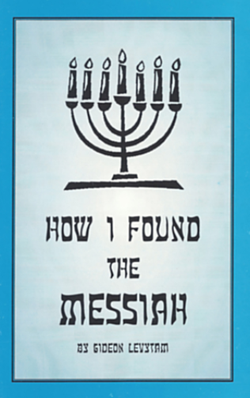
Follow Gideon Levytam's journey and discover how he was led by God, through a series of exciting circumstances, to find the One his people are still waiting for.
Past Episodes

Featured Offer
Follow Gideon Levytam's journey and discover how he was led by God, through a series of exciting circumstances, to find the One his people are still waiting for.
About Holy Scriptures and Israel
As time passed by, the Lord Yeshua took dear brother John Van Stormbroek to himself. The ministry of Holy Scriptures and Israel continued with additional development. In the early 1990’s, a weekly morning Bible class began which brother Gideon Levytam led regularly in the City of Toronto. This weekly open Bible class was held in the Willowdale assembly meeting hall. Eventually, a second mid-week evening Bible class was added. In April 2002, the need for an additional outreach Bible teaching meeting arose. We begun a Saturday (Shabbat) ministry meeting in which a systematic teaching of God’s word is presented to all who attend. Together we learn God’s Word, pray for each need and the salvation of Israel, and sing songs of worship unto our God, praising Him and our Lord Yeshua the Messiah.
In Mid 2004 we started to air on Joy 1250 Radio station a 15 minute Bible teaching program called "The Holy Scriptures and Israel" with Gideon Levytam. The broadcast teaches God’s word from a Hebrew Messianic perspective and has proved to be a blessing to many. It's now aired seven days a week. Our prayer is that many more of our Israeli people will have a clear understanding of who Yeshua is, why we all need him, and come to know him as their Lord and Messiah.
About Gideon Levytam
Contact Holy Scriptures and Israel with Gideon Levytam
426 Simcoe Street
Niagara-on-The-Lake
Ontario L0S 1J0
Canada
(905) 325-1234