

2 John 1:1-13, Part 1


The Importance of Truth Part 1
Guest (Female): Shalom. Holy Scriptures and Israel is a ministry designed to share with the Jewish people the good news of the Lord Jesus, Yeshua the Messiah, and to instruct Christians on the Jewish roots of their faith. And now, teaching God's word from a Hebrew Messianic perspective, here is Gideon Levytam.
Gideon Levytam: Shabbat Shalom. Today we are going to look into the second epistle that Yohanan, John, wrote. I would like you to turn to Second John. The second letter that Yohanan wrote is rather a short letter, and it is very much linked with the very same theme that he had in his first letter. So we're reading today the Second Epistle of John, and let's see what the Lord has for us in those 13 verses of Second John.
Verse one: The elder unto the elect lady and her children, whom I love in the truth; and not I only, but also all they that have known the truth; for the truth's sake, which dwelleth in us, and shall be with us forever. Grace be with you, mercy, and peace, from God the Father, and from the Lord Jesus Christ, Yeshua the Messiah, the Son of the Father, in truth and love.
I rejoiced greatly that I found of thy children walking in truth, as we have received a commandment from the Father. And now I beseech thee, lady, not as though I wrote a new commandment unto thee, but that which we had from the beginning, that we love one another. And this is love, that we walk after his commandments. This is the commandment, that, as ye have heard from the beginning, ye should walk in it.
For many deceivers are entered into the world, who confess not that Jesus Christ is come in the flesh. This is a deceiver and an antichrist. Look to yourselves, that we lose not those things which we have wrought, but that we receive a full reward. Whosoever transgresseth, and abideth not in the doctrine of Christ, hath not God. He that abideth in the doctrine of Christ, he hath both the Father and the Son.
If there come any unto you, and bring not this doctrine, receive him not into your house, neither bid him God speed: for he that biddeth him God speed is partaker of his evil deeds. Having many things to write unto you, I would not write with paper and ink: but I trust to come unto you, and speak face to face, that our joy may be full. The children of thy elect sister greet thee. Amen.
This is the reading of the second letter of the Epistle of Yohanan that he wrote. I would like to suggest, beloved brothers and sisters, in light of the first verse, that this letter that he wrote, he wrote to, as it says here, to an elect lady and her children. Many Bible teachers who look at this letter that was written by Yohanan have two ways in which they look at this letter, this short epistle.
Some suggest that it was written to a single woman who was living in her home and had children. Perhaps we don't hear of her husband at all; we just hear of the elect lady and her children in an ordinary home. He specifically wrote to her because of the danger that existed in those days that false teachers were walking around already at that time, seeking to influence believers to follow after their false teachings.
Others take this epistle and apply it to a local assembly, a local church, in which the believers in this body of the Messiah are really looked upon as a sister, as a woman who have children, who have believers in her midst of this local assembly. Yohanan is writing to a collective assembly in a certain locality and encouraging them to follow the truth of the word of God.
So whichever way we will take it, it's applied in any rate to a single individual who lived in the home life or to a local church, a local assembly, a local congregation. We definitely can take it and apply this in our days to a local assembly as well as into a family in their home. In fact, what we really learn is that it is our family actually making a congregation, an assembly.
And when we have the truth of the word of God in our homes, we will also bring it to the local assembly, to the local church, and will enjoy it together among the people of God. But now, beloved brothers and sisters, just remember that Yohanan, this fisherman who had accepted Yeshua the Messiah from the Galilee from the north of Israel, the reason that he wrote this letter is to give warnings to the people of God.
At that time in which Yohanan was writing, there was false teaching already risen and specifically in connection with the humanity of Yeshua from Nazaret. Many already in those days had rejected the humanity of the Messiah. They have rejected the fact that he was a real man—spirit, soul, and body. And by rejecting his humanity, they were really saying that Jesus, Yeshua, was merely a phantom, was not a real man.
Some believe that when he walked on the sand, he walked about an inch or so above the sand, that you didn't see the footsteps of Yeshua the Messiah. In fact, some believe if they touched him, their hand went through. In other words, he was really only a spirit, but not a spirit, soul, and body—a real human being. And Yohanan is writing this and giving warning to believers to the local assembly or to individuals in their home to be careful.
Itinerant preachers were already at that time going from place to place, claiming to be servants of the Lord, but they were teaching false doctrine. Now, to remind you that in the early days of the assembly, of the church, they didn't have a building such as this. They didn't have this huge building where many people gathered together and called this building the church. What they did in those days, they were meeting in homes.
Somebody in a home was hosting the believers, and they were gathering together to meet around the Lord Yeshua the Messiah, to enjoy fellowship with each other. But the so-called church building was not in existence because they were meeting in homes. Let me just show you for a moment, in Romans chapter 16 and verse five, Paul wrote to the believers, "Likewise, greet the church that is in their house." The assembly, the believers, were meeting in the houses.
Paul also writes in First Corinthians chapter 16 and verse 19, "The churches of Asia salute you. Aquila and Priscilla salute you much in the Lord, with the church that is in their house." What does he mean? With the assembly, the believers meet together in the house of Aquila and Priscilla. You see, if you and I would have lived 2,000 years ago, we would meet in some people's home.
In fact, today there are many believers who are no longer going to those big buildings with stained glass windows and huge crosses on top. They simply gather together in someone's home because they want to be gathered unto the name of Yeshua the Messiah with a sound teaching, with the word of God being simply open and understood with the help of Ruach HaKodesh, the Holy Spirit of God.
So in those days, some 2,000 years ago, Yohanan was seeking to influence the believers to be encouraged to continue in the truth which they have already learned because false teachers were already roaming around, going from home to home and teaching false doctrine. Now, notice in this letter how many times the word truth is mentioned. For example, in verse one, it says, "Whom I love in the truth."
In verse one-B, it says, "That have known the truth." In verse two-A, "For the truth's sake." In verse three, it says, "The Lord Yeshua the Messiah, the Son of the Father, in truth and love." In verse four, "Walking in truth." And he continue on again and again, and he's emphasizing the importance of truth in this whole second epistle that he's writing now today to this elect lady.
So I want to say, in the dividing of this letter, there are three major points that Yohanan is communicating with this letter. The first one is in verses one to three, and there Yohanan is emphasizing that God's people need to know God's truth. Why do we meet together every week? We study the Bible in the morning on Friday. We study the Bible in the evening of Friday. We study the Bible on Saturday, that is Shabbat, in the afternoon regularly.
We meet together. We open the Bible. We don't come here for any other reason than to study the word and to have fellowship with believers because we want to learn what is the truth of the word of God, what God is telling us from his word. So God's people need to know the truth. You know, brothers and sisters, there is so much fallacy today in the world. Everyone has his ways to God. Many religious groups are in this world.
Everyone has his or her way, and everybody seems to know and to say that their way is the right thing. What we need to do is to open God's word and to find out the truth that is found in the word of God. And so Yohanan is saying all the people of God need to know the truth. This is verses one to three. Secondly, in verses four, five, and six, God's people need to walk in the truth.
You know, at time, to our shame, we don't live up to what we know in our head. Had we put down what we know in our heads into our hearts and ultimately down to our feet, we will also be able, by the grace of God of course, to walk in the light of the truth that we know. Thirdly, from verse seven to the end, God's people need also to abide, to stay, to remain in the truth which they have already learned.
And so he writes this letter, emphasizing the theme of this letter—the truth of God. So the importance of this truth is found here in this letter. You remember what Yeshua said in John chapter 8 and verse 32? "And ye shall know the truth, eta emet, and the truth shall set you free." It's better to take the truth of the word of God than what any human being is telling unto us because the truth of the word of God will remain; it's standing firm, never changes.
So please let's go over those verses together. The first thing that we want to talk about is that God's people need to know the truth. Yohanan's message is really being sent to a lady. That says here, "The elder unto the elect lady and her children, whom I love in the truth; and not I only, but also all they that have known the truth." So he is apparently writing to a woman who have accepted Yeshua the Messiah.
Perhaps her husband haven't accepted the Messiah because apparently we don't find her husband mentioned, but it is a lady and her children. How many of us, beloved brothers and sisters, can say honestly that not every member of our family is a believer? We wish for that. But you know, when Yeshua was here on earth, he already said that the word of God will separate even families. Why?
Not because he doesn't want all the family will be saved, but what happen is when we take side with Yeshua the Messiah, immediately what happen, it become like a sword between us and our own family who reject Yeshua the Messiah. Here's a lady and her children who came to faith in Christ, in the Mashiah, in the Messiah. Perhaps she was a widow. Perhaps her husband was not a believer. But she have accepted Yeshua the Messiah.
And according to here, he call her an elect lady. She was elected. Every one of us have been chosen in the Messiah (Ephesians chapter 1) before the foundation of the world. If Yohanan is speaking to the local church, local assembly, every believer in that assembly have been elected in the Messiah before the foundation of the world. If he's speaking to a single individual in a home and her children because they believe in Yeshua the Messiah, they were elected.
They were chosen in the Mashiah, in the Messiah, long before the foundation of the world. He's not only writing to her, but he's writing to her children. Apparently, her children also have accepted the Messiah. Now, notice who is writing. He says, "The elder unto the elect lady." He's calling himself the elder. In Hebrew, we call it zaken, an old man. By this time, Yohanan have been at least at his 90s.
This letter was written about 90 AD. Yohanan was the last apostle to die. And he didn't die out of persecution and killing, though he suffered persecution a lot. He's the only one who died natural death at a very old age. And he's writing to the people whom he loved so much, to the family of God, to minister to them. And notice he begin to use the word emet, truth.
He says, "Whom I love in the truth; and not I only, but also all they that have known the truth." Apparently, this lady and her children were hosting itinerant preachers in their home. And perhaps she was using her home for the assembly, for the church to gather together. And Yohanan is writing to her, but he's writing to her as an elder in twofold. He was an elder in a local assembly at Ephesus, but he was also an older man.
That expression here for elder, it come from the Greek presbyterian. It simply mean zaken, an elder. He was older, but he was an elder at the same time. Because he loved her and her children, but not only he loved her, but also all the other believers with whom he was who loved her, appreciated this elect lady. In verse two, he is telling her that the truth of God dwells in her.
It dwells in a believer, and it will ever dwell. Every person that have acknowledged the truth of the word of God, verse two, he said, "For the truth's sake, which dwelleth in us, and shall be with us forever." In other words, here, elect lady, I'm writing to you this letter. It is for the truth's sake. I want to tell you something because I want to present for you the truth which you already know.
It is in us, it dwells in us, and it will always remain in us. People may come, people may go, people will give us all sort of ideas of their own. False teachers always come and go and not necessarily stay because when they stop to get success with their influence upon others, they leave so they can go somewhere else and they can influence somewhere else someone. And you see what he's really saying to this elect lady.
The truth of God is dwelling in you, and not only this, it will remain in you because you are a child of God that will remain in you forever. And then he is telling her now in verse three, he giving her the greetings. I think it's so beautiful. Notice he is using three words that are mentioned here together. Number one, grace be unto you. Number two, mercy. Number three, peace.
From God the Father and from the Lord Jesus the Messiah, the Son of the Father, in truth and in love. You notice those three expression mentioned in the beginning. Grace, in Hebrew it's chesed. Mercy, in Hebrew it's rachamim. And peace is the Hebrew shalom. Now again, I would like to remind you that John or Yohanan knows these expression from what he have already understood from the Hebrew Scripture.
After all, when he was writing the epistles of Yohanan, he only had the Tanakh in his hands. And he was writing from the Hebrew text in Deuteronomy chapter 32 and verse four, where Moshe was pointing to the grace of God, to the mercy of God, to the peace of God. He is saying in verse four, "He is the Rock, his work is perfect: all his ways are judgment: a God of truth and without iniquity, just and right is he." Moshe, Moses, was already singing the praises of God.
He is a God of truth. Look what Moses said about God, Exodus chapter 34 and in verse six, "And the Lord passed before him, and he proclaimed, The Lord, The Lord God, merciful and gracious." The same words that Yohanan is mentioning here. Longsuffering and abundance in goodness and in truth. He's again speaking about the grace of God, the truth of God, the mercy of God.
And here Yohanan is writing to this elect lady and he's greeting her in verse three, says, "Grace be unto you, and mercy, and peace, from God the Father, and from our Lord Yeshua the Messiah, the Son of the Father, in truth and love." Now don't you think this lady, just like you and I, needed the grace of God, the chesed? You remember the verse in Ephesians chapter 2, "By grace are ye saved."
We have been saved by grace. The word mercy, rachamim, is God did not give us punishment that we deserve. Grace is God gave us what we don't deserve. And then he add the word shalom, peace. We have peace with God through our Lord Yeshua the Messiah, Romans chapter 5 and verse one. And so really now it's not a matter here of salvation, but it's a matter that we needed and she needed ongoing grace, ongoing mercy, ongoing peace of God, shalom im Elohim.
That's what we need every day of our lives. We are facing conflict, friction, challenges, opposition, all sort of things such as this the believer is experiencing in his or her life. And Yohanan is introducing himself, writing to this elect lady, telling her the importance of truth. And so far, beloved brothers and sisters, in these three verses, he use four time the word truth. And I would like to mention this to all of us.
It is very important that God's people will know the truth. If somebody tell you something, check it with God's word. Don't allow everyone to tell you all sort of things that are not found on the basis of the word of God. But remember, 2,000 years ago, she couldn't go to Second John. She simply heard the truth of the word of God from the apostles and from those who were preaching the message of the gospel.
They knew what they knew at that time in the early church. So they needed constantly to be aware of the fact that maybe another preacher going to come and he going to start to tell us things that are not the truth of the word of God. And we don't have to go far, even though we have the word of God in our hands today, there are those who are walking about today who are teaching us things that are not found in God's word.
They are teaching us false teaching. And that's where Yohanan is warning this elect lady and he's warning you and I today. So God's people need to know God's truth. Ye shall know the truth, eta emet, and the truth shall set you free, Yeshua the Messiah said before he have gone to the cross. Now you notice he link the name of Jesus the Messiah in the end of verse three.
It's from God the Father, HaAbba, but he add, "and from the Lord Yeshua the Messiah, the Son of the Father, in truth and in love." Why does he add this? Because he knew very well that already in those days, people rejected the fact that Yeshua was the Son of God, that he was the Son of the Father, and that he became a man just like you and I in order to finish the work of redemption.
And it was necessary for God to enter humanity and to take the form of man, to become literally a man, so he can take the punishment for sin upon himself. And had he not became a man, he would not be able to identify with men and women such as you and I, and therefore your salvation and my salvation will never be accomplished because we cannot get saved and receive forgiveness of sins unless God dealt with it in his own person when he took humanity union with divine nature and went all the way to the cross, to the tree where he laid down his life for the sin of this world.
And that's why here it's very strongly connected: not only greeting grace, mercy, peace from God the Father, but also grace, mercy, and peace from Yeshua the Messiah, Jesus the Mashiah, the Messiah. Notice he adds, "the Son of the Father, in truth and in love." So really what we have here, five words in Second John and verse three: grace, mercy, peace, truth, love. Chesed, rachamim, shalom, emet, and ahavah in Hebrew.
Beautiful. Because for us, those of us who are coming from a Jewish background, it's so important for us to grasp this because John or Yohanan is really linking this with what he have already heard long time ago through reading the Hebrew text from what Moshe have already provided for the people of Israel.
Guest (Female): Shalom. Holy Scriptures and Israel is a ministry designed to share with the Jewish people the good news of the Lord Jesus, Yeshua the Messiah, and to instruct Christians on the Jewish roots of their faith. And now, teaching God's word from a Hebrew Messianic perspective, here is Gideon Levytam.
For more information about this ministry, write to Holy Scriptures and Israel, Box 1411, Niagara on the Lake, Ontario, L0S 1J0, or visit our website at holyscripturesandisrael.com. You are also invited to Gideon's weekly Bible teaching on Fridays at 11:00 AM and 7:00 PM and Saturdays at 1:00 PM at Willowdale Christian Assembly Hall, 28 Martin Ross Avenue in Toronto.
Holy Scriptures and Israel is made possible by your prayers and financial support. If you would like to support the program, visit holyscripturesandisrael.com. God bless you. Shalom, shalom.
Featured Offer
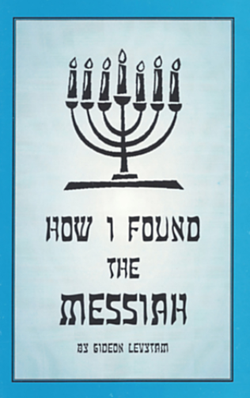
Follow Gideon Levytam's journey and discover how he was led by God, through a series of exciting circumstances, to find the One his people are still waiting for.
Past Episodes

Featured Offer
Follow Gideon Levytam's journey and discover how he was led by God, through a series of exciting circumstances, to find the One his people are still waiting for.
About Holy Scriptures and Israel
As time passed by, the Lord Yeshua took dear brother John Van Stormbroek to himself. The ministry of Holy Scriptures and Israel continued with additional development. In the early 1990’s, a weekly morning Bible class began which brother Gideon Levytam led regularly in the City of Toronto. This weekly open Bible class was held in the Willowdale assembly meeting hall. Eventually, a second mid-week evening Bible class was added. In April 2002, the need for an additional outreach Bible teaching meeting arose. We begun a Saturday (Shabbat) ministry meeting in which a systematic teaching of God’s word is presented to all who attend. Together we learn God’s Word, pray for each need and the salvation of Israel, and sing songs of worship unto our God, praising Him and our Lord Yeshua the Messiah.
In Mid 2004 we started to air on Joy 1250 Radio station a 15 minute Bible teaching program called "The Holy Scriptures and Israel" with Gideon Levytam. The broadcast teaches God’s word from a Hebrew Messianic perspective and has proved to be a blessing to many. It's now aired seven days a week. Our prayer is that many more of our Israeli people will have a clear understanding of who Yeshua is, why we all need him, and come to know him as their Lord and Messiah.
About Gideon Levytam
Contact Holy Scriptures and Israel with Gideon Levytam
426 Simcoe Street
Niagara-on-The-Lake
Ontario L0S 1J0
Canada
(905) 325-1234