

1 Timothy 1:3-11, Part 3


Teach Healthy Doctrine, Part 3
Unidentified Speaker: Shalom. Holy Scriptures and Israel is a ministry designed to share with the Jewish people the good news of the Lord Jesus Yeshua the Messiah, and to instruct Christians on the Jewish roots of their faith. And now, teaching God's word from a Hebrew messianic perspective, here is Gideon Levytam.
Gideon Levytam: The study of 1st Timothy chapter 1. We're going to see in a moment what the law could not do because of our sin nature in us. That's why we needed a new life and a new nature. But the aim of the law and the fulfillment of the law is to love thy neighbors as thyself. So in verse 5, Paul points to the goal, to the end and the aim and the purpose of God's commandment. What was the aim is to produce in a person love, to lead us to love our brothers and sisters, and also the next word is faith, emunah. And you know the verses in Hebrews chapter 11, without faith it is impossible to please God, for he that cometh unto God must believe that he is and that he is a rewarder of them that diligently seek him.
It's out to produce in us faith ultimately. That's the end of the law. That's the goal of the law. That's the purpose of the law. And you see, here is where we're going to touch here one or two things that I would like to mention. But before we're going to get to those things, notice what it says in verse 6 and verse 7. Paul point to some who strayed from the sound teaching. He says in verse 6, from which some, having swerved, in another translation he says strayed, have turned aside unto vain talking, or jungling, as it says in the King James. Desiring to be teachers of the law, understand neither what they say nor whereof they affirm.
Now, Paul, you see, brothers and sisters, Paul had a real challenge in the first century. He really had a tough, why? Because after all, the whole world was exposed to the gospel through the Jewish believers in Yeshua the Messiah. Even our own Jewish believers had friction among themselves. If you remember, some want to keep the law, some didn't. Yeah, there was a real challenge in first century. And by the way, it is still today among our Jewish brethren. We have various views. We look at things in various ways among our people, and it's still coming on here in this present day. But in the early days of the church age, those Jewish believers who heard the message of the gospel and have accepted Yeshua the Messiah, and now they saw the Gentiles were coming in, that the body of Messiah was formed, and there was a challenge.
They had the special meeting in Acts chapter 15, where Paul had to come and to present before the church which was in Jerusalem what God was doing among the nations of the world. And so they commended him that he would just tell them that they should abstain from idols, abstain from blood, but accept the person of the Lord Jesus the Messiah. They didn't ask from the Gentile nations at all whatsoever to go under any ground of what God had given Israel as a nation, but simply that they will accept Jesus the Messiah and become part of the assembly of the local church, of the church in their locality.
And so here's a problem that existed then and there, and we are struggling with it still today. And so Paul is saying to them, some having strayed. They've turned aside into vain talking, designed to be teachers of the Lord. They understand neither what they say nor what they affirm. Now he had a lot of opposition. He was struggling because he was called by the Lord Jesus the Messiah to present the gospel to the Gentile world. He was an apostle to the nations, but what do we do when there's all these things rising up among the people of God? So Paul is charging Timothy to continue on, and he gave him, Timothy, listen, some have gone astray, some have swayed and have turned into vain jungling, vain talking, and it's end up to be many friction that have happened at that time.
And so now he's in the last verses, verses 8, 9, 10, and 11. Paul is now telling us, telling Timothy, telling the Ephesians, telling you and I, what is the purpose or the proper use of the law in believers' life today? What the problem, brothers and sisters, is not with the law. We're going to see it in a moment, but there is a proper use of the law in the life of believers in Yeshua the Messiah today. And you notice what he began with? He began with, as he mentioned those 4 points in verses 8, 9, 10, and 11. He began with saying that the law is good. Notice how it says in verse 8, he said, but we know that the law is good.
I'm going to pause here for a moment. Of course the law is good, because it is a law that was given from the living God, the God of the universe, the God of Israel. Of course the law is good. But the problem is not with the law, we're going to see it in a moment. The problem is with humanity, with mankind. The standard of God is perfect, is perfection. And the law is good, and if God is going to expect from man to be accepted by him, man's standard has to be extremely high. And so he says, listen, the law is good. Then, if you don't mind, if you just turn back to Romans chapter 7 and verse 12, Paul is saying, wherefore the law is holy and the commandments holy, and they are just and they are good.
In other words, he does not put down the law, but he wants to help the believers in the present day dispensation to know how in a proper way to use the law that God had given to us in his word, but in believers' life, those of us that are now have accepted Yeshua the Messiah and are part of the ekklesia. So he began by saying in verse 8 of 1 Timothy chapter 1, But we know that the law is good, but then he continues, notice what he says? If men use it lawfully. In other words, in order for us to understand how to use the law in our present day dispensation, we have to use it lawfully, in a right way, to know what's to apply to us today.
Now that we are part of the ekklesia of the called out one, and remember most of the people that were at Ephesus were Gentiles from the goyim, from the nations of the world. They didn't live in Jerusalem in Israel. They were not part of the Jewish people who were called to come to Israel three times a year. They were not part of the temple worship in the city of Jerusalem. They had a distance. But now they've accepted the Messiah. And so now that they've accepted the Messiah, they needed to learn how to apply the law that God had given to them in their own life today. And you and I need to know how to handle that because we ourselves often fail in knowing how to handle the law in our lives as believers today.
So the first thing that he does in verse 8 to 11, he says, here is how properly to use the law in us, in our life as believers. Number one, recognize that the law is good. If a man use it lawfully. God gave the law. The Ten Commandments was written by the hand, by the finger of God, and therefore it is holy, it is just, it is pure. How do we lead, how do we handle this today in the present day dispensation? Paul tell to Timothy how to do so. In verse 9 now, the first part of verse 9, we could see for whom the law was given. Look what it says here. Knowing this, that the law is not made for a righteous man.
Now, just a minute. Who of us is righteous? Well, we know that all have sinned and come short of the glory of God. The law was not given for somebody who is righteous. Now, how can we call one righteous? You see, when Paul was writing to Timothy, he was speaking to him so he can speak to other people who are already believers in Yeshua the Messiah, who were sinners by nature, but they receive forgiveness from the Lord and they become righteous positionally because of the work of Christ, because of the work of the Messiah. So he's saying to him, Timothy, really the law is good if it be used lawfully, because the law was not made for a righteous man.
Now let's me just read a couple of verses, if you don't mind, to see how can you and I can be called today righteous. We know very well that practically speaking, we are not righteous. In fact, the people of Israel will say in the future day, according to the prophet Isaiah, all our righteousnesses are filthy rags because it comes from a sin nature. But how do we become righteous? How do God can declare an unrighteous man righteous? Well, look what Paul says. Turn to Romans chapter 3. This is important. This is really a doctrine. It is teaching. It is something we all need the Lord even to help us understand that there's so much here that sometimes one cannot grasp.
Romans chapter 3, look at this, and I'm Paul is now speaking in verse 20. After it says, and I'll read the last verse 19 of Romans 3, it said, all the world become guilty before God. And then in verse 20, therefore by the deeds of the law shall no flesh be justified in his sight. For by the law is the knowledge of sin. You see, Paul saying, look, the law given to us, the Ten Commandments, or all the 613 laws that God had given our people of Israel in the Decalogue, in the first five books of Moshe, all the law is really, what does it do? Through the law, we realize that there is sin in us. The law is like a mirror.
It shows us our hearts. It shows us how failing we are because God's law demanded a high standard. And so he says, for by the law is the knowledge of sin. Then he continue. He says, but now, but now, now that we have accepted Yeshua the Messiah, but now the righteousness of God without the law is manifest, being witnessed by the law and the prophet. Now he's saying, listen, God can declare a person righteous on the basis of the written word because man is condemned because he is sinner. Now God says, if you turn your heart to the Messiah, I can declare you righteous. The righteousness of God without the law is manifested and being witnessed by the law and by the prophet.
Why by the law and by the prophet? Because the Lord says you are sinners and you need the substitute. The prophet says the substitute will come, namely Yeshua the Messiah. If you will accept him, I will declare you righteous. It says now in verse 22, even the righteousness of God, which is by faith in Yeshua the Messiah unto all and upon all them that believe, for there is no difference. See, now God can declare a sinner righteous, not because we are righteous on our own, but simply because we have accepted the Messiah Yeshua who paid the penalty for our sin. So it's unto all men, but only upon them that truly believe and accept Yeshua the Messiah.
For all have sinned, verse 23, this is a message that when we preach the gospel, all have sinned and come short of the glory of God, being justified or being declared righteous freely by the grace through the redemption that is in Messiah Yeshua. You see, we have been redeemed, we are declared righteous on the basis of the finished work of Yeshua, Jesus the Messiah. Now turn to Romans 8. Here's another thing. This is why oftentimes those who do not believe in salvation only on the basis of the work of Yeshua the Messiah, this is why they don't like the Pauline ministry, because Paul gave a clear message, and I have to mention this again, again.
Paul was a Jewish man. He understood Phariseeism. He understood what the law is all about. He could teach all of us about the law that God had given our people of all, the people of Israel. But he also realized that on the basis of law, he could never be declared righteous, and therefore he have accepted the work that Yeshua the Messiah had provided for him. Notice Romans chapter 8 and verses 3 and 4. It says here, for what the law could not do, in that it was weak through the flesh, God sending his own son in the likeness of sinful flesh, and for sin condemned sin in the flesh, that the righteousness of the law might be fulfilled in us who walk not after the flesh, but walk after the Spirit of God, or walk after the Holy Spirit of God.
Now again, brothers and sisters, look, the law could not produce in us righteousness. You know, you set up all sort of laws in the life of a person, tell him you do this and you do this, you do this, you will notice that it doesn't take too long, and we violated the very first command that we received. Why? Because the problem, it was weak through the flesh. A holy law, a righteous law could not produce in a sinner a lifestyle that is pleasing to the Lord. And maybe someone might say, you know what? I'm so obedient to the law in my outward appearance. But one thing God knows, that we have a heart that is deceitful, that we know that even though we successfully outwardly have done something, we know our hearts, beloved brothers and sisters.
And even more, God knows our hearts. And when we have to stand before him, he will reveal to us the reality about our hearts, and he will say to us, this is the reason why I send my Mashiach, my Messiah, so you will be able to be declared righteous, that you will be able to say, God, I'm standing here not upon my merits, but upon the finished work of Yeshua, the Messiah. So the law is good, verse 8 of 1 Timothy 1, but the law was not made for a righteous man. And here the reference to a righteous man, it's not for righteous men in general, because all have sinned, as I mentioned. But the law was not made for a person whom the Lord declare already righteous because of what Yeshua have done on our behalf.
Now let's look at the third thing. So who are the people or who are the ones for whom the law was made? Well, look at this. Now I'm back to 1st Timothy in chapter 1. Look what Paul says. Who are the people for whom the law was made? And so notice that it says here in verse 9 again, but this time it's 9B and 10, in verse 10, those two verses. Well, notice there are two kind of people that is mentioned here in verse 9B. Number one, it says, but the law was made for, it said, for the lawless, for the disobedient, for the ungodly, for sinners, for unholy, for profane, for murderers of fathers and murderers of mothers, for manslayers, for ************ for them that defile themselves with mankind, for man stealers, for liars, for prejered, or people who are promised and break their promises.
And then it said, and if there be any other thing that is contrary to sound doctrine. Now, who was the law made for? Well, the law, as it says here, the law was made for or was given to, look at the list, beloved brothers and sisters. There are two types here that we have. The first one is for those who are, and the second one is for those who do. Those who are and those who do. Number one, notice that, verse 9, those who are lawless, disobedient, ungodly, sinners, unholy, profane, murderous, and so on. Notice that the first list is a list of people who are like so, and that's really include all humanity.
We are by nature, we are sinners. We are by nature lawless. We are by nature unholy. We are by nature disobedient and ungodly. That's all humanity. The reason that the law was given this high standard of God is to people like you and I who were born in sin, who are unholy or disobedient. We are not only what we do, but what we are by nature. But we became righteous on the basis of the work of Yeshua the Messiah. And that's why it says in verse 9, knowing that the law is not made for those righteous, because the law is now condemning us for what we were by nature. But now look at the second group here, you might say.
Not only those who are unregenerate, but here's where you and I as believers are coming to. The law was made for those who do, including you and I, even as believers. So the law has a work. Notice what it does here. It says for profane people, verse 9b, murderers of fathers and of mothers, manslayer, ************ and then those that defile themselves with mankind, and then for man stealers and liars and those who break promises. Now here is where you and I, as believers, can fall into those things, and indeed we can say that oftentimes we fail. Let me ask you a question. Have you ever said a lie?
Did you ever lie? What about made promises which you didn't keep? This is applied to us. So you see, here's how to use lawfully the law because it's applied to us. God is holy and he want us that our life will be pleasing to him. And here it's not only applied to the unbelieving world or to us before we became believers. Here it's applied to us, this standard that God had given, and how can we please the Lord and walk in such a way? Well, we just read Romans chapter 8, and you remember what we said in Romans chapter 8, and I want to reread this verse, Romans 8 and verse 3. It says, for what the law could not do that it was weak through the flesh, God sending his own son in the likeness of flesh and for sin, he condemns in the flesh.
And then he says, why? That the righteousness of the law might be fulfilled in us. And then he add, who walk not in the power of the flesh, but who walk after the Holy Spirit, in the power of the Spirit of God. The only way that we as believers can somehow, in some small measure, adhere to this is when we allow the Spirit of God to lead us forward. Otherwise, the flesh is unprofitable. So you see, he has these two lists here, the ones who are unregenerated, and then we have all, including the believers, those not only who are by nature, but we are no longer sinners because we are saved through the Lord Jesus the Messiah, but now it's a matter of how do we do, how do we live?
And at time, brothers and sisters, we have a guilty conscience because we fail the Lord even as believers. And therefore, beloved brothers and sisters, the law is now for us. We have to know how to use it in the present day dispensation. If the law is not leading us to the person of Yeshua the Messiah and convicting us, so we will turn to him and ask him to help to lead us. Otherwise, the law will not benefit anybody if it doesn't convict us to turn away and to follow after Yeshua the Messiah. So, number one, the purpose, the proper use of the law is recognizing that the law is good. Number two, we have to realize that the law was not given for a righteous man.
Number three, we have to realize that the law was given to the unrighteous one and also to the believers who live in sin and allow this without to judge themselves. And finally, in verse 11, the law must be understood in light of the glorious gospel that the Lord had given unto us. And here's the last verse, and I'm going to conclude with that. Difficult passage as it is. It says in verse 11, according, notice that, to the glorious gospel of the blessed God, which was committed to my trust. Here's the fourth way in which we are to properly use the law. To use the law that God had given Israel, the law that God had given in his word, must be understood in light of the gospel, in light of this grace of God provided for us through the Lord Yeshua the Messiah.
If we understood what happened when the Lord Jesus the Messiah died for us on the tree. Do you see when you and I became believers? 2 Corinthians 5:17, all that are in the Messiah Yeshua are new creation. All things have passed away, all become new. We received a new nature, we receive a new life. We belong to a different person, no longer to this Adam and his failure. We belong to the man that came from heaven. We belong to Yeshua the Messiah, and therefore we need to understand how to appropriate the law into our lives today, but always in the light of this glorious gospel. Brothers and sisters, I tell you, this gospel, you will never find such a wonderful message.
God found a way that he can redeem my soul. God found a way to make you and I whole. God found a way to declare a sinner righteous. God found a way. How is that way? The way was through the precious, precious blood of his beloved Son, Yeshua the Messiah, who cried on the cross, it is finished. Who said, Father, unto thee I commit my spirit. He yielded up the spirit, and he died, and he was buried, and he rose again, and God have took him and placed him at his right hand, and he is a risen and ascended and glorified Messiah, who because of this message, you and I today can receive declaration of righteousness.
And Paul was warning Timothy, Timothy, there's already there those that teach other teaching other than that which I have instructed them. Timothy, I want you to charge them that they will not teach any other doctrine. May the Lord help us all to understand, and when we don't have the same view on certain things, may the Lord help us to be gracious with each other, to know how to communicate the word, but never to change the truth of the word of God. God's word will never ever change. It remain firm as it is given to us in his word.
Announcer: You have been listening to the Holy Scriptures and Israel with Gideon Levytam. Gideon teaches God's word from a Hebrew messianic perspective. For more information about this ministry, write to Holy Scriptures and Israel, Box 1411, Niagara-on-the-Lake, Ontario, L0S1J0, or visit our website at holyscripturesandisrael.com. You are also invited to Gideon's weekly Bible teaching on Fridays at 11:00 AM and 7:00 PM and Saturdays at 1:00 PM at Willowdale Christian Assembly Hall, 28 Martin Ross Avenue in Toronto. Holy Scriptures and Israel is made possible by your prayers and financial support. If you would like to support the program, visit holyscripturesandisrael.com.
God bless you. Shalom, shalom.
Featured Offer
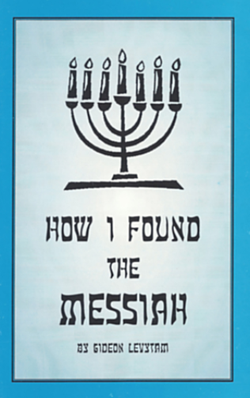
Follow Gideon Levytam's journey and discover how he was led by God, through a series of exciting circumstances, to find the One his people are still waiting for.
Past Episodes

Featured Offer
Follow Gideon Levytam's journey and discover how he was led by God, through a series of exciting circumstances, to find the One his people are still waiting for.
About Holy Scriptures and Israel
As time passed by, the Lord Yeshua took dear brother John Van Stormbroek to himself. The ministry of Holy Scriptures and Israel continued with additional development. In the early 1990’s, a weekly morning Bible class began which brother Gideon Levytam led regularly in the City of Toronto. This weekly open Bible class was held in the Willowdale assembly meeting hall. Eventually, a second mid-week evening Bible class was added. In April 2002, the need for an additional outreach Bible teaching meeting arose. We begun a Saturday (Shabbat) ministry meeting in which a systematic teaching of God’s word is presented to all who attend. Together we learn God’s Word, pray for each need and the salvation of Israel, and sing songs of worship unto our God, praising Him and our Lord Yeshua the Messiah.
In Mid 2004 we started to air on Joy 1250 Radio station a 15 minute Bible teaching program called "The Holy Scriptures and Israel" with Gideon Levytam. The broadcast teaches God’s word from a Hebrew Messianic perspective and has proved to be a blessing to many. It's now aired seven days a week. Our prayer is that many more of our Israeli people will have a clear understanding of who Yeshua is, why we all need him, and come to know him as their Lord and Messiah.
About Gideon Levytam
Contact Holy Scriptures and Israel with Gideon Levytam
426 Simcoe Street
Niagara-on-The-Lake
Ontario L0S 1J0
Canada
(905) 325-1234