
1 Timothy 1:3-11, Part 2


Teach Healthy Doctrine, Part 2
Unidentified Speaker: Shalom. Holy Scriptures and Israel is a ministry designed to share with the Jewish people the good news of the Lord Jesus Yeshua the Messiah, and to instruct Christians on the Jewish roots of their faith. And now, teaching God's word from a Hebrew messianic perspective, here is Gideon Levytam.
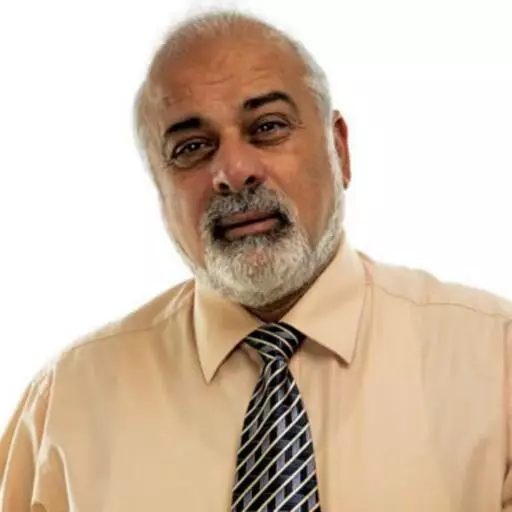
Gideon Levytam: The study of 1st Timothy chapter 1. You know, we just read just a few minutes ago from Deuteronomy chapter 4, God warned our people of all the people of Israel. Now therefore, O Israel, he says, hearken all Israel. Why? He says, this is my statutes. This is the judgment that I've given unto you, Israel. What a nation that is great as you. What a nation is as great that receives such judgment as statute as you had received, Israel, when you received this from me, when you came out of the land of Egypt. All the nations of the world never had what Israel, our people, have received because God have elected Israel as a nation, brought him to himself from all other nations.
But in the present time, God now, because our people Israel have not submitted to the authority of the Lord, have not accepted Yeshua the Messiah, he have introduced this present day dispensation where Jew and Gentile are united in the body of Messiah, and you and I are proof of it here in this meeting today. We have people here, whether they're Jewish or non-Jewish. We have people who are coming from every people, tongues, and nation, and all of us have been saved, not because we are Jewish, but because we confess that we are sinners and needed forgiveness of sins. And so Paul is warning. Now, turn with me to Psalm 11 for a moment, for a verse.
Look what the psalmist of Israel said years ago when he was speaking to our people. It's like almost like a song that had been sung. Of course it is, the Psalms are songs, but you can see the truths that he's teaching us even through the Psalm. He says, listen, in verse 3, why is it so important to have the sound doctrine? It's Psalm 11, verse 3 says, if the foundation be destroyed, what can the righteous do? If we don't have any foundation and every wind of doctrine, everybody gonna bring it, and if we don't have a sound teaching, if we don't have the foundation, how can we build anything? You know, sometimes people say this, you know, we don't need to know to have sound teaching as long as we have love in our midst.
To remind me what the Beatles used to say, all we need is love. But beloved brothers and sisters, we don't need only love, but we also need light. First John tells us God is light, and in him there is no darkness at all. There is darkness in us, but not in God. And we, as we walk with him, as we walk in the light of his word, as we listen to his teaching, we also begin to walk in the light as he is in the light. And we need sound doctrine. Go to Psalm 82. Again there, the Psalmist of Israel in Psalm 82 says this, verse 5. They know not, neither will they understand. They walk on in darkness. All the foundation of the earth are out of course.
When you don't have foundation, when we don't have teaching, when we don't have instruction, then we go astray. Then we don't have anything whereby to stand upon. And so Paul is saying to Timothy, Timothy, I left you in Ephesus. I beseech you. Notice he used the word in verse 3. I'm back to 1 Timothy chapter 1 verse 3. He says, I besought you. I appeal to you, Timothy. Abide still. Stay at Ephesus. Paul, why? There's so many issues to deal with. I cannot handle this, he might say to Shaul Paul, and yet Paul says, I beseech you, and here is the reason why, Timothy. I love the brothers and sisters of the Ephesians, and I really want them to be protected from false teaching.
And he says, therefore, that you might charge, and you notice he charged some, you know, in every groups of people, there's always those some. That Timothy is exhorted to charge them, not everyone, but some, because we are so inclined to have all kind of things crept in and to be careful to teach the word of God, to charge them to not to teach no other doctrine than the apostolic teaching that the apostles have taught. I remember years ago, I was teaching the Bible in another location. We used to teach a Bible class. It used to be every Thursday morning and Thursday night instead of a Friday morning and Friday night.
And I remember somebody came with a Bible about that thick, and he was telling me, and he was spreading all kind of things among the Bibles and people start to come to him and says, Gideon, Gideon, Gideon, and say, what, you know? So I just asked him, please, when you come in our midst, let us be what we teach, unless you want to take the teaching and I'll go somewhere else. You take the responsibility and you do the teaching. And then when I said this to him, he was not happy with me, and he said, you are guilty of their own blood is upon you. And I said, but what do you mean? I teach them the word of God.
What do you want me to do? And it didn't take too long that he left. He was not in our midst anymore. And it's always a struggle every time. And it's not only in my case. I hear it in many areas that there are always those issues will rise up. We should really be sure the way we are and what we hear is that what we understand from the word of God. Otherwise, we can teach so people will have tickled ears, so we can make everybody happy, and we can change certain things so that everybody will be happy. So it's very difficult for the young men like Timothy. Imagine the opposition that he had. He could say, what's the use?
Let them be. I'm going to carry on and do my own thing. But Paul charged him, Timothy, I left you there for the purpose that you will charge those that teach things that are not right, not to teach those doctrines because it harms the people of God. Don't do so. And he was really strong when he said this to Timothy, but Timothy was a timid man. He was young. He needed an encouragement. So in verse 4, Paul is challenged Timothy now not to give heed to all sort of fables and genealogy. You know, brothers and sisters, it happened 2,000 years ago, and it's happening today. Look what it says in verse 4, neither give heed to fables.
That word here for fables is the Hebrew word hagada, hagadot, all kind of stories. And he continue, and endless genealogies. You know what, the son of this and son of this, and my forefathers and my grandparents and my great-grandparents, and everyone has all sorts of fable and genealogy. And you know, remember, Paul was Jewish. Timothy was Jewish. We have history, it's tremendous history. Our forefathers is Abraham, Isaac, and Jacob, and there's so much history, and they were godly men. And when you think about it in Ephesians, they also introduce all sort of things, people with all sort of their genealogy and their fables and so on.
And Paul said to Timothy, Timothy, listen, all these things, the fables and the endless genealogy, you know what it does? It's minister questions rather than edifying with that which is in faith. It doesn't edify. It really doesn't edify. Then you know, everybody have a story to say. In this case, there were fables. If you just turn to chapter 4 of the same book of 1 Timothy, verse 7, it says, but refuse profane and old wives' fables, but exercise yourself rather into godliness. Timothy, all these fables, and you know, there are stories that can be told, and it's biblical and sound, which is edifying.
But there are fables that one can hear that I'm sure happen in this assembly, in this local church in the city of Ephesus that were not helpful. Again, the word genealogy in Hebrew is limudei toldot. It's like telling certain stories and genealogies from the past and so on, which instead of leading people closer to the Lord, it led to all sort of confusion among the people of God. He continue in the same verse as he says it's minister to questions. But he says, Timothy, rather than godly edifying, which is in faith. So do. Timothy, when you minister to the brothers and sisters of the Ephesian, minister that which is of the faith which was once delivered unto the saints.
Minister that which is edifying. Because God's people, you know, all of us, we are like sheep that is so liable to go astray because we are human beings. We have a sin nature. This sin nature oftentimes rises up. We have our own way, our own will, and at time we are going astray. Look at the history of the church. It's not only talking about the history of our people Israel, look at the history of the church. Look at what's going on in the last 2,000 years of church history. Look at the mess, divided state of the church. Somebody just said, I just passed by on the way to the meeting. I've passed by at least by 3, 4, 5 places, and every place there, there's a church building.
And you just wonder, and you say, why are they there, so many of them, because everybody there have sound teaching and sound doctrine? Why is it all these divisions? Well, it's not always because we all have sound doctrine. It's because this group believed that way, and that group believed this way, and we don't have all alike in sound teaching, and you can see how the people of God are so divided. I remember when I first became a believer, I thought, well, my Jewish people have so many opinions and so many views. There is the conservative Jews, there is the more liberal Jews and the more orthodox Jews and so on.
And then I came to become a believer in Jesus the Messiah, and I find that it is worse in the church. There are more divisions among the professing people of God than even among our own people, Israel. And you find out that it's everywhere the same. And so how, what we're going to do? We're going to just allow every voice to tell us what? Shouldn't we go to the Bible and find out what does the Bible say? What does God's word say? Well, that's the only place to go. And even then we constantly have misunderstanding among the people of God. The one read a verse and he see it this way, another read another verse and he see it another way, and we don't see.
So what we really need is the help of the Spirit of God to feed us and to help us to rightly divide the word of truth. We are all in a school. We are all to learn that. And so Paul saying, you know, I challenge you, Timothy, now, don't give heed to fables and endless genealogies. Why? Because it minister questioning. Rather, Timothy, you should minister in such a way that will be godly edifying, which is in faith. So do Timothy. And this is a challenge for us, brothers and sisters, when we are speaking with each other and when we are learning from the Word of God. We want to have sound teaching.
We want to rightly divide the word of truth. Otherwise, we can take this page out of the Bible and we'll pass on to another page. We can rip all the pages from the Bible and we'll never get to a time in which we find some sort of a sound teaching. That's why Timothy was left at the city of Ephesus. Well, in verse 5, look at this. Paul points to the purpose of the commandment that God had given to Israel. And remember now that when Paul was writing, it is in the beginning of the church age. We are talking about 60 something AD, about 60 AD to 65 AD, the foundation, early days of the church. So the vast majority of influence was from the law, from the commandment that God gave to Israel, our people.
And so you can understand that why you often find certain remarks that has to do with the law, the commandments, and all these kind of things. He says now, the end of the commandment is love, out of pure heart and of good conscience and of faith unfeigned. What was the goal of the law that God had given the people of Israel? The end, the goal, the aim was to produce in the believer and those that will seek to accept God's ways to lead them into, notice number one, love, verse 5, number two, faith. In Hebrew, ahava and emunah, to love one another, to love God, and also to lead us to believe what God had said.
Let me just read two verses in Romans chapter 13, and the first verse is found in verse 8 and then verse 10. Look at that, Romans chapter 13 and verse 8. Paul is saying to the Romans, "Owe no man anything but to love one another, for he that loveth another hath fulfilled the law. What the law ought to produce in a person who have accepted what the law, aiming toward accepting the Messiah, first of all, but to produce in a person love towards one another. Notice what it says also in verse 10, love worketh no ill to his neighbor, therefore love is the fulfilling of the law. You see what Paul is saying to Timothy in this passage that we have just read in verse 5?
The end, the goal of the commandment of the law is to bring someone to love and to faith, To produce this, that's the aim eventually, is to bring us into a point in which we have this practice in our life. Love, number one, and then he says, he continues in verse 5b and uses the word also emunah, faith. Another verse is Galatians chapter 5, verse 14. It says in verse 14, for all the law is fulfilled in one word, even in this, thou shalt love thy neighbor as thyself. You see, that's what the law is really aiming for. We're going to see in a moment what the law could not do because of our sin nature in us.
That's why we needed a new life and a new nature. But the aim of the law and the fulfillment of the law is to love thy neighbors as thyself. So in verse 5, Paul points to the goal, to the end and the aim and the purpose of God's commandment. What was the aim is to produce in a person love, to lead us to love our brothers and sisters, and also the next word is faith, emunah. And you know the verses in Hebrews chapter 11, without faith it is impossible to please God, for he that cometh unto God must believe that he is and that he is a rewarder of them that diligently seek him. It's out to produce in us faith ultimately.
That's the end of the law. That's the goal of the law. That's the purpose of the law. And you see, here is where we're going to touch here one or two things that I would like to mention. But before we're going to get to those things, notice what it says in verse 6 and verse 7. Paul points to some who strayed from the sound teaching. He says in verse 6, from which some, having swerved, in another translation he says strayed, have turned aside unto vain talking, or jungling, as it says in the King James, desiring to be teachers of the law, understand neither what they say nor whereof they affirm.
Now Paul, you see, brothers and sisters, Paul had a real challenge in first century. He really had a tough, why? Because after all, the whole world was exposed to the gospel through the Jewish believers in Yeshua the Messiah. Even our own Jewish believers had friction among themselves. If you remember, some want to keep the law, some didn't. Yeah, there was a real challenge in first century. And by the way, it is still today among our Jewish brethren. We have various views, we look at things in various ways among our people, and it's still coming on here in this present day. But in the early days of the church age, those Jewish believers who heard the message of the gospel and have accepted Yeshua the Messiah, and now they saw the Gentiles were coming in, that the body of Messiah was formed, and there was a challenge.
They had the special meeting in Acts chapter 15, where Paul had to come and to present before the church which was in Jerusalem what God was doing among the nations of the world. And so they commanded him that he would just tell them that they should abstain from idols, abstain from blood, but accept the person of the Lord Jesus the Messiah. They didn't ask from the Gentile nations at all whatsoever to go under any ground of what God had given Israel as a nation, but simply that they will accept Jesus the Messiah and become part of the assembly of the local church, of the church in their locality.
And so here's a problem that existed then and there, and we are struggling with it still today. And so Paul is saying to them, some having strayed. They have turned aside into vain talking, desiring to be teachers of the law. They understand neither what they say nor what they affirm. Now he had a lot of opposition. He was struggling because he was called by the Lord Jesus the Messiah to present the gospel to the Gentile world. He was an apostle to the nations, but what do we do when there's all these things rising up among the people of God? So Paul is charging Timothy to continue on, and he gave him, Timothy, listen, some have gone astray.
Some have swayed and have turned into vain jungling, vain talking, and it's end up to be many friction that have happened at that time. And so now he's in the last verses, verses 8, 9, 10, and 11. Paul is now telling us, telling Timothy, telling the Ephesian, telling you and I, what is the purpose or the proper use of the law in believers' life today? What the problem, brothers and sisters, is not with the law. We're going to see it in a moment, but there is a proper use of the law in the life of believers in Yeshua the Messiah today. And you notice what he began with? He began with, as he mentioned those 4 points in verses 8, 9, 10, and 11.
He began with saying that the law is good. Notice how it says in verse 8, he said, but we know that the law is good. I'm going to pause here for a moment. Of course the law is good, because it is a law that was given from the living God, the God of the universe, the God of Israel. Of course the law is good. But the problem is not with the law, we're going to see it in a moment. The problem is with humanity, with mankind. The standard of God is perfect, is perfection. And the law is good, and if God is going to expect from man to be accepted by him, man's standard has to be extremely high. And so he says, listen, the law is good.
Then, if you don't mind, if you just turn back to Romans chapter 7 and verse 12, Paul is saying, wherefore the law is holy and the commandments holy, and they are just and they are good. In other words, he does not put down the law, but he wants to help the believers in the present day dispensation to know how in a proper way to use the law that God had given to us in his word, but in believers' life, those of us that are now have accepted Yeshua the Messiah and are part of the ekklesia. So he began by saying in verse 8 of 1 Timothy chapter 1, But we know that the law is good, but then he continues, notice what he says?
If men use it lawfully. In other words, in order for us to understand how to use the law in our present day dispensation, we have to use it lawfully, in a right way, to know what's to apply to us today. Now that we are part of the ekklesia of the called out one, and remember, most of the people that were at Ephesus were Gentiles from the goyim, from the nations of the world. They didn't live in Jerusalem in Israel. They were not part of the Jewish people who were called to come to Israel three times a year. They were not part of the temple worship in the city of Jerusalem. They had a distance.
But now they've accepted the Messiah. And so now that they've accepted the Messiah, they needed to learn how to apply the law that God had given to them in their own life today. And you and I need to know how to handle that because we ourselves often fail in knowing how to handle the law in our lives as believers today. So the first thing that he does in verse 8 to 11, he says, here is how properly to use the law in us, in our life as believers. Number one, recognize that the law is good. If a man use it lawfully. God gave the law. The Ten Commandments was written by the hand, by the finger of God, and therefore it is holy, it is just, it is pure.
How do we lead, how do we handle this today in the present day dispensation? Paul tell to Timothy how to do so. In verse 9 now, the first part of verse 9, we could see for whom the law was given. Look what it says here. Knowing this, that the law is not made for a righteous man. Now, just a minute. Who of us is righteous? Well, we know that all have sinned and come short of the glory of God. The law was not given for somebody who is righteous. Now, how can we call one righteous? You see, when Paul was writing to Timothy, he was speaking to him so he can speak to other people who are already believers in Yeshua the Messiah, who were sinners by nature, but they receive forgiveness from the Lord and they become righteous positionally because of the work of Christ, because of the work of the Messiah.
So he's saying to him, Timothy, really the law is good if it be used lawfully, because the law was not made for a righteous man. Now let's me just read a couple of verses, if you don't mind, to see how can you and I can be called today righteous. We know very well that practically speaking, we are not righteous. In fact, the people of Israel will say in the future there, according to the prophet Isaiah, all our righteousnesses are filthy rags because it comes from a sin nature. But how do we become righteous? How do God can declare an unrighteous man righteous? Well, look what Paul says. Turn to Romans chapter 3.
This is important. This is really a doctrine. It is teaching. It is something we all need the Lord even to help us understand that there's so much here that sometimes one cannot grasp.
Announcer: You have been listening to the Holy Scriptures and Israel with Gideon Levytam. Gideon teaches God's word from a Hebrew messianic perspective. For more information about this ministry, write to Holy Scriptures and Israel, Box 1411, Niagara-on-the-Lake, Ontario, L0S1J0, or visit our website at holyscripturesandisrael.com. You are also invited to Gideon's weekly Bible teaching on Fridays at 11:00 AM and 7:00 PM and Saturdays at 1:00 PM at Willowdale Christian Assembly Hall, 28 Martin Ross Avenue in Toronto. Holy Scriptures and Israel is made possible by your prayers and financial support. If you would like to support the program, visit holyscripturesandisrael.com.
God bless you. Shalom, shalom.
Featured Offer
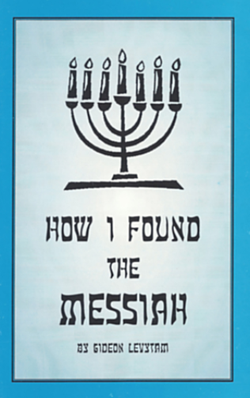
Follow Gideon Levytam's journey and discover how he was led by God, through a series of exciting circumstances, to find the One his people are still waiting for.
Past Episodes

Featured Offer
Follow Gideon Levytam's journey and discover how he was led by God, through a series of exciting circumstances, to find the One his people are still waiting for.
About Holy Scriptures and Israel
As time passed by, the Lord Yeshua took dear brother John Van Stormbroek to himself. The ministry of Holy Scriptures and Israel continued with additional development. In the early 1990’s, a weekly morning Bible class began which brother Gideon Levytam led regularly in the City of Toronto. This weekly open Bible class was held in the Willowdale assembly meeting hall. Eventually, a second mid-week evening Bible class was added. In April 2002, the need for an additional outreach Bible teaching meeting arose. We begun a Saturday (Shabbat) ministry meeting in which a systematic teaching of God’s word is presented to all who attend. Together we learn God’s Word, pray for each need and the salvation of Israel, and sing songs of worship unto our God, praising Him and our Lord Yeshua the Messiah.
In Mid 2004 we started to air on Joy 1250 Radio station a 15 minute Bible teaching program called "The Holy Scriptures and Israel" with Gideon Levytam. The broadcast teaches God’s word from a Hebrew Messianic perspective and has proved to be a blessing to many. It's now aired seven days a week. Our prayer is that many more of our Israeli people will have a clear understanding of who Yeshua is, why we all need him, and come to know him as their Lord and Messiah.
About Gideon Levytam
Contact Holy Scriptures and Israel with Gideon Levytam
426 Simcoe Street
Niagara-on-The-Lake
Ontario L0S 1J0
Canada
(905) 325-1234