
1 John 5:14-21, Part 3


Confidence of Believers in Their Lives Part 3
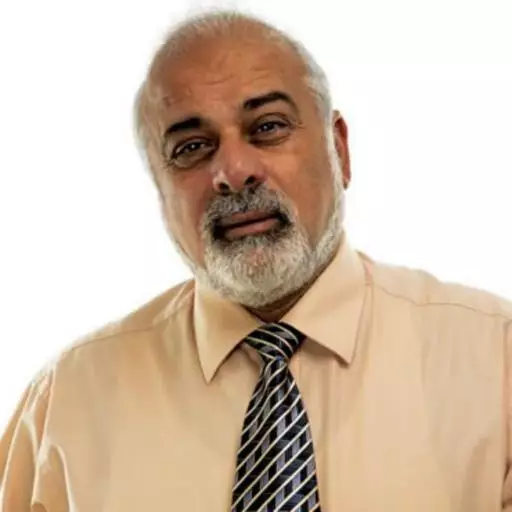
Gideon Levytam: The study of 1st John chapter 5 continues. Today we look at the Lord and those things among all the people of Israel. We can do this as well. There was pride in Korah's life. He wanted to take something that God did not give him. You remember Moses said to him, "Do you want also to take the priesthood? Sons of Levi, how much blessing God blessed you, you have served God in so many ways and you want to take that which does not belong to you as well?" And you remember what happened. The ground opened and the whole family of Korah, Korah himself died, and those who followed him died—physical death. Korah was a believer among our people Israel and he was taken outside of this scene prematurely because of certain sin. In his case, it was the sin of pride.
But notice, for example, in Leviticus chapter 10, Nadab and Abihu, the two sons of Aaron. They were priests. But what did they do in their ministry? They offered a strange fire. And what God said, He smote them on the spot and He removed them out of this scene. They did not die eternally. They did not die spiritually. They died physically. God removed them out of this world and took away their lives here from this earth. They were no longer suitable for His service because of this particular sin.
We can mention so many others but I just particularly want to mention the verses that we read in Numbers chapter 20. I want you to turn to them for a moment. I want you to mention for a moment Aaron and Moses who also sinned a sin unto physical death. Look at Numbers chapter 20. You know what happened with them when God told them to go to Moses. He said, "Moses, you go speak to the rock." Already earlier in chapter 17 of Exodus, he told him to smite the rock, but now Moses was called to speak to the rock.
And so in chapter 20 of the book of Numbers, God said to him to go to speak to the rock. Notice verse 7: "And the Lord spoke unto Moses saying, take thy rod, gather thou the assembly together, thou and Aaron thy brother, and speak, notice, tedaber, speak ye unto the rock before their eyes, and it shall give forth water and thou shalt bring forth for them water out of the rock, so thou shalt give the congregation and their beasts to drink."
But what Moses did, he was a servant of God. He wanted to please God but he was not happy with the congregation of Israel. So we read, "And Moses took the rod," verse 9, "from before the Lord as he commanded him. And Moses and Aaron gathered the congregation together before the rock and he said unto them, Hear now ye rebels, must we fetch you water out of this rock?" He was upset and angry with the people of Israel. So Moses lifted up his hand and what did he do? Something that he should not have done.
God told him, "Speak to the rock," but Moses lifted up his hand and with his rod he smote the rock twice. And the waters came out abundantly and the congregation drank and their beasts also. And look what we read in verse 12: "And the Lord spoke unto Moshe and Aharon, because ye believed me not to sanctify me in the eyes of the children of Israel, therefore ye shall not bring this congregation into the land which I have given them." God was not pleased with the disobedience of Moses and Aaron.
Actually, He said to both of them to speak to the rock, but Moses smote the rock twice and really both of them, Aharon and Moshe, Aaron and Moses, both of them sinned that sin which is called 1 John chapter 5 and verse 16: the sin unto physical death. And you read in the very same chapter, in Numbers chapter 20, verse 23: "And the Lord spoke unto Moses and Aaron in Mount Hor by the coast of the land of Edom saying, Aaron shall be gathered, he will die, Aaron shall be gathered unto his people and he shall not enter into the land which I have given unto the children of Israel. Because ye rebelled against my word at the water of Merivah." And then Aaron died on that mountain there on Mount Hor.
Now what about Moses? Turn to Deuteronomy chapter 3 for a moment. Look what we read about Moses. I was really fascinated when I was reading these verses concerning Moses as well because in chapter 3 of the book of Deuteronomy, we read in verse 23: "And I besought the Lord at that time saying, Oh Lord God, thou hast begun to show thy servant thy greatness and thy mighty hand. For what God is there in heaven or in earth that can do according to thy works and according to thy might? I pray thee, let me go over and see the good land that is beyond the Jordan, that goodly mountain and Lebanon."
Look what the Lord said to him in verse 26: "But the Lord was wroth with me for your sakes and he would not hear me. And the Lord said unto me, Let it suffice thee, speak no more unto me of this matter. Get thee up to the top of Pisgah and lift up thine eyes westward and northward and southward and eastward and behold it with thine eyes, for thou shalt not go over this Jordan." Now God was serious about Moshe and he says, "Moses, don't even ask me." Now you see what we read in 1 John 5:16: "There is a sin unto death and I say I do not say that ye shall pray for it."
Moses was praying that God would not take away his life and allow him to enter into the Promised Land and God said to him, "No, Moses." Now you and I might say, "God, why is it that you not allow thy servant Moses to enter into the land? He was longing to see it." And that's why, brothers and sisters, God knows best. We don't know best. He knows what's better for His own people, for the human race. He knows better than all of us. And that's why we need to be in tune with His mind, with His will. Many times we are not.
Now what about New Testament people? You might say, "Well, those were Old Testament people, they were long before the Messiah came and that does not apply to us because we are believers of the present-day dispensation of the church age, that does not apply to us." Doesn't it apply to us? Well, what about Ananias and Sapphira in Acts chapter 5? You know what was their sins? They lied to the Holy Spirit. They sold the possession, they came to the meeting hall, and they said, "Here is the amount of money that we sold the possession."
Peter asked, "Is that the amount?" Hananyah says yes. And because he lied, he died on the spot. Then it didn't take too long that they took his body out, his wife Shaphirah, she's coming to the meeting hall and she's asked, "Is that the amount of money that you sold the property that you say that's it?" She says yes. She died on the spot. And he says, "Why did you lie against Ruach HaKodesh?" Now remember they didn't have to give anything from the property that they have sold. It's theirs.
But they wanted to appear as if they were doing and pleasing the Lord and doing and everybody would say, "Wow, look at these people." And God smote them on the spot. They were part of the local assembly in the city of Yerushalayim. They died on the spot. Now I have to mention this because the greatest passage that alludes to that is 1st Corinthians chapter 11. I want you to turn there for a moment, please. We have this expression that the apostle Paul mentioned to the Corinthian local assembly.
He was writing to them and in verse 23 he said, "I received of the Lord that which I have delivered unto you that the Lord Yeshua the same night in which he was betrayed he took bread. And when he had given thanks, he broke it and he said, take, eat, this is my body which is for you, do this in remembrance of me. Afterward he took the cup which he supped and he's saying, this is the cup of the new covenant in my blood, this do as often as ye drink in remembrance of me, for as often as ye eat this bread and drink this cup, ye do show the Lord's death until he come."
And then he said in verse 27, "Wherefore whosoever shall eat this bread and drink this cup of the Lord unworthily, or in an unworthy manner, shall be guilty of the body and the blood of the Lord. But let a man examine himself and so let him eat of the bread and drink of the cup. For he that eateth and drinketh unworthily, in an unworthy manner, he eateth and drinketh damnation unto himself, not discerning the Lord's body. For this cause, many are weak and sickly among you and many sleep, many die."
Apparently what happened in the local assembly at Corinth, the condition in which they were meeting together was in an unworthy manner. It's not unworthy because nobody is worthy, neither you nor I, no one is worthy, but the manner in which they were coming together. And he's saying to them, if you coming in this way to remember the Messiah in His death, burial, and resurrection, and you're coming in an unworthy manner in such a way you are not discerning the body of the Messiah and what he have done, you really bringing upon yourself damnation and judgment of God among the people of God.
That's why he says, "That's why some of you, many of you, are weak. God judge us in weakness. And then others, many are sick among you." He's saying to the Corinthians. And then he said, "And many are sleeping." Now he doesn't talk here about sleeping natural sleep. He says, "Many of you are sleeping," and that mean God removed them out of this world. He actually physically removed them out of this testimony in this world because of the manner in which they were behaving.
And there is a sin unto death, John is saying. In Moses' case, it was disobedience. In the fact of Hananyah, it was lying. In the case of the Corinthians, it was disorder in the assembly. In the case of others of Old Testament time that we've just read like Nadav and Avihu, it was putting a strange fire in the service of God. In the case of Korah, it was pride and seeking to usurp a place that is not his. And we can go on and on and on. We do not know which particular sin that one have committed will remove that person out of this world by the Lord.
And so that's why he says, "I do not want you to pray for that." How do we know whether we should pray or we should not pray? One thing for sure, it must be really discerned by a believer that is really in tune with the Lord in order to discern such a thing. We cannot discern this on our own. We need the help of the Spirit of God to discern it. Secondly, it is important that we encourage each other when sin is been allowed and condoned in our lives that we are to deal with it, to confess it and forsake it.
Notice what he says in verse 17: "All unrighteousness is sin. And there is a sin not unto death." In other words, everything that we do that is unrighteous is sin. And how many time, brothers and sisters, if God is going to deal with us in the way he dealt with Hananyah and Shaphirah, in the way that he dealt with the Corinthians, in the way that he dealt with Moshe and Aharon, in the way that he dealt with Korah in the day that he dealt with others, none of us would be at the meeting here today.
So the important thing is to repent of our sin and see that come a time into our lives and as we have in 1st John chapter 1 verse 9: "If we confess our sins, he is faithful and just to forgive us our sins and to cleanse us from all unrighteousness." And sometime if there is a sin that God in our life that God says, "Listen, I cannot allow you to continue. I'm going to take you to be with me at home." For the believer, this sin unto death is physical death.
All our sins have been already forgiven by Yeshua the Messiah for our eternal relationship with him. But sins that allowed to be condoned on an ongoing basis in the life of a believer here and now, God is intending to deal with it unless we repent and confess and turn back to the Lord. And we need His help to help us to turn to him back when sins happen in our life. Now notice let's move on in our chapter here in 1st John chapter 5 and now I'm in the next verses here, verses 18 and 19.
In verse 18, a person who is born of God do not habitually practice sin. He says here in verse 18, "And we know that whosoever is born of God sinneth not. But he that is begotten of God keepeth himself and the wicked one toucheth him not." In other words, a believer that is born of God does not live habitual, continual sin. We may fall into sin, we don't have to, but we have to realize that a believer is not carrying on and carrying on habitually, continually living a life of sin. Because he have a new nature, a new life.
Notice this again in verse 19: "And we know that we are of God and the whole world lieth in the wicked one." It should be wicked one rather than in the wickedness. The whole world is lying in that wicked one who influence them but we, but the believer, we know that we are of God. We belong to Yeshua the Messiah. And we have a new nature, a new life. We don't have to live anymore like we lived before we became believers in Yeshua the Messiah.
And yet, brothers and sisters, the world lieth in the wicked one. Who is that wicked one? It's Satan himself. Satan is an enemy of every believer. He shooting darts at you and I. He knows our weaknesses. He know where we are lacking. He find a place where we are not in a communion with the Lord, a time and so on, and he shoot these darts in order to tempt us, beguile us, cause us to fall and to stumble. Satan is our enemy. The world is our enemy.
That's why John said in 1st John chapter 2, "Love not the world, nor the things that are in the world. For all that is in the world is the lust of the flesh, the lust of the eyes, and the pride of life." And thirdly, the enemy that is the closest to us is the flesh within us, the old nature. The old nature, Yeshua said, "The flesh profiteth nothing." With this old nature, we have sinned against God. This old nature we have received from Adam when we were born into this world. And this sin nature was judged when Yeshua the Messiah died for us on the tree.
When those of us who are going to get baptized in the will of the Lord very soon, what they say by being baptized, going under the water, they say, "I died with the Messiah." Coming out of the water, I say, "I seek to live in newness of life. I seek to please my Lord and my Messiah." So we have an enemies, yes. Satan, the world, and the flesh. But what we read here in this verse 19: "We know that we are of God. We are not of this world. And the whole world is lying in that wicked one." The god of this world that blinded the mind of them that believe not the gospel, this is none else but Satan himself.
So we spoke about God's answering His people's prayer, verses 14 and 15. We spoke about God's people do not practice habitual, continual sin. This is verses 16 and 19. And let me conclude with verses 20 and 21 and with this we'll conclude the whole letter of 1st John. God's people know the true God and eternal life. And so we read verse 20: "And we know that the Son of God is come and has given us an understanding that we may know him that is true. And we are in him that is true, even in his Son Yeshua the Messiah. This is the true God and eternal life."
I love this verse, brothers and sisters, because this verse only shows us who Yeshua is. Notice that because many people reject His divine nature. They say Jesus is not God. They say Yeshua is only a man. Some said as in John's time, they say that he is a phantom, that the Messiah kind of came upon him at his baptism, beginning of his ministry, and went off him at his crucifixion when he died on the tree and that he was only a phantom. But here is a very clear passage for all those that belong to Yeshua the Messiah.
Notice he said, "And we know." We know. We know it by faith. We know it on the basis of God's word. We know it because the Holy Spirit of God is indwelt in every believer. We know that the Son of God have come. Peter said to him in Matthew 16 verse 16: "Atah hu HaMashiach," you are the Messiah, "ben Elohim chayim," the Son of the living God. He declared there, "You are the Mashiach, the Messiah, the Son of the living God."
He said that even before Yeshua went to the tree, before he had the indwelling of the Holy Spirit within him. He understood that in light of what the word of God said. The psalmist in Psalm 2 said, "Kiss the Son lest he be angry and ye perish from the way." The Proverbs said, "Who has ascended unto heaven and descended?" And he said in Proverbs chapter 30, "What is his name? And what is his son's name? Can you tell me?" Agur and Ukal said this in the Proverbs chapter 30 and verse 4.
He is the Son. We know that the Son of God has come. We know that he is the promised Messiah of Israel and the Savior of the world. We know this because the Bible tells us this. The Hebrew scripture teaches us this. The Holy Spirit declared this to us. We know it. And what did he do? He had given us an understanding that we may know him that is true and we are in him that is true, even in his Son Yeshua the Messiah. And then he says, "This is the true God."
You tell this to those who do not believe that Yeshua is divine. "This is the true God." He's speaking about Yeshua. And also he says, "and eternal life." He that has the Son has life. He that does not have the Son hath no life. Having relationship with Yeshua the Messiah given us an assurance that we have eternal life because he is eternal life. John 17:3 says he's speaking about himself, speaking to the Father. He says, "to know thee the only true God and Jesus the Messiah whom thou had sent."
This is eternal life. And brothers and sisters, you and I can be assured on the basis of who Yeshua is that we have eternal life because he is that true God and he is that eternal life. It was the Holy Spirit of God that revealed this unto every believer. And finally, His final word of exhortation, he said to them, "Little children." Now again he's writing to the mishpachah, to the family. All of us considered as children of the Father. Little children, part of the family of God.
Doesn't matter what age we are. Some of us are younger here, some of us are older here. Every believer is considered to be a child of God. He says, "Little children, all you mishpachah, family of God, keep yourselves from idols, Amen." Why? Because idols take the place of God in the life of the family of God. Idols take away a relationship with our Father. Idols draw us away from God and idol can be anything in our life. You may have your idol, I may have my idol.
It can be anything. It can be your position at work. It can be your look. It can be your possession. It can be your pride and arrogance. My pride and arrogance. It can be everything in our life. It doesn't have to be a little figurine that you worship somewhere in your home. It can be anything in our life that takes away from the relationship with our Abba, our Father, and that hinder us from a fellowship with the Father. He says, "Little children, keep yourselves from idols."
Do you think only Israel have built a golden calf and had an idol to say this is your God? Believers in the present-day dispensation of the church age do the very same thing. And we have greater responsibility than the nation of Israel because believers today have the indwelling of the Holy Spirit of God in each and every one of us. We have the complete canon of scripture. We have the risen and exalted Messiah.
We have everything far more than what Israel have ever had. And that's why a believer in Yeshua the Messiah have a greater responsibility than even the nation of Israel before the coming of the Messiah. "Little children," John is saying, "keep yourselves from idols." And he closed the letter of 1st John with the word Amen. So let it be. Well, brothers and sisters, may the Lord bless us with these thoughts and encourage us to continue to follow with the Lord's strength after Yeshua the Messiah.
Featured Offer
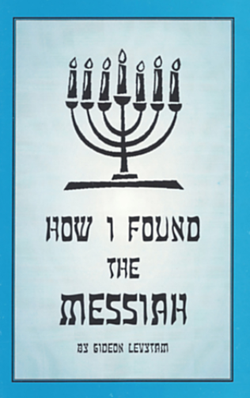
Follow Gideon Levytam's journey and discover how he was led by God, through a series of exciting circumstances, to find the One his people are still waiting for.
Past Episodes

Featured Offer
Follow Gideon Levytam's journey and discover how he was led by God, through a series of exciting circumstances, to find the One his people are still waiting for.
About Holy Scriptures and Israel
As time passed by, the Lord Yeshua took dear brother John Van Stormbroek to himself. The ministry of Holy Scriptures and Israel continued with additional development. In the early 1990’s, a weekly morning Bible class began which brother Gideon Levytam led regularly in the City of Toronto. This weekly open Bible class was held in the Willowdale assembly meeting hall. Eventually, a second mid-week evening Bible class was added. In April 2002, the need for an additional outreach Bible teaching meeting arose. We begun a Saturday (Shabbat) ministry meeting in which a systematic teaching of God’s word is presented to all who attend. Together we learn God’s Word, pray for each need and the salvation of Israel, and sing songs of worship unto our God, praising Him and our Lord Yeshua the Messiah.
In Mid 2004 we started to air on Joy 1250 Radio station a 15 minute Bible teaching program called "The Holy Scriptures and Israel" with Gideon Levytam. The broadcast teaches God’s word from a Hebrew Messianic perspective and has proved to be a blessing to many. It's now aired seven days a week. Our prayer is that many more of our Israeli people will have a clear understanding of who Yeshua is, why we all need him, and come to know him as their Lord and Messiah.
About Gideon Levytam
Contact Holy Scriptures and Israel with Gideon Levytam
426 Simcoe Street
Niagara-on-The-Lake
Ontario L0S 1J0
Canada
(905) 325-1234