

1 John 5:14-21, Part 1


Confidence of Believers in Their Lives Part 1
Narrator: Shalom! Holy Scriptures and Israel is a ministry designed to share with the Jewish people the good news of the Lord Jesus Yeshua the Messiah and to instruct Christians on the Jewish roots of their faith. And now, teaching God's word from a Hebrew Messianic perspective, here is Gideon Levytam.
Gideon Levytam: Shabbat Shalom! Today we are going by the grace of God to seek to conclude with the Epistle to the letter of 1st John. And we are going to turn into chapter 5. The passage that I'm reading really are the last verses, verses 14 to the end to verse 21. And please follow me as I'm reading this text.
John, Yohanan is saying: "And this is the confidence that we have in him, that if we ask anything according to his will, he heareth us. And if we know that he hear us, whatsoever we ask, we know that we have the petitions that we desired of him. If any man see his brother sin a sin which is not unto death, he shall ask, and he shall give him life for them that sin not unto death. There is a sin unto death. I do not say that he shall pray for it. All unrighteousness is sin, and there is a sin not unto death.
We know that whosoever is born of God sinneth not; but he that is begotten of God keepeth himself, and that wicked one toucheth him not. And we know that we are of God, and the whole world lieth in wickedness. And we know that the Son of God is come, and hath given us an understanding, that we may know him that is true, and we are in him that is true, even in his Son Jesus Christ. This is the true God, and eternal life. Little children, keep yourselves from idols. Amen."
These are the last words Yohanan gave the family of God, the brothers and sisters to whom he wrote, who were believers. They were children of God. They were redeemed people. They were part of the Hebrew Mishpachat Elohim, the family of God. And brothers and sisters, those of us that are here are part of this family of God. Every one of us that confessed that Yeshua is Lord and Messiah and Savior and acknowledged the price that he paid for us, we are all part of this great family that had begun some 2,000 years ago and will conclude when the Messiah Yeshua is going to take his own people to be with him in glory.
Those are the final words that the Epistle of John presents before us. It is a very important passage here, and I would like to present before you today three points in these last verses of 1st John chapter 5, verses 14 to 21. The first point I want to present before you is verses 14 and 15: We learn that God is answering his people's prayers.
Secondly, we learn that God's people do not practice an habitual and continual sinning. We fall into sin, but we don't live in sin. We ought not to live on a continual and habitual life of sin. And thirdly, verses 20 to 21: God's people know the true God and eternal life. Three points that we learn here today from these verses.
Let's just talk first of all, brothers and sisters, about verses 14 and 15. Do you know, brothers and sisters, that God does answer his own people's prayers? Sometimes we wonder, "Has God answered my prayer?" I have a real burden in my heart. You have a real burden in your heart. You went to the Lord, you were on your knees, you have acknowledged the fact that you depend upon God, and you present before him things that are very important for you and for me in our own lives.
What we learn from those two verses, verses 14 and 15, is that God does answer and he hears the prayers of God's people. And look at this, what John is saying. First of all, in verse 14: Any request which is according to God's will, he hears; it is being heard by God. Look at this verse 14. He says, "And this is the confidence that we have in him, that if we ask anything according to his will, he hears us."
Now brothers and sisters, that word for "confidence" here in verse 14 is the Greek word that really says that we have not only confidence but boldness. The word here in the Greek, parrhēsia, speaks of the fact that we have boldness and assurance that God does hear our prayer. Beautiful to know this, because it says this is the boldness that we have in him—in the Messiah, in Yeshua, in Christos, in the Mashiach—this is the confidence that we have in him that if we ask anything. And now notice what he adds here: "According to his will." Now this is very important in verse 14: according to the will of God.
You know sometimes, brothers and sisters, we are not asking things from God which are according to his will. You remember Yeshua himself, we find him in the Gospels when he was in the Garden of Gethsemane, Gat Shmanim. He was in this garden, and when he was anticipating the death on the tree, he had before him the thought that he's going to bear the sin of this world in his body on the tree.
So you remember what Yeshua said? "Father, if it is possible, take this cup"—the cup of God's righteous indignation against sin. He says, "Take this cup away from me." But he didn't stop there. He said, "Nevertheless, not my will, but thine be done." And then he submitted to the will of God. Why, beloved brothers and sisters? The will of God was that the Messiah will go to the tree, that he will pay for the penalty of sin, that it will be possible for you and me to be able to be forgiven. Otherwise, if he would have not gone to the cross, to the tree, we would never be able to be forgiven.
And so Yeshua submitted to the desire of a holy and righteous God, that he will give over his life as a ransom for many. And that's why he added in the Gospel: "Nevertheless not my will, but thine be done." Yeshua the Messiah has said. So what we really learn here from this verse 14 is that prayer must be in accordance with God's will.
You know, sometimes it's rather sad when we ask from God certain things and then it's really totally not of the will of the Lord. And we know it. And then we wonder why we don't get what we ask from God. Well, we don't get it because it was not done and not requested in accordance with his will. And so there are conditions in order for God to hear our prayer and to answer our prayer.
So I want to present before you a few conditions that we have here in the Word of God. Turn with me to 1st John, back a couple of pages, actually a page. 1st John 3, verse 22. One of the conditions that we need in order that our prayer will be heard by God is not to have a condemned heart. 1st John 3, verse 20 and 21, we read those words. John said, "If our heart condemn us, God is greater than our heart and knoweth all things. Beloved, if our heart condemn us not, then we have confidence towards God."
Now you know sometimes, brothers and sisters, our hearts condemn us because something is wrong in our life; the way we live is not right with God. Now if we knowingly live a life that is not right with God and then because there is a situation in our life that we need him to answer our prayers, and we go to him and say, "God, help me. I need you to answer this situation, this problem that I have in my life," and we know that our heart condemns us—well, what we need to do is to settle this issue first.
How many times when we are not right with the Lord, when we behave wrongly and we have sinned against the Lord and our heart condemns us, and we don't have liberty. And do we expect God to answer our prayer and hear our prayer and answer our prayer when we know knowingly that we are in the wrong? Do you think that we can say, "God, well your will be done," when in practice his will is not done in our lives?
So John says, "Listen, one of the things that is important for us to understand: We need to have an uncondemned heart. If our heart condemned us, then we have no liberty. And God, though he is greater than our heart, as we read here in 1st John chapter 3, nevertheless we need to deal with this issue." Look at another thing. Turn to Psalm 66 and verse 18. There listen to this verse. The Psalmist said these things. He says, "Look at this." He says, "If I regard iniquity in my heart, the Lord will not hear me."
See, this is the Psalmist of Israel said long time before the Messiah was born, Yeshua was born, long time in anticipation for the coming of the Messiah. The Psalmist of Israel says, "If I regard iniquity in my heart, the Lord will not hear." In other words, when sin is allowed and condoned and not being judged and confessed in the life of the believer, and then we come to God and we ask him to answer our prayers—well, what do you think God is going to do?
He's going to say, "Well listen, you live a life that is not pleasing to me, and then you come for me and you want me to answer your prayers? Deal with this first and then I will respond to your prayer." Look at the third verse that I think is very important. Turn to the Gospel of Matthew chapter 5. Yeshua said in the Sermon on the Mount in the Galilee, in Galilee when he was sharing with the nation of Israel there.
I'm reading Matthew chapter 5, verse 22. "I say unto you that whosoever is angry with his brother without a cause shall be in danger of judgment, and whosoever shall say unto his brother Raca"—that means empty, Reik, empty—"shall be in danger of the council, but whosoever shall say Thou fool, shall be in danger of hell fire. Therefore," and now he speaks to the believers, disciples, he said, "if you bring thy gift to the altar and there remember that thy brother has ought against thee," look at verse 24, I'm reading, "leave there thy gift before the altar and go thy way. Be first reconciled to thy brother and then come and offer thy gift."
Now brothers and sisters, this is so practical because how many times we have an internal conflict among the people of God? So what is happening is when we have conflict with each other and we don't deal with it and allow this to carry on, what happens? We are fighting among the people of God and then we are coming to the altar—you might say we are coming to the presence of the Lord to offer our gifts, to praise him, to pray to him—but we don't deal with the conflicts that exist with each other.
Especially when I am wrong. It's another thing when somebody else has wronged me, but when I wronged you, the right thing to do is to tell you I've wronged you, to deal with it and then to come and to present myself before the Lord. Don't you think, brothers and sisters, that often time one of the reasons why our prayers are not answered is because we have an internal conflict which is not being dealt with? And that's why there is no liberty in prayer and God does not answer.
And friction among the people of God definitely hinders the liberty in prayer but also God's answering prayer because we don't deal with those issues as well in our life. Let me give you one more verse in connection with God's answering prayer: the Gospel of John in chapter 15 and verse 7. Yeshua said these words to the disciples: "If ye abide in me and my words abide in you," and listen what he adds there, "ye shall ask what ye will, and it shall be done unto you."
Yeshua says, "Abide with me, stay close to me, and my words will abide in you. And then," he said, "ye shall ask." You know, just like we have here in 1st John chapter 5 and verse 14: "If we ask anything according to his will, he hears us." Yeshua already said this and John quoted that. And we find here in John chapter 15 and verse 7: "If ye abide in me and my words abide in you, ye shall ask what ye will, and it shall be done unto you."
Here's a promise that abiding close to the Messiah, he will answer the prayer. He hears the prayers of the people of God. So beloved brothers and sisters, prayer is very important. And knowing that we are in a suitable condition before the Lord is very important to assure us that God is hearing our prayer. Now I have searched the scripture and I was thinking to myself, "What would be a suitable way in which a person is really asking God according to his will?"
And the one man that I found that was very impressive to me is Moshe. Do you remember when Israel, our people, have sinned against God and built the golden calf? And when Israel built the golden calf, God sent Moses down from the mountain and he says, "This people have violated my word. Look at that what they have done. They have sinned against the Lord." And Israel indeed has sinned against the Lord.
Can you imagine? They build a golden calf right there and they said to themselves, "Israel, these are the gods that brought you out of the land of Egypt." Can you imagine how it grieved the heart of God, the very people whom he loved so much and brought them all the way from Mitzrayim, from Egypt? And he was going on to lead them to the promised land. And he was grieved because Israel has sinned against him and Israel has said that this golden idol calf was the one that had brought them out of the land of Egypt.
So God said to Moses, "You know what? I'm not going to bring myself Israel into the promised land, but I'm going to send an angel to lead them into the promised land." But what do you think Moses did? Moses was a man of God, a man who loved God so much, wanted to please him. And Moses didn't want to be led by an angel. He wanted Jehovah, Yehovah himself to lead our people Israel to the promised land. So you know what he did? He began to pray. He began to speak with the Lord in prayer.
And I want you to just listen to what Moses said in Exodus chapter 33, verses 12 to 17. "And Moses said unto the Lord, 'See, thou sayest unto me, "Bring up this people," and thou hast not let me know whom thou wilt send with me. Yet thou hast said, "I know thee by name, and thou hast also found grace in my sight." Now therefore, I pray thee,'"—here's Moshe praying, Moses is praying—"'"I pray thee, if I have found grace in thy sight, show me now thy way, that I may know thee, that I may find grace in thy sight, and consider that this nation is thy people."'"
And he said—this is Jehovah, the Lord, answering Moses and he says—"'"My presence shall go with thee, and I will give thee rest." And he said unto him,'"—now Moses still wants to make sure that the presence of the Lord is coming, and he said to him in verse 15—"'"If thy presence go not with me, carry us not up hence. For wherein shall it be known here that I and thy people have found grace in thy sight? Is it not in that thou goest with us? So shall we be separated, I and thy people, from all the people that are upon the face of the earth."'"
And the Lord—this is Jehovah, Yehovah—said unto Moses, "'"I will do this thing also that thou hast spoken, for thou hast found grace in my sight, and I know thee by name."'" You see, Moses was very wise. God said to him, "I'm going to send an angel to lead you into the promised land," in verse 2 of chapter 33. But Moses didn't want an angel. He wanted the presence of Jehovah, of Yehovah himself. So he said to him—notice how many times used the word "thy people," "thy way," "found favor in thy sight."
See, Moses did not want to take away from God that which really belongs to God. Israel is God's people. Moses wants God's way. Not my way, not my will; God's way. Moses wanted that all the world will know that Israel is God's people. And that's why he again and again used the word "in thy sight," "thy way," "thy people," "I will not go unless thy presence is going with us." Here is a man that prayed in accordance with God's will.
But you see, sometimes, brothers and sisters, we don't want God's will; we want to have our own will. And no wonder God does not answer our prayers, because we don't say, "Thy will be done." We say, "God, you turn around and fix things in such a way that I will have my will rather than yours." See, no wonder we don't have answers to our prayers many, many times, because we don't ask according to his will.
So go back now to 1st John chapter 5. Verse 14 says, "Any request in accordance with the will of God is being heard by God." The conditions are very important. We have to have an uncondemned heart. We have to have confessed sins. We have to have issues with each other settled, and we have to have a fellowship with the Messiah, abiding with him. Then our prayers are being heard and then we can receive the requests that we have asked from the Lord.
Now notice in verse 15, believers who pray in accordance with God's will have God's answer. Look at this. Prayer is much more than merely vocalizing something. Prayer is a real expression of dependence. Do you know that the Bible is filled with exhortations for prayer? And honestly, brothers and sisters, let me ask you a real question. I'm speaking to myself. How often do you pray? Don't answer now, but how often do you really pray?
We know very well many times we don't really pray. Prayer is an expression of dependence upon God. Prayer is an expression of a need. Prayer is an expression of fellowship with God. And many times we don't pray. Look at some exhortation that we have in the scripture. In Luke chapter 18 verse 1, Yeshua said, "Men ought always to pray." In Romans 12 and verse 12, Paul says, "Continue instant in prayer." In 1st Corinthians chapter 14 and verse 15, we read, "Praying with my spirit."
In 2nd Corinthians chapter 1 and verse 11, Paul said, "Help us by prayer." In Ephesians chapter 6 and verse 18, Paul said, "Praying at all times." In Philippians chapter 1 and verse 4, Paul is saying, "Always in every prayer." In Colossians chapter 1 and verse 3, Paul says, "Praying always." And the famous verse and one of the shortest verses in the Bible, 1st Thessalonians chapter 5 and verse 17, we read the Apostle Paul encouraging the Thessalonians to "pray without ceasing."
In Hebrews chapter 13, the writer says, "Pray for us." James chapter 5 and verse 16, "Pray for one another." And finally, in Revelation chapter 8 and verse 4—and I didn't read all of them that I could read for you—the writer John, speaking about those tribulation saints, that their prayers of the saints was heard in the midst of the tribulation, that they were under trials and difficulties; their prayers were heard by the God of the nation of Israel during the tribulation time.
The scripture is filled with the necessity of prayer. But prayer must be done in accordance with God's will. So verses 14 and 15 of 1st John chapter 5, God answers his own people's prayer. And it is important for us to have a suitable condition in order for the Lord to answer our prayer. So now he's moving on in verses 16 to 19. And now notice this, brothers and sisters. This text is a very difficult text that many Bible teachers perhaps differ on and try to explain these verses.
But it is very important verses in verses 16 to 19, specifically verse 16. In those four verses, the thought we have that God's people do not practice continual, habitual life of sin. And so John is saying now in verse 16, he says, "If any man see his brother sin a sin which is not unto death, he shall ask, and he shall give him life for them that sin not unto death." But then he adds, "There is a sin unto death. I do not say that he shall pray for it." Now this is a very interesting verse, which is troubling many who read this text. And it is important for us to understand...
Narrator: You have been listening to Holy Scriptures and Israel with Gideon Levytam. Gideon teaches God's word from a Hebrew Messianic perspective. For more information about this ministry, write to Holy Scriptures and Israel, Box 1411, Niagara-on-the-Lake, Ontario, L0S 1J0, or visit our website at holyscripturesandisrael.com. You are also invited to Gideon's weekly Bible teaching on Fridays at 11:00 AM and 7:00 PM and Saturdays at 1:00 PM at Willowdale Christian Assembly Hall, 28 Martin Ross Avenue in Toronto. Holy Scriptures and Israel is made possible by your prayers and financial support. If you would like to support the program, visit holyscripturesandisrael.com. God bless you. Shalom, shalom!
Featured Offer
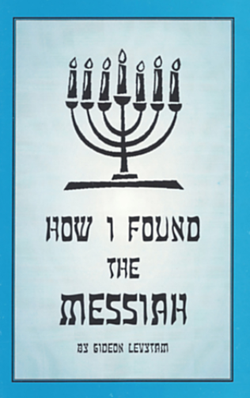
Follow Gideon Levytam's journey and discover how he was led by God, through a series of exciting circumstances, to find the One his people are still waiting for.
Past Episodes

Featured Offer
Follow Gideon Levytam's journey and discover how he was led by God, through a series of exciting circumstances, to find the One his people are still waiting for.
About Holy Scriptures and Israel
As time passed by, the Lord Yeshua took dear brother John Van Stormbroek to himself. The ministry of Holy Scriptures and Israel continued with additional development. In the early 1990’s, a weekly morning Bible class began which brother Gideon Levytam led regularly in the City of Toronto. This weekly open Bible class was held in the Willowdale assembly meeting hall. Eventually, a second mid-week evening Bible class was added. In April 2002, the need for an additional outreach Bible teaching meeting arose. We begun a Saturday (Shabbat) ministry meeting in which a systematic teaching of God’s word is presented to all who attend. Together we learn God’s Word, pray for each need and the salvation of Israel, and sing songs of worship unto our God, praising Him and our Lord Yeshua the Messiah.
In Mid 2004 we started to air on Joy 1250 Radio station a 15 minute Bible teaching program called "The Holy Scriptures and Israel" with Gideon Levytam. The broadcast teaches God’s word from a Hebrew Messianic perspective and has proved to be a blessing to many. It's now aired seven days a week. Our prayer is that many more of our Israeli people will have a clear understanding of who Yeshua is, why we all need him, and come to know him as their Lord and Messiah.
About Gideon Levytam
Contact Holy Scriptures and Israel with Gideon Levytam
426 Simcoe Street
Niagara-on-The-Lake
Ontario L0S 1J0
Canada
(905) 325-1234