

1 John 4:17 to 5:5, Part 3


True Love is Fearless and Submissive Part 3
Guest (Female): Shalom. Holy Scriptures and Israel is a ministry designed to share with the Jewish people the good news of the Lord Jesus, Yeshua the Messiah, and to instruct Christians on the Jewish roots of their faith. And now, teaching God's word from a Hebrew Messianic perspective, here is Gideon Levytam.
Gideon Levytam: The study of First John chapter 4 and chapter 5. For he that loves not his brother whom he has seen, how can he love God whom he had not seen? And verse 21 said, and this commandment we have from him, that he who loves God, loves his brother or his sister also.
Now, you see, sometimes in our behavior, in our pretension, we actually really approve that we really don't love God in a proper way. You see, we have never seen God. No man has seen God and live. We read in the Gospel of John. The only begotten Son, who is in the bosom of the Father, he had declare him. This is Yeshua the Messiah. We haven't seen God.
So, how do we show our love for God? You see, we just read in verse 19, we love because he first loved us. Well, how do we show that we really love God and love God's people if we have friction among each other? And not only friction, because here it said if any man say. You notice the word say. It's easy to say words.
Oh, yes, I love God, but at the same time I'm turning around and I hate a brother that is made in the image and a likeness of God. So he says, you know what, and John is very clear. John does not beat around the bush. He doesn't say it's not nice. He says, you are a liar.
He's saying to me, saying to you, you are a liar if you say that you love God and you harbor hatred against your brothers and your sisters who are made in the image and the likeness of God, who are forgiven just like you, who are part of the body of Messiah, who have been redeemed just like you have been redeemed. If you have hatred towards them, actually, you are a liar.
Notice that word here. And by the way, John saying it more than once. Notice in chapter 2 and verse 4, he said, He that sayeth, I know him and keep us not his commandment, he's a liar.
First John 2 and verse 22, who is the liar, but he that denieth that Yeshua is the Messiah. John, Yohanan is using the word liar, shakran in Hebrew, many times in his epistle, in his letter. But this time he's really speaking to the believers, to the family of God, and he's saying, listen, really, it is a lie that you say that you love God and you harbor hatred against your brother or your sister. This is making you a liar.
And brothers and sisters, isn't it true? The danger that we have, and at time it happened. That's why we need to judge ourself and examine ourself again and again and again, and confess it before the Lord. Thank God for the throne of grace, where we can come to the presence of the Lord in a time of need and tell him, Lord, I fail you, Lord, I dishonor you, and we can be restored into fellowship with the Lord. And that's why he's saying, hating a brother is lying.
That expression, if any man say, is mentioned so many time in the Epistle of John. Chapter 1, verse 6, if we say that we have fellowship with him and walk in darkness, we lie. Chapter 1 and verse 8, if we say that we have no sin, we deceive ourselves.
Chapter 1 and verse 10, if we say that we have not sinned, we make him a liar. Chapter 2 and verse 4, he that sayeth, I know him and keep not his commandments, he's a liar. Notice he used the word if we say, if we say, if any man say, it's very cheap to talk, right? It's another thing to walk with the Lord.
And how often time we say things that we really don't mean them. And therefore, beloved brothers and sisters, every believer is not only called to grow in boldness, in confidence that he is not going to be judged anymore because Yeshua judged it, but every believer is called to be true to God's love and practice this towards our brothers and our sisters.
So, if any man say, I love God, and hates his brother, he's a liar. For he that loves not his brother whom he had seen, how can he love God whom he had not seen? You know, the proof of our fellowship with the Lord is our love towards one another. And you know, Yeshua said this many, many years ago.
In the city of Jerusalem, when he was with his own Hebrew disciples in the upper room in that city, he says, listen, by this shall all men know that you are my disciples if you have love one towards another. It's beautiful to see, beloved brothers and sisters. Turn with me to Matthew chapter 22 and verse 36 to 40, and that is in connection with the last verse of First John chapter 4, verse 21.
Somebody came to ask Yeshua and he said to him, Master, which is the great commandment in the law? Remember, the church was not born at that time. He's speaking to the nation of Israel as a Jewish man, among his own people. The Messiah came. The church was not born. The Gentiles' world was not yet in. The body of Messiah had not begun as yet.
He is there in the midst of his own people of Israel, and they were talking which is the greatest commandment in the Torah? The Torah that God gave our people Israel. So Yeshua answered, and he says to him, Thou shall love the Lord thy God with all thy heart, and with all thy soul, and with all thy mind.
This is the first and a great commandment. But he didn't stop there. And the second is like unto it, Thou shall love thy neighbor as thyself. In Hebrew, Ve'ahavta lere'akha kamokha. And so what Yeshua is saying in verse 40, on these two commandments hang all the law and the prophets. You see, it's not only a New Testament teaching that the believers are exhorted to love one another and proving that they love God by loving one another.
It was given to our people Israel a long time before God gave the law to our people Israel. Loving God and loving the neighbor or the brothers, the family and the people around him is an evidence of really love for God. The first commandment is to love God. All the remaining is the love for God will be evident in the way that we behave towards one another.
Love your neighbor as yourself. Matthew chapter 22 verse 36 to 40. Yeshua mentioned that. V'ahavta et Adonai Elohecha, Deuteronomy 6 verse 4. V'ahavta lere'akha kamokha, Leviticus 19 verse 18. Love towards God is proven by love towards one another. And this is very challenging, brothers and sisters.
We know this in our very own personal life, how we often fail. And may the Lord help us never to harbor hatred towards our brothers and sisters. We might dislike what they did. We might not appreciate how they behaved. And they might not appreciate how we behave or what we have done. But never to harbor hatred against anyone. But especially not against the Mishpacha, the family of God.
How many families are broken because of hatred? How many homes are broken to pieces because their family cannot deal with each other? This hate this one and the other one hate this one. And listen, beloved brothers and sisters, this commandment have we from him that he who loves God loves his brother also. Verse 21 of First John chapter 4.
We have to be so guarding ourself against hatred. We see what's going on in the world when it's come to hatred. Hatred produce all sort of evil. Hatred bring about such a sadness and sorrow. Hatred is not something that should be part of the life of the believer. When hatred rises up, we should go to the throne of grace, and we should confess it before the Lord, and ask the Lord to help us to produce love in our hearts, that God's love to shed abroad in our hearts by the help of the Ruach HaKodesh, the Holy Spirit of God.
And so now that he mentioned in verses 17 to 21 those two things, namely, every believer should grow in boldness, in confidence in the love of God, and that every believer is called to be true to the love of God. Now in chapter 5, he added two additional things that every believer ought to have in his or her life.
First John chapter 5, verses 1 to 3, every believer need to submit to God's commandments. Oh, submission, it's so difficult for us. Submission is one of the greatest problem. Obedience is our problem, right? Brothers and sisters, disobedience plunge the human race into sin. And so obedience is very important.
So, the first three verses of First John chapter 5, every believer need to obey, to submit to God's commandments. And I'm reading this. Verse 1, whosoever believes that Yeshua is the Messiah is born of God, and everyone that loves him, that begets, loves him also, that is begotten of him. They began by saying, listen, submission to God, it's been proven by obedience to God's request to love those that who are born from above, born of God.
You see, whosoever believes that Yeshua is the Messiah is born of God. You have a new life. I have a new life. We are born from above. And if we are born of God, born from above, everyone that loves him that beget, loves him that begotten of him. In other word, we are to love in obedience, in submissiveness to God, we are to love other ones that have been born of God.
You see, he's talking to the Mishpacha, to the family. Well, you are part of the family of God, and I'm part of the family of God. All of them that have been born again are part of the family of God. Now in the Mishpacha, in the family, the only way to enjoy fellowship with each other is evident by our love one towards another.
Sacrificial love, not only feeling of love, but a sacrificial love. And so if we are born again, we are born from God, we have this new nature, well, the other brother and sister have the very same nature that you and I have. They have been born of God. And can you imagine? We are going to spend with each other eternity in glory.
And yet here, we often time fail to love our brethren. You remember what one have said, Oh, to dwell with saints above, that will be glory. But how to dwell with saints below, this is another story. You see, to dwell with saints, we are going to go to heaven, we're going to be above with all the saints. That will be glory, we say. Wow, to be with all those that have been born from above.
But how to behave here with saints here below, this is another story. For this, we need to enjoy the love of God and to practice this in our life. So every believer need to submit to God's commandments, to love the brethren. Notice what it says in verse 2 of First John chapter 5, loving God is keeping his commandments.
It's obedience to his commandments. Look at this, it says in verse 2. By this we know that we love the children of God, when we love God and keep his commandments. In submissiveness to him, we keep his commandments. Now, God's commandments are vast. We are not called today in the present day dispensation of the church age to go three times a year to the city of Jerusalem to the temple, because that was given to Israel as a nation. It was a commandment.
But we are called, all the other commandments that God had given to us in scripture, are given to us as believers today to submit to. And so, he's saying, when we love God, we love him out of joy, and we submit to him not because we have been forced. You see, God can force us at any time, but he doesn't want us to submit to him because we have been forced.
He want us to submit to him because we love him, as a response. You know, every father here can tell you that. Every mother here can tell you that. When our children submit to us because they love us, it moves our hearts. It gives us joy. Can you imagine if your son and your daughter come to you one day and said, hey, mommy, what can I do more for you today?
Hey, Abba, can I help you more with some of the problems that you have? Can I wash the dishes? Can I clean for you the house? You just rest. I love you. I appreciate you. Now, I know we hardly hear those things. All we hear, hey, I didn't get enough. I want more. Why didn't you give me this? Why didn't you do this for me? You know, you are just not good enough.
But it's so beautiful when we love the Lord and we submit to him just because I love God. That is a wonderful submissive. You see, so when he says that loving God is keeping his commandments, it doesn't mean to keep his commandments out of necessity, but we are to keep his commandment because we love him, and we want to honor him, and we want to do him good, to give him pleasure.
You know, the story that had been said of a son that disobeyed his mother all day long. And the mother says, okay, watch it. When dad going to come home, you're going to watch it. So when dad come home from his work, the son is not staying by the door, he's hiding in his room. He know very well that when the dad going to come home and how mom going to tell how the boy behaved that he going to get some discipline, pain.
But it's another story when all day long he obeyed his mom and he had been helpful at home. And when the father come, guess who is at the door? The child waiting, hey, Abba, dad, what can I give you? He bring the newspaper to his father, bringing the slippers for his father. Sit down and makes him feeling rejoicing because he just want to submit to his father.
And you know, when we don't obey the Lord, we don't have easy time at his presence. We don't feel good. We don't have joy to have him if it were coming at the door and have fellowship with him and enjoy him. Why? Because we disobeyed him. Look at the man by the name of David, when he was in a suitable situation in his life in Psalm 119.
You know, David was not always obedient to God. There was time he dishonored the Lord. But when he was in a suitable condition, he said in Psalm 119 and verse 97, he says, Oh, how I loved thy law. It is my meditation all the day. Thou through thy commandments had made me wiser than my enemies. For they are ever with me.
I have more understanding than all the my teachers, for thy testimonies are my meditation. I understand more than the ancient, because I keep thy precepts. I have refrained my feet from every evil way that I might keep thy word. I have not departed from thy judgment, for thou has taught me.
Listen to this, beloved brothers and sisters, verse 103 of Psalm 119, How sweet are thy words unto my taste. Yet sweeter than honey to my mouth. Through thy precepts I get understanding, therefore I hate every false way. You see, David, David, Melech Yisrael, David, the King of Israel, writing this psalm, who said those words.
He says, Oh, how I love thy law. Now, while we don't have David as a heading of the writer of this psalm, David is known to be the psalmist of Israel, and often time this psalm is attributed to him. And David says, How I love thy law. You know, the word law here is Torah Techa. HaTorah shelcha, your law.
He use Hebrew word mitzvot, commandments, edot, testimonies, pikud, precepts, devar, word, mishpat, judgment, imrat, commandments. He used those words, all of them together are the commandments of the Lord, the law of the Lord, Torah Elohim, the word of God. And so, John is saying, loving God is keeping his commandments.
Do you know, brothers and sisters, that the only ones that disobey the commandments of God are the human race. Everything else submit to the commandments of the Lord. Let me read you a verse in Psalm 148 and verse 8. Listen to this, brothers and sisters. Fire and hail, snow and clouds, strong winds, fulfilling his word.
Fire submits to God's word. Hail submits to God's word. Snow submits to God's word. Vapor, clouds submits to God's word. Stormy winds submits to God's word. All fulfill the word of God, except man. Man do not obey the word of God, because man is a sinner. And our sin nature proved to us by not submitting to God's word, proving that we are at a distance from the Lord.
And a believer have a new nature, which enable us to submit to the word of God. So loving God is keeping his commandments. First John chapter 5 and verse 2. Go back to First John chapter 5, verse 3 now, in connection with every believer's need to submit to God's word. It says in verse 3, God's commandments are not grievous.
God's commandments according to verse 3 of First John chapter 5, for this is the love of God that we keep his commandments and his commandments are not grievous. You see, the word for grievous, in other word for that is not burdensome. See, God's commandments are not heavy and burdensome and grievous. He doesn't ask us to do things that are bad for us. He asks us to do things that are for our own blessing.
He doesn't lay upon us burdensome things. You know, the Pharisees, what they have laid upon the people were burdensome. Keep that, do this. It's not a response to God out of love, but it's a response out of rules of men. And that's why he said to them, the commandments of the Lord is not grievous, is not burdensome.
So, we had so far, every believer should grow in confidence because of God's love. Every believer is called to be true to God's love. Every believer need to submit to God's love. And finally, in verses 4 and 5 of First John chapter 5, every believer overcomes the world because of his faith in our Lord Yeshua the Messiah.
And look at this. It says in those final verses for this ministry meeting, everyone that is born of God has overcome the world. For whatsoever is born of God, overcomes the world. And this is the victory that overcomes the world, even our faith. And I read also verse 5, Who is he that overcomes the world but he that believes that Yeshua is the son of God?
There are two aspects of overcoming the world. There is the positional truth and a practical truth. There is the positional overcoming and there is the practical overcoming. First of all, the positional. First John chapter 5 and verse 5, Who is he that overcomes the world? But he that believes that Yeshua is the son of God.
Every one of us who believe that Yeshua, Jesus, the Messiah is God's son, we have already positionally once and for all overcome the world. But there's the practical overcoming. And that is where again, we need the help of the Lord to overcome it day by day. This is in verse 4.
Whatsoever is born of God, overcomes the world. That's true, positionally. And this is the victory that overcome the world, even our faith. So we positionally overcome the world because we believe in Yeshua the Messiah. But practically, at time, we don't succeed to overcome the world because we have not trusted God. We did not have faithfulness to him.
And that's why at time, we end up falling and allowing the world to creep into our lives. You see, that's why John said in First John chapter 2 and verse 15, love not the world. Nor the things that are in the world. If any man love the world, the love of the Father is not in him. And all that is in the world, the lust of the flesh, the lust of the eyes, and the pride of life is not of the Father, but of the world.
But the world passes away, and the lust thereof, but he that doeth the will of God abides forever. And what he's really saying, that there is a need for practical overcoming. Every believer is positionally victorious over the world, but how is it practically? That's why you remember to the seven churches of Asia Minor, the same apostle, Yohanan, John was writing what Yeshua said in the book of Revelation in chapter 2 and chapter 3.
You remember those verses, every letter that was written to those local assemblies of Asia Minor, ended up with the words, He that hath an ear, Let him hear what the Spirit says unto the churches. To him that overcometh. These are practical overcomers. Where even though positionally the world has been dealt away once and for all because we have accepted Yeshua the Messiah, but practically we need to overcome the world.
And faith in the Messiah and faithfulness to him will prove it in our lives. It will enable us to overcome the world. So every believer is positionally victorious because of his faith in the Messiah. But every believer need to be practically victorious as well. And so I'm concluding now with true love is fearless and submissive.
May the Lord help us to have no fear for the day of judgment, to grow in it and appreciation of the love of God for us. There is no need to be afraid of the day of judgment because Yeshua had paid for this. But also true love is submissive, joyful submissiveness to the word of God. May the Lord help us to be submissive to his word.
Guest (Female): You have been listening to the Holy Scriptures and Israel with Gideon Levytam. Gideon teaches God's word from a Hebrew Messianic perspective. For more information about this ministry, write to Holy Scriptures and Israel, Box 1411, Niagara-on-the-Lake, Ontario, L0S 1J0. Or visit our website at holyscripturesandisrael.com. You are also invited to Gideon's weekly Bible teaching on Fridays at 11 AM and 7 PM and Saturdays at 1 PM at Willowdale Christian Assembly Hall, 28 Martin Ross Avenue in Toronto. Holy Scriptures and Israel is made possible by your prayers and financial support. If you would like to support the program, visit holyscripturesandisrael.com. God bless you. Shalom, Shalom.
Featured Offer
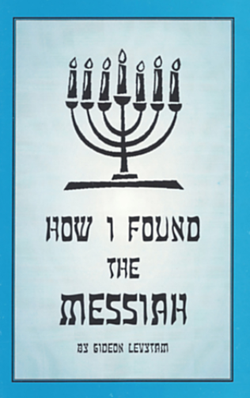
Follow Gideon Levytam's journey and discover how he was led by God, through a series of exciting circumstances, to find the One his people are still waiting for.
Past Episodes

Featured Offer
Follow Gideon Levytam's journey and discover how he was led by God, through a series of exciting circumstances, to find the One his people are still waiting for.
About Holy Scriptures and Israel
As time passed by, the Lord Yeshua took dear brother John Van Stormbroek to himself. The ministry of Holy Scriptures and Israel continued with additional development. In the early 1990’s, a weekly morning Bible class began which brother Gideon Levytam led regularly in the City of Toronto. This weekly open Bible class was held in the Willowdale assembly meeting hall. Eventually, a second mid-week evening Bible class was added. In April 2002, the need for an additional outreach Bible teaching meeting arose. We begun a Saturday (Shabbat) ministry meeting in which a systematic teaching of God’s word is presented to all who attend. Together we learn God’s Word, pray for each need and the salvation of Israel, and sing songs of worship unto our God, praising Him and our Lord Yeshua the Messiah.
In Mid 2004 we started to air on Joy 1250 Radio station a 15 minute Bible teaching program called "The Holy Scriptures and Israel" with Gideon Levytam. The broadcast teaches God’s word from a Hebrew Messianic perspective and has proved to be a blessing to many. It's now aired seven days a week. Our prayer is that many more of our Israeli people will have a clear understanding of who Yeshua is, why we all need him, and come to know him as their Lord and Messiah.
About Gideon Levytam
Contact Holy Scriptures and Israel with Gideon Levytam
426 Simcoe Street
Niagara-on-The-Lake
Ontario L0S 1J0
Canada
(905) 325-1234