

1 John 4:17 to 5:5, Part 2


True Love is Fearless and Submissive Part 2
Guest (Female): Shalom. Holy Scriptures and Israel is a ministry designed to share with the Jewish people the good news of the Lord Jesus Yeshua the Messiah, and to instruct Christians on the Jewish roots of their faith. And now, teaching God's word from a Hebrew Messianic perspective, here is Gideon Levytam.
Gideon Levytam: The study of First John, chapter 4 and chapter 5. So they are not growing in appreciation of the love of God towards them. In other words, they are really saying to God, really God, the work of Yeshua the Messiah is not sufficient.
I'm not sure if what He have done is satisfactory. And you see, instead of trusting the work of the Messiah, they trust in themselves and their ability to keep themselves saved. And that's wrong. We are not able to keep ourselves saved, because the moment we leave this meeting and we go out and we fail in sin, every sin demanded judgment.
Look at what he said in Ephesians chapter 1, the Apostle Paul says in verse 5 and 6, "Having predestinated us unto adoption of the children by Yeshua the Messiah to himself, according to his good pleasure of his will, to the praise of the glory of his grace, wherein He made us accepted in the beloved."
We are not accepted in ourselves, but we are accepted in the beloved. As He is, so are we in this world. God have accepted His work and we are accepted in Him.
Now it's so beautiful to see a believer enjoying the love of God in his or her life, and it's shining out in the relationship to others, and they communicate this with others. They are not condoning sin, not at all. Paul says, "Shall we continue in sin that grace may abound?" Of course not.
But they are appreciative of the love of God which fully and completely have done away with all the sin question once and for all. We have been accepted in the beloved. Just one more verse I want to read as well. Paul also writing in Colossian chapter 1 and verse 12, he said, "Giving thanks unto the Father, which had made us meet to be partakers of the inheritance of the saints in light, who had delivered us from the power of darkness, and translated us unto the kingdom of his dear Son, in whom we have redemption through his blood, even the forgiveness of sins."
Listen, we either have redemption or we don't have redemption. We are either in or we out. We are either saved or we lost. We are either going to heaven or we going to hell, there is no in between.
This is important, beloved brothers and sisters, to understand. So every believer should grow in his confidence that when we are going to stand one day before the Lord, we have no fear of judgment anymore because of the love of God through Yeshua the Messiah made us suitable, made us accepted in the beloved, as He is, so are we in this world, accepted.
Now, verse 18 he continued, Yohanan to tell them, "God's perfect love cast us out fear." And you notice what he's saying here, and I want to elaborate here a little bit about this because it says in verse 18, "There is no fear in love, but perfect love cast us out fear because fear has torment. He that fear is not made perfect in love." You see, beloved brothers and sisters, this is again doctrine, this is teaching. Perfect love cast out fear.
Not your perfect love or my perfect love. We don't have perfect love. You see, our love towards Him is very whiny. One day we love Him more, the next day we love Him less. Our love towards each other is also whiny. One day we like you, the other day we don't love you anymore.
But God's love is a perfect, perfect love. There is no greater love than the love of God. There is no greater love when He proved it when He sent His son, Yeshua the Messiah. So that perfect love ought to cast out fear.
Now the Hebrew word for fear is pachad. When a person have to be afraid of standing before God, he or she know that they are not right with God. You see, why people afraid of death? Because naturally speaking, we all by nature afraid of death. Why? Because we know when we die, we are not sure about what's going to happen after death.
And that's why people, human beings, they are often tried to cover their fear, to appease God by doing all sort of things. For example, the first time that we find fear is found in Genesis 3 when Adam and Eve sinned. What did Adam do immediately, and his wife? They feared God, they hide. They hide behind the trees there, and they even cover themselves and they began to pretend if everything okay. They are not naked, they are okay. You see, they cover themselves with fig leaves.
That's how it began, right, in the garden of Eden, when sin came into this world, when Chet had come into this world. But you see, what happened, the perfect love of God take away fear. You see, there is a difference between pachad to be afraid and yirah to have the fear of God.
In Proverbs chapter 1 and verse 7, we read, "The fear of the Lord is the beginning of knowledge." That is a reverential fear. That is an honor to God. But the believer in Yeshua the Messiah, when his or her sins have been dealt once and for all, there is no need to be afraid because it says, "There is no fear in love." God loves us to such an extent that He doesn't want us to have this fear from Him because perfect love cast away fear.
We don't need to be afraid of God because God become our Abba, our Father. And He loves us so much. He doesn't condone our sins. For this He judged the Messiah, the Mashiach Yeshua. But He loves us to the extent that He dealt with this question of sin, and He want us to respond to Him.
Now you notice what it says in verse 18b, it says, "Because fear has torment." Now, I have enjoyed explanation of another. You see, there is a difference between torment and torture. I don't know if you have seen just recently what we heard on the television how they have burned alive a man, a pilot. How evil men is, that he's able to torture.
Torture has to do with physical suffering. But torment, it doesn't have to do with the physical suffering, but it has to do with the sufferings of the mind, just the thinking. You know, sometimes when we are afraid of something, we don't have torment on our body. We don't have torture in our body, but we have torment in our mind. We are afraid, "What's going to happen?"
And we sweat at night. And we feel so bad because we have these thoughts, the thinking that tormenting us. So there is a difference between torment and torture. In Hebrew, it's ennui, to do evil things to the body, to burn a person alive. This is not torment, this is torture.
So what he's really saying here, "Because fear has torment." You see, what happened when we are afraid of judgment or something, we began to think. We have a suffering of the mind. By the way, that word for torment is the Greek word kolasis, K-O-L-A-S-I-S, in the biblical text, which speaks of the word for punishment.
It is used only twice in the New Testament. The first time it used in the Gospel of Matthew, and the second time it is used in First John chapter 4 and verse 19. And I want you to go to Matthew, please, chapter 25 with me back to the Gospel of Matthew, where Yeshua was speaking in connection with the tribulation period and what's going to happen for those who are unbelievers when they're going to die without their sins forgiven.
Matthew chapter 25, John said there in verse 46, this is the last verse of chapter 25 of the Gospel of Matthew, "These shall go away into everlasting punishment, but the righteous into eternal life." That word for punishment is the same word for torment in First John chapter 4 and verse 18.
In other words, when someone is afraid, this mean because his thoughts are in and his mind is afraid of consequences. But he says here in verse 18, "There is no fear in God's love." The perfect love of God casting away all fear, we don't need to be afraid when we're going to stand before God because our sins have been dealt with once and for all.
And then he says, "Fear has torment." The mind of a person is thinking about all the evil and the wrong that he has done, and he or she not realizing that they have been already dealt once and for all on the tree when Yeshua himself finished the work for us on the cross.
And do you remember in Luke chapter 16, Yeshua was telling a story about the rich man and Lazarus. And you remember when Lazarus died, he was taken to Abraham's bosom, Luke 16. But when the rich man died, he was taken unto hell, unto Hades. And there he was, it used the word tormented.
And he says, "Father Abraham, send Lazarus, that he will dip the tip of his finger in water and my tongue because I am tormented here." And you know what Father Abraham told him? He says, "Son, remember, when you were in your lifetime you had all the pleasures of this world but you didn't want God in your life. But Lazarus didn't have much. And now Lazarus believed in God, and that's why Lazarus is here in Abraham's bosom, and you are there away from the bosom of Abraham. You're in Hades, you are tormented."
But the tormentation there was a tormentation of the mind. He was thinking and he looking back. And that's why Abraham said to him, "Remember." Where you remember? In your head, in your mind. You look back and you see, "Wow, I had an opportunity to have my sins forgiven, and I rejected the Messiah Yeshua. Now it is too late."
And this rich man is looking back and what does he see? He says, "Wow, I played the fool. I should have accepted the Messiah and I rejected him." So what he's really teaching us here, beloved brothers and sisters, that fear for the unbeliever is really a torment, is a mind, is a suffering of the mind, just thinking, "I have rejected God. I had an opportunity to accept Him, and all my sins are now laid upon me."
And that's why John is saying, "Listen, there is no fear in love. Perfect love cast away fear. In fear there is tormentation, but you should not have that because it is for the unbeliever. The believer should grow and mature in appreciation of the love of God. Perfect love cast us out fear."
And therefore, beloved brothers and sisters, it is so wonderful to know that God once and for all removed our sins away from us. Paul said to Timothy in Second Timothy chapter 1 and verse 7, he said, "For God has not given unto us the spirit of fear, but of power, and of love, and of a sound mind."
God did not give us the spirit of fear, beloved brothers and sisters, but He gave us the spirit of power, the spirit of love, the spirit of sound mind. Those of us that have truly accepted Yeshua the Messiah as our Lord and Savior, we do not have to fear from the day of judgment because the judgment have passed by. The Messiah Yeshua bore our sins in his body on the tree. And therefore, perfect love cast us out fear. The love of God cast us out fear.
In verse 19, we are still speaking about the first thing, every believer should grow in appreciation of God's love. In verse 19, "We love because He first loved us." Now you notice that I omitted the word Him in verse 19, "We love Him because He first love us." In most of the older manuscripts, the word Him is not mentioned here.
Because it's not a matter of loving God here only, but the point is here that he's trying to say, "We love in general." We love mankind. We love others. We love God. Why? Because God first loved us. His love has been proven in the fact that He gave His son for us on the tree. And therefore, he says, "We love because He first loved us." Wonderful truth to understand.
In First John chapter 4, in verse 10, it says, "Here in his love, not that we loved God, but that He loved us, and He sent his Son to be the propitiation for our sins." And really, brothers and sisters, we love in general because we appreciate God's love, unconditional love towards us.
And that's why it is awful when we not appreciative of God's love towards us and we treat each other in a bad way, in un-becoming way. That is not growing in appreciation of the love of God. This is only prove to us that we haven't grown and mature enough to appreciate what God have done for us.
As he began here in our verses, verse 17, "Herein our love been made perfect, been mature." Because we have appreciated what God have done for us in loving us and giving His son for us. So, every believer should grow in appreciation of the love of God. I hope we all do so. I hope we all grow in this.
If we don't grow in this, something is lacking. We are not appreciating His love for us. We got to check ourselves and ask the Lord to help us in this. And so, he is moving on now, not only that every believer should grow in confidence because of the love of God, but every believer is called to a true practice of love, the love of God in our own life.
This is verses 20 and 21. Every believer is called to be true to this love of God in practical way. The last two verses here in chapter 4, verses 20 and 21, look what he's saying. "If any man say, 'I love God,' and hates his brother," oh, we can say, "his sister, he's a liar. For he that loves not his brother whom he has seen, how can he love God whom he had not seen?"
And verse 21 says, "And this commandment we have from Him, that he who loves God loves his brother or his sister also." Now, you see, sometimes in our behavior, in our pretension, we actually really approve that we really don't love God in a proper way. You see, we have never seen God.
No man have seen God and live, we read in the Gospel of John. The only begotten Son, who is in the bosom of the Father, He had declared Him. This is Yeshua the Messiah. We haven't seen God. So how do we show our love for God? You see, we just read in verse 19, "We love because He first loved us." Well, how do we show that we really love God and love God's people if we have friction among each other?
And not only friction because here it says, "If any man say," you notice the word "saying," you know, it's easy to say words. Oh, yes, I love God. But at the same time, I'm turning around and I hate a brother that is made in the image and the likeness of God. So he says, "You know what?" And John is very clear. John does not beat around the bush. He doesn't say, "It's not nice." He says, "You are a liar."
He's saying to me, saying to you, "You are a liar if you say that you love God and you harbor hatred against your brothers and your sisters who are made in the image and the likeness of God, who are forgiven just like you, who are part of the body of Messiah, who have been redeemed just like you have been redeemed. If you have hatred towards them, actually you are a liar."
Notice that word here. And by the way, John is saying it more than once. Notice in chapter 2 and verse 4, he said, "He that saith, 'I know Him, and keepeth not his commandment,' he's a liar." First John 2 and verse 22, "Who is the liar but he that denies that Yeshua is the Messiah?" John, Yohanan, is using the word liar, shakran in Hebrew, many times in his epistle, in his letter.
But this time, he's really speaking to the believers, to the family of God, and he's saying, "Listen, really it is a lie that you say that you love God and you harbor hatred against your brother or your sister. This is making you a liar."
And brothers and sisters, isn't it true, the danger that we have, and at time it happened. That's why we need to judge ourselves and examine ourselves again and again and again and confess it before the Lord. Thank God for the throne of grace where we can come to the presence of the Lord in a time of need and tell him, "Lord, I fail you. Lord, I dishonor you." And we can be restored into fellowship with the Lord. And that's why he's saying, "Hating a brother is lying."
That expression, "If any man say," is mentioned so many time in the epistle of John. Chapter 1 verse 6, "If we say that we have fellowship with Him and walk in darkness, we lie." Chapter 1 and verse 8, "If we say that we have no sin, we deceive ourselves."
Chapter 1 and verse 10, "If we say that we have not sinned, we make Him a liar." Chapter 2 and verse 4, "He that saith, 'I know Him, and keep not his commandments,' he's a liar." Notice, he use the word, "If we say, if we say, if any man say," you know, it's very cheap to talk, right? It's another thing to walk with the Lord. And how often time we say things that we really don't mean them.
And therefore, beloved brothers and sisters, every believer is not only called to grow in boldness, in confidence that he's not going to be judged anymore because Yeshua judged it, but every believer is called to be true to God's love and practice this towards our brothers and our sisters. So, "If any man say, 'I love God,' and hates his brother, he's a liar. For he that loves not his brother whom he had seen, how can he love God whom he had not seen?"
You know, the proof of our fellowship with the Lord is our love towards one another. And you know, Yeshua said this many, many years ago in the city of Yerushalayim, when he was with his own Hebrew disciples in the upper room in that city, he says, "Listen, by this shall all men know that you are my disciples if you have love one towards another."
It's beautiful to see, beloved brothers and sisters. Turn with me to Matthew chapter 22 and verse 36 to 40, and that is in connection with the last verse of First John chapter 4, verse 21. Somebody came to ask Yeshua, and he said to him, "Master, which is the great commandment in the law?"
Remember, the church was not born at that time. He's speaking to the nation of Israel. As a Jewish man among his own people, the Messiah came, the church was not born, the Gentile world was not yet in. The body of Messiah have not began as yet. He's there in the midst of his own people of Israel, and they were talking, "Which is the greatest commandment in the Torah?" The Torah that God gave our people Israel.
So Yeshua answered and he says unto him, "Thou shall love the Lord thy God with all thy heart, and with all thy soul, and with all thy mind." This is the first and the great commandment. But he didn't stop there. "And the second is like unto it, thou shall love thy neighbor as thyself." In Hebrew, "Ve'ahavta lere'akha kamokha."
And so, what Yeshua is saying in verse 40, "On these two commandments hang all the law and the prophets." You see, it's not only a New Testament teaching that the believers are exhorted to love one another and proving that they love God by loving one another. It was given to our people Israel long time before.
God gave the law to our people Israel, loving God and loving the neighbor or the brothers, the family and the people around him is an evidence of really love for God. The first commandment is to love God. All the remaining is the love for God will be evident in the way that we behave towards one another. "Love your neighbor as yourself." Matthew chapter 22 verse 36 to 40, Yeshua mentioned that.
"Ve'ahavta et Adonai Elohecha," Deuteronomy 6 verse 4. "Ve'ahavta lere'akha kamokha," Leviticus 19 verse 18. Love towards God is proven by love towards one another. And this is very challenging. Brothers and sisters, we know this in our very own personal life, how we often fail. And may the Lord help us never to harbor hatred towards our brothers and sisters.
We might dislike what they did. We might not appreciate how they behaved. And they might not appreciate how we behave or what we have done, but never to harbor hatred against anyone. But especially not against the mishpachah, the family of God. How many families are broken because of hatred? How many homes are broken to pieces because the family cannot deal with each other. This hate this one and the other one hate this one. And listen, beloved brothers and sisters, this commandment have we from Him, that he who loves God loves his brother also. Verse 21 of First John chapter 4.
We have to be so guarding ourselves against hatred. We see what's going on in the world when it's come to hatred. Hatred produce all sort of evil. Hatred bring about such a sadness and sorrow. Hatred is not something that should be part of the life of the believer. When hatred rises up, we should go to the throne of grace, and we should confess it before the Lord, and ask the Lord to help us to produce love in our hearts, that God's love to shed abroad in our hearts by the help of the Ruach Hakodesh, the Holy Spirit of God.
And so, now that he mentioned in verses 17 to 21 those two things, namely every believer should grow in boldness, in confidence in the love of God, and that every believer is called to be true to the love of God. Now in chapter 5, he add two additional things that every believer ought to have in his or her life.
Guest (Female): You have been listening to the Holy Scriptures and Israel with Gideon Levytam. Gideon teaches God's word from a Hebrew Messianic perspective. For more information about this ministry, write to Holy Scriptures and Israel, Box 1411, Niagara on the Lake, Ontario, L0S 1J0. Or visit our website at holyscripturesandisrael.com.
You are also invited to Gideon's weekly Bible teaching on Fridays at 11:00 AM and 7:00 PM and Saturdays at 1:00 PM at Willowdale Christian Assembly Hall, 28 Martin Ross Avenue in Toronto. Holy Scriptures and Israel is made possible by your prayers and financial support. If you would like to support the program, visit holyscripturesandisrael.com. God bless you. Shalom, shalom.
Featured Offer
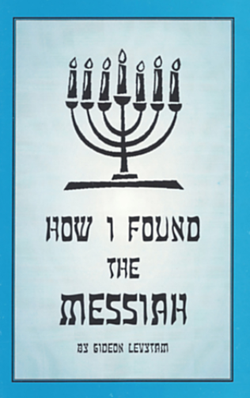
Follow Gideon Levytam's journey and discover how he was led by God, through a series of exciting circumstances, to find the One his people are still waiting for.
Past Episodes

Featured Offer
Follow Gideon Levytam's journey and discover how he was led by God, through a series of exciting circumstances, to find the One his people are still waiting for.
About Holy Scriptures and Israel
As time passed by, the Lord Yeshua took dear brother John Van Stormbroek to himself. The ministry of Holy Scriptures and Israel continued with additional development. In the early 1990’s, a weekly morning Bible class began which brother Gideon Levytam led regularly in the City of Toronto. This weekly open Bible class was held in the Willowdale assembly meeting hall. Eventually, a second mid-week evening Bible class was added. In April 2002, the need for an additional outreach Bible teaching meeting arose. We begun a Saturday (Shabbat) ministry meeting in which a systematic teaching of God’s word is presented to all who attend. Together we learn God’s Word, pray for each need and the salvation of Israel, and sing songs of worship unto our God, praising Him and our Lord Yeshua the Messiah.
In Mid 2004 we started to air on Joy 1250 Radio station a 15 minute Bible teaching program called "The Holy Scriptures and Israel" with Gideon Levytam. The broadcast teaches God’s word from a Hebrew Messianic perspective and has proved to be a blessing to many. It's now aired seven days a week. Our prayer is that many more of our Israeli people will have a clear understanding of who Yeshua is, why we all need him, and come to know him as their Lord and Messiah.
About Gideon Levytam
Contact Holy Scriptures and Israel with Gideon Levytam
426 Simcoe Street
Niagara-on-The-Lake
Ontario L0S 1J0
Canada
(905) 325-1234