

1 John 3:11-24, Part 3


The Need of True Love Among God’s People Part 3
Guest (Male): Shalom. Holy Scriptures and Israel is a ministry designed to share with the Jewish people the good news of the Lord Jesus, Yeshua the Messiah, and to instruct Christians on the Jewish roots of their faith. And now, teaching God's word from a Hebrew Messianic perspective, here is Gideon Levytam.
Gideon Levytam: The study of 1 John chapter 3 continues. As the apostle John said, the one who hates another is like a murderer, similar to what Cain has done to his own brother. He says that is not the way at all. Brethren, he says, how do we know love? We know it when we look at Yeshua and we see what He has done for us.
If He has done this for us, can one harbor hatred in his own heart or her own heart to the extent that they are willing for all sorts of evil to happen to their own brothers and sisters who have wronged them perhaps? You see, he says no. If we learn what love is all about from Yeshua the Messiah, who laid down His life for us, we also have to look at this example and be willing to offer ourselves in some measure. He said we ought to be willing to lay down our lives for the brethren.
Then he says in verse 17, the proof that we have love one towards another is by meeting the needs of each other. That's why it is very practical. You notice when he uses the word brethren in plural in verse 16, he is narrowing it down to a brother singular or a sister singular. He says in verse 17, whosoever has this world's good and sees his brother or his sister have a need and shuts up his bowels of compassion from him or from her, how dwells the love of God in him?
Here is the proof that we really learn some lessons from the love of our Lord Jesus, our Lord Yeshua the Messiah, is by how we treat our brothers and sisters. This is very important. This is very practical. It is not theory. It is not merely word of mouth like we often like to say things, but this is very practical. We fail the Lord when we are not practically acting upon what He expects from His own people to do.
I have a couple of verses I want to link with this passage. It turns back to the book of Ya'akov, the book of James. In James chapter 2 verse 14, James, Ya'akov, says this: "What does it profit, my brethren, though a man say that he has faith and have not works? Can faith save him? If a brother or sister be naked and destitute of daily goods or daily food, and one of you say unto them, 'Depart in peace, be warmed and filled,' notwithstanding you give them not those things which are needful to the body, what does it profit?"
You see what he is saying. John is speaking about love; James is speaking about faith. You say that you believe in God, but how is it manifest in a practical way in the life of the believer? While in James, Ya'akov wrote in connection with faith, Yohanan is connecting it with love.
If you say that you really love the Lord and you love the people of God, how is it evident in the life of the believer? If a brother has a need and then you shut your bowels of compassion from him, how does the love of God dwell in you, dwell in me, or dwell in us? You know how many times we had opportunities to meet a need and we failed the Lord and we failed our brothers and sisters by not acting upon it?
John is very practical. There is a danger of living without concern or with indifference and callousness. It is dangerous to think, "I don't care, I'm a child of God, I belong to the body of Messiah, I'm going to heaven, I'm saved," but not to practically be a blessing to each other. How do you say that the love of God is dwelling in you? John is addressing this in 1 John chapter 3 and verse 17.
John is emphasizing this today. Look at another verse in Hebrews chapter 13, verses one, two, and three. The writer who wrote to Hebrew believers says, "Let brotherly love continue." In other words, it began, so let it continue on. Then he said, "Be not forgetful to entertain strangers, for thereby some have entertained angels unaware."
Then he says, "Remember them that are in bonds as bound with them, and them which suffer adversity as being yourself also in the body." In other words, do not be indifferent. Do not have the kind of attitude that is without concern for others. We are always in danger of being like that, not concerned about the needs of others and not meeting the need of the brothers and sisters. Although we love the Lord, there is this danger of having a lack of care for the people of God.
This is practical Christianity, a practical walk with the Lord. We have the lowest way of living, which will lead man to murder. We have that which is a bit higher, and that leads man to just have an internal hatred rather than love among the people of God. Then we have the danger of being so careless. We are not the worst of the worst, but we are careless.
In the last verses of this chapter, John is leading these brothers and sisters to the highest form of love in which we ought to live. This is something that we all need help with. This is the believer's true way of living here in this world. This is what you call a practical walk with the Lord in relationship to our brothers and sisters. Here it is in verses 18 to 24.
In verse 18, first of all, notice that he calls them "my little children." He used the word "little children" before, but now he adds "my." Not only were they children of God, believers, and part of the family of God, but he felt this sense of responsibility and ownership. That is why he is saying to them in verse 18, "my little children."
He used this expression already in chapter 2 and verse one. Now he uses this expression again because John felt an ownership over the people to whom he wrote. He felt that perhaps he was used by the Lord and by the Spirit of God to lead many of those to the Messiah. He had been sharing the gospel and teaching the word of God, and so he had, as a father, concern for them.
That is why he says "you are my little children, I love you." Paul used this very same expression also in Galatians 4 and verse 19. Paul was laboring and ministering the word and sharing the gospel, and then the believers there became like his own born ones. They became born from above, but he had ownership over them in a sense that he loved them and wanted well for them.
John does the same thing. He has care and concern for the people to whom he wrote. So in verse 18 he is saying, "my little children, let us not love in word first of all, and neither in tongue, but in deed and in truth." Brothers and sisters, he is saying to the one he wrote in the *mishpachah*, in the family, "my little children, let's not merely love one another in tongue and in word, but let's love one another in deed and in truth."
In other words, he is saying to them, "let's have a sacrificial love one towards another." It's so beautiful to remember reading Bible stories to our children when they were young. I still remember one that really moved my heart. There is a story about the little boy that went to school and won a prize.
He was going to get number one. It was a big prize just for himself. In the story, it shows a cloud and in the cloud, he was seeing his little brother playing at home with the toys. When he was supposed to get this number one prize, he said to the teachers, "I do not want this number one prize for myself. Give me number two or number three," because there were two smaller toys, not as valuable, but he was thinking about his brother.
Really, that moved me. I am sure it will move your heart too when you think about how wonderful it is to see where brethren have concern one towards another. It doesn't mean we have to agree with each other on everything. It doesn't mean that we have to love the way we behave. Sometimes we are not lovable people, we know that, but we must love the brethren just to wish them well and to seek to see them being blessed rather than to seek them evil, ill, or wrong.
It is so beautiful and attractive because it reminds us of the love of Yeshua the Messiah, who was willing to lay down His life for enemies such as us. In Romans 5, we read that while we were enemies, while we were without strength, and while we were weak, the Messiah, the *Mashiach*, died for us. But somehow at times, unfortunately, we allow Satan to control us and we allow the flesh to take its course.
We end up instead of caring for each other, we end up careless about our brothers and sisters and have no desire to practically assist them or practically aid them. That's why he says in verse 18, "my little children, let us not love in word." Just don't say only "I love you." We need to hear that, by the way. We need to say to each other once in a while, "you know brother, a sister, I love you in the Lord." It's a good thing to say.
But do not leave it there when a need arises. My little children, do not love one another in word and in tongue only, but love one another in deed. The Hebrew word is *po'al* or *pe'ulah*. Do something about it. And love in truth, or *emet*. Use sincere, practical love to the believers. It is so essential. This is the highest standard of living here in this world.
It is not verses 11 and 12, which led to a murder. It is not verses 13, 14, and 15, where hatred comes out of the heart. It is not even verses 16 and 17, which address carelessness or lack of concern for the believers. But here he is leading us to a higher way of living the life of the child of God. Let us, he says in verse 18, "my little children, let us not love in word, neither in tongue, but let us love in deed and in truth."
It is so precious because it reminds us of the one who loved us and gave Himself for us, of Yeshua the Messiah, of whom we read through the prophet Isaiah: "He was wounded for our transgression. He was bruised for our iniquity. The chastisement of our peace fell upon Him and with His stripe we were healed." Yeshua the Messiah died for our sins and paid a price. How precious it is when we learn from Him, the one that paid the price in order to redeem us.
This is a practical love towards mankind and we ought to show this in some small measure toward one another. Now he is reminding those believers in verses 19 to 24 of three things in conclusion. First of all, in verses 19 and 20, we ought to know that God is greater than our heart. When we fail the Lord and get disappointed with ourselves, don't forget for a moment that God is greater than your heart.
If you fail the Lord, we need to repent and to confess our sins and not to come to a point that we are so hard upon ourselves. We must realize that God is greater than our heart. Listen to these beautiful verses 19 and 20. "And hereby we know that we are of the truth, and shall assure our hearts before Him. For if our hearts condemn us, God is greater than our heart, and knoweth all things."
Now pause with me here for a moment. Sometimes we fail the Lord as believers. We are not always loving our brothers and sisters as we ought to. We are not always speaking kind to each other or helping each other practically. At times we behave terribly and we are disappointed in ourselves. Others are looking at us and saying, "Look, you say that you are a believer in Yeshua the Messiah, look what you have done."
What is the believer to do when he or she fails the Lord? Well, we are to turn to 1 John 1:9: "if we confess our sins, He is faithful and just to forgive us and to cleanse us from all unrighteousness." We are to turn back to Him, get up, dust ourselves off, and continue on to seek to live for the Lord in this world. Sometimes when we fail the Lord, we are so hard upon ourselves and we feel so disappointed.
You remember Peter, who said to Yeshua the Messiah, "Everyone will deny You, but I am going to stand for You." And when the test came, he denied his Messiah three times. "I know not that man." You know what happened? By the third time that he denied Yeshua the Messiah, the cock crowed. Remember that? And then Peter wept.
The Lord looked at him as if to say, "You are the one that promised me that you're going to follow me and will never deny me." He looked at him and Peter turned around and he went out weeping. He really felt so bad. Don't you feel that sometime when we fail the Lord? We should have been wiser, but we were fools. We should have behaved better and we didn't. We should have made a better choice and we made a foolish choice. We failed the Lord and we sinned.
When that happens, our conscience bothers us. There is no liberty. He says here in verse 19, "hereby we know that we are in the truth and shall assure our hearts before Him." Sometimes we are so disappointed in the wrong that we have done and in ourselves that we have no liberty to pray or to rejoice in the Lord because we failed Him. But if we truly repent of it and we turn to the Lord and confess it before Him and turn away, then fellowship is restored.
That's why it is such an important verse to know in verse 20: "If our hearts condemn us." How many times our hearts condemn us because we were wrong before the Lord. Thank God for what he adds here. He says, "God, He's greater than our heart and He knows all things." What do you think, we caught God by surprise? He knows our hearts. He knew our hearts before we became believers, and He knows our hearts now.
Let me read you what the prophet Jeremiah, Yirmiyahu, said in chapter 17. Jeremiah said in chapter 17 in verse nine, "the heart is deceitful above all things and desperately wicked." Then he adds, "who can know it?" I want to tell you who can know it. God knows our heart. He knows when we fail Him. He knows everything about us.
When we are children of God, He is delighted to see a confession before Him and repentance and turning to Him. Notice how beautiful verse 20 of 1 John chapter 3 is. "God is greater than our heart and He knoweth all things." That's an important verse to understand because God is in the business of restoring His own people. He delights to see a brother or sister being restored by Himself and then continuing on to live here in this world for Him.
This is the higher way of living rather than that lower one that we have been speaking about in the previous verses. It is wonderful to see this here in 1 John chapter 3. There are many verses that can come to mind. Remember when Peter denied the Lord three times, the Lord restored him. In chapter 21 of the Gospel of John, we find the Lord calling Peter and saying, "Peter, lovest thou Me?" After Shimon Petros denied the Messiah, He restored him.
How come He restored him? Because Peter repented. He knew he was wrong, he failed the Lord, but he repented and he turned back to God. This is beautiful. In Psalm 139, David, Melech Yisrael, says, "Search me, O Lord, and know my heart. Know my thought, try me and know my thought and see if there is any wicked way in me and lead me in a way everlasting." David wanted the Lord to search him because we don't even know our own heart. God knows the heart better than we know our own heart.
That's why God is greater than our heart. Even when you have no liberty at times and you feel like you disappointed Yeshua the Messiah, it should lead us to repentance, to confession, and to restoration. That will ultimately lead us into a fellowship with the Father, fellowship with the Son, and fellowship with the people of God. It is wonderful to be restored. We ought to know that God is greater than our heart.
Then verse 21 and 22 address another thing that we ought to know as believers in Yeshua the Messiah: that God is able to answer prayer. Sometimes you don't feel like praying because you disappointed the Lord. The important thing is to confess and to repent. Once we have repented, God is able to answer our prayers. Again, look at verse 21 and 22.
We read in verse 21, "beloved, if our heart condemn us not, then we have confident toward God. And whatsoever we ask, we receive of Him because we keep His commandment and do those things which are pleasing in His sight." When our heart does not condemn us, that means that we have been restored. When we have confessed our sins and repented, now our hearts are no longer condemning us, and we can turn in prayer to the Lord and ask Him to assist us.
As he says in verse 22, "whatsoever we ask, we receive." Here is the reason why: because we keep His commandment and do the things which are pleasing in His sight. When we have a hateful attitude towards the people of God, that is not pleasing to the Lord. That is disobeying His commandment. "By this shall all men know that ye are My disciple if you have love one towards another." If we are not obeying His commandment and not doing things that are pleasing in His sight, no wonder we will have no liberty to ask anything from Him in prayer.
But he says in these verses that if our hearts do not condemn us anymore, then we have confidence toward God. We have liberty and confidence, and we can say as in verse 22, "whatsoever we pray, we ask, we receive." Why? Because we keep His commandment and because we do the things which are pleasing unto Him. The Father wants us to do things that are giving Him pleasure and joy because that's the reason why He left us here in this world.
Finally, not only are we to know that God is greater than our heart, but we are also to know that God is going to answer prayer. Then finally, we are to know in verses 23 and 24 that God's Holy Spirit will reveal to us if we are truly abiding close to Yeshua the Messiah. This is the final portion of 1 John chapter 3, verses 23 and 24.
Verse 23: "And this is His commandment, that we should believe on the name of His Son Yeshua the Messiah, Jesus Christ, and love one another as He gave us commandment." This is the commandment that we should believe in the Messiah and trust Him as believers in Yeshua, and then love the brothers and sisters because He gave us this commandment.
Then he concludes in verse 24 and says, "and he that keepeth His commandment dwelleth in Him, and He in him. And hereby we know that He abideth in us because the Spirit which He have given unto us will show this to us, by the Spirit which He have given unto us." Now, you know, brothers and sisters, that *Ruach HaKodesh*, the Holy Spirit of God, is indwelling every one of us who is a believer. And the Holy Spirit of God is a divine person. He convicts us.
He speaks to us through the word. He's the one that is speaking to us constantly, allowing us to understand whether we are abiding close to the Lord. When we are not close to the Lord and we are going astray, we have the Holy Spirit of God, the person of God the Holy Spirit, really grieved and quenched. There is no liberty. We feel that we have made Him sad when we quench the Spirit or grieve the Spirit. We are, in a sense, hurting Him, and that's why there's no liberty.
That's why he says in the last verse, "and he that keepeth His commandment." If we follow the Lord and obey Him, then we find out that we are really dwelling in Him and He dwells in us. And he says at the end here, "and hereby we know that He abideth in us by the Spirit which He had given unto us." God had given us the Holy Spirit of God, and He is the one that enlightens us. He is revealing unto us whether we are in the right or in the wrong, and whether we are making the better decision or the wrong decision.
He is indwelling every believer. And again remember, if a person does not have the Holy Spirit of God, Romans 8 verse 9, he or she does not belong to God whatsoever at all. But for those of us that have accepted Yeshua the Messiah, the Holy Spirit of God is indwelling in us. 1 Corinthians chapter 6 says, "know you not that your body is a temple of the Holy Spirit?" The body is a temple of the Holy Spirit and we belong to Him. The Holy Spirit of God indwells us, and by the Spirit of God, we can know whether we are abiding in Him and He abides in us.
And we know it very well because the Spirit of God does speak to us. When we go wrong, we know it because He convicts us. He shows us, "Listen, that's not the right way," and we don't feel satisfied or at ease. We have no liberty. And that's why it is important for us to realize and to know that God the Holy Spirit will reveal to you and I, will reveal to every believer who is part of the family of God, whether we are close to the Lord or whether we are far from the Lord.
In conclusion of 1 John chapter 3, may the Lord help us to live the kind of life that will be as it is in verse 18. 1 John 3:18: "My little children, let us not love in word nor in tongue but in deed and in truth." Let's love one another and let's seek to be a blessing to one another because by this shall all men know that you are My disciples if you have love one toward another. Can we say amen?
Guest (Female): You have been listening to Holy Scriptures and Israel with Gideon Levytam. Gideon teaches God's word from a Hebrew Messianic perspective. For more information about this ministry, write to Holy Scriptures and Israel, Box 1411, Niagara-on-the-Lake, Ontario, L0S 1J0. Or visit our website at holyscripturesandisrael.com.
You are also invited to Gideon's weekly Bible teaching on Fridays at 11:00 AM and 7:00 PM and Saturdays at 1:00 PM at Willowdale Christian Assembly Hall, 28 Martin Ross Avenue in Toronto. Holy Scriptures and Israel is made possible by your prayers and financial support. If you would like to support the program, visit holyscripturesandisrael.com. God bless you. Shalom, shalom.
Featured Offer
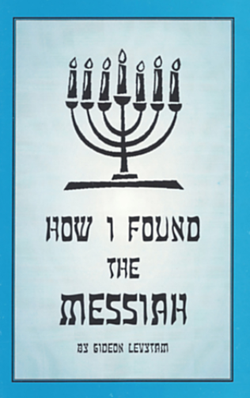
Follow Gideon Levytam's journey and discover how he was led by God, through a series of exciting circumstances, to find the One his people are still waiting for.
Past Episodes

Featured Offer
Follow Gideon Levytam's journey and discover how he was led by God, through a series of exciting circumstances, to find the One his people are still waiting for.
About Holy Scriptures and Israel
As time passed by, the Lord Yeshua took dear brother John Van Stormbroek to himself. The ministry of Holy Scriptures and Israel continued with additional development. In the early 1990’s, a weekly morning Bible class began which brother Gideon Levytam led regularly in the City of Toronto. This weekly open Bible class was held in the Willowdale assembly meeting hall. Eventually, a second mid-week evening Bible class was added. In April 2002, the need for an additional outreach Bible teaching meeting arose. We begun a Saturday (Shabbat) ministry meeting in which a systematic teaching of God’s word is presented to all who attend. Together we learn God’s Word, pray for each need and the salvation of Israel, and sing songs of worship unto our God, praising Him and our Lord Yeshua the Messiah.
In Mid 2004 we started to air on Joy 1250 Radio station a 15 minute Bible teaching program called "The Holy Scriptures and Israel" with Gideon Levytam. The broadcast teaches God’s word from a Hebrew Messianic perspective and has proved to be a blessing to many. It's now aired seven days a week. Our prayer is that many more of our Israeli people will have a clear understanding of who Yeshua is, why we all need him, and come to know him as their Lord and Messiah.
About Gideon Levytam
Contact Holy Scriptures and Israel with Gideon Levytam
426 Simcoe Street
Niagara-on-The-Lake
Ontario L0S 1J0
Canada
(905) 325-1234