
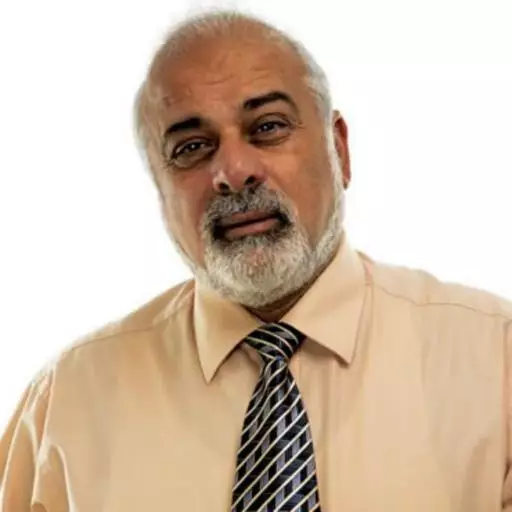
1 John 2:12-17, Part 1


Why Should Believers Love Not the World Part 1
Guest (Male): Shalom. Holy Scriptures and Israel is a ministry designed to share with the Jewish people the good news of the Lord Jesus Yeshua the Messiah and to instruct Christians on the Jewish roots of their faith. And now, teaching God’s word from a Hebrew Messianic perspective, here is Gideon Levytam.
Gideon Levytam: Shalom everyone. I would like you to open your Bibles, please, and let’s turn to the First Epistle of John or Yohanan, and we are going to continue with chapter 2. We have covered so far from verses 1 to 11. Today we’re going to continue in 1 John chapter 2 verses 12 to 17. I find this portion extremely interesting, and I’m sure we’re all going to benefit from the study of this passage.
I write unto you, little children, because your sins are forgiven you for his name's sake. I write unto you, fathers, because ye have known him that is from the beginning. I write unto you, young men, because ye have overcome the wicked one. I write unto you, little children, because ye have known the Father. I have written unto you, fathers, because ye have known him that is from the beginning. I have written unto you, young men, because ye are strong, and the word of God abideth in you, and ye have overcome the wicked one.
Love not the world, neither the things that are in the world. If any man love the world, the love of the Father is not in him. For all that is in the world, the lust of the flesh, and the lust of the eyes, and the pride of life, is not of the Father, but is of the world. And the world passeth away, and the lusts thereof: but he that doeth the will of God abideth for ever.
Now we are in the Epistle of Yohanan, of John. This epistle is very important because it reminds us again that we are part of the family of God, Mishpachat Elohim. Every one of us that has accepted Yeshua the Messiah has immediately been brought into a family. This family is not always functioning in a right way. This family is not always pleasing the Father, the Abba, yet we are all part of the family of God. In this family, there are many needs, and God desires to see the people of God growing.
Peter, Shimon Petros, wrote his epistles to Hebrew believers many years ago, and in the last verse of his second epistle, he wrote: "Grow in the grace and in a knowledge of the Lord Yeshua the Messiah." To see a child growing is essential. When we see children in a normal family, in our very own family, not growing physically, not being nourished physically, we begin to worry. We begin to be concerned. We desire to feed them so they will grow and mature and be strong men and women so they can function here in this world.
Well, it is the very same thing in the family of God. God desires to see us all growing spiritually. When we grow spiritually, we can be used better by the Lord Yeshua the Messiah among his people and be a better testimony for the Lord here in this world. In these previous 11 verses of 1 John chapter 2, he gave them an important understanding of the fact that the Messiah is our advocate with the Father. We have a lawyer who represents us in heaven. While we are in this earth, he has exhorted the believers to love the brothers and sisters.
In the last verses that we spoke about in our previous meeting, he said in 1 John 2:9: "He that says that he is in the light and he hateth his brother is really in darkness." Verse 10: "He that loveth his brother abideth in the light." Verse 11, which we concluded in our previous meeting together: "But he that hateth his brother is in darkness." In the previous portion of 1 John chapter 2, Yohanan said: "Listen, it is evident that we are really enjoying our fellowship with the family when we love the brothers and sisters."
Imagine if you have children in a home, in a normal, ordinary family, and the brothers and sisters are constantly fighting and hating each other and always putting each other down. Instead of building each other up, they are constantly hating and saying, "I hate you, I don’t love you, I hate you." God wants the believers to love each other unconditionally. Even if we don’t like the manner in which they conduct themselves, we are to love the brothers and sisters. Yeshua said in the upper room in Yerushalayim to the Hebrew disciples: "By this shall all men know that ye are my disciples, if ye have love one towards another."
If somebody is going to come in our midst and see us not loving each other, he is going to say: "Listen, shalom, shalom, I don’t want to have anything to do with you." A testimony for God is love among the people of God. I don’t mean wishy-washy love; I mean love that is really sincere. Even when we are wrong and need to be corrected, sometimes the best thing is to hear the need of the correction. If you love each other, we will also seek to correct and help each other graciously and lovingly. That’s what the Apostle Yohanan is sharing with them.
But now, he is shifting from loving the brothers and sisters to not loving the world. It is interesting how John is shifting here. There is a verse in Psalm 97 verse 10: "Ye that love the Lord, hate evil." Interesting, isn’t it? On the one hand, we are exhorted to love. On the other hand, we are exhorted to hate. God loves the sinner, but he hates sin. He does not love sin. Here we see we are to love the brothers and sisters and to love the human race, but we are to hate and not to love the world system that is against God and against his Mashiah, namely Yeshua himself.
So before we go into those verses, we should ask the question: what is the world? The Bible, especially in the Brit Hadashah, uses the word "world" in various ways. In fact, the Greek word for world is cosmos. In Hebrew, we say olam. It can apply to various things in the New Testament. At times, God uses the word for world and applies it simply to the creation of God, in fact to the earth. In Acts chapter 17 verse 24, we find Sha’ul, that is Paul, speaking: "God that made the world and all things therein."
That word for world is cosmos in the Greek, but it is applied to the creation of this world. It is applied to the mountains, the hills, and the valleys. It is applied to the sun, the moon, and the stars. It is applied to the creation at large. That is why Paul says in Acts chapter 17 verse 24: "God that made the cosmos, the world, and all the things that is in the world." Secondly, sometimes the very same word for cosmos is not so much used for the earth and God’s creation, but it speaks about the human race, about mankind.
In John chapter 3 verse 16, the famous verse which we all know by heart: "For God so loved the world, that he gave his only begotten Son, that whosoever believeth on him should not perish, but have everlasting life." That world, using the same Greek word cosmos and the same Hebrew word olam, applies to the human race. For God so loved humanity that he gave his only begotten Son for humanity, for mankind, that whosoever from among humanity will believe on the Son of God, on the Messiah, will have everlasting life.
He is not talking about the love of God for the trees, the mountains, the valleys, the sun, the stars, or the moon. In John chapter 3:16, that word for world applies to the human race. There is another way in which the Brit Hadashah uses the word for world. This time it is not speaking about the human race or the creation. But this olam applies to an evil system that is headed up by Satan himself. That is why you notice in 1 John chapter 2 verse 15, he says: "Love not the cosmos, the world, neither the things that are in the cosmos."
If any man loves the world, the love of the Father is not in him. This is the third way in which the word cosmos is being used in the Greek. It does not apply to the human race or to creation, but it is applied to the evil system that is headed up by none other than Satan himself, who is called in the Bible "the god of this world," with a small "g." In 2 Corinthians chapter 4 verses 3 and 4, Paul is writing to the Corinthians and he is telling them: "But if our gospel be hid, it is hid to them that are lost: in whom the god of this world has blinded the mind of them that believe not."
This is to prevent the light of the glorious gospel of Mashiah, who is the image of God, from shining unto them. In the New Testament, there are three ways in which the word cosmos is applied in different contexts: to the creation of this universe, to the human race, and to this evil system that is headed up by the god of this world, namely Satan himself. There is another word for world, and I want to just mention it since we are in this subject. That fourth way in which the Bible speaks about the word world is actually in the Hebrew word olam.
It is simply applied to a long duration of time. It really speaks about the word everlasting. You remember Psalm 90 verse 2, where we read: "From everlasting unto everlasting, thou art God." In Hebrew: "Me’olam ad olam atta El." In other words, God is from everlasting to everlasting. It speaks about eternity. It speaks about a long period of time, a time that has no measurement. It is simply eternity, forever and ever. Simply the Hebrew word is the same; it is olam. From everlasting to everlasting, thou art God.
This is very interesting because in the Greek word, we have the three ways in which the very same word cosmos applies to three distinct things. One of them applies to the human race, the other one applies to the creation. Here, in the subject that we have today, is why God teaches his children not to love this world system. There are three reasons in this text why the children of God, the believers in Yeshua the Messiah, ought not to love this world system. He does not talk about not loving mankind or not loving the trees, plants, and mountains.
He is talking about the fact that believers ought not to love this world system that placed Yeshua the Messiah on the tree and rejected God and the Messiah himself. The first reason is found in verses 12, 13, and 14. The first reason that believers ought not to love this evil system headed up by Satan is because we are born-again people who belong to God himself. If we belong to God and to Yeshua the Messiah, if we have been born again from above, do you think the children of the Father ought to love and spend all their energy and time with the god of this world and its system?
That system is headed up by him and draws away the children of God out of having fellowship with our Father. Look at what Yohanan is saying here in 1 John chapter 2 verse 12. He is writing: "I write unto you, little children." Why is he writing? "Because your sins are forgiven for his name’s sake." That word here in the Greek for "little" really should not be necessarily little children. He is not speaking only for people that were just born spiritually yesterday or today. He is speaking about the whole family of God. It should be said: "I write unto you, dear children."
In the Greek, it is a different word than a little bit further down in verse 12. The word for little children is teknion, and it simply means "born ones." So really what he does here in verse 12 is write to all believers: boys, girls, men, women, adults, and young ones. He is writing to all those that have been born from above, born by the Ruach HaKodesh. He says: "Listen, I’m writing unto you, dear children, those that are members of the family of the body of Mashiah. Why do I write unto you and challenge you not to love the world and its evil system? Because your sins are forgiven, and it was for his name’s sake."
The name of Yeshua the Messiah says: "For those sins I have paid." It is such a relief to know that we don’t have to carry the burden of our sins on our shoulders anymore because someone paid for our sins. They have been dealt with once and for all. We can now, as dear children and as part of the family of God, follow the Father instead of loving this system that hates God. We follow the Messiah, guided by the Holy Spirit, and love the Father. We read in scripture in this same epistle: "We love him because he first loved us."
John is reminding and speaking to all of us. He is writing to a family, to the mishpachah, and he says: "Listen, I don’t want you to forget, dear ones, your sins are forgiven. And it had been forgiven you because of the name of Yeshua the Messiah." Remember what we read in the Gospel of Matthew: "And you shall call his name Yeshua, for he will save his people from their sins." What a wonderful thing to know that our sins are forgiven and that we are part of the family of God.
On that basis, the believer is not to love this evil system, the cosmos of the evil system headed up by Satan. Instead of being drawn after this world, we are to be drawn after Jesus, looking unto Yeshua, the author and the finisher of our faith, who for the joy that was set before him endured the cross, despised the shame, and sat down on the right hand of the Majesty on high. Verse 12 is a very important verse. Yeshua himself called his own disciples with the very same name: little children.
In John chapter 13 verse 33, he says: "Little children, yet a little while and I am with you. Ye shall seek me, and as I said unto the Jewish people, whither I go, ye cannot come. So now I say to you, a new commandment I give unto you, that you love one another." It is interesting that Yeshua uses the very same word, "little children." It doesn’t matter the age; it simply matters that everyone was a child of God that accepted Yeshua the Messiah. In verses 13 and 14, he builds upon this. John points out three levels of growth among the family of God.
We have various levels of growth among the people in the family of God. You notice how he divides these three distinctions of spiritual growth among the people of God. Look at what he does in verse 13: "I write unto you, fathers, because ye have known him that is from the beginning. I write unto you, young men, because ye have overcome the wicked one. I write unto you, little children, because ye have known the Father." He uses three levels: fathers, young men, and little children.
The word for little children here is to be distinguished from the little children in verse 12 because it is a completely different word. Here the word for little children is paidion. What is the difference? In verse 12, it is applied to all believers, born ones. In verse 13, little children applies to a young believer in Yeshua who just became a believer recently, maybe one or two years walking with the Messiah, but he or she is young in their faith. So we have three groups in spiritual growth: fathers, young men, and little children.
We can also apply this to the sisters: mothers, young ladies or young women, and little daughters. It applies for both male and female. What we really see here is that there are three groups in three levels. You and I have to ask ourselves: how long have you been in the things of the Lord? One year, two years, three years, four years, five years? What stages are you in spiritual growth? Are you still a babe that still needs to drink milk all the time and needs to be changed by spiritual diapers because you are not growing?
Are you a young man or young lady who is really fighting for the things of the Lord and moving forward and growing spiritually? Are you being a good testimony in this world and overcoming that wicked one, Satan himself? Are you a father or a mother in the Messiah who really has a good counsel to give to the young ones to assist them in their spiritual growth? Where do we fit into these three stages of spiritual growth here, as we have it in 1 John chapter 2 and verse 13?
Guest (Male): You have been listening to the Holy Scriptures and Israel with Gideon Levytam. Gideon teaches God’s word from a Hebrew Messianic perspective. For more information about this ministry, write to Holy Scriptures and Israel, Box 1411, Niagara-on-the-Lake, Ontario, L0S 1J0, or visit our website at holyscripturesandisrael.com. You are also invited to Gideon’s weekly Bible teaching on Fridays at 11:00 AM and 7:00 PM and Saturdays at 1:00 PM at Willowdale Christian Assembly Hall, 28 Martin Ross Avenue in Toronto. Holy Scriptures and Israel is made possible by your prayers and financial support. If you would like to support the program, visit holyscripturesandisrael.com. God bless you. Shalom shalom.
Featured Offer
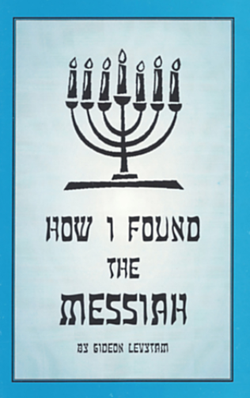
Follow Gideon Levytam's journey and discover how he was led by God, through a series of exciting circumstances, to find the One his people are still waiting for.
Past Episodes

Featured Offer
Follow Gideon Levytam's journey and discover how he was led by God, through a series of exciting circumstances, to find the One his people are still waiting for.
About Holy Scriptures and Israel
As time passed by, the Lord Yeshua took dear brother John Van Stormbroek to himself. The ministry of Holy Scriptures and Israel continued with additional development. In the early 1990’s, a weekly morning Bible class began which brother Gideon Levytam led regularly in the City of Toronto. This weekly open Bible class was held in the Willowdale assembly meeting hall. Eventually, a second mid-week evening Bible class was added. In April 2002, the need for an additional outreach Bible teaching meeting arose. We begun a Saturday (Shabbat) ministry meeting in which a systematic teaching of God’s word is presented to all who attend. Together we learn God’s Word, pray for each need and the salvation of Israel, and sing songs of worship unto our God, praising Him and our Lord Yeshua the Messiah.
In Mid 2004 we started to air on Joy 1250 Radio station a 15 minute Bible teaching program called "The Holy Scriptures and Israel" with Gideon Levytam. The broadcast teaches God’s word from a Hebrew Messianic perspective and has proved to be a blessing to many. It's now aired seven days a week. Our prayer is that many more of our Israeli people will have a clear understanding of who Yeshua is, why we all need him, and come to know him as their Lord and Messiah.
About Gideon Levytam
Contact Holy Scriptures and Israel with Gideon Levytam
426 Simcoe Street
Niagara-on-The-Lake
Ontario L0S 1J0
Canada
(905) 325-1234