
1 John 2:1-11, Part 2


Yeshua Our Advocate, And the Need of Obedience Part 2
Guest (Female): Shalom. Holy Scriptures and Israel is a ministry designed to share with the Jewish people the good news of the Lord Jesus Yeshua the Messiah and to instruct Christians on the Jewish roots of their faith. And now, teaching God's word from a Hebrew Messianic perspective, here is Gideon Levytam.
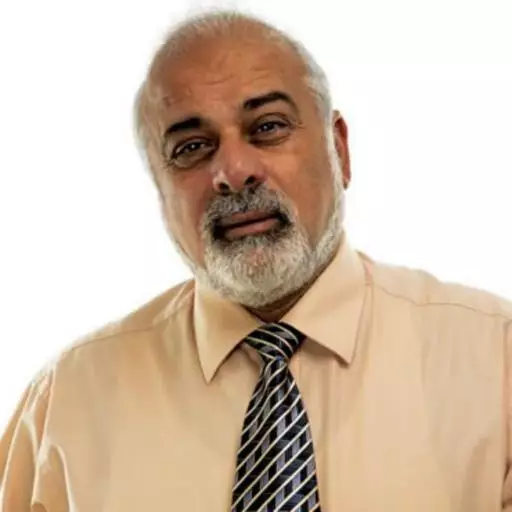
Gideon Levytam: In the study of 1 John chapter 2, that word for comforter is the same word for advocate or parakletos. Now, what Yeshua is saying here to the disciples is, "I'm going now to go back to my Father. But when I go back to the Father, I'm going to send to you another paraklete, another advocate, another one that's going to come alongside you to aid you in your life."
So what we really learn here is that the Holy Spirit of God, Ruach HaKodesh, was given to us to be our parakletos, our advocate, our lawyer, to help us, to aid us as we walk here in this world. And He is actually doing the work of the Father in the life of the believer. That's the first advocate that we have.
But we have another advocate, and that is another one who represents us, who comes alongside to represent us, but He represents us in heaven. This is Yeshua the Messiah. He is the one that is saying to the Father, "Father, for the failure, for the sin of this particular child of yours, I have already paid the price. Forgiveness must be given to them because I have paid the price. I am the righteous one who knew no sin, who did no sin, in whom there was no sin, and I was judged on behalf of this particular child. And therefore, Father, these sins, I have already paid for them."
The difference between this advocate, this lawyer, and the lawyer that we might hire for today's problems in this world—I'm talking about when we go to the world court—the difference is simply this. The lawyer we hire today, we will have to pay him a lot of money to do the service. But the lawyer that we have in glory, the Messiah, we don't have to pay Him. He paid for us. He washed our sins away.
Secondly, the lawyer that we have to pay money for here in this world represents us before a judge here in this world. But Yeshua the Messiah is representing us before the King and the Judge of the universe, the one that is the Judge of judges, the one who is the supreme court of the universe. He is representing us before the Father and He is saying to the Father, "Father, I have already paid for this. There is no longer a need for this price to be paid again because I have already finished the work for us on the tree."
Beloved brothers and sisters, there are many people who are walking around today, they are believers, they accepted Yeshua the Messiah, but they never have the assurance of salvation. Every time they fail or they sin, they already think that they have lost their salvation and now in order to regain their salvation, they have to do something. Yeshua is teaching us through the apostle John, Yochanan here, that we are children of God the moment we have accepted the Messiah as our Lord and Savior. And if any man sins, we do have an advocate with the Father, Yeshua the Messiah the righteous, who paid for our sins on the cross, on the tree.
Another thing to learn is to see another aspect of the ministry of Yeshua in heaven, and this is the aspect of His high priestly ministry in heaven. So for this, I want you to turn to Hebrews chapter 4 in verses 14 to 16. It says, "Seeing then that we have a great high priest, that is passed into heavens, Yeshua the son of God, let us hold fast our confession. For we have not an high priest which cannot be touched with the feeling of our infirmities, but was in all points tempted like as we are, yet without sin. Let us therefore come boldly unto the throne of grace that we may obtain mercy and find grace to help in time of need."
Chapter 7 now, verse 23. This is the writer to the Hebrew, he continues and he says now in connection with the high priestly ministry of Yeshua the Messiah, he says these words: "And they truly were many priests, because they were not suffered to continue by reason of death: But this man, namely Yeshua, because he continueth ever, hath an unchangeable priesthood. Wherefore he is able also to save them to the uttermost that come unto God by him, seeing he ever liveth to make intercession for them."
Just pause with me here for a moment. You notice that John is speaking of the ministry of Yeshua as an advocate, but the writer to the Hebrews speaks of the ministry of Yeshua the Messiah as a high priest. What is the difference between the ministry of Yeshua today as the advocate in the presence of God or the ministry of Yeshua the Messiah today as a great high priest before God?
The difference is this. As an advocate, as a lawyer, He represents us before the Father. As a high priest, He represents us before God, though it is the same person. As an advocate, He is aiding us and He is showing to the Father that these sins that we have committed have been paid for. But as a high priest, He is not sympathizing with our sins, but He sympathizes with our weakness.
As an advocate, He is representing us before the Father. As a high priest, He represents us before God. And as representing us before God, He is not representing us sympathizing with our sins. No, our sins had to be judged. That's why He paid for our sins. But as an advocate, He is representing us before the Father, the Abba, and He is saying, "For these sins, I have already received the judgment on behalf of these people."
And that's why, notice again Hebrews chapter 7, it says in verse 25, "Wherefore he is able to aid them and to save them to the uttermost that come unto God by him, seeing he ever liveth to make intercession for them." Every day He is making intercession on behalf of the people of God.
Again go back to Hebrews chapter 4 and verse 15: "For we have not an high priest that cannot be touched with the feeling of our infirmities, but he was in all points tempted like as we are, yet without sin." Notice he used the word infirmities here in verse 15. He is touched with the feeling of our infirmities, not with the feeling of our sins, but with the feeling of our infirmities.
He knows our weakness. He knows our shortcoming. He knows that we are inclined constantly to be tempted and tested by Satan. He knows that we have an enemy that desires to cause us to fall. And as man, He understands this because He lived here. He was tempted. He was tested, yet without sin.
So He knows what you and I are going through, but He never sympathizes with our sins. He sympathizes with our weaknesses, with our infirmities. That's why He represents us before God as a high priest. But as a lawyer, as an advocate, He represents us before the Father and He is reminding the Father that He was that righteous one who paid for every sin that we have committed here in this world.
So beloved brothers and sisters, this is really doctrine. This is teaching. And that's why sometimes we mix it. Sometimes we say as a high priest, He's representing us before God because of our sins. No. As a high priest, He represents us before God and He sympathizes with our infirmities. But as a lawyer, He represents us before the Father and reminds Him that the price has already been paid and He was judged for our sins.
So now go back to our chapter in 1 John chapter 2. And now he's building upon this. He's moving now to verse 2 and he's saying, look who is the one that is representing us before the Father. It says, "And he is the propitiation for our sins: and not for ours only, but also for the sins of the whole world." Notice in Hebrews it was for our infirmities; here it is for our sins.
Here is another thing with respect to doctrine. This word propitiation comes from the Hebrew word, actually to the word Kappara. Kappara means to make atonement. And really what we learn here is that Yeshua is the propitiation, the Kappara for our sins before the Father. That means that word really speaks of the fact that the Father has been satisfied with the work of the Messiah.
In other words, in order for God to accept a sinner and to have the ability that a sinner can be able to be in His presence, God had to be propitiated, satisfied. So you know what happened, brothers and sisters. God is holy. We just read in 1 John chapter 1 and verse 5: "This is the message that we have heard from him and declare unto you that God is light and in him there is no darkness at all."
So how can a holy God receive a sinner into His presence? Well, He must be satisfied with respect to the judgment upon sin. So God has been satisfied with the work of His son. And that's why Yochanan is saying, "You know what? Yeshua is the propitiation. He satisfied God's holiness." So when a sinner comes to God and he says to Him, "I confess my sins, I accept what Yeshua has done for me," God says, "I am accepting you because my holiness and righteousness have been satisfied, propitiated."
The need of my holiness has been satisfied with the work of the Messiah Yeshua and now I can allow a sinner to come into my presence and make him a child of the Father. I have been propitiated. You know, brothers and sisters, really, some of us I think talked earlier about Cain and Abel. You know when Cain and Abel approached God, Abel was accepted, Cain was rejected.
But why did God reject Cain and accept Abel? Well, Abel brought blood of an innocent animal. Cain brought good works, a lot of the sweat of his brow, but it does not satisfy the holy God. A holy God needs to be satisfied with respect to sin. And so when Yeshua came and He was righteous one and He was penalized for us, He satisfied a holy and a righteous God.
God looks at Him, who said already in John 19:30, "It is finished." God looks at Him and He says, "I am satisfied." Because if there would not be someone who would pay the price, another will have to be punished, for sin must be judged. All have sinned and come short of the glory of God and God will have to judge sin. And so Yeshua satisfied Him. He had propitiated Him. He satisfied the holy requirement of a just God and He became now the propitiation for our sins.
And so now somebody says, "Wait a minute, Brother Gideon, notice the verse continues." And the verse says not only that He is the propitiation for our sins, but it says and not only for our sins only, but also for the sins of the whole world. Now what does that mean? Because sometimes somebody says, "Well, look, Jesus died for the whole world and therefore everyone is a believer and he is saved because He satisfied God for everyone and therefore everyone can be saved."
Well, the truth is this. Yes, the work of Yeshua the Messiah on the tree propitiated for the sins of the whole world. Everyone's sin has been judged by the work of Yeshua the Messiah once and for all on the cross. But not everyone from this world avails themselves of the value of the work of Yeshua the Messiah. That's why the Bible says, "Whosoever will let him come. For God so loved the world that he gave his only begotten son that whosoever from the world will come and believe on him, he will receive forgiveness of sins."
So what we learn here is that the work of Yeshua the Messiah is sufficient to meet the need of every person that ever was born into this world. The value of His precious blood is enough to meet everyone's need. Everyone's sin has been paid for. But you've got to come and make it your own and to appropriate the work of the Messiah for yourself. Otherwise, you will not receive the benefit that Yeshua the Messiah has paid for us on the tree, on the cross. So this is important, brothers and sisters. This is what you call doctrine that we must understand if we are going to appreciate the work that Yeshua has done for us on the tree, on the cross.
Go back to another verse in 1 Peter chapter 3, verse 18. Simon Petros wrote and he said, "For Christ, Christos, Messiah, for the Messiah also has once suffered for sins, the just for the unjust, that he might bring us to God, being put to death in the flesh but made alive by the spirit." Now in this verse we have three things that we find out about the work of Yeshua the Messiah.
The first thing is "the Messiah also has once suffered for sins." This is the ministry of propitiation. He once suffered for sin, propitiated God, satisfied God with respect to sin. Secondly, it says "the just for the unjust." That is substitution. He is the just one. He is the righteous. The just is Yeshua, the unjust is you and I. So He died once, satisfied God. The just for the unjust became our substitute.
And then thirdly, "that he might bring us to God." That is the word reconciliation. Three words: propitiation—the Messiah has once suffered for sins; substitution—the just for the unjust; reconciliation—that He might bring us to God. Now that He's satisfied God, a sinner can be brought to God and be reconciled with God and become part of a family, the mishpacha, eternally saved.
We have a parakletos in heaven and have a parakletos within us. The parakletos in heaven is Yeshua the Messiah, who is before the Father. The parakletos on earth is Ruach HaKodesh, the Holy Spirit of God, who are aiding us here in this world as we walk here with Yeshua the Messiah here upon the face of this world.
So what a precious truth it is for us to understand that Yeshua the Messiah satisfied entirely the holy God and who became now our Father. And one more point before we're going to move to the next verses. The reason that we read today from Exodus chapter 25 about the mercy seat that Aaron and Moses were called to build among our people Israel when the Tabernacle, the Mishkan, was built some 3,500 years ago, there was a mercy seat.
What was the purpose of the mercy seat? The mercy seat was right above the ark of the covenant. It was like the lid upon the ark. There were two cherubim standing facing each other and the wings hovering above the kaporet, the mercy seat. And that to which Aaron had to come every year on the Day of Atonement, Yom Kippur, to bring blood. When he would bring the blood, he would sprinkle it between the mercy seat, on top of the mercy seat, before the mercy seat, in order to propitiate the God of Israel, to satisfy His holiness.
The blood of the animal made it possible now for a person to be accepted with God because God has been totally propitiated, totally satisfied with the work of the sacrifice. Well, we know that all these sacrifices pointed to Yeshua, to Jesus our Messiah and our Lord. And so, brothers and sisters, I hope I was clear on these verses 1 and 2. Yeshua the Messiah is our advocate with the Father, the one that represents us as this parakletos in the presence of the Father. For every sin that we have committed, He would say to the Father, "Father, for these sins I have already paid the price. I have died for those sins already and therefore we can say that when we confess our sins, He is faithful and just towards the Lord to forgive us our sins and to cleanse us from all unrighteousness."
Back to 1 John chapter 2 and verses 3 to 11. If we are now as children going to enjoy fellowship with God the Father now, we are in a need of having an obedient life. We know very well that obedience is something that is hard for us to learn. Oftentimes, those of us who raise children know very well, we never need to train our children to disobey, right? You never said to your child, "Please, I want you to learn a little bit to disobey me."
You always have to train the children to obey. They are not always obeying. And when there is disobedience, practical fellowship is broken. Not fellowship as in our union, no, that is never broken because they are still children. But nevertheless, look at the importance of obedience to the Father. Verses 3 and 4, the children are called to walk in light, and walking in light is walking in obedience to God's word.
He says in verse 3, "And hereby we know that we know him if we keep his commandment. He that saith I know him and keepeth not his commandments is a liar and the truth is not in him." So keeping the commandments of the Lord, what the Lord has commanded us in Scripture, is in obedience to God. In other words, notice how he is saying in verses 3 and 4: "He that saith I know him and keepeth not his commandments is a liar and the truth is not in him."
How do we know the Father? Not only to know about the Father, but to know the Father. How do we know each other? We perhaps know about each other more than we really know each other personally, close enough. Somebody said to me, "Brother Gideon, if you're going to know me, you will not like me anymore." Why? Because if you know more about me, you'll find out my failure, my shortcoming, my sins, because I am not perfect. I may be giving an appearance that I'm pretty good and okay, but in reality, I'm not.
And the truth of the matter is this, really. The more we will know God as our Father, it will help us to seek to be more like Him, to be more in fellowship with Him. And the more we know Yeshua our Mashiach, the more we have an intimate relationship with Him. It rubs upon our shoulder and we are somehow walking in light, walking in a way that is pleasing to God.
So he says in verse 3: "Hereby we do know that we know him," in a real fellowship with Him, "if we keep his commandments." And we can go through the various commandments that Yeshua the Messiah had given His disciples when He was teaching them in the upper room during His walk with them here in this world. So to know Him is to have fellowship with Him and to enjoy to spend time with Him.
And then he says he that says that he knows Him and does not keep His commandments really, he's lying, and the truth is not in him. In other words, by saying, "Oh, yes, I know Yeshua, I know Jesus, I know Yeshua the Messiah," but if we are violating consistently on an ongoing basis, violating His commandments, it really shows that we really do not know intimately the Father or intimately the Son, the Messiah.
By the way, do you know that the first disciples in Acts 11 were called Meshichim, translated to the Greek Christos or Christ or Christians, but in the Hebrew it's Meshichim, followers of the Messiah. How do you think they called them Meshichim, Christians, in the beginning? Because they spent time with the Lord. The more they spent time with the Lord, they say, "Ah, those are the that belong to Yeshua, to the Mashiach, they are followers of the Messiah." They became a testimony to Yeshua the Messiah by virtue of the fact they knew Him, spending time with Him.
When we don't spend time with the Lord, when we don't have fellowship with Him, we really don't know Him. How do we know the Lord more and more in our lives? Well, we read the Bible, we read the Scripture, we take time to pray, to speak with Him, and we spend time to submit to Him, obeying Him, keeping His commandments, seeking to submit to what He commanded us as believers in Yeshua the Messiah. Then you notice, and I'm continuing here...
Guest (Female): You've been listening to the Holy Scriptures and Israel with Gideon Levytam. Gideon teaches God's word from a Hebrew Messianic perspective. For more information about this ministry, write to Holy Scriptures and Israel, Box 1411 Niagara on the Lake Ontario, L0S 1J0 or visit our website at holyscripturesandisrael.com.
You are also invited to Gideon's weekly Bible teaching on Fridays at 11:00 a.m. and 7:00 p.m. and Saturdays at 1:00 p.m. at Willowdale Christian Assembly Hall, 28 Martin Ross Avenue in Toronto. Holy Scriptures and Israel is made possible by your prayers and financial support. If you would like to support the program, visit holyscripturesandisrael.com. God bless you. Shalom, shalom.
Featured Offer
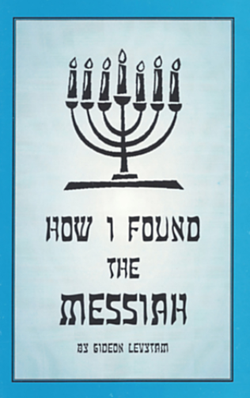
Follow Gideon Levytam's journey and discover how he was led by God, through a series of exciting circumstances, to find the One his people are still waiting for.
Past Episodes

Featured Offer
Follow Gideon Levytam's journey and discover how he was led by God, through a series of exciting circumstances, to find the One his people are still waiting for.
About Holy Scriptures and Israel
As time passed by, the Lord Yeshua took dear brother John Van Stormbroek to himself. The ministry of Holy Scriptures and Israel continued with additional development. In the early 1990’s, a weekly morning Bible class began which brother Gideon Levytam led regularly in the City of Toronto. This weekly open Bible class was held in the Willowdale assembly meeting hall. Eventually, a second mid-week evening Bible class was added. In April 2002, the need for an additional outreach Bible teaching meeting arose. We begun a Saturday (Shabbat) ministry meeting in which a systematic teaching of God’s word is presented to all who attend. Together we learn God’s Word, pray for each need and the salvation of Israel, and sing songs of worship unto our God, praising Him and our Lord Yeshua the Messiah.
In Mid 2004 we started to air on Joy 1250 Radio station a 15 minute Bible teaching program called "The Holy Scriptures and Israel" with Gideon Levytam. The broadcast teaches God’s word from a Hebrew Messianic perspective and has proved to be a blessing to many. It's now aired seven days a week. Our prayer is that many more of our Israeli people will have a clear understanding of who Yeshua is, why we all need him, and come to know him as their Lord and Messiah.
About Gideon Levytam
Contact Holy Scriptures and Israel with Gideon Levytam
426 Simcoe Street
Niagara-on-The-Lake
Ontario L0S 1J0
Canada
(905) 325-1234