
1 John 1:1, Part 1


Introduction: The Family of God Part 1
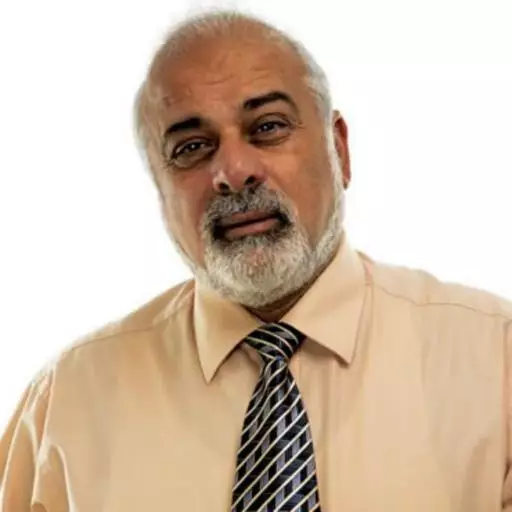
Gideon Levytam: Shalom. Holy Scriptures and Israel is a ministry designed to share with the Jewish people the good news of the Lord Jesus Yeshua the Messiah, and to instruct Christians on the Jewish roots of their faith.
And now, teaching God's word from a Hebrew Messianic perspective, here is Gideon Levytam.
Gideon Levytam: Shabbat Shalom, everyone. This Shabbat meeting, I'm going to begin to teach from the First Epistle of John, in Hebrew, Ha’igeret Ha’rishona L’yochanan. Will you please turn with me to the writings of the Apostle John.
This is not the gospel. This is the letter that Yochanan wrote to the early first century believers in Yeshua the Messiah. John Yochanan wrote his epistle rather later than other epistles that were written by other apostles.
I want to begin today by the grace of God to give us some introduction to this letter. And I would like to begin by simply reading the first verse of the First Epistle that John Yochanan wrote. And I would like you to notice that, this is very important verse.
It says in verse 1 of First John 1, “That which was from the beginning, which we have heard, which we have seen with our eyes, which we have looked upon, and our hands have handled, of the Word of Life.”
I just want to begin today by simply reading this first verse of First John, chapter 1. Now, First John is a very interesting letter because when John was writing his epistles, his letters to the early centuries among the people of God, he wrote these letters in order to help the believers to understand that they are part of the family of God.
When you and I became believers in Yeshua the Messiah, we not only have entered into the body of Christ or the Body of Messiah, we not only have entered into what is called the Kingdom of God, which we have, but we have also entered into the family of God.
And I would like to emphasize this today in the ministry meeting, you see, Paul, that is Shaul, emphasized the Body of Messiah, the Body of Christ. On the other hand, Peter, Shimon Petros, he emphasized the Kingdom of God. But what John had been led by the Spirit of God to teach and to emphasize in his letter, it's not so much the Body of Messiah and not so much the Kingdom of God, but he emphasized the family of God.
In Hebrew, the mishpacha. Every one of us that was born of the Holy Spirit of God have entered into the family of God. And when it's come to the family of God, with your immediate family, you will share your concern and your love and your care for the family of God.
Just like a parent, a mother, or a father will share with his or her children some intimate things when it's come to their love and care and concern for each other. And so John in his writing, specifically the letters, he's emphasizing the family of God, the mishpacha.
Now, mind you, it doesn't mean that he doesn't talk about the kingdom or about the Body of Messiah, just the same like when Shaul Paul wrote about the Body of Messiah, it doesn't mean that he didn't talk about the family or the Kingdom of God. Or just the same as Shimon Petros when he emphasized the kingdom, he also spoke about the family of God and the Body of Messiah.
But, nevertheless, the major emphasis in this letter, First John, is the mishpacha, the family of God. And you like it or not, beloved brothers and sisters, we are part of a family. Yesterday, when we were together in our Bible class, and we were reading the text in the Bible in the book of Numbers, we have noticed how many accents we have by those who read the text in the Bible.
One of them were coming from the former Soviet Union. Another one came from China. Another one came from Israel. Another one came from Germany. Another one came from another country. And we had in this group of believers, the mishpacha, we are a composition not only of Jewish people and non-Jewish people, but a composition of people that come from every people and tongues and nations of the world.
And it's so precious to realize that we are part of a family. And so now John, just by way of introduction, we want to talk about a little bit of who is that Yochanan, John. We also want to know what is the theme of the book of the First John. When was this book written? What is the date that this letter was written?
What was the purpose that Yochanan wrote these letters, specifically First John, the whole epistle? And what was the condition that prevailed when Yochanan wrote this epistle? The condition that prevailed the false teaching that already rose among the people of God in the first and second century of the church age.
And just to give you a little bit highlight about the division of the Epistle of First John. So first of all, let's talk about this author. You know, Yochanan was a Jewish fisherman. He was not a Greek philosopher. He was just a Yahudi, Jewish fisherman who lived in the Galil, in Galilee.
And he was one of those Hebrew, Jewish, Israeli people who lived in the north, and he was simply a fisherman. Dayag in Hebrew. I want you to turn with me for a moment to Matthew chapter 4, and just to read a verse there. It's very interesting that how Yochanan, John became a disciple of Yeshua the Messiah.
In Matthew chapter 4, we read these words, notice that Matthew 4 verse 21 and 22, it says, “And going on from thence, he,” this is Yeshua, “saw other two brethren, James, Ya’akov, the son of Zebedee and John, Yochanan, his brother in a ship, with Zebedee their father, mending their nets.”
“And he called them.” And notice this, beloved brothers and sisters, “They immediately left the ship of their father, and they follow him, Yeshua.” Here we find out that Yochanan, John, was a fisherman. He was living in Galilee. He was fishing in the Sea of Galilee, in the Kinneret. And as he was fishing, we find out that Yeshua the Messiah, the Messiah saw him and his brother, Ya’akov and Yochanan, James and John, and they were working with their father, Zebedee, and they were mending their nets.
And Yeshua called them. Just the same like he called earlier to Simon Peter and Andrew his brother, “Come, follow me, and I will make you fishers of not fish right now, but fishers of men.” And in response, what Yochanan did, he was a young man at that time, of course.
You know what it says in verse 22? “Immediately, they left their father's ship and their father even and they followed Yeshua the Messiah.” Beautiful to see, but to realize that when John wrote his epistles, his letters to remind ourselves that he was not a Greek philosopher, but he was a simple Jewish fisherman who lived in the Galil and served with his father, fishing for fish, and Yeshua the Messiah have called them to become now fishers of men.
Amazing. Now, we find out about John as we read about him a little bit more, that John was not only called by Yeshua to become a fisher of men, he also was one of the 12 apostles. One of the shlichim. I want you now to turn with me in the next book to Mark chapter 3, and I want you to notice what we read there about this man by the name of Yochanan who wrote the Epistle.
Mark chapter 3, we read this about John. Look at this. It says in verse 17, “And James,” this is Ya’akov, the son of Zebedee, “and John, Yochanan,” the one we are speaking about, “the brother of James, and the surname of them,” notice what they were called, James and John, “Boanerges, which is the sons of thunder.”
In Hebrew, it's actually Bnei Regosh, it's more correct to say it in Hebrew, it's a little bit confusing when you read it in the English text. Bnei Regosh. In fact, they were sons, Bnei Regesh. It's come from the word thunder. They were like been aroused many time. They were the kind of a person that was aroused. He's called a son of thunder.
Later on, we find out about him when he wanted to pour out judgment of someone, he asked the Lord to bring down fire from heaven upon someone when he was really not happy with someone's condition. And so he's called here the son of thunder. Actually, both of them were called children of Bnei Ra'am, the sons of thunder.
This is the kind of man John have been. But yet, beloved brothers and sisters, you find out that he was also a man that had much affection. He was a person that we find him in John chapter 13, in verse 23, that he leaned in the upper room on Jesus' breast. You remember that?
In John chapter 13. I'm going to turn to this passage, this time another gospel here, John chapter 13, and verse 23. Look what it says there in the Pesach, in the Feast of Passover. It says, “Now, there were leaning on Yeshua's bosom, one of his disciples, whom Jesus loved. Whom Yeshua loved.”
He was leaning on the bosom of Yeshua in the upper room when Yeshua was gathering all the disciples, all the apostles together in preparation for the celebration of Pesach, and in view of the fact that he was going to go to die on the tree, to die on the cross. You know what John did?
He was leaning on Yeshua's bosom. And you know, this tells us that he was so near to our Lord Yeshua the Messiah, so he was ready to listen to the voice of our Lord Jesus the Messiah. He was leaning on him. And you notice what he's writing here in verse 23.
He doesn't say I am the disciple who love Yeshua, or love Jesus, but it says in verse 23, “The disciple whom Yeshua loved. Whom Jesus the Messiah loved.” You know, sometimes we talk a lot about us loving the Lord, but John in his writing, never said, “I love Yeshua.” Rather, “Yeshua loved me.”
And this is so beautiful to see. You know, because our love to Yeshua changes. Some days soothe us, other time it doesn't. Our affection toward our Lord Yeshua the Messiah changes, but His love for us never changes. And that's why Yochanan John is saying to us here that I am the disciple, talmid, that Yeshua loved.
The love of our Lord Yeshua towards John, towards you, towards me, towards the people of Israel, towards the nations of the world, towards the Body of Messiah is so supreme. And John says, “I am the disciple,” not only the one who loved the Lord, and I'm sure he did, but I am the disciples whom Yeshua loved.
And this is such a commendation to say about John the writer of this text, of this letter. Now, I want you to also notice, brothers and sisters, that we don't read who actually wrote this. You notice how we began?
First John chapter 1 verse 1. “That which was from the beginning, which we have heard, which we have seen with our eyes, which we have looked upon, and our hands have handled of the word of life.” It doesn't say like any other letters, like when Peter wrote, he wrote, “Simon Peter, a servant and apostle of Yeshua the Messiah.”
When Paul wrote, he says, “Paul, an apostle, a servant of Yeshua the Messiah.” But when John wrote his letter, he doesn't write here, “I'm John, whom writing to you this letter.” And that's why some people may not describe the writing of this letter to John. Nevertheless, beloved brothers and sisters, all that is written in this book, in this letter, including what is written in the Gospel of John, gives the evidence that it is none else but the Apostle Yochanan, Apostle John himself who gave us this letter that called First John.
This Epistle that is called the First Epistle of Yochanan, of John. Now, what is the theme of this book? And I love the theme of this book. I mentioned already earlier, the theme of the book is the family of God. Even if we're not practicing it in many ways at times, but really we are a family that is a collection of sinners that have been forgiven and saved and brought into the family of God.
Every one of us here, and I hope all of us here are believers in Yeshua the Messiah. And every one of us is a part of this wonderful family that called the family of God, the mishpacha, as we say it in Hebrew. And so it is important for us to notice how many time John uses expression, little children.
I want you to see that for a minute with me, brothers and sisters. Turn to First John chapter 2. Notice in verse 1, it says, “My little children.” The word Yeladim is mentioned. Yeladim Ktanim. Yeldai Ha’ktanim in Hebrew. “My little children.” First John 2 in verse 1. Just turn the page to First John chapter 3, and verse 18, again, you notice Yochanan is saying, “My little children.”
He's talking to the children of God. To every one of us who is a believer in Yeshua the Messiah. Back to chapter 2 again, I want you to notice a couple more verses. He doesn't there use my little children, but in First John 2, and verse 12, it says, “I write unto you, little children.”
Yeladim Ktanim. Notice verse 13 at the end, “I write unto you little children.” Again, you notice it? Verse 18, it began, “Little children,” Yeladim Ktanim. Again, he's saying there. And if you go further down to verse 28, “And now, little children.” You see, what is John doing?
He's writing to the mishpacha, to the family of God. It's not addressing necessarily one local city or town, but he's writing to the whole family of God. Whether we are here locally in this city, this country, whether we are in another city, in another country, he's writing to the whole family of God, and he's calling all of us little children.
We might be 80 years old, 90 years old. We might be five, six, seven years old. If we are believers, we are part of this family. And he called them often time little children. Go to chapter 3 of First John. It says in verse 7, “Little children.”
Notice verse 10 of chapter 3. “In this, the children of God are manifest.” He's writing to the children of God. And I can just go on in chapter 4, and verse 4. Again it says, “Ye are of God, little children.” Yeladim Ktanim. You belong to God.
And if you go a little bit further into chapter 5, and verse 2. He says, “By this we know that we love the children of God.” Someone who is not a child of God, this letter will not be helpful to him or to her because he or she are not part of the family of God. But he's writing to believers.
And every believer has to realize that he or she are part of the family of God, and he's really writing family secrets. Things that you share with your immediate family. You know, husbands and wives will share with each other secrets, you might say, things that are very special only to them.
And then it will be broader with the children, the husband, the wife, the father, the mother and their children. You will share with them things that you will not share with the people of the world or people who are not part of the family. So John, Yochanan, is emphasizing the family of God.
So the writer, the author is Yochanan. The fisherman from the Galil, from Galilee, in the land of Israel. The theme is really little children, the family of God and concern with all the needs among the people of God. Now, thirdly, this is also important by way of introduction.
When did John write this letter, the epistles? First John chapter 1-5, Second John, Third John. When did Yochanan write these letters? When 70 AD have come over our nation of Israel in the land. You remember the Romans destroyed the city of Jerusalem, burned the temple in Yerushalayim, have killed over a million Jewish people, and many of the believers have been scattered abroad.
Apparently, history will teach us that Yochanan John moved to Ephesus. Asia Minor became a central of what we would call the assembly, the church. The majority, you might say, the growth of the church was in Asia Minor. In Jerusalem, many of the early Jewish believers have been persecuted and scattered outside of the land of Israel.
Well, John was in this area that is known Asia Minor, in Ephesus. And in Ephesus, he became a prominent spiritual leader in this local church, the local assembly in Ephesus. When he wrote the Gospel of John, he wrote it between 85 to 90 AD.
By that time, brothers and sisters, most of the apostles already died. In fact, the first person of the 12 apostles who died was his own brother, Ya’akov, James. He died first. I'm not talking about Ya’akov, the brother of Yeshua the Messiah, that we just finished the study of the book of James.
I'm talking about James, the brother of Yochanan, Ya’akov, the brother of John. He died, he was the first one to die. But the last one to die was Yochanan, John. He was the youngest of the apostles or disciples. It took much longer time for him to remain in Ephesus, and he wrote between 85 to 90 AD the Gospel of John.
Then immediately sometime after seeing what was going on among the people of God, he wrote the Epistles of John between some suggested 90 to 95 AD. He was writing a general letter to the believers all over wherever they are. He wrote it for you and for me as well today.
We don't read in these epistles anything in connection with the Emperor Domitian who persecuted the church. And later on, if you remember, he took John and he cast him into the island of Patmos, which is present day Greece today. There in the island of Patmos, Yochanan wrote the book of Revelation, around 96 AD.
So he wrote the gospel between 85 to 90, somewhere there. Then somewhere between 90 to 95, Yochanan wrote the Epistles, the letter in which we are studying today, First John. And after he was sent to the island of Patmos, he wrote the last book of the Brit Chadasha, the New Covenant, that we know as Chazon, or Revelation.
And he wrote it by divine inspiration when he was on the island of Patmos. And it was about 96 AD. By that time, John was a very, very old man. Then after he left the island of Patmos, he was sent back to Ephesus, and eventually Yochanan died in the city of Ephesus. I remember when I took one of my tours to Asia Minor, we went to visit the tomb where supposedly John was buried in this area, outside of the island of Patmos, of course, in the area that is Ephesus.
So the time, the date of the writing of the letters here is between 90, you might say, to 95 AD. By that time, brothers and sisters, there was a reason why Yochanan wrote this letter. And I believe it is good for all of us to understand why we even study this letter.
There are more than one reason why John wrote to us this letter and to the whole family of God. You see, because we live here in this world, and we are often time influenced by this world. There's always a danger in each one of our lives, not only somebody else, me, you, all of us are in danger of falling away from the narrow path that God have called us to follow.
And so as we study the book of First John, you will notice some reasons why did he write this letter to the believers among the family of God. Let me give you some of the reasons. Notice that. We are in First John, chapter 1. And notice the first reason that Yochanan wrote in verse 4, he wrote this letter in order that believers in Yeshua will have fullness of joy.
Look at this. First John chapter 1 and verse 4. He said, “These things write we unto you that your joy may be full.” You see, brothers and sisters, many times we as believers in Yeshua the Messiah have not much joy in our lives. And we have to distinguish between happiness and joy.
Happiness depend upon what's happening. If things happen good, we got a good job, we got promotions, things are well with us, we are happy. But joy is far behind it. Sometimes you see believers who are going through persecution and trials in their life, but they have an internal joy in their hearts.
Like what we read, the Hebrew writer in Nehemiah Nehemiah who say, “The joy of the Lord is our strength.” He wrote it to our own people of Israel many years ago when Israel just returned back from Babylon. Shaul Paul wrote, “Rejoice in the Lord always.” The book of Philippians. “Again, I say, rejoice.”
You see, John wrote this letter that we will have joy in our lives. And not only joy, but notice he said, “That your joy may be full.” It is so sad when we are at time joyless believers. How sad it is when a believer have no joy.
And the writings of this epistle to the family of God, to the children of God, is for the express purpose that they will have joy. You know, just like you and I as parents. When we have our own children and when they don't walk right and don't obey the Lord, and you can see that they are not happy in Yeshua.
How can you be happy and joyful when you are not communicating with the Lord and living in obedience to the Lord? We cannot be happy and joyful. Sometimes again, we sing, “When we walk with the Lord, in the light of His word.”
Gideon Levytam: You have been listening to the Holy Scriptures and Israel with Gideon Levytam. Gideon teaches God's word from a Hebrew Messianic perspective. For more information about this ministry, write to Holy Scriptures and Israel, Box 1411, Niagara-on-the-Lake, Ontario L0S 1J0. Or visit our website at holyscripturesandisrael.com.
You are also invited to Gideon's weekly Bible teaching on Fridays at 11 AM and 7 PM and Saturdays at 1 PM, at Willowdale Christian Assembly Hall, 28 Martin Ross Avenue in Toronto. Holy Scriptures and Israel is made possible by your prayers and financial support. If you would like to support the program, visit holyscripturesandisrael.com. God bless you. Shalom, Shalom.
Featured Offer
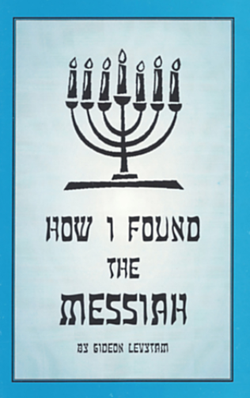
Follow Gideon Levytam's journey and discover how he was led by God, through a series of exciting circumstances, to find the One his people are still waiting for.
Past Episodes

Featured Offer
Follow Gideon Levytam's journey and discover how he was led by God, through a series of exciting circumstances, to find the One his people are still waiting for.
About Holy Scriptures and Israel
As time passed by, the Lord Yeshua took dear brother John Van Stormbroek to himself. The ministry of Holy Scriptures and Israel continued with additional development. In the early 1990’s, a weekly morning Bible class began which brother Gideon Levytam led regularly in the City of Toronto. This weekly open Bible class was held in the Willowdale assembly meeting hall. Eventually, a second mid-week evening Bible class was added. In April 2002, the need for an additional outreach Bible teaching meeting arose. We begun a Saturday (Shabbat) ministry meeting in which a systematic teaching of God’s word is presented to all who attend. Together we learn God’s Word, pray for each need and the salvation of Israel, and sing songs of worship unto our God, praising Him and our Lord Yeshua the Messiah.
In Mid 2004 we started to air on Joy 1250 Radio station a 15 minute Bible teaching program called "The Holy Scriptures and Israel" with Gideon Levytam. The broadcast teaches God’s word from a Hebrew Messianic perspective and has proved to be a blessing to many. It's now aired seven days a week. Our prayer is that many more of our Israeli people will have a clear understanding of who Yeshua is, why we all need him, and come to know him as their Lord and Messiah.
About Gideon Levytam
Contact Holy Scriptures and Israel with Gideon Levytam
426 Simcoe Street
Niagara-on-The-Lake
Ontario L0S 1J0
Canada
(905) 325-1234