

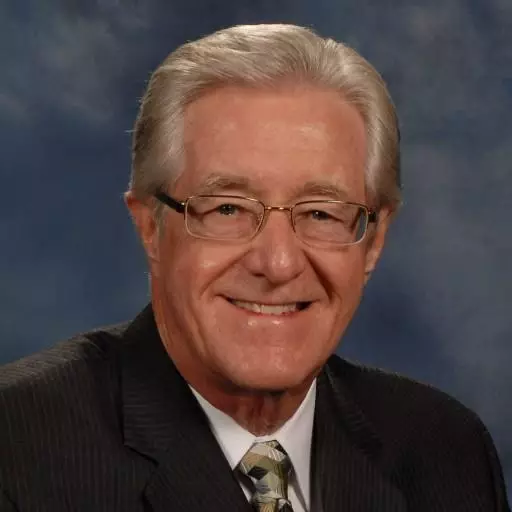
Surpassing Greatness


Today Pastor Jack Morris takes us to Philippians chapter 3, where Paul describes "the surpassing greatness of knowing Christ Jesus." As we continue Changed by Grace, we're challenged to examine our own hearts and consider the place Jesus truly holds in our lives.
Pastor Jack Morris: Prayers are answered. You've prayed for your children, those prayers are going to be answered. For your husband, for your spouse, for your parents, for loved ones, those prayers are going to be answered. I don't know whether in your lifetime or not, but God has heard our prayers.
Guest (Male): What do you value most? Family, relationships, health, accomplishments and success can all be precious to us. But the Apostle Paul discovered something of such extraordinary worth that everything else became secondary by comparison. Today, Pastor Morris takes us to Philippians chapter 3 where Paul describes the surpassing greatness of knowing Jesus Christ. As we continue changed by grace, we're challenged to examine our own hearts and consider the place Jesus truly holds in our lives. Here is surpassing greatness.
Pastor Jack Morris: As I read today's passage of scripture from Philippians chapter 3, I began to consider privately thinking silently, what is it in life that I really value? And I want you to think that with me today. What is it that you cherish that's so precious and dear to your heart that you you value greatly? I began to think of some of the things that I I value and I thought, well, I have I value relationships. I value the relationship I have with my wife, with my children and grandchildren, with my friends and the relationship I have with my church family, my spiritual family.
I value that. I I put that those things that I just mentioned of relationship high, very high. I value it. I don't want to treat any relationship, particularly those I've just mentioned, any relationship casually. I value those relationships. I also value my health. I thought about it and I thought, how many people I know who are sick and ill and suffering and in pain and are scheduled for surgery and some of them I I hear it in their voice. They they're not quite sure whether they're they're going to actually be cured. And I thought as long as I have my health, I I want to remember I have health.
I can do things. I can go places. I don't have to consider my health and in making those decisions what I'm going to do and where I'm going to go and I I value my physical health very much. And I also value achievements. I don't want to take my achievements for granted and just think, oh, these are some of the things that I have done and how great I am. No, may I achievements and the things I've attained and my education and I thank God for all of that. These are some of the things that that I value greatly.
What is it that you value? Think about it. What is it that you value the most? This passage of scripture that was read probes deeply. It really probes deeply. And and I must be honest, you must be honest. Paul, the Apostle, catalogs some of the most valuable and wonderful things that he considers valuable and wonderful in his life. He puts it all together. He catalogs it all together and then he questions, but what do I value most? And the conclusion that he comes to is Jesus. I value Jesus. Never seen him. He's invisible. Never heard him with my audible ear and I've never touched him.
Now, friends, how can you value something or someone you've never seen, you've never heard, you've never touched physically? But Jesus can be just that real, more real and more valuable than anything or any experience. And Paul said it's Jesus that I value. He He put it all together and then he thought to himself, now that I know that that he's the most valuable possession in life, just how much do I value him? And when he came to calculate his valuation of Jesus, it just ran off the charts and he he almost staggered back as he considered how much he valued Jesus.
And he said, I I I just can't put a premium on it how much I value him. He is of surpassing greatness. That's a Christian experience that that goes so deep, surpassing greatness. He surpasses everything and everyone and every experience. He just so far surpasses that I just can't tell you how much he surpasses, how much I value him, how great he really is to me. I want you to look in your bulletin. There's a sermon outline and you can follow along and let's look at this passage together and consider where we are in our thinking of Jesus and how much value we put on Jesus.
Point A in your outline, write down the word privileges. The privileges of Paul. Now, here's Paul. He's He's going to now put it together all of the things that he considers value and these are valuable assets to him. They really are. They would have been to anybody. And he he wants to think it through logically. He He He wants to use his mind, his brain in his worship to Jesus Christ. And he begins to tell us that he has all of these privileges that things have gone so right in his life. He's in the right family.
He's in the right tribe. He's in the right religion. He's in the right culture. He said, I'm really a privileged man. Now, number one, let's look at what he talks about when he refers to the privileges of birth. Write down the word birth. In verse 5, Ephesians Philippians, excuse me, Philippians chapter 3 verse 5. Look at verse 4. He says, though I myself have reasons for such confidence, if anyone else thinks he has reasons to put confidence in the flesh, I more. Now, he starts out by listing and he says, circumcised the eighth day. When Paul was 8 days old, his parents took him to the temple.
Now, John the Baptist parents took John the Baptist to the temple when John was 8 days old to bring him under the covenant of Abraham. Jesus, when Jesus was 8 days old, Paul didn't say, well, some of them came in on the third day and some came in on the 10th day and my parents told me that they took me on the eighth day. The eighth day had significance. The eighth day, isn't it interesting that the Christian's first day of the week happens to be the eighth day when we start counting them out. Saturday being the seventh and if we follow our calendar, but the eighth day, it was the eighth day.
It was prophetic of the covenant that we come under in our relationship to God. It was the eighth day. Paul was saying, I want you to know it was the eighth day. What's the significance about that? In Genesis chapter 17, God brought this wonderful covenant to Abraham and said, Abraham, it's going to be you and your children and their children and their children's children. And eventually it's going to be through your genes that the Messiah is going to come and I make this promise to you, Abraham. It's God Almighty talking. Abraham, I make this promise to you on the eighth day for it's going to be on the eighth day that Jesus raises from the dead.
Now, listen, if he doesn't raise from the dead, you're dead forever. And our whole salvation is predicated upon Jesus Christ and his resurrection. For if he has not risen, Paul says, ye are yet in your sins. It's the resurrection. It's the resurrection. And Paul said, my parents took me to the temple on the eighth day. I want you to know that my parents and my grandparents and my great grandparents and my parents and ancestry, we are connected to that covenant blessing. Now, that that was significant. Proselytes would come in and become Jews. Gentiles would They They would convert to Judaism.
And when they would convert to Judaism, regardless of how old they were or how young they were, they were circumcised and brought under the covenant of Abraham. But Paul was saying, I didn't convert to Judaism. I didn't convert to this covenant. I was born into it. It was the eighth day. He He He was He was pointing this out, showing the significance and showing that he was truly of of royalty, of of covenant royalty. Now, look what he asked. He says, of the tribe of Israel, he said the people of Israel, of the tribe of Benjamin.
He said, I'm an Israelite. I'm a true thoroughbred, full-blooded Israelite. I'm of the tribe of Benjamin. Now, that that held significance. That meant he was born into that royalty. It was of that tribe Benjamin that the first king of Israel came from. King Saul came from the tribe of Benjamin and Saul of Tarsus, we know him as the Apostle Paul, was named after that king. Paul is telling us, I have connections in this world. He said, I can go places. Matter of fact, I was going places. I had political clout. He said, I want you to know I had some things that I could boast about.
Listen to him as he compares all of these things to a relationship to Jesus Christ. Now, those were the privileges of birth. He said, I had nothing to do with that. I was just born right. I was born right. But now, look under number two under point A, the privileges of attainment. He goes on to say now, here are some things that I chose to do. The other things I didn't choose to do. I I was just blessed, lucky, I guess. He said, but now my choices. He said, I was a Hebrew of the Hebrews.
Paul and his families lived in Tarsus and he went to the University of Tarsus. That that was like Harvard or Oxford of today. It was the world's greatest university. He was a a great man, an educated man, a brilliant man. He said, I had all the advantages. And he says, even though we were living in Tarsus, we were not living in Jerusalem. We were living in a Roman city, the city of Tarsus. He said, I was still a Hebrew of the Hebrews. He said, my family spoke Hebrew. We observed every Hebrew custom, although we didn't live among Hebrews.
We couldn't have been anymore Hebrew. I was a Hebrew of the Hebrews. No one was more Hebrew than I was. Now, listen. He goes on to say some other things. He said, and then when I became of age, he said, in regarding the law, a Pharisee. I want you to notice the choices he's making. Pharisees were one of the two main popular sects of the Jewish people. This was the conservative group. This was the most strict of the Jewish sects. And he said, I followed that law of the Pharisees and I kept the law and I didn't deviate from the law.
He said, I was dedicated to their commitment to the law. I was a Pharisee. That was what I chose. He said, that really put me in a good political place in Israel. Now, look at verse 6. You following along at verse 6? He said, as for zeal, persecuting the church. He said, I was zealous for my people, the Jews. Last week, those of you who were here remember the story that Paul confessed to being a blasphemer, a persecutor and a and a violent man. He He confesses this. When he said, I was a persecutor, remember last week, he said, I I blasphemed the name of Jesus.
Now, he may not have used expletives, but he talked about him. He talked him down. He hated him. He murdered his followers. He was their part of that regime that was trying to stamp out Christianity because Christianity was a threat to Judaism. He said, I was a Hebrew of the Hebrews. I was a Pharisee. I was zealous. I I was for Israel all the way. He thought he was doing the will of God. He thought he was doing the work of God. He said, I did it out of out of ignorance. But he said, all of these things put me in a high political position where I had real clout.
These things all young Hebrew men valued. And he said, I valued this very greatly. And then look at verse 6. He says, as for zeal persecuting the church and as for legalistic righteousness, faultless. Paul was a meticulous follower of the law and faultless. He said, I kept it all. No one could point their finger at me and say, he's a half-hearted follower. He sort of hits and misses. When you see him, you see him and when you don't, you don't. You really can't count on him. Paul said, I was a Jew and you could count on me and all of the Jews in Israel knew that they could count on me.
I was a Pharisee. I was zealous. I wanted my people to win. And I didn't want Christianity to threaten my people in any way. And Christianity was making great strides and many people were converting. And Paul said, and I hate to think of even he he was like yet a a good man, but remember the the Holocaust and how a whole nation of Jews were going to be liquidated and stamped out. Paul had that same mentality. He said, everybody that converts to Christianity, I kill them. They're a threat to Israel. And Paul was of that mentality.
And the people of Israel loved him because he was protecting Israel and he was being elevated and promoted and promoted and promoted higher and higher in in prestige and in clout. But now look at point B in your outline. Look at the calculation of Paul. We find this in verse 7 in your Bible. Paul says, but See, he went through that whole list of all of his advantages and all of the things that he valued. And now he says, but I want you to read verse 7 with me out loud. Everybody hold your Bible up and read it in unison.
But whatever was to my profit, I now consider loss for the sake of Christ. Wow. What a statement. He said, I had everything and every advantage of birth and attainment. But he says, I now consider I I used to consider those advantages and how advantaged I really was. But he says, I now consider. Now, he didn't always consider Christ to be very much of an advantage to him. Friend, my my heart is heavy for the church at times because I think there are so many Christians that Christ is second place, third place, fourth place in their life.
That that Christ just isn't first. We say seek first the kingdom of God and then we have everything else to distract us. And we are allowing these things to distract us. I I just wonder, I really wonder if I stood before Jesus today and someday I will stand before him. I wonder what he's going to say. And I'm going to say, oh, I was a Jesus is going to say, but I know how good you were. I know how much you put me first. I know really what you value. You see, Jesus knows our hearts and most of us do, too.
We know just how much we value Jesus and the premium that we put on him. And Paul said, I when I when I discovered Jesus, when I experienced his love and forgiveness, I mean, it was real. It was something that that he discovered, that he knew that it touched his heart. He didn't say, I'm just going to going to convert to Judaism or I'm just going to convert to Christianity. He was born again, literally transformed his character, his personality. He didn't just, I'm going to turn over a new leaf and you know, it's time that I start going to church and taking my family to church.
He didn't have that attitude at all. He met the man of Calvary. He met the man of resurrection. He met the son of God. When he talked about Jesus, he was talking about somebody. When he was praying to Jesus, he was praying to somebody. He knew Jesus and he valued Jesus so greatly. I look at this today and I'm searching my own heart. I really am. I'm probing my own heart. This scripture is probing my own heart. How much do I really value Jesus? This this verse 7 is Paul's profit and loss statement. Now, he's he's calculating.
He He He He had so many things. But when he compared them to Jesus, he said they're they're just as rubbish. There is nothing. There came such a change in his value system, such a change. I don't know how people can become Christians and they don't change their lifestyle. Nothing really really happens. The only thing that really happens is that they may join a church or they may begin to participate in in in church activities occasionally. But their lifestyle, their value system, their love doesn't change. There's no change. It's a It's a strange kind of Christianity that so-called Christians are experiencing today.
But listen to what Paul is saying. He said, I calculated, but whatever was to my profit, I now consider loss. Look at point C in your outline. Now, this is the conclusion he comes to. Verse 8. I want you to read verse 8 with me in unison. Read it together. What is more, I consider everything a loss compared to the surpassing greatness of knowing Christ Jesus, my Lord, for whose sake I have lost all things. I consider them rubbish that I may gain Christ and be found in him. We stop right there. Paul personally met Jesus and the story is found in Acts chapter 9.
He was on the Damascus Road. This is what happened. The first time we hear about the Apostle Paul, he's called Saul, Saul of Tarsus. The first time we hear about him is when he is standing there consenting to the death of Stephen. That's a terrible way to come on the scene, to be introduced as a murderer, one consenting to murder. But that's the first time we heard him and heard about him. He's consenting to the death of Stephen. He was very zealous to put out all Christians and to promote the faith of Israel and the covenant of Abraham.
He had Stephen murdered. Stephen Saul is mashed in with rocks. And they didn't pick up little stones and pebbles and throw at him. They picked up big boulders and ran at him and crashed it into him. They It It was a terrible scene. Well, this made Paul even more popular. The people of Israel thought, we have a champion here. And Paul then goes to the high priest and gets authority to go to the Damascus to bring back, to arrest, bring back in prison, perhaps beat and kill Christians. Paul said that it was a murderous thing that he was doing.
But he was doing it all in the name of religion, not knowing that he was attacking the one who would later become the most valuable possession in his life. When When Stephen died, many Christians left Jerusalem. They dispersed and went to other places and a large segment of Christians went to the city of Damascus, which was about 160 miles from Jerusalem. They were fleeing the persecution of the Apostle Paul and his cohorts and the high priest that was the who were authorizing their deaths. They went to Damascus. Well, Paul knew they were there. Now, you talk about a bounty hunter.
Paul got letters. He got became deputized. He received the authority. He said that he was going there and he was going to arrest them and he was going to bring him back. Well, word reached Damascus. There was that little flock of sheep, Christians in Damascus praying. And they knew the wolf was coming. It was only about 160 miles, but it took approximately a week in those days to travel from Jerusalem to Damascus. And Paul had to travel across the Syrian desert. Damascus is look is the capital or was the capital of Syria. I'm sure Paul's mind was tormented during that journey.
The last thing he did before getting the authority letters authorizing him to go arrest these Christians, the last thing he did was have Stephen put to death. And the last thing he saw was that man fall on his knees and start praying, not God save me, God save me. Don't let him hit me with those those rocks. Save me, heal me, deliver me. No, Stephen did not pray for himself. Stephen said, God, forgive them, forgive Paul, forgive Saul. He prayed for them. Listen, when somebody calls your name before the throne of grace and you hear them pray for you, now that's pretty significant.
I've had people pray for me and I I know you pray for me. But when I hear somebody pray and use my name, that touches me. I remember that. And And often I'm talking to people of the congregation on the phone or face to face and I tell them, this morning in my devotions, I called your name before the throne of grace. Well, that hung in Paul's mind. I'm referring to the prayer that Stephen prayed. It absolutely tormented him. He saw Stephen's face shine like an angel. He heard him say, I see the son of God standing at the right hand of the father.
And then they crushed his brains and he died. Paul was remembering. He couldn't get away from that experience, what he saw and what he heard. At the same time in Damascus, that little flock of Christians knew the wolf was coming and he was getting near. Each day he was getting near. And approximately the day he approached the city, he looked up and saw Damascus. His appetite became so hungry to arrest them. And he he's he may was now making the last leg of the journey into the city and he had his his officers with him to legally arrest them and to bring them back.
And in that time, that little flock was praying and they knew that he was coming in today. This would be the day. Wives, children, they were all going to be arrested and taken back across that hot desert back to Jerusalem. They just fled to get out of Jerusalem. Now, he's coming to arrest them and take them back. Well, the good shepherd heard the prayers of the little flock. Did you hear what I just said? The good shepherd heard the prayers of the little flock. And the good shepherd went out to meet Paul. It was the prayer that Stephen had prayed.
And now God was answering Stephen's prayer. Stephen had already died. Friends, there's prayers that you prayed after you're gone, some of those prayers are still going to be answered. Stephen prayed. Stephen was gone, but he prayed for Paul. And prayers are answered. You've prayed for your children. Those prayers are going to be answered for your husband, for your spouse, for your parents, for loved ones. Those prayers are going to be answered. I don't know whether in your lifetime or not, but God has heard our prayers. He heard Stephen's prayer. And it was under that desert noon day sun when the sun the desert sun was glaring in brightness and heat.
And Paul says, there came another light that was brighter than that desert sun. It was Jesus. And when Paul said, who are you, Lord? He said, I am Jesus. I am Jesus. Paul met Jesus that day. Paul had a transformation. You see, a lot of so-called Christians have never met Jesus. I don't know whether you understand that statement or not. But I believe there's a lot of church people. They have never met the love. They have never experienced the personality of Jesus. Paul met Jesus. A lot of you hear this morning, you have met Jesus.
You know exactly what I'm talking about, but I'm I'm wondering if everybody here today, good, wonderful, Largo Community Church members, but have you met the man? Have you met Jesus? Have you Have you been touched with his personality? He has such charisma, such love that envelops us when we accept him and when we know him. Paul experienced peace of mind and joy of heart and beauty of life. It says in in Matthew chapter 13, Jesus tells a story of the pearl of great price. Jesus tells the story how that merchants will scour the the marketplaces of the world to find a pearl.
And when they find that pearl, they'll sell everything they have. They'll They'll They'll accumulate all the money they can accumulate to buy that pearl because of the beauty and the value of that pearl. The merchants and the people knew what Jesus was talking about. Paul had met Jesus and to Paul, Jesus was the pearl of great price. Paul said, I'll give up family. I'll give up religion. I'll give up nationality. I'll I'll give up my education. I'll give up my association as a Pharisee in the in the political arena. I'll give it all up because it's all as rubbish.
I'll just pick it all up and take it out to the dump and throw it away in comparison. He had an experience with Jesus, an experience with God. He met Jesus and he says nothing matters now but Jesus Christ. I want you to think about what do you value? Curtains, material things, your education, what? Paul said, it's fit for the dump because you you're going to give it up someday anyway. But the but the bottom line is you got to look at your profit loss statement. Do you know Jesus? That is the only thing that really profits.
What shall it profit a man or woman if he gains the whole world? Paul said, I had it all. Paul said, I had it all. I was a University of Damascus graduate. I was a Pharisee. I was born in a royal family. I was a Pharisee. I had power, clout, finances, education, prestige. I was the darling son of Israel. I could do anything. I had it all. But he said, I put it all together and compared it to the man I met on the Damascus Road. And he said it, I lost interest in everything. The only thing I'm interested in now is Jesus, loving Jesus, serving Jesus, doing his will, obeying him.
What about it, friend? Where are you today? Do you know him? I mean, have you been touched by his personality? Do you really know him? Well, we're going to bow before him now. I pray that he'll come to your heart, speak to you. And Christians, some of us need to do a little calculating this morning see where we are in following Jesus. And if you don't know him as your personal Lord and savior, I pray that you will give your heart to him. Just ask him to come in. He'll touch you with his love. You'll never be the same again.
It'll be wonderful because of Jesus.
Featured Offer

In God’s Wonders Made Visible, Pastor Jack Morris reflects on John chapter 9, where Jesus notices a man who has been blind from birth. This wasn’t a recent hardship; it had shaped the man’s entire life. He didn’t ask for help, and he didn’t draw attention to himself.
But Jesus saw him, and He chose that long-standing need as the place where God’s work would be made visible.
Past Episodes
- Faith Never Quits
- Faith That Moves: Lessons from the Life of Abraham
- Finding Peace In Life
- Forward In Faith
- Foundations of Faith
- Jesus: The Early Years
- Joshua and The Israelites: A Crossover Experience
- Jump Start Your Christian Walk
- Life After Death
- Living Above the Circumstances
- Living by Faith: Freedom Found in Christ
- Love, Conflict and Forgiveness In Marriage
- Phillippians 4 - The Spiritual Impact of Your Thoughts and Attitudes
- Prayer Power
- Pressing On WIth Life
- The Benefits of Thanksgiving
- The Greates Gift Ever Given
- The Greatest Gift Ever Given
- The Healing MIracles of Jesus
- The Life of Christ
- The Love of God for Us
- The Majesty of God
- The Names of God
- The Power of Prayer
- The Radiant Person
- The Upward Call: Living with a Heavenly Mindset

Video from Pastor Jack Morris
Featured Offer
In God’s Wonders Made Visible, Pastor Jack Morris reflects on John chapter 9, where Jesus notices a man who has been blind from birth. This wasn’t a recent hardship; it had shaped the man’s entire life. He didn’t ask for help, and he didn’t draw attention to himself.
But Jesus saw him, and He chose that long-standing need as the place where God’s work would be made visible.
About The Healing Word
The Healing Word Ministries delivers the Word of God to the healing of broken, confused, fearful, and hurting lives.
~ Psalm 107:20 “He sent His Word and healed them.”
About Pastor Jack Morris
Pastor Jack Morris is the founding pastor of Largo Community Church and the speaker on the radio broadcast – The Healing Word.
Contact The Healing Word with Pastor Jack Morris
Mailing Address:
Largo Community Church
1701 Enterprise Rd.
Mitchellville, MD 20721
301-249-2255