

An Experience in Worship
Welcome to The Healing Word. Worship is far more than attending church, singing hymns, or offering a prayer. True worship is a personal encounter with the living God that changes us from the inside out. Today Pastor Jack Morris begins a powerful new series, Entering His Presence, by exploring what it really means to worship "in spirit and in truth." As he looks at the worship of Abraham and the sacrifice God provided, you'll discover that genuine worship begins when our hearts are fixed on Jesus.
Those who are forgiven little worship little. But those who are forgiven much worship much.
Guest (Male): Welcome to The Healing Word with Pastor Jack Morris. Worship is far more than attending church, singing hymns, or offering a prayer. True worship is a personal encounter with the living God that changes us from the inside out.
Today, Pastor Morris begins a powerful new series, Entering His Presence, by exploring what it really means to worship in spirit and in truth. As he looks at the worship of Abraham and the sacrifice God provided, you'll discover that genuine worship begins when our hearts are fixed on Jesus. Stay with us for today's message and experience in worship.
Pastor Jack Morris: You have an outline in your bulletin, and I always encourage you to follow the outline. If you'll open your Bible to Psalm 99, I'm going to call your attention to this particular psalm this morning. Prayer is a wonderful thing, and singing is a wonderful thing. But worship, I want to talk about worship today. Worship is something higher than even prayer. It's prayer with a higher dimension to it. It's song with a higher dimension to it.
I stumble a little bit today because I'm trying to grasp the true meaning and experience of worship and explain it and amplify it and talk to you about it today. It was like the little boy that his mother asked him, "Did you say your prayers before you got into bed?" And he said, "No, I didn't want anything."
One family had some company in for dinner one evening, and the mother thought she would ask the little seven-year-old daughter to say grace. She asked her to say grace and the little girl said, "Oh, Mommy, I don't know what to say. I don't know what to say." So the mother said, "Well, everyone, all the guests and the family around the dining room table ready to eat," she said, "Well, you just say what mother says when mother prays." The little girl said, "All right." They bowed their head and she said, "Dear God, why did I invite these people for dinner tonight?" How would you get out of that one?
So prayer means many things, different things to many people. And you know, I think sometimes Christians are about like that. We go almost all week and we can't think of anything to ask Him for. Prayer is almost limited to asking God for things. But prayer is something so far more than just asking. We're going to look at the scripture here, and I want to have a worshiping experience this morning. I want you to have a worshiping experience. But I'm asking myself the question, will I worship in this service this morning?
Will I have a worshiping experience? Now, I don't know. I hope so, but I'm not sure that I'm going to have that. I'm at the place of worship. I'm in the house of worship. I'm on property that has been dedicated and set aside for worship. I'm in a sanctuary house. This dome says this is a house of worship. It has been built for just that very purpose. So I'm at the right place.
Now I look around me and I see the symbols of worship. We have Bibles. I have my Bible, you have yours. There are pew Bibles. There are hymnals. There are candles. There are crosses. We have all of these symbols: a piano, an organ. There are hymns and prayers and scripture reading. All of this is conducive to worship. But again, will I worship? That's the question. Are you going to have a worshiping experience in the house of God today? Maybe you've already had it. Maybe you've already touched God with your heart. Maybe you haven't.
I'm going to begin by trying to define the word worship. If you'll open your Bible to Psalm 99 verse 5. Psalm 99 verse 5. And if you'll open your bulletin to the sermon outline, the first word you might write down under point A is the word "defining." We're going to define the word worship. So you go ahead and write it down. As soon as you have it written down, I want you to open your Bible to Psalm 99 verse 5. Hold it up and read this verse together in unison. Do you ready to read? Hold it up, verse 5 together. "Exalt the Lord our God and worship at His footstool. He is holy."
Now, there are two words, two key words: "exalt" and the word "worship." The word worship means to bow down, to bring myself low, to stoop. That's what the word worship means: to bring myself down in submissive reverence to the Lord. And until that happens in my consciousness, listen, my mind has to click. When my mind clicks and I think I'm here to come down.
Now, the second word is "exalt." You can underline those two words. The second word exalt means I'm here to lift Him up, to elevate Him, to extol Him. So two things must happen for me to worship. I must come down in submission. I must say, "Lord, I have sinned. I have broken your law. I have thought thoughts that are not godly thoughts. I have not done all that I should have done according to your word." I must humble myself. I must come down. I must make that open confession.
And at the same time, I must now start to exalt Him, lift Him up, speak of His greatness, give thanks for the great salvation that He has brought to me and the forgiveness and the redemption. Those two things must be happening, and it must be happening in my consciousness. Listen, you haven't worshiped when you've prayed and sang some hymns. You haven't worshiped. You have to be consciously aware. You have to be engaged in Psalm 99 verse 5. Look at it and read it again with me. "Exalt the Lord our God and worship at His footstool."
Now under point B in your outline, I want you to write down the first mention of worship. Write down the word "mention." And I'm going to turn with you to Genesis chapter 22 verse 5. Genesis chapter 22 verse 5. Okay, hold your Bibles up and read it. "He said to his servants, 'Stay here with the donkey while I and the boy go over there. We will worship and then we will come back to you.'" That's the first time the word worship is in the Bible. The very first time. I don't know where Abraham got that word, but that is the very first time the word worship is given in the Bible.
Now, this is what happened. God spoke to Abraham and told him to go to a place. Now, I want you to say "a place." Say it. Now say it this way: "the place." God has a place. It is the place. Friends, you have to think about worship. You can't just sort of sashay in and sashay out to the parking lot when it's all over and say, "I've been to worship." No, you've gone through ritual and ceremony. But there's a certain place. But more importantly, the place is in your heart, in your mind, in your thoughts, in your thinking. There's a place in you.
But Abraham went to the place. He saw the place. The place there was Mount Moriah. It is the place. And Abraham goes to the place, and he says to the men with the donkey, "Now you stay here with the donkey. I'm going to take my son, and we are going to the place, and then we'll come back. While we're there, we're going to worship." There's a holy place, a holy sanctuary that you retreat to. It's a private place.
And Abraham and the son were going to the place. Now, this is what the son says. You see, you have to be observant. You have to put your mind into what's going to happen. The son said, "Father, we have all of the instruments of worship with us." I'm paraphrasing, but this is basically what he was saying. "We have the wood. We cut the wood. We have the wood. We also have the means to make the fire. One thing is missing, Father. We need a sacrifice." And the father told him, Abraham said, "Now son, God Himself is going to provide the sacrifice."
Now listen to what I'm saying. So we have the place. 1701 Enterprise Road, Largo Community Church, Mitchellville, Maryland. So here we are. We have the place. We have all of the trappings of worship: candles and crosses. Here the son says we have the wood, we have the fire. we have the place, we have the trappings. We have everything. But we're not ready to worship yet, Father. We need a sacrifice. You see, friends, you worship God, listen, you worship God on God's terms. Not my terms. On God's terms.
They got to the place of worship. A lot of people get to the place of worship. Man, you come in here trying to find a parking place. We're going to have plenty of parking space very shortly. You're trying to find it. You run into this, "I'm in the place. I see the hymnals. I see the Bibles. I see the crosses. We have the wood. We have the fire. We're ready to go. We have an altar. We're ready to worship." But how many Sundays you've come to church and you have not had that worshiping experience? There has been one thing, something missing.
Now, you can have it every Sunday if you want it, if you're ready for it, if your heart is in it, if your thoughts are in it, if your mind is in it. You can have it. So here they are at the place of worship, Abraham and his son Isaac. Isaac is about to be offered. Now, I'm not going to expound this story because there's just so much in the story. Isaac is about to be sacrificed, but there is a ram caught in the thicket. And Abraham takes the ram, a substitute, not Isaac. Listen, God didn't put you on the altar. God didn't put you on the cross. God didn't put me on the cross. I was ready to go to the cross, but God took me down and put Jesus there.
Can you say praise the Lord? I want you to remember that you're not there today suffering for your own sins. Jesus went to the cross. God had a substitute. Abraham said, "Son, God Himself will provide the Lamb." And then on the banks of Jordan, the Baptist saw Him and said, "Behold the Lamb of God who takes away the sin of the world." Friend, oh, may God help you to hear what I'm going to say right now. You can't worship today unless you have an altar and Jesus is seen. You see Him on that altar. You can't do it. You cannot.
This is what the young boy Isaac said to his father Abraham. "Father, we have everything for worship but a sacrifice. Where is the sacrifice?" Now, friend, if you come today and you're thinking about Jesus, you won't think very long about Him until you begin to feel a warmth, a love, a sensation, a nearness, a blessing. Oh yeah, you'll start to worship. It'll start flowing, but you can't without Jesus. Every time I come in this place, I've got to think the same thought. I've got to bring Jesus to the altar. I've got to see Him on the cross for me. And then I can worship Him.
When He's on the cross for me, then I can truly worship Him, bow down before Him, confess my sins to Him, humble myself in submission before Him, exalt Him. I'm trying to exalt Him and I don't see Him. I'm trying to bow before Him and my mind is what I'm going to do this afternoon at the ball game after church or something else. But you can't exalt someone you don't see, someone you're not thinking about. You can't bow before someone who isn't there. Friend, do you see Jesus this morning? That's the question. Are you thinking about Him this morning? Are you thinking about what He has done for you? Now you're starting to worship.
Now you've moved into the higher gear. Now you're not just here saying, "Lord, give me some. I can't think of anything to ask for, so I won't pray today." No, it's more than prayer. It's prayer but it's a higher level. It's singing but it's a higher level of singing. Now under point C, I want you to write down "true worship." The word "true." In John chapter 4, this is what happened. Jesus saw the woman at the well. The woman at the well wanted to debate. The only thing some people want to do when they go to church, they want to learn something. Now, that's good. We do want to learn something. But we want to worship.
See, she wanted to talk about a particular geographical place. She said, "Here's where the Samaritans worship, and here's where the Jews worship." And Jesus is saying but true worship now is not a particular place. You can be in the place and never experience the reality of worship. The reality of worship now is not just 1701 Enterprise Road. But the worship now is that holy sanctuary in your mind that you retreat into, that you think about, in spirit. Write down under number one: "in spirit." Hear what He is talking about. The invisible touches the invisible. The invisible in you touches the invisible God that you have never seen. But you know Him. He knows you. He is near you. You are near Him. In spirit.
This is it. In spirit is an attitude of the heart. Here's where the true sanctuary now is. Yes, I want to do all of these conducive things. I want it to help us and to turn us on to worship. I want to do that. I want to sing hymns and have congregational singing. I want to have choir singing. But all of this to help us, to lift us, to push us along, to motivate us to worship. But it's not ceremony. It's not ritual. Now, ritual and ceremony serves that purpose only to sort of encourage us and push us along.
Someone says, "Should I worship like an Episcopal or like a Catholic, or should I worship like a fundamentalist and a Pentecostal?" That's not the important thing. That serves a purpose. That's to encourage you to move you along a little bit. But the ritual and the ceremony is like a vehicle. There, now I'm getting some words now; they're coming. It's like a vehicle, like a car to get you from here to there. Now, that's all this service is: that worship bulletin. That's to help us to get us from here to there. To get us from here to where? To get us from where we are in this mundane world with deadlines and schedules and stress that's just tearing you apart. To get you from that place to a higher level where you can see God and worship God, experience God, and have your spirit touched.
See, your body has been touched. That's why it's all worn out and you're tired and you can't hardly keep your eyes open during the sermon sometimes. Your body has been touched by stress, deadlines, schedule, work, complaints, never being able to please your boss, or never being able to get your employees motivated. Your body has been touched. Now God wants to touch your spirit and energize that man, that woman that lives within you. That's why He says you have to worship God in spirit. And that is right and proper because the nature of God is spirit. God is spirit, and they that worship Him must worship Him in spirit and in truth. This is what the scripture is saying.
It's an attitude. You've got to get your mind in gear. You've got to get yourself ready. That's why we stop often. We do everything I can possibly do that I can think of to get you ready and get you going. We stop and we say we're going to have a silent moment of prayer. And the narthex is filled with people. Listen, all you latecomers, go ahead and stay, be late, that's okay. But when we say we're going to have a silent moment of prayer, when you're late, you bow your head out there. Will you do that? I don't hear any amens for the latecomers.
But go ahead and bow your head out there. Listen, you've got to get yourself into this thing. If you don't, see, God told Abraham to do something, to go some place, to take something with him. God's telling you to do some things now. And He's wanting to touch you with His heart. He wants you to touch Him with your heart. This is a ceremony. Now in—you don't have to turn to this, but you might want to write this scripture verse down—Psalm 2 verse 12. It says this: "Kiss the Son lest He be angry." Kiss the Son.
Now, what is he talking about here? This is a means of submission in the oriental culture. Kissing. Even today, when you're watching television and you see on CNN and you see the people from the Middle East, even the dignitaries and the officers of government, often when they greet each other, they will greet each other with a kiss. Have you ever seen the men do that? They will kiss. That's an oriental greeting that goes all the way back even before the Book of Psalms, the date of the Book of Psalms.
And this is what it means. It means submission. That's what it means. It means I'm coming down, I'm submitting to you. So you see these two dignitaries even on CNN today when they kiss each other, they represent their government, they are heads of state. They are, in ritualistic way, they are submitting, one government submitting to another government through these two agents, these two men, through the kiss. Now, this is what Jesus is—this is what the word of God is saying to us. Kiss the Son.
When you come to church, kiss Jesus. Meaning, come down before Him. Those two words, worship and exalt, come down before Him, humble yourself before Him, tell Him that you have sinned, tell Him how grateful you are that He saved you. Now, you do that even before the service starts, and in every hymn that is sung, and in every prayer that is prayed, and in every sermon that is being preached, you keep on remembering how His grace came to you, redeemed you, saved you, made you a child of heaven, redeemed you. You're no longer a child of hell.
You've got to think of that. You've got to have that in your mind. You have to hold that into your—in your consciousness. When you sing those hymns, you've got to be looking for words in that hymnal that helps you to come down. When the choir is singing, I've got to be in tune and listening for them to say the words that will bring me down and will exalt Him in my heart. And when they say the words, boom, something clicks with my spirit. Something bonds within me. And my heart is saying, "Hallelujah, hallelujah, God has redeemed me and I am saved." Every word, every prayer, every hymn, every sermon, every praise chorus.
Listen, only you can get ready to worship, and only you can worship. Worship is a very personal and private thing. God called Abraham. Abraham told the others, "You stay here. God has called me to worship. God has called me to a holy place. God has given me the instruments of worship, and He will provide the sacrifice of worship. God has done it all. Now you just have to get yourself in gear and make it happen. And God will let you make it happen. And it will happen."
Now, I want you to know something. Judas kissed Jesus, did he not? Anybody can go through the acts of worship. I can't tell, really. Up here, when I'm seated here, I can't tell whether you're worshiping or not. I just can't tell. You're going through all the motions. You can't tell whether I'm worshiping or not, can you? I'm going through all the motions of worship. But here's Judas. He comes and he kisses Jesus. He finds Him at the most holy place, the Garden of Gethsemane. He finds Him there where He took on our sins and sweat drops of blood for our redemption.
And he walks up to Him and he puts a kiss on Him. The act of submission. The act of coming down. The act of exalting. That hypocrite. That phony. That wasn't worship. Listen, the hymns you sing, the prayers you pray, if Jesus isn't on the altar of your heart, you are not kissing the Son of God. You are not submitting to the Son of God. You are going through the motions, but the reality of it—there's nothing happening in your heart. You're not being drawn closer to God. You're not being made a better Christian.
It's sad. It's sad. No wonder people don't go to church. No wonder. Why? Why should they? There's no Redeemer on the altar. They don't see Him in the songs. Their voice never touches His heart. I don't blame some people for not going to church. Now, that's terrible to say that, isn't it? But if you don't worship, if you don't worship, if you don't see Jesus, if you don't meet Jesus, if you just kiss Him through the song, through the word, but you don't come down and He's not exalted, then it's useless. It's meaningless. It's a bore, it's a drag. Go golfing. Go to an early movie.
But don't go into Gethsemane and say I'm worshiping when I'm not worshiping. When there's nothing happening. Friends, I wonder right now, with your bulletin down, don't look at it. Do you know the first hymn we sang this morning? Do you know the praise choruses? Can you sing even a little phrase of it? You see what I'm talking about today. You see what I'm talking about. God wants to touch your heart today.
You see, there was a woman. She came up behind Jesus when He was in the house of the Pharisee, and she began to weep, and her tears flowed from her eyes and dropped on His feet and ran down over His feet. And then she took her hair and she began to wipe His feet. And then she picked up His feet and began to kiss His feet. And that Pharisee looked with indignation, and he thought to himself, "If that man is truly the Messiah, if He's a prophet like He says He is, He'll know that that woman's a sinner." See, she knew she was a sinner. Jesus knew she was a sinner. But that woman knew how to worship. I mean, she could get her heart into it.
Jesus said, "You know," to this Pharisee, He said, "I came to your house. You put on all the externals. But you never gave me any water to wash my feet. Yet that woman washes my feet from the moment I came here with her tears and dries them with her hair. You never gave me the customary kiss of greeting that we do in the Middle East. You never did that. But that woman hasn't stopped kissing my feet."
And then Jesus, listen to this, friends, listen to this. Then Jesus said the most important thing of all. "Those who are forgiven little worship little. But those who are forgiven much worship much." You see, we are all forgiven much, but all of us don't know how much we've been forgiven. But this woman knew she was a sinner, and she knew how much she had been forgiven. Her kisses were so altogether different than that which Judas, the hypocrite, the betrayer, tried to put on Jesus.
"Oh, I love you, Lord." Yes, that's what Peter said to Jesus when Jesus asked Him the questions. "Peter, do you love me?" Now everyone here has a given name today. And I'm wondering if you can hear Him ask you today, "Do you love me?" He asked Peter, "Do you love me? Do you love me? Do you really love me?" Now Jesus—there are people who are fond of Jesus. They really are. Very respectful. They're very fond of Jesus. But that's not love. That's not worship. There are people who have affections for Jesus. They really do. They're affectionate toward Him.
There are people who are very polite and reverent toward the holy and the spiritual and the house of God. But Jesus says, "Look, Peter, I don't want you to be polite. I don't want you to be affectionate. I don't want you even to have fond feelings toward me. Peter, do you love me?" He's calling you and me by our given name today. Do you love me? Then worship me. Bow down before me. Submit to me. Submit to my word.
Now look back, friends, I'm going to just go through it very quickly. Worship means to bow down in submission. And you have to ask yourself, is there anywhere in the word that I'm not submitting to? The word, some place where something that God has called me to do or God has spoken to my heart and I'm not submitting. I'm not obeying. God's asked me to teach a class, sing in the choir, witness to somebody on the job. I've been feeling it for weeks.
Friend, what are you waiting for? Why have you been feeling it for weeks? Why haven't you done what Abraham did? The scripture said God spoke to Abraham that night, and early in the morning he got up. He didn't even have time to think about it, debate it, check his schedule to see if he had the time to do it. He was going to sacrifice his son because God said so. That's worship. Quick obedience. That's what worship is. True worship. It's worship in spirit and in truth. Deep calling unto deep. The invisible touching the invisible. Hearing the voice of Jesus and responding, "Yes, I love you, Lord."
That's what worship is. Have you had a worshiping experience? Now, this can happen not only here but wherever you are, for your heart is the altar. And when I come into the presence of God, and when you come into the presence of God, I must come in with Jesus. Every time I say grace at the meal or say my prayers before I get in bed or have my daily devotions, I must come into the presence of Jesus, in the presence of God with Jesus. I'm saying to the Father, "Father, if you look at me, you'll look at a sinner. If you look at me, you'll look at a failure. If you look at me, you won't like what you see. But I'm coming in Jesus' name. Look at Jesus. Jesus is on the altar. Jesus is on the altar."
Like one place I went. The fellow wasn't going to let me in. Stopped me at the door. The other man spoke, stepped up, and said to the keeper of the door about Jack Morris, he said, "That's okay. He's with me." The doors opened up. That's what Jesus does. When you go to heaven in prayer, who do you think you are, or who do I think I am? Only Jesus can open the door. He is the way, the truth, the life. He is the door into the sheepfold. The veil of the temple was rent in twain. The door is open, but you've got to walk through escorted by Jesus. You've got to know that in your heart. If you know it, if it's in your thoughts, if it's in your affection, then you've gone to the throne of grace and you've found a welcome. But you always have to stand there with Jesus. You can't stand there alone.
Guest (Male): What a wonderful reminder that worship is not merely something we do. It's an invitation to draw near to God through Jesus Christ. As Pastor Morris shared today, worship begins when we humble ourselves before the Lord, exalt Him above everything else, and keep our eyes on the sacrifice He made for us.
If today's message encouraged you, visit thehealingword.com where you'll find additional biblical teaching, daily devotionals, and a place to share your prayer requests with our prayer team. Your faithful support also enables The Healing Word to proclaim the gospel through television, radio, digital media, and online outreach around the world. If the Lord leads you, we invite you to partner with us through your prayers and financial gifts. Be sure to join us next time as Pastor Morris continues this series with "The Wonders of Worship," revealing the remarkable things God does in the hearts of those who truly seek His presence.
Featured Offer
In God’s Wonders Made Visible, Pastor Jack Morris reflects on John chapter 9, where Jesus notices a man who has been blind from birth. This wasn’t a recent hardship; it had shaped the man’s entire life. He didn’t ask for help, and he didn’t draw attention to himself.
But Jesus saw him, and He chose that long-standing need as the place where God’s work would be made visible.
Past Episodes
- Faith Never Quits
- Faith That Moves: Lessons from the Life of Abraham
- Finding Peace In Life
- Forward In Faith
- Foundations of Faith
- Jesus: The Early Years
- Joshua and The Israelites: A Crossover Experience
- Jump Start Your Christian Walk
- Phillippians 4 - The Spiritual Impact of Your Thoughts and Attitudes
- Prayer Power
- Pressing On WIth Life
- The Benefits of Thanksgiving
- The Greates Gift Ever Given
- The Greatest Gift Ever Given
- The Healing MIracles of Jesus
- The Life of Christ
- The Love of God for Us
- The Majesty of God
- The Names of God
- The Power of Prayer
- The Radiant Person
- The Upward Call: Living with a Heavenly Mindset

Video from Pastor Jack Morris
Featured Offer
In God’s Wonders Made Visible, Pastor Jack Morris reflects on John chapter 9, where Jesus notices a man who has been blind from birth. This wasn’t a recent hardship; it had shaped the man’s entire life. He didn’t ask for help, and he didn’t draw attention to himself.
But Jesus saw him, and He chose that long-standing need as the place where God’s work would be made visible.
About The Healing Word
The Healing Word Ministries delivers the Word of God to the healing of broken, confused, fearful, and hurting lives.
~ Psalm 107:20 “He sent His Word and healed them.”
About Pastor Jack Morris
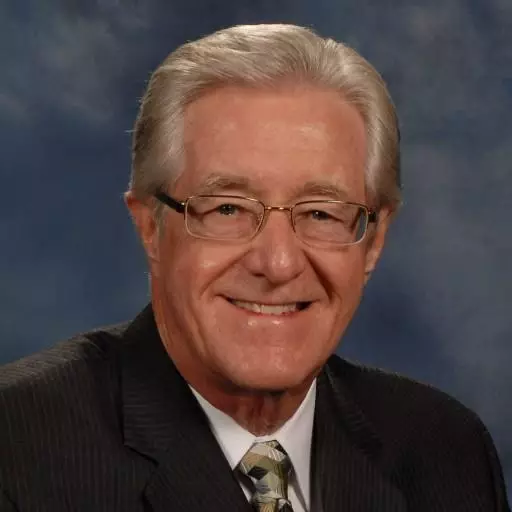
Pastor Jack Morris is the founding pastor of Largo Community Church and the speaker on the radio broadcast – The Healing Word.
Contact The Healing Word with Pastor Jack Morris
Mailing Address:
Largo Community Church
1701 Enterprise Rd.
Mitchellville, MD 20721
301-249-2255