

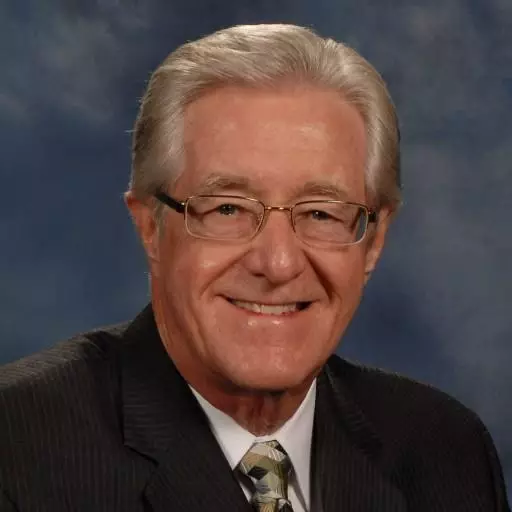
Rest for the Weary


Today we're going to the first couple of verses of Psalm 23, where the psalmist beautifully describes how God, like a loving shepherd, provides rest for the weary. “He makes me lie down in green pastures, He leads me beside quiet waters.”
In a world filled with stress and uncertainty, this verse reminds us that true peace and restoration come from resting in God’s care. Pastor Morris will explore how trusting in the Good Shepherd brings renewal to our souls and strength for life’s journey. Join us as we embrace the rest and refreshment that only He can provide.
Pastor Jack Morris: Do you know Jesus? Do you have a shepherd? Is he in your life? Are you focused on him? Is he leading you, or are you being led by your own drives, your own feelings, your own passions?
Guest (Male): Welcome to the Healing Word. Here is Pastor Jack Morris with today's message that will grow your faith in God and lead you to a closer walk with Jesus.
Pastor Jack Morris: I just keep going back to Psalm 23. It's one of the most widely circulated pieces of writing in existence today, and it has been that way for a long, long time. Jews, both Orthodox and Conservative and Reformed, and Christians of all denominations are acquainted with Psalm 23.
I don't know that I'm going to be going back to it anytime soon, but there are only six verses in this short piece of literature. Only six verses. Every verse has a Hebrew name of God attached to it. And I am so tempted to take each verse and each name and go through it, but I'm not going to do that at this time. But it's a marvelous piece of literature.
Only 118 words in the King James Version, and it only takes about 45 seconds to read this whole psalm. 45 seconds. How blessed we are when we read it with an open mind and an open heart.
Someone said, and I'm going to read this quote. I thought about it after reading the psalm. Somebody said, "I don't care how much a man says if he can say it in a few words." And then I like this one the best: "If folk who do not have anything to say would refrain from saying it, it would be a better world."
We do a lot of talking and a lot of words, but here, six verses, 118 words, I'll tell you, it will cause you to have mountain-moving faith when you read it with an open heart and an open mind. Notice how it begins. "The Lord is my shepherd." What a statement to make. "The Lord is my shepherd."
The Lord, Jehovah, the creator of heaven and earth. Do you know, friends, all of us have a shepherd? Did you know that? And for most of us, our shepherd is the clock. It tells us when to go, when to stop, when to start. We obey the clock, and the clock is leading us.
We are in a hurry, and the clock says, "It's time," and we jump to. But here, the psalmist says it is the Lord, the Abba Father, Jehovah, who created the heavens and the earth, who has come down to love me tenderly and be my shepherd. Notice it says, "The Lord is," right now. Not tomorrow, not somewhere, not someday, but is in this very present moment.
He is my shepherd. David couldn't speak for anybody else; he could only speak for himself. And that's the way it is with all of us. We can only speak for ourselves. But we have a shepherd, and that shepherd is the Good Shepherd, the Lord Jesus. If we'll choose him, he will love us, protect us, care for us, provide for us. Every need is met in Jesus once we get our focus on the Lord Jesus Christ.
David wrote this psalm. He was remembering when he was a shepherd boy. He was just a farm boy, I suppose he was around age 15, 16, when he would take his father's sheep out onto the mountain and he would be out there for days at a time.
One time, a bear came and tried to steal some of the sheep, eat some of the sheep. One time, a lion came, and he slew both of them. He must have been a really tough guy. But he had a rod and he had a staff, and he knew how to use it, and he protected his sheep. He fed his sheep. He led his sheep to where the sheep could drink. He was a shepherd. He cared. He loved, and he would go after the ninety and nine.
Somebody said to me, "Well, you know, if God wanted more people there, he would have sent them." Listen, friend, God wants more people there. He's not willing that any should perish. You have to be a shepherd and go out there on the hillside and find them and get them, care for them, love them, protect them, and cuddle them and bring them in.
Jesus said, "fishers of men." Fish don't jump in the boat. You say, "People aren't coming to my class." Fish don't jump into the boat. You have to fish for them. You have to go after them. You have to be a shepherd. David was a shepherd.
And then notice this. Now he is saying, "The Lord is my shepherd." He reverses it. He said, "One time I was the shepherd, I had the sheep. Now I'm a sheep and the Lord is my shepherd." He puts himself in the place of a sheep.
He said, "What I did for my sheep—protecting them, loving them, providing and caring for them"—he said, "that's what the Lord's doing for me." You just heard a testimony up here a moment ago, didn't you? Friend, this is not theory or philosophy. It might be called theology, but we call it the Word of God. Amen. This is what Jesus does for us: caring for us, loving us, meeting all of our needs.
Now notice it goes on to say, "The Lord is my shepherd." What's the rest of it? "I shall not be in want." Meaning I'm not going to lack anything if I know he's my shepherd. I'm not going to lack. "The Lord is my shepherd; I shall," notice shall, meaning future. Out there somewhere in the future, I'm going to have some needs: physical needs, financial needs, family needs.
I don't know how many needs, but I do know this, David said, and all of us can know this just as much as David knew this: I shall not want, regardless of what the future brings, whatever it holds. Only God knows what the future holds, but I do know this. There's a lot of things I don't know, but I know the important things.
Friends, there are things in life that really don't matter. A lot of things that don't matter. We make an issue out of things. We have a tendency. I'm talking about myself. I do that. I'll make an issue out of things.
I had an old couple. As a matter of fact, I think they were younger than me. This elderly man is a bishop, and he has a little church downtown, a storefront church. This is his third wife. His first two wives died. He is a wonderful man. Just a wonderful man. And he married this lady about three years ago, and she's had some husbands, too.
They were in my office, came in there to talk to me, and she was so upset. Here's what their issue was. Are you listening to me? He doesn't wear the right color tie for the suit he's wearing that day. I had to sit there and listen to that.
Finally, I got her in there by herself, and I said, "Ma'am, it doesn't really matter. That man, I've seen him all dressed up in a double-breasted suit. He looks fine and just a great fellow." And she just fussed and carried on. She nearly wrecked the marriage. Really. They talked about divorce. I couldn't believe it. And then there were other little things. Friend, a hundred years from now, it won't matter. It's not going to matter.
There's some things that really matter, and that is, do you know Jesus? Do you have a shepherd? Is he in your life? Are you focused on him? Is he leading you, or are you being led by your own drives, your own feelings, your own passions, or the clock?
Life will wear you out. Sometimes we wear ourselves out. We fuss and fume over things that really, friend, a hundred years from now, it really won't matter. It really won't. But here's the first want. David said, "I shall not want." Here's the first want: the want for rest—spiritual rest, emotional rest, and physical rest.
We are a tired people. We're worn out. We're just in such a hurry, and there is so much pressure and so much stress. Notice, I'm going to read verse two. You have your Bibles, let's read verse two together in unison. Together: "He makes me lie down in green pastures; he leads me beside still waters." He does this for me.
Do you remember, many of you perhaps still remember, a watch that you used to have to wind? Remember those watches? I haven't seen any like that for a long, long time. They're old watches now. They're either battery-operated or, like the one I have on right now, if I move my wrist, it winds itself. And it says I should never take it off, but I can't go to bed with this thing on. Friend wouldn't stand for it. This thing would become my shepherd.
But I remember when I was about 14 years old, I had a paper route. I made $2.19 a week, and I saved enough money to buy a watch. I went to the drugstore. That's where the watch was. I saw it in the drugstore for about $6 and a few cents, and I bought that watch. I was so proud of that watch. It was one of those watches you had to wind. That's the only kind they had back then.
Those watches had a mainspring in them. The danger was you could overwind one of those watches and snap the mainspring. Every person here this morning, you have a mainspring in you. And some of you are close to the snapping point. This world and the problems in your home and in your family and in your job and in your finances have wound you up, and you're just so tight right now.
You're not going to get a whole lot out of this service today. I hope you do. Every life needs some parentheses and some pauses, but we don't know how to relax. A lot of people, when they try to relax, they feel guilty. We just don't know how to anymore.
The more techniques we have to save time—computers and microwaves and all of these techniques to save time—we're under stress more so today than our parents and grandparents were, and we haven't saved a whole lot of time at all. But this stress and this burnout, think about it for a moment where you are.
Mentally, you're reaching the stage of burnout when you know there is confusion and disorientation. It'll cause you to begin to think negative thoughts about yourself and negative thoughts about other people. You didn't think that way before, but all of a sudden, you're calling yourself names.
You're saying under your breath—you wouldn't allow anybody else to do this, but under your breath—you say, "That was so stupid of you." You're talking about yourself. "You knew better than to do that. Why did you do such a stupid thing?" And so you're beating yourself down, and you're adding stress to stress.
And then you start thinking about other people and you have negative thoughts toward them. What am I talking about? Here is a sign of burnout. You're about ready to snap the mainspring. And so here we are, all caught up into this.
You know you're reaching burnout when you have gastrointestinal problems and headaches. Stress will do a job on you, and some of you have had that job already done. You've already reached burnout. But here is this psalm that we only read at funerals. I don't know that there's a funeral I've attended lately. This psalm isn't for dead people; this psalm is to help us to live the abundant Christian life.
He makes me lie down. You're not going to be able to do it on your own. But if your focus is on him and you're looking to him and you know he's your shepherd—"the Lord is my shepherd"—verse two says, "He makes me lie down in green meadows and peaceful streams."
A sheep will only lie down if it has a full tummy. If it doesn't have a full tummy, it's not going to lie down. That's one of the conditions for resting. The second condition for a sheep to rest is that the sheep must feel secure. And if there's anything that might be threatening the sheep, the sheep will stand and its head will continue to look that way, that way, always looking, always looking.
The third is that the shepherd must be in view. It must be well-fed. Friend, you need a personal, private Bible study. You need to read at least a chapter of the Bible a day. At least a chapter. It only takes 46 seconds to read the psalm. But if you're not well-fed, you can't rest.
You go to Hawaii or wherever you want to go, to the Caribbean, you're not going to get rest. You're going to come back, drop right into it, pick up right where you left off with all of that stress. But the Word of God, being well-fed, feeling secure because you see Jesus, your focus is on Jesus. You love Jesus. He's the most precious of all to you. He loves you and you know his love.
God makes the rest. Verse two, look at it. "He makes me. He does this. He makes me lie down." There can be a thousand troubles without, but there can be a peace within. Did you hear me? Just a lot of stress, a lot of problems, but a peace, a security, a rest within.
The scripture says in Isaiah 43, "When you walk through the water, I'll be with you. And when you walk past through the fire, you'll not be burned; the flames will not reach out and scorch you. When you walk through the river, it'll not overflow you."
And the scripture goes on to say in Isaiah 43, "Because I'm with you. I'm your God. I love you." And once we know that love that comes from our Heavenly Father, we're going to be able to walk through places that we know very well. Like Lorraine said, she couldn't have made it without God, without the church, without prayer, without the Word. Friend, I believe this: there are a lot of Christians living sub-Christian lives.
God has a lot to give to us, but we're not there to receive it. But he's there with us to bless us, to help us. There are a lot of weary people, and Jesus is saying, "Come to me, come to me, come to me." Why don't we come to Jesus? Why don't we hear that scripture? Why don't we do that? We would do ourselves the greatest blessing and favor if we were to come to the Lord Jesus Christ.
Psalm 66 says, "We went through the fire and the water, but you led us into a place of abundance." Notice when you walk, when you pass through the water, when you pass through, when you walk through, when you pass through.
The waters will not sweep over you. The fire will not burn you. You'll not even come out scorched. You won't even have the smell of smoke on you. Notice, when you walk through, you're not going to stay there. You're not going to camp in that problem.
You know, friend, listen to me, you that are going through problems this morning, you can pass through. Notice this, you're walking through the valley of the shadow of death. You're not going to pitch your tent there. It's going to be over soon, provided you have somebody out front that you're following, that you have your focus on. Focus on the Lord Jesus Christ. Let him walk you through. He'll bring you out in victory every time.
Listen to me, I'm going to have to close this very shortly. I can hear somebody say, "Pastor, that sermon this morning is too late. My mainspring has already snapped. If you could just preach that sermon a week or two ago, it would have helped me so much. I believe everything you said, Pastor. I believe Psalm 23, but your sermon came too late." No, friend, it didn't. It didn't.
If you'll just read on, look at verse three. Read it with me in unison: "He restores my soul; he guides me in the paths of righteousness for his name's sake." "He restores my soul." Say that out loud. "He restores my soul."
This is what happens sometimes with sheep. The wool will spread out all over the sheep, and that wool becomes very heavy. And if a sheep will stumble and trip and roll over onto its back and its feet stick straight up like that, the sheep will roll this way and try to get back on its feet. The sheep will roll that way and try to get back on its feet.
But the sheep can't because of that wool. It's just too heavy. Well, when a shepherd is gazing over his flock and he sees a sheep—oh, there's one out there—that shepherd will go as quickly as he can to that sheep that is on its back and can't roll over.
And the shepherd, very gently, very softly, will get down and put his arm around that sheep, and he'll turn that sheep very slowly, very gently, because that sheep is scared to death right now. That sheep knows it's in the valley of death. It's going to die; it'll never get back on its feet.
So he'll turn that sheep and right it up. But now all of the blood has drained from the sheep's legs, and the sheep can't stand. When the shepherd puts it on its feet, its feet just crumble. It doesn't have any blood.
So the shepherd now will take and start massaging the legs to get the circulation going. And then gently, after a period of time, he will let loose and the sheep will walk away. What does that mean? It means simply this: those of you who thought I preached this sermon too late, he restores my soul, simply meaning this: God will get you back on your feet. And he'll do it in a most wonderful way, a gentle way.
God is here to help you if you know in your heart you're a sheep of his pasture. He'll get you back on your feet. He'll restore your soul. You've already passed the breaking point. Some of us are nearing the breaking point.
But we need the shepherd, and he's here to help us. "The Lord is my shepherd." Can you say that? Don't let that just be a verbal statement. Let that be a reality, a conviction, an absolute of the heart.
And those of you who have passed the breaking point, he's here to restore you. He'll rush right over if you'll call him. You'll say, "Here am I." Just like a visitor in the congregation, raise your hand and wave. Say, "Lord, I'm on my back and I can't get up. I can't get over this. I can't get beyond this. This thing has got me down, and I've tried to roll myself over and get back to where I used to be. I've tried for weeks, I've tried for months." Let the shepherd do it. You can't do it, but he's here to do it now.
Guest (Male): Start your week with encouragement from God's Word. Sign up today for The Healing Word weekly devotional, delivered every Monday morning right to your inbox. It's a powerful way to begin your week with hope, scripture, and inspiration for your daily walk.
Go to thehealingword.com. That's thehealingword.com, and sign up today. Let God's truth speak to your heart every Monday morning. Join us tomorrow for another Healing Word message. Until then, blessings on you.
Featured Offer

In God’s Wonders Made Visible, Pastor Jack Morris reflects on John chapter 9, where Jesus notices a man who has been blind from birth. This wasn’t a recent hardship; it had shaped the man’s entire life. He didn’t ask for help, and he didn’t draw attention to himself.
But Jesus saw him, and He chose that long-standing need as the place where God’s work would be made visible.
Past Episodes
- Faith Never Quits
- Faith That Moves: Lessons from the Life of Abraham
- Finding Peace In Life
- Forward In Faith
- Foundations of Faith
- Jesus: The Early Years
- Joshua and The Israelites: A Crossover Experience
- Jump Start Your Christian Walk
- Phillippians 4 - The Spiritual Impact of Your Thoughts and Attitudes
- Prayer Power
- Pressing On WIth Life
- The Benefits of Thanksgiving
- The Greates Gift Ever Given
- The Greatest Gift Ever Given
- The Healing MIracles of Jesus
- The Life of Christ
- The Love of God for Us
- The Majesty of God
- The Names of God
- The Power of Prayer
- The Radiant Person
- The Upward Call: Living with a Heavenly Mindset

Video from Pastor Jack Morris
Featured Offer
In God’s Wonders Made Visible, Pastor Jack Morris reflects on John chapter 9, where Jesus notices a man who has been blind from birth. This wasn’t a recent hardship; it had shaped the man’s entire life. He didn’t ask for help, and he didn’t draw attention to himself.
But Jesus saw him, and He chose that long-standing need as the place where God’s work would be made visible.
About The Healing Word
The Healing Word Ministries delivers the Word of God to the healing of broken, confused, fearful, and hurting lives.
~ Psalm 107:20 “He sent His Word and healed them.”
About Pastor Jack Morris
Pastor Jack Morris is the founding pastor of Largo Community Church and the speaker on the radio broadcast – The Healing Word.
Contact The Healing Word with Pastor Jack Morris
Mailing Address:
Largo Community Church
1701 Enterprise Rd.
Mitchellville, MD 20721
301-249-2255