

Praying In Jesus’ Name


Christians often end their prayers with the words, “In Jesus’ name, Amen.” But what does that really mean?
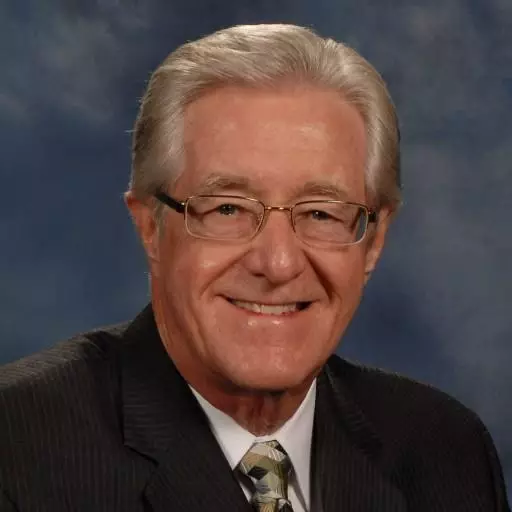
Today Pastor Jack Morris explains the deeper meaning of Praying in Jesus’ Name — and why approaching God through Christ gives us confidence in prayer.
Pastor Jack Morris: You have to remember you are bought with blood. You didn't go through some initiation to get into the family of God. You got in through blood, and you can only come through blood.
Narrator (Male): Christians often end their prayers with the words "in Jesus' name, Amen." But what does that really mean? Today, Pastor Jack Morris explains the deeper meaning of praying in Jesus' name and why approaching God through Christ gives us confidence in prayer.
Pastor Jack Morris: In John chapter 14, I would like you to look at verse 13. Would we read it together in unison? John chapter 14, verse 13. Most of my remarks this morning will be taken from this one verse. Together: "And I will do whatever you ask in my name so that the Son may bring glory to the Father."
I will do whatever you ask. What a promise. What a staggering promise. I will do whatever you ask. It is a promise that Jesus gave to us, His people, and you know and I know that He is no idle promise maker.
He said, "I will do it." He is not saying, "I am going to get an angel to do it" or "I will get my Father to do it" or "I will get the church to do it" or "I will get some spiritual man or woman or prophet to do it." He says, "I will do it."
He put Himself on the line, making it very clear that this promise is from Him and He is going to take sole responsibility in keeping that promise and making it happen. He made us a promise. Jesus made me a promise to do something, and He is going to keep that promise.
He has it here before us today to read it, to think about it, to absorb it, and then to act upon it. He said, "I will do." That means that none of us as His people have to live our lives feeling overwhelmed, overrun, powerless, or defeated. We do not have to live that way anymore. We can come to the Lord bringing our requests to our God, and He said He will do something about it.
The only conclusion I can come to is that if you are living in defeat, if you feel overrun or overwhelmed, it is because you have not asked God to do something about your particular need. I must believe that because He says if you will ask me, I will do something about it and you won't feel that way anymore. Isn't that what He says? Look at it. Verse 13: "And I will do whatever you ask in my name."
He made a tremendous promise, and He made it to somebody. Look at the verse with me. "And I will do whatever"—what is the next word?—"you ask." Who is He talking to? It is very easy to determine who He is talking to by going back into this very chapter.
Look at verse one of chapter 14. He is speaking to His disciples saying, "Do not let your hearts be troubled. Trust in God, trust also in me. In my Father's house are many rooms. If it were not so, I would have told you. I am going to prepare a place for you." He is talking about people who know Him, who follow Him, who live for Him in this life, and who are going to go to heaven and be with Him in the next life.
He said, "I will do whatsoever you ask." You, the people of God. When you, the people of God, pray, Jesus says, "I will do it." This promise then is not for everyone, is it? It is for you who follow me, Jesus said. It is for the people of God. It is for a select group of people.
This promise is not for everyone, but everyone can accept Christ and receive the benefits of the promise. No one is excluded except the person, the young person, the boy or girl who excludes themselves. Everyone is welcome, but you must be part of the family of God. You must have a relationship with the Lord. You must know Him in an intimate way.
Many people know things about God. They know many things about Jesus. But it is altogether different when you know Him. One of my favorite television programs is called Biography. I enjoy learning about people and their past, who they were, and their accomplishments.
One recent program that I viewed was that of John D. Rockefeller. I learned that he was a great philanthropist, that he got his wealth from Standard Oil, and that he was a devout Christian. Matter of fact, if you watched that program, you would have seen him out in a park one day with a group of people and here is old John D. Rockefeller leading those people in Christian songs. He was the director, an old, old man.
I really enjoyed that, but obviously, I have never met John D. Rockefeller. He is gone now. He has been gone for many, many years. I never talked with him. I never shared his thoughts or his ideas. I never experienced his personality or his charisma. I learned a lot about him, but to know him? No, I will never know him in this life.
There are many people who know a lot about Jesus. You went to Sunday school, you hear sermons, you really know a lot about Him, and you admire Him. Particularly, you admire the things that He did when He was here on Earth, how He reached out and cared for people—the poor, the hungry, the sick, the afflicted.
You admire His ethical standards and His moral pronouncements, particularly words like when He says, "Do unto others as you would have them do unto you" or "Love your neighbor as yourself." We know a lot about Jesus, but that is not the person that this promise is given to.
This promise is given to you who know you are saved, you who know you are going to heaven when you die, and you who know that He has gone on before and is building mansions in that world to come for you when this life is over.
Notice, look at it. Here is a promise, a wonderful promise, but a promise to a very select people. Are you part of His family? Do you know Him as your personal Lord and Savior? If so, you can pray and expect answers. You can pray with power, and He will be there to answer and to minister to you.
Look at verse 13: "And I will do whatever you ask." So we have a promise and we have a people to whom the promise is given. Now, how do we appropriate the promise? What is the first word in appropriating the promise? Look at it. It says, "Ask in my name." You have to ask. You really have to pray. God is not going to do anything until you pray.
You say, "Well look, I'm His child. I'm a Christian. He ought to take care of me." Look, He is taking care of you, but He is not going to do things in your life and fix things for you until you pray. You have to know Him, you have to believe the promise, and you have to ask.
Isn't that the word there? Isn't that the word He put? You have to ask. He says, "Ask and it shall be given you." You have not because you ask not. Listen, friends, if you don't ask, you're not going to get a thing. But if you ask, He says, "I will do anything."
If you know who you are, if you know who I am, and if you have a relationship with me, then ask. I can almost see Him. He is looking at each of us. He sees everything that we are going through and He is saying, "Come on, ask. Just ask me. Come on, just ask me. I want to do something for you. Please, let me do something for you."
For some unknown reason, God's people are hesitant. We hold back. We wait. That's why He put these words here. That's why we have books like those by R.A. Torrey. That's why I'm preaching sermons like I'm preaching today because we are the people of God, but we are not a praying people for the most part.
Prayer has not become a regular part of our lives. It's not normal. Matter of fact, statistics tell us that prayer for a Christian is an abnormal exercise. Christians go for days and weeks without praying. They'll bow their heads on Sunday morning when somebody else prays, but Christians do not pray.
That is why we live such defeated, overwhelmed, overrun, discouraged, and down lives. You don't have to live that way, friend. You have a Father. You have a Savior. He's given you a promise.
I don't know whether you know it or not, but this is good preaching. You're not going to read anything like this in the newspaper or in novels, but you can get it here from the book, from the one who makes the promise. Look, He says, "Ask."
If you could ask for one thing today, are you listening to me very clearly now? If you could ask for one thing today, knowing in your heart that God is going to grant that miracle, what would you ask for? I see some of you are telling yourselves. Some of you already know, but some of you are thinking, "I haven't really thought about it."
Think about it. If you could ask for one miracle, just one, and you knew that you were going to get that miracle, what would that miracle be? What would it be? Would it be to put my marriage back together? To save a loved one that needs saving? To bring back a son or daughter who has gone astray? To help me with my finances? To change something on my job?
What would it be? You know you're going to get it. What would it be? That is the prayer to pray. Jesus said if you will pray that prayer, being my child, I will take care of it for you. I will fix it for you.
Ask. Now, look how He tells us to ask. This is the core. This is the kernel. Ask. Read the next three words: "In my name." Oh, I pray the Holy Spirit will help me now to convey the truth that I feel in my heart, because whatever else I say in reference to those three words, "In my name," it's going to fall far short. But whatever I am going to say now is going to be truth, and I sincerely pray that the Holy Spirit will help us.
It does not necessarily mean every time I pray to tack on the end of that prayer when I'm ready to conclude with these words: "In Jesus' name, Amen." Now, that is a nice way to conclude a prayer, and I conclude most of my prayers that way.
But to pray in the name of Jesus does not necessarily mean to tack that little phrase at the end of every prayer. What this means is that Jesus Christ, the Son of God, went into heaven in our behalf with His own precious blood.
He put His own precious blood on the mercy seat, and He carried us into the presence of God with Him. We are there now, seated in heavenly places in Christ Jesus. We are there in Him to pray prayers in His name because of who He is, because of what He has done, and because of His great accomplishments, and to receive in His name the answer to our prayers.
He took His own blood into the presence of God. We're going to go all the way back now into the Old Testament to Exodus chapter 28 and Leviticus chapter 16. We're going to go all the way back to the Levitical priesthood and the activity and ministry of the High Priest so that we can better understand what Jesus actually did for us. I'm going to say it as quickly as I can and as clearly as I can.
In the Old Testament, God gave Moses the dimensions of a tabernacle. He told him what wood to make it out of, the pins, the coverings, the hangings, and the dimensions. In that tabernacle, there were two great compartments or great divisions—two great rooms separated with a veil, a huge curtain.
On this side of the tabernacle, this division was called the Holy Place. On that side of the veil, that was the Holy of Holies or the most Holy Place. Once a year Aaron, the brother of Moses and the first great High Priest, would take blood. He would take the blood of the lamb, the bullock, or the goat.
He would take it to the curtain and sprinkle blood. When he sprinkled the blood, then he would move the curtain aside and he would step into the most Holy Place, which represented the throne of God. In the Holy Place, there was the tabernacle with the overarching cherubim and there was the mercy seat, and he would sprinkle blood on the mercy seat. He went in there for the sins of his people so that they might be forgiven of their sins and continue to be the people of God.
All the promises in the Bible concerning answered prayer are always for the people of God, those that have a relationship. But you can only come into the presence of God with blood. The priest each year would go in with fear and trembling. Matter of fact, they would tie a rope around his foot because if he were to go into the presence of God without blood or unclean himself, he would be stricken dead.
This is a Holy Place. Prayer is a holy, sanctified place. If he were to be smitten in the presence of God, the people on the outside would not go in to get him, but they would drag him out with the rope.
This priest once a year would go into the presence of God. These were only types and shadows and imperfect copies of the true High Priest, Jesus Christ, who was to come.
When Jesus came, John the Baptist saw Him and said, "At last"—all of that ceremony in the tabernacle, the priesthood, and the curtains is going to be gone. Here is the Lamb of God. Here is the Priest of God. He is the one that goes into the very throne room in our behalf.
We don't go in on our own behalf. We can only go in through Him who is at once both priest and sacrifice. On the cross, He became the Lamb of God. He shed His precious blood. After His resurrection, He became the High Priest and He takes His own blood—not the blood of a calf, but His own blood.
He does this not for Himself, but for us. All the other priests had to cleanse themselves from their sins, but Jesus did not go behind the veil for Himself, but for us. He walks into the presence of God. He ascends into the presence of God, our great High Priest.
We read it in Hebrews chapter nine, verse 12. He, Jesus Christ, did not enter by means of the blood of goats and calves, but He entered the most Holy Place once for all by His own blood, having obtained eternal redemption for us.
He goes into the presence of God with His own blood. He stands in God's presence and He says, "This is salvation to all who believe upon me. This is redemption and eternal life for every man and every woman and every boy and every girl who will believe on my name."
When a person's name is used, that name stands for that person's character, personality, accomplishments, and failures. It still does to this very day. The other day, I was going to do some business with a particular company and somebody said to me, "Pastor, they don't have a good name."
What did that mean? Now, this company has a good name. Every time I pull out my credit card, they run it through a little machine. Somewhere, the message goes off at lightning speed to some central control. There are numbers there, and those numbers represent my name.
My signature is there, and the message comes flying back: "Go ahead and give him credit. He's got a good name. He has not defrauded anybody. He has not cheated. He is not overdrawn. He's got a good name."
You see, that name stands for the person. Your name is you. And when Jesus says, "In my name," you and I are to remember that He accomplished something for us. He did something great. His name stands for Him and all that He is.
This is what Jesus is saying: "In my name, for everything I ever was and for everything I am and for everything I have done." You have to remember you are bought with blood. You didn't go through some initiation to get into the family of God. You got in through blood, and you can only come through blood—my precious blood.
Not only did the priest go in with blood, but when that Old Testament priest in Leviticus 16 went in, he had on special garments that he would wear. Only once a year he would put these garments on. On his shoulder was the ephod, and on his breast was the breastplate. On his shoulder was the name of the 12 tribes of the children of Israel.
There were precious stones and the names of the people of Israel were on there, on that breastplate. He would walk in with blood as the people's representative, and he said, "I stand here not only for me, but for all those people who are yet to come in here. I am here for them in their behalf."
When Jesus Christ, the great High Priest of the church of all believers, walked through that veil into the very presence of God, He stood there with our names on His shoulder, which means that He carries us and that He supports us. This is what it meant to the Old Testament priest. This is what it means to the great High Priest, Jesus Christ.
You have a great carrier or a great supporter—somebody who's going to carry you and help you and give you strength to live life and to live it victoriously. Also, on the breastplate, the names were written again over the heart of the High Priest, meaning that you are over His heart. He carries you in His heart, on His heart, just as you, the believer, carry Him in your heart.
Now, look at the very last part of verse 13: "So that the Son may bring glory to the Father." Not only does Jesus want to answer your prayer and my prayer to help me and you live wonderful, abundant, overcoming lives of victory—He really does.
He wants to answer prayer for our behalf, but even more so than that, He wants to do it for the Father. He loves the Father. He says in John chapter 17, "I and the Father are one."
He said, "I am going to answer that prayer for you, Father, because when I answer that prayer, I will not only bring joy to him or to her, but I am going to gratify you. I love you, Father, and I'm going to do anything and everything to make you happy."
The Lord Jesus Christ is so anxious to answer our prayers. He really loves His Father, and He's doing it for His Father. Do you think Jesus is going to turn His Father down? The Father wants to answer it. Jesus wants to answer it. The Holy Spirit wants to bring it to you. But you have to pray in His name.
Narrator (Male): When we pray in Jesus' name, we come before God not in our own strength but through the grace and authority of Christ. You can learn more about living a life of faith by visiting thehealingword.com, where you'll find free ebooks, devotionals, and many messages from Pastor Morris.
This ministry continues because faithful listeners choose to support it. If you feel led, we invite you to partner with us through a donation. Thank you for joining us for The Healing Word.
Featured Offer

In God’s Wonders Made Visible, Pastor Jack Morris reflects on John chapter 9, where Jesus notices a man who has been blind from birth. This wasn’t a recent hardship; it had shaped the man’s entire life. He didn’t ask for help, and he didn’t draw attention to himself.
But Jesus saw him, and He chose that long-standing need as the place where God’s work would be made visible.
Past Episodes
- Faith Never Quits
- Faith That Moves: Lessons from the Life of Abraham
- Finding Peace In Life
- Forward In Faith
- Foundations of Faith
- Jesus: The Early Years
- Joshua and The Israelites: A Crossover Experience
- Jump Start Your Christian Walk
- Life After Death
- Living Above the Circumstances
- Living by Faith: Freedom Found in Christ
- Love, Conflict and Forgiveness In Marriage
- Phillippians 4 - The Spiritual Impact of Your Thoughts and Attitudes
- Prayer Power
- Pressing On WIth Life
- The Benefits of Thanksgiving
- The Greates Gift Ever Given
- The Greatest Gift Ever Given
- The Healing MIracles of Jesus
- The Life of Christ
- The Love of God for Us
- The Majesty of God
- The Names of God
- The Power of Prayer
- The Radiant Person
- The Upward Call: Living with a Heavenly Mindset

Video from Pastor Jack Morris
Featured Offer
In God’s Wonders Made Visible, Pastor Jack Morris reflects on John chapter 9, where Jesus notices a man who has been blind from birth. This wasn’t a recent hardship; it had shaped the man’s entire life. He didn’t ask for help, and he didn’t draw attention to himself.
But Jesus saw him, and He chose that long-standing need as the place where God’s work would be made visible.
About The Healing Word
The Healing Word Ministries delivers the Word of God to the healing of broken, confused, fearful, and hurting lives.
~ Psalm 107:20 “He sent His Word and healed them.”
About Pastor Jack Morris
Pastor Jack Morris is the founding pastor of Largo Community Church and the speaker on the radio broadcast – The Healing Word.
Contact The Healing Word with Pastor Jack Morris
Mailing Address:
Largo Community Church
1701 Enterprise Rd.
Mitchellville, MD 20721
301-249-2255