

Peace for Troubled Hearts | Jehovah Shalom


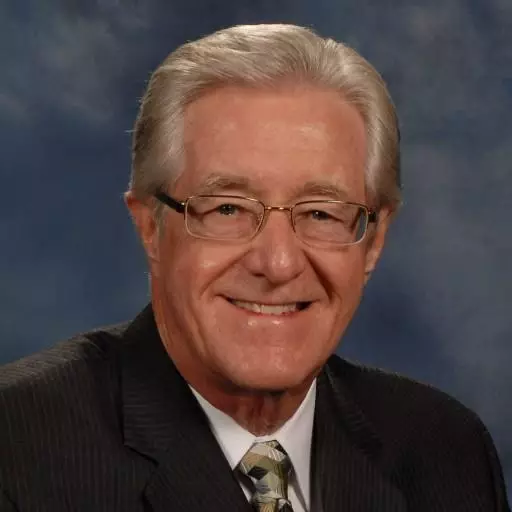
Anxious hearts are everywhere—but peace is still available. Today on The Healing Word, Pastor Jack Morris brings a comforting message titled Peace for Troubled Hearts, from Judges chapter 6. We’ll discover God as Jehovah Shalom, the Lord who brings peace that passes all understanding.
Pastor Jack Morris: When I come into this church on Sunday morning or anytime I come in here during the day or evening when I'm all alone and I have to turn the lights on, the first thing I see is this altar continually reminding me that what I see here is a reminder of the altar that should be continually in my heart. This altar stays. This altar of confession, of repentance before God, stays.
Guest (Male): Anxious hearts are everywhere, but peace is still available. Today on The Healing Word, Pastor Jack Morris brings a comforting message titled "Peace for Troubled Hearts." From Judges chapter 6, we'll discover God as Jehovah Shalom, the Lord who brings peace that passes all understanding.
Pastor Jack Morris: Judges chapter 6, verse 1. Again. Oh, I looked at that word again. Again, the Israelites did evil. Again. I thought, how many times are they going to do evil and get caught and become enslaved? Again and again and again. Do we ever learn? Do we really ever learn? Here they did it again. Again, the Israelites did evil in the eyes of the Lord, and for seven years, he gave them into the hand of the Midianites.
You see, we have a tendency to do evil, do something wrong, and then we want to come to church and get it fixed like that. Or we want to go to our place of prayer, wherever that is, and we want God to fix it like that. We're impatient. We think, well, I've prayed, why isn't it fixed?
Sometimes God says, hey, I want you to stew in this for a while. I'm going to try to teach you something. I'm not going to just lift you out of it right away. You're going to have to give some thought and think about what you have done and why you are where you are. It's like someone said the other week, they took their son and said, "Now you stand in the corner for 15 minutes." Not only one or two minutes. No, God says seven years this time. This time, seven years. He's a wonderful parent and he knows exactly how to discipline us.
Let's look at this unrest. It says they did evil in the eyes of the Lord. And then it goes on to tell us what this evil is that they actually did. Now, you think about it today and see if you can find any of this in your life that you're doing that may be robbing you of your peace. There is a reason if you don't have peace. There is a reason.
God wants to show you today and turn the x-ray of heaven upon you that he might deliver you in some great wonderful way in his way and make you whole. That's one of the meanings, the nuances of the word Shalom: whole, complete, filled up. This is God's gift, and he's coming today to do this work within us.
Here are the children of Israel. They did evil in the eyes of the Lord. And if we read on through verse 7, we'll read how they suffered during this period of time. They suffered and suffered because of the Midianites and their cohorts of the Midianites keeping them enslaved and robbing them of every possession that they had at that time. The unrest was terrible.
The purpose for all of this unrest was to bring them back to God so that God could get their attention again. I don't know why, but I've been at this work a long time. Let me tell you something, friends. I know there are some people God cannot afford to bless them with healing or to bless them with prosperity because as soon as he does, they begin to forget him. That's true. They do.
I know some people are better off sick. They seem to be more spiritual, more in tune, more regular in church attendance, more consistent. But when prosperity begins to come, they begin to forget God. And this has happened even to families, to countries, to nations. When prosperity comes, often our attention goes away from God. That's sad. This is one of the things that happened to the children of Israel. The Scripture says they began to forget God. Is it possible to forget God? They did. And when they did, they suffered terrible consequences of forgetting him.
In Exodus chapter 33, we read how Moses was—this happens right after Moses was on the mount. He got the two tablets of the Ten Commandments. He comes off the mount with the Ten Commandments. He finds his people, the people of God, the children of Israel in the valley worshipping a golden calf. All their attention had turned to silver and gold and prosperity, and they wanted something that they could touch. Today we would say they worshiped their bank account. They're worshipping their houses, they're worshipping their prosperity, they're worshipping their riches.
Moses came off the mount and said, "My God, look at these people. How you delivered them, how you set them free from enslavement, and now the only thing they can think about is money, money, money." They are so obsessed with money on the inside they wanted Aaron to build a golden calf out of pure gold, a very luxurious expensive something that they could see and touch and even bow before it. We wonder sometimes how could they do that, but they did that. Moses threw down the Ten Commandment tablets and they broke all to pieces.
God told Moses again, "Now take the people. I want you to take them to the Promised Land." And this is what Moses said in Exodus chapter 33. He said, "God, if you don't go with me, I'm not going anywhere." God said, "I'm going to send an angel to direct you and lead you into the Promised Land." Moses said, "God..." He didn't say "You didn't hear me" because obviously God hears and knows everything. But he said, "God..." Moses said to the Lord, "You have been telling me, lead these people, but you have not let me know whom you will send with me. You have said, I know you by name and you have found favor with me."
God promised that he would send an angel. He said, "I'll let an angel lead you, but these people don't want me anymore. These people don't listen to me anymore. And I'm so angry with these people I don't even want to be there, so I'll send an angel down and lead them." This is what he said in verse 14. Moses said, "No, I have to have you, Lord." And in verse 14, the Lord replied, "My presence will go with you, and I will give you peace or give you rest."
Moses knew he had lived long enough to know that without the presence of God, there is no rest, there is no peace. No rest, no peace without the presence of God. Moses knew this, and God then honored his request and came to him with the promise that he would be with him.
Look at point B: Israel's source of unrest. We're going to turn to verse 10. "I said to you, I am the Lord your God. Do not worship the gods of the Amorites in whose land you live, but you have not listened to me." Look at that last verse, that last phrase, that last sentence: "But you have not listened to me." That's a Hebrew idiom for "you have been disobedient. You haven't been listening."
You see, when we listen to God, when you and I listen to God, there is peace. When we are obedient to God, there is peace. Here is the source of unrest. Israel began to forget God. They forgot the God Jehovah Jireh. When Abraham took Isaac and put him on the altar to sacrifice him and the provision of the ram caught in the thicket and all the provisions of God. They forgot the story of their father Abraham and their father Isaac. It had been passed on down through the ages, through the centuries, but they had forgotten.
They had forgotten Jehovah Nissi, that our families were in the wilderness and we were dying of thirst and God turned the bitter waters sweet. They had forgotten. They had forgotten Jehovah Rapha, the God who heals all of their diseases. They had forgotten, just forgotten. It is so easy to forget your upbringing, your Sunday school teaching, your pastor's messages, the word of God, the Christian lifestyle that you once had. There are things in this world that are going to pull you away, and when that happens, your peace is going to be lost and then you're going to wonder what has happened. Without the presence of God, there can be no peace.
Look at point C: Israel's means of peace. M-E-A-N-S. Here's how we're going to discover our means of getting back to God and getting peace back in our hearts, back in our homes, and back in our families. Look at verse 6. "Midian so impoverished the Israelites that they cried out to the Lord for help." They had to be placed in a very desperate situation. Sometimes God has to push our backs against the wall, so to speak, before we realize, "Hey, I'm fenced in here. There's no way out. I need help."
Israel realized that there was nothing left but to cry to the Lord. And the implication is that they began to repent and they began to confess. They began to own up. They began to realize, "Hey, God doesn't understand anybody different from anybody else. He's no respecter of persons. He loves us all equally. He doesn't have one standard or rule here and another one for here. We're all his people."
When we listen to him, we have peace. But if we don't listen to him, we can't come back and say, "Well, after all, we're not hurting anybody and he understands." All God understands is that he loves you, he wants to give you peace, and if you listen to him, the peace will be there and the peace will come. So they begin to confess and they begin to repent.
I don't think there's a day that goes by that I don't confess to the Lord my sins. I know I'm saved. I know that the Lord has forgiven all my sins. I remember when I was a little boy I accepted Christ as my savior. But you and I live in the world and there are many things that are going on, many thoughts, many activities, many behaviors. Sometimes we'll think something or we'll do something and we'll think, "That wasn't right. That was wrong. I need to ask for forgiveness." And there are times I'll ask the Lord, "Forgive me of the things that I've done or thought that I didn't even remember thinking or doing."
Repentance and confession is like a continuous washing, a continuous renewing, a continuous regeneration. You and I need that on an ongoing basis. We need to continue to bring ourselves into the presence of the Lord and recognize that he is God. He will not dwell with the unclean, and if there's anything unclean in me, I want to confess it. I want it to be gone.
Some of you really, I know you have good excuses. I know somebody has done you wrong. But there's a tumor that's growing in you. There's a cancer that is growing in you. And you say, "Yeah, but if you only knew what that person said." That makes no difference right now what that person did. It's what's killing you and robbing you of your joy and of your peace. It'll only come out as you acknowledge it humbly before the Lord and open up in all honesty before God and confess it. That's the only way it'll come out.
There are people that are going to hurt you, and most of our hurts all come from relationships, don't they? We're here together, and when you are with people, there are going to be misunderstandings. Some of you act so surprised when that happens, but that's how it is in this world. But unless that is confessed and repented of and turned away from, there will something start growing in you. And it'll grow and grow until it almost has destroyed you and maybe your family and your relationship with the church before you ever begin to deal with it. You need to deal with it. Don't let the sun go down on your wrath.
I don't know why we always just put that between husbands and wives. Don't let it happen. Take it to God on a daily continuous confession repentance, and he will cleanse and you'll be renewed and you'll be able to go to sleep at night and wake up refreshed and ready to go in a new day with him. Israel began to forget God. Look at verse 8. The first one under point C: Israel's means of peace. Number one, write down the word repentance and confession. Number two, write down the word recounting.
Beginning at verse 7, when the Israelites cried to the Lord because of the Midianites, he sent them a preacher. "I want help, and you sent me a preacher." I read that and I couldn't help but smile at it. The last thing in the world I want is for somebody to tell me and to instruct me, to teach me, to tell me to repent. After all, I've been in that church for years and years and years. Matter of fact, I was there long before she ever came or long before he ever came. They're coming in and taking over. I mean, look at your heart. This happens to all of us.
What you need today is to hear. You need a preacher, you need a prophet, you need the word of God. And this is what the prophet did. Look what he did. When they cried to the Lord, he sent them a prophet who said, "This is what the Lord the God of Israel says. You need to listen to what God says." And when he began to recount all of the blessings and they begin to remember and reflect on the joy that they once had but they don't have now, and they begin to remember the source of that joy and that peace.
When they listen with a humble heart... yes, God wants to tell you what to do so he can do what he can't do until you do. And he sent them a prophet to remind them and to talk to them. And when he did, they heard the voice of God again. And look what happens at verse 11. The angel of the Lord came. Say those words: the angel of the Lord came.
Every time we confess and repent, every time we recount with thanksgiving in our heart the blessings of God and reflect upon it, that repentance, that blessing, and that recounting that brings worship always brings the presence of God. Then the angel of the Lord came. Notice, then the angel of the Lord came. We want the angel of the Lord to come before we have to do what we have to do. But if we do what we have to do every time, the angel of the Lord will come.
The joy of the Lord came back into their hearts again, and they knew the power and the blessing of God. Now look at verse 24. This is what Gideon did. Verse 24: "So Gideon built an altar to the Lord there and called it..." What did he call it? "The Lord is our peace." He built an altar.
Now, I want to tell you something quickly about an altar. We have an altar here. This is an altar. Sometimes referred as the communion table, but this is an altar. In the Old Testament, the first altar that was ever built was built by Noah in Genesis chapter 8. When Noah came out of the ark, brought the animals out after the flood, Noah worshiped the Lord with his lips and he took the best of the flocks and put it on the altar. Now, that is altar worship. Altar worship is lip worship and then the giving of our time, our heart, our service, our means, whatever—the giving of our best. He built an altar, he worshiped God, and he gave his best.
All of the Old Testament patriarchs—Noah, Abraham, Isaac, Jacob, Moses, Joshua, on and on—they all built altars. Without an altar, there is no presence of God. There is no blessing of God. There is no peace with God. Then it came time in the Old Testament that the tabernacle was built and then the permanent temple was built. And do you know where they put the altar? Right where this altar is. Right here. First thing you could see when you walked into the temple was the altar. First thing you can see when you walk to the tabernacle, the altar. Meaning you have to pass the altar in order to get to God.
There is no peace, there is no presence, there is no forgiveness, there is no heaven, there is no joy, there is no salvation. The altar is first. And what do they do at an altar? They sacrifice, right? That's what the word altar means. The altar means "place of slaughter." That's when you come in and you die to yourself. So we put a cross on here, meaning that on the altar of Golgotha God's only begotten Son was sacrificed. That is first, that is fundamental, that is before everything else, and that is continuous and ongoing.
You can never get away from the altar. That's why I can never get away from confessing and repenting every day. And every day, you and I need to come to the Lord and confess and repent and tell him, "Lord, I'm human, and I'm walking in some very dirty, unclean places, and I hear and see some dirty and unclean things, and I'm tempted." You need to open up and confess honestly to God. You're tempted to maybe lie, tempted to cheat. Not that you do it—temptation, there is no sin in temptation—but you toy with it, you dwell upon it, you ruminate it day after day, week after week, soon you're going to yield to it. You've got to get it out through confession and repentance, and it can only happen at the altar.
Now, this is what happened in the New Testament. We come now to the New Testament. Remember the old altar of Noah. They would build on their journeys wood, some of them made out of clay, some of them made out of bricks that they would bake in the fire. They built these homely-looking altars. Then we get to the tabernacle and we get to the temple. The altars now begin to take on a beautiful shape and a design. But then we get into the New Testament, no altar. No altar. The altar's gone. You never hear of it again.
What is the New Testament altar? Yet there is an altar, but not a visible altar in the New Testament. The New Testament altar is one of the heart that you continually keep building in your journey, just as Israel continually kept building in their journeyings to the Promised Land. When I come into this church on Sunday morning or anytime I come in here during the day or evening when I'm all alone and I have to turn the lights on, the first thing I see is this altar continually reminding me that what I see here is a reminder of the altar that should be continually in my heart.
This altar stays. This altar of confession, of repentance before God, stays. This altar is external only to remind me that I need an altar on an ongoing continuous basis if I'm going to have a relationship with God and if I'm going to be at peace with God. You need to build an altar this morning. You need to build an altar.
How do you build that altar? When you come down before God and think of Jesus, think of his blood, confess his name, and say, "God, I'm saved, I'm your child. But yet I'm in a world of sin and I have a nature that is within me that is influenced and prone towards sin." You use your own words, you talk to him out of your own heart. "Lord, if I have sinned, and I know I have, somehow in thought, in word, and deed, cleanse me today. Keep me clean, Lord. Keep your presence alive in my heart."
When you're praying that prayer, you are building an altar, whether you're at home or in the car or at the church or wherever you are. Now peace can be yours today if you build your altar. God will become to you Jehovah Shalom. Jesus is peace. Turn to Jesus today. Let him be upon the altar of your heart. Remember and reflect and recount, and the blessing of God will come as you confess and repent and turn to him in all humility. The blessing of God and the peace of God that passeth all understanding will come into your heart and keep your heart.
Guest (Male): God's peace is not distant. It's personal. If today's message touched your heart, you may be encouraged by our Prayer Compass, designed to help you meet God in prayer during uncertain times. Call us at 1-800-555-0199 or find us online at TheHealingWord.com to request your copy. And you'll find more messages of hope and peace at TheHealingWord.com. Join us tomorrow for another Healing Word message. Until then, blessings on you.
Featured Offer

In God’s Wonders Made Visible, Pastor Jack Morris reflects on John chapter 9, where Jesus notices a man who has been blind from birth. This wasn’t a recent hardship; it had shaped the man’s entire life. He didn’t ask for help, and he didn’t draw attention to himself.
But Jesus saw him, and He chose that long-standing need as the place where God’s work would be made visible.
Past Episodes
- Faith Never Quits
- Faith That Moves: Lessons from the Life of Abraham
- Finding Peace In Life
- Forward In Faith
- Foundations of Faith
- Jesus: The Early Years
- Joshua and The Israelites: A Crossover Experience
- Jump Start Your Christian Walk
- Phillippians 4 - The Spiritual Impact of Your Thoughts and Attitudes
- Prayer Power
- Pressing On WIth Life
- The Benefits of Thanksgiving
- The Greates Gift Ever Given
- The Greatest Gift Ever Given
- The Healing MIracles of Jesus
- The Life of Christ
- The Love of God for Us
- The Majesty of God
- The Names of God
- The Power of Prayer
- The Radiant Person
- The Upward Call: Living with a Heavenly Mindset

Video from Pastor Jack Morris
Featured Offer
In God’s Wonders Made Visible, Pastor Jack Morris reflects on John chapter 9, where Jesus notices a man who has been blind from birth. This wasn’t a recent hardship; it had shaped the man’s entire life. He didn’t ask for help, and he didn’t draw attention to himself.
But Jesus saw him, and He chose that long-standing need as the place where God’s work would be made visible.
About The Healing Word
The Healing Word Ministries delivers the Word of God to the healing of broken, confused, fearful, and hurting lives.
~ Psalm 107:20 “He sent His Word and healed them.”
About Pastor Jack Morris
Pastor Jack Morris is the founding pastor of Largo Community Church and the speaker on the radio broadcast – The Healing Word.
Contact The Healing Word with Pastor Jack Morris
Mailing Address:
Largo Community Church
1701 Enterprise Rd.
Mitchellville, MD 20721
301-249-2255