

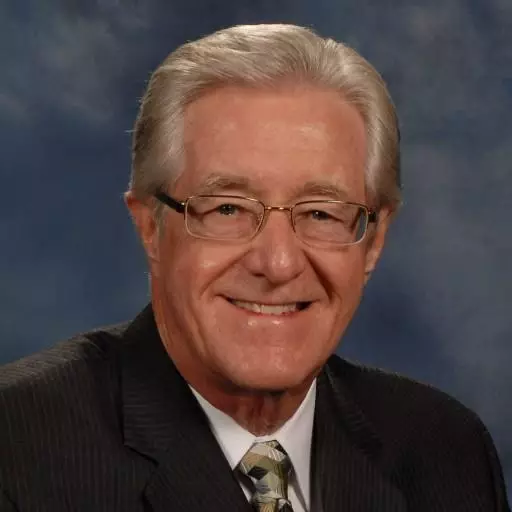
Jesus Paid My Debt


Today on The Healing Word, Pastor Jack Morris begins a powerful new series titled “Living by Faith: Freedom Found in Christ.” In today’s message, “Jesus Paid My Debt,” we turn to Galatians 2:15–21 to discover the incredible truth that we could never earn our way to God—but Jesus paid the full price on our behalf.
Freedom doesn’t come through effort or religion. It comes through faith in what Christ has already done.
Guest (Male): God said the wages of sin is death, yours or Jesus. Now you have that awesome power of choice. You can decide; it's an awesome power. You can roll your sins off of yourself and say, "Jesus, you died for me. You took my wages, death, and you gave me your wages, life."
Guest (Male): Welcome to The Healing Word. Pastor Jack Morris is here to begin a powerful new series titled Living by Faith: Freedom Found in Christ. In today's message, Jesus Paid My Debt, we turn to Galatians 2:15-21 to discover the incredible truth that we could never earn our way to God, but Jesus paid the full price on our behalf. Freedom doesn't come through effort or religion; it comes through faith in what Christ has already done. Let's join Pastor Morris now for today's message, Jesus Paid My Debt.
Pastor Jack Morris: I want to talk about a word today that is so prevalent in the New Testament. It's the word justification. I want you to think about this word and look at it with me and know what it really means and how you and I have personally experienced justification through Jesus Christ our Lord. This was a word or an experience that greatly troubled the Apostle Paul. Paul wanted to be justified before God.
Later in time came another man named Martin Luther. I'm talking about the German reformer. He also wanted to be justified before God. These two men, their lives, their desire for God seems to parallel each other. There have never been two men in all of history who have tried more earnestly to find God, to be near to God, to be justified before God, than the Apostle Paul and Martin Luther, the German reformer.
There are more books written about Martin Luther, the German reformer, than any other figure in history, with the exception of Jesus Christ. More books have been written about this man. This man earnestly desired to know God, and he tried with all his human might and all of his religious fervor to find God, to be near to God, to experience God.
Martin Luther became an ordained priest. The degree of Doctor of Theology had been conferred upon him. He had been given a position at the University of Wittenberg as a professor of biblical studies, but Martin Luther with all of this theology and all of this religion and his ordination, he did not know God. And he knew it in his heart that he didn't know God. He knew that there was a great absence of God's nearness. He felt convicted, he felt afraid, he felt that there were going to be consequences in this life and in the life to come. He felt it, and he prayed and he sought God and he did everything humanly possible. And he followed every religious technique possible, very much like the Apostle Paul did.
The Apostle Paul thought that he could get to God by destroying Christianity. He thought the religion of the Jews was the only religion. This was God's religion, and he was going to help God preserve the faith of Israel by destroying anything and everyone who threatened the faith of Israel. So he set out to destroy Christians.
Martin Luther thought surely if I become a priest, I'll know God. Surely if I become a doctor of theology, I'll know God. Surely if I become a professor of biblical studies, I'll find God. And he did not find God in all of his pursuits. So one day he took leave of the university and he went to Rome to climb the sacred staircase on his hands and knees, calling out to God, "Where is God? Where can I find God? Surely there's a God, but I don't know God and God doesn't know me. I'm unjust, I'm not right with God." And he over and over prayed and repeated and crawled those steps on his hands and knees, seeking to find God.
And a voice from heaven came and said to Martin Luther, "The just shall live by faith." It's not anything you can do, Dr. Luther; it's what Jesus has already done. And at that moment, Luther prayed out, "Jesus is my Savior. Jesus forgives me of my sins. Jesus justifies me." And he threw his complete heart and soul over onto Jesus and for the first time in his life, he knew God, he knew peace, he knew forgiveness, and he knew that he knew.
You know, there are so many people that say, "I hope I'll go to heaven when I die. I think I'm doing all right." Friend, you can know that Christ has forgiven you and you can have this peace. The Apostle Paul on the Damascus road met Jesus in a most wonderful way, and he knew that he had come into the presence of God. He bowed before Jesus and called him Lord and began to serve him and served him the rest of his life, the Apostle Paul did.
Let's talk about justification, and I want you to think about your justification. On point A in your outline, write down the word "what". Justification: what is it? Simply this: justification means right standing with God. We need to be right with God. We need to be put in a right relationship with God. We need to be justified before God.
Justification is more of a legal term. It is being declared right before God, that God declares you right. Have you felt in your heart that God has made that declaration for you, to you, that God has declared you just? God has declared you right before him. You are now in good standing with God. It's a declaration. It's like the judge in the courtroom coming down with the gavel. You're justified. That's what Paul, that's what Martin Luther, that was the desire of their heart to hear the judge of all the earth say, "You are right before me. You are in good standing before me."
Let me tell you something. Many, many years ago, I got a speeding ticket in Virginia. You know, that's the state that I need to be careful of. Now, I don't get many speeding tickets. This happened when I was 22 years old. Maybe I was only 21. So, and it's been a long time since I was 21 years old. That was even before Route 95. That's when I was coming up Route 1 out of Virginia coming up toward Maryland. And my foot became heavier and heavier, and it just gradually, imperceptibly faster and faster until this trooper pulled me over. And he told me that I had broken the law and that I was a lawbreaker and that I now must pay a fine and to come back to the courtroom.
It was in a little place called Dinwiddie. Anybody know where Dinwiddie is? And I felt like a dinwiddie. And so two weeks later, I went back to the court and I stood before the judge. And the trooper came in and told the judge that this fellow broke the law, he was speeding, I clocked him at so many miles an hour. And the judge listened. Well, I was caught. I didn't try to defend myself because I knew I was guilty. And so the judge asked me for my driver's license. I thought, oh my land, how am I going to get home? I'm up here in Dinwiddie and I don't know how to go home.
And he took my driver's license and he fined me $30. Now then, that was like a small fortune, and it was a small fortune to me. $30. When I think I had about $1.20-some cents left in my wallet when I walked out of there. I mean, I gave the clerk the money, and when I gave the clerk the money, he handed me back my driver's license and told me, "You're free to go." You see, for the two weeks from the time I was clocked on the highway until the time I went before the judge, I was in their system as a lawbreaker with a sentence that had to be pronounced.
And I waited and waited those two weeks. It seemed like a long, long time, and I walked then before the judge with fear and trembling in my heart. And he judged me. When I paid my fine, the records then showed that my fine was paid, I'm free to go, it's over. I was guilty, found guilty, now I'm not guilty. Here's your license, you can go.
Now, every one of us have broken the law of God. And God's radar gun, the Bible, caught us. And the Holy Spirit has convicted us. Now, there are going to be consequences to our sinning. Consequences to sinning produces guilt in the heart. And we know that we're going to be judged. We know that we've been caught. We know that we have broken the law.
Justification means breaking the law, on the outside of the law with a sentence. This is what Paul felt, this is what Luther felt, that both of these men felt that they were on the outside of the law of God. There's a law of God that they felt at their heart and they wanted to be right with God, but they didn't know how. They didn't know how. They did everything they thought, but it wasn't enough. Peace never came to their hearts.
Now on line B in your outline, write down the word "who" needs justification. Who needs a fine paid? I was going to put my sermon title "Jesus Paid My Fine", but I thought maybe I use the word "debt", it might look better up at the street. But who needs it? The scripture says in Romans 3:23, "All have sinned and fallen short of the glory of God." We fell short, we didn't quite make it with God. We didn't quite do everything we were supposed to do. We tried, some of us, but we just fell short of doing all that God wants of us and expects of us.
To fall short of the glory of God means that we never reached or attained the glory that God had before man fell. God had great plans for the human race. Great plans, exciting plans, wonderful plans, beautiful plans, but men just fell short of it. To fall short of the glory of God means that we have not attained to where God wanted us to attain to, the plan that he had for us. That we're not living up to our full potential that God had and still does have great designs for us, but we can't quite do it. We're falling short; we continue to fall short.
Now number one under point B, God's law. This law that we broke, when I talk of God's law, I'm talking about the Ten Commandments in the Old Testament. Whenever I say God's law or the law of God, keep that in mind: the Ten Commandments, the Old Testament. God's law is good. The Ten Commandments, the Old Testament, is good. It's for our benefit. It's to help us reach this glory of God, it's to help us reach this full potential in God. That's why the Old Testament is here: to lead us to Jesus that we might reach our full potential in the Lord.
The law is good. That law in Virginia that I broke is a good law. That's not a bad law. It's for my protection and for all the people on the highway. But I broke the law, a good law, and I had to pay for it. Who said Virginia is for lovers? But the law is for me, and the law is for you. And God has a good law, not that God wanted to put something heavy upon us that we couldn't live up to or abide by, but something that we could experience goodness and wonderful things in him. But we kept breaking that beautiful law of God.
Now this law of God existed in the universe before it was ever written on Mount Sinai on the two tablets that Moses had. Before Moses wrote the Pentateuch, the first five books of the Old Testament, or any of the other prophets wrote in the Old Testament. This law of God existed. It was in the atmosphere, it was in the heart of man. You see, God is perfect, God created everything and he said it was good and it was perfect. God created man and man was perfect. You see, perfect can only produce perfect, and everything was perfect and everything was beautiful.
We didn't need a written law; it was in our nature. We just obeyed, we just did it without even thinking about it. This law existed before Adam fell. It was in the atmosphere; it was like breathing. It was automatically done. There was no effort whatsoever to do God's will. Adam had a wonderful relationship with God. In the cool of the day, God would come down and talk with him and commune with him. The law was there; there was no straining after God at all. It was just beautiful, it was just perfect, it was just done. We didn't need a written law.
But then God's law was broken. This law that was inherent in the universe and inherent in all of mankind. This law was broken. It was broken because God created man with free will, the power of choice. Now that is an awesome power, and I don't realize the power in that power of choice and how far-reaching it can take me when I make choices and God will respect those choices. And Adam decided that he was going to break the law of God, and he broke it. And when he did, he fell from God's grace and he became a sinner.
But listen to this, this is the interesting thing. The law of God that was in the atmosphere remained, because God is perfect, his law remained. And here the man that used to obey the law, it was just like breathing, he didn't even have to read it and try to live up to it, it was just in him, it was written in his heart, it was in his nature, he breathed it. But now he's trying to reach up and to obey it, and he can't obey it, and he doesn't know what he's trying to reach to. He just knew that God's no longer walking with him in the cool of the day.
He knew that paradise was gone. He knew that God was absent, but there was still a law that was inherent, which brought about shame, the nakedness of shame and guilt. Number two under point B, God's law is broken. Now, the degree to which man fell, he only knew partially. He knew externally what had happened. He knew now that the ground is going to bring forth thorns and thistles, that he's going to have to work it by the sweat of his brow, that the ground is not going to cooperate.
He also knew that his sin affected his marriage. Now he and his wife are bickering and blaming and finger-pointing and in conflict. He knew that his sin had affected his children. Now there's sibling rivalry and one son rises up and murders another son. He knew that the animal world had also been affected because from now on, instead of the animals being his friend, all animals are afraid of humans. His sin, he can look out externally and observe.
But there was another condition, that sin had touched his heart and here's where he didn't quite realize how far he had fallen. Now listen to me this morning because you're here. I'm bringing it right to where you are, because most of us here this morning have no idea how far away from God we are if indeed we haven't accepted Jesus as our Lord and Savior. Adam did not know how far down he had fallen. He knew he was in a hole, he knew he needed a ladder to get out, but as climb as he made, or as Martin Luther would try, or as the Apostle Paul would try, he couldn't get out of that hole.
There are people today that are down in a hole and they can't get out. And all their religion and human efforts and crying and self-discipline will not bring them out. But listen to me today, there is good news. Adam was so far down, internally, the absence of God. And so God now decides to take the laws of the universe, the law that Adam used to think and breathe and enjoy and just did it out of nature, his own nature. Now God says, "Man doesn't seem to realize how far down he is. We're going to have to take it out of the universe and put it on paper or on tablets of stone so he can read it."
And Adam and the people through the centuries began to read, "Thou shalt not, thou shalt not, thou shalt not." And man says, "Well, I'll try, I'll try, I'll try," only to break and to keep breaking and to keep breaking the law of God. And so now we have it in written form to show us how far away from God we are and how impossible it is to get to God from where we are by our own strength. Point C in your outline, write down the word "how". Justification: how is it going to be obtained?
Now after you write down the word "how", I want you to pick up your Bible and read verse 16 with me. Galatians chapter 2, verse 16. Read it, hold your Bible up, read it rather quickly, read it loudly. "Know that a man is not justified by observing the law, but by faith in Jesus Christ. So we too have put our faith in Christ Jesus that we may be justified by faith in Christ and not by observing the law, because by observing the law, no one will be justified."
We can't really observe the law; we can only try, but the wherewithal and the energy to do so is not there. To be justified means that we have been declared right before God, that our sins have been forgiven and that we are no longer guilty. You see, man's conscience began to bother him. The guiltiness came. It was an experience or an emotion that man had never experienced before. Being right with God, there was no need for guilt. Guilt serves as a motivation to come to God, but guilt is a terrible feeling to live with month after month, year after year. People live with guilt a whole lifetime, and they don't know how to get rid of it.
Now the only time that we can possibly assuage guilt is perhaps people will try to do something pleasurable. They'll try maybe take a vacation, they'll use drugs or alcohol, they'll do things. And only a temporary assuaging of the guilt, but as soon as whatever they've done to assuage it is over, the guilt returns and they begin to live with it again. Man has lived with guilt for centuries, and perhaps today there are feelings of guilt that you may be experiencing, but there's good news in Jesus Christ.
Romans 3:24 says, Romans 6:23, "The wages of sin is death." You see, let me tell you what guilt is. Are you listening to me? Guilt is a feeling that there's going to be consequences, that I'm going to pay for my misbehavior. That's what guilt is. People do something, it's like when I broke the law down there in Dinwiddie, I was guilty. There're going to be consequences. I'm going to come before the judge, I'm going to receive a sentence, a price is going to have to be paid.
People feel guilty because of consequences that they know or that they feel or intuit that is up ahead. That's what guilt is. "The wages of sin is death," meaning the consequences to my sinning is death. I'm going to die. Not only die physically, but I'm going to die spiritually. I'm going to be separated from God, and I don't know the full consequences of what death means, but it must be a terrible thing, and I don't like the feeling that is within. Number two under point C, man is trying to hide from God. This feeling of death, this feeling of consequence, this guilt feeling.
Look what Adam did. Watch him. He tries to hide. God comes walking, "Adam, where art thou?" Adam's hiding. There are people, listen, there are people that are hiding today. They're using pleasure, they're using alcohol, they're using drugs, they're using illicit sex. They're trying to hide behind something and camouflage and assuage the guilt and get away from that behavior. They feel guilty, but they'll put on a face and they'll give you a big belly laugh and a slap on the back, but inside they know there will be consequences. There will be consequences.
We can't break God's law. It's a law that is inherent in the universe, and you'd have to escape the universe to escape the law of God. And that's the way it is, whether we like it or whether we don't. That's how it is. Only God knows the way to escape the guilt and the consequences of our sins. Man is trying to hide from God. How many people today aren't in church? Why not? They don't want to look at what we're going to be doing. They don't feel right coming up here. They don't want to hear the word of God. They're staying home. They're going to watch the game, they're going to do something, they're going to try to have some kind of diversion, get their mind off their guilt. Anything to get their mind off their guilt.
Now another indication that people believe in God and that there's guilt feelings and feelings of consequence, watch 'em. Watch 'em. Go up to a neighbor and say, "I'd like to talk to you about God." Have you ever done that? "I want to talk to you about God." They'll blush, they'll say, "Well, you know, I was raised such and such and such," and in about three sentences, they've changed the subject. And the next time they see you coming, you see in their hearts they already know there's going to be consequences and they don't want to hear about it. And they avoid it, and they turn away from it, and they ignore you when you try to do any kind of witnessing or evangelizing. It's the same old thing. "Adam, where art thou?"
People are hiding from God. They don't want to say, "I'm a sinner." They just don't want to do it. They're hiding. But God knows exactly where we are. He does. And number three under point C, here's the good news. Isn't it's the good news? You look at your outline, you don't even know what the good news is. What is the good news? Jesus pays our fine. Somebody's got to pay. Now, you see, God is right and God is just and God cannot overlook the breaking of law. You see, it's his law, he made it. And for him now to disregard his own law, it would be like you and me disregarding his law.
God knows that we broke his law, and I can tell you for sure God's not going to break his own law. So God is a just God, and now God has a dilemma. God is thinking, "How can I be just? How can I be just and how can I be merciful and love at the same time?" You see, God loves us with an everlasting love. He wants to bring us back into fellowship. He went after Adam, "Where art thou?" The Holy Spirit is still calling that we will come back to him. And the voice is within. And here's the voice of God in that very spot where the guilt feelings are. And here's the struggle between the voice of God calling me back to righteousness, to being justified, and here's the guilt feelings.
Here's my escape, here's my way out. The fine has to be paid. You're going to pay your own fine, or Jesus will pay it for you. Jesus is the one that went to the cross, took your pain and mine, our sins, for our justification. Friend, you can can't save yourself, you can't be good enough to go to heaven because no one is good enough. We are all lawbreakers. And Jesus went to the cross. The scripture says the wages of sin is death. He took our death. Now you're going to die for your own sins, a physical death, and you're going to die a spiritual death, which means eternally separated from God. Or you're going to accept his death, but somebody's got to die. God said the wages of sin is death, yours or Jesus.
Now you have that awesome power of choice. You can decide; it's an awesome power. You can roll your sins off of yourself and say, "Jesus, you died for me. You took my wages, death, and you gave me your wages, life. You took my paycheck and gave me your paycheck." Now you can decide. God did everything within his power to get you into the kingdom of God, to assuage your guilt, to give you peace. You don't have to look any further than to the cross and to Jesus and to see what he has done for you.
The scripture says in Romans 3:21, a righteousness from God. We can't be good enough, we can't be right enough. It doesn't come from religion, it doesn't come from my good works, this righteousness, this right standing, this justification. Martin Luther heard the voice of God, "The just shall live by faith." It's faith in Jesus. Oh, I pray with all my heart I pray that you too have now heard the voice of God speaking to you, calling you, loving you, saying, "I did it. I died for you." How many people Jesus died for nothing? They could care less. All they want to do is get rid of their guilt feeling and they think by hiding they can get rid of it. But today we can come to Christ and know that he paid my fine, he paid my debt. I'm not on the books of heaven as guilty anymore. I've been justified. The gavel of eternity has come down and God says, "He's justified. She's justified. Hallelujah!" through Jesus. Through Jesus.
Guest (Male): What a freeing reminder from Pastor Morris today. Because of Jesus, our debt of sin has been paid in full. We are no longer defined by our past, our failures, or our struggles, but by the grace of Christ who gave his life for us. Thank you for listening to The Healing Word. Be sure to join us tomorrow as Pastor Morris continues this series with the next message, Alive in Christ, Part 1. And friend, if today's message brought encouragement and healing to your heart, would you prayerfully consider supporting The Healing Word ministry? Your partnership helps us continue sharing the life-changing truth of God's word across the airwaves and around the world. Every gift, large or small, makes a difference in reaching those who need to know that Jesus still heals, restores, and saves. You can give safely and easily by visiting thehealingword.com and clicking the donate tab. Thank you for standing with Pastor Jack Morris and The Healing Word ministry. Together, we're spreading the message of hope, faith, and the transforming power of God's love.
Featured Offer

In God’s Wonders Made Visible, Pastor Jack Morris reflects on John chapter 9, where Jesus notices a man who has been blind from birth. This wasn’t a recent hardship; it had shaped the man’s entire life. He didn’t ask for help, and he didn’t draw attention to himself.
But Jesus saw him, and He chose that long-standing need as the place where God’s work would be made visible.
Past Episodes
- Faith Never Quits
- Faith That Moves: Lessons from the Life of Abraham
- Finding Peace In Life
- Forward In Faith
- Foundations of Faith
- Jesus: The Early Years
- Joshua and The Israelites: A Crossover Experience
- Jump Start Your Christian Walk
- Life After Death
- Living Above the Circumstances
- Living by Faith: Freedom Found in Christ
- Love, Conflict and Forgiveness In Marriage
- Phillippians 4 - The Spiritual Impact of Your Thoughts and Attitudes
- Prayer Power
- Pressing On WIth Life
- The Benefits of Thanksgiving
- The Greates Gift Ever Given
- The Greatest Gift Ever Given
- The Healing MIracles of Jesus
- The Life of Christ
- The Love of God for Us
- The Majesty of God
- The Names of God
- The Power of Prayer
- The Radiant Person
- The Upward Call: Living with a Heavenly Mindset

Video from Pastor Jack Morris
Featured Offer
In God’s Wonders Made Visible, Pastor Jack Morris reflects on John chapter 9, where Jesus notices a man who has been blind from birth. This wasn’t a recent hardship; it had shaped the man’s entire life. He didn’t ask for help, and he didn’t draw attention to himself.
But Jesus saw him, and He chose that long-standing need as the place where God’s work would be made visible.
About The Healing Word
The Healing Word Ministries delivers the Word of God to the healing of broken, confused, fearful, and hurting lives.
~ Psalm 107:20 “He sent His Word and healed them.”
About Pastor Jack Morris
Pastor Jack Morris is the founding pastor of Largo Community Church and the speaker on the radio broadcast – The Healing Word.
Contact The Healing Word with Pastor Jack Morris
Mailing Address:
Largo Community Church
1701 Enterprise Rd.
Mitchellville, MD 20721
301-249-2255