

Healing the Wounds of Conflict


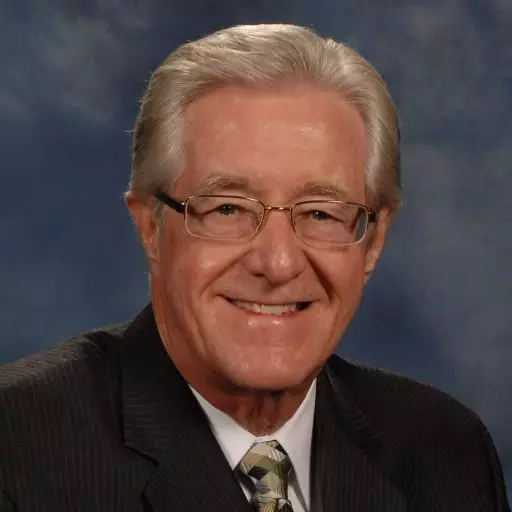
Pastor Jack Morris concludes the series The Upward Call: Living with a Heavenly Mindset with a message titled Healing the Wounds of Conflict. In this final installment, Pastor Jack helps us understand how to approach conflict with a heart shaped by grace, humility, and forgiveness—qualities that reflect the mind of Christ.
Guest (Male): The Healing Word ministry on One Place is brought to you by the generous donations of people like you. At any time during today's message, feel free to send a prayer request or make a donation using the links provided. Now, I pray you will be blessed as Pastor Jack Morris delivers a message from the Word of God that will encourage and strengthen your faith in Him.
Pastor Jack Morris: You're never going to be happy 100% of the time, all the time. Everything's not ever going to go your way that way. No. But in the Lord, you can have peace even in the midst of turmoil. You can do it.
Guest (Male): Welcome to The Healing Word, a ministry dedicated to offering strength and encouragement through God's Word for anyone facing life's challenges. As believers, we want to serve God and walk in His will, though the path isn't always easy. Today's message is here to meet you at your point of need, bringing hope and renewing your faith. Now, here is Pastor Jack Morris.
Pastor Jack Morris: Healing the wounds of conflict. Conflict. No one likes it, but we all experience it from time to time. Conflict. It starts so early in life. Why do we become so conflictual so early in life? It is just seeming like there is one conflict connected to another conflict, hooked to another conflict, almost like a train that's coupled cars together. We go from conflict to conflict. And again, it starts so early in life.
Just yesterday, I was talking to my three-year-old granddaughter and we had a conflict. That little girl is just contrary. She's in South Carolina and I was talking to her on the phone. We call them every Saturday. Corinne was talking to her first. The one is three and one is six. She's talking to the three-year-old, Samantha. She said, "Would you like to talk to Pop-pop?" That's me. And she said, "No."
Well, I caught on. Corinne said, "You don't want to talk to Pop-pop?" "No." I said, "Give me that phone." I got ahold of the phone. I said, "Samantha, I love you and I want to talk to you. Don't you want to talk to me?" "No." I said, "I love you and I want to talk to you. Do you love me?" "Yes." "Do you want to talk to me?" "No."
Conflict. I was having a conflict inside. I don't know whether she was or not. But conflict, or the potential of conflict, is there almost from the very beginning of life. It begins to reveal itself. It can be so minor with a three-year-old, but yet the potential is there, the propensity is there. Well, the conflict is there.
We're going to talk about conflict today, mainly in the church because that's where we are in our study of the book of Philippians. We're going to talk about the conflict between two women that also involved the whole church. It spread like a poison throughout the whole body of Christ. The church was inhibited, hampered by that particular situation. Paul strongly appeals to the church to unite.
You see, it is a decision. If you want to fight, you can fight. If you want to stop the fight, you can stop the fight. It's all in our attitude and in what we want to do. It also happens between husbands and wives. Now look at verse one in chapter four. Paul calls them brothers. They're having problems, but they're still brothers and sisters in Christ. He said, "You whom I love and long for, my joy and my crown."
Paul loved that church. That church was having all kinds of problems. They were destroying themselves, their happiness, their homes, and their own testimony. A fighting church does not bring glory to the Lord. We say we're filled with Jesus, who loved the world and gave Himself. We're filled with the Spirit of Christ. The Bible says God is love. Well, if I'm filled with God, then I'm filled with love.
If I hate and gossip and cause conflict, then I have just contradicted my own testimony because I am not filled with God at that time. I'm not filled with love at that time. But now, Paul loved these people. He really loved them. They were his joy and his crown. He cared deeply, even during their conflictual time. He truly cared deeply for them.
Now, number one under point A, write down the word "persons." Let's look at the persons of the conflict in this church. Paul said, "I plead with Euodia and I plead with Syntyche." What names, hard to pronounce. It was serious enough, the conflict in the church was no light thing. It was serious enough that Paul put it in a letter that was going to be read publicly to the church. He named these women.
It would be something if I put somebody's name in the bulletin and I told them to straighten up and stop fighting. Then I get up here on a Sunday morning and say, "Now everybody look at your bulletin. I want to show you a couple of people who are having problems in our church." Paul put their names in the book of Philippians. You know, it's a hard thing to get your name in the Bible. Really a hard thing. But they got their names in the Bible.
Two thousand years later, it's still in the Bible. It'll never leave the Bible. Wow, some way to get your name in print, particularly in the Bible. He sent this letter back to the Philippian church. The book of Philippians he sent back to be read publicly on a Sunday morning. Everybody already knew these two ladies were in a squabble. Everybody knew it anyway, so Paul said, "I'm going to hit this thing square on. I'm going to deal with it right up front."
These women, no doubt, were women of standing and influence in the church. Everybody knew them. They no doubt had high positions in the church. They no doubt were very visible in the church and this was part of the problem because of their visibility and because of their standing. Now, look at verse three, chapter four. "Yes, and I ask you, help these women who have contended at my side in the cause of the gospel."
Listen to me. These women were missionaries. These women were part of the clergy. These women ministered side-by-side with the greatest of all apostles. Nobody's really immune from conflict. Conflict is just when your opinion is different from my opinion. But when you say, "I'm going to keep my opinion," and I say, "I'm going to keep my opinion," you're going to have conflict.
Here were two women who were in missionary work side-by-side with the apostle Paul. If Paul can't keep a conflict down, I know Jack Morris can't keep it down. I just give up before I start. This is the greatest of them all, this great man of God, and they ministered side-by-side. The women in the early church, particularly the Philippian church, had a very prominent position.
Actually, when Paul went to Philippi, went to Macedonia, he went to the city of Philippi. What I'm telling you now is all in Acts chapter 16. On the Sabbath day, he went down to the river to find a place—Paul, Silas, and Timothy—to find a place where they'd be quiet. There wasn't a synagogue there. There had to be 12 people to make a synagogue. There weren't 12 Jews there, or else Paul would have gone to the synagogue that day.
Because there weren't 12 Jews in the city of Philippi, he took the three of them—Paul himself and the other two—and went down to the riverside to have a prayer time, just to be quiet. When they got down to the riverside, there was a group of women down there and they were having a prayer meeting. Paul talked to them about Jesus and told them that the Messiah had come and that the Messiah had bore their sins on the cross in his own body.
Lydia believed, the seller of purple. The first convert in all of Europe was a woman. She heard the gospel, she believed, and she was saved. Women had a prominent part in the Philippian church. Obviously, here are two women, Euodia and Syntyche, who are having real bad problems because of their position and because of their association with the apostle Paul and their ministry. They were having a very difficult time.
But these two women weren't sinners. No, they were missionaries. They were clergy. I don't know, they were members of some organization, but they were in there doing high, holy gospel work with the apostle Paul and they became contrary. Listen, anybody can become contrary anywhere along the way. You never get that spiritual that you can't slip back.
That's why Paul said in verse one, "Stand firm in the Lord." You have to keep watch on yourself because it's possible and it does happen. Here it happened and we find it after all these years. Someone said, "I've been a Christian for 30 years." 30 years. Well, then why don't you act like a 30-year-old Christian? Why do you act so immature? Why do you get ticked off so easily?
Paul knew what was going to happen when he wrote this whole book, and that's when he said in chapter two, and I dealt on this several months ago, he talked about Jesus. He said, "Your attitude should be the same as that of Christ Jesus," chapter two, verse five. "Who, being in the very nature of God, did not consider equality with God something to be grasped at, but made himself nothing, taking the form of a servant, being made in human likeness, he humbled himself."
He gave up. He had it all, Jesus did. But he gave it all up and humbled himself for the church. That's what Paul was saying to these two ladies. Even if you have a cause, for the sake of unity and for the sake of the name of Jesus, have the attitude of Jesus and give it up. Come down and humble yourself that the church might prosper spiritually and the name of the Lord might be glorified.
You ladies might be strengthened in Christ and go forward in Christ, and the devil might not have the joy. The devil's getting a kick out of this and you're a follower of Christ and you're putting the oomph in his kick. Give it up. Who being in the very form of God gave it all up and came down and made himself of no reputation. Give up your reputation.
It had to be a turf battle, a position battle. These were very prominent women and this was a popularity contest. Who's really going to lead? The scripture says let Jesus lead. He's the head of the church. Give it up. Now look at point B in your outline, write down the word "appeal." Paul appeals to them to end the conflict. Poor man, there in a Philippian jail, he couldn't even get there.
But he knew what was happening and the Holy Spirit was speaking through him. He's trying to pastor them in the condition that he was in and he appeals to them. Now, number one under point B, first, he appeals to the women. You know, I read this and I wondered why he didn't appeal to their husbands. Why didn't he write to Mr. Syntyche or Mr. Euodia? Why didn't he write to them?
I don't know, maybe those maybe they weren't even married. God help them if they were married to those women. Maybe nobody would have those women. Maybe they were so domineering, maybe the husbands were henpecked. I don't know, but Paul was saying if you have husbands, they're worthless in this situation. You won't listen to the church and you won't listen to the Bible. Surely you're going to listen to the apostle Paul because you're surely not listening to your husbands.
So he says, look at what he says in verse two: "I appeal, I appeal with Euodia and I plead." Notice again he said, "I plead with Syntyche." He was bowed on his knees. He was begging them. Stop it, stop it. You have the power to stop it, so stop it. Just be quiet, shut up. Let God reign. Be quiet. I plead. How earnestly he pleaded with these two ladies.
These women had their names in the book of life. These women were with the apostle Paul. But throughout all Christendom and for 2,000 years of the history of the church, whenever these two ladies, Euodia and Syntyche, whenever their two names are mentioned, do you know what they're noted for? Not because their names are written in heaven, not because they worked with the apostle Paul, but because they about split the church.
Let me ask you something. If your life could be summarized in one sentence, what would it be? Here it is. Paul summarized their life in one sentence and he says they're conflict church splitters. They're not gospel workers, even though they work with me. They're church splitters. They're adversaries of the kingdom of God in one sentence.
When you leave this world, what are people going to say after you're gone? Two thousand years later, we're still reading about these two church splitters. Isn't that amazing? "I remember her. She just about tore up the church. Where is she now? She's over there tearing up some other church." It happens to men too. Men become involved also in church wrangling and conflict.
Look, he appealed to the women, didn't he? When it didn't work, obviously it didn't work. These women had sunk their heels in. They were determined. They were absolutely determined. So then what did Paul do? He appealed to the church. He said, "I appeal," look at verse two, "I appeal to Euodia. I appeal to Syntyche." He appeals to them.
And then he goes on to say, "I ask you, loyal yoke-fellow, help these women, help these women who have contended at my side in the cause of the gospel, along with Clement and the rest of my fellow workers whose names are written in the book of life." He now appeals to the church. He says, "Church, put it down. Stop the women. It's going to ruin the kingdom of God in the city where you're trying to plant a church and name the name of Jesus Christ."
He mobilized all the resources of the church. You see, friend, a quarreling church is no church. A quarreling marriage is no marriage at all. They got married and lived happily ever after. Ever heard that before? I guarantee you've never seen it before. You see, when a church quarrels, Jesus is on the outside because Jesus is the Prince of Peace and He'll have nothing to do with it.
You can pray, you can confess, you can ask for healing, you can ask for guidance. Jesus is out there. Jesus is not going to come into a mess. He's the Prince of Peace. His name is wonderful. So he appeals to the church, Paul does, to ask them to help. The scripture says blessed are the peacemakers. Doesn't it say that? Blessed are the peacemakers.
You see, a poison, a parasitic conflict had been released into the bloodstream of the church and it was going from person to person to person. They forgot about the little children who are also hearing it. The whole church was coming down. Now look at point C, "The Ultimate Conflict Resolution." Whether it be conflict in a church, conflict between a husband and wife, conflict between parents and children, conflict in the workplace.
How many people have come to me for counseling because there's a person where they worked—a superior, a boss, or an employee? There's conflict. Conflict can erupt at any time you put two people together. The potential is so strong. But here is the ultimate conflict resolution. "In the Lord." Say those words. In the Lord. There it is again.
Notice in verse one, Paul says "Stand firm in the Lord." Didn't he say that? And then he said, "I appeal to Euodia and Syntyche and plead with them to agree with each other..." What are the last three words? "...in the Lord." There it is again. Friend, there is a power. I don't know, it's a power of conflict that'll come over a husband and wife. It'll come over a church.
If it hasn't come to LCC, it will come. It has come. It's not here now, it'll come again. People are people. But it's in the Lord you receive your help and your strength to make it and to make it through to victory in the church, or in a marriage, or in a family, or at the workplace. There are situations that you're not going to be able to handle yourself, but in the Lord, there is peace and there is strength to bear you up, to keep you going.
Keep your name in the book of life. Keep you in the church and good relationship and connection with the church. It's in the Lord. Say it again: In the Lord. That means you've got to stay in the word, you have to stay on your knees, you have to keep in the fellowship, and you've got to take some responsibility for your own behavior, your own attitude, your own disposition, your own spiritual growth.
You have to take some responsibility for that. Paul said it's in the Lord that there is peace. It's in the Lord there is unity. It's in the Lord. Every marriage that is not in the Lord will come apart, even though the people live at the same address for the rest of their life and they never get a divorce. Their marriage has gone, their happiness is gone, their intimacy is gone. They just have the same address.
It's only in the Lord. Everything the Lord begins, the Lord must keep it going. He began the church, and in the Lord, He keeps it going. He's the author of marriage. He brings them together into a one-flesh relationship and now it's up to you to stay in the Lord. It's up to the wife, to the husband, to stay in the Lord and to keep praying, keep seeking, keep knocking, keep serving.
In the Lord. Somebody said, "Well, my husband won't pray with me anymore." Well, you don't have to stop praying because he won't. "My wife won't pray with me anymore." Well, sir, you don't have to stop praying because your wife doesn't pray with you anymore. In the Lord. If you stop, you weren't very strong to begin with. You really weren't that much in love with Jesus to begin with. It's in the Lord. Now look at point D, "The Conclusion: Lessons for Today." Conflict...
Featured Offer

In God’s Wonders Made Visible, Pastor Jack Morris reflects on John chapter 9, where Jesus notices a man who has been blind from birth. This wasn’t a recent hardship; it had shaped the man’s entire life. He didn’t ask for help, and he didn’t draw attention to himself.
But Jesus saw him, and He chose that long-standing need as the place where God’s work would be made visible.
Past Episodes
- Faith Never Quits
- Faith That Moves: Lessons from the Life of Abraham
- Finding Peace In Life
- Forward In Faith
- Foundations of Faith
- Jesus: The Early Years
- Joshua and The Israelites: A Crossover Experience
- Jump Start Your Christian Walk
- Life After Death
- Living Above the Circumstances
- Living by Faith: Freedom Found in Christ
- Love, Conflict and Forgiveness In Marriage
- Phillippians 4 - The Spiritual Impact of Your Thoughts and Attitudes
- Prayer Power
- Pressing On WIth Life
- The Benefits of Thanksgiving
- The Greates Gift Ever Given
- The Greatest Gift Ever Given
- The Healing MIracles of Jesus
- The Life of Christ
- The Love of God for Us
- The Majesty of God
- The Names of God
- The Power of Prayer
- The Radiant Person
- The Upward Call: Living with a Heavenly Mindset

Video from Pastor Jack Morris
Featured Offer
In God’s Wonders Made Visible, Pastor Jack Morris reflects on John chapter 9, where Jesus notices a man who has been blind from birth. This wasn’t a recent hardship; it had shaped the man’s entire life. He didn’t ask for help, and he didn’t draw attention to himself.
But Jesus saw him, and He chose that long-standing need as the place where God’s work would be made visible.
About The Healing Word
The Healing Word Ministries delivers the Word of God to the healing of broken, confused, fearful, and hurting lives.
~ Psalm 107:20 “He sent His Word and healed them.”
About Pastor Jack Morris
Pastor Jack Morris is the founding pastor of Largo Community Church and the speaker on the radio broadcast – The Healing Word.
Contact The Healing Word with Pastor Jack Morris
Mailing Address:
Largo Community Church
1701 Enterprise Rd.
Mitchellville, MD 20721
301-249-2255