

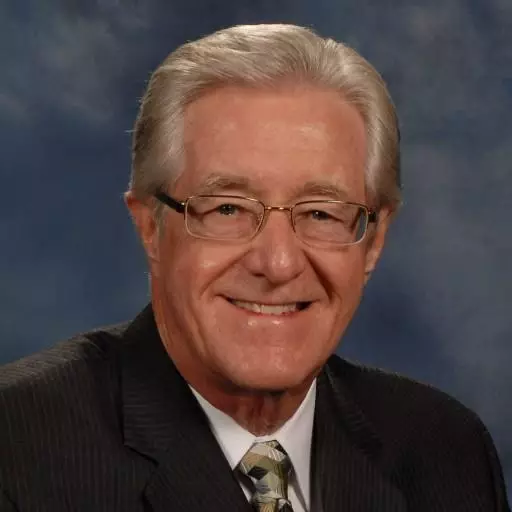
God Is Our Provider (Part 1) | Jehovah Jireh


Every life has needs—and every heart longs for assurance. Today on The Healing Word, Pastor Jack Morris brings us God Is Our Provider, part one in our series The Names of God. From the life of Abraham, we’ll begin to see God revealed as Jehovah Jireh, the One who sees our need and faithfully supplies.
Pastor Jack Morris: Now I know that you fear God. What does the word "fear" mean? It means that you so reverence God, so believe in God, so committed to God that you will bow your life and everything that you have and all your life and everything your life touches. It's on the altar.
Guest (Male): Every life has needs and every heart longs for assurance. Today on The Healing Word, Pastor Jack Morris brings us God Is Our Provider, Part 3 in our series, The Names of God. From the life of Abraham, we'll begin to see God revealed as Jehovah Jireh, the one who sees our need and faithfully supplies.
Pastor Jack Morris: Faith is not dormant, not passive, and not invisible. On the contrary, faith is active, it is growing, and it every time without fail will reveal itself in some visible, tangible way. You can't have faith and not have works. You can't have faith in secret. You can't have faith invisible. Faith steps out of the boat and walks on the water.
Faith does some of the most unreasonable things. You're going to see something today and I am too as I go through this passage of scripture. There's not a passage quite like it in all the Bible. It's awesome, but oh, so sublime with the blessing of God.
Write the word "test." We're going to look first at the test of faith. Faith will be tested. Say that with me: faith will be tested. Now, look at your Bible. You're going to have to have your Bible in hand, also. Faith comes by hearing and hearing by the word of God. This is going to build faith in our hearts. I'm sure it will as we open our hearts and receive it. Notice how it starts out: Sometime later, Genesis 22:1. Sometime later. Here we're going to get the setting for this great miracle.
God sometime later speaks to Abraham to do something with the gift God gave him. See, God's never going to ask for anything but that He first won't give it to you and then ask it back. That's how faith works. That's how we follow God. God doesn't leave us empty and God never asks for anything but first He gives it to us. It's easy to give it back if He gives it to me. And that's how God works with Abraham, and that's how God works with people to this very day.
He is now going to test Abraham. Sometime later, God spoke to Abraham when he was 75 and told him he was going to have a son. It wasn't until he was 99 that he actually had this promise confirmed, and when he was 100 years old, the son was born. Abraham was so happy, obviously he would be. This was the son of his old age and the son that he loved.
Approximately 27 years later, making Abraham 127 years old and making Isaac approximately 27 years old, God says, "You know the gift I gave you? I want you to give it back. I want you to give it to me." Sometime later. You see, Abraham thought, "I've already made all my sacrifices. I've already passed all my tests." God said, "No, you just got your baccalaureate degree, now you're going into graduate school. This is the big one."
Sometime later, approximately 27 years later, look what happens: God tested Abraham. I could have just imagined Abraham said, "Oh no, not again. I'm going to have to do this again? I've been tested, I've been pulled, I've been stretched. I thought I was in my retirement years. I thought we had arrived, we could be comfortable now." But to this old man, God spoke and God put him to the test again.
Now, there's one thing I want you to see here very quickly before I go very far. There's a difference between the word "test" and the word "tempt." God never tempts anybody. Satan tempts people to sin, to do evil. God will test people, but never tempt people. God will test us. Why does He test us? In order to see what is within us. Not only that He might see what is within us, but that we might see what is within us.
God wants you to know just how committed and how faithful and how dedicated you really are. And it's not until He puts us to the test. And this is what He was doing with Abraham. He was putting Abraham to the test. Now Abraham had already been tested several times and had passed every test that God had placed him in. This would be the supreme test. This is the big one. All other tests had been inferior compared to the one God was going to make now.
Look what happens. Sometime later, God tested Abraham. God said to him, "Abraham!" Do you ever feel sometimes, "I wish God would ask somebody else to do something, not always asking me to do it"? Do you ever feel that way? A couple of us have. But He knows our name, doesn't He? He knows us and He calls us by name because when He calls us by name, it means He has something special that He wants to do, and He wants to make us special in order to do it because we're already special or He wouldn't call us in the first place.
It's amazing how God will take people into partnership with Him. How much God loves us, how much faith He has in us, how He knows. Listen, does God know you're going to respond when He calls upon you? He knew how Abraham was going to respond. How did Abraham respond? Tell me, read it. "Here I am!" Here we go again. "Here I am." What a way to respond to God in full and complete submission. "Here I am." That's always the response of the person of faith.
Abraham didn't say, "Well, tell me what you want first. Fill me in, I'll consider it, I'll pray about it." God says, "It's to me you're praying about it. I already am answering the prayer before you pray it." No, he says, "Here I am." I don't know what you want, God. I don't know what you're going to ask, I don't know what this test is going to involve, but here I am. I'm ready. Wow, that is faith. That's commitment.
Look at verse two. Let's go on. Abraham asked. This is what God said. Do you have your Bibles? I think we need to read this one together. Open your Bible and read it. That way you won't go to sleep, right? Have to keep your eyes open. Read it with me: "Then God said, 'Take your son, your only son, Isaac, whom you love, and go to the region of Moriah. Sacrifice him there as a burnt offering on one of the mountains I will tell you about.'"
That's about the most awesome thing I think I've ever heard in my life. I've never read anything like it. I imagine this poor old man, hearing such a statement from God, literally took his breath out of his lungs. "I want you to give your son back." But God, you just gave him to me with great promise that he was going to be the child through which nations would be blessed. The son of my old age, the son of my love, the son of promise, the son through which nations are going to be blessed, the son who's going to give birth through his lineage and ancestry through which the Messiah would come.
It was so paradoxical. God says, "You gave him and you want him back," and here's Abraham trying to reconcile this paradoxical situation. But he didn't try to reason it out. He says, "God asked, and so here I am." Now notice how He says it. Look at verse two. "Take your son." Not somebody else's. I want something that's very near to you. "Take your son, your only son, Isaac, whom you love."
No doubt about it, what God was asking. God made it very, very clear. He wasn't asking for a calf or a sheep or ten sheep or whatever. It was Isaac. It was the son of his old age. It was the son of promise. It was the son that was given when Abraham's body and Sarah's body ceased producing children. Their reproductive organs had ceased to function, and yet God poured in life. God became to them El Shaddai. God Almighty, El Shaddai. And they gave birth. It was this son, the son of El Shaddai. That's the son I want back.
Now Abraham, he could have tried to bargain with God, reason with God, give God something less, stagger the gift. But he didn't. He didn't do that at all. Look at what happens. Look at verse three. Okay, we're down to point B. I want you to write down the word "obedience." The obedience of faith. If there's faith there, faith is going to obey. Faith is going to do something.
Look at what happened. Look at verse three. Do you have verse three? "Early the next morning." The very next morning. He didn't say, "Well, let me think about it for a week or let me pray about it for a month." God had spoken. Do you hear that, friend? God had spoken, and early the next morning, faith steps out. Faith begins to move. Faith is not dormant. Faith is not passive. Faith is active.
When Jesus said to Peter, "Come on, step out of the boat," Peter didn't say, "Well, let me get my nerve up first. Let me think about it and work myself into it." You move. And then, early the next morning. I read that passage as I was preparing this sermon and I thought, look at what God had asked that old man to do. I wonder how the old man slept that night before early the next morning. I wonder if he got any sleep at all when God had spoken. Abraham knew enough about God that God meant what He said and said exactly what He meant.
But early the next morning. Prompt obedience, unquestioning obedience, instant obedience. That's how it works. That's the man of faith, that's the woman of faith. Faith acts. Faith doesn't just simply talk. Faith walks the talk. Can you say praise the Lord? Faith walks the talk. Jesus says, "I love you." What did He do? He walked to Calvary. He did something. God bared His heart and Christ died. Faith walks the via dolorosa. Faith walks the talk. Faith puts up, and this is exactly what Abraham did.
What an astounding story. Look at this old man. We never read of a questioning word. Now, when he was 75 and when he was 95 years old, he did question God. Matter of fact, when he was 99, he even laughed. All of that was recorded. But Abraham had grown in faith and in confidence in God. Now he doesn't question God anymore. He knew better than to question God. He walks with God and he does what God says.
I don't think, friends, that you and I have sufficient appreciation for this story because we know the script. We know what happened, we know the end. But Abraham had no idea that God was going to do anything other than say, "Give me your best. Give me your all. Give me your darling. Give me that which is nearest to your heart." We didn't He didn't know. We know.
God came to Abraham when he was 99 with a staggering promise. Now he comes back 27 years later with a staggering demand. Non-negotiable. Either you follow me or you don't. And Abraham followed the Lord. Now look on with me. Verse four. On the third day, they were on their journey. Well, let's go back to verse three.
"Early the next morning Abraham got up and saddled his donkey and he took with him two of his servants and his son Isaac. When he had cut enough wood for the burnt offering, he set out for the place God had told him." He got up that morning, cut the wood, got the donkey, got the people together, and it was early afternoon. He didn't stop. He kept right on going, an old man almost exhausted after all that work. He kept right on going. "On the third day he looked up and saw the place in the distance. He said to his servants, 'Stay here with the donkey while I and the boy go over there. We will worship and then we will come back to you.'"
This is overwhelming as we look at the sacrifice of faith. Point C, write the word "sacrifice" down. faith obeys, but faith also sacrifices. You see, faith is simply this. This is the simplest way I know how to describe faith: faith is just simply complying with instruction. That's what faith is. God says something, God instructed to do it, and you do it. It's simply complying with instruction.
I wonder about the overwhelming horror that must have just come over and blanketed this old man's soul, flooded his soul. I wonder how he must have thought. He was an intelligent old man, knowing that he was going to have to take a knife. How often he had taken a knife and plunged it into a lamb as a sacrifice. Now he was going to hold the handle of a knife and plunge it into the flesh of his only son and how he would feel the handle as the knife went in. I know this old man must have been thinking these thoughts. How could he have felt otherwise? How could he have thought otherwise?
I wonder if he thought about his son's body, the anatomy, where he would place the blade to bring about a quick death that there would be the least amount of pain. For three days he had to think about this as he traveled and finally he saw the place and he wouldn't stop. Maybe he thought, "If I pause for a moment, I might back out, but I won't pause. I'll keep my focus on God and the instruction and I'll walk toward it and keep going."
This was the son that he had longed for. I doubt that he even talked to Sarah, his wife, about what was going to happen lest she become so upset and hysterical and try to talk him out of it. I doubt that he talked to the servants, for they have may have physically kept him from doing it. He didn't even talk to his son. You know, there are some people who have such a wonderful relationship with God and they don't really care what other people believe or think. They're going to stand on their convictions and follow what the word tells them to do. Isn't that wonderful? To have that kind of faith and confidence in the Lord. This is the kind of faith that Abraham had.
Now this is my only thought about this situation: how could this man do it? How could he do that? My only thought is this: Abraham surely must have stopped looking upon Isaac as his own flesh and blood. Something happened in Abraham's mind. Now he started looking upon Isaac solely as a gracious love offering to be given to God. I better maybe say that one again.
He looked upon his son, "My flesh and blood. This is the altar." He's going to put his son on the altar and then cut his throat like a lamb. A human sacrifice. He had to stop thinking of him as "mine." God says, "Your son, your only son, Isaac, the son you love." That was all true. He had to stop thinking of him as "this belongs to me. This came from me. This is an extension of me. This is my beloved son." He had to stop thinking that way, I don't know how else he could do it, and had to start looking upon him as a gift, a love gift to be given back to God. I don't think he could have done it otherwise.
Look at verse 12. They approached the place. Isaac speaks up and asks the father what's going on. Here is Isaac carrying the wood and the fire. Now here's how they would do it: they would have a little kettle, like a little kettle with a handle on it. And when they were back where they got off the donkey, they had this little kettle and they built a fire and they put the kettle and they carried it. And here Isaac is carrying the kettle and the smoke coming out of the kettle. They weren't going up there and start a fire up on the mountain; they carried it up the mountain. And here's Isaac carrying the wood on his back, carrying the kettle, and he looks up and he said, "Dad, where's the offering?" I imagine Abraham, "By God, you're the offering and you're carrying your altar."
And here's this young fellow, 27 years old. He must have had great faith in his father. He could have resisted. Surely he could have outrun him. Surely he could have overcome his father with physical strength. But he knew his father heard from heaven, and he willingly went to that altar and placed himself on that altar.
You see, in Hebrews, when we go over into the New Testament in Hebrews chapter 11, verse 19, Abraham concluded in that verse we're told that Abraham concluded that if God took Isaac, God would raise Isaac back to life again. Matter of fact, he even told the servants, Abraham did, "We will worship and then we will come back to you." Here's a parallel that causes us to think back to Calvary and what happened there between our Heavenly Father and His only begotten Son.
I think of the three days they traveled, I think of the three days that Christ was in the grave. I think of Isaac carrying his altar, I think of Christ carrying His cross. I think of Abraham thinking that God would raise him from the dead, I think of Jesus coming back from the grave. Abraham, give your only son. God so loved the world that He gave His only begotten Son. Think of the story, observe the parallel.
Abraham takes the knife. He never stopped one moment to consider or to debate God's demand. Look at verse 12. He takes the knife and the angel speaks. "Do not lay a hand on the boy," he said. "Do not do anything to him. Now I know." Look at those words: "Now I know." God is saying, "Now I know what's in your heart. Now you know what's in your heart. Now I know that you will withhold nothing from me." This is what God is saying.
Now I know that you fear God. What does the word "fear" mean? It means that you so reverence God, so believe in God, so committed to God that you will bow your life and everything that you have and all your life and everything your life touches. It's on the altar. It's on the altar. It's committed. See, if you fear God, it will become visible because God will speak and test your heart. The test still goes on. Now I know that you fear God.
Guest (Male): God knows your needs and He is faithful to provide. If today's message spoke to your heart, you may be encouraged by Pastor Morris's e-book From Asking "Why God?" to Trusting Him: A Faith Journey for Uncertain Seasons. Your prayers and gifts make this ministry possible and you'll find many more teachings waiting for you at thehealingword.com.
We'd like to invite you to join Pastor Jack Morris and the Healing Word family in both prayer and support of this ministry. Your prayer strengthens us and your gifts, large or small, help us extend the reach of God's word to more people who need His hope. Every gift is deeply appreciated. To stand with us today, simply visit thehealingword.com and click on the donate tab. Together we can share the life-changing message of Jesus Christ. Join us tomorrow for another Healing Word message.
Featured Offer

In God’s Wonders Made Visible, Pastor Jack Morris reflects on John chapter 9, where Jesus notices a man who has been blind from birth. This wasn’t a recent hardship; it had shaped the man’s entire life. He didn’t ask for help, and he didn’t draw attention to himself.
But Jesus saw him, and He chose that long-standing need as the place where God’s work would be made visible.
Past Episodes
- Faith Never Quits
- Faith That Moves: Lessons from the Life of Abraham
- Finding Peace In Life
- Forward In Faith
- Foundations of Faith
- Jesus: The Early Years
- Joshua and The Israelites: A Crossover Experience
- Jump Start Your Christian Walk
- Phillippians 4 - The Spiritual Impact of Your Thoughts and Attitudes
- Prayer Power
- Pressing On WIth Life
- The Benefits of Thanksgiving
- The Greates Gift Ever Given
- The Greatest Gift Ever Given
- The Healing MIracles of Jesus
- The Life of Christ
- The Love of God for Us
- The Majesty of God
- The Names of God
- The Power of Prayer
- The Radiant Person
- The Upward Call: Living with a Heavenly Mindset

Video from Pastor Jack Morris
Featured Offer
In God’s Wonders Made Visible, Pastor Jack Morris reflects on John chapter 9, where Jesus notices a man who has been blind from birth. This wasn’t a recent hardship; it had shaped the man’s entire life. He didn’t ask for help, and he didn’t draw attention to himself.
But Jesus saw him, and He chose that long-standing need as the place where God’s work would be made visible.
About The Healing Word
The Healing Word Ministries delivers the Word of God to the healing of broken, confused, fearful, and hurting lives.
~ Psalm 107:20 “He sent His Word and healed them.”
About Pastor Jack Morris
Pastor Jack Morris is the founding pastor of Largo Community Church and the speaker on the radio broadcast – The Healing Word.
Contact The Healing Word with Pastor Jack Morris
Mailing Address:
Largo Community Church
1701 Enterprise Rd.
Mitchellville, MD 20721
301-249-2255