

God and God Alone


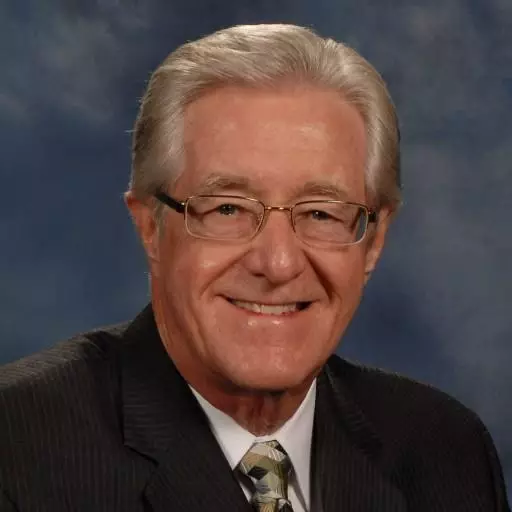
Pastor Morris highlights the importance of offering praise to God, revealing how this simple yet profound act can lead to deep peace and overflowing joy in our lives. Join us as we explore the spiritual benefits of a heart filled with gratitude and worship, discovering how praise can shift our focus from life's challenges to God's goodness.
Guest (Male): Everyone in here today needs help. Everyone. There's something there that you would like God to take care of, and He is here to do it. All of my help, not a little bit of my help, but all of my help comes from the Lord. He's the one that blesses and gives and heals and saves and graces our Lord. All of my help comes from the Lord.
Guest (Male): In the first few verses of Psalm 23, we read that very familiar passage, many times recited at funerals. But in verse 5, the metaphor changes. Pastor Morris is here today to unfold the truth of God's provision and care for us and how He truly is our Shepherd. Let's go now to today's message, "God and God Alone."
Jack Morris: God and God alone. I listen to those words, I ask for that particular song to be sung, and it was sung with a blessing of the Lord upon it because it was uplifting the Lord Jesus, and the one who brought it is a person who is dedicated to the Lord.
But yes, it says God and God alone is fit for the throne of the universe. Only God and God alone is fit for the God of the universe. It says, "Let everything that lives, everything that lives reserve its truest praise." Now, we are courteous, we thank individuals and organizations and people, and we praise them, but our truest praise is to Him who loved us and gave Himself for us.
Our truest praise for God and God alone. And friend, already you and I have so much to give to the Lord in praise and in thanksgiving, but you're going to have more as this service progresses and as it comes to a close. You're going to have more to praise God for. You had an abundant reason when you came in; you're going to have more reason when you leave today to give God praise.
But let me open again. I read it just a moment ago when I came to the opening welcome and introduction. Praise the Lord. Can you say that? Praise God in His sanctuary. Praise Him in His highest heaven. Praise Him for His acts of power. Praise Him for His surpassing greatness. Praise the Lord. Praise the Lord indeed.
This is a wonderful Psalm that we read. You know that. We've read it at every funeral, as I can remember, or nearly every one. But it's a Psalm for living, the 23rd Psalm. I counted it out—go ahead and count it out when you get time when you get home—there's only about 116 words. It takes about a minute and a half to read it.
And if you can't go to sleep some night and you're tossing and rolling, because you've memorized it, just start saying it or thinking it out loud, or just thinking it silently, and you will find a peace that comes to your heart, a tranquil spirit will overshadow you. I used this Psalm when I was a professional counselor with my counselees more than any other scripture.
I asked them to put their name there. "The Lord is Jack's Shepherd. Jack shall not want for any good thing." Come on, get into it, let it get into you, and you will know the peace of God that passeth all understanding. Praise be to the Lord.
Now, this is referred to as the Shepherd Psalm. But I want you to notice something. Look at verse 5—that's the only verse I'm going to deal with today. Verse 5, let me read it to you: "You prepare a table." That word changes the metaphor from a shepherd to a host.
There's a table now being prepared, and the banner over that table is love, and God has done the preparation. God and God alone has done this, and He is still preparing, but He has prepared this banquet to give to us today that we might feast upon it and be drawn to Him, made strong in our spirit.
Now look at verse 5 again. The very first word, what is it? "You." You prepare a table. God is the one who did this. Isaiah 45 verse 6, God says these words: "There is none beside Me; I am the Lord, and there is no other." There's no other but Him. In Psalm 121 verses 1 and 2, the psalmist says, "All of my help comes from the Lord." All of my, not just a little bit.
We have a tendency to look to the Lord after we've run out of every other place and every other individual or whatever. I mean, I'm in there with you. And then we think, "I've got to call on God." But it's God that we should be calling on first because He's with us always to answer our prayer. My help, and as I mentioned a moment ago, help.
Everyone in here today needs help. Everyone. There's something there that you would like God to take care of, and He is here to do it. All of my help, not a little bit of my help, but all of my help comes from the Lord. He's the one that blesses and gives and heals and saves and graces our Lord. All of my help comes from the Lord.
Now notice He identified Himself in verse 5 in the very first word: You. You, and You alone are my helper. All of my help comes from You. And in just a few moments, we're going to come to this holy table—not literally come down to it, but I'm looking forward to the day when we pull these altars out, and I don't think it's going to be that much longer and we're able to come.
But we're all going to be at an altar where we are seated, but God is going to bless in a very special way because we have obeyed and we have remembered. "This do in remembrance of me." We have set this day apart to remember what He has done for us. All of my help comes from the Lord, the maker... If I were to go on and continue to read that verse, it would say this: "All of my help comes from the Lord," now he identifies, the psalmist identifies Him, "who made heaven and earth."
There's a lot of lords and a lot of titles, but there is one Lord, capital L, who is over all and in all who believe on His son, the Lord Jesus Christ. There's no mistaking this psalmist, David, who wrote it. There is no mistaking. Oh, would to God that we would all get to the place where we would say, "God and God alone." It's the Lord who brings the blessing and the help that is needed in my life on a daily basis. Every day, I need Him.
Jesus was often referred to in the New Testament as Jesus of Nazareth. Now, I know that there may be a lot of other people other than the Hispanics who have the first name spelled J-E-S-U-S. And I was talking to a Hispanic lady yesterday, and I said, "How would you say that in English?" And she said something like this: "Jesús. It's spelled Jesus, but it's Jesús."
So in Jesus' day, there were others who were called Jesus, who had the first name. But this Jesus, your Jesus, your redeemer Jesus, this Jesus is the Jesus of Nazareth. They identified Him. Can everybody say, "Praise the Lord"? He's alive to bless, to forgive, to heal, and to do great and mighty things. He's Jesus of Nazareth, but the one who rose from the dead. No matter how many men were out there with that name, we know Him.
Three hills. It all began on a hill called Gethsemane. Well, the hill was not called Gethsemane; the hill or the mountain is called the Mount of Olives. But on that slope, there's this beautiful garden called Gethsemane. And that's where this beautiful table that God prepared for us, it all began there. In that garden, Jesus took three of His disciples and He walked into the garden.
Now, He wanted those three fellows to watch with Him, not go to sleep on Him. Don't go to sleep on my sermon today, friends. My pastor told me a story years ago. He said that one of his members, one of the men in his congregation, couldn't sleep one night. He told him days later—the pastor's name is Garnes, Reverend Garnes.
This man in his congregation said, "Reverend Garnes, Pastor Garnes, the other night I couldn't go to sleep. I just rolled and tossed." He said, "I thought maybe I ought to pick up the phone and call you and ask you to come down and stand at the foot of my bed and preach a sermon. That would do it." Well, don't anybody call me and ask me.
Well, Jesus took Peter, James, and John into the garden. He meant for them to watch and to listen. Now Jesus goes a stone's throw further into the garden. And He wanted some privacy, but He also wanted to be near enough so that they could hear what He was saying and what God was saying to Him. He needed them. Friends, we need one another. We don't need to go to sleep on one another or to cop out on one another, and we're not doing it. I see this church growing in relationship with God and with one another.
And while Jesus went a stone's farther into the garden, He begins to pray, and God came with a cup. And when Jesus looked into that cup that God was putting to His lips, He saw all of the sins of the history of mankind. He looked in it and He saw it in there, and He backed away. Well, Jesus obeyed the Father, but this was too much because nothing ever unclean had ever touched His holy lips.
After a moment or so, He goes back and He prays again. And He said, "Father, if it's possible, if there's anything in Your wisdom that You can do without Me drinking that filth, the sin of mankind, please, Father, do it." And the Father put it closer to His lips, and He turned. "I can't do it, I can't do it." He goes back the third time, and this time He fell on His face. Total submission.
He said, "I'm yielded to You, I'm totally submissive to You." And the Father put that cup to His lips, and He drank your sin and my sin. He drank the dregs. He drank it, and all of the corruption of the universe, of Earth, went into His bloodstream. And now He walks away, and His heart begins to pump, and His immune system kicked in immediately to fight back that corruption that was there.
Now Judas is about ready to give Him a kiss and betray Him. Someone says, "Well, don't be too hard on Judas." Listen, friends, you don't sell your friend for money. "You pay me, and I will betray that person." Judas was paid 30 pieces of silver. The stress that Jesus was under with all of that corruption and His immune system trying to fight it all off, like your immune system and mine with all of the cancer cells and all the other diseases trying to take over our being.
My niece was in the car when my sister crashed out here on the beltway. Her spleen was taken out, so her spleen doesn't work because there's no spleen there. She has to be extremely careful about who she's with and where she's at. It's a long story. But Jesus had all of that inside Him. Then Judas betrays Him, and then they all left Him and fled.
Somebody told me at the beginning of the pandemic and a little bit of conflict going on, "Pastor, people are leaving your church, Delargo Community Church. People are leaving your church." And they almost sounded happy about it. They almost acted as though this was something that maybe the church deserved. It was bad about a year and a half ago. Many of you don't know all that went on at that time, and there's no need to talk about it anymore.
But stress is a killer. But for the grace of God, I'm here. And the people are coming back, and new people are coming in. And that naysayer, God forgive that person. That person needs to pray and forgive herself or himself, whatever. But when they all forsook Him and left Him, every last one of them, then He was held up all night long with two trials: a religious trial and a civil trial.
After that was over—no sleep, no food, no supper—they stripped His back and they beat Him with 39 lashes. Friend, we're coming to the communion table. Let's think of what's happening here today and what God is doing in our hearts. Then they picked Him up off the ground and put a heavy cross on His back, and I can only imagine the severity of the pain with His back open and the raw meat hanging out of his back and that big plank on His back pressing down into those openings in the flesh.
And now He's going to carry that up another hill. What's He doing? He's preparing a table for us in the wilderness. That's what He's doing. He's setting the table. This is so beautiful. But He starts up another hill. It's called Calvary or Mount Calvary. "I will lift up my eyes to the hills." Gethsemane on the slopes of the Mount of Olives, that's the first hill.
Here's the second hill. He's carrying that cross, and He's not calling on supernatural power; He's only looking to His own physical strength. And He falls, He falters. There's nothing left in His body. He's exhausted. And there was an African man standing there, and they force him to pick up that cross and help Jesus carry it up to the top of the mountain, to the summit called Golgotha, the place of the skull.
I'll tell you, hell wouldn't let Him alone. Enough is enough, but enough wasn't enough. Now they take Him and crucify Him on that cross. The cross. I heard a story of a religious leader who bought a cross in America because America is a "Christian nation." He wanted peace between the Jews and the Muslims and the Christians, to bring all three faiths together.
He knew that it was the cross that was standing in the way of bringing about the unity. So he takes the cross to Jerusalem, and he goes to the Potter's Field that was bought with the money, the 30 pieces of silver that Judas took back and threw it down. And he took that cross and he buried it in the soil. And when he buried it into the soil, the Jews, the Muslims, and the Christians came together in a great celebration of peace.
Friends, there's peace in none other. The apostle Paul said, "God forbid"—Galatians 6:5—"God forbid that I should glory or boast save in the cross." It was on the cross where Jesus was nailed, and now all of that corruption that He drank in Gethsemane, all the sin, His veins were opened up. His body became the filter for your redemption and my redemption.
He brought about salvation through the cross. There's no other way but through the cross. The cross of Jesus. You don't bury the cross; you lift it high. You say, "Thank God, a Savior died on that cross. A Savior took my sins on that cross." I was redeemed because of that cross. I'm going to go to heaven someday because He went to that cross.
I can pray today to the Father for every problem and trial and difficulty and conflict all because of the cross. The cross is the open door to heaven. Without the shedding of blood, there is no remission of sins. Thank God for the cross. On a hill far away stood an old rugged cross, the emblem of suffering and shame. He died on that cross for you and me.
He prepared a table for us: Gethsemane, carrying the cross up the hill, and at the summit, the place of the skull, He was crucified. Thank God, three days later, He rose from the dead, and He's alive forevermore to bless His people and to bless His church, to bless you with whatever need that you may have.
Guest (Male): It is so reassuring to know there is a Shepherd who guides, protects, and provides for us, and that Shepherd is Jesus Christ. I invite you to reach out to Him right now with thankfulness and praise. Join us tomorrow for another Healing Word message. Until then, blessings on you.
Featured Offer

In God’s Wonders Made Visible, Pastor Jack Morris reflects on John chapter 9, where Jesus notices a man who has been blind from birth. This wasn’t a recent hardship; it had shaped the man’s entire life. He didn’t ask for help, and he didn’t draw attention to himself.
But Jesus saw him, and He chose that long-standing need as the place where God’s work would be made visible.
Past Episodes
- Faith Never Quits
- Faith That Moves: Lessons from the Life of Abraham
- Finding Peace In Life
- Forward In Faith
- Foundations of Faith
- Jesus: The Early Years
- Joshua and The Israelites: A Crossover Experience
- Jump Start Your Christian Walk
- Phillippians 4 - The Spiritual Impact of Your Thoughts and Attitudes
- Prayer Power
- Pressing On WIth Life
- The Benefits of Thanksgiving
- The Greates Gift Ever Given
- The Greatest Gift Ever Given
- The Healing MIracles of Jesus
- The Life of Christ
- The Love of God for Us
- The Majesty of God
- The Names of God
- The Power of Prayer
- The Radiant Person
- The Upward Call: Living with a Heavenly Mindset

Video from Pastor Jack Morris
Featured Offer
In God’s Wonders Made Visible, Pastor Jack Morris reflects on John chapter 9, where Jesus notices a man who has been blind from birth. This wasn’t a recent hardship; it had shaped the man’s entire life. He didn’t ask for help, and he didn’t draw attention to himself.
But Jesus saw him, and He chose that long-standing need as the place where God’s work would be made visible.
About The Healing Word
The Healing Word Ministries delivers the Word of God to the healing of broken, confused, fearful, and hurting lives.
~ Psalm 107:20 “He sent His Word and healed them.”
About Pastor Jack Morris
Pastor Jack Morris is the founding pastor of Largo Community Church and the speaker on the radio broadcast – The Healing Word.
Contact The Healing Word with Pastor Jack Morris
Mailing Address:
Largo Community Church
1701 Enterprise Rd.
Mitchellville, MD 20721
301-249-2255