

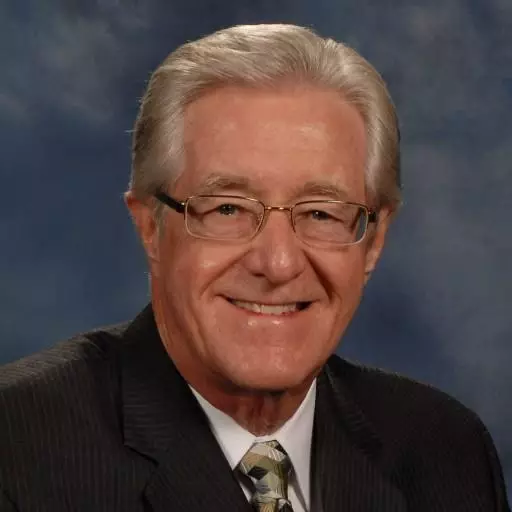
Divine Worship of Almighty God


Throughout Scripture we discover that worship is not confined to a building or a service - it begins in the heart. Today Pastor Jack Morris takes us to the church at Antioch, where ordinary believers became extraordinary instruments in God's hands because they were completely devoted to Him. Join us for "Divine Worship of Almighty God," and discover how a life surrendered to Christ becomes a powerful testimony to the world.
Jack Morris: Listen, can you say, "I was worshipping this morning and something happened to me"? Now, if you can't say something happened to me, then that means nothing happened to you. You came in and you walked out the same thing. Nothing happened.
Guest (Male): Welcome once again to The Healing Word. Through scripture, we discover that worship is not confined to a building or a service; it begins in the heart. Today, Pastor Jack Morris takes us to the church in Antioch, where ordinary believers become extraordinary instruments in God's hands because they were completely devoted to him. Please join us for "Divine Worship of Almighty God," and discover how a life surrendered to Christ becomes a powerful testimony to the world.
Jack Morris: To worship Jesus Christ, to give praise to Jesus Christ, to esteem him, to celebrate him, to value him—that’s my purpose in being here and yours too: to know him and to see him again. There are so many things that will cloud—a mist will come over, things that will dull our view of Jesus Christ. I’m thankful for every choir number, for every prayer, for every scripture reading, for every chorus.
But it all must be to him. And when the choir is done singing, when the scripture is finished reading, when the sermon is complete, I want to stand up and say, "How great Jesus is!" Not how talented the choir is or not how great a sermon it is. If you go away saying, "Boy, weren't they good this morning?" or "Wasn't that a good sermon this morning?" But if you go away saying, "Isn't he wonderful?" then you will have been to church. Then you will have experienced Jesus. Then you will have had a worshipping experience.
I have an outline. I want to talk to you about the divine worship of Almighty God. And you’ll notice I titled the sermon the same words that go over our order of worship every Sunday morning: "Divine Worship of Almighty God." And I think I see in Psalm 29 and in Acts 13 a true worship, an expression of true worship. And that’s what I want for me and for you: true worship, an expression of true worship.
Today in the outline, you’ll see in Acts, I gave a little outline here of the book of Acts. Acts 1 through 7, that’s Chapter 1 through Chapter 7: the church among the Jews. And then in Acts Chapter 8 through 12: the church in transition. And then in Acts Chapter 13 through 28: the church among the Gentiles. And that’s where I’m going to start with you today: Acts Chapter 13. And if you want to turn there with me and look at Verse 1. Take your Bible, hold it up, and read it in unison. Will you do that? Hold your Bible up and let everybody hear you read in concert, like one great choir.
We’re going to read Verse 1 of Chapter 13 together: "In the church at Antioch there were prophets and teachers: Barnabas, Simeon called Niger, Lucius of Cyrene, Manaen who had been brought up with Herod the tetrarch, and Saul." Now look at that verse again: "In the church at Antioch." Now notice that very first word. What is the very first word? "In." Say it again: "In the church," not "at the church." I want you to get that.
I think I could say amen and close the sermon right now. I think I’ve preached this morning. See, we go to the church. We go to Largo Community Church. We drive to 1701 Enterprise Road. We are at church. But are we in church? There's a complete difference. Or maybe even more important than that, is the church in me? What is it in you today? Is there a complaint, a gripe, a bad attitude, an ill-will feeling toward somebody? Are you upset with somebody?
What is it that's in you today? Remember, Jesus can't get in you if you have something else in you. If the glass is full, it's full; it can't take any more. And if you, being the temple of the Holy Spirit or the vessel of the Holy Spirit, if you are full of something else, then you can't be full of Jesus. You can't be full two times; you can only be full once.
Now notice again, it says "in the church at Antioch." They were in the church, very much like I'm in these clothes. I'm inside here. I'm in the church. The church encircles me; it envelops me; it enraptures me. I am lost in the church. I'm in the church. I'm experiencing something inside. I'm not an outsider anymore; I'm an insider. The church is in me.
Notice, the church at Antioch. The church simply means the ekklesia, the people of God, those who have been redeemed by the blood of the Lamb, those whose names are written in heaven in the Lamb's Book of Life. Those people who are now citizens of that other world and they are being acted upon and influenced by that other world. They know they belong, the church.
And we need to come back to that place again where we know who we are, or whose we are, and who we belong to, and who's in us, and where our citizenship is. We need to be reminded of that again, of that wonderful redemption that has come to us through Jesus Christ. Now, I love the church, and I believe you love the church too.
I was saved in the church. It was the church that told me about Jesus Christ. The people of God shared the life of Jesus with me, maybe even more by what they did than by what they said. Those were my people! They told me about Jesus. I came to Jesus in the church. The church, all my life long, ever since I've been a Christian since my early teen years, it's been a place of strength, of encouragement, of sweetness, of peace.
I have come to the church week after week, month after month, year after year—a whole lifetime. And I have been blessed, I have been strengthened, my inner spirit has been quickened, I have been able to go out and live better and feel better and act better. You see, the church got into me, and it lives in me.
Jesus said, "I will build my church." I'm talking about not a denomination today; don't get me wrong at all. I'm talking about an experience in Jesus, a redeeming experience in Jesus. There are many denominations, and that's fine. We need them all, I'm sure; I suppose we do. I don't know. But even within the denomination, it's not joining a church, it's not being part of a church, it's not belonging to the church of a particular name, but it's having Jesus and being in association with the people of Jesus Christ.
It was the church at Antioch. Now let me tell you what happened. I want to tell you how the church got to Antioch. Antioch was a Roman city. It was the third-largest Roman city of that time. First, there was Rome, that was the largest; the second was Alexandria; and the third was Antioch. In Acts Chapter 8, a great persecution broke out in Jerusalem. Now, that's where the church was born on the Day of Pentecost. The Holy Spirit descended, the tongues of fire, the 120 in the upper room were filled with the church. On that day, they got in the church. They were in the upper room, but the church, the Spirit of God, the fire of the Holy Spirit, got in them and they were filled with Jesus that day.
Jesus had gone back to heaven. He had sent his Holy Spirit. The Holy Spirit now enters them. They go out into the streets of Jerusalem. They tell everybody about him who lived, who died, and who rose again: Jesus. And many people were being saved. The church began to grow. They needed what we will call today board members to help the pastors so the pastors wouldn't have to do the menial work, but the pastors could give themselves to prayer, to the study of the word of God, and to working with people who need God, that they would have a particular place of ministry.
So these men came on board called deacons, meaning servants—not controllers, not church bosses, but just servants to help the pastors to do the work that the pastor was called to do, and that is to help the church, strengthen the church, and to win the lost. One of those deacons was Stephen. And the scripture said he was filled with the Holy Spirit. That really makes a church run smoothly, doesn't it? The Holy Spirit just oils it up, and it just goes so smoothly.
Filled with the Holy Spirit. Well, this man was able to pray for people, to teach people, the Lord even used him to heal the sick, and when that started happening, he was arrested. And he was taken before the religious authorities, and the story is that he was stoned to death. And the Apostle Paul, who was before called Saul of Tarsus, stood there and consented to his death.
Well, when that happened, the church scattered. Everybody began to run and to flee. You see, it was not fashionable to be a Christian in those days. Matter of fact, they weren't even called Christians until the church arrived at Antioch. But the people scattered. The church scattered. People were afraid for their lives. And so some of them went to Damascus and some of them went to Antioch and to various cities; they scattered. Well, the word got back to Jerusalem. The apostles didn't scatter; the apostles stayed in Jerusalem. Well, word got back to them that some of your members have gone down to a city called Antioch and they're having prayer meetings and a church is in the process of being formed.
The elders at Jerusalem, the Christian elders, heard about that and they selected one man: Barnabas—a good man, a man filled with the Holy Spirit. Barnabas's name means "son of consolation." You know, that's—let me pause here for just a moment—that's what the church does. The church consoles. The church helps people. The church blesses people. Listen, may there be more sons and daughters of consolation. Can you say amen? People who will help people, console people, not make waves, not frustrate people, not upset people, not gripe about something, but console.
We have enough problems without having problems among ourselves, right? And the spirit-filled church was like Barnabas; it consoled. Well, Barnabas—and that's the kind of people that gives spiritual leadership and helps people to Jesus—well, Barnabas goes down to Antioch and he finds sure enough there's a church down there. You see, that was before television, radio, telephone, and email. You had to personally go and see it for yourself.
So he goes down and he sees a beautiful group of Christians who had scattered from Jerusalem because of the persecution of Stephen. These people were meeting together, and church, God's people, always meet together. People say, "Oh, well, I don't go to church, but I'm a Christian." Hey, I don't believe that! I believe the church is the church, and the church always congregates, and the church gets in you and you want to be there with God's people because that's where you get strength and help and peace.
I don't believe in this absentee Christianity because I don't believe that is Christianity. That is a form, a ritual, a ceremony. You can have your name on church books, you can be baptized. People go to church once or twice a year and they'll tell me, "Pastor, I watch you on television." That's the poorest excuse of all! Don't watch me on television; come here and let me hug you and serve and be one with you. Reach over to your neighbor and say, "Hey, I'm glad you're here today." Will you do that? Go ahead. Oh, did you do that? All of you do that? Okay. That's what the church is.
Barnabas went down to Antioch and there were a group of glad, happy, wonderful people meeting in the name of Jesus Christ at this place called Antioch. Now, the church had not yet developed a missionary enterprise or strategy. They had the great commission to go into all the world, but they weren't doing it. So God sent a little persecution and sort of kicked them out of the nest, kicked them out of Jerusalem, and they went to Antioch. Not because they had a strategy to go to Antioch, but the persecution sent them down there. But when they got to Antioch, they began to realize, "Hey, this is what God wants us to do: go into all the world and preach the gospel to every person."
Now notice it says at the church at Antioch, look at these names: there were prophets and teachers. Let's read them again: Barnabas, Simeon called Niger, Lucius of Cyrene, Manaen who had been brought up with Herod the tetrarch, and Saul. Now, these gentlemen, these spirit-filled Christians, got together and they began to think of a strategy and plan a strategy to fulfill the great commission, and that was to go into all the world and tell the world the good news of Jesus Christ.
They weren't going to hoard it, keep it, put it under a bushel, and just save it for themselves. They thought of all of those people across the street over here and down the road there and all those houses over there who are still in bed, who are still miserable, who are having all kinds of problems, who do not know that there's peace and happiness in Jesus. They said, "We've got to tell the good news. We've got to go out and fix the world, and the one that will fix the world or heal the world is Jesus. We can't keep this to ourselves."
And so there was Barnabas, and I told you about Barnabas already. Let me just tell you a couple more things about this man. If I've ever wanted to have the spirit of a particular individual, this would be the man. You thought it would be Paul or Peter, didn't you? This was the son of consolation. This was a true pastor. That's why the church at Jerusalem sent him down to Antioch to be the lead pastor or the senior pastor, because he was a man who consoled people. He loved people. He helped people. And all spirit-filled people who are really spirit-filled, that's their attitude toward people: to help them, to love them, to care for them.
And they sent Barnabas. Now, Barnabas, everybody knew this man. He had a piece of ground, he sold it, and he gave the money to the church. There it is in the book of Acts; you read it for yourself. You see, he loved the church. The church was in him. He wanted to increase the church and send the church's message abroad, so he sold his land, he sold everything he had. No wonder he became the pastor of the church at Antioch. He was a man of God. He was the son of consolation.
Well, when he got down there and he saw what was going on, and he was so happy, he went over to Tarsus and he got the Apostle Paul. Now, again, he wasn't called the Apostle Paul; he was called Saul. Now, Saul was a trained rabbi. And Barnabas goes over to Tarsus and he said, "I want you to come over here and help me pastor these people." And this is what happened: he goes and gets him.
Now, Barnabas was a Jew. Now look at the next person's name. What was the next person's name? Simeon called Niger. Now, it's believed that this is the Simon the Cyrene who carried the cross of Jesus Christ. I believe it's in Acts 24, who carried the cross of Jesus Christ when Jesus was carrying the cross, going up to Calvary, falling and stumbling beneath the cross. The Roman soldiers found this big, husky, muscular African and he told him—arrested him and told him—"You carry the cross for this man."
Now, Simon had come into Jerusalem not to carry the cross of Jesus Christ. He'd come there because of Passover. He was going to be a worshipping Jew. He wasn't there—perhaps his wife and family were to meet him. "We're going to meet at such and such a place." And now the Roman soldiers arrest me and make me carry this man's cross. He bitterly resented carrying Jesus Christ's cross.
But are you listening? Now look at him. He is poised to take the gospel. He at one time resented carrying the cross, now he is anxiously, happily, excitedly about carrying the message of the cross to all the world. Look at this man! And then there was Lucius of Cyrene. This man may have also been an African; we're not sure. Cyrene is a city in North Africa, but there were a lot of others who lived in that city other than black people.
Then there was Manaen, who had been brought up with Herod the tetrarch. He was a foster brother, and he was an aristocrat. He was there. And then there was Saul. Saul's name—they were still referring to him as Saul. He was the least, and it was more likely started with Barnabas and come down to the least important person at that time. These were the people getting ready to take the gospel to all the world, to do what Jesus had asked them to do.
Now look at Verse 2. Do you have your Bibles open at Verse 2? I want you to read what they were doing. Read together with me: "While they were worshipping the Lord and fasting, the Holy Spirit said, 'Set apart for me Barnabas and Saul for the work which I have called them.'" Now, what were they doing? They were worshipping! They were praying. They were fasting. They were subjecting themselves, focusing all their attention on the Lord Jesus Christ, the resurrected one. While they were worshipping, extolling Jesus, lifting him up, valuing him, esteeming him.
While they were doing that, they were doing that. Who were doing that? Jews, Gentiles, Africans, Greeks. How did we get all of those people and all those cultures together doing the one same thing? Now look at these cultures. Jews. Let's think of the Jews. Here was Barnabas, a Jew; Saul was a Jewish rabbi. They were there together with the rest of them.
Here were people, very religious. Jewish people are very religious. They trace their ancestry all the way back to Abraham, to the covenant God made with Abraham. They were part of that nationality, that group of people that was a closed society. The only way you could become a Jew was either to be born a Jew or to be circumcised and come in as a convert. This group of people, the Jews, felt that everybody else was unclean and unwanted. Now look at them. I want—what I'm trying to say today and I hope, dear God, please help me.
What I'm trying to say today, I want you to see what God does with culture. He tears it down. He destroys it. Here were these people of a closed society, now opening up to all the world and worshiping with people that formerly they looked upon as heathen and as unclean, and now they love these people and are accepting them and worshipping with them. That's the power of God. That's the power of Christianity. That's the power of the church.
Look at these people. There was Simeon called Niger, this man from Africa. Look at him. Look at the culture that he came from. Now, it would be very difficult to depict his culture because Africa is made up of so many, many countries, and these countries have various cultures. A country rich with mysticism and mystery, a country of intelligence, of arts, of music, of institutions, of concepts. Various. And here this man is, able to blend right in, to become one with these Jews.
How does that happen? How do you get so connected? You see, we come to a church and we hardly even know people by their first name, let alone their last name. "Oh, you're married to so-and-so?" "Those are your children?" You can't worship with strangers. Listen, you've got to get in a Sunday school class, a parish group, you've got to reach out, you've got to hug somebody. Sometimes when I say on Sunday morning, "Let's reach out and hug somebody," a man will hug his wife or she'll hug him. Do that before you come to church! Hug somebody else's wife or husband when you get to church. Get acquainted!
Say, "Hey, I've been looking, and you've been coming here long. What is your name?" You know, we're the church, the church! And then there were these Gentiles. Gentiles were looked upon as heathens. These Greeks. Now, Greeks were not stupid; on the contrary, they were very intellectual. They prized the intellect: reason, logic. These are the people that gave birth to the philosophers Socrates, Aristotle, Plato, and many others. These were the intellectuals.
But the Jews said, "You're heathen, you're unclean." Not that they were not religious because they were very, very religious. They even put up altars to all of the gods they could possibly think of. Matter of fact, they even put up one god—one altar—to the god called the unknown god, lest they missed one of the gods. Paul said, "I know who that god is. Let me tell you about him. That's Jesus." Now here, all these people, here the Jews, the Africans, the Gentiles, the Greeks. How did they get together?
By an act of government or Congress? No! They got together and they became one because of the church, because of Jesus Christ. You know, there are so many people, they don't know who they are today. They don't know where they belong today. They have no moorings today; they've lost their moorings. The scripture says in Galatians Chapter 3: "You are all one in Christ through faith in Jesus Christ." Now, that's how it happens. It's Jesus. You are all one: Jew, Greek, Gentile, African, Asian, whatever. You are all one in Christ through faith in Jesus Christ. There is neither Jew nor Greek, slave nor free, male nor female, for you are all one—one—one in Christ.
Now, friends, the church has got to get into you. The church has got to become part of you. The church must possess you. It must get in your heart, or this thing is never going to happen. There are too many people, their culture is more important. Yeah, that's right. They want everybody to know, "I'm an Asian," "I'm an African," "I'm a this," "I'm a that." You're a Christian! Can you say amen? Stop separating yourself and then wonder why other people will separate you. You do it to yourself! We're saying, "Come on, let's all join together and be one."
Jesus already prayed about it in John Chapter 17: "Father, make them one even as we are one." Can you say, "Praise the Lord"? This is the church of Jesus Christ. This is this great mystery that is here upon earth. This is what Jesus says is the light of the world. This is what he calls the salt of the earth. Do you know who you are? I wonder. I truly wonder if we have really experienced the miracle that God would have for us.
In 1 Peter 2:9: "You are a chosen people, a royal priesthood, a holy nation, a people belonging to God." No, you are not what you used to be if you're in Christ. Your culture doesn't matter now. And if your culture makes you different than my culture, then there's something wrong with you and something wrong with me. We are a new people, a royal priesthood, one people, one new nation. You are not the race that you were born in; you're the race that you were born again in—if you've been born again.
You know, there are a lot of people who act like the church but aren't the church. They look like the church, they talk like the church, they pray like the church, they sing like the church, but they're still old you, old me, old whatever it was we were born in. We are new in Jesus Christ. Our names are written in heaven. We are citizens of God. Let's let the Lord live in us and dwell in us.
Now, that's what worship is. When we come together to worship, we are together in the Lord because the Lord has done this one new thing for us. And we rejoice in it and we want to augment it. We want to see it flow; we want to see it increase. We don't stand up again and say, "I want to show everybody who I am and my culture." You don't have a culture; you have a Christian culture. You are under Jesus now. You know that? You belong to Jesus now. You are the church now, if indeed the Holy Spirit has indwelt you and lives in you. There's neither Jew nor Greek no more. We are worshipping the Lord.
And until you really begin to feel that way and sense that, and you need to get tough with yourself right now, use some tough love on yourself and ask yourself, "Where am I in relationship to God and his church?" You see, Jesus loved the church and gave himself for the church. It's not for you or me to decide anything about the church; he already made all the decisions. He died for the church; he bled for the church. Either I'm in the church or I'm not in the church. If I'm in the church, I'm a new people, I'm a new person. I'm new in Jesus.
Now, in 2 Corinthians Chapter 12, the Apostle Paul said, "I was caught up into the third heaven." I'm going to close in just a moment, but I must tell you this. You must have a worshipping experience. I covet that for you and for me and for all of us. Paul said, "I was caught up into the third heaven." He said, "Now, I don't know whether I was in the body, in the flesh, whether God actually just took me—body, soul, and spirit—into the presence of God, or whether my body stayed here and my spirit went into the presence of God." But he said, "I saw things, I heard things, I witnessed things." He said, "There's no language to express what I experienced in the presence of Jesus."
When you get in the presence of Jesus, you're going to feel things, witness things, experience things. Now Paul said, "I was caught up into the third heaven." That means Paul said, "I went through the atmosphere that surrounds the earth, the atmosphere of the clouds. I went through the atmosphere of the constellations, called outer space, and I went into the presence of God." Now Jesus, the scripture says, when he arose from the dead and was translated back to heaven, he passed through the heavens. Listen to me: he passed through the heavens and went into the third heaven, which is the throne of God, where his seat is now.
Now Paul said, "Something happened to me. I was worshipping and something happened to me." Listen, can you say, "I was worshipping this morning and something happened to me"? Now, if you can't say something happened to me, then that means nothing happened to you. You came in and you walked out the same thing. Nothing happened. But Paul said, "I was worshipping and I was caught up."
Now, that's what worship is. Here were Jews and Africans and Greeks and Gentiles; here they all were together, one people. Saul, who later became the Apostle Paul, was there with them. And they all together—not one of them, not two of them, but all of them—were caught up into the third heaven and ushered right into the presence of Jesus Christ. Now, that's what worship is.
When you and I begin to sing, begin to pray, hear the sermon, sit in silence, meditating—whatever is going on, it happens while we are worshipping. It happens during worship. I didn't say it happened after worship. It didn't say it happened before worship; it happened during worship. That's why people will say to me, "Pastor, why don't you give an altar call and bring people forward?" Listen, God doesn't work just at one end of the service: the front end or the back end. You are caught up while worshipping, saved while worshipping, changed while worshipping.
Look at the scripture, look at the book of Acts, and worship like they worshipped, and you will have the experience like they had. Are you listening to me today? Are you with me? I want you to have a caught-up experience. I want you to have a transforming, changing experience. This is what God has for you. Again, look at it here.
Paul was caught up, just as Jesus was in Hebrews Chapter 4: Jesus passed through the heavens. Something happens to me in church. Something happens to me in my private devotions when I'm alone and I'm in my study and I'm in my chair all by myself. Sometimes I will slip out of my chair, I will fall on my knees. I've been talking to the Lord; something's starting to happen in me. I'm being caught up. The things of the earth begin to fade away, just like when you go away in the airplane and things get smaller and smaller.
You need to stop thinking of who you are and where you are and what you're going to do. You need to be caught up this morning. You need to pass beyond whatever is going on in your home, your life, your family, your career, your finances. You need to be caught up, taken away. God wants to rapture you this morning into his presence where you will know peace, a wonderful tranquility, a great stillness. That's worship. That's worshipping in spirit and in truth. That's worshipping in unity and in oneness. May God help us today to learn what it is to truly be the church, to truly have a worshipping experience, to truly be one with one another. If we're not one with one another, that means we're not quite one yet with him.
Guest (Male): Today's message reminds us that the church is much more than a place we visit. Through Christ, we become part of his living body, called to worship, encourage one another, and carry the gospel to a world that desperately needs hope. We would love to stay connected with you. Visit thehealingword.com to explore our growing library of biblical teaching, request prayer, or discover resources designed to strengthen your walk with the Lord.
The Healing Word is made possible by friends like you who believe God's word still transforms lives. Your prayers and financial partnership help extend this ministry to countless individuals searching for hope and truth. Thank you for standing with us. Please join us next time as Pastor Morris opens Psalm 103 in "Worship of the Soul," revealing how wholehearted praise begins by remembering the goodness and faithfulness of God.
Featured Offer

In God’s Wonders Made Visible, Pastor Jack Morris reflects on John chapter 9, where Jesus notices a man who has been blind from birth. This wasn’t a recent hardship; it had shaped the man’s entire life. He didn’t ask for help, and he didn’t draw attention to himself.
But Jesus saw him, and He chose that long-standing need as the place where God’s work would be made visible.
Past Episodes
- Faith Never Quits
- Faith That Moves: Lessons from the Life of Abraham
- Finding Peace In Life
- Forward In Faith
- Foundations of Faith
- Jesus: The Early Years
- Joshua and The Israelites: A Crossover Experience
- Jump Start Your Christian Walk
- Life After Death
- Living Above the Circumstances
- Living by Faith: Freedom Found in Christ
- Love, Conflict and Forgiveness In Marriage
- Phillippians 4 - The Spiritual Impact of Your Thoughts and Attitudes
- Prayer Power
- Pressing On WIth Life
- The Benefits of Thanksgiving
- The Greates Gift Ever Given
- The Greatest Gift Ever Given
- The Healing MIracles of Jesus
- The Life of Christ
- The Love of God for Us
- The Majesty of God
- The Names of God
- The Power of Prayer
- The Radiant Person
- The Upward Call: Living with a Heavenly Mindset

Video from Pastor Jack Morris
Featured Offer
In God’s Wonders Made Visible, Pastor Jack Morris reflects on John chapter 9, where Jesus notices a man who has been blind from birth. This wasn’t a recent hardship; it had shaped the man’s entire life. He didn’t ask for help, and he didn’t draw attention to himself.
But Jesus saw him, and He chose that long-standing need as the place where God’s work would be made visible.
About The Healing Word
The Healing Word Ministries delivers the Word of God to the healing of broken, confused, fearful, and hurting lives.
~ Psalm 107:20 “He sent His Word and healed them.”
About Pastor Jack Morris
Pastor Jack Morris is the founding pastor of Largo Community Church and the speaker on the radio broadcast – The Healing Word.
Contact The Healing Word with Pastor Jack Morris
Mailing Address:
Largo Community Church
1701 Enterprise Rd.
Mitchellville, MD 20721
301-249-2255