

Alive In Christ Part One


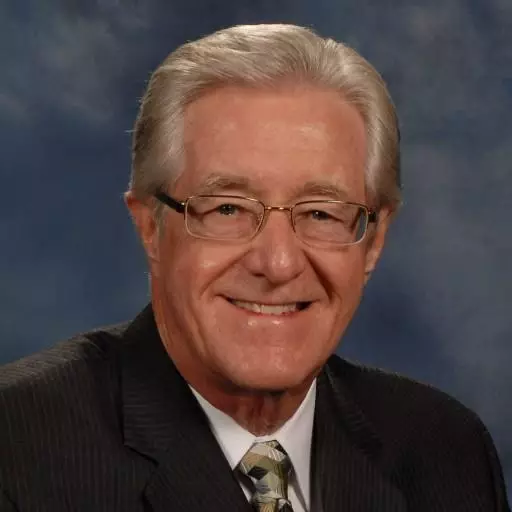
Pastor Jack Morris continues our series, “Living by Faith: Freedom Found in Christ.” Today’s message, “Alive in Christ – Part One,” reminds us that when we place our faith in Jesus, something radical happens—we are given new life.
The old no longer defines us. Christ now lives in us, shaping how we think, live, and love.
Pastor Jack Morris: He loved me, Jesus. He gave himself for me, Jesus. He now lives in me, Jesus. Old things have passed away and I have become new in him. That scripture is not just for the unsaved, it's for the saved, it's for the believer.
Guest (Male): Welcome back to The Healing Word. Pastor Jack Morris continues our series, Living by Faith, Freedom Found in Christ. Today's message, Alive in Christ Part One, reminds us that when we place our faith in Jesus, something radical happens. We are given new life.
The old no longer defines us. Christ now lives in us, shaping how we think, live, and love. Let's join Pastor Morris now for Alive in Christ Part One.
Pastor Jack Morris: In a recent issue of Christian History magazine, which I receive quarterly and enjoy it very, very much, it talks about religion as an accessory. This is the case for many people, that religion has become not the paramount focus of their life, but just a sort of a tack-on. An accessory is something that is non-essential but useful and decorative.
A lot of people, according to the magazine, and I'm inclined to believe that to be so, are involving religion more as something that is now a part of everything else that they have been involved in. It has now become a part of their life to maybe decorate their life and make their life a little more enjoyable or accessible to others, but it really isn't that driving force.
The magazine went on to tell about a supposedly advertisement in a frontier town in the early 1800s. They were advertising for a new minister, this frontier town, and this is what they put in their advertisement for their new minister: "Wanted, a man who takes his religion like his drink, moderately."
For the apostle Paul, religion wasn't something casual, accessory, or moderately taken. I want you to take your Bible and read Galatians chapter two, verse 20. Would you take your Bible, hold it up, and let's read how Paul felt about serving Christ. Galatians chapter two, verse 20, in unison.
"I have been crucified with Christ and I no longer live, but Christ lives in me. The life I live in the body, I live by faith in the Son of God, who loved me and gave himself for me." I have been crucified with Christ. He said, "I didn't just make religion a part of my life, it became my life and everything else became dead. I died to everything. I became born from above, and I became a complete new creature, a new person in Jesus." This is what Paul is saying.
Alive in Christ. There's only room for Jesus. Crucified with Christ. Let me go a little more into what that actually means. Look at verse 20, the very first word. What is the very first word there? I. I, the ego. This is a Freudian term when we use the term ego, a Freudian term meaning myself or self.
I, that conscious part of me, that that makes me distinct from everybody else. That conscious distinction that governs my behavior and my actions and my thinking. I, the ego, sometimes referred to the exaggeration of self, the exaggeration of pride, the individuality, the significance of the individual. Paul says, "I died to my significance. I died to my personality. I died to everything that I used to enjoy. I died to it, and now I'm alive in Christ."
He says it very clearly, very distinctly, very forthrightly. He knew. You see, he knew. He could say it. This is what I have done. People say, "Well, I'm trying to live a good Christian life." Paul said, "I have died to my old life. I'm not trying, I'm dead. I'm dead, but I've been resurrected and I'm a new me. I'm not trying to do anything."
"I hope I go to heaven when I die. I want to go to church when I can, and I will do good things for my neighbors." Paul says, "I have died with Christ. I have been crucified with Christ. I don't live anymore. It's Jesus now that's living within me and living in my body. I have died." Paul, when we went through our study in Philippians, we read how Paul mentioned his past life.
He said, "I came under the covenant of Israel on the eighth day. My parents made me part of the covenant of Abraham." He said that he was of the tribe of Benjamin. That's the first tribe that the first king of Israel was taken from, that small aristocratic tribe of Benjamin. The first king of Israel's name was Saul. Paul says, "I was taken from the same tribe that Saul came from. Actually, I was even named after the first king of Israel. I was named Saul, Saul of Tarsus."
Paul went on to talk about how zealous he was for Israel and for Judaism, and how he persecuted the church, and how he had become so elevated in politics and in religion far beyond his fellows, and how he had sat at the feet of Gamaliel and learned. He was one of the very most highly educated, most popular young men. He had achieved many things.
But now he says, "I have died to all of that. Everything that I thought was gain," Paul said, "everything that I thought was going to get me ahead in life," and how many people today are spending their energy, all their energy, trying to get ahead, to get to the top, to get that promotion? That's their goal, that's their drive, that's their focus. They burn their energy, they lie awake sleep at night. That's their life.
Paul said, "I died to all of that. That's not my life. My life today is Jesus. Not politics, not religion, not education. All these things might be meaningful, but I just didn't tack on as an accessory to decorate my life." Paul said, "I died to the old. I was crucified to the old, and now I'm alive in Jesus."
Hallelujah. Now, I want to go a bit further and I'm scriptural and very accurate in what I'm going to say, some of the things that we need to die to. We need to die, and I'm going to talk very practical now. We need to die to old resentments, old hurt feelings.
Some of us today, listen to me friends, some of us are just carrying around some things that have gone on and hurt us in the past, still hurting us today. God wants you to die to that. I think of people, men and women who have been divorced, and they tell me repeatedly that they've gone through a terrible experience and how they were hurt and how their spouse tried to take everything from them and how the pain is still there.
Friend, it's time to die to that and get on with your life and stop carrying that hurt. God will help you to release it. He will. You can't release it in yourself. I hear people tell me about how they've been mistreated by a family member or a friend or an employer at work, and it's wrong. I listen to them, and they're right in telling me because they need my prayers, and I need to pray with them. They're right in telling me.
But my heart goes out to them, how they have told me. They say, "Pastor, you know, I was right in line for that promotion, but because I was of the wrong sex or the wrong nationality or the wrong race, somebody else got it." And they're right, that's true. That cuts like a knife. That's painful.
But friend, to carry that pain and to have that bitterness and that resentment, you're hurting yourself, and God wants to liberate you and free you. God wants your life to be happy. I don't know that there's a person in this building today, a person here that hasn't had problems in the past that have cut deep, and we can carry resentment. There's not one person here that you're the only one that's been hurt. Everybody has been hurt.
But your hurt is still hurting you. Don't let it hurt you anymore. Now, God won't take away the memory. You will continue to remember that past, but you will remember it without pain. This is what God will do. This is what Christianity will do. Your religion must become meaningful. But if you feel the same old way and act the same old way and hate the same old way and the same old bitterness, then your religion has just been an accessory. You have tacked on something, but you have not been crucified. You have not died. The old you is still smelling.
God will do things, wonderful things, but you have to ask him and help him and you have to confess, "Lord, I've been hurt and I'm not the one that's in the wrong, but if I carry this resentment, I'm in the wrong. I'm in the wrong now." You'll never be able to go back and undo things. History is forever settled. Even God doesn't change history. But if you come to the Lord and ask him and seek him, he will allow you to die and to resurrect and to be new.
My heart goes out to people, and I see them in old age. They've lived many years with a pain. They've carried it. They're going to their grave with it, and their life has become shorter because they have carried that and that stress has just taken away the years of their life. We can die. Paul said, "I am crucified with Christ." You will be able to say that also if you give your heart to him, really truly reach out with all your heart and ask him. He will come and he will bless you.
A number of years ago, Pastor Wilson was a colonel at the Pentagon and he and his wife invited Corinne and me over to hear Corrie Ten Boom. You've heard of Corrie Ten Boom, the lady from Amsterdam, she and her family secretly tried to hide the Jews and protect the Jews from the Nazis during World War II. Well, I was so glad to go over and to hear this woman. It was the one and only time I ever heard her in person.
I heard her in person and she told the story how that when she was in the Nazi concentration camp, she and her sister Betsy, how they were so mistreated. She said we had to carry rocks out of the quarry in our dresses, put big rocks in a wheelbarrow and wheel it. When we weren't doing it the way they wanted it done or doing it fast enough and with their hands bleeding and no gloves, she said the officers would take a whip and whip us or a club and beat us and knock us down.
Month after month, we lived that way with no with little water, with little food, hardly anything to put on their bodies. She said, "They beat my sister Betsy until she became ill and she finally died. When they died, they took her body along with a lot of Jews and threw her body in a furnace." Corrie stood outside and watched the black smoke go up.
Now tell me you've been hurt. Are you listening to me this morning? Corrie said when the war was over and they got her out of prison, she said she had been a Christian before she went in, and that's why she was trying to help the Jewish people and her family. She said that after the war was over, she was released and she was going to churches and to halls giving her testimony and telling about her experience, but telling about Jesus and inviting people to come to Jesus.
She said she walked into the one hall one day, walked up onto the platform, and she looked out into the audience and there sat that Nazi former Nazi officer that had beat her, abused her, maybe even was responsible for the killing of her sister. She said, "I had to stand up there and look at that man as he smiled at me and I talked about Jesus."
She says, "And when the service was over," she said, "I stepped down and people gathered round and was shaking hands." And she said if that man didn't get up. He's an older man now, but she said, "I recognized him and he knew me and he walked up to me and he said 'Corrie,' and he put his hand out." She said, "I stood there. I couldn't lift my hand. I couldn't lift my hand. I looked at him."
"You nearly killed me and you killed my sister. You beat me and you worked me like a dog, like a slave." She said she stood there and he said, "Corrie, I'm a Christian. I've given my heart to God. I've repented of my sins, and I'm here to ask for your forgiveness. Will you forgive me?" She said, "All of a sudden, the wonderful presence of Jesus: Father, forgive them for they know not what they do." She says, "My hand went up and I took that former devil by his hand, who is now a brother in Christ."
Hallelujah. Hallelujah. Now friends, God wants to help you. He wants to do something beautiful for you. But you have to look to him and ask him. He will put his spirit within you, even the very presence of Jesus within you, and you can love people that you used to hate. You can bless people that you used to curse. You can do it. Not you, no more than Corrie could when her hands just froze at her side, but Jesus will liberate you. For you now have built a prison house around yourself and your own bitterness and own resentment has become your prison. You're in your own dungeon. You dug it. You dug it, but Jesus will resurrect you out of it.
Hallelujah. He's here this morning to bless and to do things, wonderful things. A lady came to me, let me bring it up, make it very relevant, very near now as best I can. This lady, a Christian lady, she really is. I know the church she attends. She and her husband are both wonderful Christian people. She told me, she said, "Pastor, when I was a little girl, my mother died, and my brothers and sisters, we were taken to my grandparents' house and they were raising me."
"They raised me until I was about nine years old." She said, "It was a wonderful life. My grandmother was just a precious woman. She took us to church. Church was the big thing of my life." She's from another country, but she lives in this country now. She said, "Every day, we were at the church. Something was going on, something good, something was fun, and we were there every day except Saturday." And she smiled, she said, "And sometimes even Saturdays we walk over to the church. We could walk to the church and we cleaned things up. We just loved it."
She said, "But then my grandmother got sick and she died. And then grandpa couldn't take care of us, so he had to give us out to other family members. They gave me to my mother's sister, one of his daughters, who had children, but there was no one else to take me. And so she took me, but she took me reluctantly. She didn't really want me."
She said, "I was nine years old and I was mistreated. I was abused." She said, "My uncle by marriage was mean to me." She said, "When Christmas time would come, my aunt would give her children expensive gifts and lots of gifts. But me," she said, "they gave me one little thing, very cheap."
She said, "On birthdays, my cousins had parties, birthday parties, birthday cakes. My birthday came, no party, nothing." She said, "That's how I had to live. And my aunt was so mean to me." By the way, her aunt went to church every Sunday. She was a churchgoing person claiming to be a Christian, even a spirit-filled Christian her aunt claimed.
She said, "My aunt just abused me and my uncle abused me." She said, "When I got to be 17, I ran away from home and I went to college." She said she graduated early, and she graduated with a master's degree in one of the universities right here in the Washington DC area, very well-trained.
She said, "Today, I still see my aunt and I go to my country and I visit my aunt, and my aunt comes to here to visit me. And every time I get with my aunt, at least a couple of times," she said, "I tried to bring up the past. And when I do, my aunt starts to cry. My uncle starts to cry and they change the subject."
She said, "I want to talk to them about it." She said, "I don't hate them anymore. I don't feel bitterness to them anymore." She said, "I even send them money now. I'm able to send them money, and I'll bring them here and we'll get together once a year, perhaps, or twice a year, I'll go there." She says, "But they won't talk about it. They just cry. They just cry."
So I asked her, I said, "How do you feel?" She said, "Oh, I've forgiven them. It's gone. It's gone. But the pain was so great, but it's gone now. It's gone." You see friends, the pain can go away. I don't know how you've been hurt or who's hurt you, a family member, a friend, a parent, an employer. I don't know who may have hurt you.
But I know there's not a person in here today that hasn't been hurt. You can't live in this world very long without being hurt. But I want you to know that the Lord not only forgives you, but he puts forgiveness in your heart. He causes you to die to certain things and forget about them to the degree that you're not hurt or bothered by them anymore.
This is a great day for some of us. This is a great Sunday morning service of healing to some of us who will reach out this morning. I didn't come here just to tell you some sad stories today. I came here to tell you that Jesus loves you. He wants to help you, and he wants to heal you. This is for you and me. Paul said, "I'm crucified with Christ." I hope and pray that soon you'll be able to say that too, that "I am crucified with Christ. I'm dead to all of that. I'm alive under the Lord. There's a new beginning in Jesus Christ."
Dying to lifestyles, resentments and lifestyles, the unchristian ways of living and habits. You know, some of these people who and I think you have and I'm sure I have too, the world holds out such promise of joy. Come here, do this, start this, become involved in participating in this until you develop some kind of a lifestyle or some kind of habit.
The world promises you a lot of joy and happiness if you just get involved, if you'll just do it, only to find out that you're doing it, now you cannot stop doing it, but the promises that the world gave you in the beginning never came to pass. They were empty promises, and you're still a very unhappy person. Friend, you could die to those lifestyles. You can die to those habits. You can die to it. Jesus says so. Paul gave the testimony that he died. "I am crucified with Christ. I died, but now I've resurrected to these new lifestyles." Let them die, let them fall off. Go forward in Jesus.
Billy Graham's new magazine came out, the March issue, and in his Decision magazine, he always has at least one sermon from himself, and he put a sermon in there, I didn't read the whole thing, only caught part of it, and it's entitled "Six Kinds of Fools." The Bible talks about six kinds of fools. I don't want to be any of those fools except one, and that's a fool for Christ's sake, to serve the Lord and to do the Lord's.
Dr. Graham goes on to tell about a lifestyle of atheism. He said there's one of the fools that the Bible talks about is an atheist. In Psalm 14:1, "The fool has said in his heart there is no God." The fool has said that. Like I told the story here before, and I like to tell it so you just have to bear with me and listen to it all over again.
This atheist was telling about the Christians who have all of these great events during the year. He said, "You Christians have wonderful holidays, you have Christmas and you have Easter and you have all of these holidays." He says, "We atheists don't have anything." This Christian man spoke up and said, "Oh yeah, you've got a holiday: April the 1st, April Fool's Day."
But how could anybody be an atheist? I really don't know. I believe to be an atheist must be a very difficult thing to do. Sometimes people think it's very difficult to be a Christian. But to be an atheist, you have to block out so much. You have to block out life and you have to block out death and you have to block out the universe and you have to block out the heavenly planets and you have to block out the galaxies.
You can't look up, you can't look down, you can't look out because the evidence of God is everywhere. How do you block all of that out? I don't believe there is such thing as a pure atheist. I believe there are some people who claim to be atheists, but in their heart, in the secret part of their being, the evidence of God is written in the heart and the evidence of God is everywhere.
But then Dr. Graham talks about the practicing atheist, the person who says, "Well, I believe in God. Do you believe in God? You don't believe in God? Oh, yes, I do believe in God. I may not go to church, but I believe in God. Or I may go to church sometimes, but I believe in God." He or she says they believe in God, they profess that they believe in God, but they don't practice godliness.
They have an atheistic lifestyle. There are people who can come and even sit under the preaching of the gospel, even what I'm saying today, and somehow they don't believe in their heart that they can really truly die to self, die to the resentment, die to the bitterness. A lot of you today are hearing me, but what I am saying is going to make absolutely no difference.
There are people who want to carry the bitterness. They're mean and they're going to stay mean. They want to stay mean, they don't want to be delivered. Somehow they're getting some kind of feedback reward or compensation or pity from going around telling everybody how hurt they are. You don't have to be hurt. There is a great physician, there is a healer if you want him.
Jesus has come and he's present to do great and mighty things. Look at verse 20 with me again. Look at it with me. This is for you, not just for Paul, not just for Corrie Ten Boom, not just for this lady that ran away from home when she was 17 because she was so mistreated. But this verse is here for all of us. Paul says, "I have been crucified with Christ and I no longer live, but Christ lives in me. Christ lives in me." Think about it. Christ lives in me. Say those words: Christ lives in me.
Christ can do it with his strength and his power and his endowment. You can be better off, more better off than you've ever been in all your life, but "Christ lives in me," says the apostle Paul. And he said, "The life I live, or the life that I now live in the body, I live by faith in the Son of God who loved me and gave himself for me." He loved me, Jesus. He gave himself for me, Jesus. He now lives in me, Jesus. Old things have passed away and I have become new in him. That scripture is not just for the unsaved, it's for the saved, it's for the believer.
Come to the Lord this morning. Let him do something beautiful, let him do the nice things that he wants to do for you.
Guest (Male): Today's message reminds us that faith in Jesus doesn't just forgive our sins, it gives us new life. Christ lives in us, empowering us to walk in freedom and purpose each day.
Start your week with encouragement from God's word. Sign up today for the Healing Word weekly devotional, delivered every Monday morning right to your inbox. It's a powerful way to begin your week with hope, scripture, and inspiration for your daily walk. Go to thehealingword.com. That's thehealingword.com and sign up today. Let God's truth speak to your heart.
Thank you for listening. Join us tomorrow as Pastor Morris continues with Alive in Christ Part Two.
Featured Offer

In God’s Wonders Made Visible, Pastor Jack Morris reflects on John chapter 9, where Jesus notices a man who has been blind from birth. This wasn’t a recent hardship; it had shaped the man’s entire life. He didn’t ask for help, and he didn’t draw attention to himself.
But Jesus saw him, and He chose that long-standing need as the place where God’s work would be made visible.
Past Episodes
- Faith Never Quits
- Faith That Moves: Lessons from the Life of Abraham
- Finding Peace In Life
- Forward In Faith
- Foundations of Faith
- Jesus: The Early Years
- Joshua and The Israelites: A Crossover Experience
- Jump Start Your Christian Walk
- Life After Death
- Living Above the Circumstances
- Living by Faith: Freedom Found in Christ
- Love, Conflict and Forgiveness In Marriage
- Phillippians 4 - The Spiritual Impact of Your Thoughts and Attitudes
- Prayer Power
- Pressing On WIth Life
- The Benefits of Thanksgiving
- The Greates Gift Ever Given
- The Greatest Gift Ever Given
- The Healing MIracles of Jesus
- The Life of Christ
- The Love of God for Us
- The Majesty of God
- The Names of God
- The Power of Prayer
- The Radiant Person
- The Upward Call: Living with a Heavenly Mindset

Video from Pastor Jack Morris
Featured Offer
In God’s Wonders Made Visible, Pastor Jack Morris reflects on John chapter 9, where Jesus notices a man who has been blind from birth. This wasn’t a recent hardship; it had shaped the man’s entire life. He didn’t ask for help, and he didn’t draw attention to himself.
But Jesus saw him, and He chose that long-standing need as the place where God’s work would be made visible.
About The Healing Word
The Healing Word Ministries delivers the Word of God to the healing of broken, confused, fearful, and hurting lives.
~ Psalm 107:20 “He sent His Word and healed them.”
About Pastor Jack Morris
Pastor Jack Morris is the founding pastor of Largo Community Church and the speaker on the radio broadcast – The Healing Word.
Contact The Healing Word with Pastor Jack Morris
Mailing Address:
Largo Community Church
1701 Enterprise Rd.
Mitchellville, MD 20721
301-249-2255