
Islam—Religion of Peace or Political Ideology of Domination? (rebroadcast of 12/13/2025)


This program was previously aired on 12/13/2025
GUEST: PASTOR DARRELL HARRISON, Co-Host, Just Thinking Podcast
Five times each day the Muslim call to prayer sounds from mosques in Minneapolis. One might expect this in an Islamic country like Saudi Arabia or Iran, but in the United States, a nation that was founded and operated on distinctly Christian principles? The founders likely made the assumption that our nation would be and remain Christian, as early immigrants came from Christian European nations. They probably thought future Americans wouldn’t be so foolish as to welcome hundreds of thousands of Muslims.
But those with an unbiblical worldview of secular and religious humanism have taken power and hold to the spirit of Babel—that uniting all religions and peoples together will make us good and united. That will not work with Islam and its mission to dominate the world. Europe has puts its very existence at risk in bringing millions of Muslims into its nations and towns and now America is doing the same in Minneapolis, Dearborn, MI, New York City, and elsewhere.
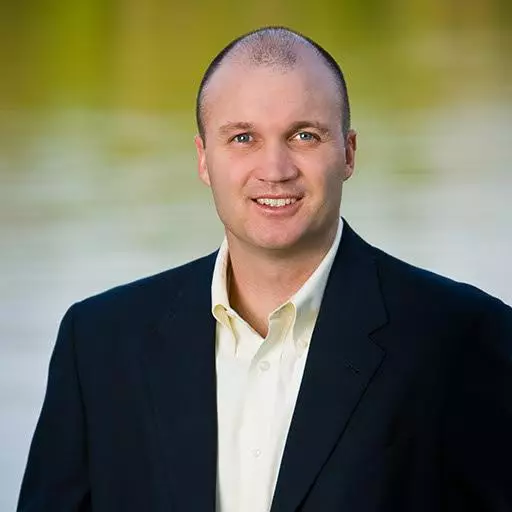
Darrell Harrison, shepherding and teaching pastor at Redeemer Bible Church (Gilbert, AZ) and the co-host of the popular Just Thinking Podcast, joins us to explain how Islam is less a religion but rather a political ideology of domination and how Christians should respond.
Program Notes:
David Wheaton: Islam, religion of peace or political ideology of domination? That is the topic discussed today on The Christian Worldview Radio Program, where the mission is to sharpen the biblical worldview of Christians and to proclaim the good news of Jesus Christ. I'm David Wheaton, the host. The Christian Worldview is a non-profit, listener-supported radio ministry. Our website is thechristianworldview.org, and the rest of our contact information will be given throughout today's program. As always, thank you for your notes of encouragement, financial support, and lifting us up in prayer.
Where would you think you were if you were awakened in the early morning to the following Muslim call to prayer?
Recording: [Muslim call to prayer]
David Wheaton: Would you be in Saudi Arabia, Iran, perhaps Turkey? What you just heard is the actual Muslim call to prayer that is broadcast five times per day from mosques across streets and homes in Minneapolis, Minnesota, in the United States of America—a nation that was founded and operated according to distinctly Christian principles.
Our founders likely made the assumption that our nation would remain Christian as early immigrants came from Christian European nations. They probably thought future Americans wouldn't be so foolish as to welcome hundreds of thousands of people from an opposing religion. But those with the unbiblical worldview of secular and religious humanism have taken power and adhere to the spirit of Babel—that uniting all peoples in religions together will make us good and united.
But that will not work with Islam and its mission to dominate the world. Europe has put its very existence at risk by bringing millions of Muslims into its nations and towns, and now America has done the same in Minneapolis; Dearborn, Michigan; New York City; and many other places across the country.
Daryl Harrison, the shepherding and teaching pastor at Redeemer Bible Church in Arizona and the co-host of the popular Just Thinking podcast, joins us today to explain how Islam is less a religion but rather a political ideology of domination and how Christians should respond.
Daryl, welcome back to The Christian Worldview Radio Program. It's so great to have you on the program again. Let's start out as we talk about Islam today, and specifically political Islam as what you entitled the three-hour podcast that you did with your co-host, Virgil Walker, on the Just Thinking podcast. What was the impetus for you to do this program on political Islam? Something in the news, something you were reading? What was it?
Daryl Harrison: It was really my observations of what I've seen going on and happening in the United Kingdom, particularly under the leadership of Labour Party Prime Minister Keir Starmer, who, to be quite frank, is doing everything he can to erase the traditional—and by traditional, I hate to say it this way, but it's true—white dominant culture and history of the UK and remake it in the image of Muslims and Middle Eastern Indians under the pretense of immigration and diversity.
So that's what got my attention on this topic. Now, consequently to what Starmer is doing in the UK in that regard, Muslims in the UK are running for political office in record numbers, and in many instances, they're winning these races due to the orchestrated influx of Muslims from places like Kenya, Somalia, Pakistan, Bangladesh, places like that. So that was the motivation for me, and this topic caught my attention.
Now, as a side note, Keir Starmer, who is a full-blown liberal socialist and a proponent of Palestinian statehood, by the way, was given the name Keir by his parents, that name is spelled K-E-I-R, who themselves were socialists, and they named him after the 19th-century trade union socialist Keir Hardie. Keir Hardie actually founded the Labour Party in the UK to which Keir Starmer belongs. But again, seeing Muslims gain political power in Western nations and continents like the UK, Canada, Australia, and especially here in the United States, is why Virgil and I spent three-plus hours addressing this important topic in such detail in our episode.
David Wheaton: Now, you quoted in that podcast, Daryl, and we have it linked at our website, thechristianworldview.org, highly recommend listeners go there and take a deep dive into this, you quoted Dr. Christine Schirrmacher, who said, quote, "Political Islam is synonymous with a socio-political ideology supported by a religious justification, the goal of which is to perfectly implement the Quran and the Sharia and thus to establish the archetypal Islamic society," unquote. And I want to just play a short soundbite from your podcast where you said this.
Daryl Harrison: [Audio Clip] And one of the things we just keep coming back to is the absolutely, literally comprehensive, total, encompassing vacuum black hole that Islam is. It wants everything. And this is what Dr. Schirrmacher is saying. She says when it comes to the topic of Islamism or political Islam, one is dealing with nothing less than a conflict with a totalitarian ideology. She says it is a totalitarian ideology that uses religious terminology while demanding to put the original form of the Islamic faith comprehensively into practice. Islam is not a religion, and it's never been a religion.
David Wheaton: So the question is, Daryl, let's make the distinction between political Islam rather than just religious Islam. In other words, what you were saying and what Schirrmacher was saying is that this is really a political, all-encompassing, totalitarian ideology that uses religion to get there. Explain that more.
Daryl Harrison: I thought this description by Dr. Schirrmacher was the most brilliant, clear, objective definition of political Islam that I've come across. We call it political Islam, David, because that's what Islam is. Islam is a political ideology and worldview that uses political strategies and tactics to accomplish political aims. Everything about Islam is political. It is not a religion, and perhaps we'll have time to flesh that out a little bit more.
But as Dr. Schirrmacher stated very, very well, political Islam is a socio-political ideology supported by a religious justification. So in other words, Islam for centuries now has purported to be a religion in an effort to mask, to camouflage, what its true teleology is, what its true objectives are, what its true aims are, which is the socio-political dominance in every area of the globe where its foot trods. This is a very merciless, graceless, compassionless ideology that seeks dominance and control, and political strategies and tactics is the way that Islam seeks to bring those goals to fruition.
David Wheaton: Very interesting. Daryl Harrison with us today here on the program. We could get into some of the history and advancement of Islam starting in the 7th century with Muhammad. We may get to that eventually, but I want to follow up with a question on what you just said there because you'll hear quotes like this: that Islam is one of the great world religions, that it's a quote-unquote "religion of peace." We've heard that even by Americans and presidents and so forth. That Muslims believe in Jesus, that we share history with Muslims going back to Abraham, most Muslims are not jihadists, they're not on a holy war, they're not trying to take over the world, and that there's a very wide spectrum, they'll say, of Muslim belief, just like in Christianity of all different kinds of flavors of Christians on the left and the right and everything in between, it's the same thing with Muslims. Now, I want to play another soundbite from your program where you kind of cut through all those clichés and you said this.
Daryl Harrison: [Audio Clip] Political Islam is nothing other than a centuries-old satanic scheme founded in the pits of hell itself. It is a scheme designed to undermine and dominate Western Judeo-Christian nations and territories through intimidation, violence, and religious dogmatism. The idea that Islam is, one, a religion is false, and two, that it is a religion of peace is equally false.
David Wheaton: There's a lot of religions in the world, Daryl, and there's a lot of major ones, maybe six or seven major religions: Christianity, Islam, Buddhism, Hinduism, whatever, a few others. How is Islam different from every other major religion?
Daryl Harrison: Because Islam is political. I really hate to sound simplistic, but that fundamentally, David, is the core distinction between Islam and every other major religion out there. I don't see any evidence that Hinduism is trying to form caliphates in cities around the world. I don't see any evidence that Buddhism seeks to, as many Muslim leaders have said, invade every home in America and then raise the Islamic flag over the White House. I don't see any evidence of that, any objective evidence—and by objective evidence, I mean any evidence that I can research and point to that objectively demonstrates that any other major religion has those same goals as Islam does through the political processes that they're taking advantage of in the West.
David Wheaton: Now, I can hear the follow-up from potentially someone listening today who doesn't agree with what we've been talking about so far. They would say, well, Islam is not the only religion to want to have dominion or domination over the world. Christians want to do the same thing. As a matter of fact, there are elements of the Christian religion, so to speak, the Christian nationalists or the Christian dominionists who see their call to take dominion over the world and then that ushers in the return of Christ. How would you answer that particular rebuttal: that Islam is really not much different than a more extreme version of a Christian nationalism or dominionism?
Daryl Harrison: First of all, let me just clearly say, and I don't want to stutter when I say this: I'm not a Christian dominionist, I'm not a Christian nationalist. I don't subscribe to either of those ideologies or philosophies personally, okay? But when someone were to make that argument or that rebuttal, the problem with that is that Islam wants to do that by force. Islam historically is a worldview of coercion. It is a worldview of forced domination, forced acquiescence, forced compliance.
Christianity is not that. Theologically, the God that the Christian serves, that God has dominion already. So that's not even a logical position to take. Muslims, however, their desire, their goal, their aim is literally, as the word Islam means "submit," they literally want to force obeisance on you. So again, with all due respect, for someone to make that rebuttal, they haven't studied Islam very much, to be honest with you.
David Wheaton: Pastor Daryl Harrison is with us today, the co-host of the Just Thinking podcast. They did a recent program on this particular topic of political Islam. We have it linked at our website, thechristianworldview.org. I thought one of the interesting aspects of your conversation with Virgil Walker, your co-host, on this topic was talking about the foundation. Every worldview has a foundation or a basis. For Christianity, it's the Bible. You talked about the three-part foundation for the ideology of Islam: the Quran, the Hadith, and the Suras. Could you just briefly describe what those are?
Daryl Harrison: The Quran is considered by Muslims to be the literal word of their god, whom they refer to as Allah, which according to Muhammad was revealed to him through the angel Gabriel over a period of 23 years. The Hadith, H-A-D-I-T-H, are reports of the sayings, actions, and approvals of Muhammad which were remembered by his companions and later compiled by a myriad of Islamic scholars. The Hadiths are a secondary source to the Quran of guidance, explaining and contextualizing the Quran. So while the Quran gives principles, the Hadith shows how Muhammad applied those principles in his daily life.
And then lastly, we have the Suras. The Suras are chapters of the Quran, okay? There are 114 Suras, varying in length from just a few verses like Sura Al-Kawthar, which is only three verses, to hundreds of verses like Sura Al-Baqarah, which is 286 verses. Each Sura addresses different things: faith, law, morality, stories of the prophets, or guidance for the Muslim community. Suras are recited in daily prayers and memorized by Muslims all around the world. So those are the sort of trifecta that undergirds the ideology of Islam.
David Wheaton: Daryl Harrison, pastor and co-host of the Just Thinking podcast, is our guest today. We have links to him along with his popular X account at thechristianworldview.org. After this short break to tell you about some ministry resources, I'll ask Daryl whether Allah of Islam and Yahweh of Christianity are the same God, as many people assert. I'm David Wheaton, and you are listening to The Christian Worldview Radio Program.
David Wheaton: The classroom and the dorm room students encounter at secular and yes, Christian colleges lead to as many as 50% of students who profess upon entering college to be born-again Christians not saying the same four years later. So how can students avoid spiritual shipwreck? In my book, "University of Destruction: Your Game Plan for Spiritual Victory on Campus," I give a scouting report on the three pillars of peril in college and provide a game plan to be an overcomer. "University of Destruction" is softcover, 176 pages, and retails for $17. For a limited time, you can order signed copies for a donation of any amount to The Christian Worldview. Bulk discounts are also available. Go to thechristianworldview.org or call 1-888-646-2233.
David Wheaton: We just released a special keepsake resource that contains all 12 issues of The Christian Worldview Journal from 2025. Each issue is neatly wrapped in a clear plastic folder and held in a padded navy blue three-ring binder embossed with the journal logo on the cover. You'll have all the timeless, insightful articles on current events and issues of the faith in one place. If you're like me, magazines and newsletters get scattered all over the house. What I like about the journal all-in-one binder is that it keeps the issues chronologically organized for easy reference and sharing. So if you're not a Christian Worldview partner and don't receive the journal, here is your opportunity to get all 12 issues from 2025, plus one—the inaugural issue. To order, go to thechristianworldview.org or call 1-888-646-2233 or write to Box 401, Excelsior, Minnesota 55331.
David Wheaton: Welcome back to The Christian Worldview. I'm David Wheaton. Be sure to visit thechristianworldview.org where you can sign up for our free weekly email and The Christian Worldview Journal print publication, order resources for adults and children, and support the ministry. Our topic today is Islam, religion of peace or political ideology of domination, and our guest is Daryl Harrison, pastor and co-host of the Just Thinking podcast.
Now, Daryl, sometimes the Islamic deity, Allah, is called God. The Christian God in the Bible wanted to be called Yahweh. There's a common assumption that they both go back to Abraham in some way, both religions do, and so therefore Muslims and Christians actually worship the same God even though they have slightly different names, Allah versus Yahweh. So the question is, do Christians and Muslims, are they worshipping the same God that we know of as Yahweh as Allah, similar and just a variation of it? What are your thoughts on that?
Daryl Harrison: I say this with all grace and humility: No. Christians and Muslims do not worship the same God. And it's amazing to me how often that question comes up. First of all, we don't worship the same God because Allah is not truly God. Allah is merely an idol of man's imagination, one man's imagination in this case, that is Muhammad.
Now, I say that in light of Psalm 96:4 and 5 where David says this: "For great is the Lord and greatly to be praised. He, the Lord, is to be feared above all gods. For all the gods of the peoples"—and Allah is a god of the peoples, it is an invented deity—"for all the gods of the peoples are idols, but the Lord made the heavens." Again, that's Psalm 96:4 and 5. So no, that's reason number one, because Allah is an idol of man's imagination.
Secondly, when you look at the question, David, just on logic alone, if the Christian God is Yahweh and the Islamic God is Allah, who is not a God to begin with, then it stands to reason that Christians and Muslims do not worship the same God. How can it even be argued that Christians and Muslims worship the same God when one of those gods is not a God to begin with? So just on logic alone, you have to eliminate Allah.
Conversely, along that same line of thought, how can it be said that Christians and Muslims worship the same God when Islam was founded more than 600 years after the death of Jesus Christ, who is the true God of the Christian? Some other questions I might have on that is where is the incarnation in Islam? Where is that? Where is the doctrine of substitutionary atonement in Islam? Where is the righteous life of Muhammad wherein he fulfilled all the law perfectly and without sin? Where is that? Where is the doctrine of justification by faith alone in Islam wherein the perfect righteousness of Muhammad is applied to sinners? Where is that?
David Wheaton: How about the Trinity?
Daryl Harrison: The Trinity, and we mention that in the episode as well. We talk about, I think I quote Dr. R.C. Sproul in the episode who had a brilliant quote on that regard. Fundamentally, the God of the Bible is triune; the god of Islam is not triune. Where's the resurrection of Muhammad from the dead? Where is the ascension of Muhammad into heaven as testified to by hundreds of eyewitnesses? I mean, we could go on and on and on. So if people would just read their Bible, you don't even need to read the Quran, you can offer an apologetic against the idea that Christians and Muslims worship the same God simply by reading your Bible. You don't need the Quran to argue against that. But these are just some very simple logical deductions that Christians can easily come to to refute the idea that Christians and Muslims worship the same God because remember, God promised to Abraham that the promise would be carried through his son Isaac, not Ishmael. So that should end the discussion right there.
David Wheaton: How do Muslims, if they think back to where their founder of the religion, Muhammad, was in the 7th century, how do they continue to go further back and draw the line to Ishmael? Is that what they do?
Daryl Harrison: Great question, David. That's exactly what they do. This is where the Muslims' hatred of the Jews derived. Because when you look at the Quran, there's a lot in the Quran that inverts a lot of what is in the Bible. And this is one of the things that they invert: They argue that Ishmael is Abraham's legitimate son as opposed to what Scripture clearly declares. And God reiterates this with Abram: that "No, the promise shall be fulfilled through Isaac, not Ishmael." And the Muslims carry this as a fundamental belief that drives and really vivifies their hatred of Jews because God dared to make the promise through Isaac and not Ishmael. That fundamentally is where everything else flows from that.
David Wheaton: Our guest today is Daryl Harrison, the co-host of the Just Thinking podcast. We have him linked at our website. Also, he's the shepherding and teaching pastor at Redeemer Bible Church in Gilbert, Arizona, just in the metro area of Phoenix, Arizona. We're talking about Islam today. I want to dig down a little deeper into Islamic doctrine, Daryl. You talked about the difference in the false god of Allah and the true God of Yahweh. But what about the means of salvation in Islam versus Christianity? Your co-host Virgil Walker said this on the podcast about what Islam teaches: it's a religion of works. Let's listen here.
Guest (Male): [Audio Clip] Islam is a religion of works. It teaches that salvation is achieved through submission to Allah and adherence to the five pillars: confession of faith, prayer, fasting, almsgiving, and the pilgrimage to Mecca. It is a system where you can earn your standing before God through obedience and performance. But Christianity teaches something radically different. Ephesians 2:8 and 9 says, "For by grace you have been saved through faith. And this is not of your own doing; it is the gift of God, not a result of works, so that no one may boast." Islam says that you must work your way to God; Christianity says that God came down to us in Christ, died in our place, and offers salvation as a free gift by faith alone. These are not mere theological differences, saints. These are fundamental, irrevocable contradictions about the nature of God, the person of Christ, and the way of salvation. So when culture tells you that all religions are basically the same, that we all worship the same God in different ways, that Islam and Christianity are just two paths to the same mountain, understand this: that is a lie, another lie from the pit of hell.
David Wheaton: What does Islam teach about the most important question in life: how can sinful man be reconciled with who they believe is the God who isn't a God, but Allah? How do we have eternal life is the question for Islam versus what the Bible teaches.
Daryl Harrison: This may shock some of your listeners to learn, but in Islam, you don't really have eternal life. In Islam, sin is merely looked at as disobedience to God. Reconciliation comes through repentance, what they call Tawbah, that's spelled T-A-W-B-A-H. And eternal life is arbitrarily determined by God's judgment. You may or may not get into heaven when you die. So you never really know.
I mean, you contrast that to what Scripture teaches us in 1 John 5:13, for example, where John writes these words. He says, "These things I have written to you who believe in the name of the Son of God so that you may know that you have eternal life." Islam teaches it, but you don't know that you will ever have it. So that's a fundamental distinction between Christianity and Islam.
David Wheaton: Wow, what a great blessing that God gives believers that assurance that we're not working our way to try to please Him and never know whether we're going to make it or not. He's already done the work on our behalf. I just follow up with one point. I think there actually is one way that Muslims can be assured that they're going to go to the eternal bliss or whatever they call it: is through martyrdom, through jihad. And that's why there's a willingness by some Muslims to martyr themselves for the cause because they think that guarantees them eternal life. Daryl Harrison with us today here on The Christian Worldview. Just one more doctrinal question, Daryl, before we get into some of what do we do now now that there's so many Muslims in the West. One more soundbite from your co-host Virgil Walker where he describes that there's some principles of political Islam. I don't remember all of them, but there was, I think, dualism, Kafir, I think abrogation was one of them. But let me play this soundbite and I'll follow up with a question.
Guest (Male): [Audio Clip] How does Islam view us as individuals? Are we all created in the image of God? Are we all equals, deserving of equal rights, respect, dignity, value? The answer to that is no. The world is divided into those who submit to Allah and the Kafir. What you're able to do then, once you create that second-class citizenry, that second-class person, that human being not created in the image of God but deserving of your vitriol, of your anger, of your outrage, is you can treat them in ways that are not humane, that are inhuman. You can rape, you can kill, you can murder at will. Why? Because they're not submitted to Allah, so they don't have the same rights and legal...
David Wheaton: Okay, I'll stop it there. The world is divided between those who believe in Allah, so Muslims, and the Kafir. Explain what the Kafir are, how Muslims treat the Kafir, and some of these other principles of political Islam.
Daryl Harrison: That word is spelled K-A-F-I-R, and Kafir refers to the unbeliever. As much as a Muslim may come along today and argue that there's equality in Islam, no there isn't. There's never been equality in Islam. The Quran does not recognize non-believers as being equal as we're all image bearers of God. There's a hierarchy within Islam, and within that hierarchy, Kafirs, unbelievers, are treated very differently than Muslims are. For instance, one of the principles that is taught in the Quran is that a Muslim man may marry a non-Muslim woman, but a Muslim woman can never marry a non-Muslim man. I could go on; we don't have time for all that.
But there are clear distinctions within the Quran with regard to how Muslims and non-Muslims are to be treated. And I mentioned in the episode, actually I make this point: that in Christianity, there is no word for unbeliever. We don't have a counter term like Kafir. We don't have anything in Christianity, in the Bible, that refers to unbelievers in a negative and derogatory way as the Quran does in Islam. So you and I, David, are Kafirs. We are unbelievers; we're to be shunned. We're to either be converted or killed. Those are the only two options in Islam. If the Kafir doesn't convert, he or she is to be killed. And this ties into the comment you made earlier about their desire, their thirst, to die as martyrs for Allah. But never believe for one second that there is such a thing as equity within Islam because there is not.
David Wheaton: Daryl, I want to get into the mass immigration, the resettling of Muslims here in the United States, and as you know, I live in the Minneapolis area in Minnesota, and I believe we have the highest Somali Muslim population in the country. We have well over 100,000—I think by far, right, and it's over 100,000 just in the state, but it's huge in the Minneapolis area. You see it everywhere, not just walking around the streets, but in the hospitals, aides in hospitals, and everywhere around the city.
There was a war over in Somalia, so someone or people had the idea that it would be okay to take those of a different language, a different culture, and a different religion and bring them here to Minneapolis to settle them. And you think, what a crazy idea that would be and how much that's going to affect the existing—it's really an existential thing. People use that word: this is an existential thing. Well, that's because it affects your existence.
So, and it's probably—I'm not sure, I haven't researched this—but who brought all the Somali Muslims to Minneapolis? Probably had something to do with two big resettlement agencies that make a lot, a lot of money for doing so: Catholic Charities and Lutheran Social Services, at the behest of politicians, by the way. And they're settled in other places around Minnesota, too, smaller towns. So this has been a huge cultural change to this state and to this city, and it's happening in other places. You mentioned New York with the Muslim mayor there now, Dearborn, Michigan. But this is certainly one of the central places. No doubt you've heard about the amount of fraud—a billion dollars at least worth of fraud has taken place by mostly Somali Muslims when it comes to a non-profit for supposedly helping children, welfare, trying to game the system to claim benefits for having your children have autism. So this has been a huge defrauding of the taxpayer here in Minnesota too.
Daryl, you can imagine how this group of people now, they are very much catered to. We have a well-known Congresswoman, Ilhan Omar, who's Somali Muslim. The Mayor of Minneapolis—we almost had a Somali Mayor of Minneapolis; he lost to Jacob Frey. And I'm going to play a soundbite from him in a second. But this is the level of how this has changed the culture here in what was kind of historically Scandinavian Minnesota where you had Lutherans and some Catholics and so forth, sort of broadly white Christian culture up here. Just as there's more of a black Somali Muslim culture in Somalia, be like taking people from here and dropping them into Mogadishu. And so here is our mayor, Jacob Frey, who's Jewish, by the way, speaking to a group of Somalis. And this is not a unique soundbite. This happens frequently where you'll be seeing leaders speaking in Somali to this population of people that now inhabits Minneapolis.
Jacob Frey: [Audio Clip] As-salaam alaikum. Haben wanaagsan! Maalin wanaagsan! Magacaygu waa Jacob Frey. To the great people of Minneapolis, and I say that very intentionally, because no matter where you are from, Minneapolis should be a place where you are proud to call home. Whether you are from Bosaso or Mogadishu, whether you are from Hargeisa or Galkayo, Minneapolis is a place where you come to seek prosperity, where you come to raise your family. And here is what this election means: This election means this is a moment for unity, where the entire Somali community can come together and say, "This is our people, this is our city, we are united behind each other."
David Wheaton: This is again the Mayor of Minneapolis, the current Mayor Jacob Frey, speaking in Somali at campaign events and acting like, hey, we're just one big happy family here, even though there's very little integration and assimilation to American culture. How could there be, after all of what we have talked about where Islam comes from? This is a completely different ideology. How could there be? They'd have to give up everything they believe in to be assimilated into our society here.
And so my question is, how has this taken place in this country? Because there was a time earlier in our country's history that they had to fight back against the Muslims back in the early days of American history, or in Europe. Europe was almost taken over by Islam. How did we come to this, Daryl? And you mentioned something in the podcast as well, you give a reason for why they come but don't go back.
Daryl Harrison: I thought that was a key question to answer because we hear that question—Virgil and I hear that question all the time—American citizens in general, because their rationale is, well, we hear how much these Somali Muslims say they hate America. I'm getting probably one video a day I see of a Somali Muslim in Minneapolis saying how much they hate America: they hate the food, they hate the culture, they hate everything.
So the logical question is, well, if you hate it here, why don't you go back to where you came from or go at least go somewhere else, leave America? It's no different, David, than I see if you're on a job that you don't like, you're probably going to try to find another job that's more complimentary to what you're looking for in a place of employment. But Muslims don't think that way. And I think a lot of what's driving this is what I call "Hippy Theory."
Hippy Theory is the idea that originated in the 1960s. And I said this in the episode, that the 60s may be chronologically over, but the 60s are not ideologically over. You have probably third-generation hippies who descended from their grandparents in the 60s who were educated in liberal colleges and universities that were flooded with communists, that were flooded with socialists, that were flooded with socio-cultural revolutionaries, Maoists who admire people like Che Guevara, Mao Zedong.
So now these people are in positions of political power, administrative power, where they can make decisions like this to bring black—it's almost to a person—black-skinned, brown-skinned people into predominantly white areas, like you just alluded to. Minnesota was a Scandinavian settlement, and now all of a sudden they're trying to "un-Scandinavianize" Minnesota by bringing all these black and brown-skinned Muslims into places like Minneapolis, into places like Dearborn, Michigan, so as to flip on its head the ethnic hegemony that previously existed.
So this is all driven by political ideology. So we're really not just talking about political Islam. We're talking about contemporary American progressivism, what I call "permissivism," that's coordinated, it's orchestrated, it's very well-funded to bring these people here. And as I said in the episode, they come here to live separate from America. They do not come here to assimilate. They come here to take advantage of the naivety of liberals and progressives who want to flood them with free benefits that are available only on the backs of taxpayers so they can live in comfort as Somalis in this case. They want to live here as Somalis. To Muslims, national boundaries are irrelevant; they're not important. For all intents and purposes, David, if this keeps up, you will not have Minnesota anymore. It won't be Minnesota. It'll be Northern Somalia, because the Somalis will overpopulate you, and as a result of overpopulating the state, their culture will begin to dominate. And that's going to transform Minnesota from a state within the United States union into effectively a foreign nation within the boundaries of the contiguous 48 United States. This is the goal: is for them to come here, live as Somalis while all the while reaping the benefits of American citizens. And that's not only wrong; that's immoral because they're stealing.
David Wheaton: Yeah. I think the follow-up question to this is people could be listening today and thinking, well, you hate these people, you consider yourselves Christians, you want them to go away. Hey, look, this is a great evangelistic thing. Just think, God brought them over here, they can be evangelized. This is a very difficult community to penetrate. Where they live, as you mentioned, it's very non-assimilated. But there's a balance here for the believer. And I'm going to ask you how to achieve this balance. Because I want to be clear that you and I both believe that every Somali Muslim or every Muslim is made in the image of God, and their soul is just as valuable as yours and mine. And that the gospel is open to them. They can repent and believe in the gospel and be forgiven and reconciled to God and inherit eternal life. Period.
So how do we as Christians walk this line and not fall into the ditch on one side of being, "these people are worthless and get them out of here," and yet being open and being available to proclaim the gospel enthusiastically to them? And on the other side saying, "Look, we have our own culture and language here in America that's based on our Constitution and the immigrants that came here, and we don't want our culture irretrievably changed forever because of the decisions of politicians and resettlement agencies." How do we walk this line of being graceful towards individual Muslims but resisting the overall push to transform our country? Daryl Harrison, pastor and co-host of the Just Thinking podcast, will answer these important questions after this short break. I'm David Wheaton, and you are listening to The Christian Worldview Radio Program.
David Wheaton: The Christian Worldview Journal is now available in digital format, meaning that it can be read on your computer, tablet, or smartphone. For the March/April issue, all Christian Worldview partners will be sent both the print version of the journal by mail and a link to the digital version by email. For future issues, you can choose to receive only one format—print or digital—or continue to receive both. The Christian Worldview Journal is a bi-monthly publication with compelling articles on current events and issues of the faith. It is sent to all Christian Worldview partners as a thank you for their support of this radio ministry. To become a Christian Worldview partner and receive the journal, or to update your print and/or digital preferences, call us at 1-888-646-2233, email us at support@thechristianworldview.org, or return the resource insert form in the March/April issue.
David Wheaton: The classroom and the dorm room students encounter at secular and yes, Christian colleges lead to as many as 50% of students who profess upon entering college to be born-again Christians not saying the same four years later. So how can students avoid spiritual shipwreck? In my book, "University of Destruction: Your Game Plan for Spiritual Victory on Campus," I give a scouting report on the three pillars of peril in college and provide a game plan to be an overcomer. "University of Destruction" is softcover, 176 pages, and retails for $17. For a limited time, you can order signed copies for a donation of any amount to The Christian Worldview. Bulk discounts are also available. Go to thechristianworldview.org or call 1-888-646-2233.
David Wheaton: Thanks for joining us on The Christian Worldview. I'm David Wheaton. Today's program and past programs, along with transcripts and short takes, are available at thechristianworldview.org. While there, you can also sign up for our free weekly email and The Christian Worldview Journal print publication, order resources, and support the ministry. Our topic today is Islam, religion of peace or political ideology of domination, and our guest is Daryl Harrison, pastor and co-host of the Just Thinking podcast.
So, Daryl, how should Christians respond to this existential threat of Muslim immigration into our country and yet at the same time treat individual Muslims as fellow image bearers of God who are lost and need to be saved?
Daryl Harrison: You recall, David, in the episode on political Islam, one of the statements I made established the thesis that I was going to argue in that episode for why Christians need to be paying attention to this. I said in the episode that naivety is not a fruit of the Spirit. Ignorance is not a fruit of the Spirit. Now, I said that in light of Matthew 10:16 where Jesus Himself says, "Behold, I send you out as sheep in the midst of wolves, so be shrewd as serpents and innocent as doves."
See, we as Christians—and I hate to say this—we can be really naive. So as it relates to Matthew 10:16, we'll err on the side of being innocent as doves at the total disregard of what Jesus said about being shrewd as serpents. We'll dive into the innocent as doves end of the swimming pool while totally ignoring that Jesus also said we are to be shrewd as serpents. Now, a primary reason, David, that human beings are so suspect and wary of serpents is because of their shrewdness in stalking their prey. They hide and they even camouflage themselves so as to pounce on unsuspecting prey that they're after.
Now, Christians are not to function like that in the world. We are not to be naive or gullible to the serpentine tactics and strategies of ideas and worldviews like Islam. To the contrary, we're to be like serpents in this regard: we're to be crafty, intelligent, and aware of our surroundings, all while praying for the salvation of Muslims, knowing that Islam blinds Muslims to the truth and holds them in bondage to a works-based construct of salvation that they will never be able to achieve in and of themselves.
Listen, I pray for unbelievers regularly, but I make sure at the same time to lock the doors of my house when I go to bed at night. I don't just naively, under the guise of "love" and preaching the gospel to them, I don't just naively or ignorantly leave my front door wide open. Jesus did give us as a means of His common grace—He gave us all common sense. If someone were to break into my house and threaten my wife, I'm probably not in that moment going to preach the gospel to them; I'm probably going to get my handgun and defend myself and my wife.
So again, we have to be as shrewd as serpents. We can be innocent as doves without being ignorant of the very real threat to our freedoms and our liberties that Islam inherently poses. So again, naivety is not a fruit of the Spirit. We don't throw away our common sense, sacrificing our liberties and freedoms to an ideology that explicitly declares that that's exactly their goal. So again, I don't want to sound harsh, but we have got to stop being naive about stuff like this under the guise of "loving your neighbor." That's just absurd.
David Wheaton: Final question for you, Daryl, and really appreciate your coming on the program today. It is just ludicrous for the Minnesotans, I'm just using that as an example because I'm from here, but other places around the country, same thing, to have been residents, citizens of this state, paying into the state and taxes and so forth, property taxes, and then to have the state completely changed—it's not completely changed yet, but you can see where things are going. And it is an existential threat to the culture we've been a part of for our whole lives. And so my final question for you, Daryl, is: Do you think that Europe, because I think they're further down the road than we are in America—oh yes, oh yes—do you think Europe and America are going to be able to withstand a takeover from Islam? And the second part of that question is, what is your exhortation for what pastors and churches need to be doing in the midst of this slow but steady wave coming into our country?
Daryl Harrison: So let me answer that question, David, in light of the podcast episode Virgil and I produced in which we examined political Islam as a present-day socio-cultural reality. And I think it behooves pastors who are—let me remind them, I'm not being boastful when I say this, but pastors are shepherds. They're shepherds. And you are obligated as a pastor to shepherd your people through increasing and enhancing their acumen of what this threat is.
Fundamentally, Islam is against the Church. Islam is against the gospel. Islam is against Jesus Christ. And anything that opposes Jesus Christ is our enemy. So we cannot, again, walk around naively with our heads in the sand. We need pastors to educate themselves, just as Virgil and I had to do—it took us six weeks to research and prepare for this episode. Pastors are obligated, it behooves them, to help shepherd their people through what political Islam is and not just sweep this under the rug passively and leave it to us to just, "well, just preach the gospel, yeah just pray for them, yeah just do all that," when these people want to kill you.
So again, pastors have to roll up their sleeves and get their hands dirty on this one. They need to educate themselves, shepherd your people, educate them on what the distinctions are between the gospel and Islam so that they can intelligently offer an apologetic to Muslims as God gives them opportunities to speak to Muslims, remembering that there is no certainty of salvation in Islam. These people are lost. They are desperately lost, and they don't know it. They don't know it. So that should incur mercy on our part, it should incur humility, because again, we were lost at one point as well but for the grace of God. That is our motivation to reach out to them, share the gospel with them, but we are not to be naive. We're not to be ignorant as we do that. Islam is the most dangerous ideology the West faces, and I say that unhesitatingly. Islam is the most dangerous threat to the West that I have ever encountered. And pastors and churches, we must be proactive in equipping our people with the apologetic tools that they need to respond to this threat. And it is a threat. We cannot be naive in acknowledging that.
David Wheaton: Daryl, just so appreciate your final exhortation there to us and how we are to see individual Muslims as opportunities to share the gospel to people who are lost, who are believing in a false god. And at the same time, how we're not to be innocent and naive as people who don't see the onslaught of what this is will do to our country if we just have it continue in the way it's going. So we thank you for all the hard work that you and Virgil put into the research of this podcast. Again, we have it linked at our website, thechristianworldview.org, the Just Thinking podcast on political Islam. Thank you for your commitment to the Word of God and the gospel, Daryl. And we just wish all of God's best and grace to you. Thank you again for coming on the program.
Daryl Harrison: Thank you, David. Thank you so much, brother.
David Wheaton: If you missed any of today's program or would like to hear it again or share it, it is archived at our website, thechristianworldview.org, or search for it on the main podcast platforms. To be honest, I'm not confident there will be enough pushback against the increasing influence of Islam in our country. For example, many native Minnesotans are fully in favor of the Somali Muslims. What they don't understand is that they will lose their own freedoms as Islam becomes prominent. Just look at Dearborn, Michigan. Ultimately, it is the Lord who controls the rise and fall of nations. But how sad to see this once great nation based on biblical values succumbing to those who use our freedoms to dominate. So pray for our nation, our people, our leaders, that they can wake up, repent, and return to the principles that made us great. Thank you for joining us today on The Christian Worldview and for your support of this non-profit radio ministry. Until next time, think biblically, live accordingly, and stand firm.
David Wheaton: The mission of The Christian Worldview is to sharpen the biblical worldview of Christians and to proclaim the good news of Jesus Christ. We hope today's broadcast encouraged you toward that end. To hear a replay of today's program, order a transcript, or find out what must I do to be saved, go to thechristianworldview.org or call toll-free 1-888-646-2233. The Christian Worldview is a listener-supported, non-profit radio ministry furnished by the Overcomer Foundation. To make a donation, order resources, become a Christian Worldview partner, sign up for our free weekly email or The Christian Worldview Journal print publication, or to contact us, go to thechristianworldview.org, call 1-888-646-2233, or write to Box 401, Excelsior, Minnesota 55331. Thanks for listening to The Christian Worldview.
Featured Offer

With gentle pastoral wisdom, deep insight into church history, and an impressive command of philosophical genealogies, The Desecration of Man speaks to those troubled by the spiritual sickness of our time and points toward consecration to a God who is alive and loving as a solution.
The Early Church triumphed over Rome because it offered life in place of death. It is time for modern Christians to offer the same kind of vision.
256 pgs, hardcover [retail $29]

Featured Offer
With gentle pastoral wisdom, deep insight into church history, and an impressive command of philosophical genealogies, The Desecration of Man speaks to those troubled by the spiritual sickness of our time and points toward consecration to a God who is alive and loving as a solution.
The Early Church triumphed over Rome because it offered life in place of death. It is time for modern Christians to offer the same kind of vision.
256 pgs, hardcover [retail $29]
About The Christian Worldview
On air since 2004, The Christian Worldview with host David Wheaton is a weekly radio program that airs on 250 stations across America. A new program releases every Saturday. The program focuses on current events, cultural issues, and matters of faith from a biblical perspective and often features interviews with compelling guests. The mission is "to sharpen the biblical worldview of Christians and to proclaim the good news of Jesus Christ.”
You can find out more, sign up for the free weekly e-newsletter, order resources, and make a tax-deductible donation to support the ministry at TheChristianWorldview.org.
About David Wheaton
David Wheaton is the host of The Christian Worldview, a radio program that airs on 250 stations across America. He is also the author of two books, University of Destruction: Your Game Plan for Spiritual Victory on Campus and My Boy, Ben: A Story of Love, Loss and Grace.
Formerly, David was one of the top professional tennis players in the world. He is married to his lifelong best friend, Brodie, and they are the parents of a son…and two Labrador retrievers. David is thankful for his faith in Christ, his family, and living near where he grew up in Minnesota.
Contact The Christian Worldview with David Wheaton
The Christian Worldview
P.O. Box 401
Excelsior, MN 55331
1-888-646-2233