
Charlie Kirk’s Assassination and The War on Reality


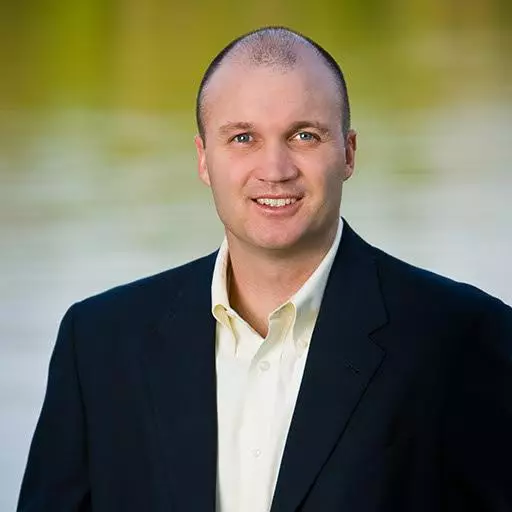
GUEST: FRANK TUREK, mentor to Charlie Kirk and author of The War on Reality—Recovering Truth in a World that Celebrates Lies
It was almost one year ago—Wednesday, September 10, 2025—that Christian and conservative leader Charlie Kirk, just 31-years-old, walked into an outdoor amphitheater at Utah Valley University to hold a question-and-answer event with thousands of college students.
The crowd was buzzing with anticipation. Charlie would be taking any and all questions, typically inviting those who disagreed to come to the front of the line as he advocated for the biblical worldview and conservative values. Countless videos show him doing this all over the country—conversing and debating the prominent issues of our day: abortion, gender, marriage, sexuality, economics, and politics. Charlie was one of the most well-known and influential conservative in the world.
Just minutes into the event, a shot rang out from a rooftop sniper position, fatally striking Charlie in the neck. Mayhem ensued as he was pulled into a nearby vehicle and rushed to the hospital. Despite the doctors’ best efforts, Charlie Kirk died—assassinated by Tyler Robinson, a leftist who hated Charlie’s worldview.
Standing within 25 feet of Charlie when he was shot was well-known Christian apologist Frank Turek. Frank was one of Charlie’s mentors and had helped him learn how to give reasonable, biblical answers to the questions he fielded.
Frank Turek joins us this weekend on The Christian Worldview to share about that tragic day, why Charlie’s murder is a prime example of the “war on reality” gripping our country, and how Christians must “sanctify Christ as Lord in your hearts, always being ready to make a defense to everyone who asks you to give an account for the hope that is in you, yet with gentleness and reverence” (1 Peter 3:15-16).
--------------------------------------------
- The War on Reality by Frank Turek and Phoenix Hayes
- Sep 12 - Speaker Series with Pastor Travis Allen
- Sep 14 - Overcomer Foundation Cup
David Wheaton: Charlie Kirk's assassination and the war on reality. Frank Turek, mentor to Charlie Kirk and author of "The War on Reality," joins us today here on The Christian Worldview radio program, where the mission is to sharpen the biblical worldview of Christians and to proclaim the good news of Jesus Christ. I'm David Wheaton, the host.
The Christian Worldview is a non-profit, listener-supported radio ministry. Our website is thechristianworldview.org, and the rest of our contact information will be given throughout today's program. As always, thank you for your notes of encouragement, financial support, and lifting us up in prayer.
Well, we hope you are planning to attend one or both of our upcoming events now just three weeks away. First, The Christian Worldview Speaker Series event on Saturday, September 12, from 4:00 to 7:00 p.m. at Stonehouse Farm in Jordan, Minnesota, with featured guest Travis Allen, pastor of Grace Church in Greeley, Colorado.
There's a time for meet and greet and to explore the farm at 4:00 p.m., followed by dinner and dessert at 5:00 p.m., and then a live recording of the radio program with Travis. Then, on Monday, September 14, is the 11th annual Overcomer Foundation Cup golf and dinner event at White Bear Yacht Club in Dellwood, Minnesota, one of the top courses in the state.
Details and registration are available at our website, thechristianworldview.org, or just call Rosie at 1-888-646-2233. And thank you for praying that both events are impactful for all who attend.
It was almost one year ago, Wednesday, September 10, 2025, that Christian and conservative leader Charlie Kirk, just 31 years old, walked into an outdoor amphitheater at Utah Valley University to hold a question and answer event with thousands of college students.
The crowd was buzzing with anticipation. Charlie would be taking any and all questions, typically inviting those who disagreed with him to come to the front of the line as he advocated for the biblical worldview and conservative values.
Countless videos show him doing this all over the country, conversing and debating the prominent issues of our day: abortion, gender, marriage, sexuality, economics, politics, and why Christianity is true. Here's an example of that.
Charlie Kirk: Are you a Christian? I am. Very much so. Like, why is that exactly? Jesus saved my life. I'm a sinner, gave my life to Christ. Most important decision I've ever made. So you believe the Bible is real? Yes, I believe the Bible is true and real. And why is that?
Well, I could give you the technical answer. There's never been an archaeological discovery that has contradicted the truth of the Bible. And then, of course, the wisdom. There is not a truth of the Bible that if you apply to your life, your life does not improve dramatically. And then finally, we have the most accurate and transparent, historically robust account that one can have of the most important figure ever to live in the history of the world, Jesus of Nazareth.
And the resurrection is the pinpoint of my belief that Jesus did rise from the grave so that we may live. If Genesis 1:1 and the resurrection is true, anything in the Bible is possible. You're looking at the greatest miracle. The greatest miracle is creation. And then the fact that Jesus rose from the dead. And say, how do you know that Jesus rose from the dead? Well, show me another historical piece of a story where so many people willingly died a brutal death for a lie.
David Wheaton: Charlie Kirk was arguably the most well-known and influential conservative in the world. Just minutes into this event at Utah Valley University, a shot rang out from a rooftop sniper position, fatally striking Charlie in the neck.
Mayhem ensued as he was pulled into a nearby vehicle and rushed to the hospital. Despite the doctors' best efforts, Charlie Kirk died, assassinated by Tyler Robinson, a leftist who hated Charlie's worldview.
Standing within 25 feet of Charlie when he was shot was well-known Christian apologist Frank Turek. Frank was one of Charlie's mentors and had helped him learn how to give reasonable biblical answers to the questions he fielded.
Frank Turek joins us today on The Christian Worldview to share about that tragic day, why Charlie's murder is a prime example of what he calls the war on reality gripping our country, and how Christians need to obey 1st Peter 3:15 and 16: "Sanctify Christ as Lord in your hearts, always being ready to make a defense to everyone who asks you to give an account for the hope that is in you, yet with gentleness and reverence."
Frank's new book, "The War on Reality: Recovering Truth in a World That Celebrates Lies," is our new featured resource. We'll tell you how you can get a copy today for a donation of any amount to The Christian Worldview. But first, let's get to the interview with Frank Turek.
Frank, it's really good to have you back on The Christian Worldview radio program. It's been a while, though. So for new listeners today, tell us about your background, how God brought you to saving faith in Christ, and what you do with Cross Examined.
Frank Turek: Thanks, David. I was brought up in New Jersey, so I was Catholic because it's the law. All right? You're either Catholic, a skeptic, or Jewish if you're from New Jersey. Went to Catholic high school. I always believed in God because I knew there had to be a first cause, but I didn't really know who Jesus was.
And it wasn't until I got into the Navy, I met the son of a Methodist minister, and I had so many questions for him. He finally said, "Look, you just need to get Josh McDowell's books, 'Evidence That Demands a Verdict' and 'More Than a Carpenter'." These were books written in the '70s. So this is about 1985 when this happened.
So I read those books, became a Christian. And when I got out of the Navy, I happened to meet Norman Geisler, who at the time was sort of the Michael Jordan of apologetics. He was starting a seminary here in Charlotte, North Carolina. So in 1993, before there was an internet and you couldn't take courses online, we moved from the D.C. area down here to Charlotte, North Carolina.
And then later, he and I wrote a couple of books. One is called "Legislating Morality." The other is called "I Don't Have Enough Faith to be an Atheist." And then I later started a ministry called crossexamined.org, where I go to college campuses mostly and present evidence that Christianity is true, predominantly from the book "I Don't Have Enough Faith to be an Atheist." But three of my six books have had more to do with cultural and political issues, like "Legislating Morality" and the brand new book called "The War on Reality." Because there's a war on reality going on right now, and my friend Charlie Kirk was one of the victims of that war on reality.
David Wheaton: I think the title of your book, "I Don't Have Enough Faith to be an Atheist," is one of the best book titles out there. Just love that title because it's true. Everyone is a person of faith; it's just what you are going to put your faith in. And that's why Christianity is true because there's so much evidence. It's the most reasonable by far of any faith.
Frank Turek joins us today. Now, in your new book, "The War on Reality," Erika Kirk, the widow of Charlie Kirk, wrote the foreword and describes how you and Charlie met. And then you write in chapter one that he was 26 years old when you met him. That was back in 2020. And he wrote you an email.
And you say, "A young man who far outpaced his age in intellect, wisdom, and achievement. Yet when I contacted him back, answered his email, he asked me to mentor him in the evidence for Christianity, a topic formally known as Christian apologetics. It's normally difficult to mentor someone smarter than you," you're referring to Charlie Kirk, "but not with Charlie. In fact, his one attribute that surpassed his soaring intellect was his humility. The humble are always teachable," you write. "The wise listen, Charlie once said. The few things I knew that he didn't, he wanted to know so he could reach more people with the truth of Christ." So, Frank, tell us more about what your mentorship of Charlie Kirk looked like.
Frank Turek: I wasn't the only mentor Charlie had. Charlie was smart enough to have people in his life that could help him in many different areas. But I was trying to help him with college campus events, which he did many of these events, as you know, and how to better answer questions that you get related to Christianity and cultural issues related to Christianity.
The last year, 2025, he and I met in Phoenix on four different occasions over the summer just to sharpen one another on the kinds of questions that we get. That's why I was with him in Utah. He had just gotten back from Japan a few days before that. And the month before, he said, "Hey, when I get back from Japan, can you be here? Can we get ready for the tour? Can we spend some more sessions together?" I said, "Yeah, absolutely."
So when he got there, Sunday, I think it was, I had landed on Sunday too. And so Monday, Tuesday, we spent some time together, even going on long walks talking about these things. We would just sit around or walk around and drill one another on, you know, he would say, "Well, what if you get this question? What do you say?" And he would have insights for me too. So we'd go back and forth on that just trying to sharpen one another. Look, he was smarter than me in so many areas, but the few things that I did know that he hadn't learned yet, he wanted to know because he wanted to be a better ambassador for Christ on a college campus.
David Wheaton: Wow. Those are the kind of conversations that you had with Charlie Kirk that I really believe believers should be having with one another. Not just talking about the weather and the ball game and those kind of things. That's how iron sharpens iron. Charlie wasn't an edgy, trendy guy. He wasn't a hipster. And yet, he was incredibly popular with young people. What was it about him that made him unique and so popular with young people?
Frank Turek: I think because he was giving them a track to run on, and he wouldn't shy away from the hard issues. He would open the microphone up even to people who disagreed with him. "If you disagree with me, come to the front of the line. Let's have a conversation." He was a conversationalist, and he knew that we needed to have more conversations.
When the conversations stop, that's when the violence starts. Ironically, the question he was trying to answer when he was shot was the question about trans violence. And then we learn that the alleged killer is involved in a trans relationship. It seems to me that so many people in that condition who have that condition—not all, obviously, but—they know they can't defend their position with reason and evidence. So sometimes they resort to violence.
And while it is a very small minority of people within that trans community that will commit violence, the folks in that community commit more violence than virtually any other community. They get frustrated because they can't deal with logic and reason and evidence, and so they resort to violence. And even the survey data shows that out, David. Recently, a survey came out that said 25% of very liberal people think it's okay to use violence to advance a political viewpoint, whereas only 3% of very conservative people agree with that. So very liberal people are more than eight times as likely to think violence is okay to advance a political viewpoint than, say, conservative people are. And that's what appears to be seen in the events out there, not just the survey data.
David Wheaton: Yeah, there's no question. And the projection on the left is always that the right is the violent side.
Frank Turek: Oh, yeah. Well, that's just projection. And you should know from being up there in Minnesota. In the George Floyd situation, you have people basically torching the city because they felt something went wrong. And instead of having a discussion about it, we're going to burn down our own neighborhoods.
Charlie Kirk gets murdered, and we have a memorial service where more people heard the gospel even from politicians than at any point in history. Millions of people saw that. We didn't riot. We didn't burn things down. We prayed. And Erika Kirk even forgave the killer because Christianity forgives. Doesn't mean there aren't consequences. There are consequences. But Christianity, if you're a Christian, you believe that if Christ has forgiven you, you can forgive others.
David Wheaton: That memorial service was one of the most powerful things I've ever seen in my life. To see Erika get up there just days after her husband being murdered and what she said about forgiveness, and what you said, by the way, about the gospel, and some others as well, was just—it was an amazing moment. And it was a—
Frank Turek: Who knew Rubio knew the gospel so well, huh? Right, exactly. Marco Rubio's like, he's the utility guy for everything now. He gave a great gospel message. He did. He did. So we had several people give gospel messages, and I know Charlie would have been pleased with that and is pleased from that looking down going, "Okay, a lot of people came to faith because of this tragedy." That's a positive from it.
David Wheaton: Certainly is. Frank Turek with us today here on The Christian Worldview. Just a couple more questions just as we look back, coming up on the one-year anniversary of Charlie's murder back on September 10, 2025. It seems in recent years at these college events that Charlie had been more intent on contending or persuading for a biblical worldview than even politics. I think at one time, he was known much more for his political engagement. And he still was, of course. But is that true, do you think, Frank, that he had become much more biblically and spiritually focused? And if so, what changed inside of him to go that direction?
Frank Turek: Well, he became a Christian when he was in fifth grade. But early on, when he started TPUSA, he didn't realize that Christians should be involved in politics. He was always told, "Oh, stay out of that." And so he didn't think he could bring his faith into that world, when in reality, the founders of our nation brought their faith into the world.
"We hold these truths to be self-evident, that all men were created equal and endowed by their government?" No, "endowed by their Creator" with certain unalienable rights. Among these are life, liberty, and the pursuit of happiness. And governments are instituted among men to secure these rights. Rights do not come from government. If there is no God, there are no rights. Everything's just a matter of opinion.
And Charlie began to realize this. And he realized that he could go on a college campus and present the evidence for Christianity, as Erika says in the foreword to the book, "The War on Reality," because he knew that there was a foundation to what he was saying. That there is a God, Jesus is God, we're sinners, we need a Savior, and our rights come from that God. If there's no God, everything's just one person's opinion against another, and we know that's not true. We know murder and love are not the same thing. And one is bad and the other's good because there's a standard of good that we're obligated to obey, and that standard is God's nature. So ironically, some of the people out there who are claiming Charlie was this or Charlie was that are atheists, and yet they have no way to justify what they're saying because, again, if there's no God, what they're saying isn't right or wrong morally, because there is no right or wrong morally. Everything's just a matter of opinion.
David Wheaton: Yeah, so well said. Frank Turek with us today. I think Charlie's death was a great loss for Christianity. He was a great advocate for the biblical worldview and the gospel. But it was also, I think, a great loss for the political movement as well, too. I think I look at President Trump's re-election in 2024, and I look to Charlie Kirk as being very, very responsible—his organizing, his work in that campaign.
Frank Turek: Yeah, they did a lot of work in the seven swing states, all of which Trump won.
David Wheaton: Exactly. And just really amazing what he did. So it's a great loss for the conservative movement, not easy to replace someone like that. Did he ever mention that he had ambition to be president someday?
Frank Turek: Yeah, I would kid him all the time about that. "Vance Kirk 2028." He'd just smile, you know. He would officially say, "If my country needs me, I'll do it," but he was going to be president someday. Yeah, he was.
David Wheaton: Yeah, I could certainly see that. Okay, Frank, let's go back to this very—I mean, had to be one of the, if not the hardest moment in your life, September 10, 2025, in Utah. You write about this extensively in your new book, "The War on Reality." Just walk us through briefly the days and hours leading up to that event when you entered the amphitheater, so to speak, at Utah Valley University, where Charlie would be murdered.
Frank Turek of crossexamined.org will answer that question after this two-minute break. Frank's new book, "The War on Reality," releases September 8. In the next segment, we'll tell you how you can order a copy for a donation of any amount to The Christian Worldview. I'm David Wheaton, and you are listening to The Christian Worldview radio program.
David Wheaton: You are invited to two events in September. The first is The Christian Worldview Speaker Series event on Saturday, September 12, at Stonehouse Farm in Jordan, Minnesota, with Pastor Travis Allen of Grace Church in Greeley, Colorado, who is a longtime favorite guest on the program and former managing director of Grace to You and a U.S. Navy SEAL.
We will discuss a wide range of current events and issues of the faith, along with audience questions. Dinner will be served. Two days later, on Monday, September 14, is the annual Overcomer Foundation Cup golf and dinner event at White Bear Yacht Club near St. Paul, Minnesota.
Golfers from near and far experience an enjoyable day of golf, meals, and fellowship, all in support of the Overcomer Foundation, which is the non-profit organization that directs The Christian Worldview. More details and registration for both events is at thechristianworldview.org or call us at 1-888-646-2233.
The July-August issue of The Christian Worldview Journal commemorates 250 years of America. Ed Vitagliano of American Family Association writes how foundations of our past provide a blueprint for future political and cultural renewal. My column is about the consequences of a nation rebelling against God and the blessings for repentance as described in Psalm chapter 2.
There is lots of additional content, including the insert with resources for adults and children. The Christian Worldview Journal is a bimonthly print and digital publication designed to sharpen your biblical worldview on current events and issues of the faith. The Journal is sent to Christian Worldview Partners as a thank you for their support of this radio ministry. To become a Christian Worldview Partner or to order an individual issue of the Journal, go to thechristianworldview.org or call 1-888-646-2233 or write to Box 401, Excelsior, Minnesota 55331.
Thanks for joining us on The Christian Worldview. I'm David Wheaton. Today's program and past programs, along with transcripts and short-takes, are available at thechristianworldview.org. While there, you can also sign up for our weekly email and The Christian Worldview Journal print publication, order resources, and support the ministry.
Our topic today is Charlie Kirk’s assassination and the war on reality, and our guest is Frank Turek, mentor to Charlie and author of "The War on Reality: Recovering Truth in a World That Celebrates Lies." Just walk us through briefly the days and hours leading up to that event when you entered the arena, the amphitheater, so to speak, at Utah Valley University, where Charlie would be murdered.
Frank Turek: We had actually stopped at another venue prior to that after coming from the airport because Charlie was speaking to a group of entrepreneurs, restaurateurs, actually. His cousin was a restaurateur, and he's the one that invited him. So we went to that, and he spoke there extemporaneously.
And then we got in the car, and we drove over to Utah Valley University. And on the way in, we got some footage on his phone of the crowd. It was from above. I originally thought it was a drone. It may not have been a drone; it may have been somebody standing up on the walkway above us. But in any event, it was an overhead shot.
And I said, "Charlie, I don't like this place. There's too many buildings." And he just kind of shrugged it off because he was brave. And he, you know, he had a security team, and he also knew that in order to love people, you have to expose yourself to a certain extent. You can't wall yourself off completely.
And so when we got there, the crowd was just going crazy. And they weren't there for a lecture; they were there for a guy to answer questions about Christianity and politics. I go do events, I get a few hundred people. Charlie, there had to be 3,000 to 5,000 people there. And I mean, he was a phenom. And rightfully so. He had great answers, and he was engaging.
And I'm standing about 25 feet from him when the shot rang out. And I say all this on a podcast I did about five days after it happened. So if people want the details, they can get it. But I wound up getting in the car trying to do whatever I could, because I was always worried somebody was going to take a shot at Charlie. And I always told myself, "Look, if you're there and something happens, just do whatever you can." So I got in the car. I was the only non-security guy in the car. And when we got in there, you know, blood everywhere, and we tried to stop the bleeding. And he wasn't looking at me. He was looking past me right into eternity. I mean, his eyes were fixed. Bryan Harpool, who was in the car as well, the head security guy, said he had doll eyes. Yeah, that's the good definition. You know, doll eyes, they don't move. They're just staring. And so the only good news we got was that he died instantly. The surgeon later told us if he had been shot in the operating room, we couldn't have saved him. It is true we got a heartbeat when we got to the hospital, but the surgeon also said, "You can do that on a healthy body, even though the person's dead. You can restart the heart." So—
David Wheaton: Frank, when you write in the book, just after you got to the hospital, that the surgeon came out of the OR, the operating room, into the hallway, we're quoting here, "where we're standing, his expression was like stone. He sternly announces, 'He's dead.' That's all he said. He's dead. Not, 'I'm sorry.' Not, 'We tried everything.' Just the verdict," he said, "delivered with all the tenderness of a brick." And you said, "I can never unhear the words, 'He's dead.'" You were standing, as you mentioned, within 25 feet of Charlie when this happened in this arena at what was going to be just this amazing moment, debating about the Christian faith and other issues. And all of a sudden this happens. That is real trauma to happen, something like that, to a very close friend of yours. Of course, you know Erika very well and just know the repercussions of something like this happening. How has this affected you, your life, maybe your spiritual life, through experiencing something so horrific?
Frank Turek: Well, I think two things have become very prominent since then. One is the real existence of evil. When you see it close up like that to somebody you love, you know it's not theoretical. You know, in America, we're often shielded from this kind of thing. In Nigeria, there's 50 Charlie Kirks killed every day. People are martyred.
The second aspect of this that now has become front and center in my mind, even though it was before, even more so now, is the importance of eternity and the gospel. Because look, if there is no God and there is no resurrection, it really doesn't ultimately matter whether if you live like Tyler Robinson or Charlie Kirk. Whether you live as a murderer or a missionary, it doesn't ultimately matter if there's no God or afterlife because we all just go to the same place: nowhere. We just go out of existence. So what does it ultimately matter if you love people or murder them? It doesn't. There is no meaning unless God exists, unless there's an afterlife. And so those two things, evil and eternity, have become more real, and the urgency of eternity is more real now. And yeah, still to this day, almost a year later, the first person I think of when I wake up is Charlie. The last person I think of when I go to bed is Charlie. But I'm more worried about Erika. People need to be praying for Erika. You know, she's strong, but can you imagine? No. No, can't. And then you have all these foolish, slanderous conspiracy theories put out, slandering a widow, slandering her husband's organization.
It's demonic. Jesus and the apostles said Satan is a murderer, a liar, accuser, and slanderer who seeks to steal, kill, and destroy. We had a murder. And shortly after the memorial service, what did we have? Lies, accusations, and slanders seeking to steal, kill, and destroy. And people don't believe in the demonic. I say, "How could it be more obvious?" There it is. It's happening every day.
David Wheaton: Celebrating his death, I think that was truly one of the most shocking things that really, really shook me, to see that people were so open and willing to mock and go around with shirts on with the white shirt that he was wearing when he was shot and a hole in the neck. I mean, it was just—as you said about the reality of evil and stuff, it just came out afterwards and it's still there today.
How do you even explain, not only that side, these people hate God, they hate what Charlie Kirk stood for, but then, as you mentioned, people like Candace Owens, who at one point was, I think, a friend of Charlie Kirk, and many others, have whipped up into this conspiracy theory and tried to blame everyone else but the guy who pulled the trigger? I'm still trying to figure out, is it purely a financial motive, that this gets more clicks and views, or is it a complete spiritual deception? What is it, Frank?
Frank Turek: I'm not going to judge anyone's motives on this. All I will say is the Bible and common sense has strict prohibitions against slandering widows and the orphans. And this is why the Bible talks about you should always have two witnesses. Obviously, this is pre-DNA and circumstantial evidence. But the Bible has a very high standard for convicting someone.
God thought it was so important to defend widows that in Exodus 22:22, He says He'll hunt down people with the sword who go after widows and orphans. And in Deuteronomy 19, it says that in the Old Testament economy, if you falsely accuse someone of a crime, you get the penalty of that crime. So if you falsely accuse someone of murder, you're the one executed.
And I've said this on previous podcasts, and Candace Owens said, "Frank's calling for me to be killed!" No, that wasn't what I was calling for. I'm just pointing out what God thinks about slandering people and trying to convict people in the court of public opinion without evidence. I'm not saying she should be killed; quite obviously not. I pray for Candace Owens. I actually think she's a great talent if she would just direct her talents in the right direction.
And I've had people write me and say, "You know, my marriage is falling apart over this. My wife's following all this conspiracy nonsense. What do I ask?" I say, "Here's one question you can ask. 'Honey, God forbid somebody were to murder me. Would you want Candace Owens to treat you like she's treating Erika?' 'No.' 'Well, then why are you applauding this kind of behavior?'"
If you were in Erika's position, you wouldn't want this kind of treatment. Quite obviously nonsense. There is no evidence for any of this. Anything's possible, but not everything is reasonable. You know, it's possible aliens killed Charlie, but is it reasonable? Do we have evidence for that? Is it possible Israel did it? Yeah, it's possible. Do you have any evidence for it? No! And you don't implicate people.
I haven't even said this to anyone yet, but my grandkids have gotten death threats over this. Grandkids, David! They think I had something to do with it, and my grandkids now are getting—I mean, this is exactly one of the reasons you don't slander people because then innocent people get hurt.
David Wheaton: Absolutely. And I remember you were being implicated early on for holding a cell phone up and taking pictures of the crowd when it occurred. It was just unbelievable.
Frank Turek: Yeah, and who knew? Who knew people do that? Gee. Right, exactly. Right.
David Wheaton: Let's transition from that life-changing, altering event to your book. And you merge these issues well in the book. The book is "The War on Reality," and the subtitle is "Recovering Truth in a World That Celebrates Lies." We have the book available for a donation of any amount to The Christian Worldview. We'll tell you how you can order coming up.
And as I mentioned, Erika Kirk wrote the foreword. She said, "We live in a moment when much of our culture seems convinced that reality is negotiable. We are told that truth—and we can use the terms 'reality' and 'truth' interchangeably—that's what reality is, truth according to the way God sees it, the only truth that matters, in some instances personalized and self-created. This also has produced within our culture a distorted understanding that feelings can determine what is real and what is not. I feel this way, therefore it's true. A society can survive disagreement. We've been disagreeing with each other since the beginning of time. What it cannot survive is the abandonment of reality itself."
And that's why I think this book is important. And then in the book, you write, "In recent years, countless people seem to have lost touch with reality. Beliefs held for thousands of years across nearly all cultures are being supplanted by radical ones. Now we are being told quite forcibly that," and there's a number of bullet points you give, and I'm just going to read them because they really make the point about the crazy non-reality people believe today.
One, there are an infinite number of genders, not just male and female. People are whatever they feel. Men can have babies. Who knew? Math is racist. Reason and logic are white tools of oppression. There is no objective truth, only your truth and my truth. Marriage doesn't require a man and a woman; it's whatever you want it to be. Medically transitioning children is compassionate; it's healthcare; it's gender-affirming care. Abortion is healthcare. Disagreement that Charlie encountered on campus, he was considered a hater and a bigot. And of course, the only cure for racism is a little more racism. And you close that section saying, "Who has gone crazy? You," and you're referring to a Christian there, "or the world?"
And this really is Romans 1: the suppression of truth, the affirmation of sin, Frank. And so how do you think our society has got to the point of not just believing a lie—those lies that I mentioned right there that you wrote in your book—but actually celebrating these lies?
Frank Turek: I think so much of that, David, is through deception because there's something we talk about in the book, "The War on Reality," called linguistic theft. And what is linguistic theft? It's when you take a word that sounds good to try and advance evil. Like, for example, on abortion. They don't call it murder, they don't call it killing a human being; they call it "reproductive healthcare" or "reproductive justice." They don't call a baby what it is, a baby; they call it "the product of conception."
Because they can't bear to tell you the truth about what it is because if you knew what it really was, you would be against it. Or they'll talk about the fact that we have to have "equity." And equity sounds like such a good thing. But what it really means is that regardless of your effort, everybody ought to have the same at the end of the day. Regardless of whether or not you worked hard, you get the same as everybody else, which is essentially Marxism. It's essentially that we're going to take from the haves and give to the have-nots.
And because anything other than that is unjust. Never mind that the people who may have more money worked much harder and took more risk and the people that don't may have not worked at all. We're going to say it's just to take from the haves and give to the have-nots. And we're going to also say that we're not going to judge people based on the content of their character, as Martin Luther King said; we're going to judge people based on the color of their skin or what identity group they're in.
This is what is known as cultural Marxism. There are oppressors out there and there are the oppressed. And if you're an oppressor, it doesn't matter if you're as clean as the wind-driven snow; you could be the second coming of Jesus, but if you're a white Christian, heterosexual citizen of America, you are automatically considered an oppressor.
On the other hand, if you are a minority, and if you are, say, homosexual, if you are from out of the country, and you are a non-Christian, you're automatically considered oppressed. You could be committing genocide against the Jews; you're automatically considered an oppressor—not based on your behavior, but based on the fact that we have this cultural Marxist view where we're going to judge people not on their character, not on what they do, but on what particular identity group we put them in.
And so we have an entire chapter in "The War on Reality" on cultural Marxism. Once you understand this dichotomy between oppressed and oppressors, then you can start to see why there's DEI, which stands for "didn't earn it," why there's "Gays for Gaza." Gays for Gaza! Are you kidding me? If gays go to Gaza, they get murdered. But why are gays over here siding with Hamas? Because the enemy of my enemy is my friend. If you're considered oppressed, I'm going to be on your side even though at some point you may kill me. And this is essentially what's going on in our country now. We have a battle, a war on reality, by the people who say there's oppressed and oppressors out there and the people who say, "No, we should judge people based on how they behave, not what identity group they're in."
David Wheaton: This is all in chapter 10 of your book, "The War on Reality," on Marxism and cultural Marxism. That is a very good chapter, and we're seeing it being manifested as people are believing the lie about capitalism, that capitalism is inherently bad. And the Democrat socialists, so-called Democrat socialists, whatever that means, but they're socialists, Marxists, are winning elections now: Mayor of New York and possible Senator from Michigan, being an Islamo-Marxist actually. Where do you see this going? What have they been able to convince people about capitalism that they're misrepresenting it to be able to convince people that socialism is the better way? And that's never been the American way.
Frank Turek: It's never been the human way because it's against human nature. It's a misunderstanding of human nature to say that we don't need to incentivize people to work. If we don't incentivize people to work, many of them won't. And so that's why Marxism doesn't work.
And I just ask this question, David: How many people do you know who are boarding rickety boats in Florida to escape to Cuba? You don't know anybody, right? How many caravans are going from the United States to Venezuela? None. They've all been coming the other way. Why? Because we have a system that recognizes human nature.
And Adam Smith knew this back in 1776 when he wrote "The Wealth of Nations." He says, "It's not by the benevolence of the butcher, the baker, or the brewer that we get our dinner; it's by their own self-interest." If they want to have a dinner for themselves, they're going to have to please customers, which means they're going to have to work hard. And if everybody works hard, then everybody prospers.
But if you're going to say that, no, we're not going to do that and you can't keep the fruits of your own labor, what you're going to have is some elites doing okay, but the rest of the world in poverty, and many of them are going to be murdered. We've seen what socialism and Marxism and communism has done in the 20th century. Over a hundred million people have been murdered by those regimes, and yet somehow, we have people today, because they haven't been properly educated—we have a very bad education system now which does not teach people history or economics—somehow the people today think, "Oh, yeah, we can try socialism here and it's going to work." No, it's not going to work. It never could work because it's a misunderstanding of human nature. It's like trying to get water to run uphill. It doesn't happen.
David Wheaton: Frank Turek is our guest. His new book, "The War on Reality," releases September 8. It's softcover, 400 pages, and retails for $22. For a limited time, you can order a copy for a donation of any amount to The Christian Worldview. Our contact information will be given during this break. Much more coming up in the final segment. I'm David Wheaton, and you are listening to The Christian Worldview radio program.
The July-August issue of The Christian Worldview Journal commemorates 250 years of America. Ed Vitagliano of American Family Association writes how foundations of our past provide a blueprint for future political and cultural renewal. My column is about the consequences of a nation rebelling against God and the blessings for repentance as described in Psalm chapter 2.
There is lots of additional content, including the insert with resources for adults and children. The Christian Worldview Journal is a bimonthly print and digital publication designed to sharpen your biblical worldview on current events and issues of the faith. The Journal is sent to Christian Worldview Partners as a thank you for their support of this radio ministry. To become a Christian Worldview Partner or to order an individual issue of the Journal, go to thechristianworldview.org or call 1-888-646-2233 or write to Box 401, Excelsior, Minnesota 55331.
You are invited to two events in September. The first is The Christian Worldview Speaker Series event on Saturday, September 12, at Stonehouse Farm in Jordan, Minnesota, with Pastor Travis Allen of Grace Church in Greeley, Colorado, who is a longtime favorite guest on the program and former managing director of Grace to You and a U.S. Navy SEAL.
We will discuss a wide range of current events and issues of the faith, along with audience questions. Dinner will be served. Two days later, on Monday, September 14, is the annual Overcomer Foundation Cup golf and dinner event at White Bear Yacht Club near St. Paul, Minnesota. Golfers from near and far experience an enjoyable day of golf, meals, and fellowship, all in support of the Overcomer Foundation, which is the non-profit organization that directs The Christian Worldview. More details and registration for both events is at thechristianworldview.org or call us at 1-888-646-2233.
David Wheaton: Welcome back to The Christian Worldview. I'm David Wheaton. Be sure to visit thechristianworldview.org, where you can sign up for our weekly email and The Christian Worldview Journal print publication, order resources for adults and children, and support the ministry.
Our topic today is Charlie Kirk’s assassination and the war on reality, and our guest is Frank Turek, mentor to Charlie and author of "The War on Reality: Recovering Truth in a World That Celebrates Lies." Frank, there is a twin ideology that's a little different but the same sort of destructive ideology that we're seeing rising in America as well. You write about it in your new book, "The War on Reality," and I'm just going to read the quote.
You say, "First, the things that you were leading into this paragraph by talking about what you and Charlie were discussing when you went down to Arizona with him," you said there were three topics, and I think it was Islam, I can't remember the other two off the top of my head, but—
Frank Turek: Islam, Israel and the government, the resurrection, the evidence for Jesus, and the family. We need more people getting married and having kids.
David Wheaton: That's right. And it turns out that, David, we didn't plan this, Charlie didn't plan it. Those were the three topics we talked about two nights before he was murdered when we went on a long walk in Phoenix after dark with a 300-pound bodyguard behind us. And it turns out that those three institutions that God created are the family, the government, and the church.
And those were the three things Charlie was concerned about that night. The family, the government, and the church. How can we show people that Christianity is true? That's the church. How can we better govern people? And both of us have had very deep concerns about Islam because Islam is a political movement that wants to take away the rights that we enjoy in the West. And then how can we get more young people to get married and have kids? And so Charlie was talking about those three things. We were trying to find solutions to those three questions that night.
David Wheaton: What did you come up with when you discussed with him to the solution of the really alarming rise of Islam in this country? You say that he knew that fundamentalist Islam or Islamism is incompatible with the God-given rights recognized in the U.S. Constitution: freedom of speech, freedom of religion. How about women showing your ankles without state interference? I mean, it is so incompatible, Sharia law and U.S. constitutional law.
Yet Frank, we see mosques going up all over the place. Obviously, here in Minnesota, it's been very, very prominent with all the Somali Muslim immigrants being allowed into the country. There doesn't seem to be political or legal will, or enough of it, to deport those who will not live under our Constitution and want their own separate law here, Sharia law. I've been asking guests on the program this for a number of weeks here. What can be done about the rise of Islam so we don't end up being another United Kingdom here in America?
Frank Turek: Well, what we have to show them what Sharia law is. We have to show them what the future looks like. We have to talk about the 1,400 years of history that show inevitably when Islam takes over a nation, freedoms go away. I mean, there's 54 plus Muslim countries in the world. Very few of them have freedom. And yet there's one tiny Jewish country that somehow has to give land to these Muslim countries.
This is ridiculous, and yet people are arguing for this. We need to show people what life really is under Sharia law and get people to wake up. Yes, the First Amendment enshrines a right to freedom of religion, but the founders knew that that right was not a self-contradictory or self-defeating right. No one group has the freedom of religion to obliterate the freedoms of religion of all other people.
And that's what Islam does; it takes away freedom of religion. So Sharia law is just incompatible with the United States Constitution. And we're going to have to start showing people that's the case and putting that into law. But if we continue to elect people who think that allowing anybody into the country who won't assimilate is a good thing, eventually this country's going to be overtaken and our freedoms are going to be taken from us.
And by the way, that has implications on the gospel. And we have a whole chapter on this, chapter 15 in "The War on Reality." I always hear pastors saying, "I don't get involved in politics; I just preach the gospel." And when they say that, I say, "I guess you don't think the gospel's very important then." And they say, "What do you mean?" Because politics affects your ability to preach and live the gospel.
If you don't think so, go to some of the countries I've been to. I've been to Iran. There's no First Baptist Church of Tehran. I've been to Saudi Arabia. There's no Calvary Chapel of Mecca. I just got back from Egypt. You want to start a church in Egypt? You're going to have trouble. Why? Because politically, they've ruled it out. They will give you trouble. One of the reasons we have to be involved politically is to protect our ability to preach and live the gospel.
And Charlie Kirk always used to say this: "Politics is not our most important responsibility, but it helps us achieve our most important responsibility." You know, there's no Christian Worldview podcast in Saudi Arabia. Why? Because politically they don't allow it. And this is why it just frosts me to no end that these people don't seem to understand this, or they don't want to understand it, because they've been lulled into this false sense of security here in America that, you know, we don't have to engage in any of this because we have freedom of religion. Well, the only reason you do is because Christians got involved politically to start this country, and Christians stayed involved politically to keep our freedoms. And if we do not stay engaged, as Ben Franklin famously said when he was asked, "What kind of country have you given us?" and he said, "A republic, if you can keep it." You know, Reagan said freedom is just one generation away from going away. If we don't fight for it, we'll lose it. And so we have to be engaged in this. Charlie was engaged in this. Rightfully so. And so we need a million more Charlie Kirks out there who will evangelize and protect our ability to evangelize.
David Wheaton: He really was clear about the gospel, and he was clear about political engagement for Christians. And if more Christians were animated that way and saw the world that way and not cocooning themselves, it might be very different the way our country would be today.
Last question for you, Frank. And I want to ask a question from chapter 14 of your book, "The War on Reality." The title of that chapter is "The War on the Mind." You say, "The war on reality—again, that's the war against the truth of the word of God—is at its core a spiritual war between the father of lies, Satan, and the spirit of truth, the Holy Spirit. And though we see the war's effects in the world, the attacks start in the minds of humanity. In this war, the enemy doesn't wait for the body to fail; he moves into the gaps where sin, pain, confusion, and weakness have already set up camp: the mind. Satan's primary weapon is his native tongue called deception, which he uses to manipulate both truth and people to reshape how we see God, ourselves, and others."
And you go over in this chapter just about how when people start believing lies and they make up their own reality which is not truthful, the deception, the depression, the mental illness that takes place. So as we close today, how would you like to exhort listeners to not be deceived by this non-reality soup that we are swimming in today in our culture, in our society, and instead be able to clearly see and live by and according to God's truth, which is the only reality that's actually true?
Frank Turek: I was just over in the UK last week and I had the opportunity to interview my friend John Lennox, who's a brilliant older gentleman now, but a brilliant Christian who taught at Oxford for many years. And at the end of our interview—and we're going to air this interview on the "I Don't Have Enough Faith to be an Atheist" podcast next week—I asked him, "John, you've got 83 years of experience. What one piece of advice would you give our viewers and listeners out there?"
And he said, "Get into the word and stay into the word. Because you need to know the word in order to know what direction to go in and in order to expose lies." Paul even says this in 2nd Corinthians 10:5: "We demolish arguments and take every thought captive to Christ." Satan is a murderer, liar, accuser, slanderer who seeks to steal, kill, and destroy. And he's going to try and deceive. He comes as an angel of light.
One of the problems with deception is you don't know you're being deceived, right? I mean, if you knew you were being deceived, you wouldn't be deceived. And so one way you can not be deceived is to know the truth. In fact, years ago my aunt used to work for the Federal Reserve and she was an expert in spotting counterfeit $100 bills. You know how she got to be an expert? By studying the original. She knew the original so well she could just look at any bill and go, "Counterfeit."
That's what you need to do as a Christian. You need to know the original. You need to know the truth so when you hear a lie you can go, "That's a little bit off. There's a deception there." Most lies are just a little bit off. In fact, who was it? Was it Chesterton who said, "True discernment is not being able to tell true from false. True discernment is being able to tell true from almost true."
And so there are subtle lies that are being told. They come across your iPhone every day. You hear them in media, you see them on social media. They're whispered to you at your public school. You need to know the truth. And so you need to study the word. You need to study logic, by the way. In fact, my mentor Dr. Norman Geisler used to tell, "Before your kids study the Bible, have them study logic. Then move on to the Bible because you need logic to know what the Bible says just like anything else." And so many people are being pulled away by just fallacious thinking. We even have a course called "Train Your Brain." It's for kids. We tell parents to take it because it's written for kids; maybe you'll learn something, right? Study the word, study logic, and get involved with people who can hold you accountable.
David Wheaton: Well, Frank, we appreciate your coming on The Christian Worldview radio program today, writing this book, which of course must have been a very kind of soul-searching exercise to think back to what happened last year when Charlie was murdered and then to consider all you face when you're going on college campuses and the questions you're taking and seeing how people are going away from reality. But we appreciate you being just a black and white objective thinker, and that's what we need. And we need to have our objective worldview based on what you just said: the word of God. That's our truth, that's our foundation. So thank you for pointing us back to that and for coming on the program today, and we just wish all of God's best and grace to you.
Frank Turek: Thank you, David. God bless.
David Wheaton: Again, our guest today has been Frank Turek, Christian apologist at crossexamined.org and the author of the new book, "The War on Reality." It's softcover, 400 pages, retails for $22, and releases September 8. You can order a copy today for a donation of any amount to The Christian Worldview, and we will send it to you shortly after we receive copies in September. You can order at our website, by phone, or by mail, and all our contact information will be given immediately following the program.
Reality is the way things really are. God is the determiner of reality, what is actually true. Reality about God, morality, how to be reconciled to God, heaven and hell, and more is all found in God's word. If you read it, believe it, and ask God to help you obey it, you will be blessed because your thoughts and actions will align with reality, God's truth. Thank you for joining us today on The Christian Worldview and for your support of this non-profit radio ministry. Until next time, think biblically, live accordingly, and stand firm.
David Wheaton: The mission of The Christian Worldview is to sharpen the biblical worldview of Christians and to proclaim the good news of Jesus Christ. We hope today's broadcast encouraged you toward that end. To hear a replay of today's program, order a transcript, or find out "What must I do to be saved?" go to thechristianworldview.org or call toll-free 1-888-646-2233.
The Christian Worldview is a listener-supported non-profit radio ministry furnished by the Overcomer Foundation. To make a donation, order resources, become a Christian Worldview Partner, sign up for our weekly email or The Christian Worldview Journal print publication, or to contact us, go to thechristianworldview.org, call 1-888-646-2233, or write to Box 401, Excelsior, Minnesota 55331. Thanks for listening to The Christian Worldview.
Featured Offer

With gentle pastoral wisdom, deep insight into church history, and an impressive command of philosophical genealogies, The Desecration of Man speaks to those troubled by the spiritual sickness of our time and points toward consecration to a God who is alive and loving as a solution.
The Early Church triumphed over Rome because it offered life in place of death. It is time for modern Christians to offer the same kind of vision.
256 pgs, hardcover [retail $29]
Past Episodes
This ministry does not have any series.
Featured Offer
With gentle pastoral wisdom, deep insight into church history, and an impressive command of philosophical genealogies, The Desecration of Man speaks to those troubled by the spiritual sickness of our time and points toward consecration to a God who is alive and loving as a solution.
The Early Church triumphed over Rome because it offered life in place of death. It is time for modern Christians to offer the same kind of vision.
256 pgs, hardcover [retail $29]
About The Christian Worldview
On air since 2004, The Christian Worldview with host David Wheaton is a weekly radio program that airs on 250 stations across America. A new program releases every Saturday. The program focuses on current events, cultural issues, and matters of faith from a biblical perspective and often features interviews with compelling guests. The mission is "to sharpen the biblical worldview of Christians and to proclaim the good news of Jesus Christ.”
You can find out more, sign up for the free weekly e-newsletter, order resources, and make a tax-deductible donation to support the ministry at TheChristianWorldview.org.
About David Wheaton
David Wheaton is the host of The Christian Worldview, a radio program that airs on 250 stations across America. He is also the author of two books, University of Destruction: Your Game Plan for Spiritual Victory on Campus and My Boy, Ben: A Story of Love, Loss and Grace.
Formerly, David was one of the top professional tennis players in the world. He is married to his lifelong best friend, Brodie, and they are the parents of a son…and two Labrador retrievers. David is thankful for his faith in Christ, his family, and living near where he grew up in Minnesota.
Contact The Christian Worldview with David Wheaton
The Christian Worldview
P.O. Box 401
Excelsior, MN 55331
1-888-646-2233