Obeying Christ
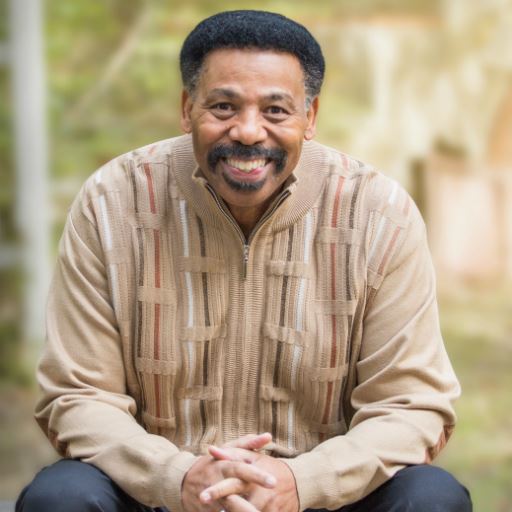
The Bible calls us to be doers of the Word, not just hearers—but that takes a level of discipline many of us struggle with. Dr. Tony Evans explains how to find both the motivation and the strength to live out what God says.
Dr. Tony Evans: The proof of love is not nice feelings in the middle of your belly. The proof of love is in your obedience.
Guest (Male): This is The Alternative broadcast, featuring the timeless biblical teachings from the archives of Dr. Tony Evans. The Bible says we should be doers of the word, not just hearers. But being a doer takes a kind of discipline many of us struggle with. Let's join Dr. Evans as he explains how we can find the motivation and muscle we may be lacking.
Dr. Tony Evans: I want to talk about three things relative to obeying Christ. They overlap, but they all drive home this concept that if we're going to come to know Him as He wishes to be known, desires to be known, then we must follow Him to the point of radical obedience, which can be tough. It's not hard to obey the areas that you are comfortable with, but to follow Him in dogged obedience can be rather difficult.
Matthew chapter 7, where we will look at the first of a number of passages, this one addressing the issue of the foundation of obedience. Jesus tells a little story after proclaiming the Sermon on the Mount, and these are His words. Verse 24: "Therefore everyone who hears these words of mine and acts on them may be compared to a wise man who built his house upon the rock. The rains descended, the floods came, the winds blew and burst against the house, and yet it did not fall, for it had been founded upon the rock. And everyone who hears these words of mine and does not act upon them will be like a foolish man who built his house upon the sand. The rains descended, the floods came, and the winds blew and burst against the house, and it fell, and its fall was great."
Jesus says here that what you hear Me say is like a man building a building. Jesus Christ knew a lot about buildings. He was a carpenter. He grew up with a father who was a carpenter. He knew what it was to frame in and do those building projects, and He uses that as a statement about how one constructs their lives. He takes the concept of building a house to mean how you build your life, because He's talking to people about living.
And He says there are only two ways to build your life: wisely or foolishly. What was the difference between these two buildings, these two homes? It was not externally apparent. The differences were not easily noticeable because the differences had to do with their foundation.
Now, many of us have gone house hunting in the past, or if you've never owned a home, I am sure that you look forward to the day when you will go house hunting to buy your own home. I can pretty much guarantee that when you thumbed through the newspaper, you will not look for homes for sales that are advertising their foundations. When you go house hunting, you probably have never asked, "May I go look and see how your foundation is?" That is a concern, but that's not usually the first thing you look at. You want to know the shape and the size and the square footage and all of the visible details.
External is what we look at first. External is what we get impressed with first. External is what we relate to first. But one man built his house according to divine specifications. Verse 24 says he built his house upon a rock. The Greek word for rock has to do with a large expanse of bedrock. He dug down deep.
The other gentleman, according to verse 26, built his house upon the sand. Now, I'm sure you and I know that there's a big difference between a rock and sand. Sand is unstable. Sand is loose. Sand moves. If you've ever been to a beach and you've ever made a sandcastle, one of the things is for sure: you do not really expect it to last long.
The difference between the man who built his house on a rock and the man who built his house on the sand was the difference of long-term view. One man built his house on the sand, being concerned with the external only and looking short-term. Another man built his house on a rock, being concerned about the long-term view and the stability. One anticipated, the other did not.
What happened to these two men was that there was a torrential rain. In other words, the houses were not tested when the weather was good. When the weather was good, his house was good as his house. His house was pretty as his house. His world was as nice as his world when the weather is pretty.
But the test of your character, the test of what you're really made of shows up when it rains and when there is wind blowing against your life. On the windy days of life, on the days when there are tests that overwhelm you, temptations that seek to oppress you, when there are medical determinations that dread you, when it rains, that is the test of what your house has been mounted on, or to put it another way, what your life has been built on.
What then is the rock? What then is this thing that holds you steady when the winds blow and the rains come? Jesus says, in contrast, in verse 24 and 26, everyone who hears these words of mine and acts on them has built his life on a rock. Everyone who hears these words of mine and does not act on them has built his life, his house, his building on sand.
Please notice in both cases, both men heard the same word. It wasn't that one heard and another didn't hear. That was not where the dichotomy was. It was that both heard, but only one did. The power to live a productive life is not in the sermons you amen with your lips. The power to live a productive life is in the sermons you amen with your feet.
It is in the radical obedience to Christ as the architect of your life. You have to assume something here. You have to assume, like when you get an architect who puts his stamp on a set of blueprints, that he knows more about the codes of building than you do. And if you're going to build a life that will stand the test of testing, the windy days that will blow—and anybody who tells you if you accept Christ, it no longer rains, has lied to you. Jesus says that the man who heard His word and acted on His word still got rained on.
The Christian life is not a life of all sunny days. But what marked this man was that his house stood. His life stood the test, even though it did rain, because of its foundation. The foolish man, however, had spent all of his time, all of his energy, all of his money building a house that won't last. And the end statement was, and great was its fall. There was a major collapse, so it must have been a monster of a house.
If you want a skyscraper kind of life, don't lay it on the foundation of a chicken coop. If you and I want a life that's going to go way up there, then that means you have to have a foundation that goes way down there. If you have a weak foundation, it may get compliments along the way until it rains. And when it rains, it will be clear that there was not much underneath.
Let me tell you another thing that you need to know about the foundation of obedience. It's hard to lay foundation when it's raining. When it's raining and they're out here to pour concrete, they have to stop. The foundation has to be poured on sunny days. It has to be poured when the temperature is at a certain level. It can't dip too cold, and it can't be too wet. If today is a sunny day, it's a good day for pouring foundation. Because once it starts to rain in your life, once the winds begin to blow and you don't know how long the storm is going to last in your life, the foundation must already be in place, because when it's raining, you can't pour foundation.
So Jesus says, don't be foolish. Don't be foolish. If you have built your life to this point building the external framing—windows, doors, roof, and the external things—but there is nothing going down deep in your soul because you're acting on it. You don't have to like it, you don't have to want it, but you do have to do it before it will stick. Even though it doesn't make sense, act on what He says.
Guest (Male): Many of the things you do as a Christian can either waste your time or change your life. Dr. Evans will tell us what makes the difference when he returns in just a moment. First, though, I want to tell you about a unique book he's put together. It's called Experiencing Israel. Through stunning photos and insightful commentary, you'll get to relive a recent tour of the Holy Land. You'll walk in Jesus' footsteps, seeing what He saw, going where He went.
Tony will teach you about the history, the geography, the customs, the people—everything you need to know to bring a whole new dimension to your Bible study time. This hardcover, coffee table-style book will be a keepsake you'll want to display as well as a resource you'll want to consult over and over again. It also makes a terrific gift. We want you to have a copy of Experiencing Israel as our gift.
All we ask is that you make a donation to help us keep Tony's teaching on this station. Your contributions are the only way we can continue our outreach on radio and TV, our work with pastors, their families, and with local congregations. Contact us today. Let us know you can help, and we'll send you the book along with all eight lessons in Tony's current series, Pursuing Christ. Visit us today at TonyEvans.org for the details or call our resource center at 1-800-800-3222. That's 1-800-800-3222. Right now, Dr. Evans is back with more of today's lesson. Let's join him.
Dr. Tony Evans: Secondly, let me say a word about the fellowship of obedience. John chapter 14, verse 15: "If you love me, you will keep my commandments." Obedience is related to a love relationship. Jesus is saying it is incongruent to say you love Me and then not obey Me. The proof of love is not nice gitchy-gitchy-goo feelings in the middle of your belly. He says the proof of love is in your obedience.
Verse 21: "He who has my commandments and keeps them, he it is who loves me; and he who loves me shall be loved by my Father, and I will love him and will disclose myself to him." Please notice verse 15, "If you love me, you keep my commandments." Verse 21, He says and because you keep My commandments, therefore revealing you love Me, you will be loved by My Father.
Now, why does He say that? Because if you do not love Me, My Father cannot respond to you because My Father responds to Me. If you really want to see God do some stuff, you're going to have to take the risk of obedience. And I am not suggesting that we don't have times where we don't follow God as we should, and I'll show you the provision for that. But it means that that is the direction you're going in, that you are moving in the direction of radical obedience.
God says if you will obey, I will provide you a helper. Verse 16: "I will ask the Father, and he will give you another helper, that he may be with you forever." Please notice that verse 16 comes after verse 15. Verse 15 says obey. Verse 16 says you have a helper. Many of us get it backwards. We say, "Lord, help me to obey." No, it is "Lord, I am obeying, now help me."
Most of us say, "Lord, help me, verse 16, to obey, verse 15." God is saying no, 15 comes before 16. "Lord, I am obeying, help me." The Holy Spirit enables us as we obey. Look at one other passage in this regard: 1 John chapter 2, verses 3 to 6. You say, "I want to know that I know God." Okay. He says you know Me. By know, he doesn't mean you're saved. This word "know" in the book of John means fellowship, that you're close to Him. Know has to do with not so much relationship, but fellowship, because he already says these believers are saved because he writes to them as believers.
If you want to know whether you know Him, then you are keeping His commandments. Now, watch this. The one who says, "I have come to know him," and does not keep his commandments, is a liar and the truth is not in him. Are there any liars in the house? This is the person who says, "I am close to God. I love the Lord with all my heart, mind, might, and soul, and he and I are on good speaking terms," but obedience is not the passion of your life. He says you're lying. You're lying because, remember, Jesus says you love Me if you keep My commandments.
Now, follow this. Verse 5: "But whoever keeps his word, in him the love of God has truly been perfected. By this we know that we are in him." Now, I want to draw your attention to two different phrases. In verse 3, he says that we have come to know Him if we keep His commandments. But he says in verse 5, our love is perfected for Him when we keep His word.
When you accept Jesus Christ as Savior, you come into relationship with Him. When you make a decision of your will that Lord, whether I like it or not, whether I feel it or not, whether I want it or not, I'm going to do what You say, then you enter into fellowship with Him. And then God begins a process of disclosing Himself to you. But when you keep His word, the fellowship that you have with Him is now perfected so that you've got this mature kind of love.
Finally, James chapter 1. He says therefore, verse 21, "Therefore, putting aside all filthiness and all the remains of wickedness, in humility receive the word implanted, which is able to save your souls." Well, he's already writing to Christians. He's not writing to non-Christians. He already called them in verse 2, brethren. What does he mean, receive the implanted word that is able to save your souls? Notice that the word implanted has an "ed" on it. It means it's already inside of you. He's already talking about believers.
But you can put a seed in the ground and it not grow, because even though you've got the seed in the ground, you need certain weather conditions before it will grow. If you've received Jesus Christ as Savior, the word has been implanted into your life, but that doesn't mean it's growing inside of you. You need the proper conditions. You need the proper weather influences in order for that word, that seed inside of you, to grow.
He tells you what those consist of if you back up to verse 19 very quickly. He says, "My brethren, let everyone be quick to hear." He's referring to the word of God. He is saying, be quick to hear. Let your priority be to take in God's truth. When a woman has a baby, especially if it's the first one, as soon as that thing whimpers, she jumps up. Why? Because she's sensitized by virtue of the relationship to respond quickly. What does he say? He says, "My beloved brethren, be quick to hear." In other words, prioritize getting God's opinions first. Don't get what everybody else has to say before you've even heard what God has to say, because if you get what God has to say first, you don't have to waste all that time listening to everybody else.
Be quick to hear. Quick to hear what? Quick to hear God's word, God's truth. Secondly, be slow to speak. Slow to speak. Is he saying don't be a talkative person? No, he's talking about God's word. Quick to hear God's word, but slow to speak. In other words, don't argue with the word that you hear. Did you know that there's a reason why you have two ears and only one mouth? You are to hear twice as much of God as you speak back to God.
In other words, he's saying be quick to hear what God says, slow to speak. In other words, listen to Him first. You ever have your kids try to cut you off when you're trying to talk? They got that backwards, don't they? What do you say? "Shut up. I'm talking. Wait till I finish." You want them to be quick to hear and slow to speak. You want them to get everything you have to say before they venture their opinion. Why? Because their opinion measured against what you have to say doesn't mount to a hill of beans usually. Right? You know why? Because you've probably already anticipated their objection before you started talking because you're the parent, they're the kid, and they don't have as much knowledge as you. God has already anticipated your objection. He says if you would just slow down a little bit and listen to My way, then you would see the word begin to grow.
Third thing he says, be slow to anger. What are you being angry about? Angry because you don't like what God's word has just told you to do. Getting mad at God is not going to make Him change His mind. And He's not going to rewrite the Bible because you're crying. He said, be slow to anger. Don't get mad, just see what God does. Do it His way, even though you don't want it. Be slow to speak and just see what God does. Maybe there's a blessing for you so big.
It's like the widow of Zarephath. God told her, "Feed the priest." She said, "I only got one meal." He says, "Feed the priest. Feed Elijah." "But this is my last meal." "Yeah, but just feed him." She fed him. The Bible says and the food just kept on coming and coming and coming and coming.
Why? Because she did what God said. So he says, "But prove yourself doers of the word," in verse 22, "and not hearers only." Oh, by the way, he says in verse 21, "Put aside all filthiness and wickedness," deal with sin in your life. You will be blessed. The hand of God will be on you. You will see Him work in your life. You will see Him answer your prayer. You will see Him deal with things or change you so that you can accept what He wants to do. But you will see His hand in your life when you become a consistent, effectual, serious, non-forgetful doer.
Guest (Male): Dr. Evans will return with a closing thought to share with us in just a moment. First, though, don't forget that today's lesson is part of Tony's powerful series on Pursuing Christ, a look at deepening our devotion to the Lord, not only through obedience but through praise, service, and more. It'll equip you to set new priorities, demonstrate love, and reflect the Lord to those around you.
These eight full-length messages are yours with our thanks when you make a donation to help us keep bringing you Tony's teaching each day. And remember, as a bonus, it'll come to you along with Tony's beautiful keepsake book, Experiencing Israel. This special double offer won't be around for long, so be sure to contact us right away before time runs out. All the details are waiting for you at TonyEvans.org or call our resource center at 1-800-800-3222 for some in-person help. Again, that's 1-800-800-3222.
There's plenty of bad news in the world today, but some of the worst news is that we are not sharing enough of the good news. Dr. Evans says that should change, and tomorrow he'll tell us how we can do it. Right now, though, he's back to wrap up with his closing illustration.
Dr. Tony Evans: Now, some people when they go to school like to audit classes. You know why? They don't want to take no test. Auditing means you get the information, but you do none of the work. Okay? And some of us want to audit the Christian life. We want to come to church and get all the instruction, we don't want to do none of the work and wonder how come we don't get a grade for the course. How come we don't escalate up the ladder?
So in closing, I'm challenging you and me to ask, "Lord, what do you want me to do with what I have learned so that you can disclose yourself to me, so that I'll have the fruit of your blessing in my life because of what? Obedience." That means you're going to have to decide to make an investment spiritually and no longer waste time by hearing things that you intend not to do anything with. There's no greater payoff than following Christ.
Featured Offer
Discover a deeper understanding of life’s true meaning with Ecclesiastes: How to Avoid a Wasted Life sermon series and the Experiencing God Together book, available as our thank-you gift for your donation of any amount. In this powerful series, Dr. Tony Evans explores the book of Ecclesiastes and the words of Solomon, who spent the latter part of his life searching for purpose, only to conclude that all earthly pursuits are ultimately “vanity” apart from the fear of God. Your generous support helps share this life-changing message with others, and as our expression of gratitude, you’ll receive these resources to strengthen your walk with God and inspire a more meaningful, God-centered life.
Past Episodes
Video from Dr. Tony Evans
Featured Offer
Discover a deeper understanding of life’s true meaning with Ecclesiastes: How to Avoid a Wasted Life sermon series and the Experiencing God Together book, available as our thank-you gift for your donation of any amount. In this powerful series, Dr. Tony Evans explores the book of Ecclesiastes and the words of Solomon, who spent the latter part of his life searching for purpose, only to conclude that all earthly pursuits are ultimately “vanity” apart from the fear of God. Your generous support helps share this life-changing message with others, and as our expression of gratitude, you’ll receive these resources to strengthen your walk with God and inspire a more meaningful, God-centered life.
About The Alternative
The Urban Alternative is the national ministry of Dr. Tony Evans and is dedicated to restoring hope and transforming lives through the proclamation and application of the Word of God.
About Dr. Tony Evans
Dr. Tony Evans is the founding pastor of Oak Cliff Bible Fellowship in Dallas, founder and president of The Urban Alternative and the author of over 150 books, booklets and Bible studies. Dr. Evans holds the honor of writing and publishing the first full-Bible commentary and study Bible by an African American. His radio broadcast, The Alternative with Dr. Tony Evans, can be heard on more than 1,200 US outlets daily and in more than 130 countries.
Contact The Alternative with Dr. Tony Evans
info@tonyevans.org
http://tonyevans.org/
Mailing Address
The Urban Alternative
P.O. Box 4000
Dallas, TX 75208
Telephone
1-800-800-3222