
Getting on Track, Part 2


What does it mean to live in the Word? How do you hear His voice and apply it to your daily life? Jill Briscoe shows us that it starts with bringing your heart, your mind, and your will when you sit down and spend time reading His Word. Psalm 119:18 says, Open my eyes that I may see wonderful things in your law.
Jill Briscoe: So how do we get on track in the first place? Blessed are those whose ways are blameless, who walk according to the law of the Lord. Blessed are those who keep His statutes and seek Him with all their heart. Happy are those who obey His decrees and search for Him with all their heart.
God says you will find me when you search for me with all your heart. So begin the conversation.
Guest (Male): Are you ready to start that conversation? It's the most important one you'll ever have. This time on Telling the Truth, we hear the second part of Jill's message about getting on track with your relationship with God. It's part of Stuart and Jill's series Living in the Word, and Jill shares more from the Psalms in just a moment.
We want to help you grow strong in your faith as you conquer temptation by sending you Triumph Over Temptation, a powerful four-message series by Stuart and Jill Briscoe. We'll send you a copy of Triumph Over Temptation as thanks for your gift today to help continue Stuart and Jill's legacy of helping others experience life in Christ. Today is your last chance to claim this special offer.
So call now to request your copy of Triumph Over Temptation at 1-800-889-5388. That's 1-800-889-5388, or you can give online at tellingthetruth.org. Last time, Jill spoke from her heart about how too many believers treat their time with God as just another to-do, an item on a daily checklist that they rush through and they do all the talking. It's on that thought Jill picks up with the second part of her message, Getting on Track.
Jill Briscoe: Your word is a lamp for my feet and a light to my path. That's the promise. Bring all of you to your quiet time, to your devotions, to your time in the sanctuary on a Sunday, wherever you go to church, and take a scribbling book. Just scribble. You don't need to take down every word. Just capture things.
Two great needs of the human race: to be loved, cared for, and to be known and understood. And the third one is to have purpose and meaning, have reason for living. Something to live for and something to die for. In my work with young people, and that goes on because gift doesn't age. Spiritual gift, heart doesn't age, passion doesn't age.
I'm a kid person. Don't know what I'm doing with all you grown-up people here. Just give me my teenagers and my college kids and my 20-somethings. Gift doesn't age. If you are good with kids, you'll be good with kids all your life. Spiritual gift doesn't age.
And so as I'm thinking about this and the study of the word and finding the track, the right path, the way, the truth, the life, I'm thinking of all the things that we need to do to make sure we are getting on track with God or getting on the road. In Psalm 139, which I just love, it's one that I memorized. If you can memorize, memorize when you're young.
You know, my glasses come in handy, my hearing aid is fine, my false teeth are just dandy, but I sure do miss my mind. Okay, that's what happens. But if you look at Psalm 139 for a minute: O Lord, You've searched me and You know me. You know when I sit, You know when I rise. You perceive my thoughts from afar.
You discern my going out, my lying down. You're familiar—the word is family—You're family, says God. I'm your Father. You're family. I'm familiar with all your ways. Before a word is on my tongue, You know it completely, O Lord. That's a blessing to speakers, I can tell you.
You hem me in, behind, before. You've laid Your hand upon me. Such knowledge is too wonderful for me. Where can I go from Your Spirit? Where can I flee from Your presence? If I go to heaven, You're there. If I make my bed in the depths, You're there. If I rise on the wings of the dawn, I settle on the far side of the sea, even there Your hand will guide me.
Your right hand will hold me fast. If I say, surely the darkness will hide me, the light will become night around me, even the darkness will not be dark to You. The night will shine like the day, for darkness is as light to You. You created my inmost being. You knit me together—embroidered is the word—You embroidered me in my mother's womb.
I praise You because I'm fearfully and wonderfully made. Your works are wonderful; I know that full well. My frame wasn't hidden from You when I was made in the secret place, woven together in the depths of the earth. Your eyes saw my unformed body. All the days ordained for me were written in Your book before one of them came to be.
How precious to me are Your thoughts. And then the last verse: Search me, O God, and know my heart. Test me and know my anxious thoughts. See if there's any offensive way in me and lead me in the way everlasting. Lead me in the way everlasting. Lead me in the way everlasting. Lead me in the right road. Get me on the right track.
Are you on the right track? Well, if you're on the right track, this word will come alive to you because that's the word you're going to need to keep you on the right track. As you see at the beginning of that Psalm, it's all "Show me Your word and I'll obey You. Show me Your word and I'll walk in Your ways."
And when I get off track, don't give me up, get me back on again. And so David knows his heart, knows it all too well. One of the things that we need to know—to be loved and known, to feel relevant, to feel necessary, to feel important, to feel that somebody cares. Somebody loves me. Somebody knows me.
Even if you have the most wonderful relationships, there is a longing within that to be known, to be known thoroughly, and what is known not to make a difference to the person that knows it. God says, I know you like that because I've made you. You can know you're loved because of the trouble He took to make you.
He took such trouble in such a small studio and in the dark in the womb. He made you on purpose. I mean, if you want meaning, just think about that. He had a purpose for making you. He didn't go to all that trouble just for you to wander around with nowhere to go and nothing to do and no destiny. I mean, why take all that trouble, right?
So this Psalm says, I've got plans for you. All the days ordained for me were written in Your book before one of them came to be. He has plans. What are these plans? The very best for you. If He took all this trouble, if He loved you so much, if He loved you enough to send His Son to die for you, then can you imagine what His plans are for you?
Not only to forgive you, not only to indwell you, but to have plans. Every day ordained for you is written in His book because He loves you and He wants you to live in His word every day of your life—the good days and the bad days. So we are loved and we are known. It's a favorite Psalm of mine because of the wings of the morning.
You see that? If I take the wings of the morning and dwell in the uttermost parts of the sea. And for many years, I've been taking the wings of the morning as Stuart and I have literally been on every continent. And I hate flying. I used to have to take medicine to get on a plane when I came to America years ago, to get myself on a plane.
That's what I think of flying. And it is a total miracle that I can now say I'm a million-mile flyer. And I am busy telling everyone, and I try to look around planes now for people that look frightened and get a seat next to them or move because I want to talk to them. And so when they're showing nervousness or they say, "I hate flying" or "I like my feet on the ground," I tell them how heavy the earth is and how amazing it is it stays in space, and that doesn't help them much.
Anyway, and I really get them as frightened as I can. And then I say, "Are you scared?" "Well, yeah, I don't like flying." And I'm always able to say, "I used to hate it. It used to be awfully difficult for me to get in an airplane." And they look at me and they say, "Well, what happened?" And I say, "Jesus, basically. Jesus."
And it's knowing that every day ordained for you is written in His book, and you won't go to heaven one day before you're meant to. That doesn't always comfort me either, because this might be the day I'm meant to. But it helps. That victory has to be won for me over and over again.
Guest (Male): This is Telling the Truth, and today Jill Briscoe shares about how to have a deep and meaningful relationship with God. That relationship is the difference between a religion and true abundant life. She talks more about how to stay on the right track once you're on it in just a moment.
Temptation is nothing new. It's been around since the dawn of mankind, and it's not going anywhere as long as we're on this earth. You'll face temptation every day, but sometimes moment by moment. So we want to send you a special resource to help you stand strong in God's word when temptation does come along.
It's a four-message series from Stuart and Jill Briscoe called Triumph Over Temptation, and they created it to help you not only conquer temptation but to grow stronger in your faith as you do. This series will give you powerful biblical tools to defeat sinful desires and encourage you with the truth that every temptation to do wrong is also an opportunity to do right.
We'll send you Triumph Over Temptation as our thanks for your gift today to keep sharing the life-changing truth of God's word with people across the globe through the resources and teaching of Telling the Truth. Today is the last day this offer is available, so don't wait. Call now to request your copy of this resource: 1-800-889-5388. That's 1-800-889-5388, or you can give online at tellingthetruth.org. Now, let's hear more from Jill Briscoe.
Jill Briscoe: It says in Psalm 119, wherever I lodge, Your word will comfort me. True, it does, wherever I am or whatever. So are you on the right road? Two roads, two ways of living: the right way and the wrong way, the right road and the wrong road. There's a way that seems right but is wrong. There's a way that looks wrong but is right.
Isn't it funny? Narrow way and a broad way. Tolerance is the first commandment. How people say to you, "How can you be so narrow and live on this narrow road of righteousness?" Well, they're thinking the majority is always right. Something wrong with that. Or "If I'm sincere, it won't matter if I'm on the wrong road." There's a broad way that seems right.
What happens if we're sincerely wrong? Have to tell my tram track story. When Stuart was traveling all those days in mission, he was away for months and months on end. I was busy taking meetings and things. I had to go to Blackpool, which was about an hour and a half away. And my driving is legend, and so is the inability to find wherever I'm going.
And nothing has changed except it's got worse. You know, I told you about this newfangled thing where there's a lady called Siri, and you can ask her where you are. I was so excited. So I tested it about three weeks ago because I got lost just in my neighborhood where I've lived for years now. And so I'm trying to find somewhere and I ask Siri, "Where am I?"
And she tells me. So then I say, "But where should I be?" And she was silent. So she's not God, right? Anyway, so here I am. Somebody gives me a little map to get to Blackpool and speak at a church. And they are sincere. They are absolutely sincere. But they are sincerely wrong, that's all.
But I don't know that. So they say, "Go straight towards Blackpool, towards the sea. You'll see the sea, and there's a little road. Just go as far as you can till your car is nearly in the water and turn right. You'll see it, but you'll have to get right down there." And so I did. And there were no lights or anything. And I thought, "I can't see a road."
And then suddenly, here it was. And there was a hedge, but there was a way round it onto this little road. I could see the road. And so I get onto this road and I'm going and I thought, "This is a weird road." And then in my mirror, there are headlights behind me, and I look ahead and there are headlights in front of me. And they're sort of high.
And I'm on the tram track. But the problem was, there's now a hedge this side of me and that side of me. So the tram behind me on electric cables, you know, is coming pretty fast. And I think, well, I can go faster than he can. And then suddenly across the hedge come lights of a police car who have seen this.
And so, very naughty me, but I think, well, there's nothing to stop me on the tram track, there's lots to stop him. So I put my foot down and I just go, thinking I can get off the tram track at the station coming up. And so sure enough, he has to stop at the traffic lights, which he does, and I roar into the station where there are people very interested waiting for the tram.
And here I come in the car. So I go through the station and there's, thank the Lord, a place to get off. So I get off and here's the policeman. So he comes over and he says, "Never, never in my life." So we have this little conversation. He says, "I'll have to fine you." And I say, "Officer, where does it say in your book that you're not allowed to go 80 miles an hour on a tram track?"
But that didn't work. So in the end, he said, "Where are you going?" And I said, "To church." Oh dear. Actually, he said, "Follow me, where is this church?" And so he took me and, actually, he took me to the wrong place and it was a Masonic Hall, but I didn't know that. So I walk in and they're waiting for something and I appeared.
The whole thing gets worse and worse and worse and worse and worse. But the whole point is, they were sincere but they were sincerely wrong. I had the map, I had the word: "This is the right way." And you know what's so sad? People aren't on the wrong track which leads to destruction for deliberate reasons.
It's just that they have believed somebody who is sincere that believes something that is wrong. And that's all. And you know how we can help those people is to get to know them well enough and make friends with them and show them from the word that there is a right way and a wrong way and there is only one way they have to get on that track.
And if they do, then they'll get to the right place. They'll get to the everlasting heaven, won't they? So what are we going to do with this sort of person that is not naughty but numb, that's drifted, the drifter? That's probably 90% of the people I know have just drifted away from their moorings. They are not anti-God.
They still would say, "I love the Lord, I think. I do know the Lord." It's just that it isn't as all-important to me as it was. And we'll attend to that in the next lecture because it marries what I'm going to talk about. I'm going to talk about how shall a young man cleanse his way, the next piece of Psalm 119: "By taking heed thereto according to Thy word.
Thy word have I hid in my heart that I might not sin against Thee." How do we stay on track? How do we not get distracted? How do we not drift? How do we come to life again if we're just numb? What happens if my only problem is I don't feel anything anymore? It's as if I'm asleep. And you know what?
Living in the word can attend to all those things. Over and over again, it says, "I'll renew you. I'll set you on fire. My word is sweet. My word is powerful. My word is life. It's life, folks. It's life. Think you're living? This is life." And how does that happen? If you live in my word, you'll surely be my disciple.
You will know the truth, and the truth will set you free from fear. And if my fears have been realized, or from the fear of dying—I don't have a fear of what's after it, it's just getting there, right?—from my fear of that, He'll release you. So will you ponder? Will you promise Him, from now on I'm going to figure it out, and then you'll write it in books and emails and letters and you'll have coffee with people, and that will be the most meaningful thing you can do to teach people how to live in the word.
Guest (Male): Will you begin to live in the word? Jill Briscoe closing out her message Getting on Track today on Telling the Truth. But she's right back to talk about having purpose and how to avoid the "slow drift." First, we want to remind you of a very special resource that's available through tonight only.
We all struggle at times with sinful desires and selfish motives. And when you do, you must remember that every temptation to do wrong is also an opportunity to do right. That's the empowering truth Stuart and Jill Briscoe wanted to help you grasp when they created their four-message series, Triumph Over Temptation.
This series will equip you with powerful biblical truth to help you triumph over temptation and grow your faith in the process. Triumph Over Temptation is our thanks for your gift today to keep sharing the life-changing truth of God's word with so many people around the world through the teaching and resources of Telling the Truth.
Generous friends like you keep broadcasts like this one going, reaching others with God's healing love so they can experience life in Christ and find strength to carry on with courage. So if you haven't given before, consider a gift today to help keep God's word going out around the world to you and many others.
Remember, today is your last chance to request your copy of Triumph Over Temptation when you call and give. Just call 1-800-889-5388, 1-800-889-5388, or you can give online when you visit tellingthetruth.org. Now, Jill sits down and talks a little more in-depth about a couple of points from today's message.
Jill, God created a person with a unique purpose and a plan for that individual. So how does a person find out what it is?
Jill Briscoe: Joshua had just taken over from Moses. Can you imagine how intimidating it must have been to stand in Moses' sandals? He was supposed to lead this million-and-a-half-plus people through the desert, keep them alive, stop them fighting among themselves, protect them, lead them in God directions, which meant he had to spend much time in the tent of meeting with God Himself.
How was he going to do that? And he is totally overwhelmed. Otherwise, God would not have said to him in Joshua 1:6, "Be strong and courageous, because you will lead these people to inherit the land I swore to their forefathers to give them. Be strong and very courageous.
Be careful to obey all the law my servant Moses gave you. Don't turn from it to the right or the left, that you may be successful wherever you go. Do not let this Book of the Law depart from your mouth; meditate on it day and night, so that you may be careful to do everything written in it. Then you will be prosperous and successful.
Haven't I commanded you? Be strong and courageous. Don't be terrified. Don't be discouraged, the Lord your God is with you." God would not have said that to him if he hadn't been terrified and discouraged and quaking in his sandals. How could he fill Moses' sandals? How could he possibly do this?
And God encourages him and says, part of your encouragement will be my direction for your life, for the decisions that you make, in my word. Now remember how much of the word Joshua had—not nearly as much as you and I have. And so how does that person today find out the plan of God?
It will be different from Joshua's plan. Every single plan for every single person is different because every single person is different. But some of the principles of how we find out pertain. For example, we need to be in the word, meditating. That means that word, chewing it over like a cow chews over the cud over and over again until the nourishment invades his whole body.
And we have to chew it over. We have to think through. We don't perceive truth because we don't meditate. This culture that we're in can't stop. Silence terrifies our children. And we need to learn silence and solitude and teach our children, take them with us into it and teach them how to think, to meditate.
Even on a verse of Scripture, just to be quiet and say, "Think about it. What do you think that means? Can you think of a promise there? Can you think of a command? Can you see a warning?" And so we meditate, we chew it over, and God begins to give us direction in very practical ways through His word.
Guest (Male): Jill, when someone drifts away from God, it often happens so slowly that they don't even know they're adrift. How do we stop ourselves from drifting away from God?
Jill Briscoe: All of us need to watch the drift. The devil's clever. Obvious sin somehow is obvious and we say, "Oops, no, definitely not." But I wrote a piece not long ago called Apples are Apples. All apples are apples. Little apples grow into big apples. Talking about sin.
Little sins, just a little tiny apple, and we take it and we absorb it and it doesn't seem to matter. The devil uses something that doesn't seem to matter; it's just a little apple, a little sin. That's how the drift begins. And so sensitivity to the Holy Spirit is essential.
And what we need to do is be still before God and say, "Lord, did I eat any little apples? Like, did I tell a little lie? Was it a half-truth? Show me, make me sensitive to the little things." And drift starts like that, and we don't think it matters, but then little gets bigger and bigger and the drift gets bigger and bigger.
So time with God and heart over His word and look for the warnings and look for the commands—"Do nots"—color them in. Do not the "do nots." That's how you guard against drift.
Guest (Male): Thanks, Jill. Before we go, don't forget that today is the final chance to get this month's special resource offer. When you give to continue Stuart and Jill's legacy of sharing God's word through Telling the Truth broadcasts like this one, we'll send you the Briscoe's four-message series, Triumph Over Temptation.
These encouraging messages will help you defeat temptation and grow in your faith as you do. That offer ends tonight, so call now to request your copy: 1-800-889-5388, 1-800-889-5388, or you can give online when you visit tellingthetruth.org. Thanks for tuning in today. We'll see you next time here on Telling the Truth, where you can hear solid biblical teaching to help you experience life. Have a great weekend.
Featured Offer

Every believer faces temptation, but God has not left us to fight these battles alone. Through His Word and His power, we can recognize temptation, resist the enemy’s schemes, and stand firm in God’s strength.
As our thanks for your gift today, we’ll send you Stuart and Jill Briscoe's 4-message series, Triumph Over Temptation. In these practical and encouraging messages, you’ll discover biblical truth to help you overcome temptation, grow stronger in your faith, and experience victory through Christ.
Your gift will help share the timeless truth of God’s Word with people around the world searching for encouragement and the Life found only in Jesus. Thank you!
Past Episodes
- A Conversation with Pete Briscoe, #GivingTuesday 2018 Special Programming
- A Lifetime of Wisdom
- A Little Pot of Oil
- A Modern Day Disciple
- A Portrait of Jesus
- A Two-Sided Coin
- A View from the Porch Swing
- Addressing the Issues
- After I Say "Yes, Lord"
- Alive and Free
- Anchored and Moving Forward
- Anchored in Genuine Prayer
- And He Shall Be Called
- Ask and Bask
- Be a Witness
- Be Wise
- Believing What We Believe
- Believing with Confidence
- Better: A New and Living Way
- Beyond Ordinary
- Body Language
- Brave Enough to Follow
- Breaking the Grip
- Building a God Honoring Church
- But What Did Jesus Say About It?
- Carry On
- Celebrating Marriage and Family
- Changed by Christ
- Cheerful Godliness
- Choosing
- Christianity Q&A
- Comfort For Troubled Hearts
- Confronting the Enemy
- Conversation with Pete Briscoe, #GivingTuesday 2019 Special Programming
- Conversations with the Briscoes
- Conversations with the Briscoes 2016
- Coping with Christmas
- Easter in My Heart
- Eight Things that Make a Marriage Work
- Empowering the Next Generation
- End Times: What's Going On?
- Enjoying the Good Life
- Entrapment
- Everness
- Every Soul Needs a Break
- Everyday Disciples
- Everyday Jesus
- Experiencing God
- Experiencing God’s Love on Life’s Journey
- Experiencing Peace
- Extraordinary Marriage
- Facing God in Your Loneliness
- Facing Jesus in Your Loneliness
- Faith Enough to Finish
- Faith With Boots On
- Faith, Hope, and Love
- Families Made New
- Family Business
- Family Values
- Fathers
- Feeling Alone
- Fight for the Family
- Fighting Unseen Forces
- Finding Contentment
- Finding Freedom in Your Finances
- Finding God
- Finding God's Will For Me
- Finding Happiness
- Finding Healing
- Finishing Strong
- For People on the Grow
- Freed by Forgiveness
- Freedom
- Frontline Christianity
- Getting Ready for Christmas
- Go Ahead and Ask
- God Has a Plan - and We're Part of It!
- God in the Shadows
- God of Wonder, God of Worship
- God Promises
- God's Design for Marriage
- God's Love For Us
- God's Perfect Gifts
- God's Unfailing Love for You
- God's Will for My Life
- Good News, Great Joy
- Grace in the Garden
- Grace to Go On
- Great News, Great Joy
- Growing the Fruitful Life
- Growth of a Soul
- Have No Fear
- He Came to Give Us Life
- Healing Broken Relationships
- Hearing the Holy Spirit's Voice
- Heart Hunger
- Here Am I, Send Aaron
- Heroes of Faith
- Heroes of the Faith
- Hidden Treasures
- Hope for the Disheartened
- Hope for Your Marriage
- How Much I'm Loved
- How the Story Ends
- How to Be Up When You're Down
- How to Face a New Year
- How to Live a Productive Life
- How to Pray for Your Pastor
- Identity Defined
- I'm Not Who You Think I Am
- Immanuel - God with Us
- Impacting Our World
- Improving with Age
- In God We Trust
- Inside the Box
- Lessons from the Boy Jesus
- Let Your Light Shine
- Let's Do It God's Way
- Let's Talk
- Life Lessons
- Life that Works
- Live Life in Gear
- Live Like You Mean It
- Living Above the Circumstances
- Living in a Messed Up World
- Living in Exile
- Living in the Word
- Living in Uncertain Times
- Living Love
- Living One-Mile High
- Living the Life
- Living to Fight Another Day
- Lost and Found
- Love One Another
- Making God Smile
- Making Him Known
- Making Marriage Work
- Making Room for Him
- Making Sense of Signs
- Making Sense of Suffering
- Making Your Life Count
- Marriage Made New
- Mary's Little Box
- Meet Him at the Manger
- Modern Marriage
- More Effective Prayer
- Mother's Day
- Peace in the Puzzle
- Perfect Peace
- Pondering Christmas
- Powerful and Effective Prayer
- Prayer School
- Prayer That Works
- Praying for the Family
- Pulling Together
- Searching
- Secrets of the Heart
- Secrets to a Successful Marriage
- Seeing Jesus in the Old Testament
- Seeing Through Suffering
- Sermon on the Mount
- Settling for More
- Settling for More in Work
- Sexual by Design
- Shaking Up Your World
- Shelter from the Wind
- Six Things a Mother Can't Do
- Six Things We Must Never Forget
- Six Ways to Get a Life
- Slaying Giants
- Solid Ground
- Spirit-Powered Living
- Spiritual Arts
- Spiritual Renewal
- Staying Spiritually Sharp
- Sticking Together When We're Pulled Apart
- Sticking with It When Faith Seems Hard
- Take 5: A Christian Point of View
- Taking Jesus Next Door
- Teach Us to Listen
- The Answer Is Yes...Now What's the Question?
- The Answer to Anxiety
- The Awesome Power of Encouragement
- The Balancing Act
- The Barrenness of Busyness
- The Best of 2010
- The Best of 2011
- The Best of 2012
- The Best of 2013
- The Best of 2014
- The Best of 2015
- The Best of 2016
- The Best of 2017
- The Best of 2018
- The Best of 2019
- The Best of 2020
- The Best of 2021
- The Best of 2022
- The Best of 2023
- The Best of 2024
- The Book of Romans
- The Cross of Christ
- The Cutting Edge
- The Devoted Life of Daniel
- The Difference Christ Makes Today
- The Empty Tomb
- The Essence of Christian Living
- The Essence of Worship
- The Fatherhood of God
- The Good Life
- The Gospel
- The Gratitude Attitude
- The Healer
- The Heart and Soul of Friendship
- The Heart of Christmas
- The Heartbeat of the Master
- The Holy Spirit
- The Holy Spirit and You
- The Innkeeper's Daughter
- The Last Word
- The Life I Now Live
- The Meaning of Love
- The Names of God
- The New Normal
- The People and the Book
- The Power to Change
- The Search for Answers
- The Squall: Weathering the Storms of Life
- The Steeplechase
- The Visitor
- The Woman at the Well
- Thinking Clearly in a Messed Up World
- Thirsty for Living Water
- This Is Big
- Thoughts from a Woman's Heart
- Time Bandits
- To Love and to Cherish
- Triumph In Trouble
- Triumph Over Temptation
- True Identity
- Truly Centered
- Truth for Troubled Times
- Turning a Kind Eye
- Two-Thirds of the Way
- Weathering the Storms of Life
- What About Those Who Have Never Heard?
- What Did Jesus Do?
- What Do You Give When You Have Nothing to Give?
- What Happens When We Die?
- What Is God Really Like?
- What Really Happened on the Cross
- What the World Needs Now
- What to Do While Your Life is Happening
- What Will Jesus Do?
- Whatever Happens
- What's So Special About Easter?
- When Will Christ Return?
- Where to Find Help
- Who Are You God?
- Why Christ Came
- Why Church?
- Women in the Life of Jesus
- Women Who Changed Their World
- Words to Live By
- Worry-LESS
- Worship and Prayer
- Worshipful Living
- Wrestling with God

Featured Offer
Every believer faces temptation, but God has not left us to fight these battles alone. Through His Word and His power, we can recognize temptation, resist the enemy’s schemes, and stand firm in God’s strength.
As our thanks for your gift today, we’ll send you Stuart and Jill Briscoe's 4-message series, Triumph Over Temptation. In these practical and encouraging messages, you’ll discover biblical truth to help you overcome temptation, grow stronger in your faith, and experience victory through Christ.
Your gift will help share the timeless truth of God’s Word with people around the world searching for encouragement and the Life found only in Jesus. Thank you!
About Telling the Truth
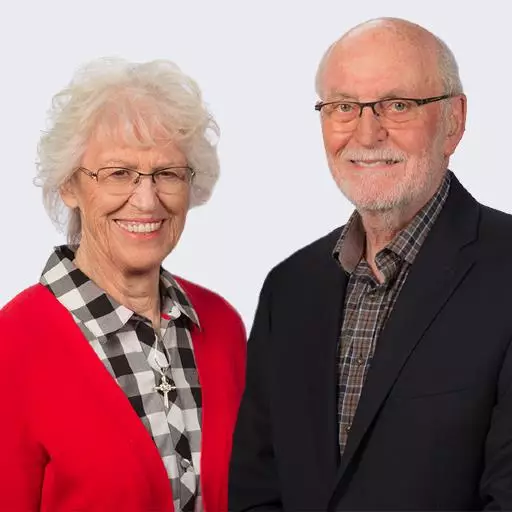
Telling the Truth is an international broadcast and internet ministry that brings God's Word into the lives of people all over the world. Stuart and Jill Briscoe are the featured Bible teachers, encouraging and challenging listeners to study the Word of God and be drawn closer to Christ. Gifted with wisdom, discernment, and a bit of English humor, the Briscoe's bring God's Word to life. With distinctly different teaching styles, you'll be moved by the emotional appeal of Jill and the compelling logic of Stuart, as they boldly proclaim God's sovereignty, grace, and love.
About Stuart and Jill Briscoe
Jill Briscoe was born in England and found Christ when she was 18 years old. She never looked back. Upon graduating from Cambridge University, she began working as a teacher by day and had a vigorous street ministry to the youths of Liverpool by night.
She met Stuart at a youth conference and they married in 1958. In the 50 years since, Jill has become a highly sought-after Bible teacher and author who travels around the world ministering to under-resourced churches and speaking at international seminars and conferences. Since 2000, she and Stuart, who was formerly senior pastor of Elmbrook Church for 30 years, have had the joy of equipping and encouraging believers across the globe in their roles as ministers-at-large for Elmbrook.
Jill has authored more than 40 books including devotionals, study guides, poetry and children's books. Her vivid, relational teaching style touches the emotions and stirs the heart. She serves as Executive Editor of Just Between Us, a magazine of encouragement for ministry wives and women in leadership, and served on the board of World Relief and Christianity Today, Inc., for over 20 years.
Jill and Stuart call suburban Milwaukee, Wisconsin their home. When they are not traveling, they spend time with their three children, David, Judy and Peter, and thirteen grandchildren.
Contact Telling the Truth with Stuart and Jill Briscoe
info@tellingthetruth.org
Brookfield, WI 53005-4633
Outside North America
Telling the Truth
PO Box 204
Chessington
KT9 9DA
United Kingdom
800.889.5388
Outside North America
0800.652.4120