
Everness, Part 1


When you come to familiar Scriptures, do you tend to pass them by? Most of us have heard Psalm 23, describing the Shepherd’s relationship with His sheep. Take time and allow the Lord to give you a fresh revelation on these verses as Jill Briscoe shares her heart and perspective on one of her favorite passages in Scripture.
Guest (Male): No matter what phase of life you're in, the Lord is always with you. Today on Telling the Truth, Jill Briscoe brings a message from Psalm 23 on the everness of God. She'll get started in just a moment. Right now, people are searching for hope, answers, and truth they can build their lives on. And Stuart and Jill Briscoe's timeless biblical teaching is reaching into those very moments through social media and other digital platforms, a vast collection of vintage videos and wonderful ministry partners. At Telling the Truth, our mission has always been clear, faithfully share the truth of God's word so people everywhere can know and experience life in Christ.
And you can be part of that mission. When you give today, you help share hope with people who need to hear biblical truth taught clearly, faithfully, and without compromise. As our thanks, we'd love to send you Verses for Advent, a set of 25 beautifully designed scripture cards created to help you keep God's word at the center of the Christmas season. Reflect on a new verse each day through Advent as you embark on a journey from Old Testament prophecies about Jesus to the Christmas story in the New Testament. So please consider a gift today and help us carry out the Great Commission, ensuring that more people can hear God's word and discover the life found in Jesus.
Call now at 262-788-4648. That's 262-788-4648. Or give online at tellingthetruth.org. Thanks again for listening and for your support today. Now, let's hear from Jill on today's Telling the Truth.
Jill Briscoe: Well, we're going to look into a very familiar passage of scripture, the 23rd Psalm. And let me read you the scriptures. The Lord is my shepherd. I shall not be in want. He makes me lie down in green pastures. He leads me beside quiet waters. He restores my soul. He guides me in paths of righteousness for his name's sake. And even though I walk through the valley of the shadow of death, I will fear no evil. For you are with me. Your rod and your staff, they comfort me. And you prepare a table before me in the presence of my enemies, and anoint my head with oil, and my cup overflows.
Surely, not maybe, surely, surely, surely, surely. Goodness and mercy will follow me all the days of my life. And I will dwell in the house of the Lord forever. Do you ever get disappointed when the preacher is taking something that is so familiar to you, you could preach three or four sermons yourself and you've looked into it and it's perhaps only been heard for you at funerals, which is very sad, for this isn't for funerals. This isn't for death. Yes, there's one line. We shall dwell in the house of the Lord forever. But this is for life.
And the whole key to this Psalm is between the first and last verses. The Lord is my shepherd for all the days of my life. And I will dwell in the house of the Lord forever. And maybe even if you've only heard it at funerals on that one line, though I walk through the valley of the shadow of death, I want you to think of this for life. I want you to think of this as a journey because that's what David was writing about. I remember coming in from a meeting I'd been taking, having to go to bed very late and get up and go out the next morning and really needing replenishing, restoring.
I was tempted not to follow my pattern of reading. I hope you all have a pattern of reading. Get one from the bookstore, get one from anywhere, but have somebody give you the passage of scripture you should be reading and stick to it. And that way you'll get right the way through the Bible and you won't be just feeding in one little corner of the pasture for the rest of your life. Well, I have that pattern. And when I came to the pattern and I was really hungry and needing repleting and I was exhausted, it was the 23rd Psalm.
And I said to the shepherd, oh, I hope you don't mind, but I think I've I've grazed this. I I know this. I I'm looking for something new and fresh and fresh grass, Lord. And and I was just about to turn over to Malachi or somewhere like that and look for something new. And I know that the shepherd said, uh, read it. And so I was obedient and I began to read such a familiar thing. And there, in the corner of a verse, God had grown me a little patch of nourishment that hadn't been there till then because I didn't need it till then.
God's grass grows overnight. Yes, it does. So when you come to familiar scriptures, don't pass them by. And I was so glad I didn't. So let's look at a very familiar Psalm. David, of course, is the writer. He was a shepherd. He knew all about sheep and sheep. In fact, he'd never had a real childhood, had he? Well, he had in that culture. But he being the youngest of many brothers had been sent out to look after the sheep and the goats. And so he was there all his childhood. He never played with other children.
He never had a teenage life. He was a shepherd. And that's where he learned God. He learned solitude. He learned silence, some of the things that we don't know anything about in this generation. All it was was God and him and the sheep and the lions and the bears and fun things like that. And he looked up to the sky one day and he said, oh, when I can set of the stars and the work of your fingers, what is man that your mind full of him? Your mind is full of man when you have all these stars to keep into place.
Says in Isaiah that you've put all the stars in place and named them and not one of them is missing. He knows where each of them are. I always think, oh Lord, just lend me a bit of that because I never know where my glasses are and my books and car or anything like that. And God knows where everything is, not only the stars that are inanimate, but certainly the sheep, certainly the sheep. And he uses an image that is used right the way through the Old Testament. It starts in Genesis where Jacob talks to God as the great shepherd of Israel right at the beginning of the Bible because Jacob at one point in his life had had a vision and a dream.
He'd messed up back home. He was running away from his brother who wanted to kill him. Sure, that's not the first time that's happened, but this was for real. And Esau was chasing him with his soldiers and he ran for good reason. And he ended up exhausted in the middle of a field, fell asleep and had this vision of a ladder stretching to heaven. And when he looked in this vision, there was one like unto the son of God, it says, sitting on a throne. And the angels going up and down the ladder. And the one sitting on the throne spoke to him and said, my name is Jehovah, Lord, capital l o r d.
The word that he uses, the Lord is my shepherd, that David uses here. And so Jacob, the father who had all these children and they became the children of Israel and all that wonderful story, he knew God was a personal God. For this is the name of the personal God, the one who came down the ladder. When did he come down the ladder? To Bethlehem. God said to him, who'll go? Who'll go for us? Speaking of the Trinity. Jesus said, I will. And the great shepherd of the sheep came down the ladder, became a baby.
And so David is so familiar with this idea that the one his father and his heritage, Jacob saw sitting on the throne was a personal God. And David knew this. Why did David know it? Because he was king of Israel. When the kings were crowned, they were given a scroll, a scroll of scripture, of the law. All the time he was king, it had to be in a pocket in his long robe and he was to take it and he was to learn it and read it and digest it and live it. Think he left it at home only one day and he didn't get off the roof.
Saw a beautiful woman. Remember the story? But the rest of the time he read it and he knew it. And David knew passages, chunks of scripture if you wish off that roll that had to do with the shepherd of Israel, that great shepherd of the sheep. And so it's not surprising that in one of his Psalms, probably the most famous of his Psalms, we see him using this analogy of shepherd and sheep. He could have used king and commoner. He could have used husband and wife. The Lord is the husband, Israel is the wife. All these analogies and pictures were used, but he used the one that most people find that favorite.
If I gave you all of those, king and commoner, vine and branches, all of those things that he could have used and then say shepherd and sheep, I know because I've done it in audiences that the most favorite one image that we have of shepherd and sheep, shepherd and sheep. So many wonderful images. And so there are many verses in the Old Testament as well as the new about shepherding and sheep. And David knew the ones obviously only in the old Testament. The whole Bible is the whole Bible. I remember teaching some of my kids in Liverpool hundreds of years ago.
They were sort of nearly semi-literate. They were 15 16. They were gangs. They were tough kids. And they began to come to the Lord in my classroom. And one of them, Trevor said to me, would you teach us to read, miss? And I said, that's a very brave thing for you to ask in front of your mates. I would be delighted to teach you. I said, actually, you can nearly read. You just don't know it yet. I would love to do that. But why do you want to learn to read? And he said, I want to read the Bible for myself.
I want to read the Bible for myself. And so I began teaching these kids to read. And it wasn't long before Trevor was leading the whole group and saying where he wanted to be. And And then he said, well, now now you've taught us to read, will you teach us the Bible? I said, I'd love to. I went to my head master and said, can I use the school? He said yes because there were transformed lives. They tried everything else and nothing was working. And Jesus of course transforms lives and he was delighted. He's his public school.
He said, be my guest. What you want? I'll give you anything you want. This is working. And so I said, well, I want to teach the Bible. He said, I needed those of the Bible. He said, that's fine. And so I began. And I said to the kids, and I was a very young Christian myself. I'd just been converted at Cambridge. I said to the kids, where do you want to start? I didn't know. I I didn't know when I got saved that an apostle was the wife of an epistle. I didn't know anything about my Bible.
And so I wasn't far on from that. And he said at the beginning, he says, you start at the beginning, miss. He says, you know is the book and is the beginning. And he says, I've been looking and the one you gave me and there's an old bit and there's a new bit. And I suggest that's the Old Testament, the New Testament. He said, what's testament? I said, well, never mind. There's an old bit and there's a new bit. And I learned of course with my kids as we began to get into the Bible. There was an old bit and a new bit.
And it wasn't long after that as I read somewhere or other in a book somebody gave me that it's one book though. And if we could do away with the New Testament and the Old Testament, you would see that the theme, the grand themes of salvation and all of these themes, they go from Genesis. It's a red thread of redemption right the way through to to Revelation. It's one book. And so I started preparing this talk for you by just looking up everything I could find about shepherds and sheep as it was in the Old Testament and then everything I found in the New Testament.
And they're intertwined. And Jesus refers to the Old Testament and shepherd stuff and books and things like that. And of course in prophecy, David had no idea what he was saying when he wrote Psalm 22. He wrote it as a frightened little sheep who is being attacked by his enemies and suddenly prophetically he began to absolutely and detail tell us about the cross. And what would happen at the cross when the shepherd was killed? Now they divide his garments. And in detail Psalm 22 talks about that. Amazing. And so it's intertwined. It's all one. So when Jesus, the shepherd came, he talked about himself in language that the people listening to him who are Jews could understand.
He said, I'm the shepherd of the sheep. I'm Jehovah. I am. That's why they tried to kill him. You shouldn't say you're God. That's blasphemy. And he did. He said, I'm the one Jacob saw. Look at me. Even his disciples didn't get it. Three years with him. Philip says, could just show us Jehovah? If you just show us the Lord, if you just show us the father, we'd be happy. And Jesus said, look at me, Philip. Look at me. You're looking at him. How had he never noticed he had his father's eyes? Great shepherd of the sheep.
And so no wonder in parable and teaching when Jesus the shepherd came, he taught about the shepherd in John 10. And in parable he told about the lost sheep, remember? How the shepherd had a hundred. It didn't matter because one was lost. Every individual sheep he cared about. Everyone had a name. Everyone was an individual in the crowd. And how when he lost his sheep, the great shepherd of the sheep went and found him, went and found him. And so all the people listening to him were Jews and they knew all about the shepherd of Israel.
And they knew all about Isaiah where it says, all we like sheep have gone astray. We have turned everyone to our own way. And the Lord has laid on him who? The him of Psalm 22, the him of the prophets, the him of the people around them for Psalm 22 hadn't happened at that point that we're talking about the shepherd of Israel. I love it the way it's all interwoven. And Jesus came and said, I'm the good shepherd. Not only am I the good shepherd, I'm the door of the sheep. Now that was not changing the analogy.
The sheepfold had an open door. It was called the gate, but there wasn't a gate. The shepherd was the gate. And when the shepherd had counted the sheep in, touching each one from head to tail as they went by, always touching, always touching, always touching, and naming them as they came in. He would not shut the gate because there wasn't one. He would use oil to rub their little woolly head if it was bumped and bruised as healing balm. He would attend to his sheep. And then when they lay down, he would too across the opening.
I am the door. I am the door. The people listening to him would been familiar with that image. He was the door. Then Psalm 22 it says, the lion came and got him. And it describes the lion roaring at him. He got him. But three days later he got the lion. Yes, right? Three days later the shepherd got the lion that got him. And he rose from the dead and came back to be our shepherd, our great shepherd of the sheep. This image is very powerful. It's very wonderful. And David picks up his pen and talks about his own heart relationship with God in these images that would have been incredibly familiar with those people.
And even though we are not perhaps familiar with them, the nearest we have got is a woolly jumper maybe. That's the nearest we get to sheep and shepherds in our knowledge. We know because we've been to school and we're literate. We're literate. Always thank God every morning that you can read. But also remember he that does not read has no advantage over he that cannot read. And so as we read and as we apply our heart to the green pastures and as we use the blessing of our education to find out from the scriptures all this wonderful wealth of explanation of who God is and what he's like and why he came.
Thank him for that. Thank him for that. And remember he that does not read has no advantage over he that cannot read. So let's think about our relationship to him. He makes me to lie down in green pastures, leads me beside the quiet waters, and thus restores my soul. He renews uh replenishes is the word I'm looking for. They're depleted. It's the opposite of depleting. Depleting is what we are in our society. Replenishing means he restores my soul and implies the seasoning and quickening of the soul in times of depression, exhaustion, internal weakness, and disorder.
That's what replenish means. And that actually is as near as we can get to the word that's used in another language here. He replenishes the sheep. He replenishes the soul, the me, the internal person that lives within this tent, this body. The shepherd, Christ, the shepherd by his spirit now can replenish our soul.
Guest (Male): Now Jill's here to answer a few questions about our message today. Jill, the red thread of redemption runs through the entire Bible from Genesis to Revelation. What would you say to someone who is longing for redemption today?
Jill Briscoe: What I mean by the red thread of redemption, there is a constant theme starting in Genesis where after the fall God made them clothes and covered them symbolically, having come to realize their nakedness which in their innocence they didn't realize. Sin opened their eyes to the dark side of everything that God had made as human beings. Now that thread or the promise of redemption, of rolling back the effects of the fall starts in Genesis when man fell. And God covered. To cover him with skins, an animal had to die. And so that theme or thread begins in Genesis as God began to call fallen man out from behind his tree, get him to admit what he'd done, and then promise him a covering.
And you can pick it up all the way through. If you have a good reference Bible, all you need to do is look at the little references to that verse and follow them through the Bible and they will lead you to the next to the next to the next and the thread of the promise of buying you back, of God buying you back through his death and resurrection. You will see. So that's really what the red thread of redemption I was talking about means. What would I say to someone who's longing for redemption today to have in their own life the effects of the fall, of the sinfulness that is born within every baby that's ever born and we live with that selfishness?
What would I say to someone who's longing that that be dealt with, that somehow another force, another power could come into my life and counter the intrinsic selfishness of the human heart without God? I would say you don't need to live like that. You can't struggle in your own strength and do anything about it anyway. What you need is a power greater than the power of sin. And that power is the power of the Holy Spirit, God, if you wish, Jesus without his body after Pentecost coming to invade your life and begin to stop you being selfish, which is the essence of sin.
Selfishness is the essence of all sin. You're going to do what I want, when I want, how I want, what I want. That's sin. Because what we choose to do is usually not what God permits or what God has actually told us not to do. And so the power to counter that sinful nature we are all born with, every baby is born with that and grows up to begin to exercise it. Uh to counter that you need a greater power. And the power is the power of the Holy Spirit. And how do you get him into your life?
You invite him. You say, come in, Lord Jesus, by your spirit and begin to turn me into an unselfish person as only you can. Transformation inwardly comes from the power of the Holy Spirit as you invite him to come and rule and reign in your life today.
Guest (Male): Thanks for listening to Telling the Truth today. We're thrilled you've joined us and pray today's message has helped you experience more of the abundant life Jesus promises. We thought you'd be encouraged by this testimony we received from a listener named Patricia. She says, you don't know my husband and me, but you played a powerful role in helping us grow in our fledgling faith as a young couple 30 plus years ago. We will hold you in our prayers and remain eternally grateful for the profound gifts you've given us. And we're praying for you too, Patricia. Right now, people are searching for hope, answers, and truth they can build their lives on.
And Stuart and Jill Briscoe's timeless biblical teaching is reaching into those very moments through social media and other digital platforms, a vast collection of vintage videos and wonderful ministry partners. At Telling the Truth, our mission has always been clear, faithfully share the truth of God's word so people everywhere can know and experience life in Christ. And you can be part of that mission. When you give today, you help share hope with people who need to hear biblical truth taught clearly, faithfully, and without compromise. As our thanks, we'd love to send you Verses for Advent, a set of 25 beautifully designed scripture cards created to help you keep God's word at the center of the Christmas season.
Reflect on a new verse each day through Advent as you embark on a journey from Old Testament prophecies about Jesus to the Christmas story in the New Testament. So please consider a gift today and help us carry out the great Commission, ensuring that more people can hear God's word and discover the life found in Jesus. Call now at 262-788-4648. That's 262-788-4648. Or give online at tellingthetruth.org. Thanks for listening today. Be sure to join us again as the Briscoes share more biblical insight from God's word. Experience life next time on Telling the Truth.
Featured Offer

Advent is a season to slow down, remember God’s promises, and prepare your heart to celebrate the coming of Jesus.
As our thanks for your gift today, we’d love to send you Verses for Advent, a set of 25 beautifully designed Scripture cards created to help you keep God’s Word at the center of the Christmas season. Reflect on a new verse each day throughout Advent as you embark on a journey from Old Testament prophecies about Jesus to the Christmas story in the New Testament.
Request your set today, and thank you for helping share timeless biblical teaching with people around the world!
Past Episodes
- A Conversation with Pete Briscoe, #GivingTuesday 2018 Special Programming
- A Lifetime of Wisdom
- A Little Pot of Oil
- A Modern Day Disciple
- A Portrait of Jesus
- A Two-Sided Coin
- A View from the Porch Swing
- Addressing the Issues
- After I Say "Yes, Lord"
- Alive and Free
- Anchored and Moving Forward
- Anchored in Genuine Prayer
- And He Shall Be Called
- Ask and Bask
- Be a Witness
- Be Wise
- Believing What We Believe
- Believing with Confidence
- Better: A New and Living Way
- Beyond Ordinary
- Body Language
- Brave Enough to Follow
- Breaking the Grip
- Building a God Honoring Church
- But What Did Jesus Say About It?
- Carry On
- Celebrating Marriage and Family
- Changed by Christ
- Cheerful Godliness
- Choosing
- Christianity Q&A
- Comfort For Troubled Hearts
- Confronting the Enemy
- Conversation with Pete Briscoe, #GivingTuesday 2019 Special Programming
- Conversations with the Briscoes
- Conversations with the Briscoes 2016
- Coping with Christmas
- Easter in My Heart
- Eight Things that Make a Marriage Work
- Empowering the Next Generation
- End Times: What's Going On?
- Enjoying the Good Life
- Entrapment
- Everness
- Every Soul Needs a Break
- Everyday Disciples
- Everyday Jesus
- Experiencing God
- Experiencing God’s Love on Life’s Journey
- Experiencing Peace
- Extraordinary Marriage
- Facing God in Your Loneliness
- Facing Jesus in Your Loneliness
- Faith Enough to Finish
- Faith With Boots On
- Faith, Hope, and Love
- Families Made New
- Family Business
- Family Values
- Fathers
- Feeling Alone
- Fight for the Family
- Fighting Unseen Forces
- Finding Contentment
- Finding Freedom in Your Finances
- Finding God
- Finding God's Will For Me
- Finding Happiness
- Finding Healing
- Finishing Strong
- For People on the Grow
- Freed by Forgiveness
- Freedom
- Frontline Christianity
- Getting Ready for Christmas
- Go Ahead and Ask
- God Has a Plan - and We're Part of It!
- God in the Shadows
- God of Wonder, God of Worship
- God Promises
- God's Design for Marriage
- God's Love For Us
- God's Perfect Gifts
- God's Unfailing Love for You
- God's Will for My Life
- Good News, Great Joy
- Grace in the Garden
- Grace to Go On
- Great News, Great Joy
- Growing the Fruitful Life
- Growth of a Soul
- Have No Fear
- He Came to Give Us Life
- Healing Broken Relationships
- Hearing the Holy Spirit's Voice
- Heart Hunger
- Here Am I, Send Aaron
- Heroes of Faith
- Heroes of the Faith
- Hidden Treasures
- Hope for the Disheartened
- Hope for Your Marriage
- How Much I'm Loved
- How the Story Ends
- How to Be Up When You're Down
- How to Face a New Year
- How to Live a Productive Life
- How to Pray for Your Pastor
- Identity Defined
- I'm Not Who You Think I Am
- Immanuel - God with Us
- Impacting Our World
- Improving with Age
- In God We Trust
- Inside the Box
- Lessons from the Boy Jesus
- Let Your Light Shine
- Let's Do It God's Way
- Let's Talk
- Life Lessons
- Life that Works
- Live Life in Gear
- Live Like You Mean It
- Living Above the Circumstances
- Living in a Messed Up World
- Living in Exile
- Living in the Word
- Living in Uncertain Times
- Living Love
- Living One-Mile High
- Living the Life
- Living to Fight Another Day
- Lost and Found
- Love One Another
- Making God Smile
- Making Him Known
- Making Marriage Work
- Making Room for Him
- Making Sense of Signs
- Making Sense of Suffering
- Making Your Life Count
- Marriage Made New
- Mary's Little Box
- Meet Him at the Manger
- Modern Marriage
- More Effective Prayer
- Mother's Day
- Peace in the Puzzle
- Perfect Peace
- Pondering Christmas
- Powerful and Effective Prayer
- Prayer School
- Prayer That Works
- Praying for the Family
- Pulling Together
- Searching
- Secrets of the Heart
- Secrets to a Successful Marriage
- Seeing Jesus in the Old Testament
- Seeing Through Suffering
- Sermon on the Mount
- Settling for More
- Settling for More in Work
- Sexual by Design
- Shaking Up Your World
- Shelter from the Wind
- Six Things a Mother Can't Do
- Six Things We Must Never Forget
- Six Ways to Get a Life
- Slaying Giants
- Solid Ground
- Spirit-Powered Living
- Spiritual Arts
- Spiritual Renewal
- Staying Spiritually Sharp
- Sticking Together When We're Pulled Apart
- Sticking with It When Faith Seems Hard
- Take 5: A Christian Point of View
- Taking Jesus Next Door
- Teach Us to Listen
- The Answer Is Yes...Now What's the Question?
- The Answer to Anxiety
- The Awesome Power of Encouragement
- The Balancing Act
- The Barrenness of Busyness
- The Best of 2010
- The Best of 2011
- The Best of 2012
- The Best of 2013
- The Best of 2014
- The Best of 2015
- The Best of 2016
- The Best of 2017
- The Best of 2018
- The Best of 2019
- The Best of 2020
- The Best of 2021
- The Best of 2022
- The Best of 2023
- The Best of 2024
- The Book of Romans
- The Cross of Christ
- The Cutting Edge
- The Devoted Life of Daniel
- The Difference Christ Makes Today
- The Empty Tomb
- The Essence of Christian Living
- The Essence of Worship
- The Fatherhood of God
- The Good Life
- The Gospel
- The Gratitude Attitude
- The Healer
- The Heart and Soul of Friendship
- The Heart of Christmas
- The Heartbeat of the Master
- The Holy Spirit
- The Holy Spirit and You
- The Innkeeper's Daughter
- The Last Word
- The Life I Now Live
- The Meaning of Love
- The Names of God
- The New Normal
- The People and the Book
- The Power to Change
- The Search for Answers
- The Squall: Weathering the Storms of Life
- The Steeplechase
- The Visitor
- The Woman at the Well
- Thinking Clearly in a Messed Up World
- Thirsty for Living Water
- This Is Big
- Thoughts from a Woman's Heart
- Time Bandits
- To Love and to Cherish
- Triumph In Trouble
- Triumph Over Temptation
- True Identity
- Truly Centered
- Truth for Troubled Times
- Turning a Kind Eye
- Two-Thirds of the Way
- Weathering the Storms of Life
- What About Those Who Have Never Heard?
- What Did Jesus Do?
- What Do You Give When You Have Nothing to Give?
- What Happens When We Die?
- What Is God Really Like?
- What Really Happened on the Cross
- What the World Needs Now
- What to Do While Your Life is Happening
- What Will Jesus Do?
- Whatever Happens
- What's So Special About Easter?
- When Will Christ Return?
- Where to Find Help
- Who Are You God?
- Why Christ Came
- Why Church?
- Women in the Life of Jesus
- Women Who Changed Their World
- Words to Live By
- Worry-LESS
- Worship and Prayer
- Worshipful Living
- Wrestling with God

Featured Offer
Advent is a season to slow down, remember God’s promises, and prepare your heart to celebrate the coming of Jesus.
As our thanks for your gift today, we’d love to send you Verses for Advent, a set of 25 beautifully designed Scripture cards created to help you keep God’s Word at the center of the Christmas season. Reflect on a new verse each day throughout Advent as you embark on a journey from Old Testament prophecies about Jesus to the Christmas story in the New Testament.
Request your set today, and thank you for helping share timeless biblical teaching with people around the world!
About Telling the Truth
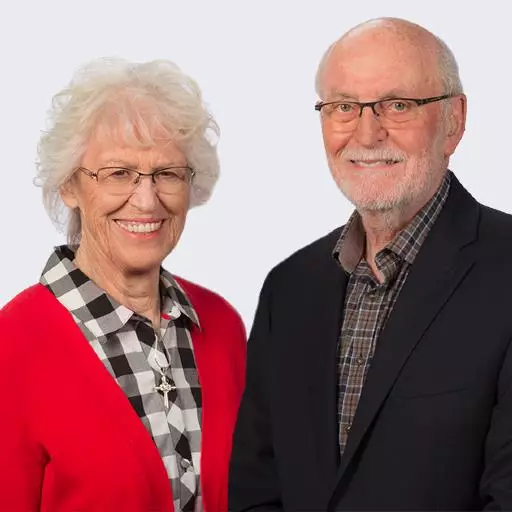
Telling the Truth is an international broadcast and internet ministry that brings God's Word into the lives of people all over the world. Stuart and Jill Briscoe are the featured Bible teachers, encouraging and challenging listeners to study the Word of God and be drawn closer to Christ. Gifted with wisdom, discernment, and a bit of English humor, the Briscoe's bring God's Word to life. With distinctly different teaching styles, you'll be moved by the emotional appeal of Jill and the compelling logic of Stuart, as they boldly proclaim God's sovereignty, grace, and love.
About Stuart and Jill Briscoe
Stuart Briscoe was born in the north of England in 1930. After leaving school he embarked on a banking career, served in the Royal Marines during the Korean War, and at 17 years of age preached his first sermon. Stuart ministered on every continent, wrote more than 40 books, pastored a church for 30 years, and founded the media ministry Telling the Truth, which broadcasts daily worldwide. He was married to Jill for more than 59 years and had three children and 13 grandchildren. In August 2022, Stuart passed on to his heavenly home, but his legacy of witty, timeless teaching lives on through Telling the Truth.
Jill Briscoe was born in Liverpool England in 1935. Educated at Cambridge, she taught school for a number of years before marrying Stuart and raising their three children. In addition to sharing with her husband in ministry with Torchbearers and in pastoring a church in the United States for 30 years, Jill has written more than 40 books, traveled on every continent teaching and encouraging, served on the boards of Christianity Today and World Relief, and founded Just Between Us, a Christian magazine for women. Jill can be heard regularly on the worldwide media ministry called Telling the Truth. She is proud to be called “Nana” by 13 grandchildren.
Contact Telling the Truth with Stuart and Jill Briscoe
info@tellingthetruth.org
Mailing Address:
Telling the Truth
12660 W North Ave
Brookfield, WI 53005-4633
Phone Number: