
Wrestling with God, Part 2


We learn in Scripture how God wrestled Jacob to the ground one night and turned him upside down—so he could live right-side up. Jacob became a “prince” with God instead of a pain.
When we’re suffering the consequences of our own poor choices; when we're bearing the brunt of someone's vengeance and anger; when we feel absolutely on our own and life is not working out as planned, that’s when God will turn up. He wants to walk down the stairway of heaven right into our hearts to make us aware of His personal interest and concern.
Guest (Male): On today's Telling the Truth, Jill Briscoe teaches how God turns up when you feel absolutely on your own and life isn't turning out as you'd hoped. That's coming up in the continuation of Jill's message, "Wrestling with God."
Right now is one of the most important times of the year for Telling the Truth. As we approach December 31st, generous friends have stepped forward with a special matching grant that will double your gift to help more people experience life in Christ. That means your support will go twice as far to help share God's word around the world through Stuart and Jill's biblical teaching, digital broadcasts, and global partnerships.
Every day, lives are being transformed as people discover the peace and purpose that only Jesus gives, and your year-end gift makes that possible. So don't miss this powerful opportunity to make an even greater impact before midnight, December 31st, while your gift will be doubled through this special matching grant. Call 262-788-4648. That's 262-788-4648, or give online at tellingthetruth.org. Now, let's hear from Jill.
Jill Briscoe: After every heritage story, I always managed to add to it some sort of story about how God brought us to America or something that He did. Surely, God was in this place, and we knew it not on the airport. Even in the car wash, God was there, I think.
After all the fun stuff and the crazy adventures, I just talk about the plan of God and how wonderful it is and how He's with us in the ordinary things of life. He has a plan for everybody's life. Think about Jacob's bedtime, will you? Think about Isaac.
Jacob's favorite story was the one about the day his father, Isaac, was shaken awake before dawn to go camping with his grandfather, Abraham. They'd be making a sacrifice to the Lord at Mount Moriah while they were there. As they walked along, his father, Isaac, asked a question, "Father, here's the fire and the wood, but where's the lamb for the burnt offering?"
Jacob's grandfather replied quietly, "God himself will provide a lamb for the burnt offering, my son." They get to Mount Moriah, and Isaac said his father began behaving in the strangest way. He took a rope and he tied Isaac's hands together, and then he picked him up and he laid him on the pyre of wood they'd built. "Why didn't you struggle?" Jacob would ask over and over again. "Because it was my father, whom I knew loved me and I trusted him," was always the quiet reply.
Jacob's eyes would widen in wonder as Isaac would tell the story. "I was very frightened, Jacob. My father raised the long knife and I realized it was actually going to happen. He was going to sacrifice me. God had not provided another animal. I, his beloved son, was to be the sacrificial lamb." There would be a long pause as Isaac remembered. "How could you ever forget? How could God ask such a thing of your father?" Jacob would whisper again and again.
Isaac, wrapped in his memories, would with difficulty say, "Jacob, I looked up to heaven expecting an angel to save me, but all I saw was the flash of the blade, my father's face contorted in anguish, and tears streamed down his cheeks. And then," Jacob would prompt, even though he had heard the story, "Then came a voice from heaven, a voice such as I'd never heard before, a voice that sounded like many waters: 'Abraham, Abraham, do not lay a hand on the boy. Do not do anything to him. Now I know that you fear God because you have not withheld from me your only son.'"
Just nearby there was a ram caught in a thicket. My father, trembling greatly, cut the ropes around my wrists and I was saved. The ram was sacrificed. It was my substitute. Surely, God was in that place and I knew it not. Surely, my son, Isaac would reply. Surely.
I wonder, as Jacob lay by the brook and had his dream, if he remembered that story. Surely, God was in that place when my father was on the altar and they knew it not until His voice came from heaven and provided the substitute, saved them both: Abraham from sacrificing his son, and his son from being sacrificed.
As Jacob went on in his life, he struggled spiritually with all these things. What was it all about? What was that lamb all about? He began to realize that God wanted to catch him up into the purposes of God, even though he was second-born, even though he was nobody, even though the birth order said he had no significance whatsoever. His significance could lie in wrestling through to saying, "I am going to be involved in what God is all about. Yes, I am. Yes, I am."
All of us have been born with a Jacob heart, and all of us have to come to that point and say, "This heart of mine wants my own way. This heart of mine wants all the wrong things. This heart of mine is self, self, self, and I give you permission to wrestle the Jacob out of me." That's where it begins.
He wrestled with life and God began to overcome him. Then he wrestled with love. This is a wonderful story. I just want to show you one verse here. Near the chapter that I read you in Genesis 28, he goes on, he meets his uncle, he settles in, he begins to farm for him, he gives him good wages, and he has two beautiful daughters. He has Leah, who is weak-eyed—it means she has a squint—and he has Rachel, who is gorgeous.
Guess which one Jacob falls in love with? He falls in love with beauty and he asks for her hand. He says, "I'll work seven years for her," because he has no dowry. He has nothing to bring to this. It wasn't just a whim. He had to work for seven years to enable him to have enough gift money for Laban to accept Jacob as a son-in-law.
Remember, if he'd been the firstborn, he would have had all that cash with him, but he had nothing. He arrived with nothing, absolutely nothing. He worked for seven years for Rachel, and the time came and he said, "Now give me my wife because I've worked this seven years for you." It seemed only a few days because of the love that he had for her. That's what love does.
Now remember, he was 77 when he arrived, so now he's in his 80s, about 84, and it's time to get married. They do it a little slower in that culture. Jacob is in the habit of getting what he wants however he has to do it. Well, this is what the Bible says. Jacob says to Laban, "Give me my wife. My time is completed. I want to lie with her."
Laban brought together all the people and they give a feast. When evening came, he took his daughter Leah and he gave her to Jacob, and Jacob lay with her. Laban gave his servant girl Zilpah to his daughter as her maidservant. When morning came, there was Leah. Will you explain that to me? Think about it.
I think that's one of the most extraordinary verses in the Bible. When morning came, there was Leah. I don't get it. He didn't know. Laban, who's a better twister and liar and cheat than Jacob, must have been laughing all the way up his sleeve and to the bank because it meant that he had to serve another seven years. Not until he got Rachel—he got Rachel after the first week—that was Leah's week, as their custom was. He married Rachel a week later, but did he ever have married trouble?
Maybe you can't relate to this, and maybe you can. Maybe you've married Rachel, and one morning you woke up and there was Leah. You never saw the woman in the woman until you got married, and the huge disappointment and shock is what you're dealing with and wrestling with. There was Leah. I have counseled many, many people that say, or told me, "I married this man or I married this woman, and I really thought they were a beautiful Christian. He said he was a Christian, he acted like a Christian, came to church with me. But on my honeymoon, he said, 'I'm not a Christian. I need you to know that. I just said all that so that I could get you to marry me.'"
There was Leah. Now, that's a dramatic thing. It doesn't need to be that dramatic. You can be disappointed in the person that you married because they're not the person they appeared to be. Jacob wrestled with life. In his youth there was Esau, in his work there was Laban, in his bed there was Leah. God is moving on this man and the shadow is still there. Nothing's gone wrong, although nothing's going right, it appears, but God is working His purposes out.
What happens is Jacob goes on doing his swindling bit until he's got all Laban's flocks, and Laban doesn't have too many anymore even though he'd been very wealthy. Laban's face is not toward him as it used to be, quite understandably. Laban is beginning to console himself with the idea of killing Jacob, so here we are again.
Jacob calls his wives out to the field and he says to them, "Listen, your father's face is not toward me as it was before. He's changed my wages 10 times. We've been wrestling in this work deal all these years, and God appeared to me last night and told me to get myself home. I have absolutely no idea if I'm going back and Esau is still intending to kill me. I have no idea what I'm asking you to come with me into, but this is the scene. Do you want to stay with your father, do you want to come with me?"
The women said, "We'll go with you. Our father's cheated us, our father's manipulated us, our father has done all these things with us as well as with you." They flee one more time and they come to this place, Jabbok. Jacob, in true fashion, sets the women and the children in order: Leah first, poor Leah, with her kids, to meet Esau who is coming to meet him with 400 men. At the back, Rachel and her children.
How do you think Leah felt about that? She was a sacrificial lamb, if you wish. Presents—he sent presents. Let's buy him off. He's still Jacob. He's left alone by this brook, and suddenly, there was God. Surely, God is in this place and I knew it not. God's hands are all over his life, and this is showtime.
God says, "If I do not wrestle that Jacob heart out of you, you're done. You're in your 90s now, Jacob. It's all over, and you and I have to have this thing where you surrender everything to me." They wrestled and they wrestled and they wrestled and they wrestled. In the end, the Angel of the Lord, capital A, second person of the Trinity, God himself, put out Jacob's hip and he submitted.
He submitted. God said, "You've prevailed with me, Jacob. At last you're laying hold of what I want you to lay hold of: my blessing. I won't let you go unless you bless me. I won't let you go." Good, Jacob, you're getting there. Okay, I will bless you if you will submit everything to me, become obedient.
There by the brook, God changed this man. He wrestled the Jacob out of him, and God is still wanting to wrestle the Jacob out of us just like He did in the story. So what do we do then? We go back to Bethel, like he did. We go back to the place where we began, as it were, and we began to review our life and say, "You know, I've wrestled with this and I've lost. I've lost to my selfishness, I've lost to my sinfulness."
I go back to my marriage, and I go back to my family, and I'm thinking, "What a mess. What a mess I've made of it. Here's Leah, here's Rachel, here's this fighting, here's this mess, and it's all my doing. I didn't do it right, and if I'd done it this, and half of it isn't my doing, and yet that's what life is like." We're very down and we're very hurt.
What we have to do is we have to get alone with God. We have to intentionally put ourselves into the presence of God and give Him a chance to get His hands all over our life. That can happen in your bedroom, that can happen here in church, that can happen in your car on the way home. I don't care where it happens. What I do care is that it happens.
There has to come a moment alone with God when we let Him hurt us, as it were, put our nose out of joint, put our hip out of joint. We have to accept the hurt He has allowed because of His sovereign permissive will and realize it's all part of the plan to bring us to submission, and to bring us to the realization that we're sick of being Jacob and we want to be Israel. We want to be a prince with God.
We want God to turn us upside down. We want to live upside down or right side up so that we can do the same for our world. That requires surrender. We have to let Him hurt us, we have to let Him heal us of our grudges and our gripes, the bitterness, and what we feel about Esau. We have to try and make amends and we have to try and reconcile with God, and then we have to let Him help us.
Say, "I will not let you go. I will not stop this prayer time until you put your hands on me and bless me and change me." When we do that, God will. God will. God will, and you will become a blessing to your world. I always think of Jacob at the age of 120 in Egypt. He thought he'd lost Joseph, remember the story? Joseph turns up, assistant to Pharaoh, saves the whole of Egypt from famine. Wonderful story.
The brothers come and don't know that he's the brother they put in the pit and sold as a slave. Then it's all found out and it's all forgiven. Joseph, assistant to Pharaoh, says, "Bring my father. I'll care for him in the famine. I'll give him the best land." There's this reconciliation in the desert. "Oh, my son, my son," says Jacob. "Now I can die. Now I can die in peace. I thought you were dead and now you're alive."
Joseph presents Jacob to Pharaoh. Remember that? Pharaoh's had a problem, for Pharaoh's life was a terminal disease, like it is for everybody, but it sort of was a quicker terminal disease than it was for everybody else. Most Pharaohs only lived about 30 years. Most Egyptians, they said, only lived between 30 and 40 years. That was their lifespan.
That's why when they're digging all these Pharaohs up, they're finding these boy Pharaohs, because the whole population, the lifespan was so small. When this Pharaoh saw Jacob at 120 years, he said, first thing he said, "How old are you? How old are you?" I'm sure he'd never seen a man 120 years old.
Jacob said, "You think I'm old? Let me tell you about my father, Isaac, and my grandfather, and the people before them. I'm just a kid." And then it says, Jacob blessed Pharaoh. I love that picture. I mean, he was Pharaoh. He was the ruler of the world at that moment. God took this man that He'd wrestled to the ground and wrestled the selfishness out of him, wrestled the Jacob out of him, and He made him a prince.
He sent him out to his world, and he took him to the throne room of the authority of the world at that time. Jacob blesses this man. Jacob speaks to this man for God. What more would you want for your life? Don't you just live your life and play tennis and go shopping? Fine. But what you really want, what you really want, you want to turn your world upside down. Well, there's only a way if God turns you upside down or right side up at Bethel.
Guest (Female): Jill, you talked today about heritage stories and sharing them with your children. Well, how can parents and grandparents share these stories in a real and impacting way? How have you done it?
Jill Briscoe: Taking every chance to share the past, especially at get-togethers—your Easter, your Christmas, your holiday times. If they're around a season in the year, in Britain there used to be a lot more church holidays like Whitsuntide, the giving of the Holy Spirit, and things like that, not national holidays. When the spiritual opportunity comes up, certainly Christmas, Easter, even Mother's Day, things like that, I've been able to give a book or use a family meal to be thankful for whatever we are celebrating in the Christian calendar, that sort of thing.
I've written a lot to my grandchildren. I've emailed a lot. I learned to text as a grandparent. Go find if you do not learn to text. Kids don't even use their email anymore, or certainly never listen to their phone messages. But they all text at the moment; there'll be something else coming up. Old grandparents, we don't just say "I can't do it." Go take a class in something that's going to connect you with your grandchildren. That's what I've had to do. Actually, what I did is I got my grandchildren to teach me how to text, etc. Any way you can, certainly pray for them and tell them you're praying for them. I tell my children all the time that I'm praying for them and my grandchildren as well.
Guest (Female): What would you say to someone who's struggling and needs to know God remains with them no matter what they're wrestling with?
Jill Briscoe: Well, I would certainly find out what the struggle's about if they'll share it with me. I would certainly try and find out if they are a believing person, a Christian, and that's where I would start. I would just share, "Look, I've got as much struggle as anybody else, but I have somebody that helps me with them. My Christianity helps me with them, what I believe." One thing I believe is that God can come and live within me to help me from inside out, not just outside in. See if you can find something in your testimony or the way that God has helped you to share with them that He can also help them that way.
Guest (Male): Thanks for joining us today. We hope today's message has encouraged you to know Christ more deeply and live in the joy of His truth. We want to share what a listener named Barry recently wrote: "I'm now 68 and have been following Jesus for 45 years. My first experience of Stuart's teaching was a series of studies on cassette tapes on the book of Ephesians. I was hooked. Stuart was a great help to me in my spiritual growth as a young Christian through the books he had written. Through the years, many other men and women have contributed to my spiritual growth, but I fondly remember those early years. Today, he and Jill continue to teach me through the daily program. Thank you for finishing well."
Right now is one of the most important times of the year for Telling the Truth. As we approach December 31st, generous friends have stepped forward with a special matching grant that will double your gift to help more people experience life in Christ. That means your support will go twice as far to help share God's word around the world through Stuart and Jill's biblical teaching, digital broadcasts, and global partnerships.
So don't miss this powerful opportunity to make an even greater impact before midnight, December 31st, while your gift will be doubled through this special matching grant. Call 262-788-4648. That's 262-788-4648, or give online at tellingthetruth.org. Thanks again for listening and for helping share the timeless truth of Jesus with people everywhere. Thanks for being with us today. Tomorrow Stuart shares a powerful message on the barrenness of busyness. Don't miss it. Experience life next time on Telling the Truth with Stuart and Jill Briscoe.
Featured Offer

When discouragement sets in, where can you turn for lasting hope?
In their encouraging 5-message audio series, Hope for the Disheartened, Stuart and Jill Briscoe share biblical truth to help you anchor your hope in God and rely on His strength and timing, even when life feels overwhelming.
We’ll send you Hope for the Disheartened on USB or as a digital download as our thanks for your gift today. Your support helps us share the timeless truth of God’s Word with more people searching for true comfort, hope, and encouragement. Thank you!
Past Episodes
- A Conversation with Pete Briscoe, #GivingTuesday 2018 Special Programming
- A Lifetime of Wisdom
- A Little Pot of Oil
- A Modern Day Disciple
- A Portrait of Jesus
- A Two-Sided Coin
- A View from the Porch Swing
- Addressing the Issues
- After I Say "Yes, Lord"
- Alive and Free
- Anchored and Moving Forward
- Anchored in Genuine Prayer
- And He Shall Be Called
- Ask and Bask
- Be a Witness
- Be Wise
- Believing What We Believe
- Believing with Confidence
- Better: A New and Living Way
- Beyond Ordinary
- Body Language
- Brave Enough to Follow
- Breaking the Grip
- Building a God Honoring Church
- But What Did Jesus Say About It?
- Carry On
- Celebrating Marriage and Family
- Changed by Christ
- Cheerful Godliness
- Choosing
- Christianity Q&A
- Comfort For Troubled Hearts
- Confronting the Enemy
- Conversation with Pete Briscoe, #GivingTuesday 2019 Special Programming
- Conversations with the Briscoes
- Conversations with the Briscoes 2016
- Coping with Christmas
- Easter in My Heart
- Eight Things that Make a Marriage Work
- Empowering the Next Generation
- End Times: What's Going On?
- Enjoying the Good Life
- Entrapment
- Everness
- Every Soul Needs a Break
- Everyday Disciples
- Everyday Jesus
- Experiencing God
- Experiencing God’s Love on Life’s Journey
- Experiencing Peace
- Extraordinary Marriage
- Facing God in Your Loneliness
- Facing Jesus in Your Loneliness
- Faith Enough to Finish
- Faith With Boots On
- Faith, Hope, and Love
- Families Made New
- Family Business
- Family Values
- Fathers
- Feeling Alone
- Fight for the Family
- Fighting Unseen Forces
- Finding Contentment
- Finding Freedom in Your Finances
- Finding God
- Finding God's Will For Me
- Finding Happiness
- Finding Healing
- Finishing Strong
- For People on the Grow
- Freed by Forgiveness
- Freedom
- Frontline Christianity
- Getting Ready for Christmas
- Go Ahead and Ask
- God Has a Plan - and We're Part of It!
- God in the Shadows
- God of Wonder, God of Worship
- God Promises
- God's Design for Marriage
- God's Love For Us
- God's Perfect Gifts
- God's Unfailing Love for You
- God's Will for My Life
- Good News, Great Joy
- Grace in the Garden
- Grace to Go On
- Great News, Great Joy
- Growing the Fruitful Life
- Growth of a Soul
- Have No Fear
- He Came to Give Us Life
- Healing Broken Relationships
- Hearing the Holy Spirit's Voice
- Heart Hunger
- Here Am I, Send Aaron
- Heroes of Faith
- Heroes of the Faith
- Hidden Treasures
- Hope for the Disheartened
- Hope for Your Marriage
- How Much I'm Loved
- How the Story Ends
- How to Be Up When You're Down
- How to Face a New Year
- How to Live a Productive Life
- How to Pray for Your Pastor
- Identity Defined
- I'm Not Who You Think I Am
- Immanuel - God with Us
- Impacting Our World
- Improving with Age
- In God We Trust
- Inside the Box
- Lessons from the Boy Jesus
- Let Your Light Shine
- Let's Do It God's Way
- Let's Talk
- Life Lessons
- Life that Works
- Live Life in Gear
- Live Like You Mean It
- Living Above the Circumstances
- Living in a Messed Up World
- Living in Exile
- Living in the Word
- Living in Uncertain Times
- Living Love
- Living One-Mile High
- Living the Life
- Living to Fight Another Day
- Lost and Found
- Love One Another
- Making God Smile
- Making Him Known
- Making Marriage Work
- Making Room for Him
- Making Sense of Signs
- Making Sense of Suffering
- Making Your Life Count
- Marriage Made New
- Mary's Little Box
- Meet Him at the Manger
- Modern Marriage
- More Effective Prayer
- Mother's Day
- Peace in the Puzzle
- Perfect Peace
- Pondering Christmas
- Powerful and Effective Prayer
- Prayer School
- Prayer That Works
- Praying for the Family
- Pulling Together
- Searching
- Secrets of the Heart
- Secrets to a Successful Marriage
- Seeing Jesus in the Old Testament
- Seeing Through Suffering
- Sermon on the Mount
- Settling for More
- Settling for More in Work
- Sexual by Design
- Shaking Up Your World
- Shelter from the Wind
- Six Things a Mother Can't Do
- Six Things We Must Never Forget
- Six Ways to Get a Life
- Slaying Giants
- Solid Ground
- Spirit-Powered Living
- Spiritual Arts
- Spiritual Renewal
- Staying Spiritually Sharp
- Sticking Together When We're Pulled Apart
- Sticking with It When Faith Seems Hard
- Take 5: A Christian Point of View
- Taking Jesus Next Door
- Teach Us to Listen
- The Answer Is Yes...Now What's the Question?
- The Answer to Anxiety
- The Awesome Power of Encouragement
- The Balancing Act
- The Barrenness of Busyness
- The Best of 2010
- The Best of 2011
- The Best of 2012
- The Best of 2013
- The Best of 2014
- The Best of 2015
- The Best of 2016
- The Best of 2017
- The Best of 2018
- The Best of 2019
- The Best of 2020
- The Best of 2021
- The Best of 2022
- The Best of 2023
- The Best of 2024
- The Book of Romans
- The Cross of Christ
- The Cutting Edge
- The Devoted Life of Daniel
- The Difference Christ Makes Today
- The Empty Tomb
- The Essence of Christian Living
- The Essence of Worship
- The Fatherhood of God
- The Good Life
- The Gospel
- The Gratitude Attitude
- The Healer
- The Heart and Soul of Friendship
- The Heart of Christmas
- The Heartbeat of the Master
- The Holy Spirit
- The Holy Spirit and You
- The Innkeeper's Daughter
- The Last Word
- The Life I Now Live
- The Meaning of Love
- The Names of God
- The New Normal
- The People and the Book
- The Power to Change
- The Search for Answers
- The Squall: Weathering the Storms of Life
- The Steeplechase
- The Visitor
- The Woman at the Well
- Thinking Clearly in a Messed Up World
- Thirsty for Living Water
- This Is Big
- Thoughts from a Woman's Heart
- Time Bandits
- To Love and to Cherish
- Triumph In Trouble
- Triumph Over Temptation
- True Identity
- Truly Centered
- Truth for Troubled Times
- Turning a Kind Eye
- Two-Thirds of the Way
- Weathering the Storms of Life
- What About Those Who Have Never Heard?
- What Did Jesus Do?
- What Do You Give When You Have Nothing to Give?
- What Happens When We Die?
- What Is God Really Like?
- What Really Happened on the Cross
- What the World Needs Now
- What to Do While Your Life is Happening
- What Will Jesus Do?
- Whatever Happens
- What's So Special About Easter?
- When Will Christ Return?
- Where to Find Help
- Who Are You God?
- Why Christ Came
- Why Church?
- Women in the Life of Jesus
- Women Who Changed Their World
- Words to Live By
- Worry-LESS
- Worship and Prayer
- Worshipful Living
- Wrestling with God

Featured Offer
When discouragement sets in, where can you turn for lasting hope?
In their encouraging 5-message audio series, Hope for the Disheartened, Stuart and Jill Briscoe share biblical truth to help you anchor your hope in God and rely on His strength and timing, even when life feels overwhelming.
We’ll send you Hope for the Disheartened on USB or as a digital download as our thanks for your gift today. Your support helps us share the timeless truth of God’s Word with more people searching for true comfort, hope, and encouragement. Thank you!
About Telling the Truth
Telling the Truth is an international broadcast and internet ministry that brings God's Word into the lives of people all over the world. Stuart and Jill Briscoe are the featured Bible teachers, encouraging and challenging listeners to study the Word of God and be drawn closer to Christ. Gifted with wisdom, discernment, and a bit of English humor, the Briscoe's bring God's Word to life. With distinctly different teaching styles, you'll be moved by the emotional appeal of Jill and the compelling logic of Stuart, as they boldly proclaim God's sovereignty, grace, and love.
About Stuart and Jill Briscoe
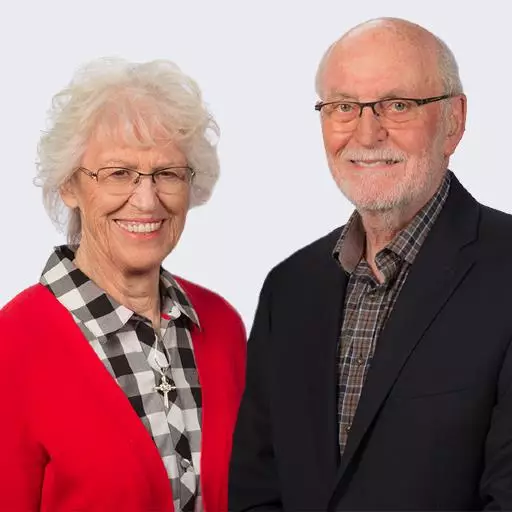
Stuart Briscoe was born in the north of England in 1930. After leaving school he embarked on a banking career, served in the Royal Marines during the Korean War, and at 17 years of age preached his first sermon. Stuart ministered on every continent, wrote more than 40 books, pastored a church for 30 years, and founded the media ministry Telling the Truth, which broadcasts daily worldwide. He was married to Jill for more than 59 years and had three children and 13 grandchildren. In August 2022, Stuart passed on to his heavenly home, but his legacy of witty, timeless teaching lives on through Telling the Truth.
Jill Briscoe was born in Liverpool England in 1935. Educated at Cambridge, she taught school for a number of years before marrying Stuart and raising their three children. In addition to sharing with her husband in ministry with Torchbearers and in pastoring a church in the United States for 30 years, Jill has written more than 40 books, traveled on every continent teaching and encouraging, served on the boards of Christianity Today and World Relief, and founded Just Between Us, a Christian magazine for women. Jill can be heard regularly on the worldwide media ministry called Telling the Truth. She is proud to be called “Nana” by 13 grandchildren.
Contact Telling the Truth with Stuart and Jill Briscoe
info@tellingthetruth.org
Mailing Address:
Telling the Truth
12660 W North Ave
Brookfield, WI 53005-4633
Phone Number: