
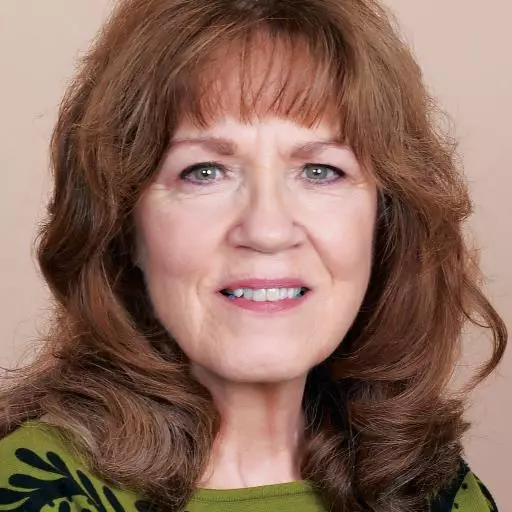
A Godly Legacy, Part 3


The greatest gift a parent can have is “to know my children walk in truth” (3 John 4).
This message is for parents and all who have an influence on children and want to invest in them a godly LEGACY: Love, Encouragement, Guidance, Affirmation, Correction, and most of all Yourself—a godly example!
You will be uplifted and inspired by the pearls of wisdom passed from one generation to another.
Sharon Hardy Knotts: Greetings friends and new listeners. Welcome to the Sound of Faith. I'm Sharon Knotts, thanking you for tuning in today because we know faith comes by hearing and hearing by the word of God. I believe you will be blessed by today's message as I minister on the importance of raising a godly seed.
I'm a third generation preacher, and I want to share with you the legacy passed to me from my dad, R. G. Hardy, and my granny, Mother Hardy, in today's message, "A Godly Legacy."
R. G. Hardy: So you see it was legacy that was being put into me. And so we have got to have encouragement. I remember when I was growing up, my mother always said to me—she had little sayings that she always said—and one that always stuck in my mind, she would always say that quitters never win and winners never quit. Whenever anything would be a problem, or I didn't want to do something, or I didn't feel like doing something, she would always say that to me: "Quitters never win, and winners never quit." And that would stay in my mind. That was encouragement.
I remember I would always tell my children: "You can do it, you can do it, you can do it." And Sarah, when she was little, she would always get this little girl whiny voice: "I can't do it." And I'd always say, "Yes, you can do it! Stop saying you can't because you can!" And what would happen is she not only would do it, she'd end up bringing an A home. And then the next time she'd go back into that same, "But I can't do it." I'd say, "What happened the last time? Didn't you get an A?" "I know, but I can't do it this time."
This was over and over again. And the next thing you know, she's on the honor roll. "I can't do it." The next thing you know, she's getting a scholarship. "But I can't do it." But she was doing it because even though she was saying that, she was wanting me to come back and say, "Yes, you can." She was wanting that encouragement. She wanted to know that her father and I believed that she could do it. Amen?
I heard about a story that they did an experiment with elementary grade school children. And the teacher stood up one day before the class, and these are just grade school level. She told the children that a recent scientific study had come out that had proven that blue-eyed children were much smarter, were more intelligent than brown-eyed children. She told this to grade school kids. Immediately and consistently, the grades and the work of all the blue-eyed children in the class went way up over everybody else's.
Two weeks later, the teacher stood up before the same classroom and she said, "I made a mistake. It wasn't the blue-eyed children that are smarter. It was the brown-eyed children that are smarter." Immediately, all the brown-eyed children in the classroom started—their grades started going up and consistently greater than the others. What was the difference? It was the encouragement. It was the suggestion that you can do it. We all know, of course, that there's no—but remember, these were little grade schoolers. So it's the encouragement that was given to them that made them think, "I can do this." And so it's the same way; we have got to give our children encouragement.
G is for guidance because there is absolutely no substitute for godly training if you want to raise a wise child who walks with the Lord. You all know the big verse, Proverbs 22:6: "Train up a child in the way that he should go, and when he is old, he shall not depart from it." How many know that? You've heard that before. It has a twofold application. First of all, in the Hebrew, that word "in the way that he should go" means in the bent that he's bent towards. In other words, what is that child's callings or giftings?
What is that kid good at? What does that child like to do? When you know your child is good at something and they like to do something, you should encourage them in that direction as much as you possibly can. Sometimes it means you've got to dig down in your pocketbook and as much as you financially can do, you want to encourage them. Now, you may really want your child to play the violin, but your child might really want to play volleyball. And you're trying to make your child play violin and they just ain't getting it.
So you've got to train them and push them in the direction that they are bent towards. Some kids are good at music, and every child is different. My son Scott, from a very early age, it was evident that he had great artistic talent. Todd was more gifted musically. And Sarah, when we found out—when I first put her in Little League, it was really because it was the cute thing to do to get the little uniform so she could march in the parade. Little did I know that she would be playing softball clear up to college. And last year when she was in college, her team made it to the Nationals.
When I put her in at six years old, I had no idea that that was going to be something that she was going to latch onto and be so good at. So you have to see what your child is good at. When my son Scott—I had no idea how talented he was. He was my first child; I had nothing to compare him to as far as the little pictures he drew me. He was always drawing all these pictures and they were really good, but I thought all five-year-olds drew that well. I thought they all drew that well.
And one day his kindergarten teacher said to me, "Scott is really gifted artistically. You really need to help him in that area." I said, "Oh yeah, I know, he draws good." "No, I'm telling you, he's really talented." And I had this look on my face. She says, "Come here, come here." She took me to the back of the room and she had this big board up on there, and she had all the pictures—the children had gone to the zoo. And when they came back, she told everybody, "Draw a picture about something you saw at the zoo."
Well, most of them were stick figures, and you really didn't know what they saw. Scott's, everything was drawn—it had all of everything, all the features, all the details, action. You knew what the animals were. And I looked at that. She says, "Now, this"—she pointed to all the others—"this is normal five-year-old talent. This is Scott's." She says, "No, this child has talent." So after that, we began to encourage him in that way. I began to buy him little art sets and anything that could encourage him in that field. That's what he was good at.
Todd was good at music. At nine years old, I put him to get piano lessons. Problem is, the piano teacher told him one day, she said, "If you don't practice, don't come back." She thought that that would make him practice. Well, she was wrong; he didn't go back. But he's told me many times, "Mom, I so regret, I so regret that I didn't stick it out. I wish I had done that." He has natural talent, but he's sorry now that he didn't learn how to read music and learn the right way.
So you have to see. So first of all, it means what are they good at? And let's face it, all the guys want to be in the NBA or the NFL. And some of them might make it, but have a backup plan. While you're encouraging them, have a backup plan because there's a whole lot of other kids out there want to make it too. And not only that, they might be the greatest—one injury and it could be goodbye. So have a backup plan. Amen?
The second meaning of that "in the way that he should go"—hey, no-brainer: God's way. There's no neutrality, there's no middle of the road. It's either God's way or Satan's way. And you've got to make that clear to them in every choice that they make, all the way down the line. They're either choosing life or death. They're either choosing blessing or cursing, God's way or the devil's way. "I'm going to go down the middle until I get ready." No, when you don't choose God, you're choosing the devil. And he's not your friend.
He's come to steal and kill and destroy your life. You've got to make that clear, make that clear. That's all you're going to get if you go that way. And as I've told you before and I'll repeat it, maybe some of you didn't hear this before, it's proven now that the frontal cortex of the brain of young people does not get fully developed until they're about age 25. They used to think it was around 18, but they realize now, with being able to do different scans, that that part of the brain is not developed yet.
And it's the part of the brain that allows them to take risks, to decide about risk-taking. That's why so many young people, they can still be 18 and still be out there driving like a maniac. They can be 18 and making terrible choices, and you think, "What is wrong with you?" Literally, their brain hasn't fully developed. And therefore, they're taking risks because they haven't developed that part of the brain. That's why you still need to guide them, even though they're 18, even though they're 21. You can't tell them and say, "You're going to do this," but you can surely put input in there, and you need to because you need to guide them as much as you can.
There is no substitute for guiding them on important things: their career, their job, who they're going to marry, their finances. Don't go getting in debt because it never ceases to amazement me, these companies, they send credit cards to kids that are in the 11th grade. They don't care that they're in the 11th grade and don't have a job. Automatically, you can have this credit card. Who is going to pay for it? And then they run it up and they ruin their credit. They're not even ready to even do anything yet.
Then when they do want to get a car or do want to get something, they've got horrible credit. You've got to stay on top of those things. You've got to guide your child and say, "You are not ready for this credit card." These people don't care because even if you default, when you default, it doesn't matter to them. They make so much money on the interest, it well compensates for all the people that default. Have you ever wondered why they don't care if you default? Because they are cleaning up on the interest. So they write it off their taxes when you default; that don't matter to them. You're the one that carries that black mark against your credit.
So guidance, G is for guidance. Teach them how to pray as I said before, in times of crisis, that they know, "Okay, I haven't been walking with the Lord. I haven't been walking in the truth like I should. I've been doing wrong, I've been going my own way, and now I've got a big mess here and I don't know what to do." But if you've taught them the right way, they will know regardless of where you are—God forbid, you find yourself sitting in a jail cell, call on Jesus! Call on the Lord!
If you make a mess, just call on the Lord. That they will know who they can run to because sometimes they're going to make a mess, and sometimes they're going to get out there and do stupid things, and they're going to pay some sad consequences. But even when they do that, it breaks your heart. You don't want that to happen, but if it does happen, pray that in that middle of that they say, "Oh God, if You'll help me, if You'll deliver me, if You'll bring me out." And God will hear them. Amen?
A is for affirmation. It's closely related to encouragement, but it's just a tad different. Whereas with encouragement, you're always cheering them on, telling them what they can do—"You can do it, I know you can, just try, you can do it"—affirmation is more affirming not what they can do, but who they are. Because they are not only your children and your grandchildren, they are children of God. And we've got to see our children as children of God. And He created them and He made them for His glory and His honor.
And He said very clearly in Jeremiah 29:11: "I know the plans I have for you," saith the Lord. Not just saith Mom or Dad, but saith the Lord. Plans to bless you, plans to give you a future, plans to prosper you, plans to give you your heart's desire. I have plans for you. Oh, if you'll only leave the choice to Him. His choices are so much better than what we would choose for ourselves. We don't have to have second best; God's got something greater. He said, "I will do exceeding and abundantly above all you would ask or think. I can do greater than that if you let Me work in you."
So we've got to affirm to them over and over, they are children of God. God created them. You're going to have them 18 years, maybe a little more after that, maybe a few more years, 21 till they're out on their own. But they are going to be God's children from day one forever. And you've got to get that across to them: who they are in God. Amen? So regardless of what the circumstances are of that child's background—suppose a child was born without a father and doesn't know their father? Okay, that's a hardship against them, that's a handicap against them.
What if that child was born and seems to be a slow learner and can't seem to find their niche and what they're fit to do, they can't seem to find it? What if that child, perhaps, is born into a poor family and you're limited resources as to just how much you can give them or how much you can do for them? What if that child does have—is born with a physical problem of some kind and a handicap of some kind? It does not matter. None of those things does not change that they are God's children and He has a great life for them.
Regardless of what the circumstances are, if they will trust in the Lord, if you make them understand: don't focus on those things that seem to be a hindrance to you. Look to the Lord. It doesn't matter even if sickness has come and stolen your child's health. Maybe something's come into their life and it seemed to steal their dreams and take them away. They are still God's child. He loves them and He's got a life for them. And you need to just encourage them and affirm to them that in God there is great things yet that they will receive if they will trust in the Lord.
And no one can say it any better than the psalmist did in Psalm 139. Turn with me to Psalm 139. Let's read this one together; I'm not going to paraphrase this one, it's too important. And verse 13: "For Thou hast possessed my reins"—and your reins talks about your innermost being—"Thou hast covered me in my mother's womb. I will praise Thee, for I am fearfully and wonderfully made. Marvelous are Thy works, and that my soul knoweth right well. My substance was not hid from Thee when I was made in secret and curiously wrought in the lowest parts of the earth. For Thine eyes did see my substance, yet being unperfect, and in Thy book all my members were written, which in continuance were fashioned when as yet there was none of them. How precious also are Thy thoughts unto me, O God! How great is the sum of them! If I should count them, they are more in number than the sand. When I awake, I am still with Thee."
Now, here we have even the testimony of the unborn child yet in the mother's womb, looking back, being in that place, not completely perfect yet. During that time of being knit in the mother's womb, being put together, God knew when it was first that tiny first little cell that is so, so tiny that you can't even—couldn't even see it before it began to divide and divide and grow and grow. God saw that tiny little child even before he had all his fingers, when they were still like this, before they began to break apart, before they had fingernails.
God saw when its eyes were tight like that, before they opened up. He saw everything about them in their mother's womb. He said that "when I was being made in secret, I am wonderfully, I am fearfully made." And that word "fearfully" means that with such reverence. Life is to be revered; life is precious. God says life is precious. He says the life of the unborn child is precious. He says that baby in its mother's womb is precious.
And today we live in a society where our children are being literally killed by the millions. 40 million today or something and counting. I know they call it abortion, but that is a misnomer. It is not abortion; it is infanticide. It is murder. Abortion is when the body of its own aborts or miscarries a seed because for whatever reason, there's a problem with it, either with the seed itself or with the environment that the mother can't carry it and the body itself may abort, deliver that child too early. That's an abortion. Not when they go in there and suck it out.
Not when they deliver a child and take scissors and stab it in the back of its right here and then suck out the brains. That's not abortion, that's murder. And God, if God said that the blood of one man, if just Abel's blood cried out from the earth, if one person's blood, what do you think God is hearing in His ears from 40 million babies being murdered? God says that child is precious regardless of how it all began. I don't care if you take someone who was high on drugs and they were with somebody they don't even know who they were with.
And now they have that child growing in there. No, that child, if they can't care for that child, they need to bring it forth and put it up for adoption. That child is precious. Amen? And so He's saying that when you were curiously made—and I love the word curious. It's a curious word. It makes you stop and think, "What does that mean?" But really the word is an old English word that literally means to embroider, to hand embroider. Have you ever seen doilies that were hand embroidered with little flowers and all the different colors?
I don't mean the kind they do with the machines, I mean where somebody sits there and sews by hand. That's the word—what it means: embroidery. And that's that word because if you go back under Leviticus, you'll see that when He told them how to make the garments for the priest, He told them, "Make the curious girdle." He meant make that covering that had embroidery all over it. So what it means is meticulously hand-designed, handmade, no stamped pattern, but hand-designed. Everyone different because it's not possible to do every single stitch identically the same over and over again.
And that's how God made us. We're all have our own DNA; every one of us is different. They know even our eyes are different and our fingers are different. We're all—God made us each one and He gave each one of us a unique makeup. And so when God made us, He made us even though we may not see all the things that God sees in us, He sees them nevertheless, even when they're imperfect, even when they're immature. And when you come to Christ, when you give that child to the Lord and when that child will surrender his life to God, God will bring out of him all the things that He placed in him, placed in her when He created them in the mother's womb.
Some people go through their whole life and they never have those things brought out of them because only God can bring them out. He's the only one that knows they're in there and put them there. You have some people that manage to bring them out, but they're using them in the wrong places. God made them to bless His kingdom, to bless His people, to shine for His glory; instead they're out there and the devil's using it. How many say amen? So we need to affirm to them who they are: they are God's child.
C is for correction. How many know you've got to have balance? And when I'm talking about correction, I'm talking about constructive remedial discipline. We're not talking about abuse, okay? So when I get to reading these scriptures, don't let your mind run off. We're not talking about abuse; we're talking about that which is remedial and that which is going to bring about a good remedy and fix a problem. The two worst things any parents can do are fail to discipline or over-discipline.
If you fail to discipline, you let a child to himself, oh my Lord, one day you will regret it, but by that time it will be too late. When they stand up in your face, it's too late then. How many say amen? So if you think, "Oh, I'm just going to let them go in their free spirit and let them be," yeah, when they get to school they're going to be so free, they're not going to be able to sit down behind a desk; they're going to have all kinds of problems.
Failure to discipline is bad, but so is over-disciplining. Because if you over-discipline them, the word of God says you break their spirit. And I think—I didn't put that scripture down, but I think it's Colossians around the fourth chapter: if you over-discipline them, you will break their spirit. And you don't want to do that either. So we want balance. Amen? Because if we love our children, we will correct them. God said it clearly—and I won't read it, but you know in Hebrews the 12th chapter—it says, "For whom the Lord loves, He chastens and scourges every son whom He accepts."
Everyone. If you endure chastening, then God deals with you as a son. For what son is there whom the father does not discipline? No chastening for the present—somebody say "for the present"—seems to be joyous, but it's grievous. For the present, it's grievous. But He says, "Oh, but in the future, afterward"—somebody say "afterward"—"it yields the peaceable fruit of righteousness."
Sharon Hardy Knotts: Amen. I hope you're being blessed by this message, "A Godly Legacy." This message speaks not only to mothers and grandmothers, but to all parents, grandparents, godparents, and really to anyone who mentors or has influence over children. You know, I love to talk about my granny, Mother Hardy. She was a self-taught Bible scholar who trained many young believers in the word of God. And when she died at age 89, she had no earthly riches, no property or money in the bank or even jewels to leave us.
But she did leave me pearls of wisdom which she gleaned from a lifetime of daily prayer and Bible study. She left a well-worn Bible with ragged pages and voluminous notes. And this is the most valuable legacy we can receive and we can leave to those who come behind us. I want to help you to walk with me in God's word as we discover the power of L-E-G-A-C-Y, legacy, and the six attributes these letters stand for.
You may want to order this message for yourself or someone you want to become a godly legator. It's available on CD for your love gift to the radio ministry of $10 or more. Ask for offer SK129. That's SK129 and mail to The Sound of Faith, P.O. Box 1744, Baltimore, Maryland 21203. You may also order online at soundoffaith.org, where you can order on MP3s as well. But to order by mail, send a minimum love gift of $10 to Sound of Faith, P.O. Box 1744, Baltimore, Maryland 21203 and request offer SK129. Until next time, this is Sharon Knotts saying Maranatha.
Featured Offer

Streaming now! Take a deep dive into a treasure trove of Sharon Hardy Knotts, preacher-teacher of inspiring biblical intrigue and gifted gospel insight.
Past Episodes

Featured Offer
Streaming now! Take a deep dive into a treasure trove of Sharon Hardy Knotts, preacher-teacher of inspiring biblical intrigue and gifted gospel insight.
About Sound of Faith
About Sharon Hardy Knotts and R. G. Hardy
R.G. Hardy is the Pastor of Faith Tabernacle in Baltimore, Maryland which he founded in 1958. He was marvelously saved after a personal encounter with the Lord in the living room of his home in January 1953, and was called into a prophetic teaching ministry. Shortly before he had been miraculously healed of a crippling back injury. Since these events, R.G. Hardy Ministries has broadened the scope of its outreaches through daily radio broadcasts, television, evangelistic crusades, Gospel publications, and missionary crusades and support.
For more than 50 years, R.G. Hardy has been recognized by the calling of a powerful prophetic anointing and message of salvation, diving healing, and deliverance through the authority of the Name of Jesus. By this anointing of power, he has demonstrated the message of the Gospel with signs following as God confirms His Word through the resurrection power of His son, Jesus Christ. Through the years, Brother Hardy hosted many of the crusades for the healing evangelists of the 1950's and 1960's. He has a rich heritage founded in the Pentecostal movement. Many ministers have received early training under his leadership and revelation anointing that is manifested when he ministers. In this world of compromise, R.G. Hardy has not compromised the Gospel of the Lord Jesus Christ. He has and still is "earnestly contending for the faith of our fathers."
Sharon Hardy Knotts is the daughter of R.G. & Doranne Hardy. She has served alongside of her parents in ministry at Faith Tabernacle Church, Baltimore, Maryland since childhood. Sharon was baptized in the Holy Spirit at age 7 in an old-fashioned tent revival, where she was slain in the Spirit, speaking in tongues. She began "preaching" in youth services at age 9, and began traveling with her father in evangelistic meetings at age 13.
Like her father and grandmother before her (Mother Mary Hardy), Sharon is an avid student of the Bible and holds a Master's in Theology from CLST, Columbus, Georgia. She is an accomplished teacher of the Word and also an anointed preacher. The marriage of these different delivery styles has produced scores of ministry tapes on various pertinent topics, which appeal to many believers.
Sharon and her husband Benny serve in fulltime ministry at R.G. Hardy Ministries. He prints Faith Is Action and oversees its publication and distribution. Family: Three grown children, Scott & Todd Stubblefield, and Sarah Knotts. Daughters-in-laws: Corinne & Amy Stubblefield. Grandsons: Noah & Matthew Stubblefield are Scott's sons. Sharon especially enjoys writing and serves as Editor of Faith Is Action and other Ministry publications. She also writes essays and poetry, some of which can be found on her blog.
Contact Sound of Faith with Sharon Hardy Knotts and R. G. Hardy
info@soundoffaith.org
Sound of Faith Ministries
P.O. Box 1744
Baltimore, MD 21203
410-525-0969