
Sound Doctrine
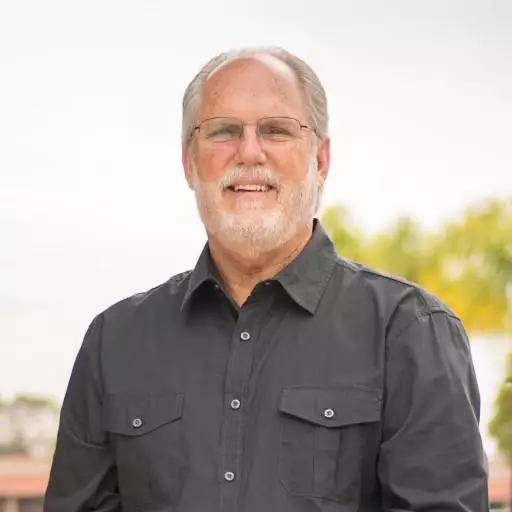
Jeff Johnson
Galatians 2 17-21 part 2


We are studying Galatians chapter two right now, and today pastor Jeff will again remind us that as Christians, we should die to ourselves and let Christ live within us. Given the choice of trusting God with your life, or going it on your own, which would you choose?
Guest (Male): What works can we perform to pay for our way to heaven? None. Period. Here's Pastor Jeff.
Jeff Johnson: We should serve in newness of spirit and not in the oldness of the letter. So he creates a new man. We have a new nature, not the old trying to do works and work our way to heaven or whatever. I mean Buddha has it all the things you got to do, Muhammad, you know, I mean you know, you name it. Yoga, you know, Paramahansa Yogananda and Eastern philosophy. They all have their little works trip. But no, we're dead to that. We're alive in Christ. We're dead to rules and regulations. This is the sweet liberty in Christ.
It's grace alone.
Guest (Male): We live in a very self-centered world. Have you noticed that? You have to love yourself before you can love anyone else, they say. Well, nothing could be further from the truth. As we'll see today on Sound Doctrine with Pastor Jeff Johnson. We're studying Galatians chapter 2 right now and today Pastor Jeff will again remind us that as Christians we should die to ourselves and let Christ live within us. Given the choice of trusting God with your life and going it on your own, which would you choose? Here's Pastor Jeff in Galatians chapter 2.
Jeff Johnson: Don't go with the religious guys, the ritual guys, the rules and regulation guys. Turn away from them. Romans 16 verse 17. Now, he says, I beg of you, brethren, mark them which cause divisions and offenses contrary to the doctrine which you have learned and avoid them. Pay no attention to them. Stay away from them. And then in Galatians, and we just kind of looked at that and touched on that as we were going through it, Galatians 1 verse 8 and 9. He says it once. He says both though we are an angel from heaven preach any other gospel unto you than which we have preached unto you, let him be accursed or damned.
And he says, again I say unto you. And he says it twice to emphasize it. Let them be damned. These are what the Bible says spots in our love feast. See, we're experiencing liberty in Christ and these spots come in like a cancer. And they seek to shake us up and to take away our liberty. Turn away, mark them, avoid them, remove them. Peter blew it. We we really don't get any response when here's Peter being rebuked in front of everybody in that coffee shop by Paul. And he did it with authority, okay? Paul says, comes right down on him.
And we don't hear his response. I thought, that's interesting. What did he How did he respond? Well, just read his epistles. Both first and second Peter. Amazing grace is throughout every one of his epistles. In fact, there's the the one portion there that every chapter has grace in it, every chapter. Did he get it? Yay, got it. I think that was his total deliverance from the law of regulations and rules when Paul, loving him so much, rebuked him in front of everybody. Galatians 6:1. If you see a brother or sister in a sin, tripping up, blowing it, confront them.
Well, I mentioned that. And in meekness you do it, not as Mr. Spiritual, in meekness. And I'm sure Paul was meek, but he was stern, okay? Because everything he believed in was being threatened right in front of his eyes. Was he a little upset? Yes. Even Barnabas? Barney? You went over to the other table? Come on, I thought you know better. You're the elder. Huh? What? Hey, blew it. Misrepresenting grace. Verse 19, going back to the text. He says, for I through the law am dead to the law that I might live unto God. The law, Paul is saying, killed me.
What? It killed me. Jot this scripture down. Romans chapter 7 in verse 9. Where Paul says, Romans 7:9, for I was alive without the law once. But when the commandment came, sin revived and I died. Well, yeah. The law was only made to condemn us, that we can't do it. And I gave you that example of the rich young ruler who said, oh, I did this law and I did this law and I did this law. I'm I'm I'm a good Jew. I did it all. Jesus said, well, there I got one thing I want you to do.
I want you to sell all your stuff and and come and follow me. Oh, I can't do that one. So there was no commitment. There was no allegiance. There was no I will follow you, Lord. You see, he's waiting. Are you going to follow me? Jesus is saying, if you love me, obey my and what? Commandments. What was his commandments? Love the Lord with all your heart, with all your mind, with all your soul, with all your strength, and love your neighbor as yourself. Bingo, you've done them all. Isn't that great? It's not hard. So the law wiped me out.
It slaughtered me. It tried me. The law's there to try us, to find us guilty, and then condemn us and slay us. That's all the 10 commandments were about. They were set up just for that. Do you remember Paul got dealt with by the Lord and he was on his back. I mean Paul was going to kill Christians. I 'm going to take their heads from them. He was like ISIS. I'm going to do it in the name of my God. That's who he was. We need to love the unlovely, don't we? And what they're doing, the unlovely things that they're doing.
Oh, I will never love an Arab or a Muslim. Come on. Where's Jesus in that? Did Jesus love them? Does he love them today? Does he care about them today? Did he die for them for them yesterday? Years ago? Yes. Then what's the problem? We need to love them. The only way they're going to hear God's love is through us. Where else? We're living epistles of the grace of God. They need to hear about grace. It's awesome. It'll free them. Cuz they're under law. And there's such a bondage to that. There's such a defeat with that.
There's no victory. So Paul on his back, and the Lord just had to lay them out. Sometimes the Lord has to lay somebody out. Some of you have testimonies. He laid me out. And then he flayed me. No. He just laid me out. I mean he I hit the wall the last time. Man. And it then Paul's blind on top of it. I can't see. I can't see. I mean humbly. Where where's my horse? You know, where's my whatever? You know, where's my sword? I can't find my sword. And he's blind. That's a way to humble somebody, huh?
He needed deliverance. They took him by the hand and led him to a place and he was in a little dark room just sitting there. And God called a man and Ananias to come and pray for him, lay his hands on him and ask the Lord to heal him. And his eyes were open. But remember there on his back he said, Lord, what do you want me to do? Gave his heart to the Lord and the Lord healed him and delivered him. And now Paul's saying, I'm dead to works. I 'm dead to the law.
I 'm dead to all that stuff that I once believed in. I 'm alive unto God. The law did its job. It executed me, got me on my back, and I heard the Lord cuz I couldn't do what I was thought I was supposed to do. Remember Romans chapter 7 with Paul, his his dilemma. I tried to do good. I found myself doing evil. I I struggled in the flesh all the time until the spirit of the Lord came upon me and freed me. Who's going to deliver me from this wretched man that I am trying to be righteous through the law?
I mean, come on. And he said, I thank God through Jesus Christ my Lord. There's only one way. Christ, he says, made me alive. Then verse 20, my favorite. In fact, I'm going to ask Jason when we end to sing this song. We used to sing it all the time. It's powerful song. Galatians 2:20. I am crucified with Christ. Nevertheless I live. Yet not I, but Christ lives in me. And the life that I now live, I live in the flesh. I live by the faith of the son of God who loved me and gave himself for me.
This is a key verse here. It brings us into redemption ground. You can be redeemed, bought with the precious blood of the Lamb. You can be set free. So Paul is saying, I no longer have a law relationship, but I have a love relationship. I no longer live by outside rules, but I live with a relationship with an inside ruler in my life. And his name is Jesus Christ. He came and he took up his home inside me. Well, knocking on your heart's door, let me in. Some of you call yourselves Christians. You're not Christians.
But even to those who call themselves Christian, he says, I'm knocking on your heart's door. If you will hear my voice, open your heart, let me in. I will sup with you and you with me and we'll fellowship together. Come on, let's walk together. Quit trying to do it yourself. Quit relying on religionity and churchianity. Rely on the relationship that you have with Christ and him with you. Come on. Let's be real. See, that's what the world isn't seeing. They're not seeing real Christians, those that are in love with Christ, those who serve the Lord.
And that's what they need to see. I got to get it until cuz they're just going to continue to call you a religious freak. You're weird. But when you get real with God, you're going to get real with them and that's going to blow their minds. That's going to speak loud. That speaks volumes. Cuz they watch your life and they watch what comes out of your heart because you have a relationship with a living God. I live through his death. I love this. I identify with him. He died for me. And here check this out.
Not just for me, he died as me. Are you getting it? I relate so much. I died with Christ when he was crucified. I 'm dead. When I received him into my life, I died. I was think I think I was 21 or something. No, I was younger. About 20. The old Jeff died. 20 years old. All of a sudden boom, there's a new life crucified, paid in full on that cross for me. I died to pride and self-esteem. I'm now alive in Christ and dwelt by Christ. That's important, isn't it? To live is Christ, Paul said.
How do you do that? How do you say that and mean it? For me to live is Christ. To die is gain. How do you have that mindset? Only through him, only in him. That's it. You died. You checked out. He checked in. It's not about living the crucified life either. You know, a lot of people say, well, you know, are you are you serving God? Are you living the crucified life? Yeah, I got some holy jeans the other day and and I'm I'm trying to humble myself and you know, and they put all all this stuff.
What are you talking about living the crucified life? He doesn't want us to crucify ourselves. That's crazy. You can't crucify yourself anyhow. How do you do that? Okay, you can maybe get one nail in. And then you can't get the other one in. We can't do that and we don't he doesn't want us to do that. We're crucified with Christ. And he killed us. When he died, we died. And we were then buried with him. I love water baptism. A little great description of being buried, you know. And then we rose what? In newness of life, with a new life.
Thank God for his finished work. He is our sacrifice. He is our substitute for our sin. Peter is no longer or actually Paul is saying to Peter, Peter, it's no longer law, Peter. It's the Lord that makes the difference. It's not what you do, it's what he's done. He died and he lives in us. He is our redeemer who lives or who loves us and lives inside of us. And that's what Paul is saying here. Nevertheless, you know, I'm I'm dead, but nevertheless Christ lives in me. The hope. He's my he's my redeemer. He he walks with me, talks with me.
He's my personal, individual Lord and savior. Very intimate. So I can live and walk by faith. Christ in me the hope of glory, Paul said. The hope of glory. And I can do all things through him who strengthens me. Right? And we are more than conquerors through Christ. We are overcomers in this world. Think of all those great adjectives that he has allowed us to experience. Lord, just burn them within us so we can meditate on them. They're powerful. Then finally verse 21. I do not frustrate grace, the grace of God. Wow. For if righteousness comes by the law, then Christ is dead in vain.
If I if you go back to the law, Christ died for nothing. In vain. But Christ died because the law was not kept. Christ died because it could never be obeyed. That's why he died. The law was there and it's good. And we have it in our gymnasium. So when everybody's playing ball in there and and all this stuff, they're looking at the the big 10. We call it the big 10. We have a lot of unsaved going in there and look at the big 10. They always they have it right there. It's huge. It's on the wall.
We don't want them forget. We have it in every classroom, the 10 commandments. Why is that? So it'll kill a lot of kids. So it'll kill a lot of those that think that by, you know, doing this. And and then they read it and they go, well, I blew it there, I blew it there and wow, man. Well, I don't want to look at that anymore. I can't do that. You got it. Then how are you going to heaven? How are you ever going to make it? And what strength do you think that you can be a spiritual man or woman of God?
Not your own. None of us have any kind of strength that way. It only comes through Christ. And now the life I live, I live by the faith of the son of God who loved me and gave his life for me. God's grace is that he died in our place. Again over in jot down Romans 7 verse 4. He says in 7:4 of Romans, wherefore my brethren, you also are become dead to the law by the body of Christ, that you should be married to another, even to him who is raised from the dead, that we should bring forth fruit unto God.
How can you bring forth fruit unless you're in the vine? And the Lord says, I want you to get connected. I want to I I want you to live. I want you to bear fruit. You will know them by their fruit. The fruit that is coming out of their lives of of the fruit of the spirit is long suffering, mercy, gentleness, kindness. I mean there's so much. The law has no more power over me. I am dead to it. To never go back to Moses. That's a graveyard, guys. It always was and it always will be.
It's a graveyard. They didn't make it. We're dead to it. Romans 7. I just saw it. Again going back to Romans 7. Romans 7 verse 6. Listen to this. Now, but now we are delivered from the law that being dead wherein we were held that we should serve in newness of spirit and not in the oldness of the letter. So he creates a new man. We have a new nature, not the old trying to do works and work our way to heaven or whatever. I mean Buddha has it all the things you got to do, Muhammad, you know, you name it.
Yoga, you know, you going to Paramahansa Yogananda and Eastern philosophy. They all have their little works trip. But no, we're dead to that. We're alive in Christ. We're dead to rules and regulations. This is the sweet liberty in Christ. It's grace alone. The law was given to those who are not walking with the Lord. That's it. Thou shalt not. Oh, man, the kids. In our school up at camp or whenever, you know, they they say, well, hey, man, why are you laying the law down to us? Can't do this and can't do that. Well, you know, if they would just get right with the Lord, they wouldn't need it, right?
Think about that. They're not they're not right yet. They're they need they need those rules and regulations. But it's for those that aren't aren't right with the Lord to condemn them, to bring them to the place of frustration to want to get right. I think Peter must have felt really silly after hearing Paul's rebuke. Like what have I done? He just zipped it up, didn't say a word. He's right, he's right, he's right, he's right. I blew it. May God help us not to frustrate the gospel of grace, to not to frustrate our faith, our freedom.
If we had have added anything, let it be removed because it's all about grace and nothing else. The Lord makes it so easy and so simple when you sing that song, Amazing Grace, how sweet the sound that saved a wretch like me and continues to save me, continues to cleanse me, continues to be with me. It's amazing. We've got to choose to live by the law with rules, regulations and rituals or by grace. And everyone's brought to that place. How are you going to live? Who are you going to live for? Who are you going to live with?
What are you going to do about this? There's no other way or there was no other way to save sinners. God would have to send his son to die for sinners. That was the only answer. There was no other way. Jesus was the supreme sacrifice. In Luke's Gospel chapter 23, jot it down verse 34. Luke 23:34 then said Jesus, as he's there on the cross, forgive them for they know not what they do. He loves us. He gave his life for us. And he died there on that cross to prove God's love. I mean God did this.
No what no man could write about this. No man would even dare go there, only God, because it's amazing grace. God gave his son to this world that whosoever would believe in him should not perish but have everlasting life, that he would save us. And he'll save you this morning if you need deliverance, if you need salvation. That's what the gospel of grace is all about. He wants to give you liberty in your life. He wants you to be free. He who is who is set free is free indeed by the word of the Lord.
Guest (Male): Funny, isn't it? The world sees a Christian and automatically thinks of someone who is tied and shackled by rules and regulations. Of course, the opposite is true. We are set free. We are free indeed. Pastor Jeff Johnson will be back in a moment with the closing comment here on Sound Doctrine. We're developing a study in Galatians right now. If you enjoyed today's message from Pastor Jeff Johnson from the book of Galatians, I'd like to remind you that you can hear it again on several different venues. First, you can go online to sounddoctrineradio.org where you can hear today's study and more as well as make a donation to this radio outreach.
That's sounddoctrineradio.org. You can also listen to us at oneplace.com and through the Sound Doctrine radio podcast app. And of course, speaking of podcasts, Sound Doctrine can be heard wherever you enjoy podcasts, including Spotify and Apple Podcasts. Now with some encouragement for those who are unnecessarily living under bondage, here's Pastor Jeff once again.
Jeff Johnson: So Lord, bring liberty this morning to those that are captive. You're in bondage to whatever. You could be in bondage to church. You can be in bondage to a lot of things. He says, I'll set you free so you can be who I've called you to be, so you can be a vessel unto honor for me. I want you to be my trophy. I want to show myself strong towards you if you turn your heart towards me. That's his promise. And he'll make you that mature man or woman of God. And he'll cause you to be a blessing to the body of Christ.
And to those who don't know him because you'll be a walking epistle, you know. You'll be a walking grace. You'll be in a grace state. And that's a good state to be in.
Guest (Male): Be sure to join us again next time we meet for another encouraging and challenging study from Pastor Jeff in the book of Galatians. You're on Sound Doctrine presented each day by Calvary Chapel Downey.
Featured Offer

Access an extensive archive of messages from Pastor Jeff Johnson
Past Episodes

Featured Offer
Access an extensive archive of messages from Pastor Jeff Johnson
About Sound Doctrine
A weekday radio program featuring the verse by verse Bible teaching of Pastor Jeff Johnson broadcasted throughout the United States and abroad.
About Jeff Johnson
Jeff Johnson is the senior pastor of Calvary Chapel of Downey, California since 1973. The emphasis within his ministry is a verse-by-verse study of the Word of God, giving its full counsel. His influence has experienced a steady and substantial growth over the years with people of all ages. Calvary Chapel of Downey has grown to average weekly attendance of more than 9,000. Teaching seminars, Bible classes, home studies, various training programs, mission outreaches, as well as a Christian Elementary & Jr./Sr. High School, and Bible college meet the needs of this large body. Calvary Chapel's impact is growing from Southern California to virtually around the world. His wife Karyn supports Jeff in his ministry.
Contact Sound Doctrine with Jeff Johnson
Mailing Address
Sound Doctrine Radio
12808 Woodruff Ave.
Downey, CA 90242
Telephone
(800) 353-7553
(KWAVE - 107.9FM)
(562) 803-6501
Southern California 2:00 pm