
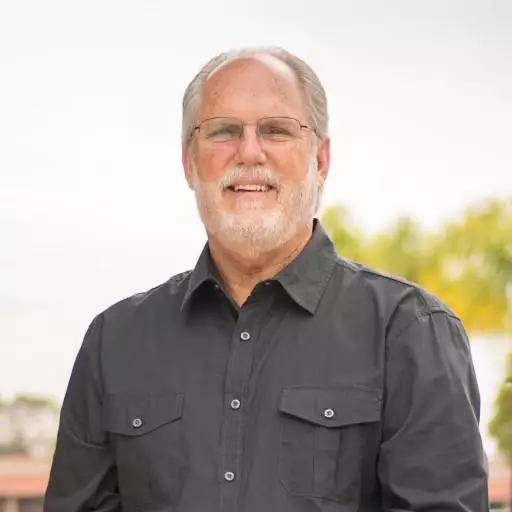
Sound Doctrine
Jeff Johnson
2 Samuel 18 part 2


If you have kids, and one of them has rebelled against you, or walked away from their faith, you’ll identify with David’s predicament. David’s son Absalom has spent quite some time trying to kill his father, and yet, after his attempts fail and Absalom dies, David mourns over the loss of his son. What a beautiful expression of Godly love and a forgiving nature.
Guest (Male): Knowledge is important for the believer. We need to know what we're talking about when we're talking about God, but we also need something else. Here's Pastor Jeff.
Jeff Johnson: May God give us not only zeal but knowledge. We need both. I never want to put down a young Christian that's zealous. I think that's great because that zealousness is something hopefully you'll hold on to for the rest of your Christian walk. Never let it go.
Without that zealousness, that zeal to serve the Lord, there is that constraint that Paul had. His love constrains me. There's a zeal that he's given to me. I want to do it. But then comes the knowledge that's so important too. What to do when you get there? What to say? So important. May God give us both.
Guest (Male): Welcome to Sound Doctrine with Pastor Jeff Johnson. On today's program, we look at a scene that describes so perfectly the burden we take on when we become parents. If you have kids and one of them has rebelled against you or walked away from their faith, you'll identify with David's predicament.
David's son, Absalom, has spent quite some time trying to kill his father. And yet, after his attempts fail, Absalom dies. David mourns over the loss of his son. What a beautiful expression of godly love and a forgiving nature. Here's Pastor Jeff in 2 Samuel, chapter 18.
Jeff Johnson: I was thinking about that one little scripture in Corinthians where Paul said, "Know you not that they which run in a race run all, but one receives the prize? So run that you might obtain." I therefore, Paul says, so run, not as uncertainly, so fight I, not as one that beats the air. But I keep my body or I keep under my body, and I bring it into subjection, lest that by any means, when I have preached to others, I myself should be a castaway. Or another word is disqualified out of the race.
I don't want to be disqualified. I want to have a message. And I realize that when I talk, when I share, I need to back up what my words are with my life. There needs to be a double message: what we say and then how we live. They need to line up, or Paul said, I'm afraid I'll be disqualified out of the race.
May God help us not to be as a relay runner who gets there with no baton. It was neat, man. I flew around that guy and then I took off and I went around the corner and I was ahead and I don't have nothing to give you. I mean, it goes to the next relay runner and you know how you're supposed to start running and you're supposed to have your hand behind you. And they have such a way as they hit right here on the side so you can feel it and take off and get the baton. But if you end up at the end of the race without the baton, what do you got? You lose. You've got to have the baton.
Listen, opportunity is not mandate. Just because something opens up doesn't mean that fools rush in where angels fear to tread. We've got to be led by his spirit. We need to pray about it and wait for his okay. Then we can be bold and then we can share the message and go in with confidence.
Verse 24: David sat between the two gates and noticed the watchman went up to the roof over the gate unto the wall, and lifted up his eyes and looked, and behold, a man was running alone. And the watchman cried and told the king. And the king said, "Oh, if he be alone, there is tidings in his mouth." And he came apace and drew near.
And the watchman saw another man running. And the watchman called unto the porter and said, "Behold, another man is running alone." And the king said, "Oh, he also brings tidings or good news." And the watchman said, "Methinketh the runner of the foremost is running like Ahimaaz, the son of Zadok."
In other words, he had that weird type of run. You ever seen somebody has a weird type of run? And when you see them run again, you go, "Oh, I know who that is," because they just have a distinct run. Well, this guy had one. And the king said, "He is a good man and he brings good tidings."
Back then, they had always two gates into a city. And when they set up the gate of a city, they would always set up the gate around the corner. In other words, there's a cliff and then they would put the gate because they didn't want to have a straight run for the enemy to be able to ram the gate. So they would always give them a little tiny platform and they'd have one gate. And then they'd have a courtyard and another gate. Well, David was waiting in the courtyard, waiting for the message from the watchman.
And I thought, I have to go just to share a moment about the watchman. Do you know that we have been given that same direction to be watchmen? Ezekiel, chapter three. He talks about the watchman there and he says the watchman needs to warn those that are wicked. And if you warn the wicked, then you won't be accountable for his blood. But if you don't warn the wicked and he goes ahead and wipes out, then you're accountable for the wicked.
As a minister, I took this deep to heart. I thought, I have to be careful. I have to always warn. And I always have to give an opportunity. So at weddings, at funerals, we've always got the gospel involved. And we always reach out to the people and say, you too at this moment right here can come to know the Lord. And we warn them of certain judgment.
I mean, there's no better time than really at a funeral to talk about the good news of Jesus Christ and about death, that it's going to come to everybody. You're going to die. What are you going to do then? Death comes and then judgment. You've got to prepare to meet your God. You've got to be ready. Get your house in order. Get right with the Lord.
What a beautiful time to share the gospel. And we have so many come and receive Christ at funerals and weddings here. It is glorious to see. Even weddings, as we leave packets in the back, people are grabbing them because there's a great hunger and thirst today. And people know they're wicked. They know they're in wickedness.
You don't have to tell people they're sinners. Everybody knows it. You know it. The spirit of the Lord has been poured out upon this whole world to convict us of our sin. We have fallen short of the glory of God. All of us have sinned. We're in a bad situation. We need the Lord. And so that warning goes out. That was the job of the watchman.
But if you do warn the wicked, then you're not held accountable for their blood and you've done your part, and then it's up to them. And that's that whole thing about the watchman in Ezekiel, chapter three. Notice it says you're to warn them, not convert them, because I know there's no one that can convert anybody. The Lord will convert you. He'll change you. But our job is just to tell people, isn't it? Tell them of what's coming. Tell them what's going on. Let them know. And then they've got to choose what they're going to do. And then the Lord will change them.
The watchman shouts out, "Hey, I see one runner." David said, "That's good," because if there's one runner, that means he's bringing a good message from the front lines. Now, if he saw a bunch of runners and a bunch of people running, he'd go, "Uh-oh, we're in trouble, guys. We're probably losing," if he saw everybody running to the back. But he just sees one runner. He goes, "All right." Then he says, "There's another runner." "Oh, that's okay. He's alone, right? Yeah, he just passed the other one. Well, that's all right because he's probably got good news too."
Ahimaaz gets there first and he says, "David, I've got some good news. Everything is well. The enemy has been dealt with. We have the victory." David looks at him in verse 29 and says, "Is the young man Absalom safe?" Ahimaaz answered, "When Joab sent the king's servant, and me thy servant, I saw a great riot, a tumult, but I knew not what it was." And the king said unto him, "Turn aside and stand here." And he turned aside and stood still.
You see, David's first question was, "How's my son doing?" And so then Ahimaaz starts going, "Well, I saw some people fighting. I don't know what the outcome was." It was just a bunch of BS. You know what BS is, don't you? Beautiful sayings. And he goes off into these beautiful sayings and he's saying nothing. And David's saying, "Hey, you don't have any answer for me?" He says, "No." He says, "Well, just stand aside."
But listen, I want you to know that Ahimaaz knew that his son had died because remember verse 20. Joab had told him. He knew what was going on. But he didn't have all the details and I don't think he wanted to be the one to break the news to David, knowing it was going to break his heart that his son had died. He didn't want to do it. But because he didn't have the news that David wanted to hear, he just said to Ahimaaz, "You just stand aside. You're worthless. You don't have what I need. I need to hear about my son. You're not going to tell me nothing, so get away."
Verse 31: Behold, Cushite came and Cushite said, "Tidings, my lord the king. For the Lord hath avenged thee this day of all them that rose up against thee." Notice number one: the Lord has done it. Isn't it neat that the Lord is for us? Who can be against us? We have enemies, Christians, don't we? You guys have got enemies.
But you know who's fighting your enemy, who's going to take care of them eventually? They're in the Lord's hands. Let the Lord do the fighting. The battle is the Lord's. Don't you get caught up in the fray and all the confusion and frustration of a warfare that is spiritual, that you need to trust the Lord to take care of your enemies. David was doing this, and God was taking care of him, and David wasn't even around. Isn't that great? The Lord just handles it. You can just say, "Lord, handle it," and he'll handle it. And then you'll get the report. Wow, you're kidding. Sometimes it's bad news.
The Lord has avenged thee this day of all them that rose up. But remember the king's question, his first concern, verse 32. King said to Cushite, "Hey, is the young man Absalom safe?" David loved his son. And all he cared about was his son's safety. Even though his son wanted to kill him and take his throne and wipe him out, David still cares about his son. Only worried about what is going on with him.
And then he gets the news. It says in the middle of verse 32, and Cushite answered, "The enemies of my lord the king, and all that rise against thee to do thee hurt, be as that young man is." In other words, "David, your son is dead." He had the message, didn't he? And man, did he give it straight on.
There were two runners. There was that strongest runner, the fastest runner, and he got there first. But he didn't have a message and he was told to stand by. Get over here. I don't want to hear from you. But then there comes this second guy who's a little slower, and I see a little bit more maturity in him as he has the message, and he gives it.
May God give us not only zeal but knowledge. We need both. I never want to put down a young Christian that's zealous. I think that's great because that zealousness is something hopefully you'll hold on to for the rest of your Christian walk. Never let it go. Without that zealousness, that zeal to serve the Lord, there's that constraint that Paul had. His love constrains me. There's a zeal that he's given to me. I want to do it. But then comes the knowledge that's so important too: what to do when you get there, what to say. So important. May God give us both.
And you need to ask yourself this morning, are you in the race to win? Are you a sprinter where all of a sudden you get going fast at first, but then all of a sudden everybody's passing you up and you're thinking, "I just wasted myself the first 100 yards. I thought we were running to win, but I didn't pace myself." You need to learn to pace yourself. Long-distance runners, they have endurance, don't they?
Are you in the race? Are you enduring? How do we endure this thing? This race that sometimes, I know they're saying the Lord's coming back and I hear this a lot, but I don't know how long. I want to know how long. We don't know. Could be tonight and it's over, guys. But until then, we need to occupy till he comes. We need to endure.
How do you endure? By doing what you're doing this morning: by sitting at his feet, by listening to him, by being ministered by the spirit of the Lord, by letting God deal with you. And if your heart's divided and you're in compromise, dedicate your heart anew and afresh. Get back into the race and begin to pace it off.
What's your message? Think about it. What's your calling? What is your ministry? You say, "Well, that's your job, Jeff." No. You have a ministry. You have a message. What is it? Do you know what it is? And if you don't, you should with everything that is in you seek for that message and what that ministry is. Ask the Lord to open the doors to show you. So when you get there, you've got something to say. Have direction. Ask God for that and he'll give it to you. And he'll give you a precious ministry right where you're at. And you'll begin to pray for it, watch it grow, watch it touch lives and multiply. And it's to God be the glory.
Finally, verse 33: The king was much moved when he heard this news and he went up to the chamber over the gate and he began to weep. And as he went, thus he said, "Oh my son Absalom, my son, my son Absalom. Would God I had died for thee. Oh Absalom, my son, my son." David's heart was broken when he heard the news. He was wailing and he was grieving over his son's death.
Now when I look at this and I see him and his reaction to his son's death, and then I look back at his life and look at his reaction to his first son's death. Do you remember that? Very interesting how he reacted. It was so different. He didn't cry at all. He didn't wail. He didn't go on and on.
In fact, his servants, when his son was deathly sick, saw David just bowing on the ground and praying and crying out to God, "Oh God, heal him. Oh God, raise him up." And then David left the room for a moment and his son died. And his servants were so scared. They knew when David came back he'd know that his son had died.
They said, "Man, if he reacted this way when his son was sick and dying, what's he going to do when we tell him that his son is dead?" He came back into the room and they didn't even have to say it, because David looked at their faces and said, "My son's dead, isn't he?" You just know when you're in that situation.
"Yeah, your son's dead, David." He said, "Well, give me a change of clothes, give me something to eat." And they went, "David, you're confusing us. What do you mean? Before, when your son was sick and dying, you were praying and you wouldn't eat. Now we tell you your son's dead, now you say you just want to go on with your life and you want to eat and change your clothes and just go on with life?"
He says, "Yes." And I love what he said to them. He said, "I know this: that my son cannot come to me, but one of these days, I'm going to be with him." That hope that he had. "I'm going to see my son again." He knew that his son was under the age of accountability. I don't know what that age is. I don't know how old that age is. God knows. There is that age where a child is under the age of that accountability.
And this was just a baby that died. A baby died. And what a hope to know that your baby went to be with Jesus. And you can just go on because you know that one of these days you're going to go see that little baby again. But not so with Absalom. I think David sensed that he wasn't right in his life. David knew that Absalom wasn't together and that he was lost and that he went to hell. What a downer to know that you'll never ever see your son again. No hope. It's a hopeless situation.
Parents, do you know if your kids are saved? Do you? You need to. You say, "But Jeff, they're teenagers now, they're older." Well, have you been bathing them in prayer? You need to. Have you been the witness that they need to see of a godly man and woman, godly mother and father? You need to be.
Don't be a stumbling block to them. Be a stepping stone. Let them see your life, let them see your testimony, let them experience your prayers that they might come to know the Lord, that you will have that blessed assurance that if something was to happen, they would go directly to be with the Lord. To be absent from this body is to be present with the Lord, and that you would know that.
Absalom is really here as a type of humanity. And if you look at this as a type of all men, of those who have rebelled against God, of those who have rebelled against his authority. And yet David loved him. And yet God has proven over and over again that he loves this world and he cares for everybody in this world, no matter what they've done.
That while we were yet sinners, Christ died for the ungodly. And if that isn't proof enough, I don't know what is. That when I was in my sin, cursing God, Christ died for me. God loves me. Remember as Jesus came to this earth, as Absalom sought to take David's life, so men sought to take the Son of David's life when he was here. And they took him and they crucified him on a cross. And yet three days later, he rose again from the dead.
David's great love for him was so strong that he said, "I wish I would have been able to, I wish I could have died in your place." Well, John 3:16 says God so loved the world that he gave his only begotten Son, that whosoever, that if you would believe, you should not perish but have everlasting life. What David wouldn't and couldn't do, Jesus did for us. God sending his Son, he died for us.
He was wounded for my transgression, bruised for my iniquities. The chastisement of my sin was placed upon him, and by his stripes I am healed. He came to redeem us back to God, to reconcile us, to get us back into a relationship with our creator.
This is an awesome love. In fact, Paul said in Ephesians, chapter three, listen to this beautiful prayer, Ephesians 3:17, "that Christ may dwell in your hearts by faith, that you may be rooted and grounded in love, that you may be able to comprehend with all the saints what is the breadth, the length, the depth, the height, and to know the love of Christ which passes knowledge, that you might be filled with all the fullness of God."
Wow, what a prayer: that we would know his love, that we would experience it in our lives. Look what David was willing to forgive and overlook in Absalom's life. I mean, this guy is in total rebellion, seeking his life to kill him. He has all this bitterness and all this anger, yet David says, "I don't care. I want to forgive it all. I know you hated me. I know you wanted to kill me, but I love you."
Man, that's the type of love that we have a hard time with, isn't it? I mean, you have a hard time dealing with it, especially when you're going... and the guy goes, "I love you." "Don't say that again." You want them to lash back at you, right? You want them to, "Come on, do something. I want to hit you more." No, I love you.
God's love is so overwhelming. As David's love, so is God's love toward us and towards our rebellion and towards our sin. As David cried, "Oh Absalom, my son, oh Absalom, my son," so God will cry for you if you went into a Christless eternity because God loves you. And he doesn't want you to go into that torment. And so he warns. He says you can turn.
I'm sure David had no idea when committing the adultery that he did with Bathsheba, you know, that quick roll in the hay, and you think that's not a big deal. It's just a quickie affair. It's just a quickie this, a quickie that. Everybody's into quickie everything around here: quickie divorces, fast food, fast this, fast that. And everybody thinks that's all done. And I know he didn't think of what this would entail. He had no idea of the results and consequences that they would be so great as he wept over his son and his son was dead.
Guest (Male): What a perfect example of the consequences of sin. Even what you might consider a little bitty sin can have devastating consequences. Pastor Jeff Johnson will be back in just a moment here on Sound Doctrine.
Hopefully as you listen to these messages in 2 Samuel, you'll have ears to hear what the Spirit is saying in these critical times. God's word is so practical, giving us direction, instruction, and wisdom to our lives. To hear this message again, simply go to sounddoctrineradio.org or listen through the Sound Doctrine podcast app.
You can also hear Sound Doctrine on oneplace.com and wherever you enjoy podcasts, including Apple Podcasts and Spotify. We would very much appreciate your support. It helps us deliver Sound Doctrine on stations like this one all across the nation. And you can donate to this radio outreach at sounddoctrineradio.org. Now to wrap up our study in 2 Samuel, chapter 18, here's Pastor Jeff once again.
Jeff Johnson: I think it is a sober reminder to all of us this morning of the devastation of sin and of its tragic effects in our lives. And we need to take it to heart. What a price to pay. This is the bad news. But there is good news: that all of us have sinned and come short of the glory of God.
The wages of sin is death. But the gift of God is eternal life through Jesus Christ our Lord. That's good news. That there's a way out, man. To whosoever believes and receives him, he gives the power for you to become a child of God, to live for the Lord, to experience his love, to get to know his love, his grace, his mercy upon your life, and to walk in it.
Again, it's all your choice. You want to be a son or a daughter of God, or do you want to continue to be a daughter and son of the enemy, Satan? I mean, if you're not living for God, you're living for the other guy. Think about it. You've got a choice.
Guest (Male): That'll do it for today. Come back next time when our study in 2 Samuel resumes on Sound Doctrine with Pastor Jeff. This program is listener-supported and brought to you by Calvary Chapel Downey.
Featured Offer

Access an extensive archive of messages from Pastor Jeff Johnson
Past Episodes

Featured Offer
Access an extensive archive of messages from Pastor Jeff Johnson
About Sound Doctrine
A weekday radio program featuring the verse by verse Bible teaching of Pastor Jeff Johnson broadcasted throughout the United States and abroad.
About Jeff Johnson
Jeff Johnson is the senior pastor of Calvary Chapel of Downey, California since 1973. The emphasis within his ministry is a verse-by-verse study of the Word of God, giving its full counsel. His influence has experienced a steady and substantial growth over the years with people of all ages. Calvary Chapel of Downey has grown to average weekly attendance of more than 9,000. Teaching seminars, Bible classes, home studies, various training programs, mission outreaches, as well as a Christian Elementary & Jr./Sr. High School, and Bible college meet the needs of this large body. Calvary Chapel's impact is growing from Southern California to virtually around the world. His wife Karyn supports Jeff in his ministry.
Contact Sound Doctrine with Jeff Johnson
Mailing Address
Sound Doctrine Radio
12808 Woodruff Ave.
Downey, CA 90242
Telephone
(800) 353-7553
(KWAVE - 107.9FM)
(562) 803-6501
Southern California 2:00 pm