
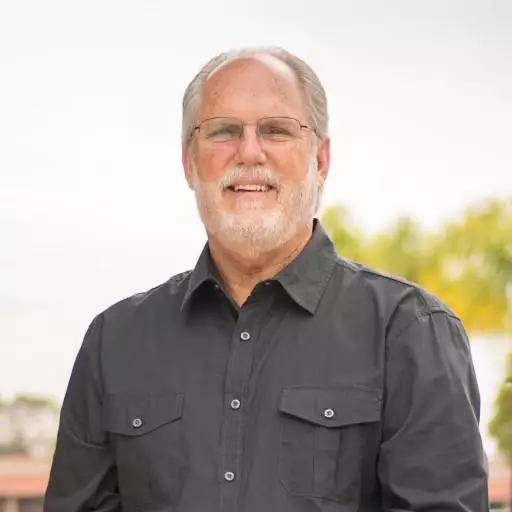
Sound Doctrine
Jeff Johnson
Galatians 1:1-5 part 2


Today we again turn to Paul’s letter to the Galatian churches. The churches in Galatia had strayed away from the truths Paul had taught them when the church was formed. Salvation through faith was the corner stone, and the Galatians had listened to the wrong teachers after Paul had left, and now they believed they had to work for their salvation. That’s the same false doctrine that many people are falling for today.
Guest (Male): We're living in the last days before the Lord's glorious return. Don't believe it? Here's Pastor Jeff Johnson.
Jeff Johnson: These days are evil and they're going to get darker. And it's going to be as in the days of Lot. Remember those that perished in Sodom and what they were into? They were into every sexual devious lifestyle. And look where we're at today. We are as in the days of Lot. And that's the day Jesus says I'm going to come back when it gets bad again. And he makes it very clear. We're living in those days.
Guest (Male): Calvary Chapel Downey welcomes you now to Sound Doctrine with Pastor Jeff Johnson. Today we again turn to Galatians. The churches in Galatia had strayed away from the truths Paul had taught them when the church was formed. Salvation through faith was the cornerstone, and the Galatians had listened to the wrong teachers after Paul had left. And now they believe they had to work for their salvation. That's the same false doctrine many people are falling for today. Here's Pastor Jeff in Galatians chapter 1, verses 1 through 5.
Jeff Johnson: The head shop is where they sell drugs and paraphernalia. I went in there, these guys with long beards, long hair, full-on guys that are just drugged out. I went in there, of course, I had long hair and a beard. So I went in there, sharing Jesus with them, and they go, "Hey, hey, hey, hey. Go in the back room and we'll sit down and we'll talk about it." I said, "Great, this is going to work out fine." So I went into the back room then all of a sudden all these big guys with hair out to here and they start passing around the bong. It was just a huge piece of marijuana, probably with all kinds of stuff in it. They're passing around, they're doing it, and they come to me and I go, "No thanks."
I said, "I didn't come here to get loaded. I came here to give you guys the good news of Jesus Christ. I used to do this and I don't do it anymore because I found peace with God through Christ. The Lord can give you such tremendous joy. You don't need marijuana to laugh. You don't need marijuana to calm you or whatever. You can get high on him." They freaked out. They got in my face immediately, two big dudes, and they go, "Yeah, we're people of peace, man, and we can't stand what you're saying. You've got to get out of here. We want you out of here." They started to just push me out the door.
So I went out the door and I kicked the dust off my feet. I went to talk to the two guys I went up there to share with. I led both of them to the Lord in that. Here I was six months old in the Lord, but I used to do SRF, Self-Realization Fellowship with Paramahansa Yogananda and all that stuff. These guys were right into their lessons and they had pictures of their gurus and everything. I started around 11:30 at night, and about 2:00 they gave their hearts to the Lord and they started burning all their stuff, throwing it in the fireplace. It was so great. All these gurus were just sizzling. And they prayed with me and they had an experience with the Lord and got saved.
Come to find out in the morning, guess what happened? That head shop burned to the ground. I didn't do it! I went by there and I was like, "Oh my gosh." God gave them an opportunity to get it right. Somehow, some way, it just burned down. Then I went and they were having a Bible study the next day and I went there and they asked if we could have communion. I said, "Sure, we can have communion. In fact, I'll help you guys and let's do it right now." So we started to pray over it and we'd break the bread up and pass it around.
These two girls came up to me and say, "What are you doing? You're not a priest! How dare you give us communion? This is ludicrous. This is wrong." They were so upset. "Where's your authority? Did you go through this or that?" I said, "No, I'm just a Christian. I love the Lord. Let's have communion." They just couldn't get it. So this is what was going on with Paul. He was struggling with this whole mindset. You're not a priest and you're not this and you're not that.
I love Paul because he's so convinced of his calling. He says, "I am an apostle by God, not man." And I'm here to share with you the good news. Now, they questioned John the Baptist. They said, "Are you he?" And he said, "No, I'll be honest with you, I am not the Messiah. I am not Christ. I'm a voice crying in the wilderness, but that's all I am, just preparing the way of the Lord." So they questioned John the Baptist.
Did they question Jesus? Oh yeah, they said, "Give us a sign so we know you're the one. We want to know. Are you him?" And they questioned him and his ministry. He said, "I'll give you a sign. You see this temple?" And he was talking about his own body. He says, "Destroy this temple and in three days I'm going to raise it up." Now they thought he was thinking about the temple in Jerusalem and thought, "Oh, we've got him now. He's going to destroy the temple." So they held that in.
But he was talking about his body. "You're going to take me out, but I'm going to rise again the third day." So that would be definitely a witness of the sign. He resurrected from the dead. No one else did it ever, but Jesus. Now watch this. Paul has three sources, those of you taking notes, three sources of his authority and he lays it out here. The first one, "I've been sent by God." We've already looked at that over in 1 Corinthians chapter 9, verse 1.
He says, "Am I not an apostle, a sent one? Am I not free? Have I not seen Jesus Christ our Lord? Are not ye my work in the Lord? I've got fruit to prove it." I had an experience with the Lord. He definitely did, as just every single one of us has if you're born again. If you know him, you've had an experience with Jesus Christ through the power of the Holy Spirit, convicting you of your sin and getting right. And you know that it's taken if you've got fruit in your life to prove it, right?
You'll know them by their fruits. I mean, somebody could say, "I'm a Christian." Okay, show me. I'll wait and check you out and listen to you and see what fruit you have. Are you walking with Jesus? Are you having a relationship? It'll be revealed. I love that Acts chapter 26 where verse 16 says Jesus is speaking to Paul: "Rise and stand on your feet. I have appeared unto thee for this purpose to make you a minister and a witness both of these things which thou hast seen and the things which I shall appear unto thee, delivering you from the people and from the Gentiles unto whom now I send you to open their eyes, to turn them from darkness to light, from the power of Satan to the power of God, and to receive forgiveness of sins."
I love that. That's the experience Paul had and that's what God did. He sent Paul to give out the gospel, as he's sending all of us. So that's the first one, the ordination that is by God, not man, which is interesting. We can only, as people of God, as pastors in a church, recognize what God is doing in a man's life. If that man is being ordained of God, then the fruit will be there and you'll see it.
Now, all we can do is say, "Wow, that brother's being lifted up by the Lord and he's a teacher," and sometimes we lay a plaque on them that you've been ordained and you have this plaque in your office that you've been ordained. But was it by man? No, it was by God and men just affirmed it. That's all we can do, affirm it. Because if you get away from being ordained, and that happens, and you're not doing the work that God's called you to do, then that plaque means what? Nothing.
So this is what somebody has said about ordination. I thought it was quite interesting. He said, "Ordination has become empty hands laid on empty heads." And we ordain this man and man gets into it. Look at what we've done, we've raised this man up. And on empty heads. God alone ordains. It's not through a seminary. It's not going through that or through human counsel. It's not that the council got together and ordained this guy. Give me a break.
Hopefully, you've been ordained by God. And all of us have been sent. So that means God's hand is on all of us who are Christians. If you're a Christian, guess what? I don't know if you've ever heard this before, you're in the ministry. Oh no, me? Yes, you. You represent the Lord Jesus Christ. He came into your life so you could stand up and be not ashamed and say, "I love Jesus. You need the Lord. You can come to the Lord, he'll change your life."
People need to hear and see Jesus in us, don't they? Paul said over in Ephesians, he was writing to those in Ephesus in 5, verse 14: "Wherefore he saith, awake you that sleep, arise from the dead and Christ will give you light." That's what happened to Paul. Christ came into his life. He was a walking zombie, he was dead. And God raised him up and then filled him with the Holy Spirit and used him. And that's what he wants to do with all of us.
Then verse 3, the next source, the second source of Paul's authority is the message that he brings. Verse 3 and 4, Galatians 1:3 and 4: "Grace be unto you, peace from God the Father and from our Lord Jesus Christ, who gave himself for our sins that he might deliver us from this present evil world, according to the will of God and our Father." God's will is he loves this world. God's will is he pulls you out of the muck and mire of the world and he saves you. That's God's will.
God so loved the world he gave his son. The message, it's powerful. Its standard greeting is noticed in verse 3, grace be unto you and peace. Paul always used that. First grace, charisma or God's gift. First you've got to receive that gift. What is the gift? Who is the gift? Jesus. That's grace. Jesus, amazing grace, comes in my life and then I have peace with God and then I have his shalom in the Hebrew, of God in my heart and in my mind.
That's the blessing, grace and peace. The message. I love what someone has said about grace. If you take every letter in the word grace, it comes out God's riches at Christ's expense. So what a blessing. The second source of his authority, verse 4, his blood. No ritual, no regulation, just the cross, right? He died on a cross for me and for you. That's as simple as it gets. His message was he paid the price to deliver us from the bondage of sin and death.
Sin is that three-letter word that's stage four in an individual's life. You're going to die and it'll take you out. But he died on that cross where you don't have to go that way. Sin will be removed. Sin is dealt with because you believe in Jesus Christ. Your body used to be a sin factory, it used to pump it out, you used to just go with it. But then all of a sudden Christ comes in and it's put out of business.
My body is no longer a sin factory. It no longer produces that. It no longer lives that way. It lives differently because of Christ and because of what he did on that cross. And death, to have no fear of death, to know where you're going to go and your loved ones, when they go. Just to know that they know the Lord, that's the most important thing, right? And that they're going to go home to be with the Lord and then we get to be together again.
What a hope we have. The liberty, the freedom that Christ brings. This is Christianity. It's hope. It's liberty. It's rejoicing. It's positive. It's awesome. It changes lives. God loves us and he frees us. And notice, he rescues us, verse 4, from this present evil world. The Galatians were losing it in the world. They didn't have it anymore. They were beginning to work their way to get to heaven. They were beginning to have all kinds of weird things coming into their lives.
They weren't being a good witness. Paul saw that and that whole area, their whole region, was getting caught up in it. So Paul writes to them. There is an interesting scripture in Galatians. Turn over with me to Galatians 2, verse 20. Let's read it together. Galatians 2:20: "I am crucified with Christ: nevertheless I live; yet not I, but Christ lives in me: and the life which I now live I live in the flesh I live by the faith of the Son of God, who loved me and gave his life for me."
Wow. I'm dead. I was a walking zombie in sin, I was dead in the world, but then Jesus took me out of the world and now I've been crucified with Christ. I'm crucified to this flesh. Paul even said it, "I die daily." To what? To self. Me, myself, and I. Oh, how that needs to all die. And when that's dead, then comes forth the goodness of the Lord and God gets the glory.
So verse 5 and we'll end with this verse this morning. He goes on to say, and this is interesting, "to whom be glory forever and ever, Amen." It's kind of like a doxology right at the first of the letter. I don't know what it's there for except that it's his final source of authority, his motive. What is his motive? That God gets all the glory, not man. You see, when man's involved and when man's doing his religious thing, he gets the glory.
But God says, "No, I won't share my glory with anybody." And he doesn't. And so Paul says, "It's to God be the glory." These Judaizers were all in it for their own glory to see what they could get, to see how high they could climb the ladder, to do man's thing. But it's all taken away when it's to God be the glory. Look what God has done and is doing. Their whole thing was about stealing sheep through religion.
How much of that is going on today? "Well, you know what, let's just tell them this and tell them that and that we do this over here and if you just do this, you're going to heaven for sure, man." They're selling their wares. They're about numbers, they're just about numbers. They don't get their quota. But this world is an evil place. And that's why Paul in Ephesians chapter 5, verse 16 says, "Redeem the days, guys. Buy up the opportunities."
Why? Because these days are evil and they're going to get darker. They're going to get darker. And it's going to be as in the days of Lot. Remember those that perished in Sodom and what they were into? They were into every sexual devious lifestyle. And look where we're at today. We are as in the days of Lot. And that's the day Jesus says I'm going to come back when it gets bad again.
That's what he says in Luke 17 and he makes it very clear. We're living in those days. Look at Romans. Paul wrote to those in Rome and they were caught up in unbelievable stuff, but he said this, Romans 13:14: "But put—and here's the answer—but put on the Lord Jesus Christ in your life. Put him on like you would clothes. Take him in. And make not provision for the flesh, to fulfill the lusts thereof."
How are we going to get through all this? It's just continuing to put on the Lord Jesus Christ and make not provision for this flesh. Look at some of these pastors. They get their eyes off the Lord and on a woman, just that fast. And these are powerful, supposedly men of God that know the scriptures. Did they mind? No. They just did it. And if they're falling, what about you guys? Are you being tempted? Are you going through it in those areas? You sure are.
How can we stop this? Put on Jesus every day you get out. Jesus go with me today, fill me with your spirit, put a hedge around me and use me. I am your vessel. And he will. He'll bless you. You'll start a Bible study maybe at work, go through the Gospel of John real simply with the guys you work with. It'll get exciting around your job where right now maybe it's boring.
You can get it exciting by just saying, "Lord, what do you want me to do with my business? What do you want me to do at my job site? What am I here for?" And he'll let you know. And you'll be excited to go to work because you won't know what he's going to do next, who he's going to bring to you to share with. And it's just opened up. But notice this, Jesus says in Luke 17:28 through 30, "I'm coming soon, as in the days of Lot. I'm coming to deliver you from this present evil world."
That's what Paul's saying to the Galatians right now. In the world you're going to have tribulation, but be of good cheer, Jesus said. Why? "I've overcome the world." So in reality, this is our Father's world. Right now, right here. This is our Father's world. We're living the dream. We're living in his world. He's got us, we're his kids. And that's awesome. Now Lord, fill us and use us as we go our separate ways.
Let me end with this scripture in Revelation 3. In Revelation 3 again, I can't get away from Revelation. I just love it so much. I've got to leave with it. Revelation 3, verse 19: "As many as I love," Jesus says, and he loves you, "I rebuke, I chasten. I'm going to go after you because I love you and I don't want you to live..."
Featured Offer

Access an extensive archive of messages from Pastor Jeff Johnson
Past Episodes

Featured Offer
Access an extensive archive of messages from Pastor Jeff Johnson
About Sound Doctrine
A weekday radio program featuring the verse by verse Bible teaching of Pastor Jeff Johnson broadcasted throughout the United States and abroad.
About Jeff Johnson
Jeff Johnson is the senior pastor of Calvary Chapel of Downey, California since 1973. The emphasis within his ministry is a verse-by-verse study of the Word of God, giving its full counsel. His influence has experienced a steady and substantial growth over the years with people of all ages. Calvary Chapel of Downey has grown to average weekly attendance of more than 9,000. Teaching seminars, Bible classes, home studies, various training programs, mission outreaches, as well as a Christian Elementary & Jr./Sr. High School, and Bible college meet the needs of this large body. Calvary Chapel's impact is growing from Southern California to virtually around the world. His wife Karyn supports Jeff in his ministry.
Contact Sound Doctrine with Jeff Johnson
Mailing Address
Sound Doctrine Radio
12808 Woodruff Ave.
Downey, CA 90242
Telephone
(800) 353-7553
(KWAVE - 107.9FM)
(562) 803-6501
Southern California 2:00 pm