
Sound Doctrine
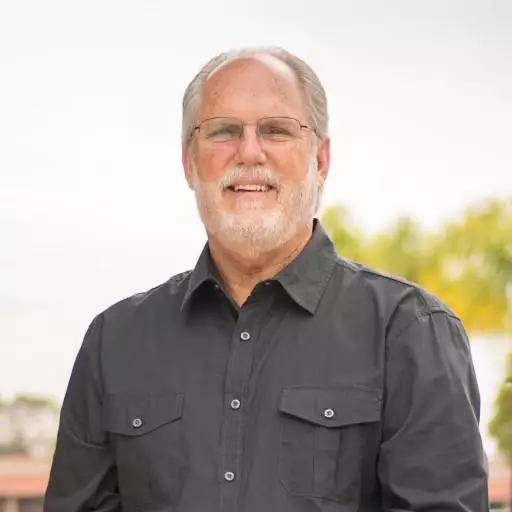
Jeff Johnson
2 Samuel 12 14-31 part 2


If we look at the biblical record, we see that many times in the past, man has made sin a priority, and the consequences are dire. We’ll look at a good example today, as we again go to Second Samuel chapter twelve. King David - a man after God’s own heart - has sinned with Bathsheba and the results are devastating.
Jeff Johnson: God has a great track record when it comes to turning a life around. Here's Pastor Jeff.
The question is here: Are you submitted to his plan? Do you believe? Because God can turn it all around again. He did it with Jonah. It says that the word of the Lord came to Jonah the second time. First time he blew it; second time it came.
Peter was all under condemnation, conviction, and yet the Lord through the angel told Mary, "Go tell Peter I'm risen from the dead." And he knew Peter needed to hear that. So God's amazing love. Our God is a loving, forgiving, setting-free God who will pardon and who will bless your life as he did with David.
Guest (Male): Hey, welcome to Sound Doctrine with Pastor Jeff Johnson. As we look around us today, we see a pretty stark landscape. Sin is everywhere. The Bible has been removed from public thought and application. But is this unprecedented? Not at all.
If we look at the biblical record, we see that many times in the past, man has made sin a priority and the consequences are dire. We'll look at a good example today as we again go to 2 Samuel chapter 12. King David, a man after God's own heart, has sinned with Bathsheba, and the results are devastating. Here's Pastor Jeff.
Jeff Johnson: There is an age that God knows in that child, that that child knows better and has been warned and understands. And that's between the child and God, isn't it? It's an age of accountability. But before that age of accountability, for a child to die, they are immediately transported into heaven to be with Jesus. Immediately, God takes them.
You say, "How do you know this?" Well, first of all, the age of accountability. Look at Romans chapter 7 verse 9 for a moment, and then we'll get back to our story. But Paul says in Romans chapter 7 verse 9, "I was alive," he said, "without the law once. But when the commandment came, sin revived, and I died."
Romans 7:9 is a proof text for the age of accountability. You say, "How do you get that?" Well, Paul simply says before the law, before I knew what was going on, you know, I was alive. Everything was fine. But then when I understood the law and the commandments of God, then I understood that I'm dead, for the law condemned me to death. And he realized, see?
So there's that time where that child clicks in. This is why it's so important for as parents, as we dedicate our children to the Lord, we also not only just dedicate them to the Lord, we dedicate ourselves in the raising of that child, in the training of that child, in the nurturing of that child, to come to that soon decision for Jesus Christ.
For until that child is of that accountability and understands the law, understands sin, understands it in their own heart, they can't really come to know the Lord. But when they come to that age, then they receive Christ. And oh, what a blessing to have your child pray that prayer and mean it and see their lives transformed before your very eyes.
There is another scripture over in Matthew 18:10 where Jesus is speaking here. Matthew 18:10, Jesus says, "Take heed that you despise not one of these little ones," talking about the little children. "For I say unto you, that in heaven their angels," and if you get the translation there, it's "their spirits," "do always behold the face of my Father which is in heaven."
So those little ones before the age of accountability that go on to be with the Lord are instantly beholding the face of the Lord in Jesus's arms. Isn't that great? To be absent from this body is to be present with the Lord, all the little ones. Even the aborted fetuses and all the little children that have been aborted go right to be with Jesus. I believe that. They're lives, aren't they? They go right to be with the Lord.
They don't have to go through this place, sin and death, and they've been taken, right? It's not right, but at least to know that they're with the Lord. And you go, "Oh, no, you mean if I go to heaven, then I'm going to see my little child that died?" Well, yeah, I think there's going to be a whole lot of rejoicing up there.
But I think the whole thing of abortion, you've got to look at it as you can't get into it and take the guilt on yourself. Once God forgives you, you've got to move on and just don't put one sin on top of another. And just say, "Lord, I'm thankful that you've taken my little one to be with you, and one day we're going to be reunited." What a hope for those that have lost little ones to go home with the Lord.
David here speaks of the resurrection. He's speaking about life after death. There is a metamorphosis that takes place that is unreal. It says that we shall all be changed in a twinkling of an eye. What happens? We're going to go through a metamorphosis. I don't know what's going to take place. God's going to do it. I've got a new body that I'm going to be put into. Why? Because this body couldn't handle heaven. The atmosphere of heaven, this thing would just explode. It wouldn't make it up there. It's corrupt, man. It's got to go down in the ground.
So there's a metamorphosis, a change, and we which are alive and remain will be caught up, will be raptured with the Lord and meet our loved ones, those that have gone on to be with the Lord in the air so to ever be with the Lord. I mean, what an incredible reunion that's going to be. But there is some kind of a transformation that takes place. This corruption is going to put on incorruption. This mortal is going to put on immortality.
And really, when you look at what God can do, even in nature, God has given us illustrations that it's nothing, it's no big deal. You say, "What do you mean?" Well, you know these little ugly worms that crawl up, these caterpillars? They grow up and they get there and they start hanging there and they go into a cocoon.
You know what happens? That whole cocoon, they just liquefy right in that cocoon. They just become a—if you've ever bust one open—yech! Well, where the worm go? Or the caterpillar, it's not there. It just liquefied. What comes out of that liquid? A beautiful butterfly. I mean, we're talking about the difference between an ugly worm and a beautiful butterfly.
So God gives us this incredible illustration that it's nothing for him to do that. So that's what's going to happen to us that are alive and remain when the rapture comes, and it's coming. And there's going to be a great transformation, a metamorphosis if you will. We're going to be changed and receive our new bodies.
And so David had this hope of this transformation, and so he began to worship the Lord. Now, what got to me was with this son, he worshipped the Lord when the son was taken. But when it came to his older son Absalom, when he finally died, he had a different reaction. I thought this is interesting. He wept. He mourned. It had broken his heart, and I thought, "Why is that?" Because David wasn't sure where his other son went. He didn't have the hope that he had with this son. And that is a terrible thing to experience, when you really don't know where a loved one has gone. That's rough, man. And you weep and you hurt.
Verse 24, going back to 2 Samuel 12: "And David comforted Bathsheba his wife, and went in unto her and lay with her, and she bore a son, and he called his name Solomon, and the Lord loved him." Here we see again God's amazing grace as he allows David and Bathsheba to continue to stay together as husband and wife. They're continuing to be together. He had forgiven the other. He has taken care of it.
Remember what David wrote in Psalm 34:19: "There are many afflictions given to the righteous, but the Lord delivers him out of them all." He was in an affliction, wasn't he? But the Lord delivered him. And once the Lord delivered him, everything was new. And God gave him a new son. His new son's name: Solomon.
What does Solomon mean? It means peaceful. Why did David name his new son peaceful, and especially this son called Solomon who would become one of the wisest men of the world, this son that God loved? Well, it's because David was finally at peace with his God and with himself.
He said, "I can't believe what God has done. Now he's given me another son. His name shall be Solomon." Because God is just, the firstborn would have to die, so all would know that God does not wink at sin. In fact, he is righteous, and so sin's got to be judged. There is a price to pay, but there is also God's mercy and restoration to be experienced.
"Old things are passed away," the Bible says, "behold, all things become new." Not only would David get one son from the Lord from Bathsheba, but three. He would get three sons. God was abundantly restoring David and blessing David.
And I thought of my own life as I look back at what my wife and I have gone through in our days of just sinning and living in high school, just going around and just blowing it. And yet we had two children out of wedlock who were put up for adoption and taken out of our lives.
And later on for us to then go after those children and to see them restored to our family, to see them—one of them come to the Lord and be a part of our fellowship, and to see God's hand working with the other one. And then at our wedding anniversary, our 25th, to have them all here come out with a picture that they took of themselves and all of our grandchildren and hold it up and show it to us, it killed us. I mean, we were rejoicing so much and just going, "God's so good, God's so good." "Shut it off, shut it off, shut it off!" you know. Can this happen? Yes, it can happen. And God is good. And God loves to restore. And God loves to bless. And he has blessed David's life here.
Verse 25: "And he sent by the hand of Nathan the prophet, and he called his name Jedidiah because of the Lord." Actually, Solomon is going to get another name here. He's going to have two names. Call him Solomon Jedidiah, son of David. But Jedidiah, what does this mean? It means "beloved of the Lord."
David was also, see, back with his God, restored to his God. He was a man now after God's own heart. Why? Because of his repentance, because he got it right with God. And God said, "I not only want to give you a son you can call him peaceful, but I want to name your son, this son that you've gotten also, Jedidiah, beloved of God, because you're all beloved of me. I love you."
So after the price was paid—look at this—after the price was paid, the first son died. Jesus hung on that cross. And he cried out, and I know all of Jerusalem heard this cry. He said, "It is finished," and he bowed his head and gave up the ghost. The words "it is finished" mean "paid in full."
The price for our sins has been paid in full through Jesus Christ who hung on that cross for us. It's been paid already. Doesn't have to be paid anymore, paid once and for all through Jesus Christ who suffered, took our sins upon himself. God's love, his forgiveness, his blessing is towards us.
And I'll tell you something about God: we have a God that's called the God of the second chance. He'll give you a second chance. You say, "Well, I already took the second chance." Well, he'll give you the third chance. Is there three strikes you're out on this? No.
You know, our God is so merciful and so gracious. He doesn't go by man's rules. He doesn't go about the three strikes you're out deal. He goes by his amazing grace. And he loves you no matter how many times you've blown it and fell on your face. He loves you, and he wants to restore fellowship. He wants you to know him so close and so near and dear. He wants to come to you. He wants to minister to you. He wants to put things back together. But you must open your heart up. David opened his heart up.
The question is here: Are you submitted to his plan? Do you believe? Because God can turn it all around again. He did it with Jonah. It says that the word of the Lord came to Jonah the second time. First time he blew it; second time it came.
Peter was all under condemnation, conviction, and yet the Lord through the angel told Mary, "Go tell Peter I'm risen from the dead." And he knew Peter needed to hear that. So God's amazing love. Our God is a loving, forgiving, setting-free God who will pardon and who will bless your life as he did with David.
So God blessed David, God blessed Bathsheba's relationship, gave them Solomon, and he says, "I want you to take hope, David, because you have confessed." And if you will confess this morning, he promises to wipe your slate clean, totally clean, if you will just turn from your sin to him.
He will use you then as a channel of his love to those that are around you. And this is the beautiful thing about the Lord: he restores us and then he uses us to bless others and to bring them into God's love and mercy because of what he's done in our lives, because we were such sinners, we know a great God who's a great forgiver and we want to share that great love with others. You see, it's the goodness of God that brings us to repentance, man, that God's so good.
Now, this portion that we've just talked about is kind of in a parenthesis. It was thrown in here, and then all of a sudden the next verse takes off and we go back to chapter 11, okay? So this portion's kind of stuck right in the middle here, but then verse 26 says: "And Joab fought against Rabbah, the children of Ammon, and took the royal city. And Joab sent messengers to David and said, 'I have fought against Rabbah and have taken the city of waters.'"
This throws us back into chapter 11. Now, the reason I'm bringing this up to you is that the writer in going back to that time in chapter 11, this is showing us that this is happened after David's sin, before he confessed his sin. The part that we're going to read right now, this is something that took place when David had sinned by being with Bathsheba and then killing her husband, okay?
So he's in the midst of his sin here when we're reading these next few verses. Joab went and fought the remaining resistance, took the city, and he cut off the water supply. The city of waters is talking about this city was built on Jabbok. All they had to do was redirect the flow of the water going into the city, and they cut off their water supply. And when you do that to a city, you've got the city; you just have to wait. And that's what they did. They waited for a year and some months until they took the city.
This is what they would do. They would always, a city would have to go and find some kind of a underwater stream that was hidden underground, and they would tap into it, then they would cover it over and bring it into the city wall. And then they would go down and fetch it out with buckets.
Jerusalem, a very good illustration: Hezekiah built a tunnel from the Gihon Spring, which is an underground spring, and they brought the water by this tunnel—these slaves, 1,700-feet tunnel. We walk through it with our groups once in a while, and it's an awesome thing to do. And it brings you into the city walls into the pool of Siloam where Jesus healed the blind man and where they took the water out of, and it went into the city gates.
And Megiddo's the same way. They have a spring that's hidden, and then they bring in—and there's this water tunnel. We bring our groups through, and you can just sense how they did it. And this is very important, because if anybody found the water supply, they could cut off the city and then you've got the city. Well, this is exactly what Joab, captain of David's army, did with this city, and this is how he took the city.
So Joab notifies David to come and to get the glory from this. Do you remember the sequence, there's a film clip that you can see MacArthur coming to the Philippines when he finally took the Philippines? He said, "I'm going to return." Well, he did return, right? And you see him getting off the thing, and it shows him there and like he's just come onto the scene. Well, the battle's already been fought three days earlier, and there was no shooting at that time because he got off on the beach and, hey, everything was calm by that time. Well, this is the same thing with David. Joab's already gone through the battle. It's already been fought. Now he's saying, "David, come on down here and get the glory." So MacArthur got the glory on that one.
Verse 28: "And now therefore gather the rest of the people together and encamp against the city and take it, lest I take the city and it be called after my name. And David gathered all the people together and went to Rabbah and fought against it and took it."
So he's saying, come into the city. It seems like David—and now remember, he's in his sin here—because of his sin, there was a fear for David to be involved in battle anymore. He didn't want to come out there. Joab's trying to talk him into coming out there so he can get the glory. And he seems to be distant here, not involved as much as he was before.
And let me submit this to you: that sin will cause you to be distant from the things of God, from the work of God. You won't be involved. You won't have your sleeves rolled up and get involved because sin keeps us away from the work of God. David was still away from it, and it brought fear to him. He didn't want to go into the battle. He was afraid. He says, "Well, I've tried that, you know, and I don't want to get out there, maybe I'll get hurt or something will happen." He was distant. So sin does that.
Now notice after David's sin, he goes out, he has this victory over this city and inwardly, you know, there's still unconfessed sin but outwardly, he's got a great victory. So everything looks great on the outward, but inside, he's still in his sin. He's still not a broken man. He hasn't repented yet, and he had hidden his sin, he thought. So outward victory, inward there was chaos in his heart.
Verse 30: "And he took their king's crown from off his head," and this is Ahab, "and the weight thereof was a talent of gold and with the precious stones, and it was set on David's head. And he brought forth the spoil of the city in great abundance." Notice that Joab takes the crown now and puts it on David's head, and David receives it to himself. Now, he didn't do this before when he took cities.
What he would do with the crown and all of the silver and all of the gold, he would take it to the temple of the Lord, and he wouldn't definitely put it on himself. But here he's raising himself up. Here he's putting on the crown. He's saying, "Yeah, this feels real good, Joab. Thanks for doing that." And he's kind of lifted himself up, and he's blowing it here. Why? Because sin is in his life. He doesn't see what's going on. He doesn't see that he's starting to take the glory for himself.
And then notice verse 31: "And he brought forth the people that were therein in that city, put them under saws, under harrows of iron or axes of iron, under axes of iron and made them pass through the brick kiln." What he did—and some commentators are kind of split on this, some say, well, he put them to work. But others who really delve into the Hebrew say no, this is not putting them to work.
He literally sawed them in half, he axed many of the people up, he took many of the people and brought them into the fire. Why? Because they caused many of their babies to be also brought in as sacrifices into this fire. So he says, "Okay, you want to be barbaric? We'll be barbaric," and he went in there and just went crazy. And notice it says that "and thus he did in all of the cities of the children of Ammon, so David and all the people returned unto Jerusalem."
I'll tell you something about a man who is away from God: he is a very dangerous person. And he is capable of doing horrendous things. And we see it all over the world. Men who have been distanced from God and the atrocities that they are capable of doing to their fellow human being.
David lost it with great cruelty. His heart was hard, he was angry, full of hatred, full of confusion. There looked like a great victory outside, but there was a great inward insanity in his life. And I would like to submit that it's because of his sin that was working. It was causing confusion and hardness in his life.
He was haughty, he was cruel as he went back to Jerusalem. But there is when he went back to Jerusalem, in the midst of his struggle with this sin, in the midst of the conviction of the Holy Spirit working on him, there he was confronted almost a year later from this point by Nathan, which we went into last week. There he was confronted, and there he finally broke and confessed his sin.
You see, the most important thing this morning is that you not only hear what the spirit is saying to your heart, but that you act upon it, that you do something with the situation that you find yourself in. That as we read these stories of examples, that we would see them, that God is seeking to be like a mirror with the word and showing and revealing our own selves, that we would be as David, that we would confess our sins, that we would act on what we hear and we would say, "Lord, I am the man, and I repent."
Guest (Male): Yes, it's a tough thing to say, "I repent. Please forgive me." Human beings by nature don't like those words at all, but they are the way to get our relationship with God back on track. Pastor Jeff Johnson will be back in a moment with a great cross-reference in Isaiah for us here on Sound Doctrine. Don't go away.
Hopefully, as you listen to these messages in 2 Samuel, you'll have ears to hear what the Spirit is saying in these critical times. God's word is so practical, giving us direction, instruction, and wisdom to our lives. To hear this message again, simply go to sounddoctrineredio.org or listen through the Sound Doctrine podcast app.
You can also hear Sound Doctrine on oneplace.com and wherever you enjoy podcasts, including Apple Podcasts and Spotify. We would very much appreciate your support. It helps us deliver Sound Doctrine on stations like this one all across the nation. And you can donate to this radio outreach at sounddoctrineredio.org. Now here's Pastor Jeff to wrap up today's program.
Jeff Johnson: I'd like to end with Isaiah chapter 1 this morning where Isaiah—God uses Isaiah to bring this very important exhortation to us. Isaiah 1, starting with verse 18, where God says, "And listen, come now, let's reason together," says the Lord. "Though your sins be as scarlet," I don't care how bad they are, "they shall be white as snow. Though they be red like crimson," listen, he says, "they shall be as wool.
If," he says, verse 19, "you will be willing and obedient, you shall eat of the good of the land. But," he says, here's the warning, "if you refuse and rebel, you shall be devoured with the sword, for the mouth of the Lord has spoken it."
Two choices once we're confronted with our situation. We can either go ahead and just say, "Lord, I hear you, I'm willing and I want to be obedient. I submit to you my situation. I give you my sin. I want to be cleansed of it. I want to be renewed and refreshed. I want to eat of the good of the land." Or you can rebel and do your own thing and walk out of here and just keep what you got, continue your struggle, continue the heartache.
But God wants to give you hope, man, as he gave David hope, as he forgave him, gave him another son and another son and another son, and just blessed his life. So the Lord is saying, "Which will it be for you?"
Guest (Male): On we go to 2 Samuel chapter 13 next time on Sound Doctrine, and we'll have a frank discussion on the dangers of lust. You don't want to miss it. This program is listener-supported and brought to you by Calvary Chapel Downey.
Featured Offer

Access an extensive archive of messages from Pastor Jeff Johnson
Past Episodes

Featured Offer
Access an extensive archive of messages from Pastor Jeff Johnson
About Sound Doctrine
A weekday radio program featuring the verse by verse Bible teaching of Pastor Jeff Johnson broadcasted throughout the United States and abroad.
About Jeff Johnson
Jeff Johnson is the senior pastor of Calvary Chapel of Downey, California since 1973. The emphasis within his ministry is a verse-by-verse study of the Word of God, giving its full counsel. His influence has experienced a steady and substantial growth over the years with people of all ages. Calvary Chapel of Downey has grown to average weekly attendance of more than 9,000. Teaching seminars, Bible classes, home studies, various training programs, mission outreaches, as well as a Christian Elementary & Jr./Sr. High School, and Bible college meet the needs of this large body. Calvary Chapel's impact is growing from Southern California to virtually around the world. His wife Karyn supports Jeff in his ministry.
Contact Sound Doctrine with Jeff Johnson
Mailing Address
Sound Doctrine Radio
12808 Woodruff Ave.
Downey, CA 90242
Telephone
(800) 353-7553
(KWAVE - 107.9FM)
(562) 803-6501
Southern California 2:00 pm