
Sound Doctrine
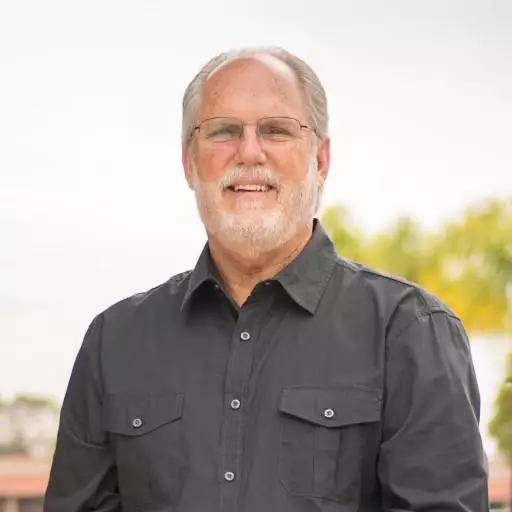
Jeff Johnson
Romans 12:1-2 God’s Will for You part 1


People will go to great lengths to try to find out what God wants them to do, and what He wants them NOT to do. You may be pleased to know the Lord doesn’t want that to be a mystery. Romans chapter twelve is a good place to turn to discover God’s will for your life. And that’s where we’ll be today on Sound Doctrine. We’ve entered a highly practical portion of Romans.
Guest (Male): Discover God's will for you today on Sound Doctrine.
What is God's will for my life? That's one of the most frequently asked questions by believers today. People will go to great lengths to try to find out what God wants them to do and what he wants them not to do.
You may be pleased to know that the Lord doesn't want it to be a mystery. Romans Chapter 12 is a good place to turn to discover God's will for your life, and that's where we'll be today on Sound Doctrine. We've entered a highly practical portion of Romans. Here's our Bible teacher and Pastor Jeff Johnson with part one of God's Will for You.
Jeff Johnson: This morning, we're starting a new chapter in our going through the Book of Romans. This is Romans Chapter 12. If you haven't been with us, you can get the CD, catch up with us. But we've been moving on through Romans, and now in Romans Chapter 12, an incredible life-changing letter from the Apostle Paul. Paul's been thanking and praising God for his great mercy and love upon all who call upon him.
Remember, they came to Jesus and they said, "Lord, what must we do to inherit eternal life?" Jesus just simply said, "Believe on him whom he has sent. Believe in me, you've got eternal life." It's that simple. And that's all I'm requiring.
So to believe, and a lot of us have Psalm 40 as our testimony because we relate to what Paul's saying in Psalm 40—that we cried out to the Lord and the Lord heard our cry. He pulled us out of the horrible pit, out of the miry clay, and he set our feet upon a solid rock and put a new song in our heart, even praise unto our God. We relate to those first three verses there of Psalm 40. Incredible, and that's a testimony.
There is another testimony in the New Testament, and that is in Ephesians Chapter 2, verses 1-6. It simply says this: that he quickened us, who were dead in our trespasses and sins. We were at one time children of wrath, led by the lust of the mind, and we were doing our own thing. We were children of disobedience.
But it says in verse 4 there, "but God reached down and he took us, and he heard our cry, and he put us in heavenly places." Paul is going from BC days, before Christ, and leading us through Romans here up to the point of heavenlies. Remember, that's what we talked about last week, that mind of Christ, that eternal, eyes upon the eternal things. He's changing us, and it's just incredible.
Now, that we would know him is the most important thing—that we would have a heart, that we would have a relationship with him. And then comes the unveiling of God's will for our lives. He begins to lay it down and to lead our lives. It's not something that's hidden.
It is very simple to be led of the Lord and to know the will of the Lord. In fact, it comes off with a real short sentence of Jesus saying, "Occupy till I come." When you really meditate on that—occupy till I come—be busy about my Father's business, occupy, do what you're supposed to be doing, do the Father's will until I come back. And that's simply laid down.
How do you occupy? We've been given doctrine up to Chapter 12. Chapters 1-11 is the doctrine, our position, what we believe, our belief system, how to be saved, how to be free from sin's power, how to enjoy the mercy and the love of the Lord, just getting our eyes on the Lord. And then understanding prophecy, how God's going to deal with Israel—we've talked a lot about that, and that's good to know.
But then comes Chapter 12. It's called the hinge of Romans. In other words, it's opening another door now to us, this chapter. Here Paul gives us the practical how to occupy, the basics. He's also inferring here that doctrine and duty are inseparable.
See, we've been getting doctrine, but now we're going to get duty. But they go together, they fit together. Belief and behavior—they are one. Our learning is nothing unless we are living it. You can learn and have great head knowledge. That's I think where the Jehovah's Witnesses are. They know the Bible from one end to the other, and they know how to refute and argue it.
But that's it; it's only intellectual. They've never been born again. Some lady hit me up last service and said, "Yeah, but they know God and they just don't know Jesus yet." And I said, "No, they don't know God because if you don't receive Jesus as Lord and Savior and realize that he's God incarnate, then you don't have God. You can't have one without the other." So they don't have Jesus, nor do they have God. They're just out there and they're intellectual, and they know the Bible. Does that save you? No.
So it's doctrine and living it and having a relationship with the Lord. So important. First John Chapter 4, verse 20: He says, "If a man say that I love God and that hates his brother, he's a liar. For he that loves not his brother whom he has seen, how can he love God whom he has not seen?" That makes sense. You can't say, "I'm a Christian" and then not live the Christian life. It's ridiculous. You're living a lie. You're like a Pharisee. There's no relationship.
So Paul's advice here is how to serve God, how to find and know God's will in Chapter 12. Now let me break Chapter 12 down for you real quick. Verses 1 and 2 of Chapter 12 speak of consecration. What's that mean? Our attitude towards God. Are we consecrating our lives unto the Lord? Our attitude towards God, verse 1 and 2.
The next section is verses 3 through 8, and that speaks of humility—our attitudes towards others and how we're ministering to others. And then the last section, number three, is verses 9 through 21. It's basically love. How the Christian life is one of love.
If you have not love, you have nothing. You can give your body to be burned, you can have all faith and know prophecy or whatever, but if you have not love, you become as a gong on the gong show. You're out. You have nothing. You've missed it. So, love.
Now, how many of you this morning would like to really know God's will? I see one hand... no, I'm just kidding. Those watching, they all raised their hands. We're hungry here, and we all want to know God's will. And so God's going to break it to us very beautifully. It's again, it's not a mystery. It's a mystery to some, and they're on the outside looking in, but it's really not to those that know him. It's possible to prove God's will for our lives.
How do you do that? Well, I don't think it's a formula. We're not going to see a formula here this morning. It's not, "Well, I'll read a chapter a day out of the Bible and I'll complete it at the end of the year, I'll have a one-year Bible." Anybody tried to do that? You're like, "I can do it, I'm going to get into it." It's sort of a thing, "Well, I'll be blessed if I do this." That's okay, but that's not the way it's done.
Or how about Bible roulette? Have you ever played that? Where you just open your Bible and then you go... and then you pick a scripture. That can be dangerous. It's like with a gun with a bullet in it. You don't play roulette with a gun, a pistol, because you never know when it's going to hit the bullet.
And you've heard the story about the guy that was playing Bible roulette and he went to the one verse and the verse said, "What you do, do quickly." And then he went, "Okay, what am I to do?" And then he flipped it over again and it says, "And Judas went out and hung himself." Whoa! Okay. It's dangerous. The enemy uses that, and the letter kills, right? We don't go that route, we don't live that way.
And it's not going to church every Sunday. I don't think that is the answer to knowing God's will—going to church because it's a doing thing. I've arrived, or I'm going to say a prayer every day. It's not an intellectual thing at all. These efforts, really when you look at them, can be very frustrating and fruitless.
And many of you, I'm included, have tried different formulas and they became very fruitless and frustration entered in. And really, no change sometimes comes by doing it as a formula. In fact, it can even get worse. I heard one guy say, "I've been doing everything, everything you said, I've been doing it, and my life's in shambles." And how do you answer that? Why are you doing it? What's your agenda in what you're doing? Is it to get to know him and to love him and to serve him? That's the right thing.
But we can do a right thing in the wrong way. And David in the Old Testament proved that. Remember, David finally got the ark back that the Philistines took, and they went through all kinds of stuff. And then he finally got it back and he said, "You know what I'm going to do?" Because the Philistines had the ark on a cart.
So he made this cart, shined it, it was a brand new cart. And he put the ark on the cart and he began to bring it back to Jerusalem. And as he was going, it hit a bump. And remember his friend, Uzzah, reached up to hold the ark because he thought it was going to tip off, and he touched it, and immediately he was dead. He fell dead.
David goes, "That's my friend. God, I mean, I'm trying to do a good thing, a right thing. What's wrong with this?" And it brought forth death? David said, "That's it." And he stopped everything, he pulled back, he dumped the ark off to the side, and he left.
And for a number of months, David was frustrated, confused. Until finally he got back into the Word of God. And when he got back into the Word of God, God showed him that the proper way of bringing the ark into the city of Jerusalem or bringing it anywhere was to have the two staves of gopher wood put into the rings on the side of the ark, and the priests were to pick it up and bring it in. That's God's way. That's what God's Word says.
David said, "Whoa!" So he was trying to do a right thing in the wrong way, and it brought death. It'll always do that. But then he decided, "Okay, let's do it the right way." And he put it in, and they were just overjoyed and the Lord blessed the trip, and they made it to Jerusalem and everything was great. But there's a little lesson about doing the right thing in the wrong way. These are good, right things, but they can be misused and really become a problem.
So there's two parts to God's will. Number one, for those of you taking notes, is first character. And that's the main thing right there: character. And the Bible says that he has quickened us, he made us alive. Our characters were in the mud, so to speak. We weren't men or women of character at all.
We had all kinds of mischievous things in us. We had sin in us. It was leading our lives, it was destroying us, until finally we cried out to the Lord and said, "Lord, forgive me of my sin. Come into my heart. I believe what you did on the cross of Calvary for my life." And your character began. It was a character that was now a child of God living for the Lord.
So that's the first thing: character. The number two to knowing God's will is service. So first, a changed life, and then one that is living the life and serving the Lord. James says it the right way: "I'll show you my faith by my works." Works doesn't save me, but it does show my faith, doesn't it?
That I'm living the life, I'm living it, and that is proof that I have this relationship. So service is awesome. Many get the cart before the horse and they... you can't serve him and know his will until we're spiritually ready.
And to get spiritually ready is to get right with the Lord. If you're a religious person, to turn that around and make it a relationship with the Lord. There's a lot of people that are religious. Religion will never get you to heaven. Jesus paid the price. He's who we need to acknowledge. He's who we need to ask to come into our lives. He's the one that paid it all. And then everything's changed from there. I'm ready to now know God's will.
So number one, one thing: he wants you, he wants me. He desires that relationship. And notice it's not a command. Now let's get to our text in Romans Chapter 12 in verse 1. It's not a commandment. He's not saying, "And you will do this." He's not saying that. He says, and this is Paul, he says, "I beseech you."
And the word there in the King James is "beg" in the English. Beseech is begging. He says, "I'm begging you." He just says, "Come on, man, do this." is what he's saying. "I'm pleading for you to do this." It's not a command. He says, "But this is what you need to do. I beg you therefore."
Now anytime you see a therefore, there's always a wherefore for the therefore. Why is the therefore therefore? That's a good question. And the reason is because of what he's been teaching us. In other words, because we've been elected—that's what we've been learning—we've been called, we've been justified, we've been glorified, we've been made holy because of our receiving Christ.
He says, "therefore because of these things, brethren." I like that. He's writing to the brothers, the bros, the saints. You see, there's two types of people: there's the saints and the ain'ts. He's talking to the saints here. You're never going to live this, you're never going to follow this or be with this and be able to make this a reality in your life until you are part of the family of God. He's talking to the family, to the brothers, to the sisters, and he makes it very clear here because the unsaved can never live this way, never.
Now notice he says, "by the mercies of God." Brethren, by the mercies of God. Not by God's judgment or his wrath. No, I'm begging you by the mercy of God. God has been merciful to us. Come on. Mercy is not getting what you deserve. Come on. He's been merciful. It is the goodness of God that leads us to repentance, isn't it?
You can catch a lot more flies with honey than vinegar. God knows that. The honey is his love. The honey is mercy, his long-suffering. I love what Paul says. He says, "his love constrains me." It's the motivation why I serve God. It's his love that keeps me going. It's his love that gets me up and keeps me loving him and keeps me serving him. It constrains me. It's my initiative, what drives me.
So from Chapters 1 to Chapter 11, it's pretty much freely we've received. Here are all the things that we have received. So really what I'm seeing here is we are working from, but not for salvation. Salvation has freely been given to us in Christ. We're not working for it, are we?
And we're not serving God or doing his will because we got to, because he warned us, "you better." It's a commandment. No, it's just by the mercies of God that he's asking us to do certain things. I think this is a word from the Lord, and I don't know who wrote it, but let me give you this little quote: "I will not work my soul to save, for that my Lord has done. But I will work like any slave for the love of his dear son."
See, the work's been done. Jesus paid it all. He paid the price for my ticket to go to heaven. So I just reached out and took that ticket. I said, "I want to go. I want to have my sins forgiven." But then I'm going to work like any slave because of his love. It constrains us.
So the earlier parts of Romans, Paul's given us three things that we're to know. And we remember those things because we were there, we spent time in the earlier portion. And these three things are interesting. These are three things that we can experience God's will once we know these things. We will live in his comfort. We will die happily. We're going to live a full life because of these three things.
Number one: how great my sins and miseries are. That's what Romans points out at the beginning, just how great they are. The misery, the sin, how it's just destroying our society all around us. Horrible.
Number two: how I'm delivered from them all, from all the misery, from all the sins. He wants me to know that I'm delivered from all that, that was destroying my life when I receive Christ.
And number three: how thankful I'm to be for such a great deliverance—that God has done this work in my life. Paul at the end of Chapter 11 started to praise God and just go off in worship because he was blown away at all that God is showing him. He was just blessed of the Lord, and he praised God for everything. So how I'm to be so grateful and thankful.
Now he is going to give us, going into Chapter 12, three things that we're to do in these next two verses. For those of you guys putting notes down: Number one, the first one is notice he says, "by the mercies of God that you what? Present your bodies a living sacrifice."
Wow, there's a direct direction for us to do this. Present your body. It's like to a bride. A bride is presenting her body to her groom in the honeymoon. And this is a total dedication. It's intimate, it's personal. It's not just the soul, not just the spirit, but we're talking about hands, feet, mouth. We sang the song this morning: "I want all what my hands do, what my feet do, what my mouth says to be all to your glory." I like that.
Over in First Corinthians in Chapter 6 and verse 19, Paul says this: "Don't you know that your body is the temple of the Holy Ghost which is in you, which you have of God, and you are not your own?" Now at one time you were doing your own thing. You were doing your will. You were living your own life. You weren't going by the scripture, you weren't going by what God said. You were going by what you say.
All right? But now once you've received Jesus, you're not your own, you're his. And then he goes on to say, "For you are bought with a price; therefore glorify your body, glorify God in your body and in your spirit, which are God's." The price is the precious blood of the Lamb, right? Bought with a price. He paid for me. He owns me. I am his now. Lock, stock, and barrel. That's an old term for a rifle, you know, the whole rifle. I am his to do what he wants with. And it's great to understand that. He wants to work in me, to work through me to a hurting world.
So Christianity is not only spiritual, a spiritual relationship, it's very practical. Give your body. That's practical, isn't it? Your whole being. There is a scripture in Romans Chapter 8, verse 9, where it says, "But you are not in the flesh, but in the spirit, if so be that the spirit of God dwells in you."
Now, if any man has not the spirit of Christ, he is none of his. So if you are here this morning and you're hearing my voice and you have the spirit of God in you, then you're not your own. We're to present our bodies to the Lord. We're to dedicate ourselves on a daily basis to serve God, to live for the Lord because he bought us with a price.
It's good to belong to God. I'm God's child. He blesses me to no end. I want that. I want to make my father blessed and proud. I mean, he's watching over the whole thing, but he's doing the work, and yet, oh, to be pleasing to God. To please God is to get it back ten thousandfold, to be blessed of God in your life.
Guest (Male): We're uncovering God's will for our lives today on Sound Doctrine through a study of Romans Chapter 12. Don't go away; Pastor Jeff Johnson has more to say, and we'll have that for you in a minute.
Romans is one of the greatest books in the Bible. And if you'd like to hear the study again, go to sounddoctrineradio.org or listen through the Sound Doctrine podcast app. You can also hear Sound Doctrine on oneplace.com or wherever you enjoy your podcasts, including Apple Podcasts and Spotify.
By the way, you can donate to this radio outreach right there at sounddoctrineradio.org. Thank you in advance for whatever God leads you to do. All right, as promised, here's Pastor Jeff once again in Romans Chapter 12.
Jeff Johnson: Now he is going to give us, going into Chapter 12, three things that we're to do in these next two verses. For those of you guys putting notes down: Number one, the first one is notice he says, "by the mercies of God that you what? Present your bodies a living sacrifice."
Wow, there's a direct direction for us to do this. Present your body. It's like to a bride. A bride is presenting her body to her groom in the honeymoon. And this is a total dedication. It's intimate, it's personal. It's not just the soul, not just the spirit, but we're talking about hands, feet, mouth. We sang the song this morning: "I want all what my hands do, what my feet do, what my mouth says to be all to your glory." I like that.
Over in First Corinthians in Chapter 6 and verse 19, Paul says this: "Don't you know that your body is the temple of the Holy Ghost which is in you, which you have of God, and you are not your own?" Now at one time you were doing your own thing. You were doing your will. You were living your own life. You weren't going by the scripture, you weren't going by what God said. You were going by what you say.
All right? But now once you've received Jesus, you're not your own, you're his. And then he goes on to say, "For you are bought with a price; therefore glorify your body, glorify God in your body and in your spirit, which are God's."
The price is the precious blood of the Lamb, right? Bought with a price. He paid for me. He owns me. I am his now. Lock, stock, and barrel. That's an old term for a rifle, you know, the whole rifle. I am his to do what he wants with. And it's great to understand that. He wants to work in me, to work through me to a hurting world.
Guest (Male): What a great privilege to be used of God in such a way. With that, we'll say goodbye. But come back next time for more about God's will for you. Sound Doctrine with Pastor Jeff Johnson is presented by Calvary Chapel Downey.
Featured Offer

Access an extensive archive of messages from Pastor Jeff Johnson
Past Episodes

Featured Offer
Access an extensive archive of messages from Pastor Jeff Johnson
About Sound Doctrine
A weekday radio program featuring the verse by verse Bible teaching of Pastor Jeff Johnson broadcasted throughout the United States and abroad.
About Jeff Johnson
Jeff Johnson is the senior pastor of Calvary Chapel of Downey, California since 1973. The emphasis within his ministry is a verse-by-verse study of the Word of God, giving its full counsel. His influence has experienced a steady and substantial growth over the years with people of all ages. Calvary Chapel of Downey has grown to average weekly attendance of more than 9,000. Teaching seminars, Bible classes, home studies, various training programs, mission outreaches, as well as a Christian Elementary & Jr./Sr. High School, and Bible college meet the needs of this large body. Calvary Chapel's impact is growing from Southern California to virtually around the world. His wife Karyn supports Jeff in his ministry.
Contact Sound Doctrine with Jeff Johnson
Mailing Address
Sound Doctrine Radio
12808 Woodruff Ave.
Downey, CA 90242
Telephone
(800) 353-7553
(KWAVE - 107.9FM)
(562) 803-6501
Southern California 2:00 pm