
Sound Doctrine
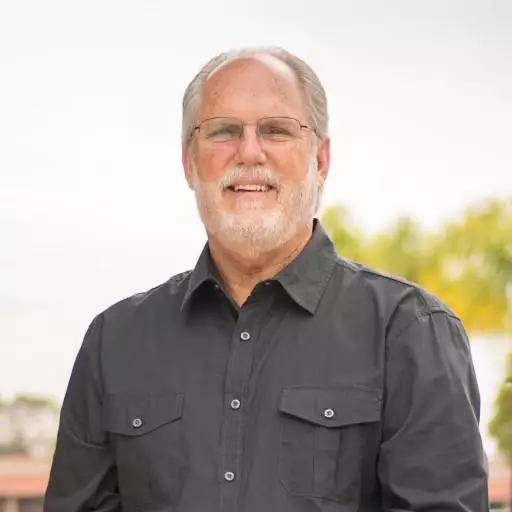
Jeff Johnson
God’s Faithfulness part 2


You can turn on the TV and see people being unfaithful ,and getting big laughs. While we are unfaithful at times, God always remains faithful! And that’s something we need to constantly be reminded of. Today on Sound Doctrine we bring you a message from pastor Jeff Johnson on the faithfulness of God, as seen in His dealings with Israel.
Guest (Male): God’s faithfulness is on display for all to see. Next on Sound Doctrine.
I probably don't have to remind you of how unfaithful people can be. We see examples of that in marriage, in business dealings, or even from people we call friends. You can turn on the TV and see people being unfaithful and getting big laughs. While we are unfaithful at times, God always remains faithful. And that's something we need to be constantly reminded of.
Today on Sound Doctrine, we bring you a message from Pastor Jeff Johnson on the faithfulness of God as seen in his dealings with Israel. We're in Romans chapter 9.
Jeff Johnson: Well, it's all about God using the world, the flesh, and the devil to get us to the end of ourselves so we might come to know him, the real reason of life and death, the answers. So we can know our creator, walk with him, talk with him, have fellowship with him, like we talked Wednesday night, eating with him, breaking bread together. He loves that, and he wants us to have that relationship that’s so important.
Verse 4. Here we go. He says, "Who are the Israelites? To whom pertaineth the adoption, the glory, the covenants, the giving of the law, the service of God and the promise." Israelites, who are they? Well, Israel means governed by God. What a blessed thing to be, right? God leading you by a pillar of fire at night and cloud by the day. When God would move, they would move. What a blessing to have the Lord leading your life. But somehow, some way, the Israelites got off track, didn't they?
Are they forgotten because they got off track? Are they forsaken? Are they lost? Well, he says, "Who are the Israelites?" Over in Jeremiah chapter 31, you might just jot this down. This is Jeremiah 31 verse 35. "And thus says the Lord, which gives the sun for a light by day, and the ordinances of the moon and the stars for a light by night," powerful, "which divides the sea when the waves thereof roar, and the Lord of hosts is his name. He is all-powerful."
"If those ordinances," Jeremiah says, the Lord is speaking here, "depart from before me, says the Lord, then the seed of Israel shall cease from being a nation before me forever." In other words, God is saying when the sun stops and turns cold, when the moon doesn't shine anymore, when all the power of God controlling the oceans and the seas from flooding the lands and all that stuff, then, and only then, will Israel cease to become a nation. But you know what? That's not going to happen until the end, to the very end. A new heaven and a new earth, right? So that's not going to happen. God is not going to forsake Israel, period.
Now, they are—what's the next word there in Romans in verse 4? He says they're Israelites, to whom pertaineth what? The adoption. See, I want to break this whole verse down word by word. We need to understand it. They were adopted by God. Why did God choose this nation? How come they got to be chosen and all the other nations got pushed away? How come they were the ones that got to experience God's blessing? Well, you can find out by just turning to Exodus chapter 4.
First of all, Exodus 4 talks about their adoption and it's just God speaking through Moses to Pharaoh. And he says, "Thou shalt say unto Pharaoh, Moses, Thus says the Lord, Israel is my son, even my firstborn. And I say unto you, Let my son go, that he may serve me. And if thou wilt refuse to let him go, Pharaoh, behold, I will slay your son, even your firstborn." But what's he talking about? He's talking about the nation. In fact, when it came to Pharaoh's firstborn, it was all the firstborn of the nation of Egypt, right? So he's talking about the nation there. But adopted, brought in. You say, well, what do you mean adopted? Well, they were chosen.
Over in Deuteronomy chapter 7 verse 6, listen to what he says here. Deuteronomy 7:6, "For thou art a holy people unto the Lord thy God. The Lord thy God has chosen thee to be a special people unto himself before all people that are upon the face of the earth." God just chose them. The Lord goes on to say, "The Lord did not set his love upon you nor choose you because you were more in number than any other people." Not because you were many, and he didn't choose you because you were few, he says. "But he chose you because the Lord loves you. He just chose them because he loves them."
"And because he would keep the oath which he had sworn unto your fathers." Now we're going back to his promises. "Hath the Lord brought you out with a mighty hand and redeemed you out of the house of the slaves, from the hand of Pharaoh, king of Egypt." This is why God did it, just because he loves them. It's sort of like with us. "You didn't choose me," Jesus said, John 15:16, "but I chose you and I called you." How come? Why me? Why not my other brothers? Why me in the family? Sometimes we do question. Why did I become a Christian and the rest of my family are struggling and going through it? I want to see them become Christians. But why me? Just because he did. And I'm glad he did.
But he opened my eyes to do what? Well, to be a witness so they can see what a real Christian is all about and that they too would want to be a Christian and come to the Lord. That's the best way I can explain it. But was there any reason? No, I was an idiot. I was a sinner in darkness, cursing God. Come on, give me a break. It's not because I was good and really seeking the Lord. No, I was going the opposite way. I was being deceived, and yet he chose me. He called me.
Do you remember Romans 8:28? "All things are working" what? For good. So what God is doing, he chooses the foolish things and we become his trophies of his grace. That's what we are. We're his trophies of grace, unmerited, unearned, undeserved favor. That's what we are. We didn't do anything to earn it, didn't do anything to deserve it. God just called us, he just chose us. And here's the big part: God is sovereign and he picked us, but then we had to respond, didn't we? We had to receive. That's our responsibility. That's what's on man today. God is sovereign, but man's responsibility, that's heavy. And man must decide because man is going to be confronted with the gospel on a continual basis. And you either accept this morning or you reject, and that's where judgment comes. And it's really your decision, your choice, that it ends up with. And you have nobody to blame but yourself. It's amazing, but it's true.
So, Israel's adoption. Now, the next word there is what? Glory. Glory is an interesting word. In the Hebrew it's kabad. And it means God's Shekinah. Interesting, back in Exodus 40 it says that God's glory came in a cloud and covered the tent of the congregation where Moses was and the glory of the Lord filled the tabernacle. And Moses was not able to enter into the tent of the congregation because the cloud abode thereon and the glory, the kabad, the Shekinah of the Lord, filled the tabernacle. Now, this word actually means it's not a light, it's not so much a bright light, but it's a heavy thing that happens.
It means that the Lord's presence is heavy. It's not like cotton candy. You know, cotton candy is just a big poof and you can wind it down to a little ball, right? Without substance is cotton candy, right? But not with the Lord. The Lord has substance. And when he comes, you sense, you respond. In fact, later on, we see that the priests trying to bring in the glory of the Lord, and then God's glory filled the place, the priests couldn't even minister. Why? Because they had to hit the ground. It was so heavy in there. God's presence in that place.
May it be known of us, may it be experienced by us that where in the New Testament it says where two or three are gathered, there I am where? In the midst. May the Lord be heavy upon us this day. May his spirit come upon us and begin to deal with us in a way that maybe we've never experienced before. May he be glorified though through it. May we experience his kabad and really experience a life-changing of the mind and of the heart. That we literally leave here in a new way, his kabad.
And then the next word as we move along is covenants, isn't it? Covenants. In other words, God has given covenants to his people. Covenants are just what he promises, and he gives signs. Now, with Abraham, we know that he gave the sign of what? Circumcision. That was his covenant with Abraham, that these things were going to be true and that this was going to happen. And so those that bless him will be blessed, and God says in Genesis 12:3 those that curse you will be cursed. Interesting. That's his covenant with Abraham.
Now, God's covenant with David was interesting. David says, I'm going to build you a house. And God says to David through Nathan, no you're not. God's going to build you a house, David. What are you talking about? Well, through David's seed would come forth the Messiah. And from his lineage, the whole world would be touched. Talk about a house. And so that was his covenant with David. In Ezekiel, God speaks there about how Israel will come back into the land. That was his covenant with them through Ezekiel. And if you read Ezekiel 36, 37, 38, and 39, you're reading the newspaper today about what's going on in the Middle East, what's taking place over there. It's amazing, but that's God's covenant.
And then today we have what is called the New Covenant. What's the New Covenant? Well, if you were here Wednesday night, we actually prayed over the New Covenant. Take this cup, this is the New Testament in my what? In my blood. The New Testament means a New Covenant that I'm giving to you. That his blood is powerful, it cleanses a man or woman from all sin. And if we believe in him, then just like in Exodus when the lamb's blood was painted on the door, so his blood is in our lives. And we're children of God, bought with the precious blood of the Savior, the Lamb of God. So that's a powerful thing, that New Covenant in his blood.
And then the next word there in verse 4 is law. He simply says, the covenants and the giving of the law. It was through who? It was through Moses. It was through the Jews. The law was given. Of course, the law we've come to understand is like a schoolmaster. A schoolmaster drives the kids to do things. And so the law comes down on us. The law can never be observed, can never be fulfilled. Jesus came to fulfill the law, to be the end of it all. The law was punishing us, the law was condemning us, but in Christ we are free from the law now.
So the law, the law was given to show us that there's not one worthy, no not one, not one righteous, not one good. We've all fallen short of the glory of God, we all need Jesus. We're all in the same playing field, so to speak. We're all sinners needing God's forgiveness. So they gave us the law, the standard, the code for man to go by, to know what's good and evil, to know where they stand with God. Why? So they can experience a happy and prosperous life. So we can receive the Savior, so we can come to know our deliverer. And Moses was a beautiful type of that, and he delivered the children of Israel.
Now we're delivered from this world, and this world is crucified unto me, I'm crucified with the Lord. So hey, I'm free. And it's a beautiful relationship. So the law is awesome. Remember what Malachi, we sang the song this morning, Malachi chapter 6 verse 8, "He has shown thee, O man, what is good; and what the Lord requires of you, but to do justly, to love mercy, and to walk humbly with your God." And so the Jews were given the word of God, the law of God, and they preserved it for us. We have a lot to be thankful for for Israel. Israel brought the scriptures from Sinai all the way down through all the history and kept them for us. Nobody messed with them.
They had such a way with the word that they would be careful not to mess any dot or crossing of any T. It was handed down, and you know what's exciting about that? You go over to Israel today and you go to the scroll of the book, which is the place where they actually found the whole book of Isaiah. And we're talking about 1,100 years ago. They found it in Qumran, they found it there in the desert. We're talking 1,100 years ago, and they took the book of Isaiah from back then to the book of Isaiah today and they lined it up. It's word for word, guys. We owe the nation Israel, the Jews, a lot. They've given us our Bibles, we've got the scriptures.
Now, moving along, he says, "and the service of God." They were a part of that service for God. They were in the temple, they were priests, they were interceding, they were sacrificially doing the sacrifices and the incense and everything. These all the things that they did back then were a shadow of things that was to come, just a type of that which was to come. And we've been going through the tabernacle in Exodus on Wednesday nights. And we've seen in there that it's all a picture about Jesus Christ, isn't it? Every part of the tabernacle. So their service.
Now, what's interesting is in Galatians, Paul confronts those in Galatia and he says, "But now, after that," and this is in Galatians 4:9 and 10, "after that you have known God, or let me put it this way, rather are known of God, how are you turning again to the weak and beggarly elements whereunto you desire again to be under bondage? Why are you going back to," and then he says, "to observe days, months, times and years?" Why are you going back to things that were religious? Things that you did back then that were only types and shadows of that which was to come? You see, Christ set us free from all that stuff.
We don't have to sacrifice animals, we don't have to go there, we don't have to burn incense on the altar, we don't have to do any of that stuff. That was all pointing to who? Our relationship with the Lord. What Christ would do in our lives, what we would be doing for him, how we would be called high priests interceding for our loved ones. So he says don't go back to that. That'll bring you under bondage. That'll rip you off. Stay in Christ. So we are to behold the Lamb of God, to worship him in spirit and in truth.
And the final word there in verse 4 is promises. I love this. The promises of the coming Messiah. "Your people shall be my people, your God my God," Ruth said to Naomi. And that's exactly what happened. The promises of God being fulfilled, Messiah coming. But they, Israel, was cut off sort of speak, or let me put it this way, blinded in part. When they rejected their Messiah, they allowed the Romans and the Jews to crucify Jesus. There was something that was said there that was just incredible. And that is, "What would you have me to do with this man?" Pilate said. And they said, "Crucify him, crucify him. Let his blood be upon us and our children."
Wow. What a heavy thing to say, but they said it. And look at the years, the thousands of years that they have suffered as a nation. And a lot of people think, oh, they're the Christ-crucifiers. They killed Christ. In the Germans in World War II, they were preaching it from the pulpits, the Jews are Christ-killers, so we got to take them out. It's just crazy. Yeah, they along with the Romans crucified... What kind of person would crucify Jesus, the Son of God? A man and a woman that thinks like you and I do. That's what kind of person. That's who did it. Our sins hung him on that cross.
So the promises. Israel now on the back burner, so to speak. 2 Peter chapter 1 in verse 4, listen to this. This is 2 Peter 1:4. "Whereby we've been given exceeding great and precious promises, that by these that we might be partakers of the divine nature." They were given the promises, but yes, the promise was handed now down to the church. And yes, they're given to us. It's not like they don't have them, they're their promises too, but we've been given these incredible promises of God in his word that we could be partakers of the divine nature, that we could become characteristics as our Father which is in heaven. That's pretty powerful. Changing our hearts to love as he loves. Only the Spirit of God can do that in us.
But then he goes on to say that you might be partakers of the divine nature, having escaped the corruption that is in the world through lust. His word, if you hold on to his word and hold it close to your heart, it will keep you from the corruption that is in this world and the lust that is in your own heart. It'll keep you from that. Those are powerful promises, aren't they? That would deliver us in such a way.
So he speaks of the promises also of the end times, and there's so many prophecies given to Israel about going back in the land, I've already mentioned that. And then there's that one scripture in Matthew 24 verse 33. Listen to this. He says, "So likewise you, when you shall see all of these things," talking about the last days and all the earthquakes and all the pestilences and all the stuff we're seeing today, "when you see all of these things come to pass and then you see Israel become a nation, May 14th, 1948. When you see all these things happen, know that it is near." What is near? His coming. "Even at the door." His return is so, so close.
And he said, behold the parable of the fig tree. The fig tree speaks of Israel blossoming, becoming a nation. "Verily I say unto you, this generation shall not pass till all these things be fulfilled." The generation that sees Israel become a nation are going to see incredible things. We are that generation. And to see it all being fulfilled.
Guest (Male): Hey, thanks for joining us today for Sound Doctrine. And don't go away, there's much more to come. Pastor Jeff Johnson's message called God's Faithfulness is part of our study in Romans. I'd like to remind you that you can hear it again on several different venues. First, you can go online to sounddoctrineredio.org where you can hear today's study as well as make a donation to this radio outreach. That's at sounddoctrineradio.org.
You can also listen at oneplace.com and also through the Sound Doctrine Radio podcast app. And of course, speaking of podcasts, Sound Doctrine can be heard wherever you enjoy podcasts including Spotify and Apple Podcasts. We have enough time to look at one more verse here in Romans chapter 9. Here's Pastor Jeff to close things out.
Jeff Johnson: Now, verse 5. "Who are the fathers?" Another great question. "And of whom is concerning the flesh Christ came, who is God blessed forever. Amen." I mean, there's another one of those scriptures that show the deity of Christ big time. But to be successful, you would think you'd choose your own ancestors, right? "Who are the fathers?" Well, look at the fathers of the Jews: Abraham, Isaac, Jacob, Moses, David, the heritage that's all related and all tied together. Powerful as it would go through the years.
And then when you really look at it, we're children of Abraham. Why? Because we have in faith believed in the Lord. And so that causes us to be children of Abraham, put in that same realm. He found righteousness because of his belief in the Lord. Then it says, "concerning the flesh, Jesus was" what? A Jew, wasn't he? Born of Jewish parents. This is his humanity, he was a Jew. So God brought him into this body, and it's his humanity. He was brought forth as a little baby and he grew up to be a man, he grew up amongst us. He grew up so we could relate to him, so we could say, Jesus understands what I'm going through. He was here, he was born, he grew up, he experienced pain and suffering. I relate to him.
I mean, look at how he was born in the dirtiest, funkiest place. And God just knew how he was going to touch. And then to be crucified, and he never did anything wrong. He was the spotless Lamb of God. We relate. And yet he died for me. So God incarnate though, he was a man, but he was God incarnate. That means God amongst us and his deity. And that's what it says here in verse 5, "who is God blessed forever." His deity.
Guest (Male): That's all for now, but come back next time when we'll cover some more ground in Romans chapter 9, seeking sound doctrine to apply to our lives. This program is listener-supported and brought to you by Calvary Chapel Downey.
Featured Offer

Access an extensive archive of messages from Pastor Jeff Johnson
Past Episodes

Featured Offer
Access an extensive archive of messages from Pastor Jeff Johnson
About Sound Doctrine
A weekday radio program featuring the verse by verse Bible teaching of Pastor Jeff Johnson broadcasted throughout the United States and abroad.
About Jeff Johnson
Jeff Johnson is the senior pastor of Calvary Chapel of Downey, California since 1973. The emphasis within his ministry is a verse-by-verse study of the Word of God, giving its full counsel. His influence has experienced a steady and substantial growth over the years with people of all ages. Calvary Chapel of Downey has grown to average weekly attendance of more than 9,000. Teaching seminars, Bible classes, home studies, various training programs, mission outreaches, as well as a Christian Elementary & Jr./Sr. High School, and Bible college meet the needs of this large body. Calvary Chapel's impact is growing from Southern California to virtually around the world. His wife Karyn supports Jeff in his ministry.
Contact Sound Doctrine with Jeff Johnson
Mailing Address
Sound Doctrine Radio
12808 Woodruff Ave.
Downey, CA 90242
Telephone
(800) 353-7553
(KWAVE - 107.9FM)
(562) 803-6501
Southern California 2:00 pm