
Sound Doctrine
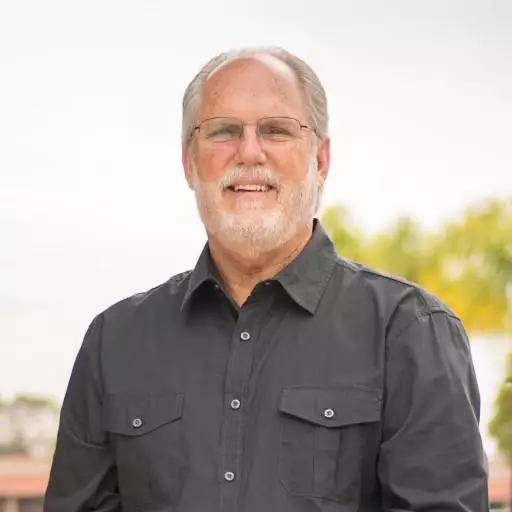
Jeff Johnson
2 Samuel 8 part 1


Pastor Jeff Johnson is taking us verse by verse through Second Samuel at the present time, and if you’ll recall, David has been on the receiving end of overwhelming kindness from his friend Jonathan as well as from God. David didn’t forget this, and when he gained power and wealth, he sought to use it to bless and be kind to others.
Jeff Johnson: Morality is an important part of our walk with Christ and it's one of Satan's favorite targets. He always uses this to get to you morally. He'll seek to get to you to corrupt you in your moral life, to get you to leave your God. So David was very severe with the Moabites and we need to be very severe with those things that would seek to corrupt us. We need to cut them out of our lives. We need to deal with them and not allow them to corrupt us to the place of immorality.
Your spirit leads me on and I'm running after you. I'll leave behind the worthless love and I'm trading them for priceless truth.
Guest (Male): We've all seen power and wealth used for evil and to hurt others. But today on Sound Doctrine, we'll see how David used his power and wealth to bless others. Pastor Jeff Johnson is taking us verse by verse through 2nd Samuel at the present time.
And if you'll recall, David has been on the receiving end of overwhelming kindness from his friend Jonathan as well as from God. David didn't forget this and when he gained power and wealth, he sought to use it to bless and be kind to others. Let's join Pastor Jeff now in 2nd Samuel chapter eight on this edition of Sound Doctrine.
Jeff Johnson: I always like to give you a little review so we're reminded of where we've come from and what's going on and what we're about to jump into. So through David so far, we've learned how the man of God is to react when God says no. And that was a good lesson. David is maturing as a man of God and as the King of Israel. So we're watching him mature and we're learning from what he's learning as he learns that without God, he can do nothing.
So he desired for the ark of God's presence to be in their midst, to be the center of their lives. And we also learned this: that you cannot serve God unless you know him, number one, and you cannot serve God unless you know His word. So Bible study became very important part of David's life. He realized that he missed the whole boat by not understanding the scriptures.
So all of a sudden, he was reminded Bible study is important. And so from there on, I see that his life has been changed, but he dives into the word of God. He also learned how God opens and shuts doors and that when God shuts a door, it's a blessing. It's answered prayer. Maybe you wanted it, but God shut the door and God didn't want you to have it. So praise the Lord for shut doors. And he learned that.
From here, David stands now in God's power and in His might as never before to go forth and to be more than a conqueror. So with us, as we learn our lessons well, as we follow David, as we learn he needs to be the center of our lives, as we seek his kingdom first, as we get into Bible study—very important—and you young men, you are strong because the word of God abides in you and because of that, you have overcome the wicked one.
And with an understanding that His ways are not our ways, when we learn these things, we also are going to go forth to be more than conquerors in our lives as we're going to see David do this morning. Chapter eight of Second Samuel. David wrote during this time as we go through Samuel at different times. He wrote different psalms. In this portion of scripture, he wrote Psalm 2 and Psalm 60.
In fact, in Psalm 2, in verse 8, David writes, "Ask of me and I shall give thee the heathen for thine inheritance and the uttermost parts of the earth for thy possession." And so God's promise to give victory. Prophetically, it will be partially fulfilled in and through David, but the final fulfillment of this prophecy, that God is going to give them the final possession of this earth, is going to come with Jesus Christ.
In Revelations chapter 11, let me read it to you, in verse 15, it says, "And the seventh angel sounded and there were great voices in heaven saying, the kingdoms of this world are become the kingdoms of our Lord and of his Christ and he shall reign forever and ever." So this is coming, final victory, overwhelming the enemy once and for all. Now, if you'd like to read a little history and a little more concerning this chapter, later on you can read in First Chronicles chapter 18, because remember Chronicles gives us a little bit more and usually we jump to it and pull out of it, but this morning we're just going to stay right here in chapter eight.
This personal application that we're going to be receiving this morning from chapter eight speaks to us really of Romans chapter 6 and chapter 8, when Paul speaks of total victory and he gives instruction in righteousness. You see, the word of God, Paul told Timothy, is profitable for doctrine, for correction, for instruction in righteousness, for reproof, that the man of God would be thoroughly furnished. He'd be perfect, he'd be mature, having the things of God, having everything that he needs through the word of God.
So instruction in righteousness. This is why we're following David's battles, why we're following his blessings and the victories of David, because we are seeking also to be instructed in righteousness. And so David was every bit of that. Verse one now of Second Samuel chapter eight: "And after this it came to pass that David smote the Philistines, subdued them, and David took Methegammah out of the hand of the Philistines." Methegammah is another name for Gath, which was a very strong Philistine city.
Now, when it says that David smote, he subdued them, we're going to see this all the way through this chapter, that David is really going for it. He's really beating the enemy back. After David receives God's promises, he goes forth with this confidence and this power to overwhelm his enemy here in chapter eight. The first city was Gath. It was a very strong walled city, but we see here that David's men were so strong, they moved so quickly that they took this giant walled city, this fortress of the Philistines. They just took it immediately.
As I was studying on this, I was reminded of Second Corinthians, where Paul says in chapter 10, verse 4, "For the weapons of our warfare are not fleshly, but they're mighty through God to the pulling down of strongholds, casting down imaginations every high thing that exalts itself against the knowledge of God, bringing into captivity every thought to the obedience of Christ." So David, doing in the physical, overwhelming his enemies, God says I want to help you to also pull down strongholds in your life.
As David pulls them down in a physical, He says I want to help you in the spiritual realm, in your own mind, in your own life. I want to be with you. Now, if you remember in Second Samuel chapter seven, in verse one, that it says, "It came to pass when the king sat in his house that the Lord had given to David rest round about from all of his enemies." David had rest. Jesus says, "If you will come to me, you that are heavy laden and down with burdens, I will give you rest."
So once you come to the Lord, he gives you an awesome rest and peace. You have peace with God, and the peace of God begins to rule in your hearts and in your minds through Christ Jesus. It's an awesome experience. You need to do that this morning if you haven't. You need to receive Christ. You need rest for your soul. So David had rest from all of his enemies.
But after God speaks to David about things to come, prophecy always is an exciting thing as God speaks to us of what is coming down, what is going to happen, David somehow leaves that place of communion and that place of rest and that place of blessing, and he says, "That's it. I'm going on the offensive. I'm not going to just sit here in Jerusalem and enjoy this peace and this rest for the rest of my life and just kick back. I'm going to go out and I'm going to kick some rear ends."
And that's exactly what he decided to do. Why? Because God's been good to him so much. He's not going to just hold off and stand off the enemy. He is going to now storm the gates of hell. David moves out on the offensive because it's time, because God's been good. And we all come to this time. I think we just get to the point where we say, "I can't sit here anymore. I can't just maintain the situation that I'm in. I've just got to move out for God."
This reminded me of a story about a guy named Larry Walters. It's a true story and I just recently heard it. I'd never heard it before. Larry Walters was a factory worker in Los Angeles. He was just a regular guy working in a factory and he'd come home every night. He lived right there next to the airport. He had a little house there where—and I don't know if you've ever flown over LA—but every house is all set up and it's just a massive amount of homes and they're pretty much all the same. They all have the chain-link fences around them.
So he'd go home to his regular old house and he'd do what everybody else does at the end of the day. He'd go out in his backyard, lay on the lawn chair, and open a six-pack and just kick back in the sun and the smog and just take it in. And every day everybody does the same thing, and that's what they would do. So he's out there downing his Cokes or whatever he's drinking, and all of a sudden an idea came to him that he says, "I'm going to try this."
So he thought of getting some balloons and putting them underneath his lawn chair. He wanted to kind of just do something different and hover above his neighbors and just kind of about a thousand feet. What he did was he put these weather balloons underneath his lawn chair and he took a BB gun with him because he wanted when he wanted to come down, he was going to start shooting these balloons and then he would be able to float right down. Well, lo and behold, he got on his lawn chair with these weather balloons and he went up, but he went up so fast and so quick.
He ended up, instead of a thousand feet, eleven thousand feet. The first ones to see him was a DC-10 radioing it in. "We've got a man in a lawn chair." Eleven thousand feet in the air over the airport. They shut down the airport and they finally, finally—I don't know whether they were talking to him how to shoot the balloons with his BB gun or what—but they finally got him down. This is a true story. Can you imagine?
The interviewers came to him and their first question was, "Larry, were you scared?" He said, "Yeah." He said, "Larry, are you going to do this again?" "No." And there's the greatest question, "Larry, why did you do this?" And he said this: "Well, I couldn't just sit there." And that was his answer. So David moves out for God.
Verse two: "And he smote Moab and measured them with a line, casting them down to the ground, even with two lines measured he to put to death, and with one full line to keep alive. And so the Moabites became David's servants and brought gifts." So he took Moab also. Listen, two-thirds of the adults as he measured them with a line, he laid them down and he killed them. Two-thirds of the adults. One-third who were the children would become his slaves.
Now, some say the reason for David's cruelty to those in Moab was because the Moabites killed his parents. We can't prove that because it's not written down, but we know in First Samuel 22:4 and 5, it talks about that his parents were with the Moabites as he was in the wilderness. And some say it's because they killed his parents. The Moabites were also responsible for corrupting Israel many times. In fact, they were a very corrupt people.
I'll tell you something about the enemy. If he cannot get to you anyway that he's trying to get to us all the ways, different ways, he always uses this to get to you morally. He'll seek to get to you to corrupt you in your moral life, to get you to leave your God. So David was very severe with the Moabites and we need to be very severe with those things that would seek to corrupt us. We need to cut them out of our lives. We need to deal with them and not allow them to corrupt us to the place of immorality.
Verse three: "David smote also Hadadezer, the son of Rehob, king of Zobah, as he went to recover his border at the river Euphrates." Now, David moves north. I want you to watch how he strategically does these moves. He moves north to Syria, but after going south to the Philistines. He also went east to the Moabites. He didn't have to go west because that's where the Mediterranean is. But I want you to see that strategically, he's taking over the land. His empire is growing. His kingdom is growing strong and he is getting complete victory throughout the land.
Now, this is actually the first, almost the last time that God's people, Israel, possessed the whole promised land. This is it. You see, David wasn't content with the little that he had. And so David went forth and methodically, he took possession of all that God had promised him. And the reason I'm stressing that "all" is because he took from the seaport city of Aqaba all the way over to Egypt, which is a little dry wadi, El-Arish, all the way up to the river Euphrates. He took over the whole land.
This was of course promised to the children of Israel, but they didn't possess it totally because the kings that were there were just subservient to David. So it wasn't totally in their hands. That is coming, that's a yet future prophecy that will be fulfilled. We know that Genesis 15:18 talks about God promising them the land, and in Genesis 13:15, He says that you will get it for your possession. But here it wasn't totally their possession.
So with content, David moved against the enemy. Remember that song we sing, that we're to hate all evil? And he was hating evil, dealing with evil. With the Philistines, he used Gath, which that name that I said was that first name in verse one, Methegammah, it means "the bridle of Ammah." So this was the main city of the Philistines, so he used Gath against themselves and he set up fortresses there.
Just like Christians, as we move into the world's music, we change it and we make it for the glory of God. We move into the sports, the area of sports, and we use it as a witness for the Lord. We do this with schools, with education, and we do it to the glory of God. And we're able to do that, and that's what David was doing with his enemy. With Moab, he showed no mercy. They were corrupt, so he dealt with them.
Notice verse four now: "And David took from him a thousand chariots and seven hundred horsemen, twenty thousand footmen, and David hamstrung all the chariot horses but reserved them for a hundred chariots." So he reserved some of them, but he killed most of them. And the reason he did this—what he did was actually he'd cut the back legs of the sinew there and it's called hamstringing a horse. And what it would do was the horse could hardly walk and it wasn't good for war anymore, but it would eventually just die of starvation. Kind of a cruel thing to do, but that's what he did with all those horses.
You say, "Why did David do that with those horses? Wasn't a horse like a tank back then?" Yes, they were. That's why God told the king that when you go into the land, in Deuteronomy 17, do not collect wives or horses. Right? So David is saying, "Okay, I won't collect horses." And we laugh, but we're like David, aren't we? In certain things we do well, but others we don't do well. So obedient to God in some areas, but in other areas we're not quite so obedient. We blow it.
And some of you, I know that maybe you're devoted to devotions and you love your devotions, but when it comes to giving your tithes, you bomb out and you go, "Well, oh gosh, man, I've got so many bills this month. Well, we just can't tithe God," and yet you're so devoted to your devotions. Yet some of you are so devoted to your tithing, but when it comes to Bible study and prayer, you blow it. You see, it's weird. We are like David. We pick and choose what we want to do.
But what's scary about this: when David was picking and choosing, what he chooses not to do is going to catch up with him. We're going to see this. It's going to catch up to him and it's going to hurt him in his life. So when we choose this and choose not to do this, hey, that thing's going to catch up with you. What goes around comes around. And we've got to be obedient to everything that God gives us, or we're going to be hurting in certain areas. We've got to see that. David's a good illustration of this.
God help us to be like David told Timothy in Second Timothy 3:17, that the man of God may be mature, thoroughly furnished unto all good works. God, help us to be mature men and women of God. Not picking and choosing, but just selling out and saying, "Lord, you are holy. You are the way, man. You're our all in all. We want to go your way a hundred percent." We're not going to play church and just do what we like to do. We want to do what you want us to do.
Verse five: "And when the Syrians of Damascus came to help Hadadezer, king of Zobah, David slew the Syrians two and twenty thousand men." So even though the Syrians had reinforcement, David was too strong for them. And I love this. Greater is He that is in us than he that is in the world. We are more than conquerors.
Then David put garrisons in Syria of Damascus and the Syrians became servants to David and brought gifts, and the Lord preserved David whithersoever he went. So the Syrians also became his servants. Over in Psalm 60, which we read this morning, in verse 8 of Psalm 60, interesting verse. David says, "Moab is my washpot." In other words, Moab, I wash my feet in them, God was saying. Those who were so corrupt, who defiled so much, I'm going to use them to cleanse. I'm going to turn them around.
And then he goes on to say, "Over Edom will I cast out my shoe." And that's usually—when you took your shoe off and threw the dirt out at somebody—they were to be your slaves and that was a sign. That's what God's saying: Edomites will be my slaves. Now, if you know anything about the Edomites, they're descendants of Esau. And in the Bible, Esau is always representative of the flesh. So what is God saying? I'll bring them under control.
That people, listen—in Christ, our flesh, our bodies can be under subjection. Didn't Paul say that? "I bring my body under subjection and I fear lest having preached to others, I myself should be a castaway. I myself should be disqualified." So I bring my body subservient to me, which is your enemy. So God says, "I'm going to do this."
And then he goes on in the end of this verse—this is Psalm 60, 8—"Philistia, triumph thou because of me?" And actually, what God is doing there, He's just using a little sarcasm. "You think you're triumphing because of me? No, no, I'm going to triumph over you." And so those in Philistia would become slaves to David also and serve him.
The last part of verse 6 there in Second Samuel 8, it says that the Lord preserved David whithersoever he went. And this is really the key verse here: that it was the Lord that was doing the work for David. The Lord blessed David and caused him to have success. It wasn't David. The Lord preserved him.
Now, David is growing in numbers, but more than just growing in numbers, what's really important is that David is growing in strength. Look at verse seven: "And David took the shields of gold that were on the servants of Hadadezer and brought them to Jerusalem. And from the cities of Hadadezer, which David took exceeding much brass."
Now, David begins to gather—and we talked about this a little bit last time we were together—all of the materials for the temple. Remember, David could not build the temple for God. And God told him that in First Chronicles 22:8. "David, you will not do it."
Guest (Male): It's our prayer that you've received some encouragement from Pastor Jeff Johnson's study in Second Samuel chapter eight here on Sound Doctrine. We'll continue this message next time. We house all of our Second Samuel studies at SoundDoctrineRadio.org. This comes in handy should you miss a study or two on the radio, or just want to hear something again or even share it with someone you know.
This study and more are available now at SoundDoctrineRadio.org under messages. You can also listen at OnePlace.com and through the Sound Doctrine Radio podcast app. And of course, speaking of podcasts, Sound Doctrine can be heard wherever you enjoy podcasts, and that includes Spotify and Apple Podcasts.
This program is made possible through the support of our listeners. To make a contribution to the ministry, just visit SoundDoctrineRadio.org and click on giving. Be sure to join us next time when Pastor Jeff will return to Second Samuel here on Sound Doctrine, a ministry of Calvary Chapel Downey.
Featured Offer

Access an extensive archive of messages from Pastor Jeff Johnson
Past Episodes

Featured Offer
Access an extensive archive of messages from Pastor Jeff Johnson
About Sound Doctrine
A weekday radio program featuring the verse by verse Bible teaching of Pastor Jeff Johnson broadcasted throughout the United States and abroad.
About Jeff Johnson
Jeff Johnson is the senior pastor of Calvary Chapel of Downey, California since 1973. The emphasis within his ministry is a verse-by-verse study of the Word of God, giving its full counsel. His influence has experienced a steady and substantial growth over the years with people of all ages. Calvary Chapel of Downey has grown to average weekly attendance of more than 9,000. Teaching seminars, Bible classes, home studies, various training programs, mission outreaches, as well as a Christian Elementary & Jr./Sr. High School, and Bible college meet the needs of this large body. Calvary Chapel's impact is growing from Southern California to virtually around the world. His wife Karyn supports Jeff in his ministry.
Contact Sound Doctrine with Jeff Johnson
Mailing Address
Sound Doctrine Radio
12808 Woodruff Ave.
Downey, CA 90242
Telephone
(800) 353-7553
(KWAVE - 107.9FM)
(562) 803-6501
Southern California 2:00 pm