
Sound Doctrine
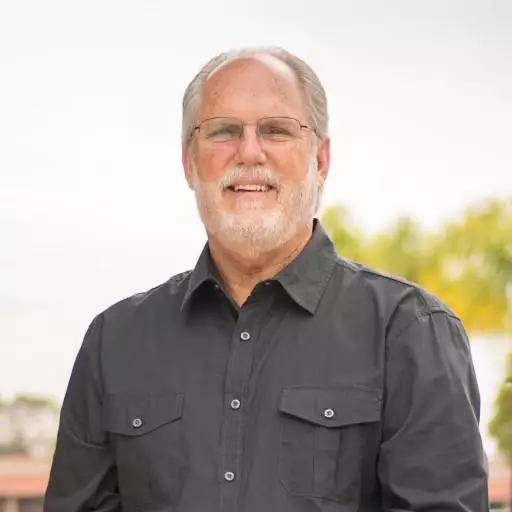
Jeff Johnson
2 Samuel 7 part 1


Today, Pastor Jeff Johnson will show us how King David desired to build a temple for God, out of a good motive, and yet the Lord declines the offer. This is part off our new series in Second Samuel, so turn to Second Samuel, chapter seven.
Jeff Johnson: Nathan says, "Listen, David, go for it. God is with you. And it's in your heart, so it's good. Do it." First of all, it's in his heart. Now, I don't think that all things in our hearts are good because I know this: the Bible says that our hearts are wicked, deceitfully wicked.
And we can come up with some real weird stuff. So, we're not always, just because your heart's in it and your heart's with it, to do that. So he says, "Hey, it's good, though; it's in your heart."
Guest (Male): It's not hard to recognize why God would say no to something terrible. We would expect that of Him, right? But according to God's word, there are times we can even desire a good thing in the eyes of God, with a good motive, and God will still say no.
Today, Pastor Jeff Johnson will show us how King David desired to build a temple for God out of a good motive, and yet the Lord declines the offer. This is part of our new series in 2 Samuel, so turn to chapter 7 as we join Pastor Jeff for this helpful addition of Sound Doctrine.
Jeff Johnson: Let's get a little review. David has learned some important lessons so far. Number one, he has learned to reverence God. He has learned to respect God. He has learned the importance of Bible study. And remember, God has showed him how to do a right thing in the right way.
And what was that right thing? To bring the ark of God into the tabernacle in Jerusalem and set it there. And they did that. And everyone rejoiced, and with gladness, they brought the ark of the Lord into the capital city of Jerusalem.
Now, chapter 7. Let me ask you a couple of questions. First of all, have you ever felt that God had something great for you and you tried to pursue it as best you could, and yet God shut the door and said no? I think we can learn a lot from His denials in our life.
Let me ask you another question. How did you react when God said no? I think that is what we need to learn about. I think David helps us in chapter 7 because we have a very similar situation when God told David no.
Verse 1 of 2 Samuel chapter 7: "And it came to pass, when the king sat in his house, and the Lord had given him rest round about from all of his enemies..." Remember, the Lord took care of David's enemies, and everything was quiet. David is in the city of Jerusalem, taken from the Jebusites; everything is calm.
And he sits there as a very wealthy man, a very rich man. I would say David, King David, at this time was like a billionaire as we have today. Very rich. He was sitting in his palace made of cedar. And remember, Hiram, the king of Tyre over in 2 Samuel 5:11, is the one that gave him the material to help him out in building his palace. He brought the cedars of Lebanon down to Jerusalem to give David a hand.
I can see David kind of looking out the window. You know, in Jerusalem, it's 2,700 feet above sea level, so in the winter, it gets very cold. There are some real good storms. I mean, we've taken groups in the winter, in March and February, and man, we can tell you stories where you could actually lean into the wind.
And the rain was coming down, and we lost some touring days even because the winters there are so harsh. But I can see David looking out his palace window, looking down upon Mount Moriah there at the tabernacle and where the ark is kept, where thousands of priests and musicians would come and gather around this tent.
And remember, God wanted it to be a tent because, in the wilderness, it was perfect. I mean, when you needed to move, it was very portable. You just get it up, move on. As God moved, they were ready to move with Him with the whole tabernacle.
But in Jerusalem, we've now settled in. We now have a capital, and God is here in our midst in the presence of the ark. And so, a tent? Look at verse 2. The king said to Nathan the prophet, "See now, I dwell in a house of cedar, but the ark of God dwells within curtains." And Nathan said to the king, "Go, do all that is in thine heart; for the Lord is with thee."
Now, mind you, God never told David once to build Him a house. But David loved the Lord, and David had a good desire to do something for the Lord. He wanted to show his gratitude to God, and he was inferring that he would build a house.
And so he said, "Nathan, it's not good that God's in a tent and I'm in a cedar palace." He was kind of feeling self-conscious. There's something wrong about this picture. You know, I'm sitting in this palace, and rain's coming down, and the ark is out there full of skins and just really getting whaled on. I don't like this picture.
I want to do something great for God. And I think we all have similar motives at one time or another where we want to do something great for God. Nathan says, "Listen, David, go for it. God is with you. And it's in your heart, so it's good. Do it."
First of all, it's in his heart. Now, I don't think that all things in our hearts are good. Because I know this: the Bible says that our hearts are wicked, deceitfully wicked. And we can come up with some real weird stuff. So, we're not always, just because your heart's in it and your heart's with it, to do that. So he says, "Hey, it's good, though; it's in your heart."
Verse 4: "And it came to pass that night, that the word of the Lord came unto Nathan, saying, 'Go and tell my servant David, thus saith the Lord, Shalt thou build me an house for me to dwell in? Whereas I have not dwelt in any house since the time that I brought up the children of Israel out of Egypt, even to this day, but have walked in a tent and in a tabernacle. In all the places wherein I have walked with all the children of Israel spake I a word with any of the tribes of Israel, whom I commanded to feed my people Israel, saying, Why build ye not me an house of cedar?'"
God is simply saying that I have never asked for a house to be built for me. And He comes to the prophet at night to tell him this. "I've always dwelt within this tabernacle." Because you see, the tabernacle was very special in that everything that was in it and around it spoke of His communion, of His way of identifying with the people.
That the people could come in and commune with God, and God with them, and that's very important. In fact, over in John's Gospel, chapter 1, verse 14, doesn't it say that the Word came and tabernacled amongst us? He came and He dwelt in His flesh. God-man Jesus Christ came and lived with us, lived amongst us.
Why? So we could identify with Him. So we could commune with a great God, a Creator of the universe. So we could relate. And it's very important that God relates to us. That's why He sent His Son, so we would be able to identify.
God says, "Listen, I never asked for a house. Nathan, I think you were a little bit premature in telling David it was okay, go for it and go do it. I don't want a house. Read my lips." You know, you get the picture?
So, the prophet Nathan was wrong in what he did. And here, this gets scary. You know, "Oh, you mean this man was wrong?" Yeah, men are wrong a lot of the time. "But this is a prophet! And you're saying this prophet was wrong?" Yes, even prophets can be wrong.
That's why it is so important that when somebody comes up to you and says to you, "The Lord is saying to me to tell you that you're to do this, this, and that." You know, especially when some guy comes up to you and says, "The Lord told me to tell you you're to marry me." Wait a minute, you know?
And there are people who go around doing this stuff. And you don't believe man. You don't believe man. Now, you might take it to heart, and then you might get into the Word and seek the Lord because you know the Lord's got your phone number too, right? He can ring you at any time.
Okay, so He rung them, all right. So, I'm going to pray about it and let the Lord ring me up on this and confirm it. I think that's very important that we need to do that. Where David was getting a word from Nathan, and Nathan was wrong. So, Nathan's going to have to backpedal here and take care of getting it squared away.
Verse 8: "Now therefore so shalt thou say unto my servant David, Thus saith the Lord of hosts," Nathan, this is what I want you to tell David, "I took thee from the sheepcote, from following the sheep, to be ruler over my people, over Israel." I love how God prefaces "no." Before He tells David no, He kind of prefaces it with, "Listen, David, I want you to know that I took you from very humble beginnings.
I took you from the sheepcote. My call was on your life. I called you out of that situation to be ruler of my people Israel." So, don't despise the days of small things. I mean, God called us all from a very humble beginning.
He reminds David of this humble beginning. Remember, God chooses differently than man chooses, right? And we saw that with Saul. Saul looked good on the outside; he looked like the kingly figure. He was tall, he was handsome, he was charismatic, and so, that's the guy. No, that's not the guy.
There's another little guy out there in the shepherd's field who looks like this little ruddy, dirty guy that watches the sheep. That's the guy. Because God looked at his heart, and the heart is what God always looks at.
Oh, you might show Him a great outside little time, you might raise your hands, and you might be able to fake people out on the outside. But God sees the heart. He always deals with our hearts, and all things are naked to Him with whom we have to deal.
So, God chose David because of his heart, not because of his great stature, because that's how God chooses. And so He chose David. Why? Because He knew that David would be the one that would really care, really shepherd, really feed, really protect Israel.
And so, those early days, when God had His hand in David's life, a relationship was being built up. God was preparing David for the place that He had prepared for him. As with all of us. It starts out with just you taking the step of faith and coming to know the Lord, and then the Lord begins to work with you.
He's continuing to prepare you for the place He has prepared for you. Now, David, in verse 9, He says, "I want you to tell David this also, 'that I was with thee whithersoever thou wentest, and have cut off all thine enemies out of thy sight, and have made thee a great name, like unto the name of the great men that are in the earth.'"
So, I have given you victory, David; I've given you a great name. He reminds David of what He's done in his past. It's always good to look back and see what God has done, isn't it? Remembering the days of the Lord and what He has already done. It sure helps us for right now, let alone for what's coming up, as we look back. Don't ever forget to look back. God wants us to look back.
And so, He tells and reminds David of the past. And now, the next verses, He reminds David of the future. Three thousand years in advance, He's going to give him a picture of what He's going to do. His promise that will be fulfilled. This is to encourage David in the midst of this "no" that David is getting.
Verse 10: "Moreover," God says, "I will appoint a place for my people Israel, and will plant them, that they may dwell in a place of their own, and move no more; neither shall the children of wickedness afflict them any more, as beforetime, and as since the time that I commanded judges to be over my people Israel, and have caused thee to rest from all thine enemies. Also the Lord telleth thee that he will make thee an house."
There's coming a day, God said, of no more moving around and no more affliction. That's good news. "Just as I've given you rest," God says to David, "from your enemies, I'm going to build you a house."
"Oh, no, no, God, I think you don't... you got it right. I want to build you a house." God's saying, "No, David, I want to build you a house." You see, you can't outgive God. I mean, you might have good things you want to do for God, and this, that, and the other, but God says, "No, no, I want to bless your life.
I want to love you, I want to walk with you, I want to blow your mind because I love you." So, God's loving, firm refusal was no to David as far as what he wanted to do. And I'm sure David, at first, would say, "Well, wait a minute, I'm confused. I've given my life for You, Lord, and I want to do this good work. Why won't You let me do it?"
Now, years later, David would fully understand, and he would see differently why God was doing what He was doing. You know, sometimes we just don't understand why we get a no. And so, we go through it. But yet, if you'll just hang on, just wait a little bit, you're going to see why.
Over in 1 Chronicles, chapter 22, verse 8, let me read it to you. 1 Chronicles is another look at this whole scenario. But in 1 Chronicles chapter 22, verse 8, it says, "But the word of the Lord came to me, saying, Thou hast shed blood," talking to David, "abundantly, and hast made great wars: thou shalt not build an house unto my name, because thou hast shed blood upon the earth in my sight."
Jerusalem means "city of peace," "city of Shalom." And God is telling David, "You're not going to build me a house. You're a man with bloody hands. I mean, you've been at war. I mean, you've done incredible things.
Jerusalem's going to be a place of peace and a place of rest, and I don't want your hands involved with it." And David would come to understand why later on. But David's heart was right in what he wanted to do, and God is going to bless him because of that.
So, there are certain things that God lays on our heart, or maybe that it's not even God laying it on our heart; it's just something you want to do for God. That's good. And that's all right, to want to do that. Maybe you're not going to ever get to do it, but it was on your heart.
Now, God's promise to David. This is incredible. This is the Davidic promise and covenant to David. Look at verse 12. And this is God's promise of a dynasty that He is going to give to David. "And when thy days be fulfilled, and thou shalt sleep with thy fathers, I will set up thy seed after thee, which shall proceed out of thy bowels, and I will establish his kingdom. He shall build an house for my name, and I will stablish the throne of his kingdom for ever."
God's promise. You see, God's plan is looking at eternity, right? He always looks at eternity at the very end. God's kind of like the Goodyear Blimp over the Rose Parade. He sees the beginning from the end. He already knows who won, He already knows... He knows everything, right?
And we are always on 5th Street, sitting there going, "Hey, can you see that?" You know, we're just in the now. We're just trying to figure things out, what's going right past us in the now. But God's always looking for eternity.
So, when He deals with us, guess what? He deals with us with eternity in mind. In everything, He sees it all done, and He's always working with a tender hand in our lives. So, Nathan is to tell David no from God.
Have you ever had God say no to you with no explanation? Just no. "Wait, wait a minute. Why? Would you explain it to me? I mean, I'm a man of reason. I mean, if You just reason with me, you know. Why not?"
And we always want to know the whole explanation. Well, I don't think David gets a whole explanation here. He just gets the "no," and he gets some promises. You see, maybe it's you wanted to serve Him, you wanted to go to the mission field, you wanted to do something good for the Lord.
You wanted to dedicate your life to the Lord, and yet you got a shut door and you didn't go. You got a no. You want to have a Christian family. It's a good desire. You want to have a Christian husband, or you want to have a Christian family, you want to have children, and yet, for some reason, the door's been shut and the answer's no with no explanation.
"What's going on? I don't understand." I mean, circumstances come up. Everything, obligations, and I was just ready to go and I got sick and I couldn't go. "I don't understand what's happening, Lord. I want You to tell me what is going on."
Now, listen. What God wants us to know is that we're to keep our eyes upon Him and trust Him because He, just like David would find out, He's saying to us, "You're going to find out. Someday, you will see it all come to pass and the reasons why."
It's hard to accept a no, especially after you've given so much and you want to do it so badly. But God's ways are not ours; we know that. They're not always clear. "Now, how come, Lord? I just... I don't understand. They just sent some more people into the field, and they prayed over them in our church, and I'm sitting there going, I want to go! And yet they're going.
And then they just went to a wedding the other day, and somebody else got married. Hey! And then the baby dedication. I can't stand it anymore! Not another one! And I don't... what's going on?" I think the important thing is that when God does say no, it's the reaction that we have with that "no" that is so important and vital.
How do you react? You see, we have a choice. We can go either one of two ways. We can either sulk and be like little children who just say, "I'm just going... I'm not talking to you anymore." You know, and just... and just stay in our bedroom. Or we can seek. Sulk or seek; which is it?
I think David just said, "Well, I'm just going to keep continuing to seek the Lord. There's got to be more. Maybe as I continue to seek the Lord, that more information will come." And as David was receiving it, the promises of the Lord, all of a sudden, he was overwhelmed with God's response.
It totally overshadowed God's no to him, that he couldn't do what he wanted to do. It's important that our minds are stayed upon Jehovah, finding, as He promised, perfect peace and rest. We need to keep seeking Him. Even in the midst of a no? Yes. Because perfect peace and rest is with eyes on Him.
"He's going to build me a house?" I'm sure David questioned that. I mean, me? He's going to build me a house? His seed, God was saying. Solomon, which would be the seed of David, would build the house.
Actually, you know, when people say this is Solomon's temple, I really disagree with that. Oh, you can go ahead and call it Solomon's temple, but listen, let's face it. It was in David's heart to start the whole thing.
In fact, I found a scripture over in 2 Chronicles, chapter 6, in verse 7. Listen to this. Solomon's talking: "Now it was in the heart of David my father to build an house for the name of the Lord God of Israel. But the Lord said to David my father, Forasmuch as it was in thine heart to build an house for my name, thou didst well in that it was in thine heart: Notwithstanding thou shalt not build the house; but thy son which shall come forth out of thy loins, he shall build the house for my name."
So, we know that Solomon built the house. But wait, whose house was it? I think when David gets to heaven, God's going to say, "David, it was your house. It goes to your account because it was in your heart to do it. You were the visionary.
You were the one that got the blueprints. You were the one that gathered all the materials to do it, even though you couldn't do it yourself." Look at what he's doing. He starts gathering the materials.
And that's telling me: when God tells you no, that you can't go to the mission field, well then you can start to really pray for somebody else and see someone else sent forth, and you can start communicating, praying for them, supporting them.
And you're going to get the blessings. Just as David's going to get the blessings, I believe, when he gets to heaven, for building the temple. It was in his heart to do it. Now, this also is a verse that looks towards Jesus Christ.
Not just Solomon as David's seed, but that Seed that was way off that will have His throne forever. Of course, that's talking about Jesus Christ who would take the throne of David, starting with chapter 4 of Revelation and go on into chapter 19 and apprehend that throne.
And that's exactly what Revelation is all about: Jesus coming into the throne of David and taking it over. Notice verse 14: "I will be his father, and he shall be my son. If he commit iniquity, I will chasten him with the rod of men, and with the stripes of the children of men:"
This verse really reveals how God deals with His children. In fact, there's a scripture in John's Gospel, chapter 20, verse 17, where Jesus said to Mary, "Touch me not, Mary, for I am not ascended unto my father, but I go to my brethren and say to them, I ascend to my father and your father, and to my God and your God."
You see, John said that to as many as received Him. Once you receive Jesus Christ, God gives you the power to become a child of God. You become His child; He is then your Father. Beautiful relationship is set up.
Guest (Male): We'll stop right here for today. This is Sound Doctrine, and what you heard today is part of our verse-by-verse series through 2 Samuel with Pastor Jeff Johnson. Pastor Jeff's messages are archived for you at sounddoctrineradio.org. That includes all of 2 Samuel.
Our programs are also accessible at oneplace.com and on Spotify and Apple Podcasts. If you enjoy the teaching you receive through Sound Doctrine, you can show your support through a financial gift, and thank you for whatever the Lord lays on your heart.
There's a place to give at sounddoctrineradio.org. sounddoctrineradio.org. Join us for another study in 2 Samuel next time we meet for Sound Doctrine with Pastor Jeff. May God richly bless you as you live by the sound doctrine contained in God's Word.
Featured Offer

Access an extensive archive of messages from Pastor Jeff Johnson
Past Episodes

Featured Offer
Access an extensive archive of messages from Pastor Jeff Johnson
About Sound Doctrine
A weekday radio program featuring the verse by verse Bible teaching of Pastor Jeff Johnson broadcasted throughout the United States and abroad.
About Jeff Johnson
Jeff Johnson is the senior pastor of Calvary Chapel of Downey, California since 1973. The emphasis within his ministry is a verse-by-verse study of the Word of God, giving its full counsel. His influence has experienced a steady and substantial growth over the years with people of all ages. Calvary Chapel of Downey has grown to average weekly attendance of more than 9,000. Teaching seminars, Bible classes, home studies, various training programs, mission outreaches, as well as a Christian Elementary & Jr./Sr. High School, and Bible college meet the needs of this large body. Calvary Chapel's impact is growing from Southern California to virtually around the world. His wife Karyn supports Jeff in his ministry.
Contact Sound Doctrine with Jeff Johnson
Mailing Address
Sound Doctrine Radio
12808 Woodruff Ave.
Downey, CA 90242
Telephone
(800) 353-7553
(KWAVE - 107.9FM)
(562) 803-6501
Southern California 2:00 pm