
2 Samuel 22:1-25 part 1


In Second Samuel twenty-two, David offers a song of praise, and it was written during his last years on earth. He’s testifying of how gracious God is, and I think you’ll be encouraged by it.
Guest (Male): How rock solid is your faith? Here's Pastor Jeff.
Jeff Johnson: Jesus says, "The wise man who hears and does these sayings of Mine, I will liken unto him as a wise man that built his house upon the rock. When the storms and all come, it's going to stand. You see, when an earthquake hits, it's those areas that are built upon sand that it begins to liquefy and they just sink. They go into a sinkhole. But those on a rock, they're solid. They stand. Interesting. The rock, my foundation."
Guest (Male): Glad you could be with us for this edition of Sound Doctrine as we get right back into our study of 2 Samuel. There have been many great songs written by believers throughout the years, which testify of God's goodness and grace. I can't help but think of Amazing Grace by John Newton, or more recently, Chris Tomlin's Your Grace is Enough.
In 2 Samuel chapter 22, David offers a song of praise, and it was written during his last years on earth. He's testifying of how gracious God is, and I think you'll be encouraged by it. Here's Pastor Jeff Johnson.
Jeff Johnson: 2 Samuel chapter 22, as we're ending this incredible journey with David. Now in 2 Samuel chapter 22, we see here that this is a song of deliverance from David. 2 Samuel 22, verse one. "And David spoke unto the Lord the words of this song in the day that the Lord had delivered him out of the hand of all his enemies and out of the hand of Saul." Many believe that this psalm, song of praise and thanksgiving and deliverance, was written earlier in David's career, right before his great troubles, right before he really fell on his face.
During the time in which his kingdom, it was written it says right here, when he was taking his kingdom, when God was giving it to him, giving him the victory over all of his enemies and over Saul. Now there are two types of praise in the scriptures. There's that which is called descriptive praise, and then there is that which is called declarative praise. The first one speaks of His attributes, in other words, what He's like. That's a descriptive praise. The latter speaks of His works, or what He's done.
So this song or this psalm that we're going to read through here is a descriptive praise. In other words, it reveals what God is like during the fight that David had, during the conflict that he was in, and during his victory. What God did for him there. Here we see the results of really trusting God. Here we see what it means to cast your care upon the Lord, for David during that time did that and he was filled with God's spirit.
Anytime you're filled with God's spirit, it says in the New Testament in Ephesians 5:18 that we're to be filled with the spirit, not with wine. And when we are filled with the spirit, we're then going to bring forth praise and thanksgiving unto the Lord. So the natural result of being filled with God is praising the Lord. And you see that also in Philippians where Paul says, "I rejoice in the Lord. Again I say rejoice." In the midst of confusion, you can rejoice.
There's just something about getting your eyes upon the Lord in the midst of your situation where you know you should be bummed out, but you're not. You know that you should be blown away, throwing things or whatever, and you're not. You have a peace and you have a joy. Well, that's from the Lord. And it's because you've got your eyes upon Him, you're trusting in Him, that He's given you this rejoicing, this joy, this knowing that it's going to be all right.
And this is what David was experiencing here. He was actually an overcomer. What is going to overcome this world? He whose faith is in Jesus Christ is an overcomer of this world. So our faith needs to be in the Lord and we will also overcome. David is kind of looking back now as he's writing this song and he's thanking God for what He has done. It is good to look back. It is always good to look back because you can see what He has done, then you know what He could do that's coming up.
So it gives us not only the strength to hang in there for what we're up against, but hope for victory. So David many times in the Psalms, over in Psalm 105, he says, remembering His marvelous works that He has done. And then he says, "Let the heart of them rejoice that seek the Lord." So let's remember what He has done and let's look forward in rejoicing what He's going to do.
This song, if you'll line it up with Psalm 18, is identical. In other words, it just lines up. They're both the same song. There's some discrepancies, very few though. Many believe that Psalm 23 David also wrote during this high point in his life of his victories. You know, the shepherd song? This is when many feel that he wrote that during a real high point in his walk with the Lord.
This song had to be written, many believe, before his sin with Bathsheba and his sin against Uriah when he committed murder, because he speaks in this song of some interesting things. He talks about his cleanliness, his goodness, and his righteousness. But after his fall with Bathsheba, his tune drastically changes and you see David beginning to cry out for His mercy and His grace and His forgiveness.
In fact, over in Psalm 51 that we read this morning, David cries out and he says, "Have mercy upon me, oh God, according to Thy loving kindness, according to the multitude of Thy tender mercies, blot out my transgressions. Wash me thoroughly from mine iniquity and cleanse me from my sin. I acknowledge my transgression and my sin is ever before me. Against Thee and Thee only have I sinned and done this evil, that Thou mightest be justified when Thou speak, and be clear when Thou judges."
David's whole tune is changing here, whereas once he was looking and coming to God on the basis of his goodness and righteousness and cleanliness, and then all of a sudden after his fall, he comes with a whole different tune, looking at God's mercy and for His grace. So it's very interesting as we look at this song. It also focuses on David's deliverance that God gave to him over all of his enemies. Every one of the psalms that David wrote are all his. I mean, they're all great, aren't they?
This one is incredible as we look through it and go verse by verse and just pick it apart a little bit. It's just fantastic the things that David says. I couldn't say them any better. And I know a lot of people say, "I love to read the psalms because I just love the way that David thanks the Lord. I love the way that he puts things. I couldn't do it." And so we read the psalms a lot. Good times, bad times, anytime. Psalms are good to read, right?
Well, right now we're going through the psalms with our staff and we love it. It's just getting our eyes right where they need to be. We go on Sunday mornings, we go through the psalms. We have it for the congregational reading and reading back and forth. It's great. It again helps us to praise the Lord. It helps us to worship the Lord, as many of these psalms were written in our worship service. We actually memorize scriptures because the psalms were put into songs so we can worship the Lord.
So David really knows how to write as he puts these psalms to words. Now, verse two, it says in chapter 22 of 2 Samuel, "And David said, the Lord is my rock and my fortress and my deliverer." In premarital counseling, I always like to have the couple sitting there with me and I always like to ask one question that stirs things up as far as letting me know how their love is towards one another. I have them turn towards each other and just give me descriptions on how much they love their mate.
Show me, is it deeper than the deepest well, highest than the highest mountain? How much do you love this guy or this girl? Out of their own hearts, and they sometimes sit there and they wrestle with it for descriptive words. "Well, it's a strong love." "Yeah, yeah, okay." "It's enduring." "Yeah, all right." And they come up with these adjectives, it's great. I love to hear them. Descriptions of how they love one another.
Here we're having David's description of his God. Remember, this is a descriptive psalm, so these descriptions are awesome. He says, "The Lord is my rock." Now in Israel, there are rocks everywhere. You can't miss rocks. Big ones, little ones, there's rocks everywhere. So David says, "The Lord is my rock." You see, God has always been a symbol of a rock. Jesus Christ, of course, throughout the scriptures is a type of rock.
And that speaks of safety, of security. Rock is always good for a foundation, especially. Remember the scripture that says, "The coney are a feeble foe, and yet it says they hide in the cleft of the rock." That little Israeli rabbit, it's such a cute little animal, but everybody's its enemy. But it's very feeble but very smart in that it runs into the rock, and as it runs in that little hole, it goes "you can't get me, man."
So he knows where to go. But do we know where to go? Feeble foe, many enemies, runs into the rock, and the rock becomes its fortress. So the Lord's my rock. Jesus says, "The wise man who hears and does these sayings of Mine, I will liken unto him as a wise man that built his house upon the rock. When the storms and all come, it's going to stand. You see, when an earthquake hits, it's those areas that are built upon sand that it begins to liquefy and they just sink."
They go into a sinkhole. But those on a rock, they're solid. They stand. Interesting. The rock, my foundation. Then he says, "The Lord is my fortress." Now he's not talking about a manmade fortress, he's talking about a God-made natural fortress up in the rocks, the clefts of the rocks. God in that area, in that part of the country, even in our part of the country, there's many mountainous regions that can be used as a fortress. It's just a place of protection, a place of defense.
If God be for us, who can be against us? So He is my fortress. And then David says, "He is my deliverer. He has delivered me." I love that psalm in Psalm 40 where many of us can relate to this in our testimony where David said, "I waited patiently for the Lord. He inclined unto me and heard my cry. He brought me up out of also the horrible pit, out of the miry clay, and He set my feet upon a rock. He established my goings. He put a new song in my mouth, even praise unto my God. Many shall see it and fear and shall trust in the Lord."
So David says, "He's my deliverer, man. Tipped me out of that pit and put me on a rock. He delivered my soul." Look at verse three. He says, "The God of my rock, in Him will I trust." The God of my faith. You see, there is a condition to being safe and delivered. You know what that condition is? It is that we must believe. In God is my rock. He is whom I trust.
The word believe is very interesting. A lot of people say, "Well, I believe in God, I believe in Jesus Christ." But you can say it so quick. But what does the word really mean? It's a huge word. It means to trust in, to cling to, to rely upon, to adhere to. I mean, we're talking about a total belief that your whole mind and body and soul and strength is behind the word. "I'll show you my faith by my works," James said. Wow.
And so with that word believe, there's so much behind it. He says, "I trust the Lord. He is my shield." He goes on. That shield of faith. Remember in the New Testament it talks about the shield of faith? They would always take on that shield and put a piece of wet leather on it as they would go into battle. When they would go into battle, then the enemy would fire their arrows full of fire, and they'd hit that leather and just go out.
And so we're to wield our shield of faith against the enemy and his lies, and we would stop them with that shield of faith. But you must have faith to take it up and to use it against the enemy. So David said He is my shield, my protector, the one who I have faith in. Over in Mark's Gospel in chapter nine, let me read it to you in verse 23. Jesus said, "If thou canst believe, all things are possible to him that believes."
So faith to believe God. Things that can happen to those who believe, who have Him as their shield. Then he says He is the horn of my salvation. Horns were always used for protection and for defense. They would always use the horn to warn or to rally the troops. He's the horn of my salvation. He's called me, He's my source. David proclaims, "He's my high tower, high places."
The enemy gets into the high place, then he's got the advantage. So the Lord puts us in the high places. Why? To give us a vision for the victory. He opens our eyes, He opens our ears. He is my high place. He raises me up above it all to let me see it and understand what's going on. He is my refuge, David says. My hiding place. Again, that special place of hiding that David remember many times was running and hid in the forests.
The forest would gobble him up, protect him. God would just cause him to be like he disappeared, and his enemies would try to find him and they'd go right by him. They couldn't find him because the Lord's our hiding place. Special place of hiding. And then he says the Lord is my savior. He's my savior in more ways than just saving me from this world, the flesh, and the devil. I mean, he saved me from a certain death. He has saved me from myself. He has saved me from so much. He is my savior.
And then finally he says in that verse, "He saves me from violence." Wow. That's a good thing to be kept from, especially these days, huh? There's violence all over the place. He keeps me in the time of violence. He saves me, He protects me. And how we need to just allow Him to go before us and open our eyes to see that in this troublous and violent time that we live, that He's in the midst of it all.
Remember when Elisha's servant was panicking because he looked at the Assyrians that were surrounding them, coming at them? And he was panicking, and Elisha was just sitting there kicking back going, "Praise the Lord." And the servant looked at Elisha, said, "What are you nuts? The Assyrians are coming against us. What's going on?" And Elisha just said, "Lord, please open his eyes that he can see what I see."
And He opened the servant's eyes and the servant looked out there, and there were the angels of the Lord surrounding the Assyrian army. So Elisha is just going, "Yes, Lord. The Lord's in charge. He's in control. Trust Him. Look to Him. He's bigger than anything out there that might try to come against you." And then verse four, he says, "I will call on the Lord, who is worthy to be praised, so shall I be saved from mine enemies."
Do you recognize that little verse there? We sing it. We sing it here. It's been put into a song and it's such a beautiful song. It's actually the summary of this whole psalm or song. Verse four, it tells it all. He says, "I will call." You see, he said, "I will trust in the Lord," and because I'm trusting in the Lord, I'm going to call upon the Lord. Because I believe in God, so that means that when I'm in trouble or something happens, I'm going to go running right to God.
And I'm going to give it to Him and I'm going to share it with Him because I need to, because I trust God. I love that scripture in Ephesians where he talks about one of our offensive weapons, and that is, of course, prayer. Praying always with all prayer and supplication in the spirit, watching thereunto with all perseverance and supplication for all saints. How we need to be praying. And so he says, "I will call upon the name of the Lord."
And remember what Paul said to the Philippians? He said with everything, don't be anxious about anything, don't be troubled, but with everything, with prayer and supplication, make your request known unto God. And then after that, with thanksgiving, he says, the peace of God will rule your heart and in your mind through Christ Jesus. So as we run to the Lord, as we trust the Lord, we run to the Lord with our prayers.
We give it to Him, and after that comes praise. We're to praise the Lord. Thank God, I just went and gave it to the Lord. You know God's going to do something. I'm excited. And a song is put in our heart for our God. Peter says cast your cares upon the Lord, and then we begin to praise. And notice he says, "for He is worthy." Who is worthy? "For Thou art worthy, oh Lord, to receive glory and honor and power, for Thou hast created all things, and for Thy pleasure they are and were created."
You're worthy, Lord, because You created me to worship You. And when I'm doing that, when I'm praising Your name, that's what I'm created to do. And that's when I start thriving, man. That's when I start just saying yeah, and I just go, "This is what it's all about. Praising the Lord. He is worthy of all of our praise." So to call upon the Lord is to be delivered from all your enemy, and that's what David is saying here.
David had a lot of enemies. Remember, he had Saul that was fast after him. He had Doeg, that dirty Doeg. And then he had Ahithophel. I mean, he had enemies coming at him right and left. We all have enemies we need to deal with. Paul and Silas were in prison, thrown in there for their faith in God and in preaching Christ. They sat down there and they said, "Let's sing a song."
And they began, but before they sang that song, don't you think that they trusted the Lord with the situation, and don't you think they prayed about it and cast their care upon the Lord? "Lord, here we are, we're in a prison, they're beating us up. Look what they've done. Now let's worship the Lord." And they began to worship the Lord and they were delivered immediately.
Look at verse five. "When the waves of death compassed me, and the floods of ungodly men made me afraid, the sorrows of hell or Sheol compassed me about, the snares of death prevented me." David must have faced death day after day as his enemy was coming after him. He said, "Though I walk through the valley of the shadow of death, and I've been in that valley of the shadow of death, and it is a scary place."
If you were alone in that as a pilgrim, and all the wolves and all the tigers that were there at one time and all the thieves that were everywhere, you would know when the Psalmist was writing it, he was talking about this place is the shadow of death that never has the sunshine on it because it's a huge valley and as the sun rotates, it always is shaded, it's always dark. The valley of the shadow of death.
David had it all around him. But when the enemy comes in like the flood, the Lord raises up a standard, and that standard is Jesus Christ in our lives. Look at verse seven. "In my distress," David says, "I called upon the Lord, I cried to my God, and He did hear my voice out of His temple, and my cry did enter into His ears." David had times of great depression. He got into times of great distress. He got discouraged because the battle just kept going.
And he listened to the enemy at times, and in fact, one time he cried out and it's kind of a lapse of faith where he just lost it. Have you ever had those times where you just lose it? Go, "My gosh, all things are against me." Well, he cried out and said, "I just know one of these days Saul's going to kill me. I just know he's going to. He keeps coming and he doesn't quit. I'm going to die like a rat."
And you go, "No, David, you lighten up. It's okay. God's with you. You're not going to die. Saul's not going to kill you." "Oh, I don't know. I think he's going to kill me." And he thought it. And you've had those times where you just thought, "I'm going to lose it here. I'm not going to make it." But the Lord is with you. And yet notice what he did during those times where he felt trapped, where he felt hemmed in.
There seems to be no other way out. You know those times where you lose a loved one in your family and then somebody gets into a bad wreck and then this happens and it all comes in. When it rains, it pours. And you're just going, "I can't believe this. What am I going to do?" Well, what did David do in the depth of his despair? He cried out to the Lord.
Lord, teach us this lesson. This is powerful. Just run to the Lord, cry out to the Lord, and let Him take the burden. Give it to Him. Cast your cares upon Him. And David did this. Deliverance is through prayer. Do you see it here? You will be delivered as you come to your God and pray. Then deliverance comes. Over in Jeremiah, the prophet Jeremiah, God said through the prophet in Jeremiah 29, verse 12, "Then shall you call upon me, and you shall go and pray unto me, and I will hearken, I will listen to you. And you shall seek me and find me when you shall search for me with all of your heart."
Guest (Male): God will never hide from anyone. He's there, and all we have to do is seek Him. This is Sound Doctrine with Pastor Jeff Johnson. You just heard a study from 2 Samuel chapter 22. Hopefully, as you listen to these messages in 2 Samuel, you'll have ears to hear what the spirit is saying in these critical times.
God's word is so practical, giving us direction, instruction, and wisdom to our lives. To hear this message again, simply go to sounddoctrineradio.org or listen through the Sound Doctrine podcast app. You can also hear Sound Doctrine on oneplace.com and wherever you enjoy podcasts, including Apple Podcasts and Spotify.
We would very much appreciate your support. It helps us deliver sound doctrine on stations like this one all across the nation. And you can donate to this radio outreach at sounddoctrineradio.org. We hope you'll join us for our next study in 2 Samuel. It's going to be a good one. That's right here on Sound Doctrine with Pastor Jeff, a presentation of Calvary Chapel Downey.
Featured Offer

Access an extensive archive of messages from Pastor Jeff Johnson
Past Episodes

Featured Offer
Access an extensive archive of messages from Pastor Jeff Johnson
About Sound Doctrine
A weekday radio program featuring the verse by verse Bible teaching of Pastor Jeff Johnson broadcasted throughout the United States and abroad.
About Jeff Johnson
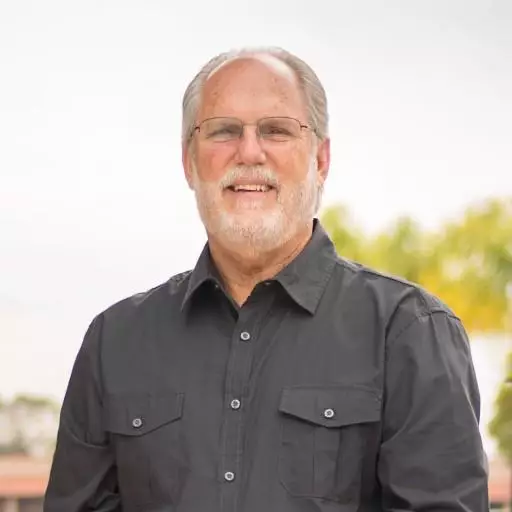
Jeff Johnson is the senior pastor of Calvary Chapel of Downey, California since 1973. The emphasis within his ministry is a verse-by-verse study of the Word of God, giving its full counsel. His influence has experienced a steady and substantial growth over the years with people of all ages. Calvary Chapel of Downey has grown to average weekly attendance of more than 9,000. Teaching seminars, Bible classes, home studies, various training programs, mission outreaches, as well as a Christian Elementary & Jr./Sr. High School, and Bible college meet the needs of this large body. Calvary Chapel's impact is growing from Southern California to virtually around the world. His wife Karyn supports Jeff in his ministry.
Contact Sound Doctrine with Jeff Johnson
Mailing Address
Sound Doctrine Radio
12808 Woodruff Ave.
Downey, CA 90242
Telephone
(800) 353-7553
(KWAVE - 107.9FM)
(562) 803-6501
Southern California 2:00 pm