
Sound Doctrine
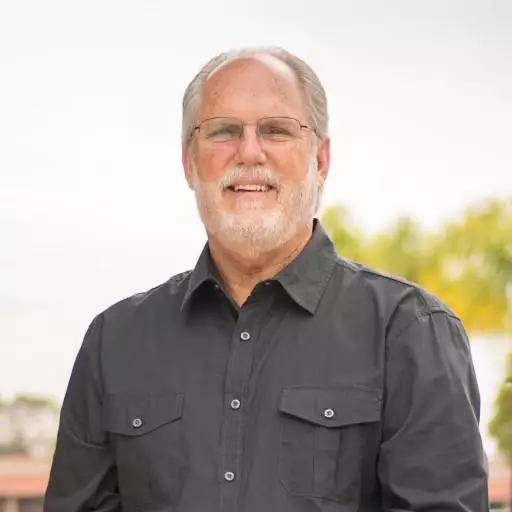
Jeff Johnson
2 Samuel 21 1-14b


I don’t have to take a poll of our listeners to say that we’ve all been guilty of not keeping a promise. While we fail to keep our promises on occasion, God never does. He’s a promise giving God and a promise keeping God! This shines through in Second Samuel twenty-one, which is where we’re headed today on Sound Doctrine.
Jeff Johnson: There is a famine going on in our nation and it has nothing to do with crops. We're in a national crisis, a peril that is unbelievable. It is a drought, it is a famine that this land has never seen.
The Scripture says righteousness exalts a nation, but sin is a reproach to any people. And if there was ever a time that Second Chronicles 7:14 is needed, it's today. If my people, that are called by my name, will humble ourselves and pray, it's today. This needs to take place. Why? Because God will hear our prayer as we turn away from our sin and heal our land.
Guest (Male): Have you ever made a promise and failed to keep it? Whether it's telling our kids we'll take them to the ball game and we never do, or telling someone at church we'll pray for them and we don't. I don't have to take a poll of our listeners to say that we've all been guilty of not keeping a promise.
While we fail to keep our promises on occasion, God never does. He's a promise-giving God and a promise-keeping God, and this shines through in Second Samuel chapter 21, which is where we're headed today on Sound Doctrine. Here's Pastor Jeff Johnson.
Jeff Johnson: But why did God wait 40 years? Well, I think it's because he's long-suffering. In fact, over in the Book of Revelation, to that church called Thyatira, the Lord says this: "I have given you time to repent of your fornication and you didn't repent. Behold, now I'm going to cast you into the bed with them that commit adultery with her into the great tribulation, except they repent of their deeds." And they didn't repent. But God gave them time to repent.
Remember Noah preached 100 years. God gave them time. Canaanites, he gave them 400 years. Over in Second Peter, there's an interesting verse in chapter three and verse nine. The Lord is not slack concerning his promise, as some men count slackness, but he is long-suffering towards us, not willing that any should perish, but that all should come to repentance. His long-suffering, his waiting is so you'll get saved.
This day of mercy and grace is so you will come to him. That's why he's holding it all back right now, because he loves you and he wants you to come to know him. So when that judgment does come on this nation, which Billy Graham said, "If God doesn't judge this nation, he's going to have to apologize for Sodom and Gomorrah," but judgment is coming. The door is going to slam and it's over, it's done.
Don't look at his patience like some people do, as like he's unable to judge, or that he doesn't want to judge or care to judge. No, don't you count God's promise that way, as some men count slackness. He is faithful. I'll tell you something, God's wheels grind slowly, but they also grind thoroughly, and you can count on that. Saul's sin here is brought up. What is the sin of Saul? Well, it says that his bloody house because he slew the Gibeonites. His inhumanity to the Gibeonites.
If you need to get a little of the background, you just need to read Joshua chapter nine. It gives you the background of the Gibeonites. Who are these guys? Well, when they were Israel was coming into the land to take the land, to destroy everyone in the land, the Gibeonites had an idea. They knew they were next to come to them. They ran to Joshua and they made themselves up like they were tattered and that they were poor and that they had traveled from a far place. Their bread was molded, their wine was all messed up and diluted.
And they came and they said, "Listen, we beg of you, we're from a far place. And we ask that you make a league with us, that you will not destroy us as you're destroying this land. We've heard of your God and we just want to come and serve you." And they said, "Make a covenant with us." And Joshua and the children of Israel, it says there in Joshua nine, that they did not pray about it. They did not seek the Lord about it. And they just ran off and they made a covenant with these people.
They said, "Okay, fine. We see you're from a far place and and we won't judge, you know, we won't come against you, but you will have to be our slaves and you will serve us all the days of your life." And they said, "Fine, great." And they ended up going over the next hill and there was the Gibeonites. And when they went to destroy them, the Gibeonites said, "Time out. You guys made a covenant with us. You can't destroy us. We have to live with you from here on out."
And Israel said, "That's true. We made a covenant with them, so we can't destroy them. We've got to let them live." They ended up living with them from that day on. The enemy was within and they had to live with them. Years went by and then finally Saul became king. Saul decided that he was going to clean up the land. He began to kill the witches and all those foreigners in the land and along with them, he began to slaughter the Gibeonites. He broke the covenant that Israel had made with the Gibeonites.
There was the sin, breaking the covenant. Verse two: "And the king called the Gibeonites and said unto them"—now the Gibeonites were not of the children of Israel but of the remnant of the Amorites and the children of Israel had sworn to them and Saul sought to slay them in his zeal to the children of Israel and Judah. I'm sure that Saul's excuse for doing what he did was the zeal of the Lord. "I'm serving the Lord. I'm getting rid of all the witches and I'm getting rid of all the foreigners." But still he broke the covenant.
Verse three: "Wherefore David said unto the Gibeonites, 'What shall I do for you? And wherewith shall I make an atonement, that ye may bless the inheritance of the Lord?'" And the Gibeonites said to him, "Ah, we don't want any silver or gold of Saul, nor do we want his house, neither for us thou shalt kill any man in Israel." I mean, we're not really looking for vengeance and we're not looking for a lot of money because David wanted to do good. David wanted to give restoration, restitution.
And he said, "What ye shall say, that will I do." And they answered, verse five, and they said, "The man that consumed us and that devised against us that we should be destroyed from remaining in any of the coasts of Israel, let seven men of his sons be delivered unto us and we will hang them up unto the Lord in Gibeah of Saul, whom the Lord did choose." And the king said, "I will give them." So the king says, "How can I repay you for what has been going on, the dirty deed that was done to you by Saul?"
And the number seven was brought up. Interesting number. The number seven means completeness or perfect. And so this would be God's complete judgment for Saul's sin 40 years earlier. Man, you know that old saying "be sure that your sins will find you out," it's so true. Even if it's 40 years later, it can catch up with you. I heard of a couple jets that were doing training exercises over Arizona. And they had these supersonic jets that were flying over Arizona. They were fast, breaking the sound barrier type. And they shot their subsonic missiles.
And what happened is as they shot their subsonic missiles, the supersonic jets caught up to the missiles and the missiles blow them up. Be sure that your sins will find you out. It'll catch up with you, man. Verse seven: "But the king spared Mephibosheth, the son of Jonathan, the son of Saul, because of the Lord's oath that was between them, between David and Jonathan the son of Saul. Remember them, Mephibosheth?" And notice, but the king took two sons of Rizpah, the daughter of Aiah, whom she bore unto Saul, and he gives the names of both of them.
One of the names is confusing because it's Mephibosheth. Wait a minute, who's this Mephibosheth? We know the other one because that was the son of Jonathan. Who's this one? Well, actually he's the nephew of Mephibosheth, they named him after him. So these two guys, notice, and there was five sons of Michal, the daughter of Saul, whom she brought up for, notice, Adriel the son of Barzillai. And really what happened here is that two sons were taken from Rizpah and five from Michal.
And you say, "Wait a minute, wasn't Michal David's first flame? Or actually first pain?" Because remember Michal was a pain in the neck to David because she mocked David for his relationship with the Lord. She made fun of David and laughed at him. And because of that, she was barren all her life. What's she doing with five sons? Well, what happens here is if you remember the story way back in Samuel, that when David killed Goliath, he was given the promise by Saul to have his first daughter, which was Merab, right?
And remember he gave Merab to David just for a moment and then took Merab back for this other guy. Just took his first love. I mean, he really loved her, just took her away from David, gave his daughter to another and then gave Michal to David. And David said, "Thanks a lot." But he took her. And what happens here is Merab dies and Michal ends up raising her five sons. And so you take the two sons of Rizpah, you take the five sons now that Michal had been raising up and you've got the seven that were going to be given to the Gibeonites.
Notice verse nine: "And he delivered them into the hands of the Gibeonites and they hanged them in the hill before the Lord and they fell all seven together and were put to death in the days of harvest, in the first days, in the beginning of barley harvest." These seven were killed and hung on display before all the people. Now there is a moral problem here when you look at this. Deuteronomy 24:16 says you are not to kill the children because of the parent's sin. It's wrong. God says don't do it.
So is David blowing it here or what? He's disobeying an Old Testament verse, a law that you do not destroy the children for the father's sins. And so this caused a lot of people to be kind of wondering what has happened here. Why would David do that? And yet later on, you're going to see that God acknowledges that it's okay because the famine is relieved. Well, I'm confused. God says this and then he goes ahead and allows it. No, many believe that the seven sons here were involved with Saul in the destruction of the Gibeonites.
So that makes a whole different story, doesn't it? Because then they were involved in murder. And Numbers 35:31 says if you kill and you murder, you shall be killed. And so the death penalty was given to these seven. Also Deuteronomy 21 covers the rebellious son thing, when there's a rebellious son that's not serving the Lord, doing their own thing, what is supposed to happen to them. They are also to be killed. Verse 10 now: "And Rizpah the daughter of Aiah took sackcloth and spread it for her upon the rock from the beginning of harvest."
Now the beginning of harvest is around May, "until the water dropped upon them out of heaven," which is about October. You see, their weather pattern is similar to ours. In fact, if you looked at the equator, they're on the same line as we are, so their weather is exactly like ours is in Israel. So from May until October, for six months, it says, "and suffered neither the birds of the air to rest on them by day nor the beasts of the field by night." This woman went over there and guarded their bodies, taking a broom and driving the predators away.
Making sure the animals didn't eat the bodies, the birds wouldn't pick on their bodies, and kept driving for six months. David sought to ease her pain. Notice going on here, it says, "And it was told David what Rizpah the daughter of Aiah, the concubine of Saul, had done. And David went and took the bones of Saul and the bones of Jonathan his son from the men of Jabesh Gilead." Remember when they had hung them up on the wall? They would actually put them in the wall and they actually decapitated both Saul and Jonathan and put them into the wall just to show everybody that "we have conquered." And that's what they would do back then.
Which had stolen them from the street of Beth-shan where the Philistines had hanged them, when the Philistines had slain Saul in Gilboa. And he brought up thence the bones of Saul and the bones of Jonathan his son and they gathered the bones of them that were hanged. And the bones of Saul and Jonathan his son they buried them in the country of Benjamin in Zelah in the sepulchre of Kish his father, and they performed all that the king commanded. And after that God was entreated for the land.
David felt sorry for this woman and said, "I can't handle this what she's doing." He took not only Jonathan and Saul's bones that he already had that he confiscated, but then he took all of the seven sons with those bones and he took them all and buried them. He got them out of sight so this type of mourning and this type of agonizing wouldn't go on anymore. In the land of Benjamin they were buried. God heard the prayer and God stayed his hand for the land and it was over.
There's two things that I want to leave with you this morning that I think really speaks to us today in this story. Number one is as a nation we are spiritually, we are morally, militarily, politically and economically bankrupt as a nation. That's why we're in the problems that we're in. We're in a national crisis, a peril that is unbelievable. It is a drought, it is a famine that this land has never seen. The Scripture says righteousness exalts a nation, but sin is a reproach to any people.
And if there was ever a time that Second Chronicles 7:14 is needed, it's today. If my people, that are called by my name, will humble ourselves and pray, it's today. This needs to take place. Why? Because God will hear our prayer as we turn away from our sin and heal our land. The second thing here on a personal level, and we need to listen to this. If we're going through a drought personally, your soul is dry, famine is in your spirit, things that once were very exciting spiritually are now very boring to you and they're just kind of no big deal.
And you don't understand "why is this happening?" I think we need to listen again anew and afresh to Psalm 38 that we read this morning. Would you turn there with me? Psalm 38, listen to these few verses as David cries out in his dryness. Psalm 38, verse three: He cries out and says, "There is no soundness in my flesh because of thine anger, neither is there any rest in my bones because" why? "Because of my sin. For mine iniquities are gone over my head as a heavy burden. They are too heavy for me."
"My wounds stink and are corrupt because of my foolishness. I am troubled, bowed down greatly. I go mourning all the day long. My loins are filled with a loathsome disease and there is no soundness in my flesh. I am feeble and sore broken. I have roared by reason of the disquietness of my heart. Lord, all my desire is before thee, my groaning is not hid from thee. My heart panteth, my strength is failing. As for the light of mine eyes, it also is gone from me. My lovers and my friends, nobody will stand around with me."
"They stand aloof from my sore. They say, 'You stink,' you know. My kinsmen stand afar off. Man, they also that seek after my life lay snares for me. They seek my hurt, speak mischievous things and imagine deceits all the day long." Then verse 19: "But mine enemies are lively and they are strong and they that hate me wrongfully are multiplied. Verse 21: Forsake me not, O Lord, O my God. Be not far from me. Make haste to help me, O Lord, my salvation."
And David wrote this Psalm when he was in unconfessed, undealt with sin. In fact, it took over a year to get him to finally confess his sin that he had done with Bathsheba and Uriah. Took a year. Up until then he was in misery and torment, living in disobedience. He cries out, he humbles himself to God and God then forgives him and restores his spirit. Listen to what the Lord is saying. Times of dryness are days of chastening. The reason why it gets dry, the reason there's a famine or a drought in your life is because God is trying to get your attention.
God loves us and we've got to see that we need to ask him why is this happening. "Lord, show me why this is going on in my heart and in my life right now." Is there unconfessed or unrepentant sin in our hearts? We need to search our hearts. And once the Holy Spirit begins to reveal that sin, we need to hang it, man. We need to hang it high, hang it up. Why? Because that is where Jesus was, hanging on a cross, and he hung there to pay for my sins and your sins.
And we need to put them there. After we do that, after we confess, after we say "Lord, I am sorry," then we can turn and be forgiven. He died for that sin. Remember what the Lord says, "Your sins and iniquities I will remember no more." Because I love you. I want to forgive it, far as the east is from the west. I want to so far remove you from your sins. It's in the sea of forgetfulness of forgiveness. And there's a sign posted "no fishing." Don't even go after them. It's gone.
It's so easy. Then why do we wait if it's so easy? Why do we just persevere and stay so dry when we can pray and ask God why this drought? I don't know. It has to do with stubbornness and pride. And we just get stubborn. But the Lord is patient, isn't he? And he'll wait. And the heat will just turn up. And he'll just wait. And he'll turn up the heat a little bit more until the drought gets so unbearable. Look at what David says in Psalm 139.
David says in Psalm 139, "O Lord, thou hast searched me and known me. Thou knowest my down-sitting, my up-rising, thou understandst my thoughts afar off." And then the last two verses of that chapter, Psalm 139, "Search me, O God, know my heart. Try me, know my thoughts. See if there be any wicked way in me and lead me in the way of everlasting." What a prayer. "Lord, reveal to me if there is sin, if there's something that I'm doing in my life that is not pleasing to you, that is causing this drought, that is causing me to be in a dry time, in a famine time."
"I am not experiencing refreshing of the Lord, I'm not experiencing your promises. I feel away from you. I feel far from you. Show me why." And it's no one else's fault but mine. I mean, you can blame a lot of people and a lot of things that happened to you. You can say, "Well, it's their fault and the reason I'm where I'm at now is because that person said this and this person did that," and you can blame everybody. But when you really look at it, it's your fault. It's your sin.
It's time to recognize the sin, ask God to reveal it, repent of it and be released from it. Bury it. See it buried and dealt with. This is really having the joy of our salvation restored that David talked about. "Restore unto me the joy of my salvation." This is what it means to have the the rains return and be refreshed and bring freshness into your life. This is what Psalms 85 in verse six is all about. He says in Psalms 85:6, "Wilt thou not revive us again, that thy people may rejoice in thee?"
And God does want to bring a day and a time of refreshment to all of us. But we need to walk humbly before our God. We need to say "Lord, search my heart." Just daily. "See if there be any wicked way. If it is, reveal it to me and I'm going to repent of it and we're going to go on because I want to walk in freshness. I want to be refreshed. I want to have the joy of my salvation. I want to be able to rejoice in what you've done for me and have that rejoicing be over and overwhelm everything else that this world's doing and all these piddly things that I seem to be groveling in that all of a sudden I start looking down instead of looking up and I start letting the world around me affect me instead of keeping my eyes upon you and being refreshed daily."
Guest (Male): Being properly focused is what Pastor Jeff Johnson is talking about as we end today's program. This is Sound Doctrine. Pastor Jeff will share some insights on being properly focused when he returns in just a few moments. We house all of our Second Samuel studies at sounddoctrineradio.org. This comes in handy should you miss a study or two on the radio, or just want to hear something again, or even share it with someone you know.
This study and more are available now at sounddoctrineradio.org under messages. You can also listen at oneplace.com and through the Sound Doctrine Radio podcast app. And of course, speaking of podcasts, Sound Doctrine can be heard wherever you enjoy podcasts, and that includes Spotify and Apple Podcasts. This program is made possible through the support of our listeners. To make a contribution to the ministry, just visit sounddoctrineradio.org and click on giving. Now let's join Pastor Jeff once again with the key to being properly focused on Jesus Christ.
Jeff Johnson: The key, I think, is First John 1:9. If we will confess our sins, he is faithful and just to forgive us and to wash us and cleanse us from all unrighteousness. We must be walking in confession. Then he will restore the years that the cankerworm has tried to destroy. And man, that cankerworm eats a lot, doesn't it? And it just tries to just chew up our lives and eat the goodness of the Lord out of our lives and get us forgetting what he has done for us, remembering the good things he has done, getting our eyes back where they need to be. Lord, revive us as Christians. Restore the joy of our salvation. Bring us into the land full of milk and honey.
Guest (Male): Next time on Sound Doctrine, we turn back to Second Samuel. David is at the end of his reign as king and faces a major national crisis and some major battles. But he does the right thing in turning to the Lord. Hear all about it on the next Sound Doctrine with Pastor Jeff, a daily presentation of Calvary Chapel Downey.
Featured Offer

Access an extensive archive of messages from Pastor Jeff Johnson
Past Episodes

Featured Offer
Access an extensive archive of messages from Pastor Jeff Johnson
About Sound Doctrine
A weekday radio program featuring the verse by verse Bible teaching of Pastor Jeff Johnson broadcasted throughout the United States and abroad.
About Jeff Johnson
Jeff Johnson is the senior pastor of Calvary Chapel of Downey, California since 1973. The emphasis within his ministry is a verse-by-verse study of the Word of God, giving its full counsel. His influence has experienced a steady and substantial growth over the years with people of all ages. Calvary Chapel of Downey has grown to average weekly attendance of more than 9,000. Teaching seminars, Bible classes, home studies, various training programs, mission outreaches, as well as a Christian Elementary & Jr./Sr. High School, and Bible college meet the needs of this large body. Calvary Chapel's impact is growing from Southern California to virtually around the world. His wife Karyn supports Jeff in his ministry.
Contact Sound Doctrine with Jeff Johnson
Mailing Address
Sound Doctrine Radio
12808 Woodruff Ave.
Downey, CA 90242
Telephone
(800) 353-7553
(KWAVE - 107.9FM)
(562) 803-6501
Southern California 2:00 pm