
Sound Doctrine
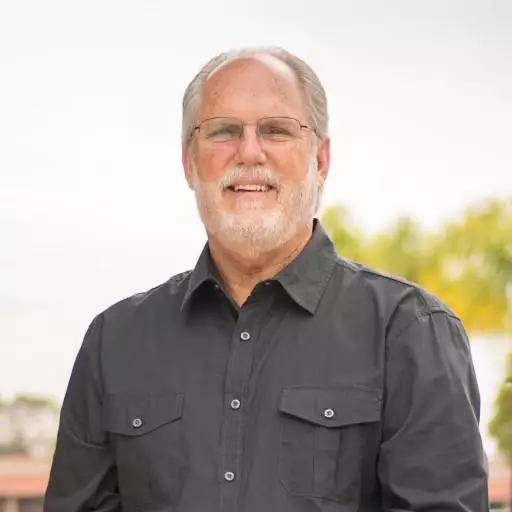
Jeff Johnson
2 Samuel 1:17 - 2:11 part 2


Today we return to Jeff’s new series through Second Samuel. In chapter two, David does something that sets him apart from many of the leaders who had come before him. He asks the Lord for guidance.
Guest (Male): Do you trust God? Do you really trust him? Consider this from Pastor Jeff Johnson.
Jeff Johnson: David could have said, "Now, what's going to happen when I get there? And why do you want me to go there? And what's there? And what's going on there? Give me more information." If we're that type of person, listen, you're not walking in faith. You want everything, then you'll move. You want it all laid out for you. Where is the step of faith that is involved?
God is a God that leads step by step, one step at a time. He gives you a step, and then you take that step of faith, and when you get there, he'll give you another step.
Guest (Male): Your spirit leads me on, and I'm running after you. I'll leave behind the worthless lot, and I'm trading them for priceless truth.
Good to have you with us as we begin another week of Bible study and practical application here on Sound Doctrine with Pastor Jeff Johnson, presented by Calvary Chapel Downey. Today we return to Pastor Jeff's new series through 2nd Samuel. In chapter two, David does something that sets him apart from many of the leaders who had come before him.
He asks the Lord for guidance. As we know, David had been described as a man after God's own heart. 2nd Samuel chapter two is an excellent example of this trait. Here's Pastor Jeff. Speak to me, oh Lord, you know I listen in. You know exactly what I need. So Father, won't you speak to me?
Jeff Johnson: This is a beautiful one-verse definition of prayer: to inquire of the Lord. Ephesians 6:18 says, "praying always with all prayer and supplication in the spirit, watching thereunto with all perseverance and supplication for all saints." Praying always. There are always ways to pray. There are a lot of ways to pray. There are private prayers, there are public prayers, there is intercessory prayer. There are so many different types of prayer, and he says to use them all. Get to know those ways of prayer and use them to the glory of the Lord.
In other words, pray at all times. The Bible says for Christians, we are to be praying without ceasing, always praying about everything, holding it up to the Lord, seeking the Lord, and inquiring of God. Then he says, "with supplication in the spirit." We are to realize that the Holy Spirit leads us to pray about these things. He wants us to, and he brings us to that point. Are you going to inquire of the Lord? Then do it in the spirit. Don't do it to consume it upon your own lusts. James says we have not because we ask not, and then when we do ask, we ask for your flesh. Pray in the spirit.
Watching thereunto. In other words, beware of the hindrances of prayer. Beware that sin will hinder your prayer life. It is not that God's hand is not short or his ear deaf; it is because your sins have kept you away from that relationship, that beautiful koinonia fellowship with God. Then on the husband's part, there is a powerful verse in 1st Peter 3:7 where it says, "husbands, dwell with your wives according to knowledge, that you both might be the heirs of the grace of life together, that your prayers be not hindered." So husbands, how are things at home with wifey? You don't want your prayers hindered.
There are hindrances to prayer. We need to get it together that our prayers would be answered, that we would be effectual, fervent praying as Elijah. It is going to profit much. We go on with this definition of prayer, and it says, "with all perseverance." Continue to pray about it. Well, somebody told me the other day that you only pray about things once, and if you pray more, it is a lack of faith. Baloney. Jesus prayed three times. Paul prayed three times. You pray more than once. God loves to hear from you. That is why he says you just continue to knock, importunate.
He loves it. Then for all saints, he says. There is the power of intercessory prayer. We need to pray for one another, for all that is going on in the world, for our missionaries on the backboard, for our families that are separated, and for our loved ones and relatives. We need to pray for all saints. Through prayer, our enemy will be devastated continually. Prayer is like a blow. Every time we pray, it is another blow to his way and his will being done. Prayer puts the enemy down.
In fact, over in Colossians, it says that Jesus, having spoiled the principalities and powers, he made a show of them openly, triumphing over them in it. In other words, he has given us the victory. We have the victory. We need to pray, and as we pray, we are damaging in the spiritual realm the works of the enemy. We have the victory now. We are more than conquerors because of what Jesus did on the cross. As we pray, the spiritual realm and the things that go on change, and the enemy loses.
The importance of inquiring of the Lord is so great. He will tell us what to do, where to go, and what to say. So notice in 2nd Samuel chapter two and verse one, that David inquired of the Lord. This is very important when you are making a move. If you are getting ready to move or sell your house, did you pray about it? You better, or you are in a whole lot of trouble. When there is a choice that needs to be made, should you pray? You bet. When you need guidance, should you pray? Yes.
David is getting ready to make a move. He is going to move everybody, and David inquires of the Lord. Note that God answered David. You say, well, how in the world did that happen? Well, David had the Urim and the Thummim, and he had ways with Abiathar, who was the high priest there, to inquire of the Lord. We do not use the same system, but we do know that God answers prayer through his word. God will speak to you through his word and he will give you an answer for that which you are praying about.
We know that also God speaks to our spirits. He gives us that still small voice speaking in our own hearts, giving us peace in our own spirits about what is going on. Then we know also God answers prayer through open and shut doors, through circumstance. We need to line these things up. Notice how David prayed and God answered him and said, "I want you to go." Immediately, he said, "Go." Then David said, "That's neat, Lord, but where?" He continued on and said, "I need to know where do you want me to go." Remember the Psalm 25 we read this morning? "Teach me thy ways, O Lord. Show me thy paths."
God said, "I want you to go to Hebron," which is 20 miles south of Jerusalem. Actually, from the area he was in, in Ziklag, it was just a little out of the enemy's territory in the place that is called Hebron. Then when David goes there, God gives him the next step. I appreciate that because God is a God who likes to hear from us, and he doesn't give us all the information right at once. David could have said, "Now, what's going to happen when I get there? And why do you want me to go there? And what's there? And what's going on there? Give me more information."
If we're that type of person, listen, you're not walking in faith. You want everything, then you'll move. You want it all laid out for you. Where is the step of faith that is involved? God leads step by step, one step at a time. He gives you a step, and then you take that step of faith, and when you get there, he'll give you another step. Let me give you a couple of examples. Remember Eliezer? Remember when he went to get a wife for his master's son, Isaac? Remember how as he went 500 miles away, when he got to that place, he said, "And as I was in the way, the Lord led me."
He took that step and he went, and the Lord led him right to the very house, one step at a time. Philip in the New Testament was in a place of revival in Samaria. Everything was going great. God spoke to Philip and said, "I want you to go to Gaza," which was the armpit of the world. Gaza? There is nothing out there but desert. And yet he didn't question the Lord. Next moment you see that Philip just left Samaria, all the people and all the great ministry, and he went out to a little desolate area in the desert, Gaza.
When he got there, God gave him the next step. He said, "See that chariot over there?" and he said, "Yeah." "Join yourself to that chariot." He didn't question and say, "Well, what do you mean? The chariot's moving. Why go up to that chariot? I don't know the guy in that chariot." He didn't question the Lord. The Lord just said to go to the chariot. Next moment you see Philip run next to the chariot. "Hey, how you doing? What are you reading?" and the Lord gives him the next step. "Now that I'm running next to it, what do I do with this guy?" Witness to him. Share with him out of the book of Isaiah about Jesus Christ.
He was able to share with the man, and the man was baptized and received the Lord, one step at a time. We need to take steps of faith. Little by little, look at verse two. So David went up thither and his two wives. And his men, verse three, and all that were with him did David bring up. Notice every man of his household, and they dwelt in the cities of Hebron. So David went, he was open, he was obedient. He went with his wives. Now you say, "Wait a minute, what's David doing with wives? Aren't you supposed to just have one wife?" Yeah.
Did God approve of this? No. Are there going to be problems? You bet. There's problems with one! But that's what God wants: a man will leave his father and mother and cleave to his wife, singular. David is wrong here. We'll see it; trouble is ahead. Notice he left with his men and their households. But remember, we also looked a couple of weeks ago where the faint-hearted also God brought up with them. God brings everybody up, even your household. Believe on the Lord Jesus Christ, and not only shall you be saved, but your household.
God wants everybody to come. He's not willing that any should perish but that all should come to eternal life. So God brought everyone up: his wives, his family, everybody, his men. Even the faint-hearted got to come. What an encouragement. Everyone to Hebron. Hebron was again right near to the Philistine territory, so David's move was kind of a cautious move. God was moving him slowly into his position. David was to be faithful with the little that God had given him, to be the best shepherd king he could be, and then God would give him more.
It was a slow bringing in and raising up of David. It doesn't happen overnight. You're not raised up into a position over a lot of people just like that. It's a slow thing. You start with a few and you're faithful year after year and day after day doing what God's called you to do, and then he gives you a little more. That's just how God works. Same with David. Verse four says the men of Judah came and there they anointed David king over the house of Judah. And they told David that the men of Jabesh-Gilead were they that buried Saul.
Remember it was these individuals of Judah that David sent the spoils from the enemy to. David sent them to all the leaders in Judah. It was a political move on David's part to win them over, but to also thank them for being faithful to him and protecting him over the years. These are the men that anoint David to be king over Judah. This is his second anointing. Remember the first anointing in chapter 16, verse 13, when Samuel anointed him in the name of the Lord? That was God's anointing on his life in front of all of his big, buff brothers.
Here is little David getting anointed. Everybody else is watching. "Hey, what's the punk doing here? How come he's getting anointed?" I am sure that flipped them out looking at little ruddy David smelling like sheep. He comes called in at the last moment and he's the one that gets anointed. But that was God's anointing. There's one more that is coming. David actually has three. But what's interesting to me is that finally, man will eventually acknowledge what God has done. And those in Judah saw God's hand upon David.
When God anoints someone, when God puts his hand upon them, you can't but see it. Now, as men, what are we to do? We are just to ratify it. We don't ordain anybody. God ordains and God anoints. We just ratify what God has done and say, "Bless you, brother. We're praying for you and go for it." And that's how it is. Finally, those of Judah, recognizing God's anointing, ratify that and anoint him and say, "Be king." Then they begin to brief David on the major feat that Jabesh-Gilead had when they went in to take the bodies off the wall of Saul and his sons.
They were put up on the wall for trophies. Those of Jabesh-Gilead took those bodies off and cremated them and then buried the bones. Verse five says David sent messengers unto the men of Jabesh-Gilead and said unto them, "Blessed be ye of the Lord." This is the first act David as king is going to perform. He sends men to Jabesh-Gilead. "Blessed be you guys that you have showed this kindness unto your lord, even unto Saul, and you've buried him. And now the Lord show kindness and truth unto you. And I also will requite you this kindness because you have done this thing."
"Therefore now let your hands be strengthened and be valiant and your master Saul is dead. For also the house of Judah have anointed me king over them." David went to commend them. They weren't even a part of Judah except David just said, "I've got to go commend these guys. I've got to approve them and commend them for what they have done." It's a good example for us that when we know of a denomination, a ministry, or somebody that is doing great in the name of the Lord, we need to commend them.
When they're doing a work, we need to acknowledge it. We need to commend them whether it is by writing or just telling them. What a blessing in the body of Christ as David now commends them for what they have done. Great job. So those who showed mercy now are receiving mercy. Here David is anointed as king of Judah and he reminds them of that, probably just saying, "If you want me to be your king, I'll be your king too." He was kind of suggesting that. Look at what God has done.
Now we come to the reaction and to the answer of the northern tribes in verse eight. I want to start into this reaction of the northern tribes to David becoming king of Judah. Verse eight introduces us to Abner. He was the son of Ner, captain of Saul's host, who took Ishbosheth, the son of Saul, and brought him over to Mahanaim and made him king over Gilead, and over the Ashurites, and over Jezreel, and over Ephraim, and over Benjamin, and over all Israel. Well, not all Israel, because he wasn't king over Judah; David was.
Ishbosheth, Saul's son, was 40 years old when he began to reign over Israel and reigned two years. But the house of Judah followed David. The time that David was king in Hebron over the house of Judah was seven years and six months. Abner was the general of Saul's army. Somehow in the battle, he escapes death. Now, if he was doing his job, he should have been the bodyguard of Saul. Remember when David made fun of him? Remember when David went in there and got a clip, the part of his robe, and ran out?
Then he made fun of Abner and said, "Abner, are you supposed to be the bodyguard? You're not too good. Look what I just got." Well, Abner really wasn't doing his job. In fact, I can see Abner in the battlefield running ahead of Saul and saying, "I'm getting out of here!" grabbing Ishbosheth, the young son, and saying, "Come on, we've got to get out. They're going to kill us!" They just ran and left Saul behind them as Saul gets wiped out. And they escape.
Abner makes Ishbosheth king over all of Israel except for Judah. We see now the first time where the kingdom is divided. This is the first split of Israel, which will bring us into a civil war. The southern kingdom is under David and the northern kingdom is under the direction of Abner because he's the one that's really ruling. It's going to be a military type of government with a puppet head, Saul's son, just sitting there and Abner telling him everything what to do. Abner is really an extension and an arm of Saul.
In fact, he was related to Saul, which is very interesting. Saul is dead. Let's mourn, David said, but let's go on. God's having his way. Oh, he's got this little extension, this Abner guy still around. He's not only the general; he's related to Saul. That same demonic, that same division maker, that same antichrist spirit just wanting to come in and hang on to something that's not theirs. Abner was extending that arm. I look at Abner as a type of the antichrist. He had a relationship to Saul, and the old scenario goes on.
There are two governments, one seeking to destroy the other one, as we even have today: good and evil. Satan seeks to usurp God's authority and destroy his children. It's not going to quit until Jesus sets up his kingdom and is King of Kings and Lord of Lords. But there always is God's remnant. His plan and his will will be done. Jesus, who was the son of David, died to purchase a treasure that was in this world. He died to purchase the whole world to get the treasure out of the world.
To reclaim this world, actually, he went and he died on that cross to get a bride, the church, to one day be able to come back and be the Lord of Lords and King of Kings. We're getting close to that point, very close. I believe his hand is on the doorknob now and he's turning it. We're very close to the coming of the Lord just as David now is coming to the point of reigning over all of Israel. David is a type of Christ to rule and reign over all of the earth.
There is a split today. There is a division today. There is a warfare for the souls of men. Who will be king in your life? Choose you this day who you will serve. The Lord is still recruiting for that day. The Lord is still calling those that will hear his voice to come aboard. That day is going to bring out a lot of things. What should we do, Lord? The wheat and the tares are being sowed together. Just let it go on, for that day will reveal everything.
The wheat and the tares will be shown. The goats and the sheep, what's going to happen? That day is going to reveal everything. Whose side are you on? I love this, and I want to end with this scripture in Acts chapter 26 where Jesus is saying about Paul. He says, "I'm sending you to open their eyes, Paul, to turn them from darkness to light, from the power of Satan unto the power of God, that they might receive forgiveness of sins and an inheritance among them which are sanctified by faith that is in me."
Guest (Male): This is Sound Doctrine, and today we heard a portion of Pastor Jeff Johnson's message in 2nd Samuel chapter two. Pastor Jeff will be back with more in a moment. We pray you've been blessed by what you've heard today. 1st Samuel is filled with practical insights for Christian living. If you'd like to hear this study again, go to sounddoctrineradio.org or listen through the Sound Doctrine podcast app. You can also hear Sound Doctrine on oneplace.com and wherever you enjoy podcasts. That includes Apple Podcasts and Spotify.
If you'd like to get behind what we're doing and donate to this radio outreach, you can do so at sounddoctrineradio.org by clicking the give tab. Thank you very much for your support. It's greatly appreciated and will be put to good use helping others build their lives on the sound doctrine found in God's word. Now here's Pastor Jeff to bring today's program to a close with a reminder of a fundamental choice we all make.
Jeff Johnson: It's always been everyone's choice who is going to reign in your life, who is going to lead your life, and who are you going to go to when you need help? Who do you have a relationship with? You either are out there in the world serving the enemy, Satan, and you have your own little philosophy worked out in your mind how it's all going to come out, or you've submitted your life to the Lord Jesus Christ.
You've chosen to invite him in to be your Lord and Savior, and you've chosen to submit your life to him and to inquire of the Lord. What a difference. But Jesus is the only one that can break Satan's hold on your life. He's the only one that can bring God's power of love and forgiveness to your life, to pull you out of the darkness into the glorious light. And it's your choice. So God says, what are you going to do this morning? Who are you going to serve? Who are you going to allow to rule and reign in your life?
Guest (Male): We'll resume our study of 2nd Samuel next time on Sound Doctrine with Pastor Jeff. This program is brought to you by Calvary Chapel Downey, made possible through the support of our listeners. So Father, won't you speak to me?
Featured Offer

Access an extensive archive of messages from Pastor Jeff Johnson
Past Episodes

Featured Offer
Access an extensive archive of messages from Pastor Jeff Johnson
About Sound Doctrine
A weekday radio program featuring the verse by verse Bible teaching of Pastor Jeff Johnson broadcasted throughout the United States and abroad.
About Jeff Johnson
Jeff Johnson is the senior pastor of Calvary Chapel of Downey, California since 1973. The emphasis within his ministry is a verse-by-verse study of the Word of God, giving its full counsel. His influence has experienced a steady and substantial growth over the years with people of all ages. Calvary Chapel of Downey has grown to average weekly attendance of more than 9,000. Teaching seminars, Bible classes, home studies, various training programs, mission outreaches, as well as a Christian Elementary & Jr./Sr. High School, and Bible college meet the needs of this large body. Calvary Chapel's impact is growing from Southern California to virtually around the world. His wife Karyn supports Jeff in his ministry.
Contact Sound Doctrine with Jeff Johnson
Mailing Address
Sound Doctrine Radio
12808 Woodruff Ave.
Downey, CA 90242
Telephone
(800) 353-7553
(KWAVE - 107.9FM)
(562) 803-6501
Southern California 2:00 pm