
Sound Doctrine
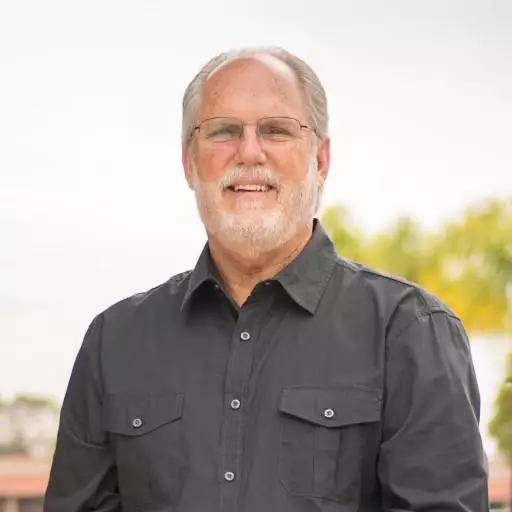
Jeff Johnson
2 Samuel 10 part 1


Today on Sound Doctrine we see how David’s kindness was responded to shamefully. And it’s a lesson for us today, for those inevitable times of life when kindness is abused. Second Samuel ten is our point of reference.
Guest (Male): Who controls you? If your answer is me, consider this from Pastor Jeff.
Jeff Johnson: We must be careful to do that. Paul said, "I've got to do that, or my body will rule in my life, and I'll stumble all over the place. So I have to bring this body under the subjection of Jesus Christ."
Paul again, mentioning to the Romans in Romans 13:14, he says, "Put ye on the Lord Jesus Christ and make not provision for the flesh to fulfill the lusts thereof." How can I do that? Put on Jesus. Identify with him. Put him on in your life. Seek him with all of your heart, and the flesh will be brought under subjection.
Guest (Male): As believers, we should strive to act kindly to others. It should feel natural, but it's a hard pill to swallow when the kindness we express to another is met with ingratitude or is unappreciated. Maybe you've experienced that recently at work, church, or even in your own home.
Today on Sound Doctrine, we see how David's kindness was responded to shamefully, and it's a lesson for us today for those inevitable times when kindness is abused. Second Samuel chapter 10 is our point of reference, and that's where we join Pastor Jeff Johnson now for Sound Doctrine.
Jeff Johnson: Second Samuel chapter 10 this morning. There is trouble in the land, but we've got victory in him. And that's what we're going to be talking about this morning as we look at Second Samuel chapter 10.
To go back a little bit in chapter nine, it was a very moving picture of God's love through David. We saw David as a beautiful type of God, bringing forth his love to Mephibosheth, which was really a type of who we are. After his fall, being shameful, afraid in the land of nothingness, David brought him into his family, sat him down at his table, and it says that he ate continually.
And his lameness was forgotten. Everything was restored, and he was blessed. Whosoever will, let him come and feast. Let him taste and see that the Lord is good. He’ll place to those that come a table before you that you would partake of it. So chapter nine was just phenomenal when it comes to God's mercy and his love.
But now moving on into chapter 10, there was peace in the land, but there was not total possession of the Promised Land. And that's important. The enemy was kind of subdued, but they were still there. They were subservient under Israel. So the danger of insurrection was always present.
Spiritually, it's the same with us. I like to look at this picture of peace in the land as the Promised Land, speaking of the Lord coming into our lives, of us coming to the Lord and experiencing his promises. He quickens us. Once with a dead spirit, he makes my spirit alive. As we ask him to come into our lives, we then have peace with God, and we begin to experience the peace of God because he is in our hearts.
And we become his new creation. He creates in us something brand new in our lives, and it's not just in name only. We're not just then Christians in name, but it's a whole lifestyle, isn't it? It's a whole way of living our lives, and it's real.
Over in Romans 8:9, it says, "But you are not in the flesh but in the spirit, if so be that the spirit of God dwells in you. Now, if any man has not the spirit of Christ, he is none of his." And so what is he sharing with us? That it's a real dynamic experience where we know that the spirit of God, the spirit of the living God, the spirit of Christ, has come to live within us, and we are now his children.
Now, maybe some of you that are here this morning listening to my voice, you're not sure that the spirit of God, the spirit of Christ, dwells in you. That scripture in Romans 8:9 says then you're not God's child. Then whose child are you? And you go, "I don't know." Well, you're the other guy's child. You're not God's; then you're his. Think about it.
You need to be the child of God. He created you. He's drawing you to himself. He's creator; he loves you. And we're going to give you an opportunity to do that this morning, to become a child of God and to have all the privileges, to feast at his table, to taste and see that the Lord is good, to live a lifestyle that is real, not just in name, but a real living whole lifestyle and philosophy that you're just going to be living for the Lord.
So as the Lord takes possession of us, Israel took possession of the land. I love these scriptures in First Corinthians. I'll read it to you in chapter six, verse 19. "What? Know ye not that your body is the temple of the Holy Ghost which is in you, which you have of God, and you are not your own?" And so when you receive Christ, the Holy Spirit comes to dwell within you.
Over in Second Corinthians chapter six, verse 16, "What agreement has the temple of God with idols? For you are the temple of the living God. As God has said, 'I will dwell in them. I will walk in them. I will be their God, and they shall be my people.'"
And then going on in Revelation chapter three, verse 20, Jesus says, "I'm knocking on your heart's door. If you will open your heart up, let me come into your life. I will sup with you and you with me, and we'll have fellowship together. We'll walk and talk together. It will be a real relationship." And that's what we're talking about this morning, is him coming in and possessing our bodies.
But when he does this, when Christ is in me, does that mean that I don't have any more problems with the enemy? No. Because the possibility of warfare is always before me. Galatians 5:17 says that my flesh wars against my spirit and my spirit against my flesh, and these two are contrary one against the other. So sometimes we feel like a walking civil war, don't we? I mean, there's war going on all the time.
Our dilemma is that our soul has been redeemed, but I live in a corrupt, unredeemed body. And because of that, I groan at times. I'm kind of bummed out, because I've got this unredeemed body that my spirit, which is redeemed, is rejoicing in, and yet this thing's falling apart and going through changes.
In fact, I found some scriptures over in the Ephesians chapter one, in verse 13. Listen to this. "In whom ye also trusted, after you heard the word of truth, the gospel of your salvation, in whom also after you believed, you were sealed with that Holy Spirit of promise." God's stamp of ownership. Boom, right on you. When you receive Christ, the Holy Spirit comes into you.
"Which is the earnest of our inheritance." You see, when you receive Jesus Christ, you're put on God's layaway plan. He's coming for you to totally redeem his purchased possession, but you're kind of like half-redeemed right now as you are in this world.
And he goes on to say, "until the redemption of the purchased possession unto the praise of his glory." What is the purchased possession? But that my body would also be redeemed, and I would live in my glorified body with him. That's going to be total, total awesome victory over everything.
But right now, it goes on to say in Romans 8:23, "And not only they, but ourselves also, which have the firstfruits of the spirit, even we ourselves groan within ourselves, waiting for the adoption, to wit, the redemption of our body." And so there's times where we say, "Oh, even so come quickly, Lord Jesus."
When we're really going through it and we're under warfare, we just say, "I wish the Lord would come back." Ever said that? A few times, right? I say it all the time. "I wish the Lord would come back." It'd be great. The final redemption of my body.
And then going on in Second Corinthians chapter five, in verse four, he says, "For we that are in this tabernacle," this body, "do groan, being burdened: not for that we would be unclothed, but for to be clothed upon, that mortality might be swallowed up of life." And so we long to get our new bodies and to be totally redeemed. Why? Because while I am in this body, there will always be conflicts.
The lust of the flesh, the weakness of my flesh, and with the world and Satan trying to entrap me with my flesh, he's trying to cause me to live in defeat. He's trying to always stumble me, to get me off track. And he uses the world, doesn't he? And he uses my own flesh. This body that I live in, he seeks to use it against me.
This is why Paul says in First Corinthians 9:27, "I bring my body under subjection." And we must be careful to do that. Paul said, "I've got to do that, or my body will rule in my life, and I'll stumble all over the place. So I have to bring this body under the subjection of Jesus Christ."
Paul again, mentioning to the Romans in Romans 13:14, he says, "Put ye on the Lord Jesus Christ and make not provision for the flesh to fulfill the lusts thereof." How can I do that? Put on Jesus. Identify with him. Put him on in your life. Seek him with all of your heart, and the flesh will be brought under subjection.
Be careful, the scripture says, not to think of yourself more highly than you ought to think, but to think soberly, especially in these days. Come on, snap out of it, man. Realize who and what you are. You're a sinner saved by grace. You're walking around in an unredeemed body. Be careful; insurrection could happen at any time. And you could have giant civil war and a warfare that you could—it could get out of hand. So we need to walk soberly. The spirit is willing, the Bible says, but what? Flesh is weak. We have that problem.
And so Paul says in Romans chapter seven, which I thought was interesting, and this is all leading up to our chapter in Second Samuel. Don't forget that. Romans 7, verse 18, he says, he makes a statement, "For I know that in me, in my flesh, dwells no good thing." What a statement to say. In my flesh dwells no good thing. "Oh wretched man that I am," he says, "who shall deliver me from this body of this death?"
And he had that desperation. I know what's to do right, but I find myself doing wrong, and he was just being torn. But then I love it, in Romans 7:25 he says, "But I thank God through Jesus Christ my Lord." He has given me the victory over this flesh.
"I am crucified with Christ," Paul said, "nevertheless I live; yet not I, but Christ lives in me. And the life that I now live, I live by the faith of the son of God, who loved me and gave himself for me."
So in chapter 10 now, there is trouble in the land. And after showing mercy and kindness to Mephibosheth, David is on a definite roll here. He just is throwing mercy and kindness everywhere. And we see in verse one now of Second Samuel chapter 10, "It came to pass after this that the king of the children of Ammon died, and Hanun his son reigned in his stead. Then said David, 'I will show kindness unto Hanun, the son of Nahash, as his father showed kindness unto me.' And David sent to comfort him by the hand of his servants for his father. And David's servants came into the land of the children of Ammon."
It is interesting when you look at Mephibosheth's name. Remember what it meant? It meant "shameful one." And then Hanun's name means "favored," "highly favored." He was a very healthy individual, very strong individual, a very rich individual. And all three of those spell danger. Oh, you've got it all, don't you? You've got everything a man needs. Yeah, I'm feeling pretty good. Got a big savings account, money in the bank. Danger all over the place.
It's interesting to see each one of these guys on how they respond to David's kindness. There are two types of people: those who are sick and receive. Remember Jesus came to the Pharisees and the scribes of his time, the religious people, and he said the physician has come to save those that are sick. I didn't come to save the righteous, those that think they're self-confident and they've got it made. I came to save those who know they're sick sinners, that they know that they've just bottomed out, and they can't run their lives as they thought they could. Those are the ones Jesus said I am come for, for I'm the great physician and I will heal you of your sickness. And so we come, and he heals us, as Mephibosheth did.
But then there are those who mock and who reject. So David sends out his servants here to bring comfort and kindness. Now, remember last week we talked about the servants of David being a type of the Holy Spirit who has come to us. The Holy Spirit has come to us to do what? To give us comfort, to come alongside of us and to help us through all the things of this life, which is true.
But now what I want to do is look at David as a type of the Son of David, Jesus Christ, and the servants that he's sending out here are you and I, as the Lord sends us out into the highways and byways and tells them of his kindness and goodness. It is the goodness of God that brings us to repentance, isn't it?
And it is the goodness of God that this world needs to hear out there. So that's what we need to be doing, right? We need to be going forth and giving out the goodness and kindness of our Lord. His mercy, that he died on a cross for them, that he loves them, that he took their place and died in their stead, that they could have eternal life and peace and joy and have the Holy Spirit come and live inside of them. This is good news out there to a world that is hard and that is calloused, and they need to hear that from us.
As his servants, we're not to be harsh or brutal, are we? We're to be kind. People need to hear of God's love, but we need to be careful that they don't leave hearing a truth but not receiving it. Why? Because it's not surrounded with love and care.
We need to be careful how we represent him, how we come on to people, our actions, our attitudes, how we share the Lord with them. Is it from our hearts, from God's heart to our heart to their heart? Do they see it in our eyes? Is it real? Is it loving and kind? Or is it real harsh and say, "You better get right, man, or you're going to—you've had it." How some people preach the love of God is beyond me. I wouldn't listen to the guy. Later with you, buddy. I mean these what they call the hellfire and brimstone preachers. Where's the love, man? God so loved the world. There's a lot of people that turn off because we're too harsh. God help us.
If an unsaved loved one has died—and this is always a tragedy—we need to be sensitive to those who are alive and who remain, and we need to give them the gospel. We need to give them an opportunity for salvation. Maybe there's no hope for the loved one that has gone on, but there is hope for those who are alive and remain.
If a saved loved one goes home to be with the Lord, we need to give out that hope that someday soon you're going to see that loved one. Just as David proclaimed, "I know that I cannot go to my son," but—I know my son cannot go to me, but one of these days I'm going to be with my son, he said.
The hope of the going to be with the Lord. And we which are alive and remain will be caught up together with them to forever be with them in the air. Who are them? It's our loved ones that have gone on to be with the Lord. We're going to have a giant reunion. Talk about hope, talk about God's goodness. We're going to see them again. And so he seeks to encourage us, and he says, "Wherefore comfort one another with these words." It's not lost forever; you're going to be back together again. The kindness of the Lord.
Now, notice in Second Samuel 10, verse three. "And the princes of the children of Ammon said to Hanun their lord, 'Thinkest thou that David doth honor thy father that he has sent comforters unto thee? Hath not David rather sent his servants unto thee to search the city and to spy it out and to overthrow it?'"
And I thought for sure these princes are a beautiful type of Satan. You know how Satan's always trying to plant lies and he's always trying to interject doubt and fear. Things that aren't even true. He's just roaming around, just lying and trying to deceive people constantly.
And yet I was also given by the Lord a hope against these lies that have been infiltrating and going around. There's—the gossip line, the grapevine if you call it, it's a dead vine, but it's hot, isn't it? And bad things are always flying everywhere. And there's always kinds of thoughts and things that come into our minds.
How can we control what is going on? Well, over in Second Corinthians chapter 10, I'll read it to you in verse four. "For the weapons of our warfare, they're not fleshly; they're mighty through God to the pulling down of strongholds, casting down imaginations, every high thing that exalts itself against the knowledge of God, bringing into captivity every thought to the obedience of Christ."
You see, what God has given to us as being Christians, we now have control of these minds. We now control the thoughts that come in, and the lies and the deceptions can just bounce off or roll off like water off a duck's back. We're not going to receive it. I'm not going to receive it because God didn't say it. I'm just going to hang on to the truth. I've got the truth, and I'm going to hang on to that. And all of this other deception and lies, I'm just not going to believe.
But these guys bought what the princes said, and they listened to—Hanun listened to them, and he was deceived. And notice what happens, verse four. "Wherefore Hanun took David's servants, shaved off one-half of their beards, and cut off their garments in the middle, even to the buttocks, and sent them away." You talk about humiliation.
You see, as we share the gospel, we need to be prepared for the worst, don't we? Because there are definitely going to be those who reject you. There are going to be those who mock you, make fun of you, even seek to humiliate you.
Now, back then, the slaves were clean-shaven, okay? So if you saw somebody clean-shaven, you'd say that's a slave. And so it was a humiliating thing to take a Jew who was very proud of his beard, who—it revealed his manliness, and shave it off.
I was over in Beirut in 1980. In fact, I was there in '78, '80, and '82 during the war. And I went into the area that was supposed to be the Christian area, and it was the Muslims were moving in slowly but surely. And they would ride around in their Jeeps with the machine guns on it, and they all had beards. And I looked at the Lebanese people that I was living with and I looked around and they were all clean-shaven. They had little mustache, but they were all clean-shaven. I thought, oh, man, I look kind of like the Palestinian guys.
And then I was asked to go preach at a Baptist church there, very large Baptist church, and to share. And the guy that invited me to come looked at me and said, "But there's one thing." I said, "What's that?" "The beard's got to go, because I don't think you're going to be able to communicate. They're just going to look at your beard. They look at you, you look like a Palestinian, man."
And I said, "Do you know how long I've had this thing?" I don't know how many years I'd had it. And the Lord spoke to me and said, "Shave it off." I just went in there and shaved it off, just fell off. And went and preached to the people. It was great. We had a great time. They really interacted and we really communicated, and the Lord had his victory.
And then I flew back home. And that time my littlest one, Tara, was about this big. And I came in the airport, hadn't seen them in two weeks, and ran down the chute there and there's my family waiting for me. "Come here, Tara!" And she looked at me and she screamed and cried and ran the other way. Oh great. And then my wife looks at me and says, "Why don't you grow it back?" So ever since, I've had a beard.
But it is interesting that we always when we go with our groups over to Israel, we always go to Yad Vashem, which is the Holocaust Museum, because in the Holocaust Museum there are pictures there showing the German Nazis cutting off the beards of the rabbis, cutting off their locks and shaming them. More than that, they stripped their clothes off and they were standing there naked. And do you know what the feeling is to have everybody clothed around you and looking at you stripped naked? It's a very humiliating place to be in.
So this is what was going on. Remember, I said there were two types of people: those who realize that they're dead dogs. Remember, Mephibosheth realized he was a dead dog, humbling themselves before the Lord, receiving God's blessings. And then there are those who are very self-sufficient, strong. They have no need of Jesus, who mock Christians and those who seek to bless them, and they make fun of them.
But remember this, that Jesus said this: "Blessed are ye, oh how happy you are, when you are poor in spirit. When you realize you are bankrupt spiritually, and you humble yourselves before your God. Blessed are you when you are meek." And the word meek there is if you take a hyphen and put it between the two e's: "me-ek." Just trying to give yourself esteem. That's a bunch of bunk, man. We are sinners saved by grace.
Guest (Male): The world will tell you differently. Meekness equals weakness to the world, but in God's kingdom, meekness equals great power through Jesus Christ.
This is Sound Doctrine, and today Pastor Jeff Johnson shared the first half of a message in Second Samuel chapter 10. Hopefully, as you listen to these messages in Second Samuel, you'll have ears to hear what the spirit is saying in these critical times. God's word is so practical, giving us direction, instruction, and wisdom to our lives.
To hear this message again, simply go to sounddoctrineradio.org or listen through the Sound Doctrine podcast app. You can also hear Sound Doctrine on oneplace.com and wherever you enjoy podcasts, including Apple Podcasts and Spotify.
We would very much appreciate your support. It helps us deliver Sound Doctrine on stations like this one all across the nation. And you can donate to this radio outreach at sounddoctrineradio.org. We hope you'll join us for our next study in Second Samuel. It's going to be a good one. That's right here on Sound Doctrine with Pastor Jeff Johnson, a presentation of Calvary Chapel Downey.
Featured Offer

Access an extensive archive of messages from Pastor Jeff Johnson
Past Episodes

Featured Offer
Access an extensive archive of messages from Pastor Jeff Johnson
About Sound Doctrine
A weekday radio program featuring the verse by verse Bible teaching of Pastor Jeff Johnson broadcasted throughout the United States and abroad.
About Jeff Johnson
Jeff Johnson is the senior pastor of Calvary Chapel of Downey, California since 1973. The emphasis within his ministry is a verse-by-verse study of the Word of God, giving its full counsel. His influence has experienced a steady and substantial growth over the years with people of all ages. Calvary Chapel of Downey has grown to average weekly attendance of more than 9,000. Teaching seminars, Bible classes, home studies, various training programs, mission outreaches, as well as a Christian Elementary & Jr./Sr. High School, and Bible college meet the needs of this large body. Calvary Chapel's impact is growing from Southern California to virtually around the world. His wife Karyn supports Jeff in his ministry.
Contact Sound Doctrine with Jeff Johnson
Mailing Address
Sound Doctrine Radio
12808 Woodruff Ave.
Downey, CA 90242
Telephone
(800) 353-7553
(KWAVE - 107.9FM)
(562) 803-6501
Southern California 2:00 pm