
Sound Doctrine
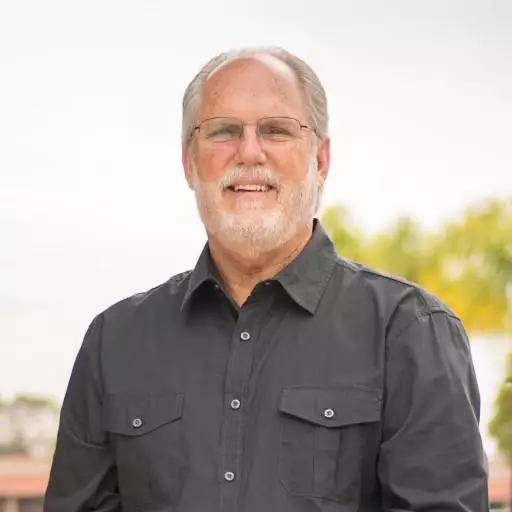
Jeff Johnson
1 Samuel 5 part 1


When the Philistines had captured the Ark of the Covenant, God did something about it – and there are quite a few takeaway lessons we don’t want you to miss. Join us in First Samuel chapter five, as we join pastor Jeff Johnson.
Guest (Male): If there's one thing that never changes, it's that everything changes. Except one thing. He's Pastor Jeff Johnson.
Jeff Johnson: He's everywhere, isn't he? He's everywhere present. He's all-powerful. He's all-knowing. He is the same yesterday, today, and forever. You want to be able to count on something that is a rock that will never move, you need to look to the Lord. Everything else is going to change. Your life is going to change, your family's going to change, your situation's going to change. Everything in this place is changing, but not the word of the Lord, not God. He doesn't change.
Guest (Male): Many people today have a tendency to pass their problems onto someone else rather than deal with it themselves. It's called kicking the can down the road. But God in his goodness has a way of bringing us to a place where the can can become unkickable. We give you a case in point on today's edition of Sound Doctrine. When the Philistines had captured the ark of the covenant, God did something about it, and there are quite a few takeaway lessons we don't want you to miss. Join us in 1 Samuel chapter five as we turn things over to Pastor Jeff.
Jeff Johnson: 1 Samuel chapter five, verse one. "And the Philistines took the ark of God, and they brought it from Ebenezer unto Ashdod." The ark of God. We went through it when we did our Exodus series, and we looked at the ark, and we saw that it was a very beautiful type of Jesus Christ, a type of his presence, a type of God's mercy upon sin, and how the mercy seat covers the top of the ark. The ark was holding the law within it, and the blood was sprinkled on the top of the mercy seat.
It's a beautiful type of how God has forgiven us and washed us from all sin and how the law has now no effect in our lives because we stand before God in his righteousness, what he did for us on the cross and who he was. He was God incarnate dwelling amongst us, as the ark was God's presence with the children of Israel. But now we see the ark is taken. Now, how many of you saw Raiders of the Lost Ark? So a lot of you have seen it. You know what went on.
The ark really was that symbol of God's presence, not the substance of God, okay? It was the symbol of his presence. But the movie brought out some very interesting questions, and the question would be, what would it be like if you found the ark? What's in the ark? Is anything in there? Once you found it, let's open it and look in it. Well, I think 1 Samuel is going to reveal to us what it's like to find the ark, and what it's like to have the ark, and also what it's like to look into the ark, because we're going to experience it in the next few chapters.
In our story, this would not be the last time that the ark would be taken. This is the first time it was taken. This definitely was a crisis. During Babylonian captivity, the temple would be destroyed and also the ark would be taken. But somehow it got back to the children of Israel, only to be taken again by Titus with his Roman legions, going into the temple itself, burning the temple, destroying the temple. He took the ark and it was never seen from that time forward. So we really do not know where the ark is.
No one really knows. Except I did go to the Temple Institute and you know, those are the people that are building the various implements for the third temple to actually start sacrificing. They're building the menorah; they're building the table of showbread. I mean, everything's being built. Except for the ark. And I asked them last time, I said, "Well, if you're not building the ark, what are you going to do as far as for the ark, for God's presence to come and to dwell upon, like it was in the Old Testament?"
They said, "We have no problems with that. We believe it's buried under the Temple Mount there in Jerusalem on Mount Moriah." And they said, "We don't have any worries about when we need it, we're just going to go and we're going to get it. Because there's certain people that know where it's at." And I thought that was interesting. According to chapter six and verse 19, they opened it. And you know, Spielberg must have done his study in the scriptures because he showed them opening it, right? And you just don't want to open the ark. But when you do get it, don't open it. And that was the message here.
God is now seeking to teach Israel a very important lesson, but not only Israel. I want you to see that God doesn't just care about Israel; he cares about everybody in this world. He cared about the Philistines too, okay? And we're going to see they're going to learn some important lessons. But also Israel will, because remember, they were not to look at things, and they were looking at the ark and said, "Oh, let's bring the ark to help us, and that's what we're missing, God's presence, so let's get the ark and it will deliver us." We looked at that last week.
Well, they're going to no longer trust in its anymore after this excursion. But God actually allowed their enemy to take the ark away from them, plus destroy Shiloh. In fact, I found a scripture in Jeremiah chapter seven and verse 12. It says, "But go ye now unto my place which was in Shiloh," God says, "where I set my name at the first, and see what I did to it," to Shiloh, "for the wickedness of my people Israel." You see, God allowed the Philistines not only to take the ark, but to destroy their worship place in Shiloh and level it for their wickedness, for their turning away from their God.
Not only was their worship place destroyed, but we know the two sons of Eli, the priests, were killed as they were trying to protect the ark. They were slaughtered right there in the battlefield. This is shaking up all of Israel. When news finally got back to Eli, we know how he took the news—not so much about his sons dying, but when it came to the ark being taken, he immediately fell backward and had a stroke or a heart attack and he fell as a dead man.
Now Samuel is next in line to be the high priest. But what was he going to be a high priest of? There's nothing left. Many believe that during this time that the ark was gone from the children of Israel—and they look at the scriptures to get this information—they believe that Samuel started what is called the Schools of the Prophets. These were various schools throughout the country that were set up to train young men, to bring them in in the ways of the Lord, to teach them the word of the Lord. And so God's word was still going forth from Samuel, but it was in these various schools that he started, Schools of the Prophets.
The saying, "If you feel far from God, guess who moved," I think comes true here with Israel. They really got distant from God from this point on. Why? Because they had moved. God hadn't moved. God was still around. God never moves. We're the ones that move. We're the ones that get away. We're the ones that are stubborn. We're the ones that are prideful. We're the ones that try to handle it ourselves, and all of a sudden you feel alone. You feel like, "Where's God? I mean, I once had that feeling that God was with me and that everything was going great, but now I feel alone."
Israel was experiencing this. Yet God's power and his presence continues to go on to deliver and to bring salvation. Ark or no ark, you don't need an ark. He's everywhere, isn't he? He's everywhere present. He's all-powerful. He's all-knowing. He is the same yesterday, today, and forever. You want to be able to count on something that is a rock that will never move, you need to look to the Lord. Everything else is going to change. Your life is going to change, your family's going to change, your situation's going to change. Everything in this place is changing, but not the word of the Lord, not God. He doesn't change.
Now, remember that Israel's enemy—and we looked at this last week—is a type of our enemy that we wrestle with daily. In other words, we wrestle with this flesh, don't we? We wrestle with the world. And so we go on with this thought as we enter into chapter five, and we look at the thought of the old habits, the things that kind of rear their ugly head in our lives after they've been dismissed out of our lives, after we've been delivered. They seek to somehow come back in the days ahead and the years ahead.
Worldliness, how it's always like weeds. Jesus warned that if you let worldliness, the cares of this world, pleasures grow up around your life, it will choke out God's word from your life. So worldliness is a danger, ever-present danger all around us all the time. It's always there, seeking to choke out the word of God out of your life. So these are things that are called our enemies that we're dealing with on a constant basis.
Now, Ashdod is the first city that we see here in verse one. Ashdod is about 22 miles south of Joppa. Now if you don't know where Joppa is, it's in the southern portion of Israel. Joppa is a well-known city because of Jonah, and that's where he ran to to get a ship. But it's on the coast of the Mediterranean, the southwest corner of Israel. This is one of the Philistines' fortress cities. They actually had five fortress cities. Remember, I shared with you that they're a seafaring people coming down from the island of Crete from Europe.
Now, verse two. "When the Philistines took the ark of God," notice, "they brought it into the house of Dagon and set it by Dagon." Now this Dagon is one of their prominent gods. They had many gods, but this Dagon is a half-man statue, half-fish, like a mermaid, okay? With a man's upper torso and then you got this big tail of a fish. This was one of their main gods, and they sought to take the ark of God and set it in their little place of where their idols were. This was kind of like a trophy for them. I mean, can you imagine? "Our God is greater than their God. So we'll just take their God in this little box and put it right next to our conquering God." And they would say, "Hey, now this is one of our gods. The more the merrier," you know? They would take on other gods all the time.
But they're about to learn that it is not just another lucky charm that they have found, that they can set up as a trophy in their trophy room. They're now messing around with the living God. This ark, remember, has never been seen by anyone but the high priest. Remember, this ark is to be covered in the Holies of Holies. The high priest only goes in there once a year. Nobody touches this ark, right? You put staves through the rings, and the high priest carry it, and then they cover it with all kinds of tapestries as they're moving along in their journeys.
Nobody messes with this ark. And yet we see the Philistines, they just got it, they're carrying it, they're doing all kinds of things with it. They're about to find out that Dagon is not the greater. He is just a stupid stone god, and they're about to realize this. Remember Pharaoh? He finally got it. It takes a while to get the message, but he finally got the message. Who is the Lord? Through a number of experiences. Two things that I see that this chapter is seeking to reveal to us: number one is that there is a sure fall of paganism. It has fallen, it is falling, it will always fall, for the Lord will reign forever and ever. And number two, the power of God to deliver is striking here. It's beautifully set up.
Look at verse three now. "And when they of Ashdod arose early in the morning, behold, Dagon was fallen upon his face to the earth before the ark of the Lord. And they took Dagon and set him up in his place. And when they rose early on the next morning, behold, Dagon was fallen upon his face again to the ground before the ark of the Lord. And the head of Dagon this time and both the palms of his hands were cut off upon the threshold; only the stump of Dagon was left to him." Now, the first morning they woke up, it was a very strange thing. I mean, their little priests that had their own little temple, they had their god sitting around. They went in there the first morning and saw, well, this is interesting. "Anybody feel an earthquake last night? This is weird. Oh, Dagon, he fell down." So they go over and they pick up their god. It's kind of sad, isn't it? People got to go and help their god up.
They're helping their god up, getting him back up on the thing. I don't know how many guys it took, but ropes and everything, this guy hit the ground. That's the first morning. The second morning, I mean, this is more than strange. Something's going on here. I mean, they saw their god, but this time they just couldn't pick him up. He was in pieces all over the place. It reminds me of a story, a traditional story that was written about Father Abraham.
If you remember the story, Abraham one day went out and he was under the stars of heaven. You know, the stars declare the glory of God. The firmament showeth his handiwork. Day unto day they utter a speech. I mean, it's loud and clear, but a lot of people don't pick up on it. Well, he was out there and he was looking up at the stars and you know, you go out into the desert and you go somewhere where it's really dark and you just look up and it's just awesome. You just stare at it, and shooting stars, and you just try to look as far as you can look. And you know it's so much more massive, and the Milky Way and it's just incredible.
Well, he was looking at these stars and he realized, "You know what? There's one God, one creator of all of this. He is the living God." And this came to his mind. Now, he was kind of upset. He was a young boy at the time. The reason he was upset is because his father was an idol maker in Ur of Chaldees. And he had a little idol shop and had his idols in there. And Abraham got so upset and so sick of what his dad was doing, he actually broke in that night, went into his father's shop and he took a huge sledgehammer and he busted every idol in the place, except for this one real ugly one sitting up in front.
And that's when he ran over and put the sledgehammer in its arms. And he left that night. He and his dad were walking to the idol shop the next morning, and they come upon the shop and they open the door, and to his dad's amazement, he sees all of his idols that he's taken so much time to make, and all of the income of their lives dashed in pieces, and everything's ruined. "Vandals," you know, have come in and just tore this place apart. And he looks at Abraham. He says, "Abraham, do you know anything about this? Look what has happened." And Abraham said, "Dad, look! Look at that big one up there. He's got the hammer. He did it."
Abraham's dad looked at him and said, "Son, he didn't do it. That's a piece of stone, man. He didn't do nothing. Somebody came in here and did this." And see, here's the point. Those idols of stone, Psalm 115, they have mouths but they don't speak, ears but they don't hear. It goes on and tells about how stupid people are who make their gods, whether it's your car, your home, or your job, or whatever your god is. Be careful. Whatever you worship, you will become like your god. Here's the good news: if we worship the Lord God, we will become like him. If we look to him, we will be transformed into his image.
In this case, in our story here, we see a little different tinge here because our God is powerful, and his presence was there amongst all of these idols. And this one idol, God totally toppled him, and he fell the first time. He's trying to get their attention. The second time, he went and he decapitated the stone statue and its hands. Now, this is a common thing that they did over there. When any kind of enemy would come into the land, they would always take the statues. Even when you go there today, we go down to the Mediterranean Sea there by Caesarea, and we show the people some of these Roman statues that they have dug up there—awesome Roman statues. The only problem is they don't have any heads or any arms. Because that's what they did. They just came through and decapitated all of the images. Because that's what they were, images.
This was God's way to get their attention, and I think he's doing it. Look at verse five. "Therefore, neither the priests of Dagon nor any that come into Dagon's house tread on the threshold of Dagon in Ashdod unto this day." They immediately got very superstitious about the whole thing, and no one was to enter. "Let's just seal this place up. Let's warehouse this situation. We don't understand it, so seal it and let's get away from it." And that's what they did. And that's exactly what you have at the last part of Raiders of the Lost Ark, right? They warehouse the ark. That's what man tries to do. He doesn't understand it, he doesn't want to get into it, so he puts it into a big warehouse and he seals it up and he goes away from it. Doesn't want to deal with it.
Look at verse six. "But the hand of the Lord was heavy upon them of Ashdod, and he destroyed them. He smote them with emerods, even Ashdod and the coast thereof." How can you get away from God? That's the question. Okay, you don't want to deal with it; you don't want to deal with your sin; you don't want to deal with God's love gift in his son Jesus Christ for your sin; you don't want to deal with this decision. But where are you going to go? Jonah tried to run away from the Lord. We know that story. Finally God just created a big fish to swallow him and get his attention. Where are you going to go? Though you make your bed in hell, he's there. Though you take the wings of the morning, wherever you go, God's going to be there. The Hound of Heaven won't let you go because the Lord loves you. He's going to continue to bug you, and at times he might use real bugs.
But judgment, God's judgment came upon them as with the Egyptians, and they got these strange things called emerods. What are these? Now, I tried to find out what this was. I dug and dug in one commentary after another, the Hebrew, and I found out that it's some type of tumor, okay? One translation says it's hemorrhoids. Okay, that's pretty bad, especially when you've got a real bad case of them. Others said, because of the rodents that we're going to be introduced to in chapter six, that it could be the bubonic plague. It's a plague.
And they said this is a disease or a plague that spread to all of the coasts, all of the area of the Philistines. It was spreading rampantly to all of their cities, their five main cities. Now in Psalm, let me read it to you, in Psalm 24, there's an interesting psalm that says this concerning God's love for the cities. He says, "The earth is the Lord's and the fullness thereof, the world and they that dwell therein." In other words, all of the cities, this earth is the Lord's.
I think we need to check our attitude right here. We need to have an attitude check. How you feel about your cities has a lot to do with how you're going to minister and how you're going to be used of God to reach the people next door. If we don't care for what's going on—Jonah, remember he didn't care too much for Nineveh, did he? He just went through the city with the message of the Lord saying, "40 days, sudden destruction. Yes!" And he went through there just going, "Get them, God." And he went through there and said, "You better repent, 40 days, man." No, he didn't even say you better repent; he just said 40 days you're going to get it.
And they just decided, "We better repent." And then as he left the city, he stood up on the hill and he just said, "Get them, God." And he wished God's judgment upon them. But what was really incredible, they repented. You know how a lot of times we just say, "Oh, they're full of sin. Just nuke San Francisco. Just eliminate it. Let it fall into the ocean." Some people, their attitudes. "LA, forget it. Write it off. They're just totally gone." And again, attitude. It cuts us off, though, from reaching them with God's love. Abraham, when he dealt with Sodom, do you remember how he pleaded with God? He had compassion for the people. God gave him that. You see, God loves everyone. He doesn't love what they're doing. He doesn't love their sin, but he loves the sinner. And who are we to then bring judgment? You know how John said, "Call fire down from heaven, Lord, snuff them out." And sometimes that's how we are. We lose it. God loves them.
Guest (Male): On that note, we'll bring today's study in 1 Samuel 5 to a close here on Sound Doctrine with Pastor Jeff Johnson. If you enjoyed today's message from Pastor Jeff, I'd like to remind you that you can hear it again on several different venues. First, you can go online to sounddoctrineradio.org where you can hear today's study, as well as make a donation to this radio outreach. That's at sounddoctrineradio.org. You can also listen at lightsource.com and through the Sound Doctrine Radio app. I should also mention Sound Doctrine can be heard wherever you enjoy podcasts, including Spotify and Apple Podcasts. Be sure to join us again next time we meet for another encouraging and challenging study with Pastor Jeff in the book of 1 Samuel. That's here on Sound Doctrine, presented by Calvary Chapel Downey.
Featured Offer

Access an extensive archive of messages from Pastor Jeff Johnson
Past Episodes

Featured Offer
Access an extensive archive of messages from Pastor Jeff Johnson
About Sound Doctrine
A weekday radio program featuring the verse by verse Bible teaching of Pastor Jeff Johnson broadcasted throughout the United States and abroad.
About Jeff Johnson
Jeff Johnson is the senior pastor of Calvary Chapel of Downey, California since 1973. The emphasis within his ministry is a verse-by-verse study of the Word of God, giving its full counsel. His influence has experienced a steady and substantial growth over the years with people of all ages. Calvary Chapel of Downey has grown to average weekly attendance of more than 9,000. Teaching seminars, Bible classes, home studies, various training programs, mission outreaches, as well as a Christian Elementary & Jr./Sr. High School, and Bible college meet the needs of this large body. Calvary Chapel's impact is growing from Southern California to virtually around the world. His wife Karyn supports Jeff in his ministry.
Contact Sound Doctrine with Jeff Johnson
Mailing Address
Sound Doctrine Radio
12808 Woodruff Ave.
Downey, CA 90242
Telephone
(800) 353-7553
(KWAVE - 107.9FM)
(562) 803-6501
Southern California 2:00 pm